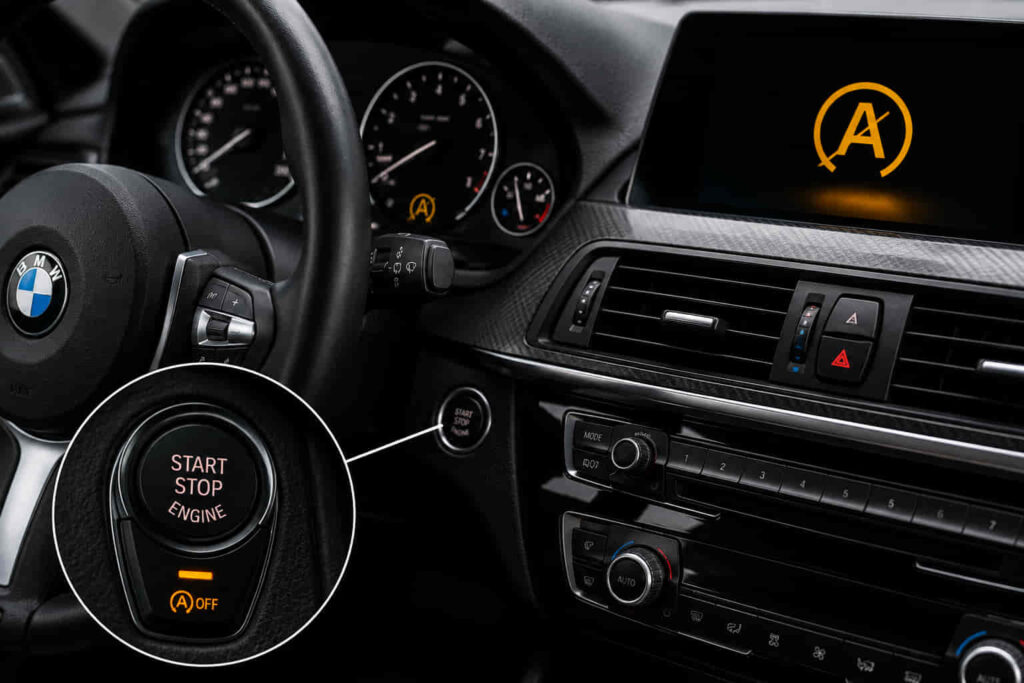
BMW Auto Start-Stop may stop working when the vehicle detects conditions that prevent automatic engine shutdown, such as low battery capacity, high electrical demand, incorrect operating conditions, or system faults. The Auto Start-Stop system is designed to improve fuel efficiency by temporarily turning off the engine when the vehicle stops, then restarting it automatically when driving conditions require power.
Unlike a simple on/off feature, BMW Auto Start-Stop relies on multiple vehicle systems working together. The engine control module, battery management system, Intelligent Battery Sensor (IBS), brake sensors, and temperature monitoring systems continuously evaluate whether shutting down the engine is safe and efficient.
A BMW that does not activate Auto Start-Stop does not always have a mechanical problem. In many situations, the system intentionally disables itself to protect the battery, maintain cabin comfort, or ensure reliable engine operation. For example, the system may remain inactive when the battery charge is insufficient, the engine has not reached operating temperature, or the climate control system requires additional power.
However, repeated failure of the Auto Start-Stop function can indicate an underlying issue, especially when combined with battery warnings, electrical problems, or dashboard messages.
Understanding how BMW Auto Start-Stop works helps owners distinguish between normal system behavior and actual faults. This guide explains the most common causes of BMW Auto Start-Stop not working, how to diagnose the problem, repair options, and ways to prevent future issues.
How Does BMW Auto Start-Stop System Work?
BMW Auto Start-Stop system works by automatically shutting off the engine when the vehicle is stopped under suitable conditions and restarting it when the driver is ready to move again. The system is controlled by BMW’s engine management and energy management systems, which continuously evaluate whether stopping the engine will improve efficiency without affecting reliability or driving comfort.
When the vehicle comes to a stop, the engine control module analyzes information from multiple components before activating Auto Start-Stop. The system considers factors such as vehicle speed, brake pressure, engine temperature, battery condition, electrical demand, and climate control requirements.
The battery management system plays a critical role because restarting the engine requires sufficient electrical energy. BMW vehicles equipped with Auto Start-Stop typically use advanced battery technology, such as AGM batteries, that can handle frequent start cycles while supporting other electrical systems.
The Intelligent Battery Sensor (IBS) monitors battery condition and provides information about voltage, current flow, and charging status. This data allows the vehicle to determine whether the battery has enough capacity to support another engine restart.
The system also monitors engine temperature because shutting down a cold engine can reduce efficiency and increase emissions. If the engine has not reached its normal operating temperature, BMW may keep the engine running until conditions improve.
Climate control demand is another important factor. When the air conditioning or heating system requires significant energy, BMW may disable Auto Start-Stop to maintain cabin comfort and prevent unnecessary strain on the electrical system.
For example, a BMW driven shortly after a cold start may keep the engine running because the engine temperature is too low, while the same vehicle may activate Auto Start-Stop normally after reaching operating temperature during a longer drive.
Read more: How to Connect Apple CarPlay to BMW
Why Is My BMW Auto Start-Stop Not Working?
BMW Auto Start-Stop may not work because the vehicle has detected conditions that prevent safe engine shutdown, including low battery charge, high electrical demand, incorrect operating conditions, or faults within the system. The system is designed to prioritize vehicle reliability over fuel-saving benefits, so it automatically disables itself when certain requirements are not satisfied.
A weak or aging battery is one of the most common reasons BMW Auto Start-Stop stops working. Even when the vehicle starts normally, the battery may not have enough capacity to support repeated engine restarts. BMW monitors battery performance closely, and the system may remain disabled when available energy falls below the required level.
Driving conditions can also prevent activation. Auto Start-Stop may not engage during short trips, heavy traffic conditions, extreme temperatures, or situations where the engine needs to continue running for efficiency or comfort reasons.
High electrical demand is another factor. Features such as maximum air conditioning operation, heated seats, windshield defrosting, or other electrical systems can require continuous engine operation to maintain power supply.
The transmission and braking system also influence operation. BMW needs confirmation that the vehicle is fully stopped and that conditions are safe before shutting down the engine. Problems with brake sensors or related components can prevent the system from activating.
Software or sensor issues can also cause problems. If the vehicle receives incorrect information from components such as the IBS sensor, temperature sensors, or control modules, the system may disable itself as a protective measure.
For example, a BMW owner may notice that Auto Start-Stop works during warmer weather but stops activating during winter because the battery capacity, engine temperature, and electrical demand conditions change significantly.
Can a BMW Battery Problem Cause Auto Start-Stop to Stop Working?
A BMW battery problem is one of the most common reasons why Auto Start-Stop stops working because the system requires sufficient electrical capacity to restart the engine repeatedly. Even when a BMW starts normally, the battery may not have enough reserve energy to support the additional demands created by automatic engine shutdown and restart cycles.
BMW Auto Start-Stop systems depend heavily on battery condition because every activation requires the starter system and electrical components to operate correctly. When battery voltage drops, charging capacity decreases, or the battery becomes aged, the vehicle may automatically disable Start-Stop to prevent unexpected starting problems.
Battery aging is a common cause of this issue. Over time, batteries lose their ability to store and deliver energy efficiently. This degradation may not always appear as a complete battery failure because the vehicle can still start normally while energy management systems detect reduced battery performance.
BMW vehicles equipped with Auto Start-Stop often use AGM batteries because they are designed to handle frequent charging and discharging cycles. Replacing an AGM battery with an incorrect battery type can affect system operation because the vehicle’s energy management system is calibrated for specific battery characteristics.
Battery replacement also requires proper registration in many BMW models. The battery management system needs updated information about the new battery so it can correctly manage charging rates and energy distribution. Without registration, the vehicle may continue using previous battery data, which can lead to incorrect charging behavior.
A battery-related Start-Stop problem can also come from the charging system. A weak alternator or charging issue may prevent the battery from maintaining sufficient energy even after replacement.
For example, a BMW with an older AGM battery may still start every morning but disable Auto Start-Stop because the vehicle detects that the battery no longer has enough capacity for repeated engine restarts.
Can the BMW IBS Sensor Affect Auto Start-Stop Operation?
The BMW Intelligent Battery Sensor (IBS) can affect Auto Start-Stop operation because it provides critical battery information used by the vehicle’s energy management system. The IBS monitors electrical data and helps BMW determine whether the battery condition is suitable for automatic engine shutdown.
The IBS sensor is usually installed on the negative battery terminal and measures important information such as battery voltage, current flow, and temperature. This information is sent to the vehicle’s control systems, allowing BMW to adjust charging strategy and decide when energy-saving functions can operate.
When the IBS sensor provides inaccurate data or develops a fault, the vehicle may incorrectly determine that battery conditions are unsafe. As a result, BMW may disable Auto Start-Stop even when the battery appears to function normally.
IBS sensor problems can create symptoms beyond Start-Stop failure. Drivers may experience charging system warnings, unusual battery behavior, or inconsistent operation of electrical features because the vehicle is receiving incorrect information about its power supply.
Diagnosing an IBS problem requires more than simply replacing the sensor. Technicians usually inspect battery condition, scan vehicle fault codes, check sensor communication, and compare reported battery data with actual measurements.
A faulty IBS sensor is different from a weak battery. Replacing the battery will not solve the problem if the vehicle cannot accurately monitor battery condition due to incorrect sensor information.
For example, a BMW with a healthy battery that still disables Auto Start-Stop and shows battery management-related faults may require IBS sensor inspection rather than immediate battery replacement.
How Do You Diagnose BMW Auto Start-Stop Problems?
Diagnosing BMW Auto Start-Stop problems requires evaluating battery condition, electrical systems, sensors, software information, and operating conditions to identify the actual cause of failure. Because the system depends on multiple components, replacing parts without proper testing can result in unnecessary repair costs.
The first step is checking whether the vehicle is intentionally disabling the system or experiencing an actual fault. BMW may temporarily deactivate Auto Start-Stop during normal operation because of temperature, battery charge, or climate control requirements.
Battery testing is one of the most important diagnostic steps. A technician checks battery voltage, charging performance, and overall health to determine whether the battery can support repeated start cycles.
Vehicle diagnostic scanning is also important because BMW control modules store information about electrical and system-related faults. Scan data can reveal problems involving the IBS sensor, battery management system, engine control module, or other components connected to Start-Stop operation.
The charging system should also be inspected. A properly functioning alternator is required to maintain battery capacity and support electrical demands. Charging problems can create symptoms similar to battery failure.
Sensor inspection helps identify whether incorrect information is preventing activation. Components such as brake sensors, temperature sensors, and battery monitoring systems provide data required for Start-Stop decisions.
A complete diagnosis focuses on finding the reason the system was disabled rather than only restoring the feature temporarily.
For example, if diagnostic testing shows low battery capacity, replacing and registering the battery may solve the problem, while a vehicle with IBS communication faults may require sensor repair instead.
How Do You Fix BMW Auto Start-Stop Not Working?
Fixing BMW Auto Start-Stop problems requires addressing the specific cause, which may involve the battery, IBS sensor, charging system, software, or other vehicle control components. Since the system depends on multiple inputs, the correct repair method starts with identifying why BMW has disabled the feature.
If the battery has insufficient capacity, replacing the battery is often the required solution. BMW vehicles with Auto Start-Stop usually require battery registration after replacement so the energy management system can recognize the new battery characteristics and adjust charging behavior correctly.
When the problem comes from the IBS sensor, repair may involve replacing the sensor and verifying communication with the battery management system. A faulty IBS sensor can provide incorrect information about battery condition, causing the vehicle to disable Start-Stop unnecessarily.
Charging system problems must also be corrected when they affect battery performance. A weak alternator or unstable charging output can prevent the battery from maintaining the energy level required for automatic engine restarts.
Software-related issues may require updating vehicle modules or resetting stored system information. BMW vehicles use complex electronic control systems, and software errors can sometimes prevent normal operation even when mechanical components are functioning correctly.
Some Auto Start-Stop issues are caused by temporary operating conditions rather than failed components. In these cases, the system may return to normal after the battery reaches sufficient charge, the engine reaches operating temperature, or electrical demand decreases.
Replacing parts without diagnosis can create unnecessary expenses. A new battery will not fix an IBS sensor fault, and a software update will not solve a battery that has reached the end of its service life.
For example, a BMW that shows no battery warning but consistently disables Auto Start-Stop may require diagnostic testing before deciding whether battery replacement or electrical repair is necessary.
Can You Turn BMW Auto Start-Stop Back On?
BMW Auto Start-Stop can often return to normal operation when the conditions preventing activation are resolved, but the system cannot always be manually forced to operate if the vehicle detects a protection-related issue. BMW designs the system to prioritize reliability and safety rather than activating the feature under unsuitable conditions.
Many BMW models include a dedicated Auto Start-Stop button that allows the driver to disable or enable the function during a driving cycle. However, pressing this button does not override system protections related to battery condition, engine temperature, or electrical demand.
If the system has been disabled because of normal operating conditions, it may automatically reactivate after those conditions change. For example, the system may remain inactive immediately after startup but begin working once the engine reaches normal temperature.
Driving mode can also influence Auto Start-Stop behavior. Some BMW driving modes prioritize performance and responsiveness, which may change how frequently the system activates.
After battery replacement or electrical service, the system may require proper battery registration and adaptation before Auto Start-Stop returns to normal operation. The vehicle needs accurate battery information to manage energy distribution correctly.
Persistent failure after checking normal conditions usually indicates a deeper issue. Warning messages, fault codes, or repeated Start-Stop unavailability should be investigated rather than ignored.
For example, a BMW that temporarily disables Start-Stop during cold weather is usually operating normally, while a vehicle that never activates the system after a fully charged and registered battery may require further diagnosis.
How Can You Prevent BMW Auto Start-Stop Problems?
Preventing BMW Auto Start-Stop problems requires maintaining battery health, monitoring electrical system performance, and addressing warning signs before they affect vehicle operation. Because the system relies heavily on energy management, battery maintenance is one of the most important factors in long-term reliability.
Regular battery inspection helps identify declining performance before the system disables itself. A battery that is approaching the end of its lifespan may still start the vehicle but fail to provide the reserve capacity required for repeated Start-Stop operation.
Using the correct battery type is also important. BMW systems are designed around specific battery technologies, and installing an incompatible battery can affect charging strategy and energy management performance.
Proper battery registration after replacement helps maintain accurate system operation. Without updated battery information, the vehicle may incorrectly manage charging levels and reduce the effectiveness of energy-saving features.
Keeping the charging system in good condition is equally important. Alternator problems can gradually reduce battery performance and create electrical issues that appear as Start-Stop failures.
Regular vehicle maintenance can also prevent related problems. Checking electrical warnings, addressing unusual starting behavior, and diagnosing battery-related symptoms early can reduce the risk of unexpected failures.
For example, a BMW owner who replaces an aging battery before complete failure, registers the new battery correctly, and maintains the charging system is more likely to experience consistent Auto Start-Stop operation.