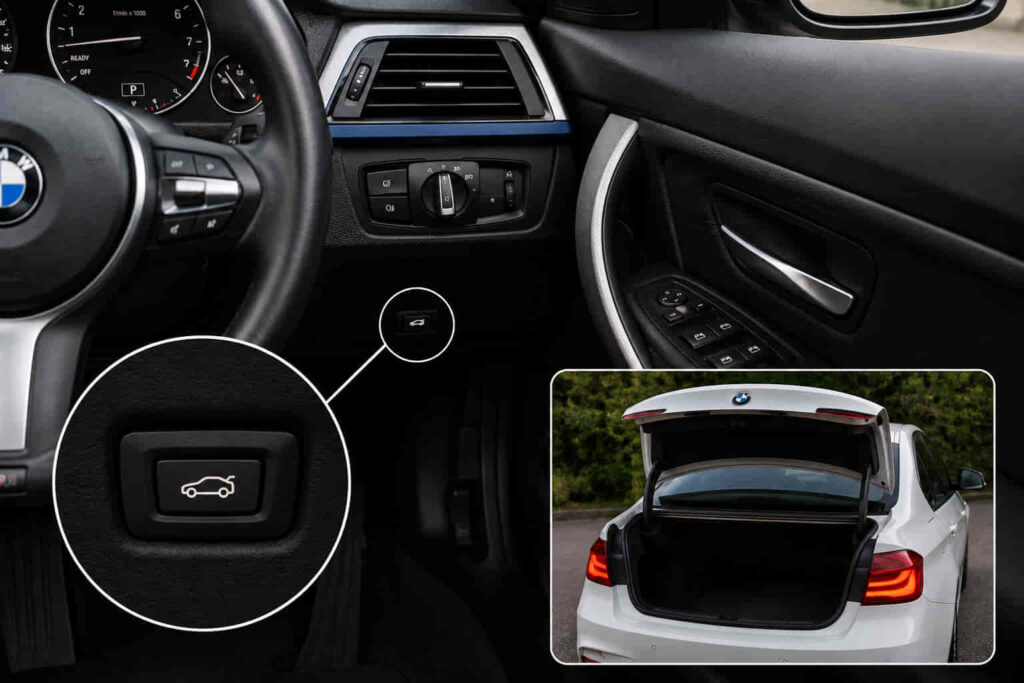
Opening a BMW boot from inside may be necessary when the trunk cannot be accessed through the key fob, exterior release button, or electronic locking system. The exact method depends on the BMW model, body style, trunk design, and whether the vehicle still has electrical power.
Modern BMW vehicles use advanced access systems that combine electronic controls with mechanical locking components. The BMW trunk access system includes the central locking module, trunk latch actuator, release switches, key fob communication, and in some models, power tailgate technology. When these components work together, the driver can open the boot easily through multiple access points.
However, situations such as a dead battery, failed remote key, damaged trunk actuator, or electrical fault can prevent normal operation. In these cases, understanding how to access the boot from inside the vehicle can help owners retrieve important items without damaging the locking mechanism.
Not every BMW has the same interior trunk release design. Some models provide direct interior release controls, while others require accessing the trunk area through folding rear seats or restoring electrical power before the boot can be opened.
This guide explains how BMW boot access systems work, how to open the boot from inside, what to do when the battery is dead, why trunk access failures occur, and how to diagnose common problems safely.
How Does the BMW Trunk Access System Work?
The BMW trunk access system works through a combination of electronic controls, mechanical locking components, and vehicle power management systems that control how the boot opens and closes. Understanding these components helps explain why a BMW boot may open normally in one situation but become inaccessible when a specific part fails.
The main component responsible for securing and releasing the boot is the trunk latch actuator. This electronic mechanism receives signals from the key fob, exterior trunk button, or interior release controls and activates the locking mechanism when an authorized opening command is detected.
The central locking system is another important part of BMW trunk operation. It manages communication between the vehicle doors, trunk lock, and security system. When the driver unlocks the vehicle, the central locking module determines whether access should be granted to the boot.
BMW models equipped with Comfort Access add additional sensors and communication features. These systems allow drivers to unlock or open certain areas of the vehicle without manually pressing the key fob buttons. However, because these systems depend on electrical components, power-related issues can affect operation.
The vehicle battery also plays an important role because most modern BMW trunk systems rely on electrical power. When the battery voltage becomes too low, electronic locking components may stop responding even though the mechanical parts remain functional.
Different BMW body styles use different trunk designs. A BMW sedan typically uses a traditional trunk lid with an electric latch, while BMW SUVs such as the X3 or X5 may use power tailgates with additional motors and control systems.
For example, a BMW with a working battery but a failed trunk actuator may require mechanical inspection, while a vehicle with a completely discharged battery may need electrical power restored before electronic trunk controls can operate again.
How Can You Open a BMW Boot From Inside?
A BMW boot can be opened from inside by using the available interior release mechanism, accessing the trunk area through the rear seats, or restoring power when electronic access is unavailable. The correct method depends on the specific BMW model and the reason why the boot cannot be opened normally.
Some BMW models include interior trunk release controls that allow occupants to open the boot without using the exterior button or key fob. These controls are usually connected to the central locking system and provide a convenient alternative when the exterior release mechanism is not responding.
If the vehicle does not have a direct interior boot release, accessing the trunk through the rear passenger area may be necessary. Many BMW sedans allow the rear seats to fold down, creating access to the luggage compartment. This method is especially useful when the boot is locked but the cabin remains accessible.
For BMW models with power tailgates, the opening process may depend more heavily on electrical operation. If the battery still provides enough power, the interior controls or tailgate button may function normally. However, a completely discharged battery can prevent these systems from responding.
It is important to avoid forcing the trunk lid or manually pulling on the latch because BMW trunk mechanisms contain precise components that can be damaged. A forced opening attempt can create additional problems involving the latch, wiring, or weather sealing.
The available emergency access method also varies by generation. Older BMW models may provide more mechanical backup options, while newer vehicles rely more heavily on electronic access systems integrated with the vehicle’s security architecture.
For example, a BMW 3 Series with foldable rear seats may allow access to the trunk from inside the cabin, while a BMW X5 with an electronic tailgate may require restoring battery power or diagnosing the power liftgate system.
Read more: BMW Auto Start-Stop Not Working
How Do You Open a BMW Trunk When the Battery Is Dead?
Opening a BMW trunk with a dead battery requires using alternative access methods because the electronic locking system cannot operate normally without sufficient electrical power. Since many modern BMW trunks depend on electric actuators and central locking modules, a completely discharged battery can prevent normal trunk operation.
The first consideration is whether the vehicle can still be accessed through another entry point. If the driver can unlock the cabin using the mechanical key blade inside the key fob, restoring electrical power may allow the trunk release system to function again.
Many BMW vehicles include designated power access points that allow external power to be connected when the battery is unavailable. Providing temporary electrical power can reactivate the central locking system, interior controls, and electronic trunk release mechanisms without forcing the trunk open.
The mechanical key system is another important backup feature. Although many newer BMW models hide traditional key cylinders for design reasons, the physical key blade inside the remote can still provide emergency access to the vehicle cabin in many configurations.
Once electrical power is restored, the driver can normally use the interior trunk release button, key fob trunk button, or exterior trunk switch depending on the vehicle model.
It is important not to repeatedly press electronic trunk controls when the battery is completely discharged because the system cannot complete the requested operation without power. Attempting to force the trunk lid open can damage the latch mechanism or surrounding body components.
For example, if a BMW X5 cannot open its power tailgate after the battery has discharged, restoring temporary power through the vehicle’s emergency power connection may allow the tailgate control system to operate again.
Why Is My BMW Trunk Not Opening From Inside?
A BMW trunk may not open from inside because of electrical failures, damaged release switches, trunk actuator problems, central locking issues, or insufficient battery power. The symptom may appear simple, but the actual cause can involve several different parts of the BMW trunk access system.
A failed trunk actuator is one possible cause. The actuator is responsible for physically releasing the latch after receiving an opening signal. When this component fails, the vehicle may recognize the command but the mechanical lock does not disengage.
The interior trunk release switch can also create problems. If the switch becomes damaged or loses its electrical connection, pressing the button may not send the required signal to the locking system.
Wiring problems are another possible source of failure. BMW vehicles use electrical connections between switches, control modules, and locking components. Damaged wiring, loose connectors, or corrosion can interrupt communication between these parts.
Central locking system problems can affect multiple access points at the same time. If the locking module cannot process commands correctly, the trunk, doors, or other access features may respond incorrectly.
Battery-related issues should also be considered. A weak battery may provide enough power for some vehicle functions while failing to operate high-demand components such as electric trunk mechanisms.
Diagnosing the correct cause requires examining the entire access system rather than replacing parts based only on symptoms. A trunk that does not open from inside may need an electrical test, mechanical inspection, or diagnostic scan depending on the situation.
For example, if the doors unlock normally but the trunk release does not respond, the problem may be isolated to the trunk actuator or switch rather than the entire vehicle electrical system.
How Do You Diagnose BMW Trunk Access Problems?
Diagnosing BMW trunk access problems requires checking the battery, locking system, electrical signals, mechanical components, and control modules to determine where the failure occurs. A structured diagnosis prevents unnecessary replacement of expensive components.
The first step is confirming the vehicle’s electrical condition. Battery voltage should be checked because low voltage can create symptoms that appear like a trunk mechanism failure.
The trunk release commands should then be tested from different sources, including the key fob, interior button, and exterior switch. Comparing these inputs helps determine whether the issue is related to one control point or the entire locking system.
The trunk latch and actuator require mechanical inspection if electrical signals are reaching the component but the lock does not release. Technicians check whether the actuator moves correctly and whether the latch mechanism is physically blocked.
Electrical testing may include checking wiring continuity, connector condition, and communication between control modules. BMW vehicles use integrated electronic systems, so a communication problem can prevent normal trunk operation even when individual components appear functional.
Diagnostic scanning can also identify stored faults related to the central locking system, body control modules, or power management systems.
A complete diagnosis focuses on identifying the failed component instead of assuming the battery, key, or latch is always responsible.
For example, a BMW with a fully charged battery and working key fob but no trunk response may require inspection of the actuator or control module rather than battery replacement.
How Do You Fix a BMW Trunk That Will Not Open?
Fixing a BMW trunk that will not open requires repairing the specific component responsible for the access failure, which may involve the battery, trunk actuator, release switch, wiring, or central locking system. Because BMW trunk access depends on both mechanical and electronic components, the correct repair method starts with accurate diagnosis.
If the problem is caused by a weak or discharged battery, restoring power or replacing the battery can restore normal trunk operation. After battery replacement, some BMW models may require battery registration so the vehicle’s power management system can correctly monitor and control electrical functions.
A failed trunk actuator usually requires component replacement because the actuator contains the motor and mechanism responsible for releasing the latch. When the actuator stops working, the trunk may remain locked even though the vehicle receives the correct opening command.
Problems with the trunk release switch may require electrical repair or switch replacement. A damaged switch cannot send the necessary signal to the locking system, preventing the trunk from opening through that access point.
Wiring and connector issues require inspection and repair of the electrical connections between the trunk components and control modules. BMW vehicles use complex wiring systems, and even a small connection problem can interrupt communication between components.
If the issue involves the central locking module, further diagnosis may be necessary because this system controls multiple access functions throughout the vehicle. Repair may involve software diagnosis, module repair, or replacement depending on the failure.
The correct solution depends on the actual cause. Replacing the trunk latch when the battery is weak, or replacing the battery when the actuator has failed, will not solve the underlying problem.
For example, a BMW with a working key fob and normal electrical power but no trunk response may require actuator replacement, while a vehicle with multiple electrical failures may need battery or power system diagnosis first.
How Can You Prevent BMW Trunk Access Problems?
Preventing BMW trunk access problems requires maintaining the vehicle battery, monitoring electronic components, and addressing early warning signs before the trunk system completely fails. Since modern BMW trunks rely heavily on electrical systems, preventive maintenance plays an important role in reliable access.
Maintaining battery health is one of the most effective ways to prevent trunk access failures. A weak battery may cause inconsistent operation of electronic locks, keyless entry systems, and power tailgates before a complete failure occurs.
Regularly checking key fob condition can also prevent access problems. A weak key fob battery can reduce communication reliability between the remote and vehicle, creating symptoms that may appear to be a trunk locking issue.
Owners should pay attention to early signs of trunk mechanism problems. Slow trunk release, unusual clicking sounds, intermittent operation, or delayed response from the release button can indicate developing problems with the actuator or electrical system.
Keeping electrical systems properly maintained also reduces the risk of access failures. Problems with battery charging, wiring connections, or vehicle power management can affect multiple electronic features, including trunk operation.
Avoiding excessive force when a trunk does not open is another important prevention measure. Forcing the trunk lid can damage the latch, hinges, seals, or electrical components and turn a simple access issue into a more expensive repair.
Regular maintenance and early diagnosis help preserve the reliability of the BMW trunk access system. Addressing small electrical or mechanical problems before complete failure can prevent situations where the vehicle becomes difficult to access.
For example, replacing an aging battery before it completely fails and repairing a trunk actuator when early symptoms appear can prevent emergency situations where the boot cannot be opened.