Honda CR-V is one of the most reliable compact SUVs you can buy today. It offers strong long term durability, affordable maintenance, and excellent resale value. Many owners drive their CR-V for more than 200,000 miles with regular servicing. This combination makes it a popular choice for families, commuters, and first time SUV buyers.
Reliability, however, depends on more than the Honda brand. The model year, maintenance history, driving habits, and engine design all affect long term performance. Some Honda CR-V generations have very few reported issues. Others are known for problems such as oil dilution, air conditioning failures, or CVT transmission concerns. Knowing these differences helps buyers avoid expensive repairs later.
This guide explains what you can expect from Honda CR-V ownership. You will learn how reliable the SUV is, how long it typically lasts, and which problems owners report most often. The article also covers maintenance costs, the best model years, and how the Honda CR-V compares with other compact SUVs. By the end, you will know whether a Honda CR-V is the right vehicle for your budget and driving needs.
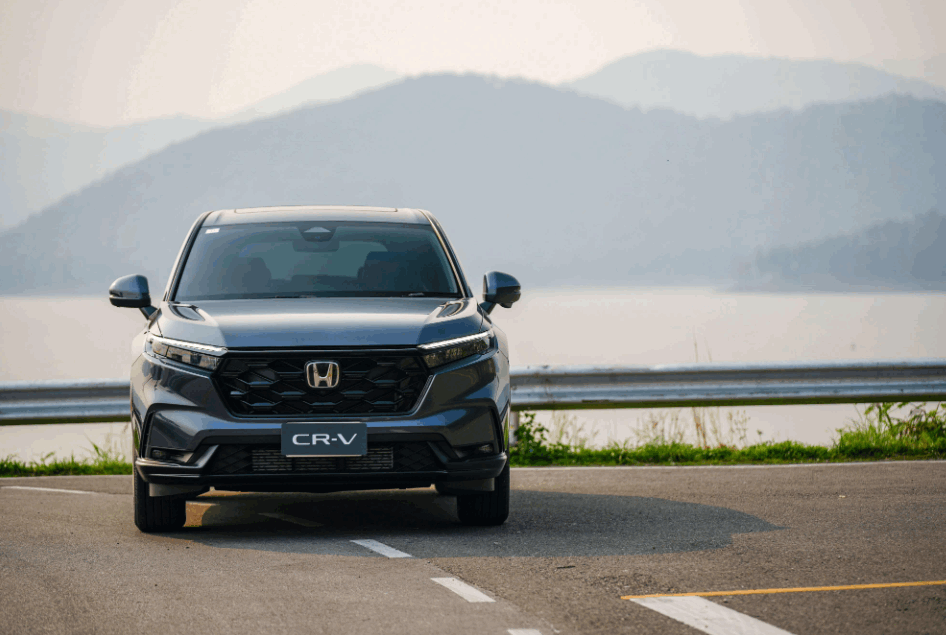
Are Honda CR-Vs Reliable Overall?
Yes, Honda CR-V models are reliable vehicles. They have built a strong reputation for long term durability, low ownership costs, and dependable daily performance. Many industry experts rank the CR-V among the most reliable compact SUVs because it combines consistent build quality with affordable maintenance. For most drivers, a well maintained Honda CR-V provides years of trouble free ownership.
One reason for this reliability is Honda’s engineering philosophy. The company focuses on proven powertrains instead of frequent redesigns. As a result, many CR-V generations deliver stable engine performance and fewer unexpected mechanical failures. Routine maintenance also remains simple and widely available. Most independent repair shops can service a Honda CR-V without specialized equipment, which helps owners control repair costs throughout the vehicle’s life.
Independent organizations also support the Honda CR-V’s reputation. Reliability studies from sources such as J.D. Power, RepairPal, and Consumer Reports often place the CR-V near the top of the compact SUV segment. These rankings evaluate factors such as repair frequency, owner satisfaction, and long term dependability. Although scores vary slightly by model year, the Honda CR-V consistently performs better than many competing SUVs.
Reliability does not mean every Honda CR-V is perfect. Some model years experienced issues involving oil dilution, air conditioning systems, CVT transmissions, or electrical components. However, Honda addressed many of these problems through software updates, technical service bulletins, and design improvements in later generations. Buyers who choose a reliable model year and follow the recommended maintenance schedule can significantly reduce the risk of expensive repairs.
Overall, the Honda CR-V remains one of the safest choices for drivers who want a practical and dependable compact SUV. Its combination of durability, reasonable maintenance costs, and strong resale value continues to attract both new car buyers and shoppers looking for a reliable used vehicle.
How Long Does a Honda CR-V Typically Last?
A Honda CR-V typically lasts between 200,000 and 300,000 miles when owners follow the recommended maintenance schedule. Many vehicles even exceed this range with proper care. This lifespan places the CR-V among the longest lasting compact SUVs on the market. For drivers who travel about 15,000 miles each year, a well maintained Honda CR-V can provide reliable service for 15 to 20 years.
Regular maintenance has the biggest impact on vehicle lifespan. Owners who change the engine oil on time, replace transmission fluid at the recommended intervals, and inspect critical components often experience fewer major repairs. Keeping the cooling system, brakes, suspension, and tires in good condition also reduces wear on other parts. Small repairs completed early often prevent larger and more expensive problems later.
Driving habits also affect how long a Honda CR-V lasts. Smooth acceleration, steady braking, and consistent highway driving place less stress on the engine and transmission than aggressive driving or frequent stop and go traffic. In addition, drivers who avoid overloading the vehicle help protect the suspension and drivetrain. These habits improve reliability throughout the ownership period.
Model year is another important factor. Some Honda CR-V generations have stronger long term reliability than others because Honda refined the engine, transmission, and electrical systems over time. Buyers should always research the specific model year instead of judging every CR-V by the same standard. Choosing a well maintained vehicle with a complete service history often matters more than choosing a vehicle with lower mileage.
Overall, the Honda CR-V offers an impressive lifespan for a compact SUV. Owners who invest in routine maintenance and responsible driving habits can expect many years of dependable performance while keeping ownership costs relatively low.
What Are the Most Common Honda CR-V Problems?
Honda CR-V models are reliable overall, but they are not free from mechanical issues. Some problems appear more often in specific model years, while others result from normal wear over time. Understanding these common issues helps buyers make informed decisions and allows current owners to address minor problems before they become expensive repairs.
Oil dilution is one of the best known concerns, particularly in some CR-V models equipped with the 1.5 liter turbocharged engine. In cold weather, fuel may mix with the engine oil before reaching normal operating temperature. This issue can reduce lubrication and increase engine wear if owners ignore it for long periods. Honda released software updates and other improvements to reduce the problem in affected vehicles.
Some owners also report CVT transmission concerns. Most continuously variable transmissions perform smoothly when drivers replace the transmission fluid at the recommended intervals. However, neglected maintenance can lead to hesitation, unusual noises, or rough acceleration. Following Honda’s maintenance schedule greatly improves transmission reliability and extends its service life.
Air conditioning failures have affected several Honda CR-V generations as well. Faulty compressors, condensers, or refrigerant leaks often reduce cooling performance during hot weather. Electrical problems can also appear as the vehicle ages. Common examples include battery drain, malfunctioning sensors, infotainment glitches, or warning lights that require diagnostic testing. Although these issues can be frustrating, they rarely affect the vehicle’s core reliability.
Most of these problems do not occur on every Honda CR-V. Their frequency depends on the model year, maintenance history, and driving conditions. Buyers who research common issues before purchasing and keep up with routine maintenance can avoid many costly repairs. For this reason, the Honda CR-V continues to rank among the most dependable compact SUVs despite a few well documented weaknesses.
Which Honda CR-V Model Years Are the Most Reliable?
Not every Honda CR-V model year offers the same level of reliability. Some generations have an excellent record for long term durability, while others are more likely to develop mechanical or electrical issues. Choosing the right model year can reduce maintenance costs and improve the overall ownership experience.
The 2013, 2014, 2016, 2020, 2021, and newer Honda CR-V models are widely considered among the most reliable options. These vehicles benefit from refined engineering, improved safety features, and fewer reported mechanical problems. Many owners praise these model years for their dependable engines, smooth driving experience, and relatively low repair frequency. They also maintain strong resale values because buyers recognize their reputation for reliability.
Some earlier model years require more careful consideration. For example, several 2017 and 2018 models equipped with the 1.5 liter turbocharged engine received attention for oil dilution concerns. Certain older generations also experienced air conditioning failures or premature suspension wear. While these issues do not affect every vehicle, buyers should review the maintenance history and confirm that any recalls or service campaigns have been completed before making a purchase.
Vehicle condition often matters more than the production year alone. A well maintained Honda CR-V with complete service records usually performs better than a neglected vehicle with lower mileage. Regular oil changes, transmission fluid replacement, brake inspections, and documented repairs all indicate that the previous owner cared for the vehicle properly. A professional pre purchase inspection can also identify hidden problems before you commit to buying.
Overall, buyers should evaluate both the model year and the vehicle’s maintenance history. Choosing a proven Honda CR-V generation with consistent service records offers the best chance of enjoying reliable performance, lower repair costs, and long term peace of mind.
How Much Does It Cost to Maintain a Honda CR-V?
Honda CR-V maintenance costs are lower than the average for many compact SUVs. Affordable servicing is one of the main reasons the CR-V has earned a reputation as a practical long term vehicle. Most owners only pay for routine maintenance during the first several years of ownership, especially when they follow Honda’s recommended service schedule.
The average annual maintenance cost is about $400 to $500, although the exact amount depends on the model year, mileage, and driving conditions. Routine services include oil changes, tire rotations, brake inspections, air filter replacements, and fluid checks. These services are relatively inexpensive and help prevent more costly mechanical failures later. Scheduling maintenance on time also improves fuel efficiency and keeps the vehicle performing as intended.
Repair costs usually remain predictable because replacement parts are widely available. Honda has produced the CR-V for decades, so most repair shops are familiar with its engine, transmission, and suspension systems. This broad parts availability often reduces labor time and keeps repair bills lower than those for many competing SUVs. Owners also have the flexibility to choose between genuine Honda parts and high quality aftermarket components.
Maintenance expenses can increase as the vehicle ages. Components such as brakes, batteries, shock absorbers, wheel bearings, and tires naturally wear out after years of regular use. However, these repairs are expected for any vehicle and should not be viewed as signs of poor reliability. Completing routine inspections allows owners to replace worn parts before they cause additional damage or affect safety.
Overall, the Honda CR-V delivers an excellent balance between reliability and ownership costs. Its affordable maintenance schedule, accessible replacement parts, and predictable repair expenses make it one of the most cost effective compact SUVs for drivers who plan to keep their vehicle for many years.
How Does the Honda CR-V Compare With Other Compact SUVs?
Honda CR-V competes with several popular compact SUVs, including the Toyota RAV4, Mazda CX-5, Subaru Forester, and Hyundai Tucson. Each model has unique strengths, but the CR-V stands out for its balance of reliability, comfort, fuel efficiency, and ownership costs. Instead of excelling in just one area, it delivers consistent performance across multiple categories.
Toyota RAV4 is the CR-V’s closest rival. Both SUVs have excellent reliability records and strong resale values. The RAV4 often appeals to buyers who prioritize rugged styling and proven hybrid technology. The Honda CR-V, however, offers a smoother ride, a quieter cabin, and more rear passenger space. Many families prefer the CR-V because it provides a comfortable driving experience without sacrificing practicality.
Mazda CX-5 focuses on sporty handling and premium interior quality. It delivers an engaging driving experience, but its cargo space is smaller than the CR-V’s. Subaru Forester attracts drivers who need standard all wheel drive and excellent visibility. However, some owners report higher long term maintenance costs than those associated with the Honda CR-V. Hyundai Tucson offers generous technology features and a competitive warranty, yet it has a shorter reliability history than both the CR-V and the RAV4.
Choosing the best compact SUV depends on your priorities. Buyers who value driving dynamics may prefer the Mazda CX-5, while outdoor enthusiasts often choose the Subaru Forester. Drivers who want advanced technology may lean toward the Hyundai Tucson. Those looking for a dependable vehicle with low maintenance costs, excellent fuel economy, and strong long term value will likely find the Honda CR-V to be the better overall choice.
Overall, the Honda CR-V remains one of the most well rounded compact SUVs available. Its consistent reliability, practical design, and affordable ownership costs make it an excellent option for drivers who want confidence behind the wheel for many years.
Is a Used Honda CR-V Worth Buying?
Yes, a used Honda CR-V is worth buying if it has a clean maintenance history and has received regular servicing. The CR-V is known for its long lifespan, which allows many used models to remain dependable well beyond 150,000 miles. This durability makes it one of the strongest choices for buyers who want a reliable SUV without paying the price of a new vehicle.
Service history is more important than mileage alone. A Honda CR-V with complete maintenance records often performs better than a lower mileage vehicle that has been poorly maintained. Buyers should confirm that previous owners changed the engine oil, replaced transmission fluid, inspected the braking system, and completed any manufacturer recalls. These records provide valuable insight into how well the vehicle has been cared for throughout its life.
A thorough inspection is also essential before purchasing a used Honda CR-V. Buyers should examine the engine, transmission, suspension, brakes, tires, and electrical system for signs of excessive wear or damage. A professional mechanic can identify hidden problems that may not appear during a short test drive. Spending a small amount on a pre purchase inspection can prevent unexpected repair bills after the sale.
Model year also deserves careful attention. Some Honda CR-V generations have stronger reliability records than others, while a few years are associated with issues such as oil dilution or air conditioning failures. Researching common problems before shopping helps buyers avoid vehicles with a higher risk of expensive repairs. Selecting a reliable model year often provides better long term value than simply choosing the newest or least expensive option.
Overall, a used Honda CR-V remains an excellent investment for many drivers. Choosing the right model year, reviewing maintenance records, and completing a professional inspection greatly increase the chances of owning a dependable SUV that delivers years of reliable performance at a reasonable cost.
Conclusion
Honda CR-V has earned its reputation as one of the most reliable compact SUVs available today. Its long lifespan, affordable maintenance costs, and strong resale value make it an attractive option for both new and used car buyers. Although some model years have experienced common issues such as oil dilution or air conditioning failures, these problems affect only certain vehicles and do not define the entire CR-V lineup.
Long term reliability depends on several factors. Choosing a dependable model year, following the recommended maintenance schedule, and keeping complete service records all play an important role in reducing repair costs and extending the vehicle’s lifespan. Buyers who invest time in researching a vehicle’s history are more likely to enjoy years of dependable ownership.
If reliability is your top priority, the Honda CR-V remains one of the best choices in the compact SUV segment. It offers a practical balance of durability, comfort, fuel efficiency, and reasonable ownership costs. Whether you plan to buy a brand new model or a well maintained used vehicle, the Honda CR-V continues to provide excellent long term value for drivers who want a dependable SUV they can trust.