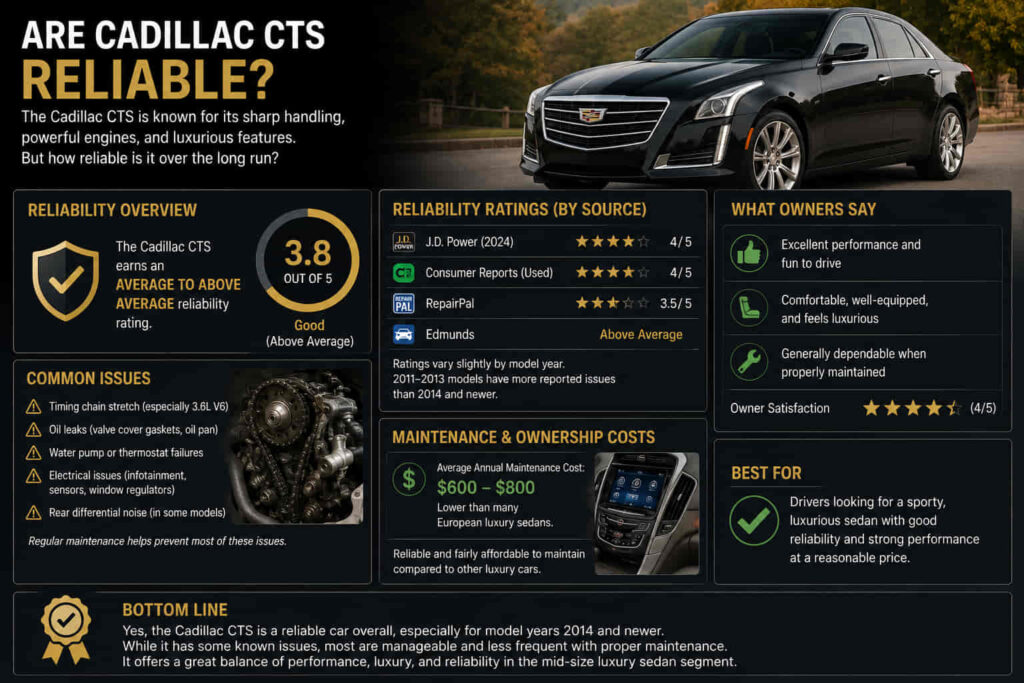
Cadillac CTS can be a reliable luxury sedan because it combines strong General Motors engineering, durable engine options, a well-developed chassis, and proven mechanical components. However, long-term reliability depends on more than the vehicle’s design. Maintenance history, driving habits, repair quality, and the condition of electronic systems all influence how well a Cadillac CTS performs over time.
The Cadillac CTS was developed to compete with established luxury sedans such as the BMW 3 Series and Mercedes-Benz C-Class while offering a different approach through American performance engineering. Its combination of rear-wheel-drive architecture, powerful engine choices, and solid handling characteristics helped it become one of Cadillac’s most recognized sport sedans.
Reliability in a Cadillac CTS should be evaluated across multiple systems, including the engine, transmission, suspension, infotainment technology, and electrical components. A strong drivetrain can provide years of dependable performance, but advanced luxury features may require additional attention as the vehicle ages.
Like many premium vehicles, the Cadillac CTS rewards owners who follow proper maintenance schedules and address problems early. A well-maintained CTS can provide a strong balance of performance, comfort, and long-term ownership value.
This guide explains the main reasons why Cadillac CTS models can be reliable, which components contribute to durability, and what owners should understand before purchasing or maintaining one.
Does the Cadillac CTS Engine Make It Reliable?
The Cadillac CTS engine is one of the main factors that supports its long-term reliability because Cadillac offered several proven engine options designed to deliver strong performance and durability. The CTS was available with different powertrains throughout its production years, including V6 engines, turbocharged engines, and the high-performance V8 engine used in CTS-V models.
The V6 engines used in many Cadillac CTS models provided a balance between performance and daily usability. These engines were designed for a luxury sport sedan that needed smooth acceleration, highway capability, and consistent operation over many years. Proper maintenance, especially regular oil changes and cooling system care, plays a major role in preserving engine reliability.
Turbocharged Cadillac CTS models added stronger low-end power and improved efficiency, but turbocharged systems require careful maintenance because additional components such as turbochargers and related systems operate under higher stress. Following recommended service intervals helps reduce the risk of premature wear.
For example, a Cadillac CTS with a regularly serviced engine can continue delivering strong performance even after reaching higher mileage. In contrast, delayed oil changes or ignored warning signs can accelerate wear regardless of the engine type.
The engine itself does not make every Cadillac CTS automatically reliable. Long-term dependability depends on how the vehicle was maintained, how it was driven, and whether previous owners addressed mechanical issues before they developed into larger failures.
Is the Cadillac CTS Transmission Reliable?
The Cadillac CTS transmission can provide reliable performance when properly maintained because it was engineered to handle the power output and driving demands of a performance-oriented luxury sedan. The transmission plays a critical role in delivering smooth acceleration, efficient power transfer, and consistent driving characteristics.
Cadillac CTS models used automatic transmissions designed to work with different engine configurations, from everyday V6 engines to more powerful performance variants. Because the CTS combines luxury comfort with sporty handling, the transmission must manage both smooth cruising and more demanding driving conditions.
Transmission reliability depends heavily on maintenance practices. Regular transmission fluid service, avoiding excessive heat buildup, and addressing early symptoms such as rough shifting or delayed engagement help protect internal components.
For example, a Cadillac CTS that receives proper transmission maintenance can maintain smooth gear changes for many years, while a neglected vehicle may develop shifting problems even if other systems remain in good condition.
The transmission is an important part of the Cadillac CTS reliability equation, but it works together with the engine, drivetrain, and maintenance history. A well-maintained drivetrain significantly improves the chances of long-term dependable ownership.
Does the Cadillac CTS Platform Improve Long-Term Reliability?
The Cadillac CTS platform improves long-term reliability because it was developed around a performance-focused architecture designed to provide structural strength, balanced handling, and consistent driving stability. Unlike many traditional luxury sedans that focus primarily on comfort, the CTS was engineered to combine premium features with sport sedan characteristics.
Many Cadillac CTS generations benefited from GM’s rear-wheel-drive sedan platforms, which provided advantages in weight distribution and driving dynamics. A balanced chassis reduces unnecessary stress on suspension and drivetrain components because the vehicle can deliver predictable handling without relying only on electronic systems to maintain stability.
The platform design also contributes to long-term ownership because many mechanical components were developed through GM’s broader vehicle engineering experience. This helps with service knowledge, repair procedures, and parts availability compared with less common luxury vehicles.
For example, a Cadillac CTS owner may find that common mechanical repairs are more straightforward because technicians have experience with GM powertrains and chassis systems. This can reduce repair complexity when compared with some imported luxury sedans that use more specialized components.
However, a strong platform does not eliminate the need for maintenance. Suspension components, bushings, steering parts, and other chassis-related systems still experience wear over time. The platform provides a reliable foundation, but ownership habits determine how effectively that foundation performs throughout the vehicle’s lifespan.
Are Cadillac CTS Suspension Systems Reliable?
Cadillac CTS suspension systems can be reliable because they were designed to support both luxury comfort and responsive handling, but advanced suspension technology requires proper maintenance as the vehicle ages. The CTS was built as a sport-oriented luxury sedan, so its suspension system was developed to provide precise steering response, stable cornering, and a comfortable ride.
Some Cadillac CTS models included advanced suspension technologies such as Magnetic Ride Control, which adjusts damping characteristics based on driving conditions. This technology improves ride quality by allowing the vehicle to adapt between comfort and performance settings.
The advantage of advanced suspension systems is improved driving performance, but additional components also create more potential maintenance requirements. Sensors, electronic dampers, control modules, and suspension components must continue working correctly to maintain the intended driving experience.
For example, an older Cadillac CTS may develop ride quality issues due to worn suspension bushings, aging dampers, or electronic suspension component failures. These problems do not mean the entire vehicle is unreliable, but they require proper diagnosis because luxury suspension systems are more complex than basic setups.
Regular inspections and timely repairs help maintain suspension reliability. When properly maintained, the Cadillac CTS suspension system can continue providing the combination of comfort and handling that defines the model.
Does Cadillac CTS Technology Affect Reliability?
Cadillac CTS technology can affect long-term reliability because advanced electronic systems introduce additional components that require proper maintenance and diagnosis. Modern luxury vehicles depend on multiple electronic modules, sensors, and software systems to control comfort, safety, and infotainment functions. The Cadillac CTS is no exception, especially with features designed to improve the premium driving experience.
The Cadillac User Experience (CUE) infotainment system is one of the most recognized technology features in CTS models. It integrates functions such as touchscreen controls, navigation, audio settings, Bluetooth connectivity, and smartphone features. While these systems improve convenience, they also create additional areas where software errors or electronic failures may occur as the vehicle ages.
Electronic reliability depends on factors such as battery condition, software stability, wiring integrity, and proper troubleshooting. A minor electrical issue can sometimes affect multiple functions because modern vehicle systems communicate through interconnected control modules.
For example, a Cadillac CTS owner may experience infotainment freezing, touchscreen delays, or sensor-related warnings caused by electronic communication problems rather than mechanical failures. Identifying the actual source of the issue prevents unnecessary replacement of expensive components.
Technology does not make the Cadillac CTS unreliable, but it changes how owners should approach maintenance. Regular inspections, addressing electrical problems early, and keeping systems functioning correctly help preserve the vehicle’s long-term dependability.
Can Proper Maintenance Make Cadillac CTS More Reliable?
Proper maintenance can significantly improve Cadillac CTS reliability because preventive care reduces wear on mechanical components and helps identify problems before they become major repairs. Like other luxury vehicles, the CTS performs best when owners follow recommended service intervals and maintain important systems consistently.
Regular maintenance includes engine oil service, transmission care, brake inspections, fluid checks, tire maintenance, and attention to suspension components. These services protect the systems that contribute directly to performance, safety, and long-term durability.
Maintenance history is especially important when evaluating a used Cadillac CTS. Two vehicles with the same mileage can have very different reliability outcomes depending on how they were maintained. A vehicle with documented service records provides better evidence of long-term care than one with unknown maintenance history.
For example, a Cadillac CTS that receives regular oil changes and timely repairs can continue operating smoothly for many years, while a neglected vehicle may develop expensive problems despite having relatively low mileage.
The reliability of a Cadillac CTS is therefore not determined only by factory engineering. Ownership behavior plays a major role in preserving the vehicle’s condition and maximizing its lifespan.
How Long Can a Cadillac CTS Last?
A Cadillac CTS can last for many years and achieve high mileage when it receives consistent maintenance, timely repairs, and responsible driving. The lifespan of a CTS depends on several factors, including engine condition, transmission care, driving environment, and how well previous owners maintained the vehicle.
The Cadillac CTS was designed as a premium sport sedan with strong mechanical foundations, allowing it to remain dependable when major systems are properly maintained. The engine, transmission, chassis, and electrical components all contribute to the vehicle’s long-term durability, but each system requires attention as the vehicle accumulates mileage.
Mileage alone does not determine whether a Cadillac CTS is reliable. A higher-mileage CTS with complete maintenance records can be a better ownership choice than a lower-mileage vehicle that has been neglected. Service history provides valuable information about whether important repairs and preventive maintenance have been completed.
For example, a Cadillac CTS that receives regular oil changes, transmission servicing, suspension inspections, and electrical system maintenance can continue providing strong performance beyond typical ownership periods. In contrast, ignoring early warning signs can allow small issues to develop into more expensive repairs.
Owners should also consider that luxury vehicle reliability includes both mechanical durability and technology performance. As the CTS ages, maintaining comfort features, electronic systems, and advanced components becomes increasingly important.
A well-maintained Cadillac CTS can provide a reliable ownership experience by combining strong engineering with proper care. The vehicle’s long-term success depends not only on its original design but also on how effectively each owner maintains its condition.