Choosing between AMSOIL and Liqui Moly is not as simple as comparing two premium synthetic oil brands. Both companies produce high-quality lubricants, but they follow different engineering philosophies. AMSOIL focuses on maximum engine protection and extended oil drain intervals. Liqui Moly emphasizes OEM-approved formulations and products designed for European vehicles.
Understanding these differences helps you choose the right oil for your engine instead of relying on brand reputation alone. The best option depends on your vehicle, driving habits, manufacturer requirements, and maintenance goals. A premium oil only delivers its full value when it matches the engine’s design and operating conditions.
This comparison examines the most important technical factors that influence engine performance. These factors include base oil technology, additive chemistry, wear protection, oxidation resistance, drain intervals, OEM approvals, and overall ownership cost. Each section explains how these characteristics affect durability and long-term reliability in real driving conditions.
By the end of this guide, you will know where AMSOIL performs best and where Liqui Moly has a clear advantage. You will also understand which brand suits daily drivers, high-performance vehicles, turbocharged engines, and European cars. This information will help you choose the synthetic oil that offers the best balance of protection, performance, and long-term value.
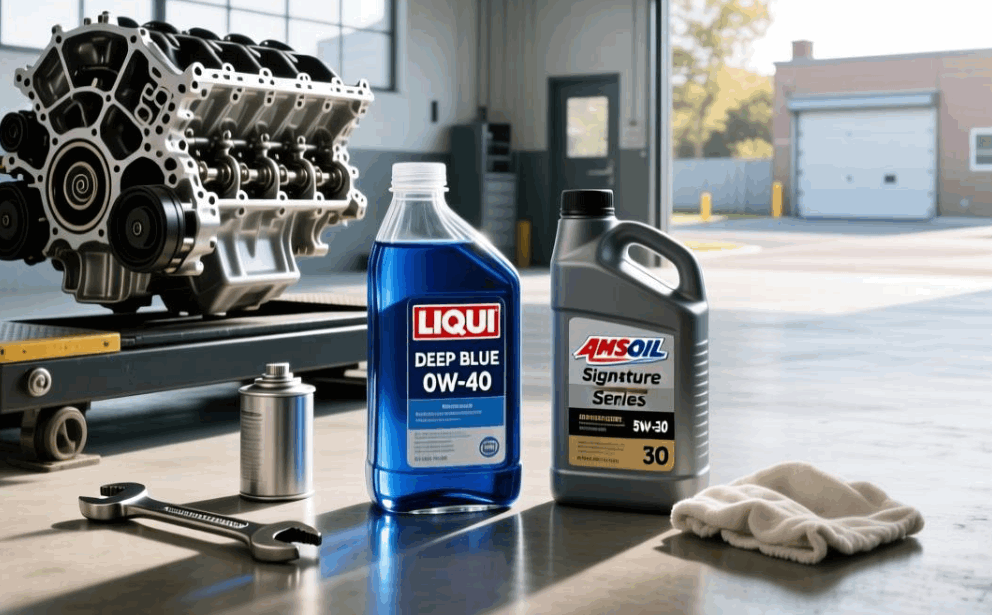
What Are the Main Differences Between AMSOIL and Liqui Moly?
AMSOIL and Liqui Moly are premium synthetic oil brands, but they serve different priorities. AMSOIL develops its products for maximum engine protection, long drain intervals, and high-performance applications. Liqui Moly focuses on manufacturer-approved formulations that meet the strict requirements of European automakers. This difference shapes the design and purpose of almost every product each company offers.
AMSOIL introduced one of the first synthetic motor oils for the consumer market in North America. The brand invests heavily in lubricant technology that supports extended service intervals and demanding operating conditions. Many AMSOIL products target drivers who want fewer oil changes without sacrificing engine protection. This approach appeals to performance enthusiasts, heavy-duty truck owners, and drivers who cover long highway distances every year.
Liqui Moly follows a different strategy. The German manufacturer develops engine oils that comply with a wide range of OEM specifications from brands such as BMW, Mercedes-Benz, Volkswagen, Audi, and Porsche. Many of its formulations combine synthetic base oils with advanced additive packages to deliver stable performance while maintaining manufacturer warranty requirements. As a result, Liqui Moly has become a popular choice for European vehicles that require precise lubricant specifications.
The product portfolios also reflect these priorities. AMSOIL organizes its lineup around performance levels and service intervals, with product families such as Signature Series, XL, and OE. Liqui Moly offers specialized product lines including Top Tec, Molygen, Special Tec, and Leichtlauf, each designed for specific vehicle manufacturers or engine technologies. This structure makes it easier for owners to select an oil that matches both viscosity and OEM approval.
Neither brand is universally better because they solve different problems. AMSOIL stands out for extended durability, high-temperature stability, and long-term engine protection. Liqui Moly excels in OEM compatibility, European vehicle support, and factory-approved maintenance. Understanding these strengths creates a solid foundation for comparing their oil technology, additive chemistry, and real-world performance throughout the rest of this guide.
Which Oil Technology Makes AMSOIL and Liqui Moly Different?
The biggest difference between AMSOIL and Liqui Moly lies in their oil formulation philosophy rather than their synthetic label. Both brands produce premium synthetic lubricants, but they use different combinations of base oils and additive technologies to achieve their performance goals. These engineering decisions directly influence engine protection, oxidation resistance, cold-weather performance, and oil service life.
AMSOIL designs many of its flagship products with a strong emphasis on high-quality synthetic base stocks and long-term stability. The company’s Signature Series, for example, targets extended drain intervals while maintaining viscosity under severe operating conditions. This formulation strategy reduces oil breakdown at high temperatures and helps protect engine components during continuous highway driving, towing, or high-load operation. Drivers who prioritize maximum durability often consider this one of AMSOIL’s strongest advantages.
Liqui Moly approaches synthetic oil development from a different perspective. Instead of focusing primarily on extended drain capability, the company engineers many of its formulations to satisfy demanding OEM specifications. Products such as Top Tec and Special Tec are developed for specific engine families and manufacturer requirements. This strategy ensures compatibility with modern emission systems, turbocharged engines, and factory maintenance schedules while maintaining consistent lubrication performance throughout the recommended service interval.
Additive chemistry also creates a noticeable distinction between the two brands. AMSOIL emphasizes wear protection, oxidation control, and viscosity retention during extended operation. Liqui Moly complements its detergent and anti-wear additives with friction modifiers in selected product lines, including its well-known Molygen technology. These additives reduce friction between moving components and support smoother engine operation under normal driving conditions. However, the exact additive formulation varies across individual product lines rather than the entire brand.
Neither technology is inherently superior because each serves a different objective. AMSOIL prioritizes long-term durability and extended performance under demanding conditions. Liqui Moly prioritizes manufacturer compliance and optimized lubrication for specific engine designs. Choosing between them depends less on the synthetic technology itself and more on whether your vehicle benefits from longer oil life or strict OEM-approved performance.
Which Brand Provides Better Engine Protection?
Engine protection is the most important factor when comparing premium synthetic motor oils. Both AMSOIL and Liqui Moly deliver excellent lubrication, but they achieve it through different engineering priorities. AMSOIL focuses on minimizing engine wear during extended service intervals, while Liqui Moly emphasizes consistent protection within manufacturer-recommended maintenance schedules. The better choice depends on how and where the vehicle operates.
AMSOIL performs exceptionally well under high mechanical stress. Its premium formulations maintain stable viscosity when the engine operates at high temperatures or under heavy loads. This stability helps preserve a strong lubricating film between moving components, reducing direct metal-to-metal contact. As a result, engines experience less wear during highway driving, towing, spirited acceleration, and other demanding conditions. Drivers who extend oil change intervals also benefit from the oil’s strong resistance to oxidation and thermal degradation.
Liqui Moly delivers outstanding protection through balanced lubrication and precise OEM compliance. Many of its products are formulated to meet the strict requirements of European manufacturers, where modern engines operate with tighter tolerances and advanced emission control systems. Stable lubrication helps reduce sludge formation, control deposits, and maintain clean internal engine components throughout the recommended oil service interval. This makes Liqui Moly particularly effective for daily driving and factory-specified maintenance programs.
Cold starts also influence long-term engine wear because most friction occurs before the oil fully circulates. Both brands provide excellent low-temperature performance, allowing the lubricant to reach critical engine parts quickly after ignition. AMSOIL often demonstrates excellent flow characteristics in extremely cold environments, while Liqui Moly delivers reliable cold-start protection that satisfies demanding European standards. In normal climates, both products provide more than enough protection for modern gasoline and diesel engines.
Overall, neither brand compromises engine safety, but each excels in different situations. AMSOIL offers an advantage for drivers who demand maximum durability, severe-duty performance, and extended drain capability. Liqui Moly stands out for factory-approved protection, consistent everyday reliability, and excellent compatibility with European engines. Choosing the right oil ultimately depends on your vehicle specifications, maintenance strategy, and driving environment rather than brand reputation alone.
Which Synthetic Oil Lasts Longer Between Oil Changes?
Oil change intervals depend on more than mileage alone. They also reflect how well the lubricant resists oxidation, retains its viscosity, and maintains its protective additives over time. Both AMSOIL and Liqui Moly produce high-quality synthetic oils with excellent durability, but they target different maintenance strategies. AMSOIL emphasizes extended service intervals, while Liqui Moly focuses on delivering stable performance within the oil change schedules recommended by vehicle manufacturers.
AMSOIL is widely recognized for its long-drain capability. Premium products such as Signature Series are engineered to maintain lubrication quality for extended periods under normal driving conditions. The oil resists thermal breakdown, controls oxidation, and preserves its viscosity even after thousands of miles. Strong Total Base Number (TBN) retention also helps neutralize acidic byproducts created during combustion, allowing the lubricant to continue protecting internal engine components as it ages. This formulation makes AMSOIL a popular choice for drivers who travel long highway distances or prefer fewer oil changes.
Liqui Moly follows a different philosophy. Instead of maximizing drain intervals, the company designs many of its products to perform consistently throughout the maintenance schedule specified by the vehicle manufacturer. Stable viscosity, effective detergent additives, and reliable oxidation resistance help maintain clean engine components until the next scheduled oil change. This approach is particularly important for modern European engines, where following factory service intervals often supports warranty compliance and long-term reliability.
Driving conditions also influence how long any synthetic oil remains effective. Frequent short trips, heavy traffic, extreme temperatures, towing, and repeated cold starts accelerate oil degradation regardless of brand. Under these severe conditions, many technicians recommend verifying oil condition through Used Oil Analysis rather than relying only on mileage. Laboratory testing provides valuable information about wear metals, contamination, viscosity, and remaining additive life, helping owners determine whether the lubricant can safely remain in service.
AMSOIL generally offers the advantage for drivers who want extended drain performance and maximum service life. Liqui Moly remains an excellent choice for owners who follow factory maintenance schedules and prioritize OEM-approved lubrication. Selecting the longer-lasting oil ultimately depends on your driving habits, engine design, and maintenance objectives rather than a single advertised drain interval.
Which Brand Meets More OEM Specifications?
OEM approvals help determine whether an engine oil meets the performance standards established by vehicle manufacturers. These approvals go beyond basic industry certifications because they require lubricants to pass additional tests for wear protection, sludge control, fuel economy, oxidation resistance, and emission system compatibility. Both AMSOIL and Liqui Moly produce oils that satisfy recognized specifications, but their certification strategies differ significantly.
Liqui Moly places OEM compliance at the center of its product development. Many of its engine oils carry approvals from leading European manufacturers, including BMW, Mercedes-Benz, Volkswagen, Porsche, and Audi. These approvals confirm that the lubricant has passed manufacturer-specific testing and performs as required for particular engine families. For owners who want to maintain factory recommendations or protect warranty coverage, Liqui Moly provides a broad selection of approved formulations that simplify product selection.
AMSOIL takes a more performance-oriented approach. Many of its products meet or exceed important industry standards such as API SP and ILSAC GF-6. Some formulations also satisfy selected OEM performance requirements, but the company does not pursue official approvals for every product in its portfolio. Instead, AMSOIL focuses on developing lubricants that deliver exceptional wear protection, thermal stability, and extended drain capability. This strategy appeals to experienced drivers who prioritize real-world performance over a long list of manufacturer certifications.
The best choice depends on the vehicle you drive and the maintenance approach you follow. Owners of European luxury vehicles often benefit from using an oil with the exact approval specified in the owner’s manual. Matching the required specification helps ensure compatibility with modern emission systems, turbochargers, and extended service programs. Drivers of domestic or Japanese vehicles may place greater value on high-performance formulations that meet current API and ILSAC standards while delivering excellent long-term engine protection.
Neither certification strategy is inherently better because each serves a different purpose. Liqui Moly offers a clear advantage for drivers who require official OEM approvals and strict compliance with factory maintenance requirements. AMSOIL stands out for drivers who prioritize advanced lubrication technology, extended durability, and premium protection under demanding operating conditions.
Which Oil Performs Better in Different Driving Conditions?
Driving conditions have a direct impact on engine oil performance. An oil that performs well during short city trips may not deliver the same results under heavy towing or sustained high-speed driving. Both AMSOIL and Liqui Moly protect modern engines effectively, but each brand excels in different environments. Understanding these differences helps drivers choose a lubricant that matches their daily operating conditions instead of selecting an oil based on brand recognition alone.
AMSOIL performs exceptionally well under severe operating conditions. Its premium formulations maintain stable viscosity during prolonged highway driving, heavy towing, high engine loads, and extreme temperatures. Strong resistance to thermal breakdown helps preserve a durable lubricating film even when the engine operates under continuous stress. This stability reduces wear on critical components such as camshafts, bearings, pistons, and turbochargers. Drivers who frequently travel long distances or push their vehicles beyond normal commuting conditions often benefit from this additional performance margin.
Liqui Moly delivers excellent performance in everyday driving. Its formulations provide consistent lubrication during stop-and-go traffic, routine commuting, and mixed urban and highway use. Many products are specifically developed for modern European engines equipped with turbochargers, gasoline particulate filters, and advanced emission control systems. Stable oil flow and balanced additive chemistry help maintain engine cleanliness while supporting fuel efficiency throughout the recommended service interval.
Climate also affects lubricant performance. Cold weather requires engine oil to circulate quickly after startup because most engine wear occurs during the first few seconds after ignition. Both brands offer excellent low-temperature flow, allowing critical engine components to receive lubrication rapidly. During hot weather, both oils maintain reliable protection against oxidation and viscosity loss. However, AMSOIL generally provides a larger performance reserve during prolonged exposure to extreme heat or heavy engine loads.
Neither brand performs better in every situation because driving habits determine which strengths matter most. AMSOIL is an excellent choice for severe-duty operation, performance driving, towing, and extended highway travel. Liqui Moly remains an outstanding option for daily commuting, manufacturer-recommended maintenance, and European vehicles that require precise OEM-approved formulations. Matching the lubricant to the vehicle’s operating environment will produce better long-term results than choosing a brand based on reputation alone.
Is AMSOIL or Liqui Moly Better for European and Japanese Cars?
The best engine oil depends on the vehicle’s engineering requirements rather than the brand name on the bottle. European and Japanese manufacturers design their engines with different performance goals, operating temperatures, and service intervals. As a result, the ideal lubricant for one vehicle may not be the best choice for another. Both AMSOIL and Liqui Moly produce premium synthetic oils, but each brand serves these markets in a different way.
Liqui Moly has a clear advantage for many European vehicles because its product range includes numerous formulations with official OEM approvals. Many BMW, Mercedes-Benz, Audi, Volkswagen, and Porsche models require engine oils that meet specific manufacturer standards. Using an approved lubricant helps maintain proper engine performance and supports factory-recommended maintenance schedules. Liqui Moly develops many of its products specifically for these applications, making product selection straightforward for European vehicle owners.
AMSOIL also performs exceptionally well in European engines when the selected product meets the required viscosity grade and performance specification. Its premium formulations provide excellent wear protection, thermal stability, and oxidation resistance under demanding operating conditions. Drivers who prioritize extended drain intervals or severe-duty performance often choose AMSOIL, particularly after the factory warranty period. Selecting the correct specification remains more important than choosing a particular brand.
Japanese vehicles usually emphasize reliability, fuel efficiency, and long-term durability. Many engines from Toyota, Honda, Mazda, Nissan, and Subaru specify modern API and ILSAC performance standards rather than numerous manufacturer-specific approvals. Both AMSOIL and Liqui Moly offer products that satisfy these requirements. AMSOIL often appeals to drivers seeking maximum engine protection and extended oil life, while Liqui Moly attracts owners who value smooth operation, clean engine performance, and proven daily reliability.
Neither brand is limited to a specific region because both manufacture high-quality synthetic lubricants for a wide range of vehicles. Liqui Moly remains the preferred option when official European OEM approvals are required. AMSOIL becomes an attractive choice for drivers who prioritize premium performance, longer service intervals, and demanding operating conditions. The most important step is always to match the oil with the viscosity grade and manufacturer specification listed in the owner’s manual.
Which Brand Offers Better Value for Money?
Value for money is not determined by the purchase price alone. It depends on how much protection the oil provides, how long it remains effective, and how well it supports the engine over time. A premium synthetic oil may cost more upfront, but it can reduce maintenance costs if it delivers longer service life and stronger engine protection. Comparing AMSOIL and Liqui Moly from this perspective provides a more accurate picture of their overall value.
AMSOIL typically carries a higher retail price than many competing synthetic oils. However, the additional cost often reflects its premium formulation and extended drain capability. Drivers who travel long distances or keep their vehicles for many years may offset the higher purchase price by changing the oil less frequently. Fewer oil changes also reduce labor costs and vehicle downtime, making the overall cost of ownership more competitive over the long term.
Liqui Moly offers excellent value through manufacturer-focused performance. Although many products are also positioned in the premium price range, they provide official OEM approvals that many European vehicles require. This compatibility allows owners to follow factory maintenance schedules with confidence while maintaining warranty compliance. For drivers who replace their oil at the recommended interval, Liqui Moly delivers consistent protection without paying for capabilities they may never use.
Maintenance habits also influence overall value. Drivers who spend most of their time in city traffic, follow standard service intervals, and own relatively new vehicles may see little financial benefit from an extended-drain lubricant. In contrast, drivers who accumulate high annual mileage or regularly operate under severe conditions often gain more value from an oil that maintains its protective properties for a longer period. Matching the lubricant to actual driving habits produces better results than choosing the most expensive option available.
Neither brand offers better value in every situation. AMSOIL provides greater long-term value for drivers seeking maximum durability, extended service intervals, and premium performance under demanding conditions. Liqui Moly delivers outstanding value for owners who prioritize OEM compliance, predictable maintenance costs, and reliable everyday protection. The best investment depends on how the vehicle is driven, maintained, and expected to perform throughout its service life.
Which Synthetic Oil Should You Choose?
The right synthetic oil depends on your vehicle, driving habits, and maintenance goals. Both AMSOIL and Liqui Moly deliver premium engine protection, but they are designed for different priorities. Choosing the better brand is less about identifying a universal winner and more about selecting the product that matches your engine’s requirements and operating conditions.
AMSOIL is the stronger choice for drivers who demand maximum performance and extended durability. Its premium formulations are well suited for high-mileage vehicles, heavy towing, long highway trips, performance driving, and severe operating conditions. Excellent oxidation resistance, strong viscosity retention, and extended drain capability make AMSOIL an attractive option for owners who want to reduce maintenance frequency without compromising engine protection. Drivers who regularly operate under heavy loads or extreme temperatures will benefit the most from these characteristics.
Liqui Moly is the better option for drivers who prioritize manufacturer-approved maintenance and OEM compatibility. Its extensive range of approved formulations makes it especially suitable for European vehicles from BMW, Mercedes-Benz, Audi, Volkswagen, and Porsche. These products are engineered to meet strict factory specifications while providing reliable wear protection, engine cleanliness, and stable performance throughout the recommended service interval. Owners who prefer following the manufacturer’s maintenance schedule will find Liqui Moly an excellent long-term solution.
Drivers of Japanese and American vehicles can confidently choose either brand when the selected oil meets the required viscosity grade and industry specification. In many cases, engine condition, maintenance consistency, and oil filter quality have a greater influence on long-term reliability than the choice between two premium synthetic oils. Using the correct specification and replacing the oil at the appropriate interval remain the most important factors for protecting any modern engine.
Overall, AMSOIL stands out for extended drain intervals, demanding driving conditions, and maximum long-term protection. Liqui Moly excels in OEM-approved performance, European vehicle compatibility, and factory-focused maintenance. Before making a final decision, always verify the viscosity grade and manufacturer specification listed in your owner’s manual. Selecting the correct formulation for your engine will provide greater long-term value than choosing a brand based solely on popularity or price.