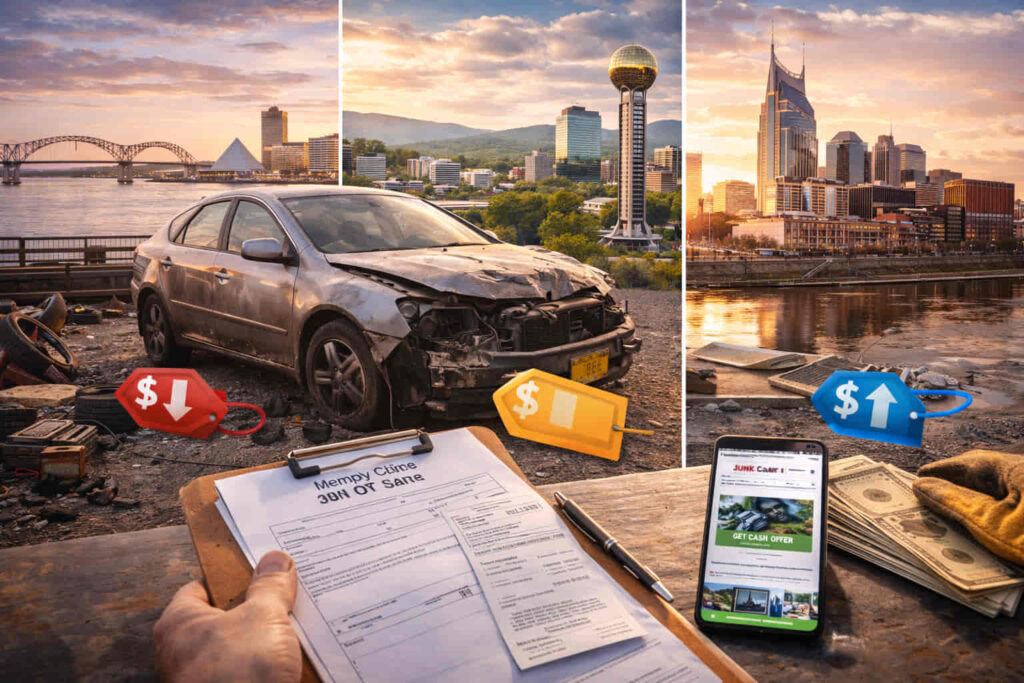
Junk cars are typically worth a few hundred dollars, with recent cash offers ranging from $250 to $475 for the middle 50% of vehicles in one U.S. buyer network’s dataset. According to JunkUrCar’s November 2026 price report, the median offer was $375 across 2,593 vehicles. Newer damaged vehicles with valuable reusable components can command substantially higher prices. JunkUrCar
The value of a junk car depends on seven primary factors: vehicle weight, scrap metal prices, vehicle condition, make and model year, missing components, geographic location, and title status. Heavier vehicles generally contain more recyclable materials, such as steel, aluminum, and copper, while vehicles with functional engines, transmissions, and intact catalytic converters offer additional recovery potential.
Junk car buyers determine their cash offers based on the recoverable value of materials and reusable automotive parts, accounting for transportation, dismantling, processing costs, and expected profit margins. As a result, the scrap metal value of a vehicle does not necessarily equal its final cash offer. Two vehicles of the same weight can receive substantially different offers because of differences in component condition and market demand.
Understanding average junk car prices, valuation factors, and the difference between scrap value and salvage value helps vehicle owners estimate a reasonable selling price. Comparing offers from junkyards, automotive recyclers, and specialized junk car buyers also helps sellers maximize their final payout.
How Much Are Junk Cars Worth on Average?
Junk cars in the United States typically receive cash offers between $250 and $1,075, based on recent pricing data from online junk car buyers. According to JunkUrCar’s November 23, 2026, price report, the median offer was $350 across 509 vehicles, with the middle 50% of offers ranging from $275 to $475. A separate 2026 report from Sell Car Advisor recorded a median offer of $560 for vehicles at least 10 years old, with the middle 50% of offers ranging from $375 to $1,075. These figures represent buyer-specific pricing data rather than a nationwide average. JunkUrCar+2
The median junk car price provides a more representative valuation benchmark than the arithmetic mean when exceptionally high-value vehicles distort the average. Newer accident-damaged vehicles with functional mechanical components retain greater resale potential than older vehicles destined exclusively for metal recycling. Including these higher-value vehicles in a dataset increases the arithmetic mean without necessarily reflecting the typical offer for an end-of-life vehicle.
Severely damaged junk cars generally receive lower offers because their recoverable value comes primarily from recyclable materials. Extensive corrosion, fire damage, and missing mechanical components reduce the quantity and quality of recoverable materials and reusable parts. Non-running vehicles with intact engines, transmissions, and catalytic converters retain additional salvage potential, even when repairing the vehicle is economically impractical.
Running junk cars and newer salvage vehicles generally command higher prices because buyers have more opportunities to recover value through component resale, reconditioning, or vehicle restoration. For example, a collision-damaged vehicle with a functional powertrain retains a source of recoverable value that a similarly sized vehicle with a destroyed engine does not possess.
Average junk car prices therefore provide a reference point rather than a guaranteed selling price. An accurate valuation requires an individual assessment of the vehicle and local market conditions.
Read more: Can You Junk a Car Without a Title
What Factors Determine the Value of a Junk Car?
The value of a junk car depends on seven primary factors: vehicle weight, scrap metal prices, vehicle condition, make and model year, missing parts, geographic location, and vehicle title status. These factors determine how much value automotive recyclers can recover through material recycling, component resale, or vehicle restoration. Junk car buyers evaluate the combined effect of these factors before calculating a cash offer.
Vehicle weight establishes the basis for scrap-based valuation because heavier vehicles generally contain greater quantities of recyclable materials, such as steel, aluminum, and copper. Pickup trucks and full-size SUVs typically contain more recoverable material than compact passenger cars, giving them a higher potential scrap value under comparable conditions. However, total vehicle weight does not equal recyclable metal weight. Nonmetallic materials, such as plastic, rubber, glass, and upholstery, contribute to the overall weight without generating equivalent scrap revenue.
Scrap metal prices determine the revenue automotive recyclers generate from processing end-of-life vehicles. Steel accounts for a substantial portion of a conventional vehicle’s recyclable material, making ferrous metal prices particularly influential in junk car valuation. Aluminum and copper contribute additional recovery value because these nonferrous metals are traded separately from steel. When industrial demand for recycled metals increases, recyclers generally generate higher material recovery revenues, supporting higher junk car offers. Conversely, declining commodity prices reduce scrap-based valuations even when the vehicle’s physical condition remains unchanged. AutoRecyclingMarketers+1
Vehicle condition determines whether a junk car retains value beyond its recyclable materials. Running vehicles generally provide greater opportunities for resale or restoration, while non-running vehicles retain value through functional components that can be removed, tested, and resold. Mechanical failures, collision damage, flooding, and fire damage affect these recovery opportunities differently. For example, a vehicle with a failed transmission and an undamaged engine retains greater mechanical resale potential than a vehicle with extensive fire damage affecting both components. Cosmetic deterioration, such as faded paint and minor dents, generally has less influence on vehicles intended exclusively for material recycling. Badger Junk Cars Cash+1
Vehicle make, model, and manufacturing year influence junk car value through replacement parts demand, component compatibility, and remaining resale potential. Popular vehicles, such as the Toyota Camry, Honda Accord, and Ford F-150, have established replacement parts markets because owners require compatible components for maintenance and repairs. Newer vehicles generally retain greater component resale potential, particularly for electronic control modules, infotainment systems, and functional powertrains. However, manufacturing year alone does not guarantee a higher offer. An older vehicle with sought-after mechanical components can generate greater salvage revenue than a newer vehicle with severely damaged parts.
Missing automotive parts reduce junk car value by decreasing recoverable material quantities and eliminating component resale opportunities. Catalytic converters, engines, transmissions, batteries, and alloy wheels represent significant sources of potential recovery revenue. Original catalytic converters contain platinum, palladium, and rhodium, which specialized recycling facilities recover for industrial applications. Removing these components before selling a junk car reduces the buyer’s potential revenue and consequently lowers the expected cash offer. Missing wheels also complicate vehicle transportation by preventing the vehicle from rolling normally during collection. AutoRecyclingMarketers+1
Geographic location affects junk car value through regional scrap metal prices, local replacement parts demand, buyer competition, and transportation expenses. Automotive recyclers located near metal processing facilities generally face lower transportation costs than businesses operating in remote areas. Urban markets with multiple salvage yards also provide sellers with greater opportunities to compare competing offers. For example, two identical vehicles located 5 miles and 50 miles from a recycling facility may receive different offers because of the additional fuel, labor, and transportation expenses associated with collecting the more distant vehicle. RecycleFind+1
Vehicle title status determines ownership transfer eligibility and available recovery options. A clean title generally provides greater resale flexibility, while salvage and junk titles restrict certain forms of resale or registration depending on state regulations. A missing title creates additional ownership verification requirements, and an outstanding lien can prevent a lawful transfer until the necessary financial or legal obligations are resolved. Junk car buyers evaluate these restrictions before issuing an offer because incomplete documentation increases administrative costs and transaction risks. A missing title does not eliminate the physical value of a junk car, but it can limit the number of eligible buyers and reduce its marketability.
How Much Are Junk Cars Worth by Weight?
The scrap value of a junk car is calculated by multiplying its accepted scrap weight by the local whole-vehicle scrap rate. At an illustrative scrap rate of $180 per US ton, a 3,000-pound junk car has an estimated gross scrap value of $270. One US short ton equals 2,000 pounds, making weight conversion necessary when scrap yards quote prices per ton.
Compact cars weighing 2,500 pounds would have an estimated gross scrap value of $225 at the same hypothetical rate. A 3,500-pound sedan would be worth $315, while a 4,500-pound SUV would generate an estimated scrap value of $405. A pickup truck weighing 5,500 pounds would have a gross scrap value of $495. These calculations demonstrate how vehicle weight influences scrap-based valuation when other pricing variables remain constant.
However, gross vehicle weight does not always represent the weight accepted for scrap payment. Automotive recyclers distinguish between complete vehicles, stripped vehicle bodies, and processed metals because each category has different material recovery and processing requirements. Nonmetallic materials, such as rubber, plastic, glass, and upholstery, also affect the amount of recoverable metal.
Weight-based calculations provide a useful valuation benchmark for vehicles intended primarily for recycling. Vehicles containing reusable mechanical components or valuable original parts require additional assessment because their salvage potential extends beyond material recovery. Vehicle owners should obtain the current local whole-vehicle scrap rate before calculating an estimated selling price.
Which Junk Car Parts Are Worth the Most Money?
The six components that frequently contribute significant value to junk cars are catalytic converters, engines, transmissions, electronic control modules, wheels, and batteries. These components generate revenue through material recovery, direct resale, or remanufacturing. Their individual value depends on physical condition, vehicle compatibility, market demand, and recovery costs.
Catalytic converters retain substantial recycling value because they contain platinum, palladium, and rhodium. These precious metals facilitate chemical reactions that reduce harmful exhaust emissions and remain recoverable after a vehicle reaches the end of its useful life. Original equipment manufacturer (OEM) catalytic converters often have greater recovery value than aftermarket alternatives because precious metal content varies according to manufacturer specifications and emission control requirements.
Engines and transmissions contribute significant salvage value when their mechanical components remain functional or suitable for rebuilding. Automotive recyclers sell these assemblies to repair shops, vehicle owners, and remanufacturing businesses as alternatives to new replacement parts. For example, a vehicle with extensive rear-end collision damage can retain a valuable powertrain when the engine and transmission remain undamaged. Alliance For Automotive Innovation+1
Electronic control modules, such as engine control units (ECUs), transmission control modules (TCMs), and infotainment systems, derive their value primarily from replacement parts demand. Their resale potential depends on electrical functionality, software compatibility, and availability within the automotive aftermarket. Discontinued electronic modules can retain considerable value when compatible replacement units are difficult to obtain.
Wheels and batteries provide both resale and material recovery opportunities. Undamaged alloy wheels retain resale potential, while damaged aluminum wheels remain recyclable. Functional batteries can be resold, whereas depleted lead-acid batteries retain material recovery value through specialized recycling processes. U.S. EPA+2
The combined retail value of these components does not represent the amount a junk car owner receives. Automotive recyclers deduct dismantling, testing, storage, transportation, and resale expenses when determining how much they can pay for a complete vehicle.
What Is the Difference Between Scrap Value and Salvage Value?
The difference between scrap value and salvage value lies in how the remaining economic value of a vehicle is recovered. Scrap value represents the monetary value of recyclable materials, while salvage value reflects the remaining recoverable value of a damaged or end-of-life vehicle, including reusable components and potential resale opportunities.
Scrap value depends primarily on accepted vehicle weight, material composition, and prevailing scrap metal prices. Automotive recyclers process end-of-life vehicles to recover ferrous metals, such as steel and iron, and nonferrous metals, such as aluminum and copper. A severely corroded vehicle with unusable mechanical components derives most of its remaining economic value from material recycling rather than automotive parts resale.
Salvage value encompasses broader recovery opportunities, including reusable automotive components, mechanical assemblies, and vehicle restoration potential. A collision-damaged vehicle with an operational engine, functional transmission, and undamaged electronic modules generally retains greater salvage potential than a vehicle of equivalent weight with irreparable mechanical damage. Demand for these components within the used automotive parts market directly influences their recoverable value.
Neither scrap value nor salvage value necessarily equals the final cash offer. Junk car buyers account for transportation, dismantling, material processing, inventory management, and anticipated profit margins before determining a purchase price. Vehicle owners should therefore distinguish between estimated recoverable value and the actual amount a buyer is willing to pay.
How Do You Calculate the Value of a Junk Car?
To calculate the value of a junk car, estimate its scrap recovery value, add the incremental value of reusable components, and deduct applicable recovery costs and buyer margins. This valuation method provides an approximate selling price based on the economic value that an automotive recycler expects to recover from the vehicle.
Start by identifying the vehicle’s make, model, manufacturing year, weight, mechanical condition, and component completeness. These characteristics establish its material recovery and resale potential. Determine the current local whole-vehicle scrap rate and assess whether major components, such as the engine, transmission, and catalytic converter, remain intact and commercially valuable.
An illustrative formula for estimating a junk car cash offer is:
\[ V = S + P – C – M \]
In this formula, \(V\) represents the estimated cash offer, \(S\) represents the estimated scrap recovery value, \(P\) represents the additional recoverable parts value beyond their scrap contribution, \(C\) represents transportation and processing costs, and \(M\) represents the buyer’s profit margin and risk allowance.
For example, a 3,000-pound junk car weighs 1.5 US short tons. At an assumed whole-vehicle scrap rate of $180 per ton, its estimated gross scrap value is $270. Reusable components contribute an additional $150 in recoverable value, bringing the total estimated recovery value to $420. After deducting $80 for transportation and processing and $40 for the buyer’s margin and risk allowance, the estimated cash offer is $300.
The calculation is illustrated below:
\[ \$270+\$150-\$80-\$40=\$300 \]
This valuation model explains why junk car offers differ from simple weight-based scrap estimates. It also demonstrates how reusable components increase potential selling prices while operational expenses reduce the amount buyers can pay.
An online junk car value calculator provides an initial price estimate using vehicle-specific information. However, obtaining actual offers from multiple junk car buyers provides a more reliable indication of the vehicle’s current market value because each buyer applies different recovery strategies, operating costs, and pricing criteria.
How Much Do Junkyards Pay for Junk Cars?
Junkyards pay for junk cars based on the expected revenue from reusable parts and recyclable materials minus acquisition and processing expenses. Offers generally amount to several hundred dollars for older end-of-life vehicles, while newer damaged vehicles with valuable components attract higher offers. There is no standardized purchase price across junkyards because each facility operates under different market conditions and recovery strategies.
Automotive salvage yards prioritize vehicles with commercially valuable components, such as functional engines, transmissions, and electronic modules. Scrap yards primarily assess vehicles according to their weight, material composition, and prevailing scrap metal prices. Consequently, a vehicle with an operational engine but severe body damage may receive a higher offer from a salvage yard than from a facility specializing exclusively in metal recycling.
Inventory requirements also influence junkyard payouts. A salvage yard experiencing strong demand for replacement parts from a particular vehicle model has a financial incentive to offer a higher purchase price. Conversely, a facility with excess inventory of identical components may issue a lower offer because of limited resale opportunities and additional storage expenses.
The amount a junkyard quotes does not always represent the seller’s final payout. Transportation charges, administrative fees, and vehicle collection requirements affect the net payment. Comparing written offers that include all applicable charges provides a more accurate assessment of how much a junkyard actually pays for a vehicle.
How Can You Get the Most Money for a Junk Car?
Getting the most money for a junk car requires comparing competing offers, providing accurate vehicle information, preserving valuable components, preparing ownership documents, and minimizing transaction expenses. These practices improve the accuracy of vehicle appraisals and help sellers retain a greater portion of the offered purchase price.
Requesting quotes from at least three junk car buyers establishes a practical pricing benchmark. Junkyards, automotive recyclers, and specialized junk car buying services apply different valuation criteria, resulting in different offers for the same vehicle. Providing accurate information about the vehicle’s manufacturing year, mileage, mechanical condition, and missing components also reduces the likelihood of price adjustments during collection.
Keeping valuable automotive components intact preserves the vehicle’s recovery potential. Removing the catalytic converter, engine, transmission, or battery reduces the materials and components available for resale or recycling. Selling individual parts separately is financially beneficial only when the additional revenue exceeds the reduction in the vehicle’s purchase price and the associated removal, storage, and selling expenses.
Preparing the vehicle title and other required ownership documents simplifies the transaction and expands the pool of eligible buyers. Resolving outstanding liens and replacing missing documents before selling also reduces potential administrative complications, subject to applicable state requirements.
Comparing net payouts rather than advertised purchase prices ensures a more financially advantageous transaction. For example, a $500 offer with a $150 towing charge produces a net payment of $350, whereas a $450 offer with free towing provides the seller with the full $450. The best junk car offer is the one that provides the highest net payment after all applicable expenses.
Where Can You Sell a Junk Car for Cash?
You can sell a junk car for cash to four main types of buyers: junkyards, scrap yards, salvage vehicle buyers, and specialized junk car buying services. Choosing the right buyer depends on the vehicle’s condition, recoverable components, and remaining resale potential.
Junkyards purchase damaged and non-running vehicles to recover reusable automotive parts and recyclable materials. They are suitable for vehicles with functional mechanical components but repair costs that exceed their market value. Scrap yards primarily purchase end-of-life vehicles for material recovery, making them suitable for severely deteriorated cars with limited component resale potential.
Salvage vehicle buyers focus on damaged vehicles that retain restoration or component resale potential. Newer accident-damaged cars with functional powertrains and relatively intact interiors are particularly suitable for this market because their recoverable value extends beyond scrap metal.
Specialized junk car buying services purchase vehicles in various conditions and connect sellers with automotive recycling or salvage networks. These services often simplify the selling process through online vehicle valuations, cash offers, and scheduled vehicle collection.
Before selling your junk car for cash, compare purchase offers, confirm towing arrangements, and verify ownership transfer requirements. Requesting a vehicle-specific cash offer provides a more accurate valuation than relying exclusively on average junk car prices or weight-based scrap calculations.