Replacing a 6.7 Cummins water pump involves draining the engine coolant, removing components that obstruct access to the pump, detaching the old pump, installing a new unit with the correct seal, and refilling the cooling system. The procedure requires basic mechanical tools, a torque wrench, and replacement parts compatible with the truck’s model year.
The water pump circulates coolant through the 6.7L Cummins turbo diesel engine to regulate operating temperature. A failing pump can cause coolant leaks, unusual bearing noises, and engine overheating. Continued operation with insufficient coolant circulation can result in severe engine damage, making prompt diagnosis and replacement essential when pump failure is confirmed.
The 6.7L Cummins engine is used in Ram 2500 and Ram 3500 heavy-duty trucks, but water pump access, component configurations, and service specifications vary by model year. Identifying the correct replacement pump and following the applicable service procedures helps prevent installation errors, coolant leaks, and premature component failure.
This guide explains the tools and parts required for a 6.7 Cummins water pump replacement, the steps for removing and installing the pump, and the process for refilling and checking the cooling system. It also covers common failure symptoms, replacement costs, compatibility considerations, and preventive maintenance.
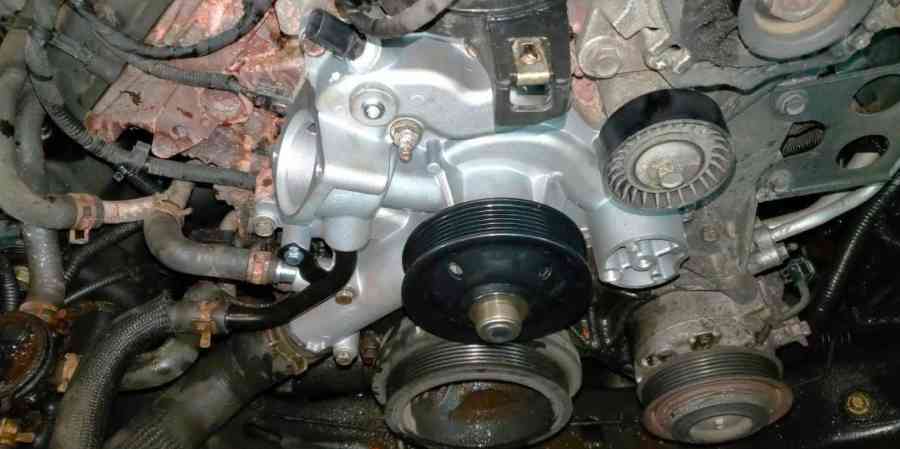
What Tools and Parts Do You Need to Replace a 6.7 Cummins Water Pump?
Replacing a 6.7 Cummins water pump requires a socket and ratchet set, torque wrench, coolant drain pan, hose clamp pliers, and basic cleaning tools. These tools allow you to access the pump, remove its mounting bolts, prepare the sealing surface, and install the replacement without damaging surrounding cooling system components. Additional tools may be necessary depending on the Ram truck’s model year and engine accessory configuration.
The essential tools and replacement parts include:
| Tools and Parts | Purpose |
|---|---|
| Socket and ratchet set | Remove water pump mounting bolts and surrounding components |
| Torque wrench | Tighten mounting bolts to the specified torque |
| Coolant drain pan | Collect coolant during draining |
| Hose clamp pliers | Disconnect coolant hoses when required |
| Belt tensioner tool | Release serpentine belt tension when necessary |
| Plastic gasket scraper | Remove old sealing material without scratching the mounting surface |
| Replacement water pump | Restore coolant circulation |
| Water pump gasket or O-ring | Seal the connection between the pump and engine |
| Engine coolant | Refill the cooling system after installation |
The replacement water pump must match the engine’s application, including the truck’s model year and the original pump configuration. OEM and aftermarket pumps are available, but compatibility should be confirmed using the vehicle identification number (VIN) or a manufacturer-approved parts catalog. Use the gasket or O-ring specified for the replacement pump rather than assuming the original seal can be reused.
Coolant selection also depends on the truck’s model year. Ram heavy-duty trucks have used different coolant specifications across production years, so the owner’s manual or applicable service information should determine the correct formulation. Prepare enough coolant for the amount drained and use the specified mixture. Allow the engine to cool completely before opening the cooling system, and keep drained coolant in a suitable container for proper disposal.
How Do You Remove the Old Water Pump From a 6.7 Cummins Engine?
To remove the old water pump from a 6.7 Cummins engine, drain the coolant, remove components blocking access to the pump, disconnect the necessary hoses, and unbolt the pump from its mounting housing. The removal procedure varies by Ram 2500 or Ram 3500 model year, so identify the pump configuration and required access steps before disassembly.
How Do You Drain the Coolant From a 6.7 Cummins?
To drain the coolant from a 6.7 Cummins, park the truck on a level surface, turn off the engine, and allow the cooling system to cool completely. Opening a hot, pressurized cooling system can release scalding coolant and steam. Once the engine is cold, slowly remove the pressure cap according to the vehicle’s service instructions.
Position a suitable drain pan beneath the radiator and open the radiator drain valve if equipped and accessible. Some configurations require disconnecting a lower radiator hose to drain coolant. Collect enough coolant to lower the level below the water pump before removing it. The exact amount depends on the cooling system configuration and the components being disconnected.
Inspect the drained coolant for rust, oil contamination, or suspended debris. Contaminated coolant may indicate additional cooling system problems that should be addressed before installing the new pump. Store used coolant in a sealed container and dispose of it through an approved recycling or waste collection facility.
How Do You Access the Water Pump on a 6.7 Cummins?
To access the water pump on a 6.7 Cummins engine, locate the pump at the front of the engine and identify the components obstructing its mounting bolts. Depending on the truck’s model year, these components may include the serpentine belt, cooling fan assembly, fan shroud, or nearby coolant hoses.
Inspect and record the serpentine belt routing before removing any belt-driven components. If belt removal is required, use the appropriate tensioner tool to release tension and carefully slide the belt off the necessary pulley. Avoid forcing the belt over pulley edges, as this can damage its reinforcing cords.
Remove only the components necessary to reach the water pump fasteners. Keep mounting bolts, brackets, and hose clamps organized according to their original locations. Some 6.7 Cummins configurations provide sufficient access without removing the cooling fan or shroud, while others require additional clearance.
How Do You Remove the Old 6.7 Cummins Water Pump?
To remove the old 6.7 Cummins water pump, disconnect any coolant hoses attached to the pump, if applicable, and remove the mounting bolts using the correctly sized socket. Support the pump during removal to prevent it from falling or damaging nearby components.
Carefully separate the pump from its mounting housing after removing all fasteners. If the pump is stuck, gently work it loose without prying against delicate sealing surfaces. Residual coolant may escape when the pump separates from the engine, so keep the drain pan positioned underneath.
Remove the old gasket or O-ring and inspect the mounting surface for corrosion, scratches, or remaining sealing material. Examine the removed pump for coolant leakage around the shaft seal, bearing looseness, or impeller damage. These findings can help confirm the failure mechanism and identify related cooling system problems.
Leave the mounting surface clean and protected until the replacement pump is ready for installation. Do not allow gasket fragments, dirt, or other debris to enter the exposed coolant passages.
How Do You Install a New Water Pump on a 6.7 Cummins Engine?
To install a new water pump on a 6.7 Cummins engine, clean the mounting surface, position the replacement pump with its specified gasket or O-ring, tighten the mounting bolts to the correct torque, and reinstall the removed components. Proper sealing and bolt tightening are essential to prevent coolant leaks, housing damage, and premature pump failure.
Before installation, compare the replacement pump with the original unit. Check the mounting bolt pattern, housing dimensions, impeller configuration, and sealing arrangement. The replacement must match the truck’s model year and engine application. Differences in pump design or gasket placement can prevent proper installation even when the parts appear similar.
How Do You Install the New Water Pump and Gasket?
To install the new 6.7 Cummins water pump and gasket, first remove any remaining gasket material, corrosion, or debris from the mounting surface. Use a plastic scraper and a suitable cleaning cloth to prepare the housing without scratching the metal. Inspect the surface for cracks, pitting, or damage that could prevent the replacement seal from forming a watertight connection.
Position the new gasket or O-ring according to the pump manufacturer’s instructions. If the pump uses an O-ring, ensure it sits evenly in its designated groove without twisting or stretching. Apply lubricant only when specified by the manufacturer. Do not add RTV silicone or other sealant unless the applicable installation instructions explicitly require it, as excess sealant can interfere with sealing or enter the cooling system.
Align the replacement water pump with the mounting holes and carefully position it against the engine housing. Insert the mounting bolts by hand to avoid cross-threading. Start all bolts before tightening any of them fully, ensuring the pump remains evenly seated against the mounting surface.
Once the pump is positioned correctly, tighten the mounting bolts gradually and evenly using the manufacturer-specified tightening sequence, if one is provided. Uneven tightening can distort the gasket or place unnecessary stress on the pump housing.
What Is the Correct Water Pump Bolt Torque for a 6.7 Cummins?
The correct 6.7 Cummins water pump bolt torque depends on the specific engine application, fastener configuration, and applicable service specifications. A single torque value should not be applied to every Ram 2500 or Ram 3500 equipped with the 6.7L Cummins engine without verifying the model year and pump assembly.
Consult the factory service manual or approved repair information for the truck’s exact model year before tightening the water pump mounting bolts. Use a calibrated torque wrench and follow the specified tightening sequence. If the replacement pump includes updated fasteners or installation instructions, verify whether those instructions supersede the original procedure.
Overtightening can damage mounting threads, distort the pump housing, or compress the sealing material excessively. Undertightening can allow coolant to escape between the pump and engine housing. Correct torque provides the clamping force needed to maintain a reliable seal during engine operation and repeated heating and cooling cycles.
After securing the pump, reconnect the removed coolant hoses and reinstall any brackets, pulleys, serpentine belt, cooling fan, or fan shroud removed during disassembly. Follow the applicable service instructions for each component, including its fastener torque requirements. Verify that the belt follows its original routing and sits correctly in every pulley groove before proceeding with the coolant refill.
How Do You Refill and Bleed the Cooling System After Replacing a 6.7 Cummins Water Pump?
To refill and bleed the cooling system after a 6.7 Cummins water pump replacement, close the radiator drain, add the manufacturer-specified coolant, remove trapped air using the applicable service procedure, and verify the coolant level after the engine reaches operating temperature and cools down. Proper coolant refilling prevents air pockets that can interfere with circulation, reduce cooling efficiency, and contribute to engine overheating.
The correct coolant depends on the Ram truck’s model year. For example, many 2013–2024 Ram heavy-duty trucks specify an OAT (Organic Additive Technology) coolant meeting Chrysler MS-12106, while earlier models may require a different formulation. Always confirm the coolant specification in the owner’s manual or factory service information. Use the recommended coolant concentration, commonly a 50/50 mixture of approved antifreeze and distilled water, unless the vehicle manufacturer specifies otherwise. Avoid mixing incompatible coolant formulations because doing so can compromise corrosion protection and cooling system performance.
Begin refilling with the engine completely cool and all drain points securely closed. Add coolant slowly through the designated fill point, allowing air to escape as the system fills. Follow the model-specific air-purge procedure, including any required bleed points or vacuum-filling equipment. A vacuum coolant filling tool can help reduce trapped air, particularly when a substantial amount of coolant has been drained.
Once the system is filled, follow the manufacturer’s procedure for warming the engine and checking coolant circulation. Monitor the temperature gauge and inspect the water pump housing, hose connections, and drain points for leaks. Stop the engine if the temperature rises abnormally. After the engine cools completely, recheck the coolant reservoir and adjust the level to the specified cold-fill mark. Never remove the pressure cap while the cooling system is hot.
How Do You Check a 6.7 Cummins Water Pump After Installation?
To check a 6.7 Cummins water pump after installation, inspect the pump and hose connections for coolant leaks, monitor engine operating temperature, listen for abnormal noises, and verify the coolant level after the engine cools. These checks help confirm that the replacement pump is properly sealed, the cooling system is functioning correctly, and no installation-related problems remain.
Start by inspecting the water pump housing, mounting gasket, weep hole, and nearby coolant hose connections. Look for wet surfaces, coolant droplets, or visible seepage around the pump. A cooling system pressure tester can help identify leaks without running the engine. Apply only the pressure specified for the vehicle’s cooling system, as excessive test pressure can damage components. Any persistent leakage should be investigated before driving.
Next, start the engine according to the manufacturer’s post-service procedure and monitor the coolant temperature as it warms up. The temperature should stabilize within the normal operating range specified for the vehicle. Watch for abnormal temperature increases, coolant warning messages, or signs of poor circulation. An overheating engine may indicate trapped air, insufficient coolant, or another cooling system fault rather than a defective replacement pump.
Listen for grinding, squealing, or rattling noises near the water pump and belt-driven accessories. Unusual sounds may indicate improper belt alignment, interference with nearby components, or a defective bearing. Keep hands and tools away from rotating parts during inspection.
After the engine reaches normal operating temperature and no problems are detected, perform a short test drive while monitoring the temperature gauge. Allow the engine to cool completely before checking the coolant reservoir again. Confirm that the coolant remains at the specified cold-fill level and that no new leaks have appeared. A stable coolant level, normal operating temperature, and absence of leaks indicate that the replacement has passed the initial inspection, although continued monitoring is advisable.
What Are the Signs of a Bad Water Pump on a 6.7 Cummins?
The three main signs of a bad 6.7 Cummins water pump are coolant leaks, engine overheating, and abnormal bearing noises. These symptoms indicate potential problems with the pump’s mechanical seal, impeller, or shaft bearings. Identifying the source of the problem is essential because radiator leaks, thermostat failures, and damaged coolant hoses can produce similar symptoms.
Coolant leaks are a common indication of water pump seal failure. Coolant may escape through the pump’s weep hole when the internal mechanical seal deteriorates, leaving wet spots, dried coolant residue, or puddles beneath the front of the engine. Leaks can also develop around the mounting gasket if the sealing surface becomes damaged or the gasket loses its ability to maintain a watertight connection. Inspect the pump housing and surrounding hoses to determine whether the coolant originates from the pump itself or another cooling system component.
Engine overheating can occur when a failing water pump no longer circulates coolant effectively through the engine and radiator. A damaged or loose impeller can reduce coolant flow, allowing engine temperatures to rise under heavy loads, during towing, or while driving uphill. However, overheating alone does not confirm water pump failure. Low coolant levels, a malfunctioning thermostat, radiator restrictions, and cooling fan problems must also be considered. Stop driving if the engine overheats to reduce the risk of cylinder head damage and other expensive repairs.
Abnormal bearing noises may indicate deterioration inside the water pump assembly. Worn shaft bearings can produce grinding, rumbling, or squealing sounds that change with engine speed. Severe bearing wear may also allow excessive shaft movement, affecting the pump seal and increasing the likelihood of coolant leakage. Because belt tensioners, idler pulleys, and alternator bearings can generate similar noises, the source should be isolated before replacing the pump. Inspecting the pump for shaft play with the engine off and the belt removed, where applicable, can help identify bearing damage.
How Much Does It Cost to Replace a 6.7 Cummins Water Pump?
A 6.7 Cummins water pump replacement typically involves three expenses: the replacement pump, mechanic labor, and new engine coolant. The total cost depends on the Ram truck’s model year, pump manufacturer, local labor rates, and whether additional cooling system components need replacement. DIY repairs eliminate professional labor charges but require appropriate tools and mechanical experience.
Replacement water pump prices vary between OEM and aftermarket options. OEM pumps are designed to meet the vehicle manufacturer’s specifications, while aftermarket alternatives offer different pricing, warranty coverage, and construction quality. Confirm compatibility using the truck’s VIN and the manufacturer’s parts catalog before purchasing. A lower-priced pump is not necessarily the least expensive long-term option if poor fitment or premature failure requires another repair.
Professional replacement costs depend on the shop’s hourly labor rate and the time required to access the pump. Labor charges can increase when additional components must be removed or when corrosion, damaged fasteners, or coolant contamination complicate the repair. A complete estimate should account for the water pump, seals, coolant, labor, and applicable shop fees.
For reference, RepairPal estimates a Ram 2500 water pump replacement at approximately $1,373–$1,619, including $416–$610 in labor. This is a model-level estimate rather than a quote specific to every 6.7L Cummins configuration. Actual costs should be confirmed using the vehicle’s year, engine, and local repair rates.
Read more: How to Use NOCO Boost Plus GB40: Step-by-Step Guide
Which Water Pump Fits Your 6.7 Cummins Engine?
The correct water pump for a 6.7 Cummins engine depends on the Ram truck’s model year, engine configuration, and original equipment part number. Although the 6.7L Cummins turbo diesel engine has been used in Ram 2500 and Ram 3500 trucks since the 2007 model year, replacement water pumps are not necessarily interchangeable across all production years. Differences in housing design, mounting arrangements, and sealing components can affect compatibility.
To identify the correct replacement, check the vehicle identification number (VIN), original water pump part number, and manufacturer-approved fitment catalog. Compare the replacement pump’s mounting holes, impeller design, inlet and outlet connections, and gasket configuration with the original assembly. Matching engine displacement alone does not guarantee proper fitment, especially when purchasing parts advertised for multiple Ram model years.
OEM and aftermarket water pumps are both replacement options for the 6.7 Cummins. OEM pumps follow the vehicle manufacturer’s specified design and fitment requirements, while aftermarket pumps vary by manufacturer, materials, warranty coverage, and quality control standards. Reputable aftermarket manufacturers may offer suitable alternatives, provided the pump meets the required specifications and is explicitly listed for the vehicle.
Before installation, verify that the replacement package includes the correct gasket or O-ring and that the pump matches the original mounting configuration. If the original part number has been superseded, confirm the updated replacement through an authorized parts catalog. Selecting the correct pump helps prevent installation difficulties, coolant leaks, and unnecessary repeat repairs.
How Can You Prevent Premature 6.7 Cummins Water Pump Failure?
Preventing premature 6.7 Cummins water pump failure requires using the correct coolant, maintaining the cooling system, inspecting drive components, and addressing leaks promptly. These maintenance practices reduce corrosion, seal deterioration, bearing stress, and other conditions that can shorten water pump service life.
Maintain the correct coolant type and concentration to protect the water pump and surrounding cooling system components. Coolant contains corrosion inhibitors that protect metal surfaces, while the proper antifreeze-to-water ratio provides freeze protection and supports effective heat transfer. Use coolant that meets the specifications for the truck’s model year and follow the manufacturer’s recommended replacement interval. Mixing incompatible coolant formulations or using contaminated coolant can reduce corrosion protection and contribute to deposits inside the cooling system.
Inspect the serpentine belt and related drive components during routine maintenance. A worn belt, damaged pulley, or malfunctioning tensioner can affect the operation of belt-driven accessories. Excessive belt tension or pulley misalignment can also increase bearing loads where applicable. Check for belt cracking, fraying, abnormal wear, and unusual noises, and replace defective components according to the vehicle manufacturer’s service procedures.
Monitor coolant levels and inspect for leaks around the water pump housing, radiator, hoses, and coolant connections. A gradually declining coolant level may indicate a small leak that becomes more severe as the engine reaches operating temperature. Inspect the water pump weep hole for persistent coolant residue and investigate grinding or rumbling noises near the pump. Early diagnosis can prevent coolant loss from developing into a serious overheating problem.
Keep the entire cooling system in good condition by checking radiator airflow, hose condition, thermostat operation, and coolant contamination during scheduled maintenance. Restrictions or malfunctioning components can increase operating temperatures even when the water pump is functioning correctly. Following the Ram maintenance schedule and addressing cooling system faults promptly helps maintain reliable engine temperature control and reduces the likelihood of unexpected water pump replacement.