Toyota wheel bearing replacement is necessary when a worn or damaged bearing causes excessive wheel noise, looseness, or rough rotation. A failing wheel bearing commonly produces a humming, growling, or grinding sound that increases with vehicle speed. Replacing the damaged component restores smooth wheel rotation and helps prevent further damage to the wheel hub and surrounding suspension components.
The cost of replacing a Toyota wheel bearing depends on the vehicle model, model year, bearing location, replacement part, and labor requirements. Some Toyota vehicles use bolt-on wheel hub assemblies, while others have press-fit bearings that require specialized removal and installation equipment. These differences affect repair complexity, labor time, and whether replacement is practical for a DIY mechanic.
Before replacing a wheel bearing, the source of the noise or vibration must be confirmed. Uneven tire wear, brake problems, and damaged drivetrain components can produce similar symptoms. A proper diagnosis helps prevent unnecessary repairs and ensures the correct bearing is replaced.
This guide explains the symptoms of a failing Toyota wheel bearing, replacement costs, required tools, and the general replacement procedure. It also covers driving safety, bearing lifespan, and differences between Toyota models such as the Camry, Corolla, RAV4, and Tacoma.
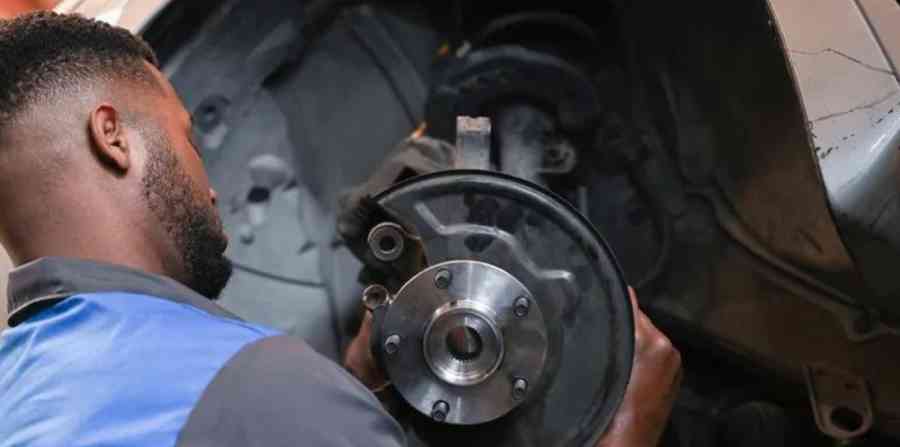
What Are the Signs That a Toyota Wheel Bearing Needs Replacement?
The main signs of a failing Toyota wheel bearing are humming or grinding noises, wheel vibration, excessive wheel play, and rough wheel rotation. These symptoms develop when the bearing’s internal rolling elements or raceways become worn or damaged, increasing friction and preventing the wheel from rotating smoothly. A damaged bearing may also produce noise that changes when the vehicle turns or shifts weight between wheels.
Wheel bearing symptoms vary depending on the severity of the damage and the affected wheel. Early bearing wear may produce only a faint humming sound at highway speeds, while advanced damage can cause noticeable vibration, looseness, or grinding. However, similar symptoms can result from uneven tire wear, brake problems, or damaged suspension components. Confirming the source of the problem is necessary before replacing a wheel bearing.
What Does a Bad Toyota Wheel Bearing Sound Like?
A bad Toyota wheel bearing typically produces a humming, growling, rumbling, or grinding noise that becomes more noticeable as vehicle speed increases. Unlike engine noise, bearing noise generally follows wheel rotation speed rather than engine RPM. For example, a damaged bearing may produce a low humming sound at 30 mph that becomes louder at 60 mph, even when the engine operates at a similar RPM.
The sound may also change during turns because cornering transfers vehicle weight between the left and right wheels. A bearing can become louder when additional load is applied to the affected side, although this pattern does not reliably identify the damaged bearing in every vehicle. Severe bearing damage may produce metallic grinding or rough rotational sounds, indicating that the bearing requires immediate inspection.
How Can You Tell Which Toyota Wheel Bearing Is Bad?
To identify a bad Toyota wheel bearing, compare wheel noise during a road test, inspect the wheels for excessive play, and check bearing rotation for roughness. A road test helps determine whether the noise changes with vehicle speed or cornering load. For example, a humming noise that becomes louder during a gentle left turn may indicate a problem with a right-side wheel bearing, but tire noise and vehicle-specific loading characteristics can produce misleading results.
A physical inspection provides additional diagnostic evidence. With the vehicle securely supported at the manufacturer’s designated lifting points, a technician can check for abnormal wheel movement by holding the tire at the 12 and 6 o’clock positions and gently rocking it. Excessive movement may indicate bearing wear, although worn ball joints or other suspension components can produce similar looseness. Rotating the wheel by hand may reveal grinding, resistance, or roughness, but some damaged bearings remain quiet without vehicle weight and road-speed loading.
A Toyota wheel bearing should be replaced after diagnostic checks identify the damaged component, rather than based on noise alone. A bearing can fail without detectable wheel play, and a humming tire can imitate bearing noise. When basic inspections are inconclusive, a technician can use chassis-mounted microphones or other diagnostic equipment to isolate the noise and avoid replacing a functioning bearing.
How Much Does Toyota Wheel Bearing Replacement Cost?
Toyota wheel bearing replacement typically costs $200–$650 per wheel at a repair shop in the United States, depending on the Toyota model, model year, bearing location, replacement part, and labor rates. Repairs involving a press-fit bearing or a more complex hub assembly can exceed this range. The total expense includes the replacement bearing or hub assembly, technician labor, and any additional components required during installation.
Front and rear wheel bearing replacement costs differ because Toyota vehicles use different hub and bearing configurations. For example, a Toyota Corolla with a bolt-on rear hub assembly may require less labor than a front press-fit bearing replacement. A Toyota Tacoma may have additional disassembly requirements depending on its drivetrain and front hub design. These differences make the vehicle’s exact configuration more important than the Toyota brand alone when estimating repair costs.
The following table provides approximate US-market budgeting ranges for replacing one wheel bearing. These figures are general estimates rather than verified current quotes for a specific Toyota model.
| Cost Component | Estimated Cost |
|---|---|
| Replacement wheel bearing | $40–$150 |
| Complete wheel hub assembly | $80–$300 |
| Professional labor | $120–$350 |
| Typical total replacement | $200–$650+ |
How Much Does a Toyota Wheel Bearing Cost?
A replacement Toyota wheel bearing generally costs $40–$150 for the bearing alone, while a complete wheel hub assembly can cost $80–$300 or more. The price depends on the bearing design, vehicle compatibility, manufacturer, and whether the replacement is an original equipment manufacturer (OEM) or aftermarket component.
OEM wheel bearings are designed to match Toyota’s specified fitment and performance requirements for the applicable vehicle. Aftermarket bearings from established manufacturers can also meet appropriate quality standards, but their specifications and warranty coverage vary. For example, a replacement bearing for a Toyota Camry must match the correct model year, axle position, and hub configuration. Selecting a part based only on the vehicle name can result in incorrect fitment.
A complete hub assembly generally costs more than a standalone bearing because it includes additional components, such as the wheel hub and a preinstalled bearing. However, an integrated assembly can reduce installation time when the vehicle uses a bolt-on design. A lower parts price does not always produce a lower total repair cost, particularly when a standalone bearing requires hydraulic pressing and additional disassembly.
How Much Is Labor for Toyota Wheel Bearing Replacement?
Labor for Toyota wheel bearing replacement commonly ranges from approximately $120 to $350 per wheel, although complex repairs and higher local labor rates can increase the expense. Labor charges depend on the repair procedure, estimated service time, and the hourly rate charged by the workshop.
A bolt-on wheel hub assembly is generally quicker to replace than a press-fit bearing because the technician can remove and install the assembly without pressing the bearing into the steering knuckle. Press-fit replacement requires additional operations, including removing the knuckle when necessary, extracting the old bearing, cleaning the bearing housing, and installing the new bearing with correctly supported press adapters.
For example, a repair requiring two hours at a shop rate of $120 per hour produces a labor charge of $240 before parts, taxes, and additional services. Corroded fasteners, seized hub components, or damaged retaining hardware can increase the time required.
Replacing a Toyota wheel bearing yourself eliminates professional labor charges but requires suitable equipment and mechanical experience. A DIY repair may be economical when the vehicle uses a bolt-on hub assembly and the necessary tools are already available. Press-fit bearings require specialized equipment and precise installation techniques to prevent damage to the new bearing. For owners without these tools, professional replacement is generally the more practical option.
What Tools Are Needed to Replace a Toyota Wheel Bearing?
Replacing a Toyota wheel bearing requires a socket set, torque wrench, floor jack, jack stands, breaker bar, and tools designed for the vehicle’s wheel bearing configuration. A bolt-on wheel hub assembly generally requires fewer specialized tools than a press-fit bearing, which must be removed and installed using a hydraulic press or an appropriate bearing service kit. The exact equipment depends on the Toyota model, model year, axle position, and suspension design.
The following table lists the main tools used during Toyota wheel bearing replacement and their functions.
| Tool | Purpose |
|---|---|
| Floor jack and jack stands | Lift and securely support the vehicle |
| Socket and wrench set | Remove wheel, brake, and hub fasteners |
| Breaker bar | Loosen high-torque fasteners |
| Torque wrench | Tighten fasteners to Toyota specifications |
| Axle nut socket | Remove the axle nut when required |
| Hub puller | Separate a seized hub from its mounting components |
| Hydraulic press | Remove and install press-fit wheel bearings |
| Bearing press adapters | Apply force to the correct bearing race |
| Snap-ring pliers | Remove and install bearing retaining rings |
| Penetrating oil | Help loosen corroded fasteners and hub components |
A torque wrench is essential for proper wheel bearing installation because wheel nuts, axle nuts, and hub mounting bolts have specific tightening requirements. Incorrect torque can damage components, compromise clamping force, or contribute to premature bearing failure. For example, an axle nut that is insufficiently tightened may allow unwanted movement in an assembly designed to operate under a specified clamping load. Always use the torque values and fastening procedures listed in the Toyota repair manual for the exact vehicle.
Press-fit Toyota wheel bearings require additional attention during installation. A hydraulic press and correctly sized adapters allow the technician to remove the old bearing and install the replacement without transferring damaging force through the rolling elements. When pressing a bearing into a steering knuckle, force must be applied to the appropriate outer race. When pressing a hub into an installed bearing, the inner race must be correctly supported. Incorrect support can damage the new bearing before the vehicle is driven.
Some Toyota models use bolt-on hub assemblies with preinstalled bearings, eliminating the need to press a separate bearing into the steering knuckle. These assemblies still require appropriate removal tools, especially when corrosion causes the hub to seize against its mounting surface. A hub puller or manufacturer-approved removal method can help separate the components without damaging the steering knuckle or ABS wheel speed sensor.
Before beginning the repair, confirm the wheel bearing design and required tools using the vehicle’s model year, drivetrain, and axle configuration. A repair that requires a hydraulic press, suspension disassembly, or specialized bearing adapters may be better handled by a professional technician when the necessary equipment is unavailable.
How Do You Replace a Toyota Wheel Bearing Step by Step?
Replacing a Toyota wheel bearing involves preparing the vehicle, removing the wheel and brake components, extracting the damaged bearing or hub assembly, installing the replacement, and checking the repair. The procedure depends on whether the vehicle uses a bolt-on hub assembly or a press-fit bearing. Both designs require correct fastener torque, careful handling of ABS components, and proper support of the vehicle during disassembly.
Before starting, identify the Toyota model, model year, drivetrain, and affected wheel position. For example, a Toyota Corolla rear hub assembly may be secured with mounting bolts, while a front press-fit bearing on another Toyota configuration requires removing the steering knuckle and using a hydraulic press. The following steps describe the general replacement process; the vehicle-specific Toyota repair manual must determine the exact disassembly sequence, fastener replacement requirements, and torque specifications.
Step 1: Prepare and Secure the Vehicle
Park the Toyota on a level, solid surface, engage the parking brake when appropriate for the axle being serviced, and secure the wheels that remain on the ground with wheel chocks. Loosen the wheel nuts before lifting the vehicle, then raise it using the designated jacking points and support it with properly rated jack stands. Never work beneath a vehicle supported only by a hydraulic jack.
Remove the wheel to access the brake and hub components. On driven wheels, the axle nut may also need to be removed according to the manufacturer’s specified procedure. Some axle nuts are staked or otherwise secured and must be replaced after removal. Avoid using the vehicle’s transmission or parking mechanism as a substitute for the approved axle-holding procedure.
Step 2: Remove the Brake and Hub Components
Remove the brake caliper and support it with a suitable hanger to prevent tension on the flexible brake hose. Detach the brake rotor and any additional components required to access the wheel hub. Depending on the Toyota configuration, removal may involve the ABS wheel speed sensor, dust shield, axle shaft connection, or steering knuckle.
Protect the ABS sensor and wiring throughout the repair. Excessive pulling, impact, or contamination can damage these components and trigger an ABS warning light after reassembly. Where removal of the sensor is unnecessary or risks damaging a seized component, follow the alternative procedure specified in the service manual.
How Do You Remove the Old Toyota Wheel Bearing?
Remove the old Toyota wheel bearing by unbolting the hub assembly or pressing the bearing out of the steering knuckle, depending on its design. A bolt-on assembly can be detached after its mounting fasteners and interfering components are removed. A press-fit bearing requires additional disassembly and controlled extraction using appropriate bearing tools.
For a bolt-on hub assembly, remove the mounting bolts and separate the hub from the steering knuckle or axle housing. Corrosion can cause the assembly to seize against the mounting surface, requiring a hub puller or an approved extraction tool. Avoid striking the steering knuckle, axle threads, or ABS components with uncontrolled hammer blows.
For a press-fit bearing, remove the steering knuckle when required and place it in a hydraulic press with suitable support fixtures. Separate the wheel hub, remove the bearing retaining ring where fitted, and press the damaged bearing out of its housing. If part of the inner bearing race remains attached to the hub, remove it with an appropriate bearing separator.
Inspect the bearing bore, hub shaft, mounting surfaces, and retaining-ring groove for corrosion, deformation, or mechanical damage. A damaged hub or steering knuckle can prevent proper bearing seating and shorten the replacement bearing’s service life. Clean reusable mounting surfaces before installation without removing material that is necessary for correct component fit.
How Do You Install a New Toyota Wheel Bearing?
Install the new Toyota wheel bearing by seating the replacement component squarely, supporting the correct bearing race, and tightening all fasteners to the manufacturer’s specifications. The installation method must match the bearing design to prevent internal damage, incorrect alignment, or premature failure.
For a press-fit bearing, position the new bearing squarely in the steering knuckle and apply installation force only to the outer race while pressing it into the housing. Install the retaining ring where required, then support the inner bearing race while pressing the wheel hub into place. Applying force through the bearing’s rolling elements can damage its raceways before the vehicle returns to service.
Some replacement bearings contain an integrated magnetic encoder ring used by the ABS wheel speed sensor. These bearings must be installed in the specified orientation because reversing the encoder side can prevent accurate wheel speed detection. Verify the correct orientation before pressing the bearing into the knuckle.
For a bolt-on hub assembly, position the replacement unit against the cleaned mounting surface and install the specified fasteners. Tighten the mounting bolts using the sequence and torque values provided in the Toyota service manual. Reinstall the axle shaft connection, brake rotor, caliper, and any components removed during disassembly.
Step 3: Reassemble and Check the Replacement
Reinstall all suspension, steering, brake, and wheel components according to the vehicle-specific repair procedure. Replace single-use fasteners, axle nuts, or locking hardware where required. Tighten the axle nut using the specified method, then reinstall the wheel and torque the wheel nuts to the correct specification with the vehicle supported as directed by Toyota.
Before driving, verify that the wheel rotates correctly, the brake components are securely installed, and no wiring or hoses are trapped or stretched. Restore brake pedal pressure before moving the vehicle if the caliper or pads were disturbed. Check for abnormal wheel play, rubbing noises, and ABS warning lights.
A controlled road test should confirm that the original humming, grinding, or vibration has been eliminated. If the noise remains, inspect other possible causes, including tire wear, the opposite wheel bearing, and drivetrain components. Wheel alignment may also be necessary when the repair involves disturbing suspension adjustments or alignment-related connections.
Toyota wheel bearing replacement is complete only after the assembly has been correctly torqued, inspected, and tested. Incorrect bearing installation or improperly secured hub components can create serious wheel retention and handling hazards. Repairs involving press-fit bearings or unfamiliar suspension configurations should be performed by a qualified technician when the required tools, service information, or experience are unavailable.
Can You Drive a Toyota With a Bad Wheel Bearing?
Driving a Toyota with a bad wheel bearing is unsafe because continued bearing wear can affect wheel stability, steering control, and the integrity of the wheel hub assembly. A damaged bearing may initially produce only a humming noise, but progressive deterioration can increase friction, generate heat, and create excessive movement between rotating components. In severe cases, bearing failure can result in wheel seizure or loss of wheel retention.
The risk depends on the extent of bearing damage rather than the distance the vehicle has traveled since the first symptom appeared. A Toyota with a slightly noisy bearing may still feel normal during everyday driving, while a severely damaged bearing can produce grinding, vibration, or noticeable wheel looseness. However, noise intensity alone cannot reliably establish how close a bearing is to mechanical failure. A suspected faulty wheel bearing should be inspected promptly rather than driven until symptoms become severe.
Continuing to drive with a damaged wheel bearing can also affect surrounding components, including the wheel hub, axle connection, brake components, and ABS wheel speed sensor. Excessive bearing movement can alter the position of the rotating hub relative to nearby components, potentially causing abnormal brake contact or sensor-related faults. For example, significant hub movement may produce brake rubbing or inconsistent wheel speed readings, depending on the bearing and sensor configuration.
A Toyota should not be driven when wheel bearing damage causes pronounced grinding, severe vibration, visible wheel wobble, substantial wheel play, or abnormal handling. These symptoms indicate a potentially serious mechanical problem that requires immediate attention. Stop in a safe location and arrange professional inspection or towing rather than attempting to reach a repair shop by driving. A burning smell or unusual heat near a wheel also warrants stopping, although brake problems can produce similar symptoms.
Replacing a confirmed faulty wheel bearing before significant deterioration is the safest repair decision. Early diagnosis reduces the likelihood of additional component damage and helps maintain predictable vehicle handling. After replacement, the wheel hub, brakes, fasteners, and ABS system should be checked to confirm that the vehicle is safe to return to normal operation.
How Long Do Toyota Wheel Bearings Last?
Toyota wheel bearings can last approximately 85,000–150,000 miles or longer, although there is no universal replacement interval for every model. Their service life depends on driving conditions, road quality, vehicle load, bearing construction, and installation quality. Wheel bearings are designed to support vehicle weight while allowing the wheels to rotate with minimal friction. Most modern Toyota wheel bearings are sealed and do not require routine lubrication during normal operation.
Premature wheel bearing failure is commonly associated with three mechanical factors: contamination, excessive impact loads, and improper installation. Water or dirt entering a damaged bearing seal can contaminate the lubricant and accelerate wear on the internal rolling elements. Repeated impacts from potholes or curbs can damage bearing raceways, while incorrect installation force or axle nut torque can create excessive internal stress. For example, a Toyota frequently driven on rough roads may experience bearing damage earlier than an equivalent vehicle used primarily on smooth highways.
Wheel bearing lifespan also depends on the condition of surrounding components. Damaged wheel hubs, improper bearing seating, and excessive vehicle loading can increase mechanical stress. However, wheel bearings should be replaced based on confirmed wear or damage rather than mileage alone. A bearing that operates smoothly without abnormal noise, looseness, or other diagnostic evidence of failure does not require replacement simply because the vehicle has exceeded 100,000 miles.
To extend Toyota wheel bearing service life, avoid severe road impacts when safely possible, maintain the vehicle within its specified load capacity, and address damaged suspension or hub components promptly. During wheel bearing replacement, use compatible parts, correct installation tools, and manufacturer-specified torque values. Routine inspections during tire rotations or brake service can also help identify developing problems before they affect wheel stability.
Read more: Subaru Engine Filter Replacement: Step-by-Step Guide
Should You Replace the Wheel Bearing or the Entire Hub Assembly on a Toyota?
Replace the wheel bearing alone when the Toyota uses a serviceable press-fit bearing and the wheel hub remains undamaged. Replace the complete hub assembly when the bearing is integrated into a non-serviceable unit or when the hub itself requires replacement. The correct choice depends on the vehicle’s bearing design, component condition, and the replacement procedure specified by Toyota.
A standalone wheel bearing is typically pressed into the steering knuckle or another bearing housing. Replacing it requires removing the damaged bearing and installing a new one with appropriate press equipment. This approach allows a reusable hub to remain in service, provided its bearing-contact surfaces, dimensions, and structural condition meet the manufacturer’s requirements. However, the additional disassembly and pressing operations increase labor complexity.
A complete wheel hub assembly includes the hub and bearing as a preassembled unit. On Toyota configurations with bolt-on hub assemblies, replacing the complete unit eliminates the need to press a separate bearing into the housing. For example, certain Toyota Corolla and Camry rear-wheel configurations use bolt-on hub and bearing assemblies, although the exact design varies by model year and drivetrain.
The replacement decision should account for three factors: parts compatibility, labor requirements, and hub condition. A standalone bearing may cost less than a complete assembly, but the labor required for pressing can offset the difference. Conversely, a bolt-on assembly may simplify installation and reduce the risk of damage caused by incorrect bearing pressing.
Before purchasing replacement parts, verify the Toyota’s model year, axle position, drivetrain, and original bearing configuration. A complete hub assembly is not automatically interchangeable with a standalone bearing design. Selecting the correct replacement method ensures proper fitment, wheel support, and reliable bearing operation after installation.
Do Toyota Wheel Bearing Replacement Procedures Differ by Model?
Toyota wheel bearing replacement procedures differ by vehicle model, model year, drivetrain, axle position, and bearing design. Toyota Camry, Corolla, RAV4, and Tacoma vehicles do not all use the same wheel hub configuration or removal procedure. Some applications have bolt-on hub assemblies with integrated bearings, while others use press-fit bearings that require specialized equipment. These differences affect the tools, labor time, replacement parts, and disassembly steps required.
Front and rear wheel bearings can also have different configurations on the same Toyota vehicle. A driven wheel may require axle nut removal and separation of the CV axle from the hub, while a non-driven rear hub may be secured directly to the suspension assembly. All-wheel-drive and four-wheel-drive configurations introduce additional drivetrain connections that must be considered during replacement. Identifying the exact bearing arrangement before disassembly prevents incorrect parts selection and unnecessary component removal.
How Does Toyota Camry Wheel Bearing Replacement Differ?
Toyota Camry wheel bearing replacement varies between front and rear axle configurations, with some model years using press-fit front bearings and bolt-on rear hub assemblies. Front bearing replacement on applicable Camry models involves removing the brake components, separating the axle connection, and accessing the steering knuckle. A press-fit bearing must then be extracted and installed using suitable bearing press equipment.
Rear wheel bearing replacement can be less complex on Camry configurations equipped with bolt-on hub assemblies. After removing the brake components and accessing the hub mounting fasteners, the complete bearing and hub unit can be replaced without pressing a separate bearing into the knuckle. However, rear suspension design, drivetrain configuration, corrosion, and model-year changes can affect the procedure.
For example, a front-wheel-drive Camry and an all-wheel-drive Camry may require different rear hub components and disassembly steps because the all-wheel-drive configuration includes rear drive axles. Replacement bearings must therefore be selected using the exact vehicle specifications rather than the Camry name alone.
How Does Toyota Corolla Wheel Bearing Replacement Differ?
Toyota Corolla wheel bearing replacement depends primarily on the axle position and the bearing assembly used for the specific model year. Certain Corolla configurations use press-fit front wheel bearings and bolt-on rear hub assemblies. The front procedure requires additional bearing extraction and installation work, while the rear procedure may allow the complete hub unit to be removed and replaced.
On Corolla models with press-fit front bearings, the steering knuckle must be accessed and the bearing removed with equipment that supports the surrounding components correctly. The replacement bearing must be installed without applying force through its rolling elements. Incorrect pressing can damage the bearing raceways and cause premature noise or failure.
Rear hub replacement on applicable Corolla models generally involves removing the wheel and brake components, disconnecting or protecting relevant ABS components, and removing the hub mounting fasteners. Corrosion between the hub and its mounting surface can complicate removal even when the assembly uses a bolt-on design.
Toyota RAV4 wheel bearing replacement also varies by model year and drivetrain. Front-wheel-drive and all-wheel-drive RAV4 configurations can use different rear hub arrangements because all-wheel-drive versions incorporate rear axle connections. Front and rear bearing designs must be identified separately before selecting parts or estimating labor.
Toyota Tacoma wheel bearing replacement requires particular attention to front suspension, four-wheel-drive components, and rear axle construction. Depending on the generation and configuration, front bearing service may involve a hub and bearing assembly that requires specialized pressing or removal equipment. Rear bearing replacement on applicable Tacoma designs can require axle shaft removal and additional bearing service operations, making it substantially different from replacing a bolt-on passenger-car rear hub.
Across all four Toyota models, the correct replacement procedure must be based on the vehicle’s specific service information. Bearing compatibility, axle configuration, installation method, and torque specifications determine how the repair should be completed. Using the appropriate Toyota repair manual and matching replacement parts to the vehicle identification details helps prevent installation errors and ensures the wheel bearing operates correctly after replacement.