Yes, Fix-a-Flat works as a temporary tire repair solution for small punctures in the tire’s tread area. The aerosol sealant enters the tire through the valve stem, spreads inside the tire, and helps seal minor punctures while adding air pressure. However, its effectiveness depends on the size and location of the damage, the condition of the tire, and whether the tire can retain sufficient pressure after application.
Fix-a-Flat is most effective for small punctures caused by objects such as nails or screws in the tread area. It cannot repair sidewall cuts, tire blowouts, large punctures, or structural damage. The product also does not provide a permanent repair, even when the tire appears to hold air normally after treatment. A professional tire inspection is still necessary to determine whether the tire can be safely repaired or must be replaced.
Understanding how Fix-a-Flat works helps drivers avoid relying on sealant in situations where it cannot restore safe tire operation. This guide explains which tire punctures Fix-a-Flat can seal, how long the temporary repair lasts, whether driving afterward is safe, and how it compares with tire plugs and professional tire patches.
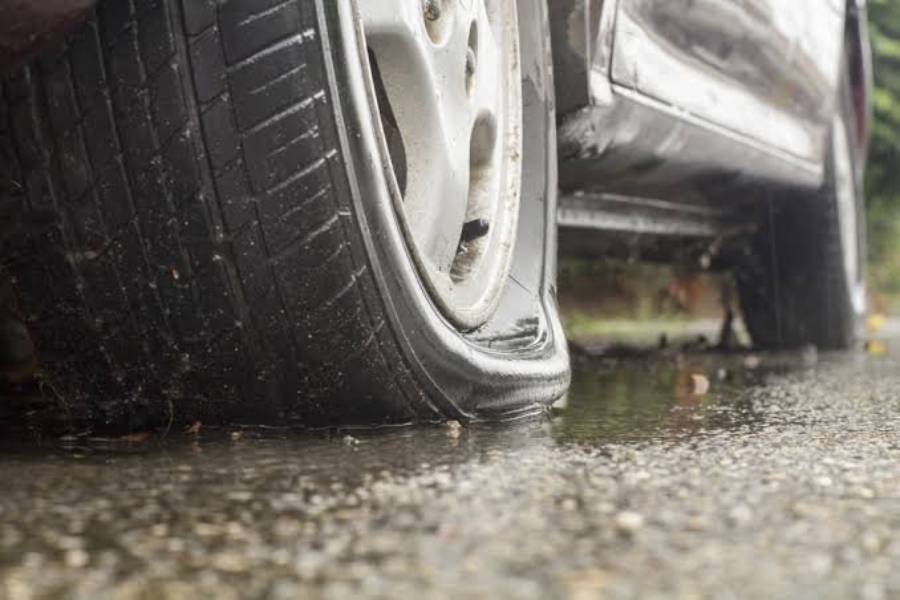
Does Fix-a-Flat Actually Work on a Flat Tire?
Fix-a-Flat works on certain flat tires by temporarily sealing small punctures in the tread area and adding pressure to help reinflate the tire. Its effectiveness depends on the puncture’s size, location, and the tire’s structural condition. The product is designed for emergency roadside use, allowing drivers to reach a tire repair facility without immediately installing a spare tire.
Fix-a-Flat is most effective when a small object, such as a nail or screw, creates an opening in the tread. The sealant moves through the tire and accumulates around the puncture as air escapes, forming a temporary barrier that reduces air loss. For example, a tire with a small nail puncture in the central tread area may retain enough pressure after treatment to reach a nearby repair shop. However, successful sealing does not establish that the tire is structurally safe or suitable for continued driving.
Fix-a-Flat does not work on every type of flat tire. Sidewall cuts, large punctures, blowouts, and damage caused by driving on a severely underinflated tire require professional evaluation rather than aerosol sealant. Sidewalls flex continuously as the tire rotates, and damage to their structural components cannot be corrected by filling the opening with sealant. Similarly, a tire with a large tear may lose air faster than the sealant can establish an effective barrier.
The distinction between temporary sealing and permanent tire repair is essential. Fix-a-Flat addresses air leakage but does not restore damaged reinforcing materials or replace an internal tire inspection. A professional repair involves removing the tire from the wheel, examining its internal condition, and determining whether the puncture meets accepted repair criteria. Even when Fix-a-Flat successfully stops a leak, the tire should be inspected promptly rather than treated as permanently repaired.
How Does Fix-a-Flat Work Inside a Tire?
Fix-a-Flat works by delivering an aerosol tire sealant and inflating gas through the valve stem, allowing the sealant to spread inside the tire and temporarily block suitable punctures. The product combines two functions: sealing minor air leaks and providing limited tire inflation. Both functions help restore temporary mobility, but neither guarantees that the tire has reached its recommended operating pressure.
When the product is discharged into the tire, the pressurized contents carry sealant through the valve stem into the tire cavity. As the wheel rotates, the sealant spreads across the inner surface of the tire. Air escaping through a small puncture helps draw sealant toward the opening, where the material accumulates and forms a temporary obstruction. This process works best when the puncture is small enough for the sealant to bridge and is located in an area suitable for emergency sealing.
The sealant’s effectiveness also depends on the tire’s ability to maintain pressure. A small tread puncture may allow the material to form a seal, while a torn sidewall or large opening can prevent sufficient pressure from building. For example, a tire leaking slowly through a nail hole presents a different sealing challenge from a tire that has suffered a blowout. The first may respond to aerosol sealant, while the second requires replacement or another safe roadside solution.
Fix-a-Flat can add air pressure to a flat tire, but it does not necessarily inflate the tire to the vehicle manufacturer’s recommended pressure. The amount of inflation depends on the product size, tire volume, remaining pressure, and leak severity. Larger tires require more gas to reach the same pressure, and an active leak can reduce the pressure gained during application. Drivers should therefore check the tire with a pressure gauge and use an appropriate air compressor when additional inflation is needed, following the product’s instructions.
The correct tire pressure is specified on the vehicle’s tire information placard, commonly located on the driver’s door jamb. It should not be determined from the maximum pressure printed on the tire sidewall. After using Fix-a-Flat, drivers must follow the applicable product instructions, monitor pressure, and arrange professional tire inspection as soon as practical.
What Types of Tire Damage Can Fix-a-Flat Repair?
Fix-a-Flat can temporarily seal small punctures in the tire’s tread area, but it cannot repair sidewall damage, large holes, blowouts, or structural tire damage. Its effectiveness depends on the puncture’s diameter, location, and the tire’s ability to retain air pressure. The product is designed to restore temporary mobility rather than repair the tire’s internal structure.
The tread area is the section of the tire that makes contact with the road. Small punctures in this area are more suitable for emergency sealants because the surrounding rubber provides a relatively stable surface for the material to accumulate around the opening. However, punctures near the shoulder, where the tread transitions into the sidewall, are not suitable for standard permanent tire repairs. Drivers should not assume that every puncture visible on the tread can be safely sealed or professionally repaired.
Does Fix-a-Flat Work on Nail and Screw Punctures?
Fix-a-Flat can work on small nail and screw punctures located in the tire’s tread area, provided the opening falls within the product’s specified sealing capacity. Nails and screws commonly create narrow puncture channels that allow air to escape gradually. When the sealant reaches a suitable opening, it can accumulate around the leak and temporarily reduce or stop air loss.
For example, a small nail embedded in the central tread area may cause a tire to lose pressure over several hours or days. Fix-a-Flat may temporarily seal the opening, allowing the driver to reach a tire shop. However, the sealant does not repair damaged steel belts, reinforcing cords, or the inner liner. The tire still requires internal inspection to determine whether a permanent repair is possible.
The puncturing object’s position also matters. A nail entering the tread at an angle may create a longer damage channel than a nail entering straight through the rubber. The visible hole therefore does not always represent the full extent of the damage. Drivers should follow the product instructions regarding embedded objects and avoid removing a nail or screw at the roadside unless the applicable instructions specifically require it.
Can Fix-a-Flat Repair Sidewall Damage or Large Holes?
Fix-a-Flat cannot safely repair sidewall cuts, large punctures, tire blowouts, or damage involving the tire’s structural components. These conditions exceed the purpose of an emergency aerosol sealant because the problem involves more than a small opening that allows air to escape.
Tire sidewalls contain reinforcing materials that support the vehicle’s load while repeatedly flexing during driving. A cut or puncture can damage these materials and compromise the tire’s structural integrity. Although sealant might temporarily reduce air leakage in certain openings, it cannot restore the strength of damaged sidewall cords. A tire with sidewall damage generally requires replacement rather than puncture repair.
Large holes and blowouts present additional limitations. A large opening allows air to escape rapidly, preventing the tire from maintaining the pressure necessary to support the vehicle. A blowout may also involve tread separation, broken reinforcing cords, or extensive rubber damage. For example, a tire that ruptures after striking a sharp road hazard cannot be made roadworthy simply by adding sealant.
Drivers should use an appropriate spare tire or request roadside assistance when a tire has visible sidewall damage, a major tear, or signs of structural failure. Continuing to drive on a severely damaged tire can further damage the wheel and reduce vehicle control.
Does Fix-a-Flat Work on a Slow Tire Leak?
Fix-a-Flat can temporarily stop a slow tire leak when the air escapes through a small puncture in the tread area. However, it is not an appropriate solution for every slow leak because tire pressure loss can originate from several different components, including the tread, valve stem, tire bead, and wheel.
A slow leak occurs when a tire gradually loses air pressure rather than deflating immediately. A small nail or screw puncture is one possible cause, but a damaged valve core, deteriorated valve stem, or poor seal between the tire bead and wheel can produce similar symptoms. These problems require different repair methods because the location and mechanism of air loss are not the same.
Fix-a-Flat is most suitable for a small tread puncture that falls within the product’s sealing limits. For example, a tire that repeatedly loses pressure because of a narrow nail hole may respond to sealant when the material reaches the opening. However, the temporary seal can fail if the puncture expands, the tire continues to flex around the damaged area, or the opening exceeds the sealant’s capabilities.
Fix-a-Flat is not a reliable repair for valve stem leaks or tire bead leaks. A valve stem leak occurs when air escapes through a damaged valve assembly or an improperly sealing valve core. A bead leak occurs where the tire contacts the wheel rim, often because of corrosion, contamination, wheel damage, or an improperly seated tire. These conditions require inspection and repair of the affected components rather than relying on sealant distributed inside the tire.
Drivers can identify a suspected slow leak by checking tire pressure with an accurate gauge and inspecting the tire for visible punctures. A tire shop can use a leak-detection solution and other inspection methods to locate escaping air. For example, bubbles forming around the valve stem indicate a different problem from bubbles appearing around a nail embedded in the tread.
If Fix-a-Flat temporarily stops a slow leak, the tire still requires professional inspection. A technician must identify the original source of pressure loss, inspect the tire’s internal condition, and determine whether an approved permanent repair is possible. Repeatedly adding sealant to a tire that continues losing pressure is not a substitute for correcting the underlying problem.
How Long Does Fix-a-Flat Last in a Tire?
Fix-a-Flat is a temporary tire sealant intended to provide enough mobility to reach a professional tire repair facility, not a permanent repair that lasts for a guaranteed number of miles or days. The actual duration of the seal depends on the puncture’s size, tire condition, remaining air pressure, and driving conditions. Even when a tire continues holding air after treatment, the sealant does not restore the tire’s original structural integrity.
Fix-a-Flat works by forming a temporary barrier around a suitable puncture. This barrier can reduce air loss, but it remains subject to the tire’s movement, internal pressure, and changes in the damaged area. As the tire rotates, its rubber components repeatedly flex under the vehicle’s weight. This movement can affect the seal around the puncture, particularly when the opening is irregular or the tire has sustained additional damage.
There is no universal mileage or time limit that guarantees how long Fix-a-Flat will remain effective. The applicable product instructions determine the recommended driving restrictions and service requirements. A tire that holds pressure for several hours after sealant application is not necessarily safe for extended driving. Likewise, a tire that loses pressure shortly after treatment may have damage beyond the sealant’s capabilities.
Three conditions can cause a temporary Fix-a-Flat seal to fail: an opening too large for the sealant to close effectively, continued movement around the damaged area, and additional air leakage from another location. For example, sealant may temporarily block a small nail puncture, but pressure can continue dropping if the tire also has a damaged valve stem. The product cannot compensate for every source of air loss or structural weakness.
A professional tire inspection is necessary after using Fix-a-Flat. The technician must remove the tire from the wheel, inspect its internal components, locate the puncture, and determine whether the damage meets accepted repair criteria. If the puncture is repairable, an appropriate internal repair can restore the tire to service. If the tire has sidewall damage, damaged reinforcing cords, or evidence of severe underinflation, replacement may be necessary.
Is It Safe to Drive After Using Fix-a-Flat?
Driving after using Fix-a-Flat is intended only for temporary travel to a tire repair facility, provided the tire retains adequate pressure, has no signs of structural damage, and meets the product’s operating instructions. The sealant may reduce air leakage, but it does not guarantee that the tire can safely withstand normal driving conditions for an extended period.
Before driving, check the tire’s inflation pressure against the vehicle manufacturer’s recommended cold tire pressure, which is usually displayed on the driver’s door-jamb placard. The pressure printed on the tire sidewall represents a maximum specification rather than the vehicle’s recommended operating pressure. A tire that remains significantly underinflated can overheat, deform excessively, and suffer internal damage even when the original puncture appears sealed.
Drivers should also inspect the tire for visible cuts, bulges, exposed reinforcing materials, or separation between tire components. These conditions indicate possible structural damage that aerosol sealant cannot correct. For example, a tire with a small tread puncture that holds the required pressure presents a different situation from a tire with a bulging sidewall. The second tire should not be driven on, regardless of whether sealant reduces air loss.
How Far Can You Drive After Using Fix-a-Flat?
You should drive only as far as necessary to reach a suitable tire repair facility after using Fix-a-Flat, while following the distance and service guidance printed on the specific product. The safe travel distance cannot be determined by sealant application alone because tire pressure, puncture severity, and tire condition directly affect whether continued driving is appropriate.
Some temporary tire sealant products specify a limited driving distance or a deadline for professional service. These instructions are product-specific and should not be treated as universal limits for every Fix-a-Flat formulation. The manufacturer’s current label is the appropriate reference for the product being used.
For example, a driver who successfully seals a small tread puncture and restores adequate tire pressure may be able to travel to a nearby tire shop. However, if the tire begins losing pressure again after a short distance, continuing toward a more distant destination increases the risk of tire damage. The driver should stop in a safe location and arrange roadside assistance rather than repeatedly driving on an underinflated tire.
The distance a temporary seal lasts is also different from the distance a tire can safely travel. A seal may continue blocking a puncture without revealing internal damage caused before the product was applied. Professional inspection remains necessary even when the tire appears to operate normally.
How Fast Can You Drive After Using Fix-a-Flat?
Drive at or below the maximum speed permitted by the specific Fix-a-Flat product instructions, and reduce speed further whenever road conditions or tire behavior require it. There is no single speed limit that should be assumed for every aerosol tire sealant or vehicle configuration.
Driving speed affects tire temperature, mechanical stress, and the frequency of tire deformation. As a tire rotates faster, its components undergo more repeated flexing, while inadequate inflation increases deformation and heat generation. A temporarily sealed tire that remains underinflated can therefore experience additional damage during continued operation.
For example, highway driving places different demands on a tire than traveling slowly to a nearby repair facility. Even when sealant appears to have stopped a leak, sustained high-speed driving is not an appropriate way to test the durability of an emergency repair. Drivers should follow the product’s restrictions, avoid unnecessary travel, and arrange tire inspection promptly.
Stop driving if the vehicle develops unusual vibration, pulling, steering instability, or renewed tire pressure loss. These symptoms may indicate that the temporary seal has failed or that the tire has additional damage. A tire pressure monitoring system warning should also be investigated rather than ignored simply because sealant has already been applied.
Fix-a-Flat should be treated as an emergency mobility product rather than permission to continue normal driving indefinitely. The safest next step is to restore the required pressure when possible, follow the product’s driving restrictions, and have the tire professionally inspected before returning it to regular service.
How Do You Use Fix-a-Flat Correctly?
To use Fix-a-Flat correctly, connect the aerosol can to the tire’s valve stem, dispense the sealant according to the product instructions, and check the tire pressure before continuing to drive. The product is designed for temporary emergency use on compatible tire punctures. Proper application requires checking the tire’s condition, selecting the appropriate product size, and following the manufacturer’s instructions for sealant distribution and inflation.
Before applying Fix-a-Flat, park the vehicle on a stable surface away from moving traffic, engage the parking brake, and turn on the hazard lights when appropriate. Inspect the tire for visible sidewall cuts, large punctures, exposed cords, or damage caused by driving while severely underinflated. These conditions make the tire unsuitable for an aerosol sealant repair. Also check that the Fix-a-Flat can is compatible with the vehicle’s tire size and type, and confirm that the product has not exceeded its expiration date.
The application process involves five main steps:
- Prepare the tire and product. Locate the damaged tire’s valve stem and remove its valve cap. Check the product label for preparation requirements, including whether the can must be shaken and whether an embedded puncturing object should remain in place.
- Connect the dispensing hose. Attach the Fix-a-Flat hose securely to the tire valve according to the canister’s instructions. A loose connection can allow gas or sealant to escape during application, reducing the amount delivered into the tire.
- Dispense the sealant. Hold and operate the canister as directed by the manufacturer. The pressurized contents enter the tire through the valve stem, delivering sealant and inflation gas. Follow the instructions for the specific product rather than assuming every canister uses the same dispensing procedure.
- Distribute the sealant. Follow the product’s directions for moving the vehicle after application. Tire rotation helps distribute the sealant across the inner surface and toward a suitable puncture. The required driving procedure depends on the product formulation and should be verified on the label.
- Check tire pressure and arrange repair. Measure the tire pressure using a reliable gauge and compare it with the vehicle manufacturer’s recommendation. Add air with a suitable compressor if the product instructions permit and additional inflation is necessary. Do not continue driving if the tire cannot maintain adequate pressure.
Using Fix-a-Flat does not eliminate the need for professional tire inspection. Even when the sealant successfully reduces air leakage, it cannot reveal internal damage to reinforcing cords, the inner liner, or other structural components. Inform the tire technician that an aerosol sealant was used so the tire can be inspected and serviced appropriately.
Three application mistakes can reduce the effectiveness of Fix-a-Flat: using the product on incompatible tire damage, selecting an insufficient or incorrect product size, and driving without confirming that the tire can maintain adequate pressure. For example, applying sealant to a tire with a large sidewall tear will not restore its structural integrity, regardless of how much material enters the tire.
If the tire continues losing air after application, stop driving in a safe location and use an appropriate spare tire or roadside assistance. Repeatedly applying sealant is not a reliable substitute for identifying and correcting the underlying damage.
Can Fix-a-Flat Damage Tires or TPMS Sensors?
Fix-a-Flat products designed for TPMS-equipped vehicles are generally formulated for use with compatible tire pressure monitoring systems, but compatibility depends on the specific product and proper application. Using an appropriate formulation does not automatically mean that every tire, sensor, or wheel assembly is compatible. Drivers should verify the product label and vehicle manufacturer’s requirements before applying aerosol sealant.
A tire pressure monitoring system, or TPMS, alerts the driver when tire pressure falls below a specified threshold. Direct TPMS systems use pressure sensors mounted inside the wheel assembly, commonly near the valve stem, while indirect systems estimate pressure changes through wheel-speed information. Because direct sensors are exposed to the tire’s internal environment, compatibility with liquid sealants is particularly relevant.
Modern Fix-a-Flat formulations marketed as TPMS-safe are designed to minimize interference with compatible sensors when used as directed. However, sealant residue can remain inside the tire and around internal wheel components after application. Improper use, incompatible products, or excessive residue may complicate inspection and servicing. A TPMS warning that remains active after inflation should be investigated rather than assumed to result from the sealant.
Fix-a-Flat does not repair structural tire damage, and the presence of sealant can make professional tire inspection and cleaning more involved. When a technician removes the tire from the wheel, sealant residue may be present on the inner liner, wheel surface, or nearby components. The technician must inspect the tire, clean the relevant surfaces as required, and determine whether the original puncture qualifies for a permanent repair.
For example, a small tread puncture may be eligible for a professional combination repair after the tire is removed and inspected. However, the technician must first locate the damaged area, assess the inner liner and reinforcing materials, and prepare the repair surface according to the repair system’s requirements. Residual sealant must not interfere with the repair materials’ ability to bond correctly.
The tire’s condition ultimately determines whether it can be repaired. A tire with sidewall damage, exposed reinforcing cords, or internal deterioration caused by severe underinflation cannot be made safe simply by removing the sealant. These conditions generally require tire replacement.
Drivers should tell the tire technician that Fix-a-Flat was used, even when the tire appears to hold pressure normally. This information helps the technician anticipate sealant residue, inspect relevant components, and follow appropriate servicing procedures. Using a compatible product according to its instructions and obtaining prompt professional service reduces the likelihood of avoidable complications.
Read more: How Much Does It Cost to Fix a Flat Tire?
Is Fix-a-Flat Better Than a Tire Plug or Patch?
Fix-a-Flat is better for temporary roadside convenience, while a properly installed combination tire plug-patch is more reliable for permanent puncture repair. Fix-a-Flat seals certain small tread punctures without removing the tire from the wheel, making it useful when immediate professional service is unavailable. A professional combination repair addresses both the puncture channel and the tire’s inner liner after the tire has been removed and inspected.
Fix-a-Flat uses an aerosol sealant to temporarily block air leakage, whereas a tire plug physically fills a puncture channel. An external tire plug can stop air loss from a small tread puncture, but installing a plug without removing the tire prevents a technician from examining its internal condition. Hidden damage, including broken reinforcing cords or deterioration caused by underinflation, may remain undetected. For this reason, an external plug alone is not considered an acceptable permanent repair under U.S. Tire Manufacturers Association guidelines.
A professional combination plug-patch repair provides a more complete solution because it seals the puncture channel and the inner liner. The technician removes the tire from the wheel, inspects the damaged area, and determines whether the puncture meets repair requirements. For passenger tires, industry guidelines generally limit eligible punctures to the designated tread repair area and holes no larger than 1/4 inch (6 mm) in diameter. Damage outside this area, including sidewall punctures, is not eligible for a standard permanent repair.
The three methods differ in their purpose, installation requirements, and long-term reliability.
| Repair Method | Primary Purpose | Tire Removal Required | Permanent Repair |
|---|---|---|---|
| Fix-a-Flat | Emergency puncture sealing | No | No |
| External tire plug | Temporary puncture sealing | No | No |
| Professional combination plug-patch | Repair of eligible tread punctures | Yes | Yes |
For example, a driver who discovers a small nail puncture while traveling may use Fix-a-Flat to reach a nearby tire shop, provided the tire is suitable for sealant and retains adequate pressure. At the shop, a technician can remove the tire, inspect the puncture, and install a combination repair if the damage meets the required criteria. If the puncture extends into the shoulder or sidewall, tire replacement is generally necessary instead.
Fix-a-Flat should be chosen for emergency mobility rather than long-term repair reliability. A professional combination repair is the preferred solution for a repairable puncture because it includes an internal inspection and addresses both the air-retaining inner liner and the puncture channel. The final decision depends on the location and extent of the damage, not simply whether the tire stops leaking.
When Should You Replace a Tire Instead of Using Fix-a-Flat?
Replace a tire instead of using Fix-a-Flat when it has sidewall damage, a blowout, structural deterioration, or punctures outside the approved repair area. These conditions compromise the tire’s ability to support the vehicle safely, and aerosol sealant cannot restore damaged reinforcing materials or correct internal structural failure.
Sidewall damage is a primary reason for tire replacement. The sidewall contains reinforcing cords that flex continuously while supporting the vehicle’s load. Cuts, punctures, or bulges in this area can weaken those components and increase the risk of tire failure. For example, a tire with a visible sidewall bulge may have internal cord damage even when it continues holding air. Applying Fix-a-Flat does not correct that damage.
A tire also requires replacement when a puncture exceeds accepted repair limits or affects a non-repairable area. Under U.S. Tire Manufacturers Association guidelines, a passenger tire puncture larger than 1/4 inch (6 mm) is not eligible for a standard puncture repair. Punctures extending into the shoulder or sidewall are also excluded. These restrictions exist because a repair must restore the tire’s ability to retain air without leaving unacceptable structural damage.
Driving on a severely underinflated or completely flat tire can cause internal damage that makes replacement necessary. When tire pressure becomes too low, the sidewalls flex excessively and generate additional heat. Continued operation can damage reinforcing cords, weaken internal components, and create deterioration that is not visible from outside the tire. A tire that appears normal after reinflation may still contain damage requiring professional inspection.
Blowouts and major tears are additional situations where Fix-a-Flat is unsuitable. A blowout can involve extensive rubber separation, broken reinforcing materials, or a large opening that prevents the tire from maintaining pressure. For example, a tire that ruptures after striking road debris cannot be restored to safe operating condition by filling it with aerosol sealant.
Drivers should use a properly installed spare tire or request roadside assistance when the damaged tire cannot safely retain pressure. A temporary spare must be operated within its specified speed, distance, and load restrictions. If the vehicle does not have a spare tire, towing may be necessary to prevent additional tire or wheel damage.
The decision to repair or replace a tire should be based on professional inspection rather than the temporary success of Fix-a-Flat. Small punctures within the approved tread repair area may qualify for a permanent combination repair, while sidewall damage, structural deterioration, and excessive puncture size generally require replacement. Fix-a-Flat serves as an emergency solution for reaching professional service, not an alternative to restoring the tire’s safety and integrity.