A transmission whining noise when accelerating is commonly caused by low transmission fluid, worn bearings, damaged gears, or a failing transmission pump. The noise typically becomes louder as engine speed, vehicle speed, or drivetrain load increases. However, a high-pitched whining sound does not always indicate transmission failure. Faulty wheel bearings, differential gears, and engine-driven accessories can produce similar noises.
The source of the whining depends on when and how the sound occurs. A transmission that whines in specific gears may have worn gear teeth or shaft bearings, while whining accompanied by delayed shifting or slipping can indicate fluid pressure problems or internal transmission wear. A noise that changes with vehicle speed rather than engine RPM may also originate outside the transmission.
Ignoring a persistent transmission whine can lead to more extensive mechanical damage, particularly when the noise results from inadequate lubrication or deteriorating internal components. Some problems can be resolved by correcting fluid levels or repairing leaks, while damaged bearings, gears, or hydraulic components may require professional repair.
This guide explains the common causes of transmission whining during acceleration, how to distinguish transmission problems from other drivetrain noises, which diagnostic steps to follow, and when repair or replacement becomes necessary.
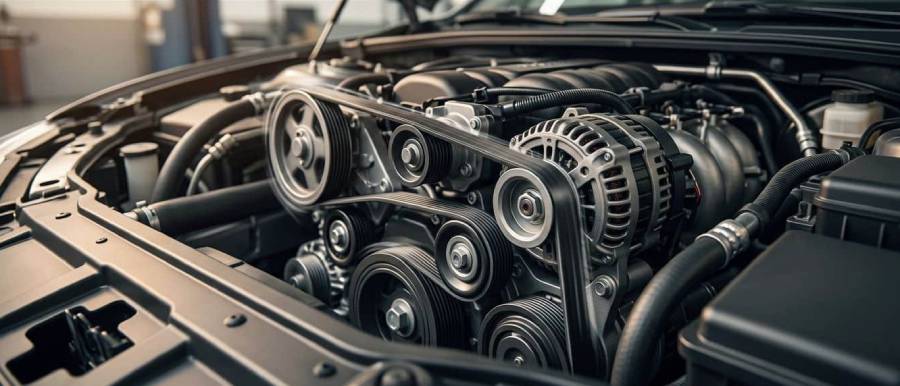
What Causes a Transmission Whining Noise When Accelerating?
A transmission whining noise when accelerating has six common mechanical and hydraulic causes: low transmission fluid, contaminated fluid, worn bearings, damaged gears, a failing transmission pump, and torque converter problems. These faults affect lubrication, hydraulic pressure, or the movement of internal transmission components. The whining often becomes more noticeable during acceleration because increased rotational speed and drivetrain load can amplify existing mechanical problems.
The sound varies depending on the affected component. Low fluid levels can cause pump noise and inadequate lubrication, while worn bearings and damaged gears may produce a high-pitched whine that changes with speed or gear selection. Identifying the underlying cause requires examining the noise pattern alongside transmission fluid condition, shifting performance, and other symptoms.
Can Low or Contaminated Transmission Fluid Cause Whining?
Low or contaminated transmission fluid can cause whining during acceleration by disrupting lubrication and hydraulic pressure. Automatic transmissions rely on transmission fluid to lubricate moving components, transmit hydraulic pressure, and remove heat. When fluid levels fall below manufacturer specifications, the transmission pump may draw air into the hydraulic system, producing a whining sound as pressure becomes unstable.
Low transmission fluid commonly results from leaks around transmission seals, cooler lines, the transmission pan, or other connections. In automatic transmissions, insufficient fluid can also cause delayed gear engagement, slipping, overheating, and irregular shifting. These symptoms may become more noticeable during acceleration because the transmission must transfer greater engine torque while maintaining appropriate hydraulic pressure.
Contaminated or degraded transmission fluid creates a different problem. Over time, excessive heat, friction material, and metallic wear particles can affect fluid performance and accelerate internal component wear. Fluid that contains significant debris or has a burnt odor may indicate overheating or mechanical deterioration. However, dark fluid alone does not confirm transmission failure because normal fluid appearance varies by transmission design and manufacturer.
Correcting the fluid level or replacing degraded fluid may reduce whining when the underlying problem is lubrication or hydraulic performance. However, a fluid change cannot repair bearings, gears, or other components that have already suffered mechanical damage. The correct fluid specification and inspection procedure must follow the vehicle manufacturer’s requirements.
Can Worn Transmission Bearings or Damaged Gears Cause Whining?
Worn transmission bearings and damaged gears can produce a high-pitched whining noise that increases during acceleration because of greater rotational speed and mechanical loading. Bearings support rotating shafts and maintain their alignment, while transmission gears transfer torque through precisely shaped contacting surfaces. Wear in either component can generate abnormal vibration and noise.
Input shaft and output shaft bearings are potential sources of transmission whining. As bearing surfaces deteriorate, their rolling elements may develop irregular contact patterns that produce humming, whining, or grinding sounds. The noise can change with shaft speed and transmission load. For example, a worn input shaft bearing in a manual transmission may produce a different noise pattern depending on clutch engagement and gear selection.
Damaged gear teeth can also create whining through irregular contact between meshing surfaces. Gear tooth pitting, surface wear, and incorrect contact patterns interfere with smooth power transmission. The resulting noise may become louder under acceleration because greater torque increases the force acting between gear teeth. A whine that occurs primarily in one gear can indicate a problem associated with that gear ratio, although bearings and other rotating components must also be considered.
Bearing and gear damage generally requires mechanical repair rather than fluid replacement alone. A technician may need to inspect shaft movement, bearing condition, gear tooth surfaces, and metallic debris inside the transmission. Continued operation with severely damaged components can spread metal particles through the lubricant and damage additional internal parts.
Can a Failing Transmission Pump or Torque Converter Cause Whining?
A failing transmission pump or a damaged torque converter can cause whining during acceleration in automatic transmissions. Both components are involved in transferring engine power or maintaining the hydraulic conditions required for transmission operation, but they produce noise through different mechanisms.
The transmission pump circulates fluid and generates hydraulic pressure for clutch operation, lubrication, and other transmission functions. Pump wear, restricted fluid supply, or aerated transmission fluid can create abnormal whining. The noise may rise with engine RPM because many conventional automatic transmission pumps operate in relation to engine speed. Low hydraulic pressure can also cause delayed engagement, slipping, or inconsistent shifting.
A torque converter transfers engine torque to the automatic transmission through fluid coupling. Internal bearing damage, stator-related problems, or other mechanical faults within the converter can produce whining, rattling, or grinding noises. These sounds may change with engine speed, transmission load, or torque converter operating conditions. However, torque converter faults cannot be confirmed from whining alone because transmission pumps and engine accessories can produce similar sounds.
Pump and torque converter problems require accurate diagnosis before component replacement. Technicians may evaluate transmission fluid condition, hydraulic pressure, diagnostic trouble codes, and operating behavior to identify the source. Repair can involve replacing the affected component and inspecting the transmission for contamination or related damage. In severe cases, extensive internal wear may make a transmission rebuild or replacement necessary.
How Can You Diagnose a Transmission Whining Noise When Accelerating?
To diagnose a transmission whining noise when accelerating, identify when the noise occurs, determine whether it follows engine RPM or vehicle speed, inspect transmission fluid, and check for related shifting problems. These observations help distinguish internal transmission faults from noises produced by the differential, wheel bearings, or engine-driven accessories.
A systematic diagnosis begins with the conditions that trigger the sound. Note whether the whining occurs during acceleration, deceleration, steady-speed driving, or specific gear changes. A noise that becomes louder under acceleration may indicate worn transmission gears, bearings, or hydraulic components, while a whine that persists at a constant road speed may originate elsewhere in the drivetrain. These patterns narrow the possible causes but do not establish a definitive diagnosis.
How Can You Tell if the Whining Is Related to Engine RPM or Vehicle Speed?
Compare changes in engine RPM and vehicle speed to determine which rotating components may be responsible for the whining noise. Engine RPM measures crankshaft rotational speed, while vehicle speed reflects how quickly the wheels turn. Transmission components operate at different speeds depending on the selected gear, making the relationship between noise, RPM, and road speed useful for diagnosis.
A whining noise that rises and falls with engine RPM may originate from an engine-driven accessory, transmission pump, torque converter, or transmission input-side component. For example, a worn alternator bearing can produce a high-pitched whine that increases as engine speed rises, even when the transmission operates normally. A transmission pump may produce a similar sound because its operating speed is linked to engine rotation in many conventional automatic transmissions.
A whining noise that follows vehicle speed more closely may indicate output shaft bearing wear, differential gear problems, or wheel bearing damage. For example, a damaged wheel bearing may produce a continuous humming or whining sound that becomes louder as the vehicle accelerates and remains noticeable when the accelerator is released.
Gear selection provides another diagnostic clue. A noise that occurs primarily in one gear may suggest damage involving that gear set or associated bearings. A whine present across several gears may point toward components shared between gear ratios. However, transmission design affects these relationships, and the same symptom can have different causes in automatic, manual, and CVT transmissions.
Drivers can record the speed, gear, engine RPM, and driving conditions under which the noise occurs during normal, safe driving. Avoid shifting into neutral while moving or performing aggressive acceleration tests to reproduce the sound. A technician can use controlled road testing and acoustic diagnostic equipment to locate the source more accurately.
How Do You Check Transmission Fluid for Signs of Damage?
Check transmission fluid level, condition, and evidence of leakage using the manufacturer’s specified inspection procedure. Transmission fluid problems can cause whining through inadequate lubrication, air entering the hydraulic system, or abnormal pump operation. The inspection method depends on the transmission design because some vehicles have a dipstick while others use a sealed system with a temperature-dependent level-check procedure.
For transmissions equipped with a dipstick, follow the owner’s manual regarding fluid temperature, engine operation, parking position, and gear selection. Some automatic transmissions require the engine to idle during inspection, while other designs use different procedures. An incorrect checking method can produce a misleading fluid-level reading.
Examine the fluid for three important warning signs: an incorrect level, a burnt odor, and visible contamination. Low fluid may indicate a leak and can interfere with lubrication or hydraulic pressure. A burnt odor can suggest excessive operating temperatures, while metallic particles or substantial debris may indicate internal component wear. Fluid color alone is not a reliable measure of transmission condition because formulations and normal aging characteristics differ.
Inspect accessible areas around the transmission pan, axle seals, cooler lines, and transmission housing for signs of fluid leakage. Red, amber, or darker oily residue may indicate transmission fluid, depending on the fluid specification and its condition. Any suspected leak should be confirmed before adding fluid because overfilling can also cause operational problems.
Sealed transmissions and CVTs may require specialized equipment, a controlled fluid temperature, and manufacturer-specific service procedures. These systems should be inspected by a qualified technician when the correct procedure or equipment is unavailable. Using an incompatible transmission fluid can cause shifting problems or damage internal components.
Beyond fluid inspection, an OBD-II scan can identify transmission-related diagnostic trouble codes associated with gear ratio errors, pressure control, or other electronically monitored faults. However, a transmission can develop mechanical whining without storing a fault code. Diagnostic codes should therefore support physical inspection rather than replace it.
The following table summarizes common noise patterns and their possible sources.
| Observed Symptom | Possible Cause | Recommended Check |
|---|---|---|
| Whining increases with engine RPM | Transmission pump or engine accessory | Compare noise under different engine loads |
| Whining increases with vehicle speed | Output bearing, differential, or wheel bearing | Inspect drivetrain and wheel bearings |
| Whining occurs in one gear | Gear wear or associated bearing damage | Inspect gear-specific operating conditions |
| Whining with delayed shifting | Low fluid or hydraulic pressure problem | Check fluid and transmission pressure |
| Whining with burnt fluid odor | Overheating or internal wear | Inspect fluid condition and cooling system |
| Whining with slipping or loss of drive | Potential serious transmission fault | Stop driving and arrange professional diagnosis |
Professional transmission inspection is necessary when whining becomes progressively louder, accompanies slipping or delayed engagement, or occurs with overheating or loss of drive. A technician can combine road-test observations, fluid inspection, electronic diagnostics, and manufacturer-approved pressure tests to identify the fault before recommending repairs.
How Do You Fix a Transmission Whining Noise When Accelerating?
Fixing a transmission whining noise when accelerating requires correcting the underlying fluid, hydraulic, or mechanical problem. The appropriate repair depends on whether the noise comes from low transmission fluid, worn bearings, damaged gears, a failing pump, or a defective torque converter. Minor fluid-related problems may be resolved through maintenance and leak repairs, while internal mechanical damage generally requires component replacement or transmission rebuilding.
A proper repair begins with confirming the noise source rather than replacing parts based on sound alone. For example, adding transmission fluid may eliminate pump whining caused by an insufficient fluid supply, but it will not restore a damaged bearing or worn gear teeth. Repair decisions should consider the transmission’s condition, the severity of the damage, and the cost of restoring reliable operation.
Can Changing Transmission Fluid Stop the Whining Noise?
Changing transmission fluid can stop or reduce whining when the noise results from incorrect fluid levels, degraded lubricant, or fluid-related hydraulic problems. Transmission fluid lubricates internal components, supports hydraulic operation in conventional automatic transmissions, and helps dissipate heat. Restoring the correct fluid level and condition can improve these functions when permanent mechanical damage has not occurred.
Low transmission fluid should be corrected only after identifying the reason for the fluid loss. Common leak locations include transmission pan gaskets, axle seals, cooler lines, and shaft seals. A technician can repair the leaking component, refill the transmission with manufacturer-approved fluid, and verify the fluid level using the specified procedure. Simply adding fluid without repairing an active leak provides only a temporary correction.
A transmission fluid change may also be appropriate when the existing fluid has deteriorated or reached its scheduled service interval. The service should follow the manufacturer’s requirements for fluid specification, filter replacement, and refill procedure. Automatic transmissions, manual gearboxes, and CVTs use different lubricant formulations, and substituting an incompatible fluid can cause improper operation or component damage.
However, transmission fluid replacement cannot reverse existing mechanical wear. A transmission that continues whining after the fluid level and condition have been corrected may have damaged bearings, gears, or hydraulic components. Significant metallic debris, persistent slipping, or severe overheating requires further diagnosis before additional fluid service is considered.
When Does a Whining Transmission Need Repair or Replacement?
A whining transmission needs internal repair or replacement when diagnosis confirms damaged bearings, gears, hydraulic components, or other faults that fluid maintenance cannot correct. The decision depends on the extent of the damage, transmission design, vehicle condition, parts availability, and total repair cost.
Worn transmission bearings generally require replacement because damaged rolling surfaces cannot be restored through lubrication alone. Repair may involve removing and disassembling the transmission to access the input shaft, output shaft, or other affected components. During disassembly, a technician should inspect adjacent gears, shafts, seals, and bearing surfaces for related wear.
Damaged transmission gears also require mechanical intervention. Gear tooth pitting, chipped teeth, or severe surface deterioration can interfere with proper gear engagement and create persistent whining under load. Depending on the transmission design, repair may involve replacing an individual gear, a gear assembly, or associated bearings. Internal contamination must also be addressed to prevent debris from damaging replacement components.
A failing transmission pump or torque converter may require component replacement. Pump-related repairs involve verifying hydraulic pressure and inspecting the fluid supply system, while torque converter replacement requires evaluating the converter and related transmission components. For example, a failed torque converter that releases metallic debris into the fluid may also require cleaning or replacing contaminated cooling components according to the manufacturer’s service procedure.
A transmission rebuild becomes appropriate when several internal components are damaged but the transmission housing and other major assemblies remain suitable for reuse. Rebuilding involves disassembling the unit, inspecting its components, replacing damaged or worn parts as required, and reassembling it to specification.
Complete transmission replacement may be preferable when internal damage is extensive, rebuilding is uneconomical, or a suitable remanufactured transmission offers better overall value. The final decision should compare repair costs, replacement costs, warranty coverage, and the vehicle’s remaining service life.
A persistent whine accompanied by slipping, grinding, overheating, or loss of drive should be inspected before further operation. Continuing to drive with a serious internal transmission fault can increase damage and turn a repairable component failure into a more expensive transmission replacement.
Is It Safe to Drive With a Transmission Whining Noise?
Driving with a whining transmission is not necessarily unsafe, but continued driving can cause further damage when the noise indicates low fluid, failing bearings, or internal mechanical wear. The risk depends on the underlying cause, noise severity, and whether the transmission shows additional symptoms such as slipping, overheating, or difficulty shifting gears.
A mild whining noise without noticeable shifting problems does not automatically indicate imminent transmission failure. Some transmissions, particularly CVTs, produce characteristic operating sounds under acceleration. However, a new or progressively louder whine should be inspected promptly because lubrication problems and bearing deterioration can worsen under continued mechanical load.
Stop driving and arrange professional assistance when transmission whining occurs alongside slipping, grinding, overheating, or loss of drive. These symptoms indicate a greater risk of serious mechanical problems or unpredictable vehicle operation. For example, a transmission that slips during acceleration may fail to deliver the expected power to the wheels, creating a safety concern when merging into traffic or crossing intersections.
Transmission warning lights, a burning smell, severe vibration, and delayed gear engagement also require attention. A burning odor may indicate overheated transmission fluid, while repeated delayed engagement can suggest hydraulic pressure problems or internal component wear. Driving under these conditions can accelerate damage to clutches, bearings, and other transmission components.
For a vehicle with an isolated, mild whine and otherwise normal operation, avoid unnecessary driving and schedule a diagnostic inspection. Do not attempt to reproduce the noise through hard acceleration or high-speed testing. If the vehicle struggles to move, loses power delivery, or displays signs of severe transmission overheating, towing is the safer option.
How Much Does It Cost to Fix a Whining Transmission?
Fixing a whining transmission can cost approximately $100 for a basic fluid service to more than $7,000 for a complete transmission replacement in the United States. The actual expense depends on the cause of the noise, transmission type, vehicle model, labor rates, and whether internal components require replacement.
Minor problems involving fluid maintenance or accessible leaks generally cost less than repairs requiring transmission removal and disassembly. For example, correcting a low fluid level and repairing a transmission pan gasket leak is typically less expensive than replacing an internal shaft bearing. Automatic transmissions and CVTs may also require specialized diagnostic procedures, components, or replacement assemblies.
The following table provides broad, illustrative US repair-cost estimates rather than verified quotes for a specific vehicle.
| Transmission Repair | Estimated Cost (USD) |
|---|---|
| Transmission diagnostic inspection | $100–$250 |
| Transmission fluid change or service | $100–$350 |
| Transmission fluid leak repair | $150–$600 |
| Internal bearing or gear repair | $500–$2,000+ |
| Transmission pump replacement | $500–$1,500+ |
| Torque converter replacement | $600–$2,000+ |
| Transmission rebuild | $1,800–$4,500+ |
| Complete transmission replacement | $3,000–$7,000+ |
These ranges are intended for preliminary budgeting. Actual quotes may fall outside them, especially for luxury vehicles, specialized CVTs, and transmissions requiring extensive labor. Internal bearing, pump, and torque converter repairs can overlap with rebuild costs because accessing these components may require removing the transmission.
The most economical repair is the one that addresses the confirmed source of the whining without replacing unnecessary components. A transmission that whines because of low fluid may need only a leak repair and fluid correction if no internal damage has occurred. In contrast, a gearbox containing substantial metallic debris or several damaged components may require rebuilding or replacement to restore reliable operation.
Before approving an expensive repair, request a written estimate that separates diagnostic charges, parts, labor, fluid, and warranty coverage. Compare the total repair cost with the vehicle’s condition, market value, and expected remaining service life. A remanufactured transmission with warranty coverage may provide better long-term value than repeated repairs to a severely worn unit.
How Can You Tell Transmission Whining From Other Car Noises?
Transmission whining can be distinguished from other car noises by examining how the sound changes with engine RPM, vehicle speed, gear selection, and drivetrain load. Differential gears, wheel bearings, alternators, and belt-driven accessories can produce similar high-pitched sounds during acceleration. Identifying the correct source is essential because replacing transmission components will not resolve noise originating elsewhere.
Transmission-related whining may change when the driver selects a different gear or applies engine torque. For example, worn transmission bearings can produce noise at particular shaft speeds, while damaged gears may whine more noticeably under acceleration. However, these symptoms are not exclusive to transmission faults, and noise location alone is insufficient for diagnosis.
Engine-driven accessories provide another important comparison. A failing alternator bearing, idler pulley, or belt tensioner can generate whining that increases with engine RPM. Unlike many drivetrain noises, accessory-related sounds may also be present while the vehicle is stationary. A technician can inspect accessory bearings and belt operation to determine whether the noise originates outside the transmission.
How Is Transmission Whining Different From Differential or Wheel Bearing Noise?
Differential whining generally changes with vehicle speed and drivetrain load, while wheel bearing noise typically follows wheel rotation and may change during cornering. Transmission whining can also respond to these conditions, but gear selection and transmission operating behavior provide additional diagnostic clues.
A worn differential ring-and-pinion gear set may produce a high-pitched whine during acceleration because engine torque changes the contact forces between the gear teeth. The sound may become quieter or change pitch when the driver releases the accelerator. Differential bearing wear can also produce humming or whining that increases with road speed. These symptoms can resemble transmission problems, particularly in vehicles where the differential and transmission are housed together.
Wheel bearing noise generally appears as humming, growling, or whining that increases with vehicle speed. Unlike a gear-specific transmission problem, the sound usually remains present across different transmission gears at the same road speed. A damaged wheel bearing may also become louder or quieter during turns as the load on the bearing changes. However, cornering-related noise changes do not always identify which wheel bearing is defective.
The following table compares common noise sources and their distinguishing characteristics.
| Noise Source | Typical Noise Pattern | Diagnostic Clue |
|---|---|---|
| Transmission bearings | Whining related to shaft speed or gear selection | Noise changes with transmission operating conditions |
| Transmission gears | Whining under load or in specific gears | Sound varies with gear ratio or acceleration |
| Differential | Whining during acceleration or deceleration | Noise changes with drivetrain load |
| Wheel bearings | Humming or whining that increases with road speed | Noise may change during cornering |
| Alternator | High-pitched whine related to engine RPM | Noise may occur while stationary |
| Belt tensioner or idler pulley | Whining or squealing that changes with engine speed | Sound originates near engine accessory drive |
The most reliable distinction comes from combining noise behavior with physical inspection rather than relying on a single symptom. A technician may use chassis-mounted microphones, controlled road testing, and component inspections to identify whether the sound originates from the transmission, differential, wheel bearings, or engine accessories.
Read more: 4L60E Transmission Fluid Capacity: Complete Guide
Does Transmission Whining Differ Between Automatic, Manual, and CVT Transmissions?
Transmission whining differs between automatic, manual, and continuously variable transmissions because each design uses different components and methods of transferring engine torque. Conventional automatic transmissions rely on hydraulic control systems, planetary gear sets, and torque converters. Manual transmissions use driver-selected gear pairs and synchronizers, while many CVTs use variable-diameter pulleys connected by a steel belt or chain.
In a conventional automatic transmission, whining may originate from the hydraulic pump, torque converter, planetary gear components, or shaft bearings. Pump-related whining often changes with engine RPM because the pump operates in relation to engine speed. Low transmission fluid or aerated fluid can increase hydraulic noise, while worn internal bearings may produce sounds that vary with transmission load or rotational speed.
Manual transmission whining is commonly associated with worn shaft bearings, damaged gear teeth, or inadequate lubrication. A noise that occurs mainly in one gear may indicate wear involving that gear set, while whining across several gears may suggest a shared shaft bearing or another rotating component. Clutch engagement can also influence the sound because it changes which transmission components are rotating under load.
CVTs can produce a characteristic high-pitched operating sound because their pulley systems continuously adjust the transmission ratio during acceleration. Some CVTs also use hydraulic pumps and other components that generate operating noise. A consistent sound that has been present since the vehicle was new may be normal for a particular design. However, a new, louder, or irregular whine accompanied by hesitation, vibration, overheating, or reduced acceleration requires inspection.
The differences between these transmission types are summarized below.
| Transmission Type | Potential Whining Sources | Common Diagnostic Clues |
|---|---|---|
| Automatic transmission | Hydraulic pump, torque converter, planetary gears, bearings | Whining changes with RPM, load, or shifting behavior |
| Manual transmission | Input shaft bearings, output shaft bearings, gear teeth | Noise varies with selected gear or clutch operation |
| CVT transmission | Pulley system, belt or chain, hydraulic pump, bearings | Whining follows engine load or ratio changes |
A whining noise is not automatically evidence of transmission failure, regardless of transmission type. The important distinction is whether the sound matches the vehicle’s normal operating characteristics or represents a new mechanical symptom. Comparing the noise with manufacturer guidance, previous vehicle behavior, and related performance problems helps determine whether further diagnosis is necessary.
How Can You Prevent Transmission Whining Noise?
Preventing transmission whining noise requires maintaining the correct transmission fluid level, following manufacturer-recommended service intervals, preventing overheating, and addressing early signs of mechanical wear. These maintenance practices protect internal bearings, gears, and hydraulic components from avoidable damage. However, regular maintenance cannot eliminate every potential transmission failure.
Transmission fluid maintenance is one of the most important preventive measures. Automatic transmissions depend on fluid for lubrication, hydraulic pressure, and heat transfer, while manual transmissions require suitable lubricants to protect gears and bearings. Follow the vehicle manufacturer’s specified fluid type and replacement interval rather than using a universal maintenance schedule. For example, some transmissions require periodic fluid changes, while others have different service requirements based on operating conditions and transmission design.
Inspecting for transmission fluid leaks helps prevent lubrication problems and hydraulic pressure loss. Leaks can develop around axle seals, transmission pan gaskets, cooler lines, and shaft seals. A declining fluid level can allow air to enter the hydraulic system or reduce lubrication to rotating components, potentially causing whining during acceleration. Repairing leaks before fluid levels become critically low reduces the risk of additional internal damage.
Transmission temperature management also affects long-term reliability. Excessive heat accelerates fluid degradation and can damage seals, clutch materials, and other internal components. Maintaining the vehicle’s cooling system and any transmission cooling components helps control operating temperatures. Vehicles used for towing or carrying heavy loads should remain within manufacturer-rated limits because excessive loads increase drivetrain stress and heat generation.
Driving habits also influence transmission wear. Avoid repeatedly shifting between drive and reverse before the vehicle has stopped, accelerating aggressively when the transmission is malfunctioning, or continuing to drive with noticeable slipping. These conditions can place additional stress on internal components and accelerate existing damage.
Early diagnosis is essential when a new whining noise appears during acceleration. A persistent whine, delayed shifting, unusual vibration, or transmission warning light should prompt inspection before the problem becomes more severe. Identifying a fluid leak or failing bearing early may prevent secondary damage to other transmission components and reduce the likelihood of extensive repairs.