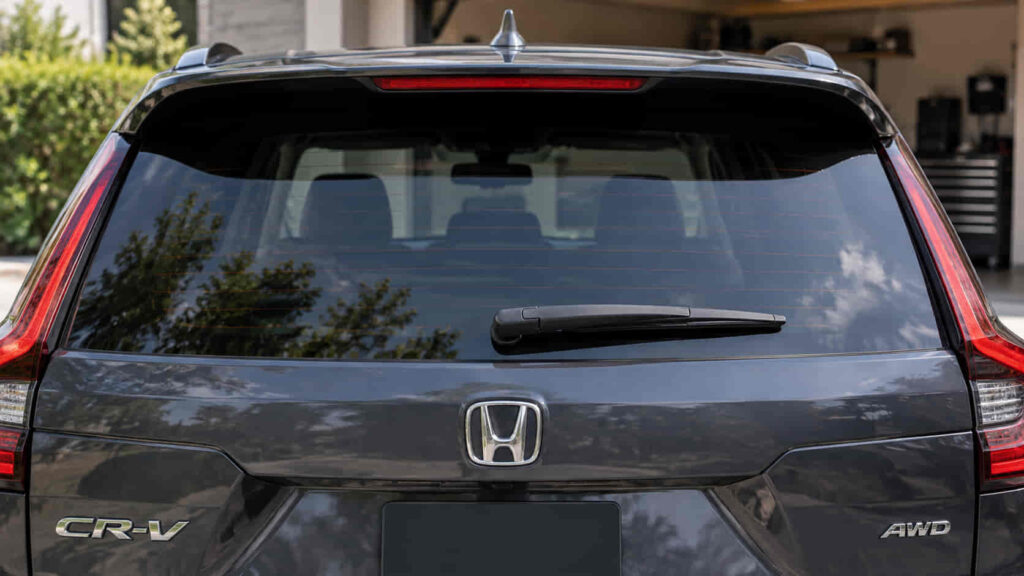
The Honda CR-V rear wiper size depends on the model year, with recent U.S.-market models commonly using a 10-inch or 12-inch rear wiper blade. For example, 2023–2025 CR-V models are commonly specified with a 10-inch rear blade, while 2017–2022 models use a 12-inch rear blade. Earlier CR-V generations use different rear blade lengths, so selecting a replacement by vehicle name alone can result in the wrong size.
Model year is the first specification to check because Honda changed the CR-V’s rear window and wiper configuration across generations. Blade length is also not the only fitment factor. A replacement rear wiper must match the applicable wiper arm and attachment design to install and operate correctly. Two blades with the same nominal length are therefore not necessarily interchangeable.
This guide provides the Honda CR-V rear wiper size by model year and explains how to confirm fitment before buying a replacement. It also covers whether a different blade size can be used, how to choose a compatible rear wiper, when the blade should be replaced, and how to install a new rear wiper correctly.
What Size Rear Wiper Blade Does a Honda CR-V Use?
The Honda CR-V rear wiper blade size ranges from approximately 10 to 14 inches depending on the model year, with 2023–2025 models commonly using a 10-inch rear blade and 2017–2022 models using a 12-inch blade. The correct size should therefore be selected by model year rather than by the Honda CR-V name alone.
| Honda CR-V Model Year | Rear Wiper Size |
|---|---|
| 2023–2025 | 10 inches |
| 2017–2022 | 12 inches |
| 2012–2016 | 12–13 inches* |
| 2007–2011 | 14 inches |
| 2002–2006 | 11–12 inches* |
| 2000–2001 | 12 inches |
The largest point of agreement among current fitment sources is for newer CR-V generations. The 2023 redesign uses a 10-inch rear wiper, while 2017–2022 models use a 12-inch rear blade. The 2007–2011 generation is also commonly specified with a 14-inch rear blade. These changes show why transferring the rear wiper size from one CR-V generation to another can result in an incorrect replacement.
The 2012–2016 CR-V requires additional attention because current fitment databases do not completely agree on the nominal rear blade length. Several databases list a 13-inch rear blade for these model years, while another fitment source identifies the original rear insert at approximately 12 inches. The practical distinction matters when buying a complete aftermarket blade rather than replacing only the rubber insert. Owners of a 2012–2016 CR-V should confirm the replacement manufacturer’s vehicle-specific fitment or match the existing blade and attachment before ordering.
Older CR-V models also show discrepancies between published fitment databases. For example, rear blade specifications for 2002–2006 can appear as either 11 or 12 inches depending on the database. This makes vehicle-specific fitment confirmation more reliable than choosing an aftermarket blade solely from a generalized size chart.
Rear wiper size changed as the CR-V moved through different generations because the rear glass, wiper system, and related vehicle design changed. A 10-inch blade that fits a recent CR-V is therefore not a universal Honda CR-V rear wiper. Model year, blade length, and attachment compatibility should be treated as connected fitment specifications.
Does the Honda CR-V Rear Wiper Size Change by Model Year?
Yes, the Honda CR-V rear wiper size changes by model year because Honda has used different rear wiper configurations across CR-V generations. This is why a rear blade that fits one CR-V model year should not automatically be assumed to fit an older or newer CR-V. For example, current fitment data commonly specifies a 10-inch rear blade for 2023–2025 models and a 12-inch rear blade for 2017–2022 models.
Model year matters because rear wiper fitment is connected to the design of the rear windshield, wiper arm, blade, and attachment system. When Honda redesigns the CR-V for a new generation, these components can change together. The required blade therefore needs to provide the intended wiping coverage while operating within the physical range of the rear wiper system.
Generation boundaries are useful for explaining why several consecutive model years often share the same rear wiper size. The 2017–2022 CR-V models, for example, are commonly grouped with a 12-inch rear blade, while the 2023–2025 models are commonly listed with a 10-inch blade. This creates a more useful fitment relationship than assuming that every vehicle carrying the CR-V name uses one universal rear wiper size.
The relationship between generation and blade size should not replace a model-year lookup, especially for older CR-Vs. Published aftermarket fitment databases can disagree about some earlier model years, including parts of the 2002–2006 and 2012–2016 ranges. The safest interpretation is therefore to use the size chart as the starting point and confirm the exact vehicle application before purchasing a replacement.
How Do You Confirm the Correct Rear Wiper Size for a Honda CR-V?
Confirm the correct Honda CR-V rear wiper by matching the vehicle’s model year with the specified rear blade size and then verifying that the replacement blade is listed as compatible with that exact CR-V application. Blade length is an important specification, but matching the number of inches alone does not establish complete fitment.
The model year should be identified first because it narrows the vehicle to the relevant CR-V generation and wiper configuration. The required rear blade size can then be checked against a vehicle-specific application guide. This approach is more reliable than searching only for a generic 10-inch, 12-inch, 13-inch, or 14-inch blade because products of the same nominal length can use different mounting designs.
The attachment between the rear wiper arm and blade also needs to match. Rear wiper systems can use application-specific blade and arm connections that differ from common front windshield wiper arrangements. A blade can therefore have the expected length but still be unsuitable if its connector does not engage securely with the CR-V rear wiper arm. Vehicle-specific compatibility should take priority over blade length alone when the two pieces of information conflict.
The existing rear blade can provide an additional reference when fitment data is unclear. Its approximate length, attachment design, and position on the rear glass can be compared with the replacement, provided the blade currently installed is known to be the correct part. This is particularly useful for older CR-V model years where aftermarket size charts do not always report identical measurements.
A vehicle-specific part listing provides the strongest final confirmation when buying an aftermarket rear wiper. The listing should identify the Honda CR-V and applicable model year rather than simply state a blade length. Correct rear wiper fitment requires both the appropriate size and a compatible connection to the wiper arm, so confirming these attributes together reduces the risk of purchasing a blade that cannot be installed or does not operate as intended.
Read more: Honda CRV Sway Bar Link Noise
Can You Use a Different Rear Wiper Size on a Honda CR-V?
A Honda CR-V should use the rear wiper size specified for its model year rather than an arbitrarily longer or shorter blade. A small difference in nominal blade length may appear insignificant, but rear wiper fitment depends on the relationship between the blade, rear glass, wiper arm, and available wiping area. Using the specified fitment preserves the wiping pattern intended for that CR-V configuration.
A rear wiper that is longer than the specified size does not automatically provide better visibility. Increasing blade length changes the area covered as the wiper arm travels across the rear windshield. If the replacement extends beyond the usable wiping area, clearance can become a concern at the limits of the arm’s movement. The extra length can also alter how the blade follows the shape of the rear glass, depending on the vehicle and blade design.
A shorter rear blade creates a different problem because it reduces the area cleared during each wiping cycle. The blade may still attach to the wiper arm and move normally, but a smaller portion of the rear windshield will be cleaned. This is why physical installation alone is not sufficient evidence that a different blade size is the correct replacement.
Nominal length also should not be used to determine interchangeability between Honda CR-V generations. A 12-inch rear blade listed for one CR-V model year is not automatically compatible with every other CR-V that uses a blade described as 12 inches. The attachment and vehicle-specific application must also match. The correct replacement is therefore the blade specified for the model year and wiper configuration, not simply the closest available length.
How Do You Choose a Replacement Rear Wiper Blade for a Honda CR-V?
Choose a Honda CR-V replacement rear wiper blade by matching the model year, specified blade size, rear wiper attachment, and vehicle-specific fitment. These attributes should be verified together because blade length identifies only one part of the replacement specification.
Start with the CR-V model year because it determines which vehicle application needs to be matched. A 2023–2025 CR-V, for example, is commonly specified with a 10-inch rear blade, while a 2017–2022 CR-V commonly uses a 12-inch rear blade. Once the required length has been identified, the replacement blade should still be checked against the manufacturer’s fitment information for that specific Honda CR-V model year.
Connector compatibility determines whether the blade can attach correctly to the rear wiper arm. This is particularly important with rear wipers because their blade and arm designs can differ from the connectors commonly encountered on front windshield wipers. Buying a generic blade solely because its package displays the correct number of inches can therefore result in a part that has the right length but the wrong connection.
Blade design should also allow the wiping edge to maintain appropriate contact with the rear windshield throughout its normal sweep. The purpose of the replacement is not simply to attach a piece of rubber of approximately the same length; it is to restore consistent clearing across the intended rear viewing area. A vehicle-specific rear blade reduces uncertainty because its length, connector, and operating application have been matched to the relevant CR-V.
Fitment information becomes especially important for older Honda CR-V models where published size charts can disagree by approximately one inch. In those cases, the replacement manufacturer’s application listing and the existing correct blade provide stronger purchasing references than a generic size table alone. The best replacement rear wiper is therefore the blade confirmed for the exact Honda CR-V model year, with the correct size and attachment considered together.
When Should You Replace a Honda CR-V Rear Wiper Blade?
Replace a Honda CR-V rear wiper blade when it no longer clears the rear windshield consistently or when the blade shows physical deterioration that affects wiping performance. The condition of the wiping edge is more useful than waiting for complete failure because a deteriorated blade can reduce rear visibility before the rubber separates or the blade becomes unusable.
Streaking is a common indication that the wiping edge is no longer making consistent contact with the glass. Instead of removing water across its full path, the blade leaves narrow wet areas or visible lines behind each sweep. Dirt on the blade or rear glass can produce similar symptoms, so cleaning both surfaces helps determine whether contamination or blade deterioration is responsible. Persistent streaking after cleaning provides a stronger reason to replace the blade.
Skipping or chattering can indicate that the wiping edge is not moving smoothly across the rear windshield. The blade may move unevenly, temporarily lose contact, or reverse the direction of its rubber edge instead of following the glass consistently. Blade deterioration can cause this behavior, although contamination and other wiper-system conditions can also affect movement. The blade should therefore be inspected rather than diagnosed from the sound alone.
Physical damage provides a more direct replacement indicator. Cracked, split, hardened, deformed, or separated wiping material cannot maintain the continuous edge needed to clear water effectively. Damage to the blade structure or attachment also requires attention because the rear wiper must remain securely connected to the arm throughout its sweep.
Replacement timing should ultimately reflect blade condition and wiping performance rather than rear wiper size. A 10-inch, 12-inch, 13-inch, or 14-inch Honda CR-V rear blade performs the same basic function, but exposure and use affect deterioration. Regularly checking the rear wiper while inspecting the front blades makes it easier to identify declining performance before visibility through the rear windshield is significantly reduced.
How Do You Replace a Honda CR-V Rear Wiper Blade?
Replace a Honda CR-V rear wiper blade by moving the rear wiper arm into an accessible position, releasing the existing blade from its attachment, connecting the correctly fitted replacement blade, and checking that it moves securely across the rear windshield. The exact attachment method can vary by model year and replacement blade design, so the applicable vehicle or blade instructions should take priority over a universal removal method.
Before removing the old blade, confirm that the replacement matches the Honda CR-V model year, rear wiper size, and attachment. This prevents a situation in which the existing blade has already been removed before discovering that the new part cannot connect to the arm. For example, a blade identified only by its nominal length should not be considered compatible until its vehicle application has also been confirmed.
The rear wiper arm is then positioned so the blade connection can be accessed without placing unnecessary force on the arm or rear glass. The existing blade is released from its attachment and separated from the arm according to the connection design. Excessive force should not be necessary when the correct release method is used, and forcing an unfamiliar connector can damage the blade or wiper-arm components.
The replacement blade is aligned with the same attachment point and secured until the connection is fully engaged. The blade should remain firmly attached without abnormal looseness at the connector. After installation, the wiper arm should be returned carefully to the rear windshield rather than allowed to snap against the glass.
The final check confirms both attachment and wiping performance. The rear wiper should travel through its intended sweep without contacting areas outside its normal path, and the blade should maintain consistent contact with the glass. Water can be used to verify that the replacement clears the intended rear viewing area without persistent streaking, skipping, or incomplete wiping. If the new blade attaches correctly but does not operate normally, the blade fitment and rear wiper system should be rechecked rather than assuming that blade length alone guarantees compatibility.
When Should You Replace a Honda CR-V Rear Wiper Blade?
Replace a Honda CR-V rear wiper blade when it no longer clears the rear windshield consistently or when the blade shows physical deterioration that affects wiping performance. The condition of the wiping edge is more useful than waiting for complete failure because a deteriorated blade can reduce rear visibility before the rubber separates or the blade becomes unusable.
Streaking is a common indication that the wiping edge is no longer making consistent contact with the glass. Instead of removing water across its full path, the blade leaves narrow wet areas or visible lines behind each sweep. Dirt on the blade or rear glass can produce similar symptoms, so cleaning both surfaces helps determine whether contamination or blade deterioration is responsible. Persistent streaking after cleaning provides a stronger reason to replace the blade.
Skipping or chattering can indicate that the wiping edge is not moving smoothly across the rear windshield. The blade may move unevenly, temporarily lose contact, or reverse the direction of its rubber edge instead of following the glass consistently. Blade deterioration can cause this behavior, although contamination and other wiper-system conditions can also affect movement. The blade should therefore be inspected rather than diagnosed from the sound alone.
Physical damage provides a more direct replacement indicator. Cracked, split, hardened, deformed, or separated wiping material cannot maintain the continuous edge needed to clear water effectively. Damage to the blade structure or attachment also requires attention because the rear wiper must remain securely connected to the arm throughout its sweep.
Replacement timing should ultimately reflect blade condition and wiping performance rather than rear wiper size. A 10-inch, 12-inch, 13-inch, or 14-inch Honda CR-V rear blade performs the same basic function, but exposure and use affect deterioration. Regularly checking the rear wiper while inspecting the front blades makes it easier to identify declining performance before visibility through the rear windshield is significantly reduced.
How Do You Replace a Honda CR-V Rear Wiper Blade?
Replace a Honda CR-V rear wiper blade by moving the rear wiper arm into an accessible position, releasing the existing blade from its attachment, connecting the correctly fitted replacement blade, and checking that it moves securely across the rear windshield. The exact attachment method can vary by model year and replacement blade design, so the applicable vehicle or blade instructions should take priority over a universal removal method.
Before removing the old blade, confirm that the replacement matches the Honda CR-V model year, rear wiper size, and attachment. This prevents a situation in which the existing blade has already been removed before discovering that the new part cannot connect to the arm. For example, a blade identified only by its nominal length should not be considered compatible until its vehicle application has also been confirmed.
The rear wiper arm is then positioned so the blade connection can be accessed without placing unnecessary force on the arm or rear glass. The existing blade is released from its attachment and separated from the arm according to the connection design. Excessive force should not be necessary when the correct release method is used, and forcing an unfamiliar connector can damage the blade or wiper-arm components.
The replacement blade is aligned with the same attachment point and secured until the connection is fully engaged. The blade should remain firmly attached without abnormal looseness at the connector. After installation, the wiper arm should be returned carefully to the rear windshield rather than allowed to snap against the glass.
The final check confirms both attachment and wiping performance. The rear wiper should travel through its intended sweep without contacting areas outside its normal path, and the blade should maintain consistent contact with the glass. Water can be used to verify that the replacement clears the intended rear viewing area without persistent streaking, skipping, or incomplete wiping. If the new blade attaches correctly but does not operate normally, the blade fitment and rear wiper system should be rechecked rather than assuming that blade length alone guarantees compatibility.