The throttle position sensor (TPS) on a Toyota 22RE is adjusted by measuring its electrical output at the specified throttle position, loosening the TPS mounting screws, rotating the sensor until the correct reading is reached, and tightening it without changing the setting. The final adjustment should then be verified at closed throttle and across the throttle range to confirm that the sensor produces a consistent signal.
Correct TPS adjustment matters because the sensor communicates throttle position to the 22RE’s electronic fuel injection system. A sensor that is installed in the wrong position can provide an incorrect throttle-position signal even when the sensor itself is functional. However, adjustment should not be used to compensate for a worn sensor, damaged wiring, a poor electrical connection, or a mechanical problem with the throttle body.
A complete 22RE TPS adjustment therefore involves more than rotating the sensor until a single measurement is correct. The procedure should include checking the required specifications, inspecting the throttle body and electrical connections, testing the TPS with a multimeter, making the adjustment, and verifying the readings afterward. This guide covers each of those steps and explains how to distinguish an incorrectly adjusted TPS from a sensor that requires further diagnosis or replacement.
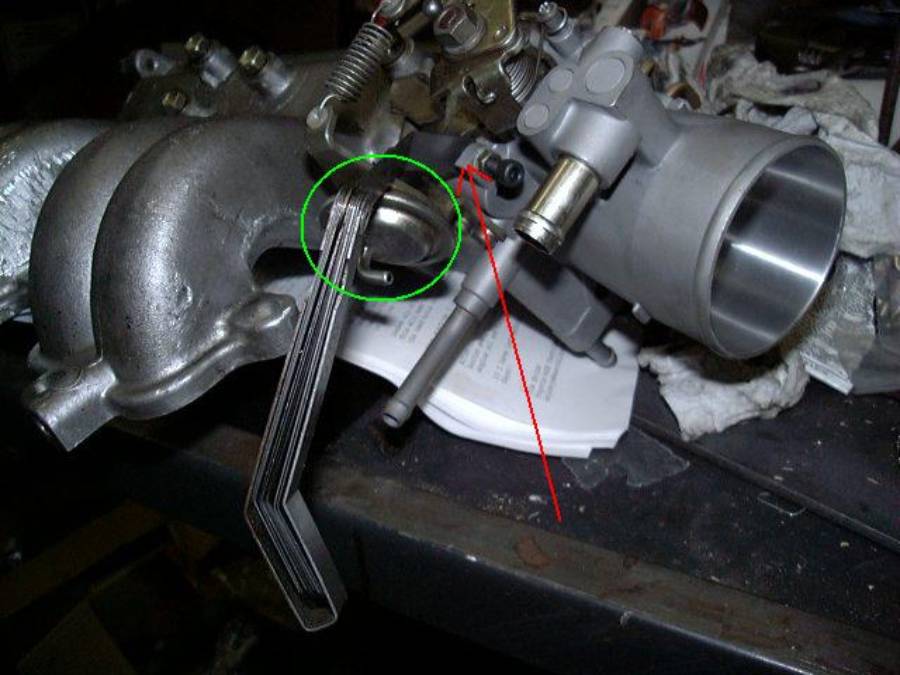
What Specifications Should You Check Before Adjusting a 22RE Throttle Position Sensor?
Before adjusting a 22RE throttle position sensor, identify the correct TPS terminal configuration, closed-throttle specification, throttle-opening test condition, and full-range measurement for the specific 22RE application. These specifications provide the reference points needed to determine whether the TPS is merely out of adjustment or has an electrical fault.
The TPS changes its electrical output as the throttle shaft moves. At closed throttle, the sensor must indicate the specified idle position. As the throttle opens, the TPS output should change consistently rather than jumping, dropping out, or remaining fixed. Testing only the closed-throttle position can therefore miss an internal worn spot that appears farther through the throttle range.
The exact terminal names, resistance or voltage values, throttle-opening conditions, and allowable tolerances should be taken from the service information that applies to the vehicle’s model year and TPS configuration. Do not substitute an unverified specification simply because it is listed for another 22RE application. The reference material provided for this article does not contain Toyota’s factory TPS specifications, so exact numerical values should be verified against the applicable Toyota repair manual before they are presented as adjustment targets.
A useful specification sheet should identify at least four items: the terminals being measured, the required meter setting, the throttle position during the measurement, and the acceptable reading or range. Recording these values before starting prevents the adjustment procedure from becoming a trial-and-error process.
What Tools Do You Need to Adjust the TPS on a Toyota 22RE?
The main tools for a 22RE TPS adjustment are a digital multimeter, suitable meter probes, the correct tool for the TPS mounting screws, and the applicable service specifications. Additional measuring tools should be used when the factory procedure for the specific vehicle requires them.
The digital multimeter is the primary diagnostic tool because TPS adjustment depends on an electrical measurement rather than visual sensor position alone. Set the meter according to the test specified by the service procedure. Suitable probes are equally important because forcing oversized probes into an electrical connector can spread or damage its terminals and create another connection problem.
Use the correct screwdriver, socket, or driver for the TPS fasteners. The goal is to loosen the sensor enough that it can be repositioned without unnecessarily removing it. A feeler gauge may also be required when a procedure specifies a precise throttle opening as the reference point. Use one only when that measurement is part of the applicable adjustment procedure.
Keep the correct specifications available while making the adjustment. A multimeter reading has little diagnostic value without a known test condition and acceptable range. For example, a reading taken at closed throttle cannot be evaluated against a specification intended for a partially opened throttle.
What Should You Check Before Adjusting the 22RE TPS?
Check the TPS connector and wiring, sensor mounting, throttle movement, and throttle body’s mechanical condition before changing the TPS position. Adjustment should correct sensor alignment; it should not be used to conceal an electrical or mechanical fault.
Start with the TPS connector and nearby wiring. Look for loose connections, damaged insulation, contaminated terminals, corrosion, or wires that have been stretched or repaired poorly. An unstable connection can change the measured signal as the harness moves. In that situation, rotating the TPS may temporarily produce the desired meter reading without correcting the underlying electrical problem.
Next, operate the throttle through its range and confirm that it moves freely and returns consistently to its resting position. The TPS is mechanically linked to throttle-shaft movement, so an inconsistent mechanical reference makes accurate sensor adjustment difficult. Inspect the TPS mounting area as well. Loose or damaged fasteners can allow the sensor position to change after it has been calibrated.
Do not alter the throttle stop or another factory mechanical setting simply to make the TPS reading match a target value unless the applicable Toyota service procedure specifically requires that adjustment. The TPS should be calibrated against the correct mechanical reference point. Changing that reference can introduce a second variable and make the original fault harder to diagnose.
Complete these checks before loosening the TPS mounting screws. If the wiring, connector, throttle movement, or sensor mounting has a clear fault, correct that problem first and then repeat the electrical test before deciding that TPS adjustment is necessary.
How Do You Test a 22RE Throttle Position Sensor Before Adjusting It?
Test the 22RE throttle position sensor at its reference throttle position and through the throttle range before changing its mounting position. This establishes whether the TPS is simply out of adjustment or produces an abnormal electrical response that adjustment cannot correct.
Set the digital multimeter to the measurement mode specified by the applicable Toyota service procedure and connect the probes to the required TPS terminals. Use the correct connector-testing method rather than forcing probes into terminals. The ignition switch and TPS connector must also be in the condition specified for that particular test because voltage, resistance, and continuity tests do not use identical test conditions.
Begin with the throttle fully returned to its normal closed position. Compare the meter reading with the specified closed-throttle value. A reading outside the specified range does not automatically prove that the TPS has failed. Sensor position, connector condition, wiring faults, or an incorrect mechanical reference can also produce an incorrect measurement.
Next, move the throttle slowly and steadily from the closed position toward wide-open throttle while watching the multimeter. The TPS reading should change progressively as the throttle shaft rotates. Pay particular attention to sudden jumps, interruptions, dead spots, or sections where the reading does not respond to throttle movement. These abnormalities are important because repositioning the TPS changes its calibration point but does not repair a worn or electrically defective sensing element.
Check the required endpoint measurement after testing the intermediate throttle positions. If the service procedure specifies both closed-throttle and wide-open-throttle checks, compare both results with their respective specifications. A TPS that can be brought into specification at one position but produces an abnormal reading elsewhere requires further diagnosis rather than repeated adjustment.
Record the measurements before loosening the TPS. These initial readings provide a baseline that can be compared with the results after adjustment and help confirm whether repositioning the sensor actually corrected the problem.
How Do You Adjust the Throttle Position Sensor on a Toyota 22RE?
Adjust the 22RE TPS by placing the throttle at the specified reference position, loosening the TPS mounting screws, rotating the sensor until the required electrical reading is obtained, and tightening the sensor without allowing its position to change. Recheck the measurement immediately after tightening because even a small movement of the sensor can alter the final setting.
Before loosening anything, connect the multimeter to the TPS according to the applicable test procedure. Position the throttle exactly as required for the adjustment measurement. The reference condition matters because TPS output changes with throttle-shaft position. A correct electrical value measured at the wrong throttle position does not represent a correct calibration.
Loosen the TPS mounting screws only enough to allow controlled movement of the sensor. Do not remove the screws unless removal is required for another repair. Rotate the TPS gradually while monitoring the multimeter. Small movements are preferable because the purpose is to locate the position that produces the specified electrical condition, not simply to rotate the sensor as far as its mounting slots permit.
How Do You Set the 22RE TPS to the Correct Position?
Set the TPS at the position where the multimeter reading meets the specified value or allowable range under the required throttle condition. Hold the sensor steady once that point is reached and tighten the mounting screws carefully. Avoid allowing tightening force to rotate the TPS away from the calibrated position.
Check the meter again after the screws are secure. If the measurement has moved outside the specified range, loosen the sensor and repeat the adjustment. Do not compensate by changing the throttle stop or another unrelated mechanical setting unless the applicable Toyota procedure specifically instructs you to do so.
After the closed/reference-position setting is correct, operate the throttle several times and allow it to return naturally. Measure the reference position again. The reading should return consistently to the required range. A value that changes each time the throttle returns can indicate sensor movement, inconsistent throttle return, a connector problem, or an internal TPS fault.
Do not consider the adjustment complete based on one correct meter reading. The TPS must still be checked through its operating range after the mounting screws have been tightened. This final verification determines whether the sensor is both correctly positioned and electrically consistent as the throttle moves.
How Do You Verify the 22RE TPS After Adjustment?
Verify the 22RE TPS by rechecking its reference-position reading, moving the throttle through its full operating range, checking the required endpoint reading, and confirming that the sensor returns consistently to its original setting. Verification is necessary because tightening the TPS mounting screws can shift the sensor slightly even when the initial adjustment was correct.
Start by allowing the throttle to return completely to its normal closed position. Check the multimeter without changing the probe connections or measurement conditions used for the adjustment. The reading should remain within the specification for that test condition. If it moved outside the specified range after the TPS mounting screws were tightened, loosen the sensor and repeat the adjustment rather than accepting the shifted value.
Next, open the throttle slowly while monitoring the multimeter. Move from closed throttle toward wide-open throttle in one smooth motion. The electrical reading should change progressively with throttle movement. A sudden jump, drop, interruption, or section with no corresponding change in output indicates that the problem involves more than the sensor’s mounting position. Repositioning the TPS can change its starting point, but it cannot correct an internal electrical dead spot.
Check the endpoint specified by the applicable Toyota service procedure once the throttle reaches the required open position. This second reference point is important because a TPS should not be judged solely by its closed-throttle setting. The sensor needs to represent throttle movement across its operating range, not just produce one acceptable measurement at idle.
Release the throttle and allow it to return on its own rather than manually holding it at the closed position. Recheck the reference reading. Repeat the throttle movement several times and watch whether the TPS consistently returns to the same electrical range. An inconsistent return reading can indicate TPS movement on its mounting points, irregular throttle return, poor electrical contact, or an internal sensor problem.
The adjustment is complete when the TPS meets the applicable reference specifications, changes consistently through the tested throttle range, and repeatedly returns to the correct closed-throttle condition. If one of these checks fails, identify the cause before making additional adjustments.
What Are the Symptoms of an Incorrectly Adjusted 22RE TPS?
An incorrectly adjusted 22RE TPS can provide the EFI system with a throttle-position signal that does not correspond to the actual position of the throttle valve. The resulting problem is therefore a disagreement between mechanical throttle position and the electrical information produced by the sensor.
Drivability problems may appear when the TPS signal does not represent actual throttle movement correctly. However, a symptom by itself does not prove that TPS adjustment is the cause. Fuel-delivery faults, ignition problems, wiring defects, throttle-body problems, and other engine-control faults can produce overlapping behavior. TPS adjustment should be evaluated with electrical measurements rather than diagnosed from drivability symptoms alone.
One of the strongest indicators of incorrect adjustment is a TPS reading that falls outside the specified range at the required reference position while the sensor otherwise produces a consistent response through its range. For example, a sensor that changes smoothly as the throttle opens but starts from an incorrect reference value may require repositioning. In contrast, a sensor that repeatedly loses its electrical response at the same point in throttle travel is less likely to be corrected by changing its mounting position.
Another indicator is a TPS that initially meets the required specification but falls outside it after the mounting screws are tightened. This points toward movement during tightening rather than an immediate reason to replace the sensor. Reposition the TPS, hold it securely while tightening, and perform the verification procedure again.
Treat an incorrect multimeter result as diagnostic evidence and drivability behavior as supporting information. This distinction prevents unnecessary TPS adjustment when the actual problem is elsewhere in the 22RE’s throttle, wiring, or engine-control system.
Why Does a 22RE TPS Still Read Incorrectly After Adjustment?
A 22RE TPS can still produce an incorrect reading after adjustment when the problem comes from the sensor itself, its electrical circuit, its mounting position, or the throttle body’s mechanical reference rather than calibration alone. Repeatedly rotating the TPS will not correct these faults. Determine why the reading remains incorrect before making another adjustment.
Start by checking whether the TPS produces a consistent electrical response. Move the throttle slowly through its range while monitoring the multimeter. A sensor that changes smoothly but remains outside the required reference specification may still have an adjustment or reference-position problem. A reading that jumps, drops out, stops changing, or becomes inconsistent at a repeatable point in throttle travel indicates a different type of fault that should be diagnosed before further calibration.
Check the TPS connector and wiring when the reading changes unexpectedly. Move the harness carefully while monitoring the meter and inspect the connector for damaged, loose, contaminated, or corroded terminals. The TPS depends on a stable electrical circuit to provide a usable signal. Changing sensor position cannot correct an intermittent connection or damaged wire.
TPS movement during tightening is another possible cause. The sensor can reach the correct reading while its mounting screws are loose and then shift as the screws are secured. Compare the measurement immediately before and after tightening. Reposition the TPS if the reading changes outside the required range during this step, and hold the sensor steady while securing it again.
The throttle body’s mechanical condition should also be checked when the TPS will not return consistently to its reference reading. The sensor follows throttle-shaft movement, so the throttle must return to a repeatable mechanical position for the TPS to return to a repeatable electrical position. Binding, inconsistent return, or another mechanical problem should be corrected before TPS calibration is evaluated again.
Do not change unrelated adjustments simply to force the TPS measurement into specification. In particular, avoid using a different throttle stop position as a shortcut unless the applicable Toyota service procedure specifically requires that setting to be changed. Doing so changes the mechanical reference used by the TPS and can make the original problem more difficult to identify.
When Should You Replace a 22RE TPS Instead of Adjusting It?
Replace or further diagnose a 22RE TPS when proper adjustment cannot produce the required electrical behavior and testing indicates that the sensor itself is defective. Adjustment corrects the relationship between TPS position and throttle position; it does not repair an internally worn or electrically damaged sensor.
A useful distinction is whether the sensor is merely offset or produces an abnormal response. If the TPS responds consistently to throttle movement and can be brought into the required specification by repositioning, adjustment is the appropriate correction. If its output contains repeatable interruptions, dead spots, or erratic changes while the throttle moves smoothly, repositioning the sensor is unlikely to solve the underlying problem.
Do not replace the TPS solely because one measurement is outside specification. Verify the test conditions first, then inspect the connector, wiring, sensor mounting, and throttle movement. An incorrect meter setting, wrong test condition, poor connection, or sensor movement during tightening can produce a failed measurement without proving that the TPS itself has failed.
Replacement becomes justified when testing isolates the problem to the sensor and adjustment cannot restore the required operation. After installing another TPS, do not assume its mounting position is automatically correct. Perform the applicable adjustment and verification procedure so the replacement sensor is correctly referenced to throttle position.
Read more: Toyota Sienna Oil Change: Type, Capacity & Guide
Do You Need to Readjust a 22RE TPS After Removing the Throttle Body?
Recheck the 22RE TPS adjustment whenever service work changes the relationship between the TPS and the throttle shaft, particularly when the sensor itself has been loosened, removed, repositioned, or replaced. Reinstallation should be followed by electrical verification rather than assuming the previous calibration has been preserved.
If the throttle body was removed while the TPS remained securely mounted and its position was not disturbed, first test the sensor against the applicable specifications. Adjustment is necessary only when the service procedure requires it or the measurements show that calibration is no longer correct. Avoid changing a verified TPS setting merely because another component was removed.
If the TPS mounting screws were loosened or the sensor was separated from the throttle body, treat its previous position as no longer verified. Establish the required throttle reference position, measure the TPS, reposition it as necessary, and tighten the mounting screws while monitoring the final setting. Then move the throttle through its operating range and confirm that the electrical response remains consistent.
The same principle applies after TPS replacement. Installation and adjustment are separate steps. Mounting a replacement sensor establishes the mechanical connection, while calibration verifies that its electrical output corresponds correctly with throttle position. Complete the repair only after the replacement TPS passes both the reference-position and throttle-range checks.