The best 22RE performance upgrades improve airflow, exhaust flow, cylinder filling, combustion efficiency, or the amount of air and fuel the engine can process. For a naturally aspirated Toyota 22RE, the main upgrades include an improved intake, header and exhaust system, performance camshaft, cylinder head work, and higher compression. Builds targeting substantially more power can move to forced induction with the fuel delivery, engine management, cooling, and other supporting modifications required to handle the additional load.
Not every 22RE modification produces the same result. An intake or larger throttle body primarily addresses airflow restrictions, while a camshaft changes valve operation and the engine’s effective powerband. Cylinder head work can increase the amount of air the engine processes, while a turbocharger increases the mass of air entering the cylinders and creates much greater power potential. These modifications also interact, so installing individual parts without considering the complete engine combination can limit their effectiveness.
This guide explains which 22RE performance upgrades are worth considering, how each modification affects horsepower and torque, and which upgrades work best together. It also covers engine condition, upgrade order, naturally aspirated builds, and turbocharged setups so you can choose modifications based on how you actually use your Toyota.
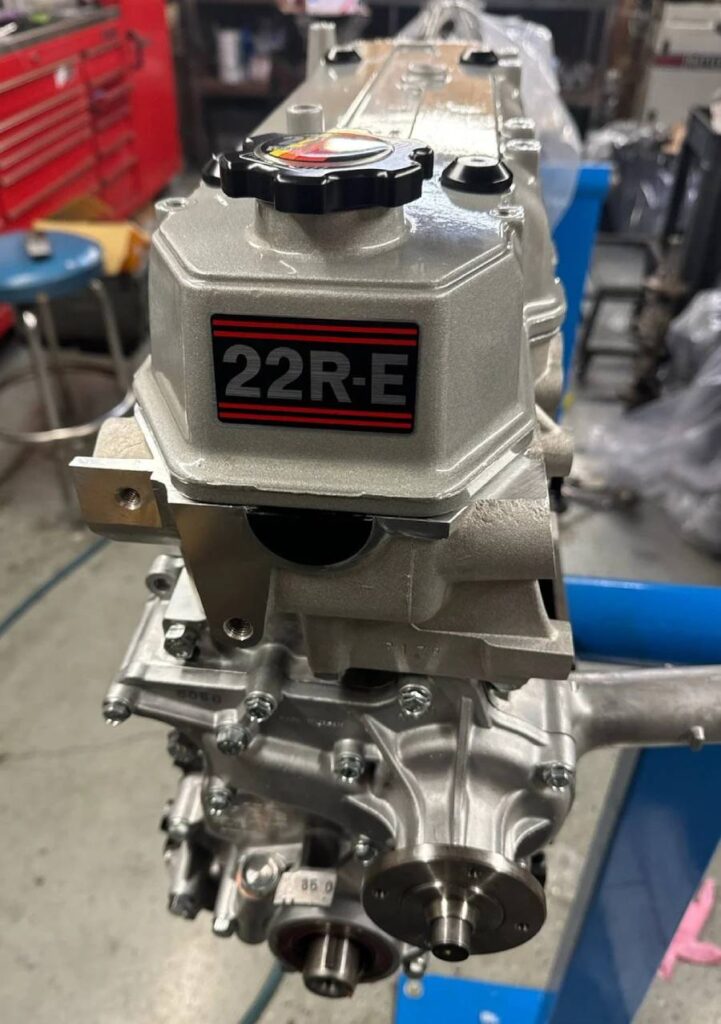
What Are the Best 22RE Performance Upgrades?
The main 22RE performance upgrades are intake modifications, a performance header and exhaust, a performance camshaft, cylinder head work, increased compression, fuel and ignition improvements, and forced induction. Each modification affects a different part of the combustion process, so the best combination depends on whether the goal is stronger low-end torque, better throttle response, more high-RPM horsepower, or a substantial increase in total engine output.
Intake and exhaust upgrades improve the path that air follows into and out of the engine. A less restrictive intake can support greater airflow when the engine demands it, while a properly sized header and exhaust system help spent gases leave the cylinders efficiently. These modifications become more relevant when they support other changes that increase airflow demand. Installing a large throttle body or oversized exhaust on an otherwise stock 22RE does not guarantee a proportional horsepower increase because another component can remain the limiting point in the airflow system.
A performance camshaft and cylinder head work change the engine at a deeper level. The camshaft controls when and how far the valves open, affecting cylinder filling and the RPM range where the engine produces its strongest output. Cylinder head modifications can improve airflow through the intake and exhaust ports. Combining an appropriate cam profile with improved head flow, intake capacity, and exhaust flow allows these components to function as a system rather than as isolated upgrades.
Higher compression and forced induction provide additional paths to increased output. Raising the compression ratio can improve the effectiveness of the combustion process, but it requires greater attention to the complete engine combination and fuel requirements. Turbocharging has considerably greater power potential because it increases the mass of air entering the cylinders. That additional airflow also increases fuel, tuning, cooling, and engine-load requirements, making a turbo setup substantially more complex than basic bolt-on modifications.
For most 22RE builds, the correct strategy is therefore not to install the largest available component. Choose each upgrade according to the engine’s airflow demand, desired powerband, vehicle use, and the modifications that will support it.
How Much Horsepower and Torque Can a Stock 22RE Make?
A stock Toyota 22RE produces roughly 100–116 horsepower and about 130–140 lb-ft of torque in common factory configurations, but the exact rating depends on model year and application. These factory figures provide a useful baseline for evaluating performance modifications, but they should not be treated as the expected output of every 22RE currently on the road.
Factory horsepower is also different from wheel horsepower measured on a chassis dynamometer. The manufacturer’s engine rating represents output before drivetrain losses, while a chassis dyno measures the power that reaches the driven wheels. Transmission type, drivetrain configuration, tires, test conditions, and dyno methodology can therefore change the measured result. A modified 22RE should be compared against a consistent baseline whenever possible rather than against an unrelated dyno result.
Engine condition creates another important variable because the 22RE is now found primarily in older Toyota vehicles. Compression loss, worn ignition components, incorrect ignition timing, fuel-delivery problems, exhaust restrictions, or other mechanical issues can reduce output below the engine’s original specification. Adding performance parts does not correct these underlying losses automatically. A healthy engine that starts from its intended baseline provides a more reliable platform for measuring the effect of a modification.
This distinction also prevents maintenance from being confused with modification. Replacing a failed ignition component or correcting low fuel pressure can recover horsepower the engine has lost, but that work does not necessarily increase output beyond a healthy stock baseline. Establishing the engine’s mechanical condition first makes horsepower and torque gains from later 22RE performance upgrades easier to evaluate.
What Should You Check Before Upgrading a 22RE?
Check compression, ignition, fuel delivery, cooling, oil consumption, and overall engine condition before installing 22RE performance upgrades. A modification works from the engine’s existing mechanical baseline. Performance parts cannot compensate reliably for worn cylinders, poor compression, incorrect ignition timing, inadequate fuel delivery, or an overheating problem.
Start with engine compression because combustion pressure depends on the cylinders sealing correctly. A compression test can identify a weak cylinder, while a leak-down test can provide more information about where pressure is escaping. More important than chasing a single universal compression number is verifying that the cylinders produce reasonably consistent results and investigating a cylinder that differs substantially from the others. Installing a camshaft, header, or intake on an engine with significant compression loss can make the modification difficult to evaluate because the engine is already operating below its intended condition.
The ignition and fuel systems should also operate correctly before additional airflow is introduced. Check spark plugs, plug wires, distributor-related components, ignition timing, injectors, fuel pressure, and fuel delivery according to the engine’s configuration and condition. A weak spark or fuel-delivery problem can cause hesitation, misfires, poor throttle response, or an incorrect air-fuel mixture. Correcting these problems restores proper operation rather than functioning as a horsepower modification by itself.
Cooling and lubrication condition become increasingly important as engine output and load increase. Inspect the cooling system for overheating problems and determine whether the engine consumes or leaks excessive oil. A modified engine can generate additional thermal and mechanical load, particularly when compression or forced induction is increased. Starting with a mechanically sound 22RE reduces the chance that an existing problem will become more severe after modification.
The key distinction is between maintenance and performance modification. Maintenance restores performance that a 22RE has lost; a performance upgrade changes the engine so it can produce or deliver performance beyond that healthy baseline. A tune-up that fixes an ignition problem may make an old 22RE feel substantially stronger, but the recovered output should not automatically be counted as horsepower created by an aftermarket part.
Does an Intake Upgrade Add Power to a 22RE?
An intake upgrade can support more power on a 22RE when the existing intake system restricts the airflow required by the engine, but an intake alone should not be treated as a guaranteed large horsepower gain. Its effect depends on the airflow demand created by the rest of the engine combination.
An engine produces power by combining an appropriate amount of air and fuel and converting the resulting combustion pressure into crankshaft rotation. The intake system supplies that air. Reducing an actual restriction can make it easier for the engine to fill its cylinders, particularly when modifications such as a performance camshaft or cylinder head work have increased airflow demand. On a near-stock engine, however, the stock cylinder head, camshaft, exhaust, or another component can remain the primary restriction. Increasing intake capacity beyond what the engine can use produces diminishing returns.
Intake-air temperature also matters because air density changes with temperature. An intake configuration that draws cooler outside air is different from an exposed filter positioned where it primarily draws heated under-hood air. For a performance-oriented setup, the objective is therefore not simply to install the largest filter or shortest intake tube. The intake should provide adequate airflow while limiting unnecessary restriction and excessive exposure to engine-bay heat.
A larger throttle body follows the same principle. Increasing throttle-body diameter is useful when the existing throttle body becomes a meaningful restriction at the airflow level the engine requires. A larger opening can increase available flow area, but the cylinders do not automatically consume that additional capacity. A stock or mildly modified 22RE can therefore receive little additional peak power from an oversized throttle body if the camshaft, cylinder head, intake manifold, or exhaust system still limits airflow.
Throttle response and peak horsepower should also be evaluated separately. A change in throttle geometry or airflow characteristics can alter how quickly the engine responds to accelerator input without producing an equivalent increase in maximum horsepower. This distinction matters when evaluating aftermarket intake claims: an engine that feels more responsive is not necessarily producing a large increase in measured output.
For a naturally aspirated 22RE build, intake modifications make the most sense as part of a matched airflow package rather than as an isolated horsepower solution. A performance camshaft can increase cylinder airflow demand, cylinder head work can improve the available flow path, and an appropriate header and exhaust can reduce restrictions on the outlet side. The intake can then support the additional airflow that those modifications allow the engine to process.
How Much Does a Header Improve 22RE Performance?
A performance header can improve 22RE horsepower and torque by reducing exhaust restriction and improving how efficiently exhaust gases leave the cylinders, but the actual gain depends on the header design and the rest of the engine combination. A header becomes more valuable as intake flow, camshaft specifications, cylinder head flow, or other modifications increase the amount of air the engine processes.
The factory exhaust manifold must collect exhaust from four cylinders and route it into the exhaust system. A performance header replaces this arrangement with individual primary tubes that merge farther downstream. Primary tube diameter, primary length, collector design, and the point where exhaust pulses merge influence gas velocity and pressure behavior. A properly designed header uses these characteristics to help evacuate exhaust gases rather than simply providing a larger passage.
Exhaust scavenging explains why header design affects more than maximum flow capacity. Exhaust gases leave each cylinder as pressure pulses when the exhaust valve opens. A well-designed header controls these pulses so the pressure changes created by one cylinder can assist evacuation of another cylinder during the appropriate part of the cycle. Better cylinder evacuation leaves less residual exhaust gas behind and can improve the conditions for the next intake charge.
Header dimensions also influence where an engine benefits within its RPM range. Larger tubes are not automatically better because excessive cross-sectional area can reduce exhaust-gas velocity at lower flow rates. A 22RE intended for street driving or low-speed off-road use therefore has different priorities from an engine built primarily for higher-RPM operation. For street and trail vehicles, preserving useful low- and mid-range torque can be more valuable than selecting a header solely for peak-flow capacity.
The rest of the exhaust system can limit the benefit of a header. Exhaust gases still have to travel through the downstream piping, catalytic converter where fitted, muffler, and other components after leaving the collector. Installing a high-flow header ahead of a restrictive exhaust system can leave a bottleneck downstream. The header and exhaust should therefore be selected as connected parts of the same flow path.
A specific horsepower gain should not be assumed for every 22RE header. Results change with engine condition, camshaft, cylinder head, compression, intake system, exhaust configuration, and testing method. The strongest case for a header is as part of a matched naturally aspirated combination where both the intake and exhaust sides can support the engine’s increased airflow demand.
What Exhaust System Works Best With a 22RE?
The best exhaust system for a 22RE uses enough pipe diameter and flow capacity for the engine’s actual output without unnecessarily oversizing the system. Stock and mildly modified naturally aspirated engines require less exhaust capacity than extensively modified or turbocharged combinations, so one exhaust diameter is not optimal for every 22RE build.
Exhaust pipe diameter affects both flow capacity and gas velocity. Increasing diameter increases the cross-sectional area available for exhaust flow, which becomes useful when engine output and exhaust mass flow increase. Increasing diameter beyond the engine’s requirements, however, does not force the engine to produce additional power. The system should be sized according to engine airflow, RPM range, modifications, and intended use rather than the assumption that the largest pipe creates the highest output.
This relationship is particularly important for a naturally aspirated 22RE used for street or off-road driving. These applications commonly depend on useful torque across the lower and middle portions of the RPM range instead of peak output alone. Header design, collector dimensions, downstream pipe size, catalytic converter flow, and muffler design should work together to provide adequate capacity without treating maximum pipe diameter as the primary objective.
A performance muffler can reduce a restriction when the existing muffler limits exhaust flow, but removing restriction is different from removing every source of backpressure without regard to the complete system. Exhaust performance depends on pressure waves, gas velocity, pipe dimensions, and component restrictions. For this reason, describing an exhaust as effective simply because it has “less backpressure” oversimplifies how the system interacts with a naturally aspirated engine.
The catalytic converter must also be considered on vehicles equipped with one. A damaged or internally restricted converter can reduce exhaust flow and engine performance, while a properly functioning converter is part of the vehicle’s emissions system. Performance modifications should retain the emissions equipment required for the vehicle and jurisdiction. Removing emissions components should not be treated as a necessary 22RE horsepower upgrade.
Turbocharged 22RE builds have different exhaust requirements because the turbocharger changes the exhaust system’s function and substantially increases potential mass flow. The exhaust downstream of the turbine must handle the requirements of the forced-induction combination, so recommendations intended for a mildly modified naturally aspirated engine should not automatically be transferred to a turbo setup.
For a naturally aspirated 22RE, the exhaust should be treated as a matched system consisting of the header, collector, piping, catalytic converter where required, and muffler. The correct combination supports the engine’s expected airflow and intended RPM range. It does not rely on pipe diameter alone as a measure of performance.
Is a Performance Camshaft Worth It on a 22RE?
A performance camshaft is worth considering on a 22RE when the goal is to change the engine’s powerband and increase its ability to fill the cylinders at the intended RPM range. Unlike a basic intake modification, a camshaft directly changes valve operation. Its effectiveness depends on cam profile, cylinder head airflow, exhaust flow, compression, and how the vehicle is used.
Three important camshaft specifications are lift, duration, and valve timing. Lift determines how far a valve opens, while duration determines how long it remains open. Valve timing determines when the intake and exhaust valves open and close relative to piston movement. Changing these specifications alters how effectively air enters the cylinder and exhaust gases leave it during different parts of the engine’s operating range.
A more aggressive camshaft does not increase performance equally at every RPM. A profile designed to support greater airflow at higher engine speeds can move useful power farther up the RPM range, potentially sacrificing some low-speed characteristics in exchange for stronger higher-RPM performance. This trade-off matters on a 22RE because a Toyota Pickup or 4Runner used for crawling, trail driving, towing, or normal street use can benefit more from usable low- and mid-range torque than from a higher peak horsepower number.
The camshaft should therefore be selected according to the intended powerband rather than by choosing the most aggressive available profile. Valve lift and duration must also remain compatible with the rest of the valvetrain and engine combination. Valve-to-piston clearance, valve springs, installed geometry, and other mechanical requirements become increasingly important as the cam profile moves farther from stock specifications.
Which 22RE Camshaft Is Best for Street and Off-Road Driving?
A mild performance camshaft that concentrates its useful power in the low- and mid-RPM range is generally better suited to a street or off-road 22RE than a profile designed primarily for high-RPM horsepower. The correct profile depends on vehicle weight, gearing, tire size, engine compression, cylinder head flow, exhaust configuration, and the RPM range where the driver needs torque.
Street-driven vehicles require a broad operating range. The engine must accelerate cleanly from relatively low RPM, operate predictably in traffic, and provide useful torque without requiring the driver to keep it near the top of the rev range. A camshaft that maintains these characteristics while improving cylinder filling through the middle of the RPM range is more useful for this application than one optimized around maximum peak output.
Off-road use places even greater emphasis on the location of the powerband. Technical trails and low-speed driving require controlled torque delivery, particularly when larger tires increase the load placed on the drivetrain. Moving too much of the engine’s useful output toward higher RPM can work against this objective. Gearing can compensate for some changes in engine characteristics, but the camshaft and drivetrain should still be selected around the same intended use.
A performance cam also works best when the surrounding components can take advantage of its valve events. Improving valve opening does little if the cylinder head, intake, or exhaust becomes the dominant restriction. Depending on the cam profile, upgraded valve springs or other valvetrain components may also be required to maintain valve control. For this reason, a 22RE camshaft should be chosen as part of an engine combination rather than as an isolated horsepower part.
How Does Cylinder Head Work Improve 22RE Performance?
Cylinder head work can improve 22RE performance by increasing the engine’s ability to move air through the intake ports, valves, combustion chambers, and exhaust ports. This becomes particularly valuable when a performance camshaft, increased compression, or other modifications raise the engine’s airflow requirements.
Air entering a naturally aspirated 22RE must travel through several restrictions before reaching the cylinder. The intake manifold supplies the head, the intake port directs airflow toward the intake valve, and the valve opening provides the final passage into the combustion chamber. After combustion, exhaust gases travel through the exhaust valve and port before entering the header. The flow capability of these passages affects how efficiently the cylinder can fill and empty.
Port work can modify the shape and dimensions of the intake and exhaust passages, but increasing port size alone is not the objective. Effective cylinder head work balances airflow capacity with air velocity and the requirements of the engine combination. Removing material without considering port geometry can produce a larger passage without producing a better-performing head, particularly when the engine operates primarily at lower and middle RPM.
Valve and valve-seat work also affects airflow. The transition around the valve and seat is a critical part of the flow path because all intake air and exhaust gas must pass through this area while the valves are open. A properly executed valve job can improve the relationship between the valve, seat, and port. Valve size, valve shape, seat geometry, and the amount of valve lift provided by the camshaft all influence how effectively this area flows.
Cylinder head modifications and camshaft specifications are closely connected. A performance cam increases valve lift or changes the period during which airflow can occur, while cylinder head work determines how effectively the available valve opening can be used. A head with additional flow capacity provides limited value if the camshaft never creates the valve events needed to use it. Likewise, an aggressive cam can be restricted by a cylinder head that cannot supply the airflow demanded at higher lift or RPM.
The exhaust side must support the same combination. Increasing intake flow without providing an appropriate path for exhaust gases can move the restriction to the exhaust port, header, or downstream exhaust system. This is why a naturally aspirated 22RE build using cylinder head work commonly needs to be evaluated as an entire airflow path: intake → cylinder head → valves → combustion chamber → exhaust ports → header → exhaust system.
Cylinder head work is therefore more involved than a bolt-on intake or exhaust modification, but it becomes increasingly relevant as the performance target rises. For a serious naturally aspirated 22RE build, matching cylinder head flow with the camshaft, intake, exhaust, compression, and intended RPM range creates a more coherent combination than maximizing any one component independently.
Does Increasing Compression Add Horsepower and Torque to a 22RE?
Increasing the compression ratio can improve 22RE horsepower and torque by allowing the engine to extract more useful work from the combustion process, but it is an internal engine modification that must be matched with the fuel, camshaft, cylinder head, and intended use. Unlike an intake or header, increasing compression normally requires changes to the engine’s internal configuration rather than installing a simple bolt-on component.
Compression ratio describes the relationship between cylinder volume when the piston is near the bottom of its stroke and the remaining volume when the piston reaches the top. Increasing this ratio compresses the air-fuel mixture into a smaller space before combustion. Under appropriate conditions, the resulting increase in thermal efficiency allows a greater portion of the fuel’s energy to be converted into useful engine output.
The effect of higher compression cannot be evaluated independently from the camshaft. Valve timing affects the amount of mixture actually trapped in the cylinder before compression begins. In particular, intake-valve closing changes effective cylinder pressure. Two 22RE builds with the same static compression ratio can therefore behave differently when they use different camshaft profiles. This is one reason compression and camshaft selection should be planned together on a naturally aspirated engine build.
Higher compression also reduces the margin for uncontrolled combustion if the complete combination is poorly matched. Fuel octane, ignition timing, combustion-chamber characteristics, intake-air temperature, engine temperature, and cylinder pressure all influence detonation resistance. An engine built with a higher compression ratio may therefore require different fuel or tuning requirements than a stock engine. Increasing compression without accounting for these variables can trade reliability for a relatively small performance objective.
Several physical changes can alter compression ratio, including piston design, combustion-chamber volume, head-gasket dimensions, and machining choices made during an engine build. Each method also affects other dimensions or clearances that must remain within the engine builder’s specifications. Piston-to-valve clearance becomes particularly important when higher-compression pistons are combined with a performance camshaft that increases valve lift or changes valve timing.
For these reasons, compression is most appropriate when the engine is already being rebuilt or when a naturally aspirated build has a clearly defined combination. A 22RE using matched compression, camshaft specifications, cylinder head flow, intake, and exhaust can benefit more from the complete package than from increasing compression as an isolated modification.
Do Fuel and Ignition Upgrades Add Power to a 22RE?
Fuel and ignition upgrades add power to a 22RE when the existing systems cannot provide the fuel delivery, spark control, or ignition timing required by the modified engine; replacing adequate stock components with larger aftermarket parts does not automatically increase horsepower. These systems primarily support combustion requirements created by other performance modifications.
The fuel system must supply the amount of fuel required for the air entering the cylinders. If intake, cylinder head, camshaft, compression, or forced induction modifications substantially increase engine airflow, fuel demand can increase with it. The injectors, fuel pump, fuel pressure, and engine-management strategy must then provide the required fuel across the engine’s operating range. A fuel system that reaches its capacity becomes a limitation and, more importantly, can create unsafe operating conditions.
Larger fuel injectors solve a capacity problem only when additional capacity is required. Installing injectors with greater flow capability does not make the engine consume more air, and fuel alone cannot create a proportional increase in output without the corresponding oxygen and correct combustion conditions. Oversizing injectors without appropriate control can also make fuel calibration more difficult. Injector capacity should follow the engine’s calculated fuel demand rather than serve as a standalone horsepower modification.
The same distinction applies to the ignition system. Spark plugs, wires, distributor components, coils, and related parts must create consistent ignition under the conditions present inside the cylinder. Replacing a worn component can eliminate a misfire and recover lost performance, but the recovered output represents restoration of correct engine operation. A healthy stock ignition system does not necessarily produce additional horsepower simply because individual components are replaced with performance-branded alternatives.
Ignition requirements become more demanding as the engine combination changes. Higher cylinder pressure can make reliable ignition more difficult, while changes in compression, airflow, fuel, and boost can alter the ignition timing the engine requires. The objective is to provide sufficient spark energy and appropriate timing for the operating condition rather than maximizing any single ignition component.
Engine management becomes increasingly important as modifications move farther from the stock configuration. Fuel delivery and ignition timing determine how effectively the engine uses the additional airflow provided by mechanical upgrades. A modified engine can have excellent intake, cylinder head, camshaft, and exhaust components but still fail to produce the expected result when the air-fuel mixture or ignition timing is poorly matched.
This makes tuning fundamentally different from simply adding another performance part. Tuning coordinates fuel and ignition behavior with the mechanical combination. Naturally aspirated modifications may require relatively limited changes depending on their extent, while a forced-induction 22RE creates substantially greater demands because boost increases the amount of air entering the cylinders and raises cylinder pressure.
For a mild 22RE, the first priority is ensuring that the original fuel and ignition systems function correctly. For a more extensively modified engine, capacity and control should be evaluated against the new airflow and power requirements. Upgrade fuel and ignition components when the engine combination requires them, not because larger injectors or aftermarket ignition parts are assumed to create horsepower on their own.
Can You Turbocharge a Toyota 22RE?
Yes, a Toyota 22RE can be turbocharged, and forced induction provides substantially greater power potential than typical naturally aspirated bolt-on upgrades because a turbocharger increases the mass of air the engine can process. A successful turbo 22RE requires more than installing the turbo itself. Fuel delivery, engine management, exhaust, cooling, engine condition, and boost control must work as a complete system.
A turbocharger uses exhaust-gas energy to drive a turbine connected to a compressor. The compressor raises intake-manifold pressure and increases the mass of air entering the cylinders. More oxygen allows the engine to burn more fuel during each combustion cycle, which increases the pressure acting on the pistons and creates the potential for more torque and horsepower. This mechanism is fundamentally different from reducing a restriction with an intake or header because forced induction actively increases the amount of air available to the engine.
The additional cylinder pressure also increases mechanical and thermal loads. Pistons, connecting rods, head sealing, cooling capacity, lubrication, and the condition of the existing engine become more important as output rises. An older 22RE with compression problems, excessive oil consumption, cooling issues, or other mechanical faults is a poor starting point for forced induction because boost adds load rather than correcting the underlying problem.
Turbocharger sizing affects how the engine delivers its additional output. A turbo selected for rapid response and useful low- or mid-range torque has different airflow characteristics from a unit intended to support substantially higher power at higher engine speeds. Selecting a turbo only according to its maximum flow capability can result in a combination that does not match the vehicle’s intended RPM range. Street-driven Toyota Pickups and 4Runners generally benefit from a responsive powerband, while a specialized high-output build can justify different priorities.
Boost pressure alone also does not define how much power a turbocharged 22RE will produce. Compressor efficiency, intake-air temperature, intercooling, exhaust flow, cylinder head flow, fuel delivery, ignition timing, air-fuel ratio, engine condition, and RPM all affect the result. Two engines operating at the same boost pressure can therefore produce different output and experience different levels of cylinder pressure and thermal stress.
For the same reason, there is no single boost pressure that should be described as universally safe for every stock 22RE. The condition of the engine, fuel quality, calibration, charge temperature, detonation control, and intended duty cycle all affect the amount of stress the engine experiences. A boost number that works on one combination does not establish a safe limit for another engine.
What Supporting Mods Does a Turbo 22RE Need?
A turbocharged 22RE needs a fuel system with sufficient capacity, appropriate engine management, controlled intake temperatures, adequate exhaust flow, reliable cooling, and a mechanically healthy engine. Higher-output combinations can also require changes to internal engine components and the drivetrain.
Fuel delivery is one of the first requirements because the additional air supplied by the turbocharger requires additional fuel. Injector capacity, fuel-pump capacity, fuel pressure, and fuel control must support the engine’s maximum airflow demand. Running out of fuel capacity under boost can create a lean operating condition at the point where cylinder pressure and temperature are already elevated.
Engine management must coordinate fuel delivery with ignition timing. Boost changes the operating conditions inside the cylinders, so a calibration intended for a naturally aspirated engine should not automatically be assumed to provide appropriate control for forced induction. Air-fuel ratio and ignition behavior need to remain suitable throughout the load and RPM range rather than only at idle or light throttle.
Charge-air temperature is another important factor. Compressing air increases its temperature, while hotter intake air is less dense and can reduce the engine’s resistance to detonation. An intercooler can remove heat from the compressed intake charge before it reaches the engine. The effectiveness of the intercooling system depends on its design, airflow, pressure loss, and operating environment.
The exhaust system must also be matched to the turbocharger. Exhaust gases drive the turbine before entering the downstream exhaust, so a turbocharged setup has different flow requirements from a naturally aspirated 22RE using a conventional header. Turbo manifold design, turbine housing characteristics, wastegate control, and the exhaust after the turbine all influence response, boost control, and flow capacity.
Cooling and lubrication deserve additional attention because turbocharging increases heat load. The engine cooling system must already function correctly, and the turbocharger requires an appropriate oil supply and return arrangement when its design uses engine oil for lubrication. Depending on the turbocharger and installation, additional thermal management can be required around exhaust and intake components.
Internal engine modifications become more relevant as the performance target increases. Pistons, connecting rods, compression ratio, head sealing, and other components should be selected according to the intended cylinder pressure and use rather than upgraded according to a generic parts list. A mild street combination and a high-output competition-oriented engine place different demands on these components.
The drivetrain must finally be considered when torque increases substantially. Clutch capacity, transmission condition, driveshafts, differentials, axle components, gearing, and tires determine how effectively the vehicle can use the additional engine output. Increasing engine torque without considering the components that transmit it can simply move the weak point from the engine to another part of the vehicle.
A reliable turbo 22RE is therefore a system rather than a turbocharger attached to an otherwise unplanned engine. Boost, airflow, fuel delivery, ignition control, charge temperature, cooling, engine strength, and drivetrain capacity should be matched to the same horsepower and torque target.
Which 22RE Performance Upgrades Should You Do First?
Start 22RE performance upgrades by establishing a healthy engine baseline, then improve the components that restrict the type of performance you actually need. For most street and off-road builds, this means addressing engine condition first, followed by matched intake and exhaust improvements, then moving to a camshaft, cylinder head work, compression, or forced induction when the performance target justifies the additional cost and complexity.
The upgrade order matters because 22RE performance parts interact. A high-flow intake provides limited value when the engine cannot use the additional airflow, while an aggressive camshaft can perform poorly when the cylinder head and exhaust cannot support its intended operating range. The same principle applies to fuel components: larger injectors are not an appropriate first modification when the existing fuel system already supplies the engine’s requirements. Each modification should either remove an identified restriction or support another modification that increases airflow and fuel demand.
A practical upgrade sequence starts with compression, ignition, fuel delivery, cooling, and general mechanical condition. Once the engine operates correctly, intake, header, and exhaust changes can establish a less restrictive airflow path. A performance camshaft can then alter cylinder filling and the powerband, while cylinder head work and compression become relevant for a more developed naturally aspirated combination. Forced induction represents a separate path when the target exceeds what basic naturally aspirated modifications can reasonably provide.
The correct sequence also depends on how the Toyota is driven. A modification that increases high-RPM horsepower is not automatically an improvement for a vehicle that spends most of its time crawling at low speed or accelerating through the lower half of the RPM range. Upgrade order should follow the required powerband rather than the maximum horsepower number available from an individual part.
What Is the Best 22RE Upgrade Order for Street Driving?
For a street-driven 22RE, prioritize engine health, usable low- and mid-range torque, throttle response, and a broad powerband before pursuing maximum horsepower. A logical sequence is baseline maintenance and testing, matched intake and exhaust improvements, an application-appropriate camshaft, and then more involved engine modifications if the initial changes do not meet the performance target.
Start by correcting mechanical problems that reduce stock performance. Compression should be consistent, ignition and fuel delivery should operate correctly, and the cooling system should maintain proper engine temperature. This step establishes whether later changes actually improve performance instead of masking an existing problem.
Intake, header, and exhaust modifications can follow when they address actual airflow restrictions. These components should be selected as a connected system rather than independently maximizing the size of each part. For a street engine, maintaining air and exhaust velocity across the RPM range is important because the vehicle operates under changing engine speeds and loads rather than continuously at peak RPM.
A mild performance camshaft is a logical next step when the goal requires a more substantial change in engine behavior. The cam profile should support the RPM range used during normal driving. More extensive cylinder head work or increased compression can then complement the camshaft when the owner is prepared for internal engine work and wants to develop the naturally aspirated combination further.
Forced induction should be treated as a different build strategy rather than the final bolt-on in every street build. A turbocharged 22RE requires fuel, tuning, cooling, exhaust, and other supporting systems that a basic naturally aspirated build may not need. If the target requires a large increase in torque and horsepower, planning the turbo combination from the beginning can prevent money from being spent on naturally aspirated parts that will later be replaced.
What Is the Best 22RE Upgrade Order for Off-Road Driving?
For an off-road 22RE, prioritize engine reliability, low- and mid-range torque, throttle control, cooling, and drivetrain gearing before modifications designed mainly to increase high-RPM horsepower. Technical off-road driving places different demands on the engine than a vehicle built around peak dyno output.
Begin with mechanical reliability because an engine operating under sustained load, low vehicle speed, or difficult terrain depends heavily on its cooling, lubrication, ignition, and fuel systems. A small performance increase provides little value if the vehicle develops an overheating, fueling, or ignition problem when it is far from normal road access.
The next modifications should support the RPM range where the vehicle actually operates. A header, exhaust, intake, and camshaft can improve performance, but their dimensions and specifications should favor usable torque rather than maximum flow at an engine speed that is rarely reached on the trail. An excessively aggressive camshaft or oversized airflow component can move the engine characteristics away from the operating range the driver needs.
Drivetrain gearing is particularly important for an off-road Toyota because engine torque and wheel torque are not the same thing. Differential gearing, transmission ratios, transfer-case reduction, and tire diameter determine how engine torque is multiplied before reaching the ground. Larger tires effectively alter the overall gearing and can make an otherwise healthy 22RE feel weaker during acceleration or climbing. Correct gearing can therefore address a vehicle-level performance problem that additional engine horsepower alone does not solve efficiently.
A more developed naturally aspirated off-road build can combine an appropriate camshaft with cylinder head work, intake, header, exhaust, and a compression ratio suited to the complete engine combination. These parts should be chosen around the desired low- and mid-range powerband. Forced induction can provide substantially more torque, but it also increases heat, cylinder pressure, fuel demand, and drivetrain load, making system reliability even more important in an off-road application.
For a high-horsepower 22RE, the upgrade sequence changes substantially. Once the target exceeds what a mild naturally aspirated combination is intended to provide, define the final power target before buying additional parts. The cylinder head, compression ratio, camshaft, fuel system, engine management, cooling, exhaust, internal components, and potentially forced-induction system can then be selected around the same objective. This approach avoids building the engine twice and keeps individual modifications aligned with the final performance target.
Which 22RE Performance Upgrades Give the Best Value for Money?
The best-value 22RE performance upgrades are the modifications that remove a real restriction, improve the engine’s useful powerband, and support the vehicle’s intended use without requiring unnecessary supporting parts. For most naturally aspirated builds, a matched header and exhaust, appropriate intake improvements, and a well-selected camshaft offer a more practical starting point than expensive internal modifications or oversized components.
Value should not be measured by purchase price alone. Installation cost, required supporting modifications, tuning requirements, reliability, and the amount of usable performance gained all affect the total return from an upgrade. A relatively inexpensive component can become poor value if it requires several additional modifications before it provides a meaningful benefit. Conversely, a more expensive camshaft or cylinder head modification can make sense when it addresses the primary restriction in an already-developed naturally aspirated engine.
Basic intake modifications are relatively simple, but their value depends heavily on the existing airflow restriction. Replacing a restrictive component can support better airflow, while installing an oversized throttle body on a near-stock engine may produce little benefit if the cylinder head or camshaft remains the limiting factor. Intake upgrades provide better value when they support other modifications that increase the amount of air the engine can process.
A header and appropriately sized exhaust system can provide stronger value when the existing exhaust path restricts the engine or when additional modifications increase exhaust flow. The header, collector, piping, catalytic converter where required, and muffler should be evaluated together. Paying for a high-flow component at one point in the system provides less value when another component immediately downstream remains restrictive.
A performance camshaft can provide a more fundamental change because it alters valve operation and the engine’s powerband. Its value is highest when the cam profile matches the vehicle’s use and the intake, cylinder head, and exhaust can support the resulting airflow demand. A street or off-road vehicle benefits more from a camshaft that improves performance within its regularly used RPM range than from one selected primarily for a larger peak horsepower figure.
Cylinder head work and increased compression require more labor and engine disassembly, so they generally become better value as the naturally aspirated performance target increases. These modifications can support meaningful improvements in cylinder filling and combustion efficiency, but their cost and complexity make them difficult to justify when the rest of the engine remains essentially stock.
Turbocharging has the greatest potential for a substantial increase in output, but it should not be evaluated according to turbocharger cost alone. Fuel delivery, engine management, intercooling, exhaust fabrication, cooling, boost control, engine condition, and drivetrain requirements can make the complete system considerably more expensive than a basic naturally aspirated build. Forced induction provides strong performance-per-dollar potential when the goal is a large increase in output, but it is not automatically the cheapest or simplest upgrade.
| Upgrade | Main Performance Effect | Installation Difficulty | Supporting Requirements | Best Application |
|---|---|---|---|---|
| Intake modifications | Supports airflow and throttle response | Low | Minimal on mild builds | Stock to mildly modified 22RE |
| Header | Improves exhaust flow and scavenging | Medium | Matched exhaust preferred | Street, off-road, and NA performance builds |
| Exhaust system | Supports exhaust-flow capacity | Medium | Correct sizing and header compatibility | Mild to advanced builds |
| Performance camshaft | Changes cylinder filling and powerband | Medium to high | Valvetrain and airflow components depend on profile | Street, off-road, and NA performance builds |
| Cylinder head work | Increases usable airflow potential | High | Best matched with cam, intake, and exhaust | Advanced naturally aspirated builds |
| Higher compression | Improves combustion efficiency | High | Fuel, camshaft, clearances, and tuning considerations | Engine rebuilds and advanced NA builds |
| Fuel and ignition upgrades | Supports increased engine demand | Varies | Required when stock capacity or control becomes limiting | Extensively modified and turbo builds |
| Turbocharger system | Provides major power and torque potential | High | Fuel, tuning, cooling, exhaust, boost control, and other supporting systems | High-output builds |
For a mild 22RE, the best value usually comes from improving the complete airflow path rather than buying the most aggressive individual component. For a serious naturally aspirated build, camshaft and cylinder head compatibility become increasingly important. For a major horsepower increase, forced induction can offer a more direct path, but the budget must account for the entire supporting system.
Read more: 3.0 Hurricane Engine Problems
Which 22RE Performance Upgrades Work Best Together?
22RE performance upgrades work best when the intake, camshaft, cylinder head, compression, exhaust, fuel delivery, and engine management are matched to the same airflow requirement and powerband. Combining compatible modifications prevents one component from becoming a restriction that limits the benefit of another.
A mild street combination should focus on a healthy engine and a balanced airflow path. Intake improvements can reduce an identified restriction on the inlet side, while a header and appropriately sized exhaust improve the outlet path. These modifications retain the basic characteristics of the stock engine while establishing a foundation for later changes. The objective is usable response and torque rather than maximizing the specification of each component.
A naturally aspirated performance combination requires greater coordination. A performance camshaft changes when and how far the valves open, cylinder head work increases the airflow available through those openings, and intake and exhaust modifications provide appropriate paths before and after the head. Compression can then be selected to complement the camshaft and combustion requirements. Fuel delivery and ignition must remain adequate for the resulting engine demand.
A simplified naturally aspirated combination follows this relationship:
Intake airflow → camshaft and valve events → cylinder head flow → combustion → exhaust-port flow → header → exhaust system
A restriction at any major point can reduce the benefit available from improvements elsewhere. For example, additional cylinder head flow has limited value when the camshaft does not provide suitable valve events to use it. An aggressive camshaft can likewise fail to meet expectations when the head or exhaust system restricts the airflow it is intended to support.
A high-output combination changes the system by introducing forced induction. The turbocharger increases air mass entering the engine, which raises fuel demand and potential cylinder pressure. Fuel capacity, engine management, intercooling, ignition control, exhaust flow, cooling, and boost control consequently become essential parts of the performance package rather than optional additions.
The relationship for a turbocharged combination becomes:
Turbo airflow → charge-temperature control → engine airflow → fuel and ignition control → combustion → exhaust energy → turbocharger
Mechanical strength and drivetrain capacity must also match the intended output as torque increases. This is why a turbocharger should not be selected independently and then supported with unrelated parts afterward. Defining the intended power level and vehicle use first allows the engine and supporting systems to be designed around the same requirement.
For an off-road build, the combination should emphasize low- and mid-range torque, predictable throttle response, cooling, and reliability. Camshaft selection, exhaust dimensions, gearing, and tire size should support this operating range. For a street-oriented naturally aspirated build, a broader powerband can take priority. For a high-output build, airflow capacity, fuel control, thermal management, and drivetrain strength become increasingly important.
The most effective 22RE build is therefore not the one with the longest aftermarket parts list. It is the combination in which each modification supports the same horsepower, torque, RPM, and vehicle-use target. Establish the target first, identify the components that limit it, and select upgrades that remove those limitations without creating unnecessary mismatches elsewhere in the system.