Toyota Corolla trim packages differ primarily in price, exterior styling, interior equipment, technology, comfort features, and driving characteristics. The lineup progresses from value-focused configurations designed for everyday transportation to better-equipped versions that emphasize sportier styling or additional comfort and technology. These differences allow buyers to choose a Corolla based on the features they will actually use rather than paying for equipment they do not need.
The terms trim and package describe different parts of a vehicle’s configuration. A Toyota Corolla trim level establishes the vehicle’s standard equipment and position within the lineup, while an optional package adds a group of specific features to an eligible trim. Individual accessories are separate additions rather than complete trim levels or packages. Understanding this distinction makes it easier to compare Corolla configurations accurately.
This guide compares Toyota Corolla trim levels by standard features, price, performance, fuel economy, safety equipment, interior amenities, technology, and available packages. It also explains which differences provide practical value for daily commuting, sportier driving, and buyers seeking more premium equipment. Because Toyota can change trims, packages, prices, and specifications between model years, all comparisons should be matched to the specific Corolla model year being considered.
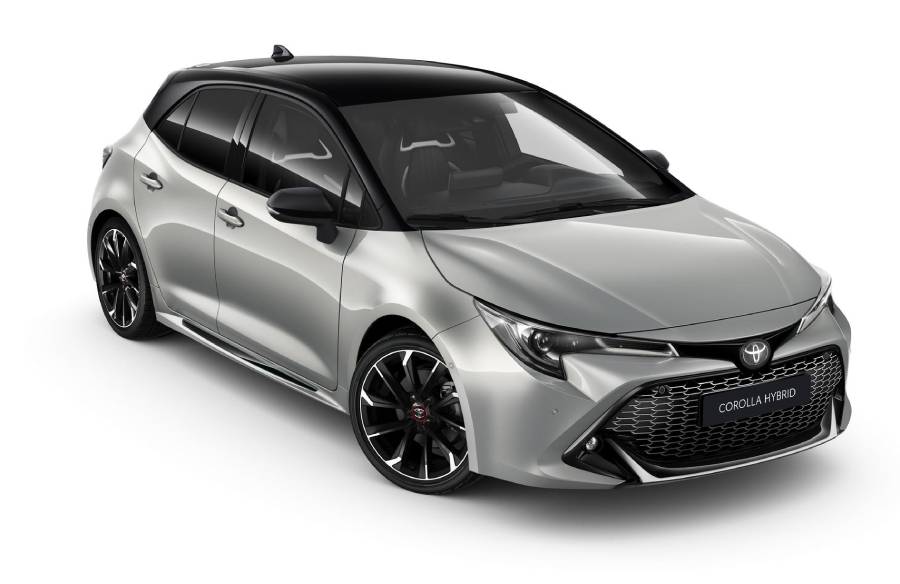
What Toyota Corolla Trim Levels Are Available?
The 2026 Toyota Corolla gas lineup has three trim levels: LE, SE, and XSE. The LE is the entry-level model, the SE adds sport-oriented equipment and styling, and the XSE combines the SE’s sportier character with more premium interior and technology features. This three-step structure creates clear differences in price and equipment without changing the basic purpose of the Corolla as a compact sedan.
The Toyota Corolla LE starts at a base MSRP of $23,125 and is the lowest-priced gas trim. Standard equipment includes an 8-inch Toyota Audio Multimedia touchscreen, wireless Apple CarPlay and Android Auto compatibility, Blind Spot Monitor with Rear Cross-Traffic Alert, and Toyota Safety Sense 3.0. Its EPA-estimated fuel economy reaches 32 mpg city and 41 mpg highway. These features position the LE as the value-focused Corolla for buyers who prioritize essential technology, safety equipment, and fuel efficiency over sport or premium upgrades.
The Toyota Corolla SE starts at $25,565, making it $2,440 more expensive than the LE. The additional cost shifts the Corolla toward a sportier configuration. Key equipment includes premium sport seats with sport fabric inserts, 18-inch alloy wheels with a graphite-colored finish, and Normal, Sport, and Eco driving modes. Fuel economy is rated at 31 mpg city and 40 mpg highway. The SE therefore fits buyers who want more aggressive styling and additional driver-focused features without moving to the highest-priced gas trim.
The Toyota Corolla XSE starts at $28,840 and sits at the top of the 2026 gas lineup. It retains 18-inch graphite-colored alloy wheels while adding a 12.3-inch digital gauge cluster and SofTex-trimmed heated front sport seats with sport fabric inserts. A 10.5-inch Toyota Audio Multimedia touchscreen is also standard on the XSE, compared with the standard 8-inch display on the lower trims. Its EPA-estimated fuel economy is 31 mpg city and 38 mpg highway. The XSE is therefore the Corolla gas trim aimed at buyers who want sport-oriented styling combined with more comfort and technology equipment.
The 2026 Corolla is also available with a hybrid powertrain, but the hybrid lineup uses a different trim structure: Hybrid LE, Hybrid SE, and Hybrid XLE, with all-wheel drive available on the Hybrid LE and Hybrid SE. These models should not be treated as additional packages for the gas LE, SE, and XSE because they use a separate electrified powertrain configuration. For a comparison focused on Toyota Corolla trim packages, separating gas and hybrid versions prevents differences in powertrain from being confused with differences in trim equipment.
What Are the Differences Between Toyota Corolla Trim Levels?
The main differences between the 2026 Toyota Corolla LE, SE, and XSE are price, wheels, exterior styling, seating materials, displays, comfort equipment, and sport-oriented features. All three gas trims use the same basic 2.0-liter four-cylinder powertrain, so moving to a higher trim primarily changes equipment and driving character rather than adding a more powerful engine.
| Feature | Corolla LE | Corolla SE | Corolla XSE |
|---|---|---|---|
| Starting MSRP | $23,125 | $25,565 | $28,840 |
| Engine | 2.0L 4-cylinder | 2.0L 4-cylinder | 2.0L 4-cylinder |
| Wheels | 16-inch steel wheels with covers | 18-inch alloy wheels | 18-inch alloy wheels |
| Seating | Fabric-trimmed seats | Premium sport seats with sport fabric inserts | SofTex-trimmed heated sport seats with sport fabric inserts |
| Multimedia display | 8-inch touchscreen | 8-inch touchscreen | 10.5-inch touchscreen |
| Gauge display | 4.2-inch multi-information display | 4.2-inch multi-information display | 12.3-inch digital gauge cluster |
| Drive modes | Standard configuration | Normal, Sport, and Eco | Normal, Sport, and Eco |
| EPA-estimated MPG | 32 city / 41 highway | 31 city / 40 highway | 31 city / 38 highway |
| Best suited for | Value and commuting | Sportier styling and driving | Premium features and sport styling |
The Corolla LE has the lowest starting price and the most efficiency-focused configuration. Its $23,125 starting MSRP is $2,440 below the SE and $5,715 below the XSE. The LE uses 16-inch steel wheels with covers rather than the 18-inch alloy wheels fitted to the two higher trims. It also retains fabric seating and a smaller driver information display. These equipment choices reduce cost while preserving the Corolla’s core infotainment, connectivity, and active-safety features.
The Corolla SE uses its $2,440 price increase primarily to add sport-oriented equipment. Its 18-inch graphite-colored alloy wheels create the most visible difference from the LE, while premium sport seats and selectable Normal, Sport, and Eco drive modes strengthen its driver-focused positioning. The SE does not represent a major increase in engine output over the LE; its value comes from changes to equipment, appearance, and driving configuration. This distinction matters because buyers should not interpret the SE badge as meaning that Toyota installs a substantially more powerful engine.
The Corolla XSE adds premium equipment to the SE’s sport-oriented foundation. At $28,840, it costs $3,275 more than the SE and $5,715 more than the LE. The additional spending brings features such as SofTex-trimmed heated front sport seats, a 12.3-inch digital gauge cluster, and a larger 10.5-inch Toyota Audio Multimedia touchscreen. The XSE therefore changes the cabin experience more significantly than it changes basic engine performance.
Exterior differences also become more pronounced as buyers move through the lineup. The LE uses a simpler wheel and styling configuration, while the SE and XSE use 18-inch alloy wheels and sportier exterior treatments. These changes affect more than appearance because wheel and tire configurations can influence ride comfort, road feel, tire replacement costs, and fuel economy. The LE reaches an EPA-estimated 41 mpg on the highway, compared with 40 mpg for the SE and 38 mpg for the XSE.
Interior equipment creates the clearest separation between the SE and XSE. The SE provides the sport-seat design without moving fully into premium cabin equipment, while the XSE adds heated front seats, SofTex trim, and substantially more digital display area. A buyer comparing these two trims is therefore deciding primarily whether the XSE’s additional comfort and technology justify its $3,275 higher starting MSRP.
The trim hierarchy can be summarized as LE for value, SE for sport-oriented equipment, and XSE for sport plus premium features. Buyers who mainly need efficient daily transportation receive the Corolla’s essential features with the LE. Buyers who value 18-inch wheels, sport seats, and selectable drive modes gain those upgrades with the SE. Buyers who also want heated seats, upgraded upholstery, and larger digital displays need to move to the XSE.
Do Toyota Corolla Trims Have Different Engines and Performance?
The 2026 Toyota Corolla LE, SE, and XSE use the same 2.0-liter four-cylinder engine, producing 169 horsepower and 151 lb-ft of torque. All three gas trims also use a Dynamic-Shift Continuously Variable Transmission (CVT) and front-wheel drive. Choosing a higher Corolla trim therefore does not increase engine output; the main performance differences come from drive modes, wheels, tires, suspension-related configuration, and driver-focused equipment.
Toyota’s 2.0-liter Dynamic Force four-cylinder engine uses Dual Variable Valve Timing with intelligence (VVT-i) and produces its maximum 169 horsepower at 6,600 rpm and 151 lb-ft of torque at 4,400 rpm. The Dynamic-Shift CVT uses a physical launch gear during initial acceleration before transitioning to the CVT pulley system. This design is intended to provide a more direct response from a stop while retaining the efficiency advantages of a continuously variable transmission.
The Corolla LE has the most efficiency-oriented driving configuration of the three gas trims. It provides Normal and Eco driving modes and uses 16-inch steel wheels. The smaller wheel configuration also contributes to the LE’s emphasis on fuel economy and everyday driving rather than sport-oriented handling. The LE is therefore the logical choice for buyers who prioritize commuting efficiency over sporty equipment.
The Corolla SE adds a Sport driving mode and 18-inch alloy wheels with 225/40R18 tires, creating a more performance-oriented configuration without increasing horsepower. Normal mode provides the standard balance of response and efficiency, Eco mode prioritizes economical operation, and Sport mode changes vehicle response for a more engaging driving experience. The larger wheels and lower-profile tires also distinguish the SE’s road behavior and appearance from the LE.
The Corolla XSE uses the same 169-horsepower engine but adds more driver-focused equipment to the sport-trim configuration. Toyota gives the XSE enhanced Sport mode tuning and paddle shifters that allow the driver to engage 10 preset transmission ratios. The XSE therefore provides greater driver involvement even though its peak horsepower and torque remain identical to those of the LE and SE.
The key performance distinction is consequently configuration rather than engine power. Moving from the LE to the SE changes the Corolla from an efficiency-focused setup to one with Sport mode and 18-inch wheels, while moving from the SE to the XSE adds equipment such as paddle shifters and enhanced Sport mode tuning. Buyers should choose a higher trim for these driving characteristics rather than expecting additional horsepower from the XSE.
Do Toyota Corolla Trims Have Different Fuel Economy Ratings?
Yes, the 2026 Toyota Corolla gas trims have different EPA-estimated fuel economy ratings even though the LE, SE, and XSE use the same 2.0-liter four-cylinder engine. The Corolla LE achieves up to 32 mpg city, 41 mpg highway, and 35 mpg combined. The SE is rated at 31 mpg city, 40 mpg highway, and 34 mpg combined, while the XSE is rated at 31 mpg city, 38 mpg highway, and 34 mpg combined.
| Trim | City MPG | Highway MPG | Combined MPG |
|---|---|---|---|
| Corolla LE | 32 | 41 | 35 |
| Corolla SE | 31 | 40 | 34 |
| Corolla XSE | 31 | 38 | 34 |
The Corolla LE has the highest fuel economy of the three gas trims. Its 41-mpg highway rating is 1 mpg higher than the SE and 3 mpg higher than the XSE. The LE also uses 16-inch wheels with 205/55R16 tires, while the SE and XSE use larger 18-inch wheels with 225/40R18 tires. Wheel and tire configuration is one of the vehicle-level differences that accompanies the change from the efficiency-focused LE to the sport-oriented SE and XSE.
The Corolla SE sacrifices a small amount of fuel economy for its sport-oriented configuration. Its 31-mpg city and 40-mpg highway ratings are close to the LE’s figures, resulting in a combined rating that is only 1 mpg lower. Buyers can therefore move from the LE to the SE for features such as 18-inch alloy wheels, sport seats, and Sport drive mode without a large reduction in EPA-estimated combined fuel economy.
The Corolla XSE has the lowest highway fuel economy rating in the gas lineup at 38 mpg, although its 34-mpg combined rating matches the SE. The XSE adds equipment beyond the SE, including heated SofTex-trimmed sport seats, a larger multimedia display, and a 12.3-inch digital gauge cluster. Its primary advantage is therefore additional comfort and technology rather than maximum fuel efficiency.
For buyers who prioritize fuel economy, the LE is the strongest choice among the 2026 gas Corolla trims. The SE provides a useful middle ground for drivers willing to trade a small amount of efficiency for sport-oriented equipment, while the XSE is better suited to buyers who place greater value on premium features. Buyers seeking substantially higher Corolla fuel economy should compare the separate Corolla Hybrid lineup rather than selecting between gas trims solely on a difference of 1–3 highway mpg.
What Safety Features Come With Each Toyota Corolla Trim?
The 2026 Toyota Corolla LE, SE, and XSE include the same core Toyota Safety Sense 3.0 driver-assistance suite as standard equipment. Buyers do not need to upgrade from the LE to the SE or XSE to obtain Toyota’s primary collision-avoidance, lane-assistance, adaptive cruise control, and road-sign recognition technologies. The higher trims mainly add comfort, technology, styling, and sport-oriented equipment rather than replacing the LE’s core active-safety package.
Toyota Safety Sense 3.0 includes Pre-Collision System with Pedestrian Detection, Lane Departure Alert with Steering Assist, Lane Tracing Assist, Full-Speed Range Dynamic Radar Cruise Control, Automatic High Beams, and Road Sign Assist. These systems address different driving situations. For example, the Pre-Collision System uses camera and radar inputs to identify potential frontal collisions and can provide warnings or automatic braking assistance under specified conditions, while Lane Departure Alert can warn the driver and provide steering assistance when an unintended lane departure is detected.
Full-Speed Range Dynamic Radar Cruise Control manages another part of highway driving by helping maintain a preset distance from a vehicle ahead. Lane Tracing Assist works with the adaptive cruise control system when appropriate lane markings or a preceding vehicle can be detected, helping the Corolla remain centered in its lane. Road Sign Assist uses a camera to recognize supported traffic signs and display relevant information in the vehicle’s multi-information display. These systems are driver-assistance technologies rather than substitutes for attentive driving.
Blind Spot Monitor with Rear Cross-Traffic Alert is also standard on the 2026 Corolla LE, SE, and XSE. Blind Spot Monitor is designed to alert the driver when a detected vehicle occupies an adjacent blind-spot area, while Rear Cross-Traffic Alert assists when reversing by warning of detected cross traffic. Because both features are standard across the three gas trims, safety equipment is not a primary reason to move from the LE to a higher trim.
The three gas trims also share important passive-safety and vehicle-control equipment. Each includes 10 airbags, a Tire Pressure Monitor System, Hill Start Assist Control, an Electric Parking Brake, LATCH child-seat anchors, energy-absorbing crumple zones, side-impact door beams, and three-point seatbelts for all seating positions. Toyota also uses structural safety measures such as high-tensile-strength body panels and an energy-absorbing collapsible steering column across the lineup.
The practical trim-selection difference is therefore how safety information and other vehicle data are presented rather than a major change in the core safety suite. For example, the XSE includes a 12.3-inch digital gauge cluster, while the lower gas trims use a smaller multi-information display configuration. The larger display is a technology and interface upgrade; it does not mean the XSE receives an entirely different Toyota Safety Sense system.
For buyers comparing Corolla trim packages primarily on safety, the LE already provides the essential active and passive safety equipment found across the gas lineup. Moving to the SE makes more sense for buyers who want sport-oriented equipment, while moving to the XSE adds premium cabin and technology features. Safety should still be evaluated feature by feature, but the standard equipment structure means buyers do not have to purchase the highest Corolla trim simply to obtain Toyota Safety Sense 3.0 or Blind Spot Monitor with Rear Cross-Traffic Alert.
What Is the Difference Between a Toyota Corolla Trim and a Package?
A Toyota Corolla trim is a complete version of the vehicle with a defined set of standard features, while a package is a group of optional features added to an eligible trim. For the 2026 Toyota Corolla gas sedan, LE, SE, and XSE are trim levels. Optional packages modify the equipment of a compatible trim without turning it into a separate trim level.
A trim determines the Corolla’s starting configuration and position within the model hierarchy. The 2026 Corolla LE starts at $23,125 and emphasizes value and fuel efficiency, while the SE starts at $25,565 and adds sport-oriented equipment. The XSE starts at $28,840 and combines sport features with additional comfort and technology. Selecting a trim therefore determines a substantial portion of the vehicle’s standard equipment before optional packages or individual accessories are considered.
A package works differently because it bundles several related options together. Instead of moving from one Corolla trim to another, a buyer can select an available package to add specific equipment to the chosen trim. Package availability is trim-dependent, which means a package offered for one Corolla configuration may not be available for another. Buyers should therefore check package eligibility after selecting the trim that provides the standard equipment they need.
Accessories form a third category. An accessory is an individual add-on rather than a trim level or bundled option package. Toyota accessories can include items intended for cargo management, exterior protection, interior protection, or appearance customization. Availability and pricing can vary by vehicle configuration and installation method.
The distinction matters when comparing Toyota Corolla trim packages because trim, package, and accessory costs should not be treated as the same type of upgrade. Moving from the LE to the SE changes the vehicle’s standard configuration, including equipment such as wheels, seats, and drive modes. Adding an optional package retains the underlying trim while adding a defined group of features. Adding an accessory changes an individual aspect of the vehicle without creating a new trim.
Buyers should therefore choose a Corolla in three stages: select the trim that contains the required standard equipment, evaluate compatible packages for additional bundled features, and consider individual accessories last. This order makes it easier to compare the actual cost of upgrading a trim against adding options to a less expensive version.
What Optional Packages Are Available for the Toyota Corolla?
The 2026 Toyota Corolla gas lineup offers the LE Premium Package for the LE, the SE Premium Package for the SE, and available JBL Premium Audio for the XSE. Package availability depends on the selected trim, so buyers cannot assume that the same optional equipment can be added to every Corolla configuration.
| Corolla Trim | Available Package or Option | Key Upgrade Areas |
|---|---|---|
| LE | LE Premium Package | Convenience, cabin technology, moonroof |
| SE | SE Premium Package | Technology, convenience, moonroof |
| XSE | JBL Premium Audio | Upgraded audio system |
The LE Premium Package expands the equipment of the entry-level Corolla without requiring buyers to move directly to the SE. Toyota lists the LE Premium Package as the primary package for this trim. It adds convenience and technology equipment, including Smart Key System with Push Button Start and a power tilt/slide moonroof. This package is most relevant to buyers who prefer the LE’s lower price, 16-inch wheel configuration, and higher EPA-estimated fuel economy but want selected comfort and convenience upgrades.
The SE Premium Package builds on the sport-oriented SE rather than converting it into an XSE. Toyota offers upgrades such as a power tilt/slide moonroof and additional technology within the SE’s optional equipment structure. The SE can also be equipped with a larger 10.5-inch Toyota Audio Multimedia touchscreen, while an upgraded 12.3-inch digital gauge cluster is available. This configuration gives buyers a way to combine the SE’s 18-inch wheels and sport-oriented character with technology that is otherwise associated more closely with higher equipment levels.
The XSE follows a different option strategy because many premium features are already standard. It comes from the factory with equipment such as a power tilt/slide moonroof, 10.5-inch Toyota Audio Multimedia touchscreen, 12.3-inch digital gauge cluster, Smart Key System, and heated SofTex-trimmed front sport seats. Toyota therefore lists JBL Premium Audio as an available upgrade rather than offering the same LE or SE Premium Package structure.
Optional packages are most valuable when they add specific features the buyer wants without forcing an unnecessary trim upgrade. For example, a buyer who prefers the SE’s price and sport-oriented configuration but wants a larger multimedia screen or moonroof may find an equipped SE more appropriate than moving directly to the XSE. In contrast, a buyer who wants several XSE-standard features at the same time should compare the total price of an optioned SE against the XSE’s starting price before deciding.
The correct comparison is therefore not simply base trim versus higher trim. Buyers should compare the total configured price of the Corolla after adding the desired package. A lower trim with multiple options can narrow the price gap to the next trim, at which point the higher trim may provide more standard equipment for the additional cost.
Which Toyota Corolla Trim Is the Best Value?
The 2026 Toyota Corolla SE offers the best overall value for buyers who want more than the LE’s basic configuration without paying for the XSE’s premium cabin features. It starts at $25,565, which is $2,440 more than the $23,125 LE but $3,275 less than the $28,840 XSE. That price position makes the SE the middle ground between affordability, sport-oriented equipment, fuel efficiency, and everyday usability.
The SE’s $2,440 premium over the LE produces several noticeable upgrades. It replaces the LE’s 16-inch steel wheels with 18-inch graphite-colored alloy wheels and adds premium sport seats, a leather-trimmed steering wheel, Normal, Sport, and Eco driving modes, and other sport-oriented details. These changes affect both the appearance and driving experience of the vehicle rather than adding features that are difficult to notice during normal ownership.
Fuel economy remains close to the LE despite these changes. The SE achieves an EPA-estimated 31 mpg city, 40 mpg highway, and 34 mpg combined, compared with 32 mpg city, 41 mpg highway, and 35 mpg combined for the LE. The difference is therefore only 1 mpg in each EPA category. A buyer choosing the SE gains its sport-oriented equipment while retaining fuel economy close to that of the least expensive gas Corolla.
The SE also retains the core safety technology available on the LE. Toyota Safety Sense 3.0 and Blind Spot Monitor with Rear Cross-Traffic Alert are standard, so moving to the SE does not require buyers to trade essential driver-assistance equipment for sport features. Available technology upgrades also give SE buyers additional configuration flexibility without automatically requiring the XSE.
The LE remains the better value for buyers whose main priorities are purchase price and fuel economy. Paying $2,440 more for the SE makes less financial sense when 18-inch alloy wheels, sport seats, and Sport mode are not priorities. The LE already includes the core powertrain, multimedia connectivity, Toyota Safety Sense 3.0, and key driver-assistance equipment required for everyday commuting.
The XSE becomes the better choice when premium cabin equipment is a priority. Its $3,275 increase over the SE adds features such as SofTex-trimmed heated front sport seats, a 10.5-inch Toyota Audio Multimedia touchscreen, and a 12.3-inch digital gauge cluster. These are meaningful upgrades for buyers who will use them regularly, but they do not increase the 2.0-liter engine’s 169-horsepower output. Buyers interested primarily in performance therefore receive limited benefit from paying the additional amount solely to move from SE to XSE.
For most buyers seeking a balance of equipment and price, the Corolla SE occupies the strongest middle position in the gas lineup. Choose the LE when minimizing purchase cost and maximizing fuel economy matter most. Choose the SE when sport-oriented equipment justifies a moderate price increase. Choose the XSE when heated seating, upgraded displays, premium upholstery, and additional cabin equipment are worth the higher starting price.
Which Toyota Corolla Trim Should You Choose?
Choose the 2026 Toyota Corolla LE for affordable daily transportation, the SE for a balance of value and sport-oriented equipment, and the XSE for the most premium gas Corolla configuration. All three trims share the same 169-horsepower 2.0-liter four-cylinder engine and core Toyota Safety Sense 3.0 technologies, so the decision depends primarily on price, driving configuration, comfort, technology, and fuel economy.
Which Toyota Corolla Trim Is Best for Daily Commuting?
The Toyota Corolla LE is the best trim for daily commuting when purchase price and fuel economy are the main priorities. It starts at $23,125 and delivers an EPA-estimated 32 mpg city, 41 mpg highway, and 35 mpg combined, giving it the highest fuel economy ratings among the three 2026 gas trims.
The LE also includes the equipment required for routine commuting without forcing buyers into a higher trim. An 8-inch Toyota Audio Multimedia touchscreen provides wireless Apple CarPlay and Android Auto compatibility, while Toyota Safety Sense 3.0 and Blind Spot Monitor with Rear Cross-Traffic Alert provide the core driver-assistance technologies found throughout the gas lineup. Its 16-inch wheel configuration also distinguishes it from the 18-inch wheels used on the SE and XSE.
The SE is a reasonable commuting alternative for drivers who want sport-oriented features and are willing to spend $2,440 more. Its 34-mpg combined EPA estimate is only 1 mpg below the LE, so moving to the SE does not create a large fuel-economy penalty. The additional expense makes the most sense when the buyer also values its sport seats, alloy wheels, and Sport drive mode.
Which Toyota Corolla Trim Is Best for Sportier Driving?
The Toyota Corolla SE is the best choice for buyers who want sportier driving characteristics without paying for the XSE’s premium interior equipment. It combines the same 169-horsepower engine used across the gas lineup with 18-inch alloy wheels, 225/40R18 tires, sport seats, and Normal, Sport, and Eco drive modes.
The SE’s advantage is not additional horsepower. Its sport positioning comes from the vehicle’s configuration and driver-focused equipment. This distinction makes the SE more appropriate for buyers who want a sportier Corolla but do not need heated SofTex-trimmed seats, the XSE’s larger standard displays, or other premium cabin upgrades.
The XSE also provides a sport-oriented configuration and adds features such as paddle shifters and enhanced Sport mode tuning. However, its starting MSRP is $3,275 higher than the SE. The XSE is therefore the stronger choice when a buyer wants both sport and premium equipment, while the SE provides the more cost-focused route to a sport-oriented Corolla.
Which Toyota Corolla Trim Has the Most Premium Features?
The Toyota Corolla XSE has the most premium standard features among the 2026 gas Corolla trims. Starting at $28,840, it combines the sport-oriented elements of the higher Corolla configurations with comfort and technology upgrades that are not standard on the LE or SE.
The cabin provides the clearest reason to choose the XSE. Standard equipment includes SofTex-trimmed heated front sport seats with sport fabric inserts, a 10.5-inch Toyota Audio Multimedia touchscreen, and a 12.3-inch digital gauge cluster. These upgrades create a more premium driver and passenger experience without changing the underlying 169-horsepower engine.
The XSE makes the most sense when several premium features are priorities rather than isolated preferences. A buyer interested only in sport styling and 18-inch wheels can save $3,275 by choosing the SE. A buyer who also wants heated seating, upgraded upholstery, larger displays, and additional standard equipment has a stronger reason to choose the XSE instead of adding individual options to a lower trim.
The choice between the three trims can therefore be reduced to three buyer profiles: LE for efficient and affordable commuting, SE for sport-oriented value, and XSE for premium equipment combined with sport styling. This approach keeps the decision focused on features the owner will use rather than assuming that a higher trim is automatically the better Corolla.
Read more: Toyota Corolla Oil Type: Complete Guide by Model Year (2000–2026)
Is It Worth Upgrading to a Higher Toyota Corolla Trim?
Upgrading to a higher 2026 Toyota Corolla trim is worth it when you will regularly use the additional sport, comfort, or technology features included with that trim. Moving from the LE to the SE costs $2,440 based on starting MSRP, while moving from the SE to the XSE costs another $3,275. Because all three gas trims use the same 169-horsepower 2.0-liter four-cylinder engine, paying more primarily buys additional equipment rather than additional engine power.
Upgrading from the LE to the SE is the most practical step for buyers who want a sportier Corolla. The SE adds 18-inch alloy wheels, sport seats, and Sport drive mode while maintaining an EPA-estimated 34 mpg combined, only 1 mpg below the LE. The upgrade therefore provides visible and functional differences without substantially changing fuel consumption. Paying the additional $2,440 makes sense when these sport-oriented features are priorities; buyers focused primarily on affordable transportation and fuel economy receive stronger value from the LE.
Upgrading from the SE to the XSE makes sense when comfort and cabin technology are priorities. The $3,275 difference adds premium equipment such as SofTex-trimmed heated front sport seats, a standard 10.5-inch Toyota Audio Multimedia touchscreen, and a 12.3-inch digital gauge cluster. These features affect everyday cabin experience but do not increase horsepower over the SE. Buyers who primarily want the sport-oriented appearance and driving configuration can therefore save money by staying with the SE.
Optional equipment should also be included when comparing trims. An SE configured with additional technology and convenience options can reduce the effective price gap between it and an XSE. When the configured prices become close, choosing the XSE can provide better value if several of its standard premium features are already on the buyer’s requirement list. Conversely, adding options simply to reproduce one or two XSE features can make a lower trim unnecessarily expensive.
The LE, SE, and XSE serve three distinct value positions rather than forming a simple good-better-best ranking. The LE is the logical choice for buyers prioritizing purchase price and fuel economy. The SE provides the strongest balance of price and sport-oriented equipment. The XSE justifies its higher MSRP for buyers who specifically want premium seating, larger displays, and additional cabin technology. The best Toyota Corolla trim is therefore the lowest-priced configuration that includes the features the buyer expects to use regularly.