The Audi Q5 service schedule helps owners plan routine maintenance by mileage and time. Regular service covers engine oil, filters, brake fluid, tires, brakes, spark plugs, and other important components. Each service helps maintain performance and gives technicians a chance to identify developing wear.
Audi sets maintenance requirements according to the vehicle and its components. However, the exact intervals can differ by model year, engine, and powertrain. Driving conditions can also affect how quickly certain parts wear. Therefore, owners should check the maintenance information for their specific Q5 before scheduling major services.
Some maintenance tasks follow mileage intervals, while others depend more on time or component condition. For example, an oil service follows a regular interval. Brake pads, in contrast, require inspection because driving habits affect their wear rate. This distinction helps owners avoid replacing parts too early or delaying necessary maintenance.
This guide explains Audi Q5 maintenance at 10,000, 20,000, 40,000, 60,000, and 80,000 miles. It also covers oil changes, brake fluid, filters, spark plugs, brakes, tires, and higher mileage service. These intervals provide a practical framework for planning maintenance throughout the vehicle’s service life.
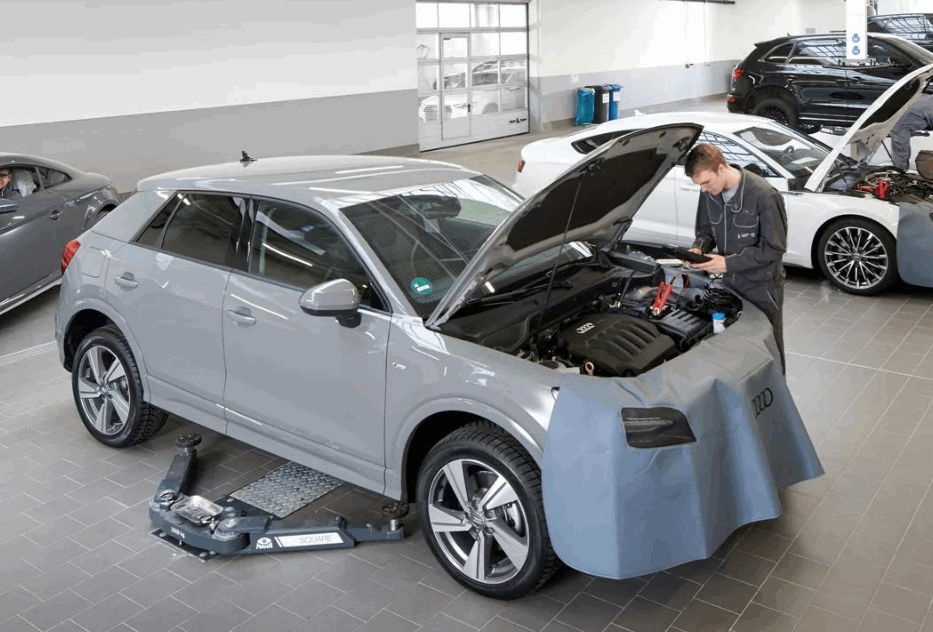
What Is the Audi Q5 Service Schedule?
The Audi Q5 service schedule sets the maintenance tasks that your vehicle needs at specific mileage and time intervals. Audi uses both measures because some maintenance depends on distance, while other services depend on elapsed time. Your Q5 may also need condition based inspections for components such as brakes, tires, and filters.
Audi does not use one universal schedule for every Q5. The required maintenance can vary by model year, engine, trim, and mileage. Audi’s official maintenance tool asks for the vehicle identification number or the model year, model, and trim level. You can also enter the current mileage to get more specific maintenance recommendations.
For example, Audi’s United States program for 2026 vehicles includes scheduled maintenance at 1 year or 10,000 miles, 2 years or 20,000 miles, and 3 years or 30,000 miles, whichever comes first. Audi Signature Care covers those first three years or 30,000 miles for eligible 2026 vehicles. Audi also states that actual scheduled maintenance can vary by vehicle model, model year, and mileage.
The schedule covers more than routine oil service. Depending on the vehicle, maintenance can include oil and filter service, inspections, fluid checks, brake system checks, tire inspections, and other component specific tasks. Owners should follow the schedule for their exact Q5 rather than apply one interval to every model year.
Your mileage and service history also matter. A Q5 with 40,000 miles needs a different maintenance review than one with 10,000 miles. The service schedule therefore works as a maintenance roadmap rather than a single recurring appointment.
What Maintenance Does an Audi Q5 Need at 10,000 Miles?
An Audi Q5 typically reaches its first scheduled maintenance point at 10,000 miles or 1 year, depending on which comes first. This interval gives owners a clear point to review routine service items before the vehicle accumulates more mileage. The exact requirements still depend on the Q5 model year, engine, and applicable Audi maintenance schedule.
At this service, the main focus falls on routine maintenance and vehicle inspection. The technician should check the engine oil and other relevant fluid levels, inspect the tires, and assess the brake system. The service may also include an engine oil and oil filter change when the applicable maintenance schedule calls for it. These tasks help identify fluid issues, tire wear, brake wear, and other developing problems early.
Audi’s maintenance program illustrates the importance of using both mileage and time. For example, Audi lists the first scheduled maintenance for eligible 2026 vehicles at 1 year or 10,000 miles, whichever comes first. The same program then moves to 20,000 miles or 2 years and 30,000 miles or 3 years.
The 10,000-mile service should not automatically trigger replacement of every wear component. Brake pads, tires, and similar parts require condition checks because driving habits affect their wear. A Q5 used mainly for highway driving may show different wear from one used for frequent short trips and heavy stop-and-go traffic.
After completing the service, keep the maintenance record with the date, mileage, and work performed. This record helps you track the next interval and gives you a reliable maintenance history for future ownership.
What Maintenance Does an Audi Q5 Need at 20,000 Miles?
An Audi Q5 reaches another scheduled maintenance point at 20,000 miles or 2 years, whichever comes first, under Audi’s current U.S. schedule for eligible 2026 vehicles. This service builds on the first scheduled visit and continues the routine inspections and maintenance required for the vehicle. Audi confirms that its 2026 Signature Care program includes scheduled services at 10,000, 20,000, and 30,000 miles.
The 20,000-mile service should address the maintenance items that Audi assigns to the specific Q5. These items can include routine fluid checks, engine oil service, filter inspection, tire inspection, brake inspection, and other scheduled checks. The exact list depends on the vehicle’s model year, engine, trim, and mileage. Audi therefore recommends using its maintenance tool with the VIN or vehicle details to identify the applicable schedule.
The second service also provides an opportunity to review wear that developed during the first 20,000 miles. Technicians can inspect the braking system, tires, suspension components, and other relevant systems. They should replace a component when its condition requires replacement rather than replacing every wear item simply because the odometer reached 20,000 miles.
Your previous service record also matters at this stage. A complete record shows which maintenance tasks you already completed and which tasks remain due. Audi’s maintenance system uses mileage and vehicle information to provide more specific recommendations, so owners should use the vehicle’s exact schedule instead of applying a generic 20,000-mile checklist.
For older Audi Q5 models, do not assume that the 2026 interval applies. Audi states that scheduled maintenance varies by model, model year, and mileage. Always verify the applicable schedule for your specific Q5 before treating a mileage point as a required service interval.
What Maintenance Does an Audi Q5 Need at 40,000 Miles?
An Audi Q5 needs a model specific maintenance review at 40,000 miles rather than one universal 40,000-mile checklist. Audi states that scheduled maintenance varies by model, model year, and mileage. Owners should therefore confirm the required service through Audi’s maintenance schedule or the vehicle’s owner’s manual.
At this mileage, the service should include the scheduled items that apply to the specific Q5. These items can include engine oil service, fluid checks, tire inspection, brake inspection, and other routine vehicle checks. The technician should also review components that have accumulated more wear since the earlier service intervals. Audi provides a complimentary multi-point inspection during service visits, which adds a broader condition check to the scheduled maintenance process.
Owners should pay particular attention to maintenance items that follow their own replacement or inspection intervals. Spark plugs, filters, brake components, and tires do not all follow the same schedule. Their requirements can also differ between Q5 model years and powertrains. A 40,000-mile service therefore should not automatically trigger replacement of every listed component.
Audi’s U.S. maintenance program also shows why owners should distinguish between scheduled maintenance coverage and a fixed mileage checklist. Audi Care for model years 2025 and older offers scheduled maintenance packages from 10,000 through 40,000 miles. For model year 2026 and newer, Audi Signature Care covers scheduled maintenance through the first 30,000 miles.
After 40,000 miles, maintenance history becomes increasingly useful. Compare the current mileage with previous service records, then confirm which tasks are due for your exact Q5. This approach prevents unnecessary part replacement while reducing the risk of missed scheduled maintenance.
What Maintenance Does an Audi Q5 Need at 60,000 Miles?
An Audi Q5 needs a model specific maintenance review at 60,000 miles because Audi does not publish one universal 60,000-mile checklist for every Q5. The required work depends on the model year, engine, powertrain, mileage, and applicable maintenance schedule. Audi directs owners to its maintenance schedule tool to find service information for a specific vehicle.
At 60,000 miles, owners should review all routine maintenance that the vehicle has reached by mileage or time. This review can include engine oil service, fluid checks, tire inspection, brake inspection, filter service, and other scheduled checks. The technician should compare the current mileage with the previous maintenance records before recommending additional work.
Higher mileage also makes condition based inspection more important. Brake pads, brake rotors, tires, suspension components, and other wear parts do not necessarily need replacement at exactly 60,000 miles. Their condition depends on factors such as driving style, road conditions, and previous maintenance. A technician should inspect these components and replace them when their condition requires it.
The 60,000-mile point also gives owners a useful opportunity to check whether earlier services remain complete. Review the maintenance history for oil changes, fluid services, filter replacements, inspections, and other work. This process helps identify overdue maintenance without turning mileage alone into a reason for unnecessary replacement.
Audi’s current U.S. maintenance programs also show why owners should use the schedule for their specific Q5. Audi states that maintenance requirements vary by model, model year, and mileage. Therefore, a 60,000-mile service plan for an older Q5 may differ from the schedule for a newer model.
What Maintenance Does an Audi Q5 Need at 80,000 Miles and Beyond?
An Audi Q5 needs a detailed maintenance review at 80,000 miles because higher mileage increases the importance of both scheduled service and condition based inspections. Audi does not publish one universal 80,000-mile checklist for every Q5. The required work depends on the vehicle’s model year, engine, powertrain, and maintenance history. Audi also states that actual scheduled maintenance varies by model, model year, and mileage.
At this mileage, owners should review every maintenance item that has reached its scheduled interval. This review can include engine oil service, fluid checks, filter service, brake inspection, tire inspection, and other vehicle checks. The technician should also compare the current mileage with previous service records. This approach shows which tasks are due and which services the vehicle has already received.
Higher mileage also increases the value of condition based inspections. Brake pads, brake rotors, tires, suspension components, battery, and drivetrain components can wear at different rates. Driving style and road conditions affect that wear. Owners should therefore inspect these parts instead of replacing them only because the odometer reached 80,000 miles.
Audi offers Audi Care Select packages from 50,000 through 120,000 miles for eligible vehicles. Audi says these packages align with its recommended mileage and time intervals. This shows that scheduled maintenance continues beyond 80,000 miles rather than ending at a specific high mileage point.
After 80,000 miles, keep a complete service history and follow the maintenance schedule for the exact Q5. Use the vehicle’s VIN, model year, model, trim, and current mileage when checking Audi’s maintenance tool. Audi provides these inputs to generate more specific maintenance recommendations.
How Often Does an Audi Q5 Need an Oil Change?
An Audi Q5 needs an oil change according to the maintenance interval specified for its model year and powertrain. Audi does not publish one oil change interval that applies to every Q5. Its maintenance system asks owners to enter the VIN or the model year, model, and trim. Owners can also enter the current mileage for more specific recommendations.
Oil service usually forms part of scheduled maintenance. The service can include an engine oil change and oil filter replacement when the vehicle’s maintenance schedule calls for them. Regular oil service helps maintain proper lubrication inside the engine. It also removes contaminated oil before it loses the properties required for normal engine operation.
Mileage does not provide the only timing rule. Audi uses both mileage and elapsed time when it defines scheduled maintenance. For example, Audi’s 2026 U.S. maintenance program includes scheduled services at 1 year or 10,000 miles, 2 years or 20,000 miles, and 3 years or 30,000 miles, whichever comes first. Audi also states that actual maintenance services vary by model, model year, and mileage.
Driving conditions can also affect the condition of engine oil. Frequent short trips, heavy traffic, and demanding operating conditions can place different demands on the engine than regular highway driving. Owners should follow the applicable Audi maintenance schedule instead of extending an oil interval based only on personal driving habits.
The myAudi portal can also show upcoming maintenance needs based on the vehicle’s mileage. Audi recommends using its maintenance schedule and owner’s manual for vehicle specific guidance.
When Should Audi Q5 Brake Fluid, Filters, and Spark Plugs Be Replaced?
Audi Q5 brake fluid, filters, and spark plugs follow different maintenance requirements, so owners should not treat them as one fixed mileage service. Audi recommends checking the maintenance schedule for the exact vehicle because service requirements vary by model, model year, and mileage. Audi’s maintenance tool uses the VIN or the model year, model, and trim to provide vehicle specific information.
Brake fluid follows a time based service requirement on applicable Audi schedules. For example, Audi Signature Care for 2026 vehicles includes one brake fluid service within the first three years or 30,000 miles. Audi also states that the actual scheduled services vary by vehicle. This makes brake fluid different from components that wear mainly through mileage and driving use.
Filters also require separate consideration. The engine air filter supports clean airflow into the engine, while the cabin air filter supports air quality inside the vehicle. Their service intervals can vary by model year and operating conditions. Dusty roads, heavy traffic, and other demanding conditions can affect filter condition. Owners should follow the replacement interval in the maintenance schedule rather than replace both filters at the same mileage by default.
Spark plugs also require a vehicle specific interval. Their replacement timing depends on the engine and applicable maintenance schedule. Owners should confirm the correct interval before replacing them. A spark plug replacement should follow the manufacturer’s requirement rather than an assumed mileage rule.
The key point is simple: brake fluid follows its own time or maintenance interval, while filters and spark plugs follow their applicable service requirements. Audi Care Select also offers scheduled maintenance packages from 50,000 through 120,000 miles for eligible vehicles, showing that these maintenance requirements continue beyond the first scheduled service period.
When Should Audi Q5 Brakes and Tires Be Inspected or Replaced?
Audi Q5 brakes and tires need regular inspection, but their replacement timing depends on component condition rather than one fixed mileage. Audi includes brake and tire checks within its vehicle maintenance process. The exact inspection requirements still depend on the model year, mileage, and applicable maintenance schedule.
Brake pads and rotors wear as you drive. Frequent braking, heavy traffic, steep roads, and other demanding conditions can increase brake wear. A vehicle that spends most of its time on highways may develop different brake wear from one that operates in frequent stop and go traffic. For this reason, owners should inspect brake components during scheduled maintenance instead of replacing them at a predetermined mileage.
Tires require the same condition based approach. Technicians should check tire pressure, tread condition, and visible wear during maintenance visits. Uneven wear can indicate issues with alignment, suspension, tire pressure, or driving conditions. Regular inspection helps identify these problems before they affect handling or tire life.
Audi also includes a multi-point inspection with service visits. This inspection gives technicians an opportunity to assess vehicle components beyond the scheduled maintenance items. Audi recommends checking the vehicle’s maintenance schedule for the exact requirements that apply to the specific Q5.
The key distinction is inspection versus replacement. A scheduled inspection does not mean that Audi requires a new brake pad, rotor, or tire at that mileage. Replace these components when their condition reaches the applicable service limit. This approach keeps the Audi Q5 service schedule focused on actual vehicle needs rather than unnecessary part replacement.
Does the Audi Q5 Service Schedule Change by Model Year or Driving Conditions?
Yes, the Audi Q5 service schedule can change according to model year, vehicle configuration, mileage, and operating conditions. Audi states that actual scheduled maintenance varies by model, model year, and mileage. Its maintenance tool also asks for the vehicle identification number or the model year, model, and trim before showing vehicle specific service information.
Model year matters because Audi can change maintenance requirements between vehicle generations and model updates. Engine and powertrain configuration also affects which components require service. A maintenance item that applies to one Q5 should therefore not automatically apply to another Q5 from a different model year or powertrain.
Driving conditions also affect component wear. Frequent short trips, heavy stop and go traffic, dusty roads, extreme temperatures, and demanding driving can place different loads on vehicle systems. These conditions can affect components such as engine oil, filters, brakes, tires, and other wear items. Condition based inspection helps identify changes that a mileage number alone cannot show.
The distinction between scheduled maintenance and condition based service remains important. Scheduled maintenance follows the manufacturer’s specified interval. Condition based maintenance responds to the actual state of a component. Brake pads provide a clear example. Two Q5 vehicles can reach the same mileage while showing different brake wear because their drivers use the brakes differently.
For this reason, use your exact Audi Q5 information when planning maintenance. Check the model year, engine or powertrain, current mileage, previous service history, and applicable Audi maintenance schedule. This approach gives you a more accurate service plan than applying one generic mileage chart to every Q5.
How Do You Know When Your Audi Q5 Is Due for Service?
You can determine when your Audi Q5 needs service by checking mileage, elapsed time, service reminders, and maintenance records. These four sources give you a practical way to track scheduled maintenance without relying on mileage alone. Audi’s maintenance system also uses vehicle specific information to provide more accurate recommendations.
Start with the current mileage and compare it with your previous service record. The mileage shows how far the Q5 has traveled since its last maintenance visit. The elapsed time matters as well because some services follow a time interval. Audi’s current U.S. schedule for eligible 2026 vehicles, for example, lists maintenance at 1 year or 10,000 miles, 2 years or 20,000 miles, and 3 years or 30,000 miles, whichever comes first.
Next, check the service information available for your vehicle. Audi asks owners to enter the VIN or select the model year, model, and trim in its maintenance tool. You can also enter the current mileage to receive more specific maintenance information. This approach helps separate the schedule for your Q5 from generic maintenance charts that may apply to another model year.
Your maintenance records provide another important reference. Review the date, mileage, and work completed at each previous visit. This record helps you identify recurring services and prevents you from repeating work that you recently completed.
Finally, pay attention to the vehicle’s service reminder and changes in vehicle condition. A reminder can signal that scheduled maintenance is approaching. Unusual brake noise, tire wear, fluid loss, or other changes can also justify an inspection before the next scheduled interval.
The best approach combines mileage, time, vehicle specific service information, and maintenance history. Using all four gives you a more reliable way to determine when your Audi Q5 needs its next service.
What Happens If You Miss an Audi Q5 Scheduled Service?
Missing a scheduled Audi Q5 service can delay routine maintenance and allow wear or fluid related problems to develop without attention. The effect depends on which service you missed, how far you drove afterward, and the condition of the vehicle. Missing one appointment does not mean that the vehicle will immediately develop a major mechanical failure.
The first step is to identify which maintenance items became due. Review the Q5’s mileage, elapsed time, and previous service records. Then compare those details with the maintenance schedule for the exact model year and powertrain. Audi states that scheduled maintenance varies by model, model year, and mileage.
Delayed oil service provides one example. Engine oil protects moving engine components and carries contaminants away from critical areas. Extending an oil interval increases the time that the engine operates with used oil. Other maintenance items have different effects. Delaying a brake inspection can allow worn brake components to remain unnoticed, while delaying a filter replacement can affect airflow or cabin filtration.
The risk also depends on how long the service remains overdue. A short delay does not create the same maintenance risk as repeated or prolonged neglect. Driving conditions matter as well. Frequent short trips, heavy traffic, dusty roads, and demanding use can increase wear on certain components.
If your Audi Q5 has missed a scheduled service, check the applicable maintenance schedule and arrange the overdue work rather than waiting for the next interval. Ask the technician to review the maintenance history and identify which items remain outstanding. This approach restores the maintenance schedule and reduces the chance of overlooking an important service item.
How Should You Follow the Audi Q5 Service Schedule?
Follow the Audi Q5 service schedule by tracking mileage, elapsed time, vehicle condition, and previous maintenance. Start by identifying the model year, engine, trim, and powertrain of your Q5. These details help determine which maintenance requirements apply to your vehicle.
Next, compare the current mileage with your previous service record. Check both mileage intervals and time intervals because some maintenance becomes due based on whichever limit comes first. Audi’s current U.S. schedule for eligible 2026 vehicles, for example, lists scheduled maintenance at 1 year or 10,000 miles, 2 years or 20,000 miles, and 3 years or 30,000 miles.
Do not treat every mileage point as a mandatory replacement interval for every component. Inspect brakes, tires, filters, and other wear items according to their applicable requirements and actual condition. Your driving habits also affect component wear, so condition based inspection remains important as mileage increases.
Keep every service record with the date, mileage, and work completed. These records help you identify overdue maintenance and plan future service. They also give you a clear history of how your Audi Q5 has been maintained.
The most reliable Audi Q5 service plan combines the manufacturer’s vehicle specific schedule with mileage, time, maintenance history, and component condition. Use the schedule for your exact Q5 rather than relying on a generic mileage chart. This approach keeps routine maintenance organized and helps you identify important service needs throughout the vehicle’s ownership period.