Firestone Lifetime Alignment is worth it when you use the service enough to recover its upfront cost. Drivers who keep their vehicles for several years may get strong value from the plan. Drivers who need only one alignment may save more by paying for the service separately.
Three factors determine the value of Firestone Lifetime Alignment. The first is the lifetime plan price. The second is the price of a standard wheel alignment. The third is how often your vehicle needs an alignment while you own it.
Road conditions can also affect the decision. Potholes, uneven roads, tire wear, and suspension problems can increase the need for alignment checks. A driver who faces these conditions may use the plan more often. A driver with stable driving conditions may use it less often.
This guide compares Firestone Lifetime Alignment with individual alignment services. It examines the cost, break even point, coverage, benefits, and disadvantages. It also explains which drivers are most likely to benefit from the plan. By the end, you can compare your expected alignment needs with the upfront price and make a more informed decision.
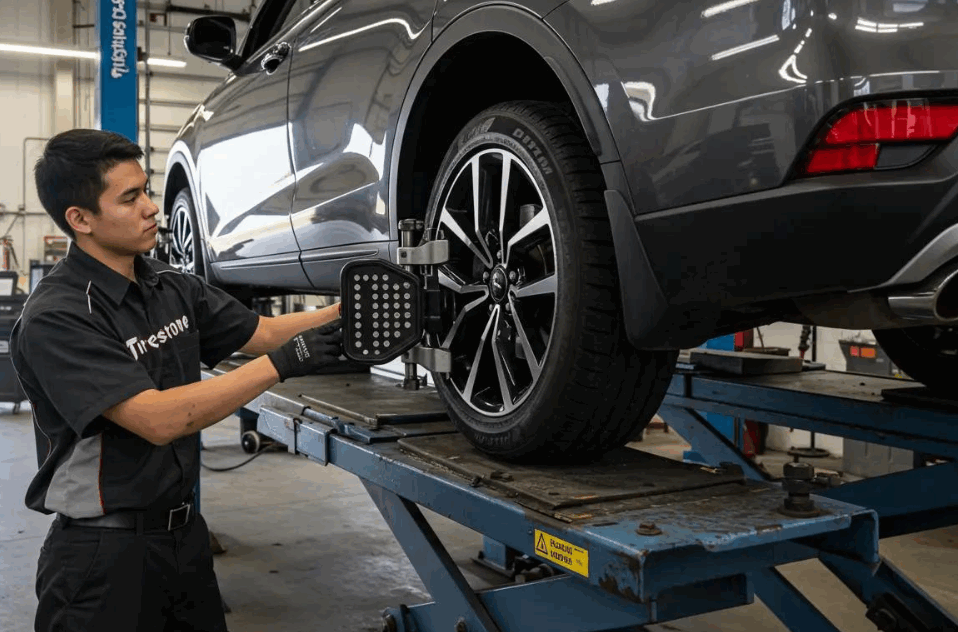
Is Firestone Lifetime Alignment Worth It?
Firestone Lifetime Alignment is worth considering when you plan to keep the same vehicle and use the service more than once. The plan includes the same core alignment service as Firestone’s standard alignment. It also adds a lifetime limited warranty for eligible alignment services while you own the vehicle.
The main financial question is simple. Compare the Lifetime Alignment price with the cost of individual alignments. If you use the lifetime service several times, your effective cost per alignment falls with each visit. One use gives you little opportunity to recover the higher upfront cost. Three or four uses create a stronger case for the lifetime plan.
Your ownership period also matters. Firestone states that the lifetime warranty applies while the original purchaser owns the vehicle. The warranty also has conditions. For example, required parts and related labor are not covered when parts are needed to restore the vehicle to manufacturer alignment specifications. Modified or damaged suspension and body height can also affect eligibility.
Driving conditions can strengthen the case for repeat alignment service. Firestone recommends an alignment check every 6,000 miles or six months unless the vehicle manufacturer specifies otherwise. Potholes, uneven tire wear, and other road impacts can also affect alignment.
For a long term vehicle owner, repeated eligible services can make Lifetime Alignment a practical investment. For a driver who expects to sell the vehicle soon, paying for individual alignments may provide better value.
How Much Does Firestone Lifetime Alignment Cost?
Firestone does not publish one nationwide base price for Lifetime Wheel Alignment. The final price can vary by location, vehicle, and service requirements. Firestone directs customers to local stores for alignment pricing. Current Firestone offers also show discounts on Lifetime Wheel Alignment, which confirms that promotions can change the amount you pay.
The best way to judge the cost is to compare the Lifetime Alignment price with the price of a standard alignment at the same location. A standard alignment includes suspension and steering inspection, alignment measurements, adjustment of camber, caster, toe, and thrust angles, final readings, and a test drive. Lifetime Alignment includes the standard service plus a lifetime limited warranty for eligible realignments while you own the vehicle.
The upfront price matters because Lifetime Alignment requires a larger initial payment than a single alignment. The value improves after each eligible use. For example, if a lifetime plan costs $250, the effective service cost falls to $125 after two uses and about $83 after three uses. These figures are examples, not Firestone’s current retail price.
Promotions can also change the calculation. Firestone currently advertises offers such as $40 off Lifetime Wheel Alignment when customers buy two or more eligible Bridgestone or Firestone tires. Other Lifetime Alignment discounts may also appear in local offers.
For an accurate comparison, get the Lifetime Alignment price and standard alignment price from your local Firestone store. Then calculate the break even point before purchasing.
How Many Alignments Make Firestone Lifetime Alignment Worth It?
The break even point depends on the price difference between Lifetime Alignment and a standard alignment. Divide the Lifetime Alignment price by the price of one comparable standard alignment. The result gives you the approximate number of paid alignments needed to match the lifetime plan cost.
For example, assume a Lifetime Alignment costs $250 and a standard alignment costs $100. One standard alignment costs less than the lifetime plan. Two standard alignments cost $200. Three standard alignments cost $300. In this example, the lifetime plan reaches its break even point between the second and third use.
The value increases with every eligible service after that point. Three uses would reduce the effective cost to about $83 per alignment. Four uses would reduce it to $62.50. Five uses would reduce it to $50. These figures illustrate the calculation. They do not represent Firestone’s current retail prices.
Firestone states that its Lifetime Alignment provides free realignment for as long as you own the vehicle, subject to the warranty terms. Firestone also recommends an alignment check every 6,000 miles or six months unless your vehicle manufacturer specifies a different interval. Road impacts and uneven tire wear can also create reasons to check alignment.
Your expected number of services therefore matters more than the word “lifetime.” If you expect one alignment, the plan may not provide enough savings. If you expect three or more eligible alignments during ownership, the financial case becomes stronger. You should compare the actual prices at your local Firestone location before making the purchase.
What Does Firestone Lifetime Alignment Include?
Firestone Lifetime Alignment includes the same core service as its Standard Wheel Alignment, plus a lifetime limited warranty. The standard service checks the steering and suspension systems, tire condition, and tire pressure. Technicians then measure the alignment angles and adjust camber, caster, toe, and thrust angles to the vehicle manufacturer’s specifications. Firestone also provides final readings and a road test.
The lifetime option adds free realignment for as long as you own the vehicle. Firestone states that the service applies whenever the vehicle needs another alignment, subject to the terms of its lifetime limited warranty. This feature creates the main difference between paying for one alignment and buying lifetime coverage.
Lifetime coverage does not mean that every alignment related repair comes free. Firestone states that parts and labor needed to restore the vehicle to manufacturer alignment specifications are not covered by the lifetime alignment warranty. This matters when worn or damaged steering and suspension components prevent a technician from setting the correct alignment.
The warranty also has eligibility limits. Firestone states that the lifetime warranty applies while the original purchaser owns the vehicle. It excludes vehicles used for commercial or racing purposes. The vehicle’s suspension and body height must also remain within original equipment specifications. Equipment availability and technician qualifications can affect service eligibility.
These terms make the coverage easier to evaluate. The lifetime plan covers eligible alignment service, not every repair needed to correct an alignment problem. That distinction should factor into the plan’s long term value.
What Are the Benefits of Firestone Lifetime Alignment?
There are four main benefits of Firestone Lifetime Alignment: lower long term alignment costs, repeat service access, more predictable maintenance costs, and stronger value for long term vehicle owners. These benefits depend on how often your vehicle needs an alignment and how long you keep it.
The first benefit is lower cost after repeated use. A standard alignment requires a new payment each time your vehicle needs the service. Lifetime Alignment requires a larger payment at the start. Each eligible realignment after that can reduce your average cost per service. The savings become more significant after you pass the break even point.
The second benefit is repeat service access. Firestone states that its Lifetime Alignment provides free realignment while the original purchaser owns the vehicle. This feature gives long term owners continued access to eligible alignment service without paying the standard alignment charge each time. (firestonecompleteautocare.com)
The third benefit is more predictable maintenance spending. Drivers who regularly check alignment can plan around one upfront purchase instead of budgeting for another alignment charge after each eligible service. This benefit becomes more useful when road conditions, tire wear, or vehicle use create a greater need for alignment checks.
The fourth benefit is stronger value for long term ownership. A driver who keeps the same vehicle for several years has more time to use the service. Firestone recommends an alignment check every 6,000 miles or six months unless the vehicle manufacturer gives different guidance. This recommended check interval can create more opportunities to use lifetime coverage over a longer ownership period.
The key benefit is therefore not the word “lifetime.” The main value comes from using eligible alignment services often enough to make the upfront purchase cheaper than repeated individual payments.
What Are the Disadvantages of Firestone Lifetime Alignment?
There are five main disadvantages of Firestone Lifetime Alignment: higher upfront cost, limited value after one use, coverage restrictions, extra repair costs, and dependence on vehicle ownership. These factors determine whether the plan actually saves money for your situation.
The first disadvantage is the higher upfront cost. A standard alignment requires payment for one service. Lifetime Alignment requires a larger initial payment. This difference creates a financial risk for drivers who do not use the service often enough to reach the break even point.
The second disadvantage is limited value after one use. If your vehicle needs only one alignment during your ownership, a standard alignment may cost less. The lifetime plan becomes more attractive only after repeated eligible services reduce its effective cost per alignment.
The third disadvantage is coverage restrictions. Firestone states that its lifetime warranty applies while the original purchaser owns the vehicle. The warranty also excludes certain commercial and racing uses. Modified suspension or body height can also affect coverage. These conditions limit the plan’s value for some vehicles and owners.
The fourth disadvantage is that the plan does not cover every repair related to alignment problems. Worn or damaged steering and suspension components may need separate repairs before a technician can restore the vehicle to manufacturer specifications. The lifetime plan does not remove those repair costs.
The fifth disadvantage is dependence on vehicle ownership. The lifetime warranty remains tied to the original purchaser and vehicle ownership. A driver who sells the vehicle soon may not get enough future use from the plan to recover the upfront cost.
The biggest drawback is therefore simple: Lifetime Alignment only creates financial value when you use its eligible services enough times. A higher upfront payment does not guarantee savings.
How Often Does a Car Need a Wheel Alignment?
Firestone recommends checking wheel alignment every 6,000 miles or every six months, unless the vehicle manufacturer recommends a different schedule. This interval gives drivers a useful maintenance reference. It does not mean every vehicle needs an alignment adjustment at each check. The actual need depends on the vehicle, driving conditions, and alignment symptoms.
Road impacts can increase the need for an alignment check. Hitting a pothole or curb can change wheel angles and damage suspension components. Firestone also lists pulling to one side, a crooked steering wheel, and uneven tire wear as common signs of alignment problems.
Driving habits also affect alignment needs. Frequent driving on rough roads creates more opportunities for impacts. Suspension repairs can also require a new alignment. Firestone notes that alignment frequency depends on driving conditions, the vehicle type, suspension condition, and driver assistance systems. Your owner’s manual remains an important reference for the maintenance schedule.
This frequency matters when you evaluate Lifetime Alignment. A driver who keeps a vehicle for several years has more opportunities to use the service. A driver who rarely needs alignment checks may not reach the break even point. The plan therefore makes more sense when your expected ownership period and alignment needs support repeated use.
The key point is that alignment frequency determines potential Lifetime Alignment value. More eligible uses can lower the effective cost of the plan. Fewer uses make individual alignment payments more competitive.
Who Should Buy Firestone Lifetime Alignment?
Firestone Lifetime Alignment makes the most sense for drivers who plan to keep the same vehicle and expect to use alignment services several times. These drivers have more opportunities to recover the higher upfront cost. The plan also suits owners who want predictable access to eligible alignment services during long term ownership.
Drivers who keep their vehicles for several years are stronger candidates. A longer ownership period gives the plan more time to reach its break even point. The same principle applies to drivers who cover high annual mileage. More miles create more exposure to potholes, rough roads, and other conditions that can affect alignment.
Drivers who regularly drive on poor roads may also benefit. Potholes and curb impacts can affect wheel alignment. Uneven tire wear and steering changes can also signal the need for an alignment check. These conditions do not guarantee that you will need repeated alignments, but they can increase the opportunity to use the service.
The plan also suits owners who prefer predictable maintenance costs. Instead of paying a separate alignment charge after each eligible service, the driver pays a higher amount upfront. Firestone states that Lifetime Alignment provides free eligible realignment while the original purchaser owns the vehicle. Coverage remains subject to the warranty terms.
The strongest candidate is therefore a long term owner who expects repeated alignment needs. If you expect to keep your vehicle for several years and your local Lifetime Alignment price reaches the break even point within that period, the plan becomes easier to justify.
Who Should Not Buy Firestone Lifetime Alignment?
Firestone Lifetime Alignment is a weaker value for drivers who expect to use the service only once or twice. The higher upfront cost may not create enough savings before the vehicle leaves their ownership. In these cases, paying for individual alignments can keep the total maintenance cost lower.
Drivers who plan to sell or trade their vehicle soon should compare the ownership period with the break even point. Lifetime Alignment provides value through repeated use. A short ownership period reduces the number of opportunities to use the service. The plan may therefore cost more than separate alignment services.
Drivers who rarely encounter alignment problems may also have less reason to choose the lifetime plan. A vehicle that maintains proper alignment and receives few alignment adjustments may not generate enough eligible services to justify the initial purchase. Normal driving conditions do not guarantee a fixed number of future alignment services.
The plan also makes less sense when the vehicle needs other repairs first. Worn steering or suspension components can prevent a technician from restoring the vehicle to the correct alignment specifications. Firestone states that parts and labor required for these repairs fall outside the lifetime alignment warranty.
Modified vehicles also require careful consideration. Firestone lists modified suspension and body height outside original equipment specifications among the warranty limitations. Commercial and racing use also falls outside the stated coverage.
The weakest candidates are short term owners, low use drivers, and owners whose vehicles fall outside the warranty conditions. Paying for individual alignment services can make more financial sense when expected usage stays below the break even point.
How Often Does a Car Need a Wheel Alignment?
A car should have its wheel alignment checked according to the vehicle manufacturer’s schedule and whenever alignment symptoms appear. Firestone recommends checking alignment every 6,000 miles or six months unless the vehicle manufacturer gives a different recommendation. A check does not always mean that the technician needs to adjust the alignment.
Road impacts can create a need for an alignment check. Potholes and curb strikes can change wheel angles or damage suspension components. Uneven tire wear can also indicate an alignment problem. Other signs include pulling to one side and a steering wheel that does not stay centered while driving.
Suspension work can also affect alignment. Replacing or repairing steering and suspension components may change the vehicle’s alignment angles. A technician may need to check and adjust alignment after this type of repair. Vehicle type and driving conditions can also affect how often an alignment check becomes necessary.
Alignment frequency matters when you calculate the value of Lifetime Alignment. A driver who keeps a vehicle for five years has more opportunities to use the service than a driver who keeps it for one year. However, the number of checks does not equal the number of required adjustments. The vehicle still needs an actual alignment problem or adjustment requirement.
The key factor is your expected number of eligible alignment services during ownership. More services can improve the financial value of Lifetime Alignment. Fewer services make individual alignment payments more competitive.
Is Firestone Lifetime Alignment Worth the Money?
Firestone Lifetime Alignment is worth the money when repeated eligible services cost more than the lifetime plan. The decision depends on your vehicle, ownership period, local price, and expected alignment needs.
Start with the break even point. Compare the Lifetime Alignment price with the cost of one standard alignment. Then estimate how many alignments your vehicle may need while you own it. A driver who expects several eligible services has a stronger financial case for the lifetime plan. A driver who expects only one service may save money by paying separately.
Ownership period also affects the result. Keeping the same vehicle for several years gives you more opportunities to use the coverage. Selling or trading the vehicle soon reduces those opportunities. Firestone states that the lifetime warranty applies while the original purchaser owns the vehicle, subject to its warranty conditions.
Your driving conditions also matter. Potholes, curb impacts, uneven tire wear, and suspension repairs can create reasons to check alignment. These factors do not guarantee repeated alignment adjustments, so they should not determine the purchase by themselves.
The best way to judge Firestone Lifetime Alignment is to calculate your expected cost per service. If repeated eligible alignments lower that cost below the price of individual services, the plan offers stronger value. If your expected use stays below the break even point, paying for each alignment separately is usually the simpler choice.