A Mercon SP equivalent is a transmission fluid that matches the requirements of a MERCON SP application. Choosing one requires more than finding another automatic transmission fluid with a similar name.
MERCON SP has specific transmission fluid requirements. Different ATF formulations can have different viscosity and friction characteristics. These differences affect how a transmission operates. For this reason, vehicle owners should check the required transmission specification before choosing a replacement.
This guide explains how to identify a suitable MERCON SP equivalent. It also examines MERCON LV and MERCON V because vehicle owners often consider these fluids when searching for alternatives. The guide explains what to check on an ATF label and in product documentation.
The right choice starts with the vehicle and its transmission requirements. Check the required specification first. Then compare that specification with the ATF manufacturer’s compatibility information. This approach helps you avoid choosing a fluid based only on its brand, viscosity, or general compatibility claim.
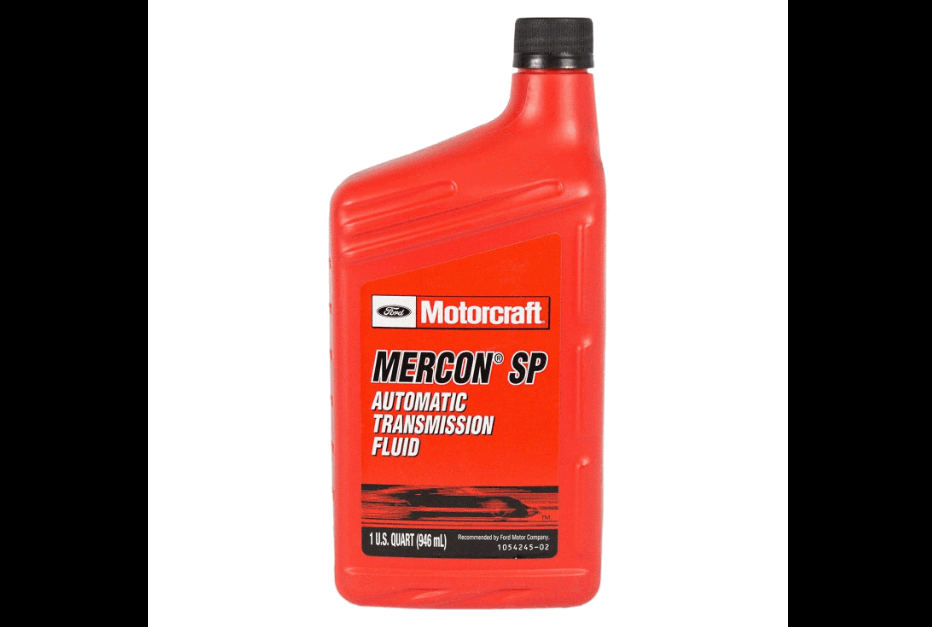
What Is a MERCON SP Equivalent?
A MERCON SP equivalent is a transmission fluid that meets the requirements of a MERCON SP application. The key question is not whether another ATF has a similar name. The key question is whether the fluid suits the transmission that requires MERCON SP.
Transmission fluids have different technical characteristics. These characteristics include viscosity and friction behavior. A transmission depends on the correct fluid properties for proper operation. Therefore, drivers should check the required transmission specification before choosing another ATF.
The terms used by ATF manufacturers also need careful attention. “Equivalent,” “compatible with,” “recommended for,” and “meets” do not necessarily communicate the same claim. A product may list compatibility with certain vehicles or transmissions without serving as a direct replacement for every MERCON SP application.
The vehicle and transmission requirement should guide the selection process. First, identify the transmission specification for the vehicle. Next, check the ATF manufacturer’s product information. Then, compare the stated application with the vehicle’s requirement. This process gives the reader a clearer basis for deciding whether an alternative ATF fits the intended application.
A MERCON SP replacement should therefore come from documented compatibility, not from the fluid’s brand name or viscosity alone. Checking the specification before replacing the original fluid helps prevent an unsupported substitution.
What Transmission Fluid Can Replace MERCON SP?
The right MERCON SP replacement depends on the transmission application and the fluid specification it requires. A suitable alternative should have clear documentation that connects the ATF to the required application. A general claim that a fluid works with Ford vehicles does not establish that it replaces MERCON SP.
Start by identifying the transmission fluid requirement for the specific vehicle. The owner’s manual and relevant transmission service information provide the most useful starting points. Once you know the required specification, compare it with the information from the ATF manufacturer.
Product documentation also matters when you evaluate an alternative fluid. Check the product label for specification and compatibility claims. Then review the manufacturer’s technical information for details about recommended applications. These sources provide stronger evidence than a product’s brand name or general description.
Multi vehicle ATF products require the same level of attention. The term “multi vehicle” describes the range of applications a manufacturer targets. It does not automatically prove compatibility with every transmission fluid specification. The same principle applies to synthetic ATF. A synthetic base does not make a fluid equivalent to MERCON SP by itself.
A reliable replacement decision therefore follows a simple sequence. Identify the required specification, check the alternative ATF’s application information, and confirm the manufacturer’s compatibility claim. If the available documentation does not support the application, do not assume that the fluid can replace MERCON SP.
Can You Use MERCON LV Instead of MERCON SP?
You should not treat MERCON LV as a MERCON SP replacement without checking the transmission specification. Both fluids belong to the MERCON family, but that fact alone does not establish interchangeability.
MERCON SP and MERCON LV represent different transmission fluid specifications. Each specification relates to particular transmission applications and fluid requirements. Therefore, the name of the fluid does not provide enough information to determine whether one can replace the other.
Check the vehicle and transmission requirements before considering MERCON LV as an alternative. The owner’s manual provides an important reference for the required fluid specification. Transmission service information can provide additional application details. You should then compare those requirements with the information that the ATF manufacturer provides for MERCON LV.
The same approach applies when an ATF label lists several Ford applications. A compatibility statement needs to match the specific transmission requirement. A general Ford compatibility claim does not automatically make MERCON LV equivalent to MERCON SP.
The safest selection process starts with the transmission specification rather than the fluid name. Confirm the required specification first. Then check whether the manufacturer specifically supports the alternative for that application. If the documentation does not establish compatibility, do not assume that MERCON LV can replace MERCON SP.
Can You Use MERCON V Instead of MERCON SP?
You should not assume that MERCON V can replace MERCON SP simply because both fluids belong to the MERCON family. The correct choice depends on the transmission specification and the vehicle application.
MERCON V and MERCON SP have different specification identities. A transmission that requires one specification may have different fluid requirements from a transmission that requires another. Therefore, the shared MERCON name does not prove that the two fluids have the same application.
Check the required fluid specification before considering MERCON V as a replacement. Start with the vehicle owner’s manual or transmission service information. Then compare the stated requirement with the ATF manufacturer’s application and compatibility information.
Viscosity alone also cannot establish equivalence. Transmission fluids can have different friction characteristics and other properties that affect transmission operation. A fluid needs more than a similar viscosity to qualify as a suitable replacement.
If the available documentation does not specifically support MERCON V for the required application, do not treat it as a MERCON SP equivalent. Confirm the transmission requirement first, then verify the alternative fluid through reliable manufacturer documentation.
How Do You Verify a MERCON SP Equivalent?
You can verify a MERCON SP equivalent by checking the vehicle requirement, transmission specification, ATF label, product documentation, and manufacturer compatibility information. These five checks help you determine whether an alternative fluid fits the intended application.
First, check the vehicle information. The owner’s manual can identify the required transmission fluid specification. Transmission service information can provide additional details about the specific transmission. This step establishes the fluid requirement before you compare alternative products.
Next, check the ATF label and product documentation. Look for specific specification statements, compatibility claims, and recommended applications. Do not rely on the product name alone. A product can advertise broad vehicle compatibility without providing enough information to confirm a specific transmission application.
Then, review the manufacturer’s technical information. Product documentation can provide more detail than the front label. Compare the stated applications with the transmission requirement identified in the first step. This comparison gives you a stronger basis for evaluating an alternative ATF.
Finally, confirm the compatibility claim before using the fluid. If the documentation does not clearly support the required application, do not assume that the ATF qualifies as a MERCON SP equivalent. A documented compatibility claim provides a more reliable basis for replacement than general descriptions such as “multi vehicle” or “synthetic ATF.”
What Happens If You Use the Wrong MERCON SP Equivalent?
Using the wrong transmission fluid can create problems when the fluid does not match the transmission’s requirements. The main concern is compatibility. Different ATF formulations can have different viscosity and friction characteristics, so a fluid that works in one transmission may not suit another application.
The first step is to identify the fluid you used. Check the product name, specification claims, and manufacturer information. Then identify the transmission specification required by your vehicle. This comparison can show whether the fluid matches the intended application.
Do not assume that a problem comes from the fluid without checking other possible causes. Transmission symptoms can have different causes, so diagnosis should consider the vehicle’s service history and transmission condition. A fluid change alone does not establish the cause of a transmission problem.
If you already used an ATF that you have not verified, check the product documentation before continuing to drive based on an assumption of compatibility. Compare the product’s stated applications with the vehicle’s transmission requirement. When the documentation does not support the application, consult the appropriate vehicle or transmission service information before deciding on the next service step.
Choosing the correct specification before replacing the fluid remains the simplest way to reduce the risk of an unsupported ATF substitution.
How Should You Choose a MERCON SP Equivalent?
Choose a MERCON SP equivalent based on the transmission specification and vehicle application, not only on the ATF brand or product name. The correct replacement needs supporting compatibility information for the intended transmission.
Start by checking the required transmission specification in the owner’s manual or relevant service information. Then compare that requirement with the ATF manufacturer’s compatibility statements and product documentation. This process gives you a clear basis for evaluating an alternative fluid.
Do not assume that MERCON LV or MERCON V can replace MERCON SP simply because they share the MERCON name. Do not rely on viscosity alone either. Transmission fluids can have different technical characteristics, including friction behavior and viscosity.
Before buying or using an alternative ATF, check five things: the transmission specification, the vehicle application, the compatibility statement, the product documentation, and the manufacturer’s requirements. These checks help you avoid an unsupported fluid substitution.
When the available documentation does not confirm compatibility, the safest approach is to verify the requirement through the appropriate vehicle or transmission service information. A documented application match provides a stronger basis for choosing a MERCON SP replacement than a general compatibility claim.