A Dexron III ATF equivalent provides the fluid properties required by applications that originally called for Dexron III. Dexron VI is one replacement option for many compatible GM applications. Several modern multi vehicle ATFs also support older Dexron III requirements. However, drivers should always check the specific vehicle and component before choosing a replacement.
General Motors introduced Dexron III as an automatic transmission fluid specification. Many older automatic transmissions used this type of ATF. Some power steering systems, transfer cases, and hydraulic systems also required Dexron III. These different applications do not always share the same replacement requirements. For this reason, drivers should not assume that one substitute works in every Dexron III application.
The correct choice depends on fluid viscosity, friction characteristics, system requirements, and manufacturer guidance. Drivers should also understand the difference between an equivalent fluid and a compatible replacement. A newer specification does not automatically suit every older component. This article compares Dexron VI, MERCON related fluids, and multi vehicle ATFs as potential alternatives. It also explains how to check compatibility, mix compatible fluids, and select the correct ATF for your vehicle.
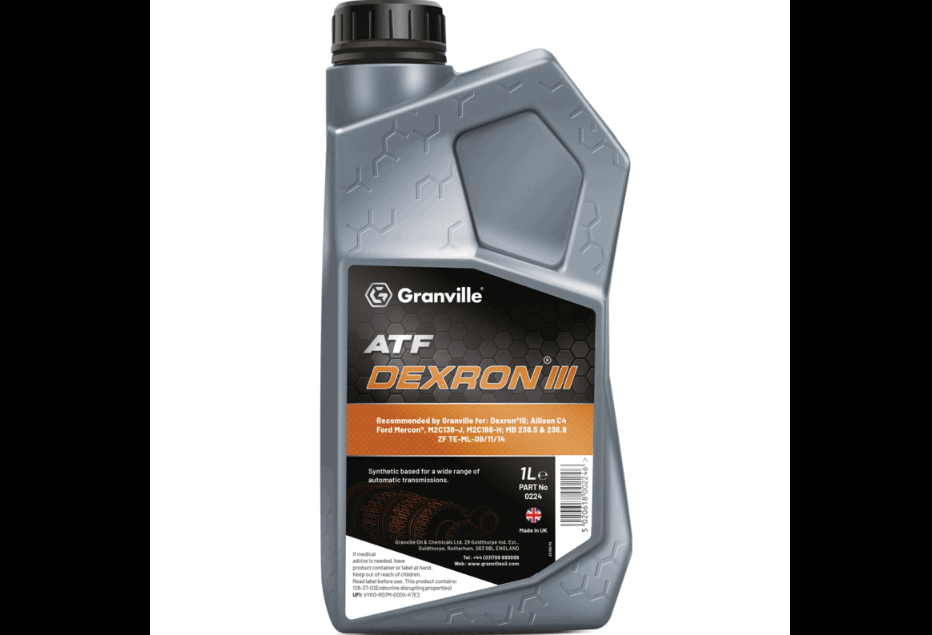
What Is the Best Dexron III ATF Equivalent?
The best Dexron III ATF equivalent is a fluid that explicitly supports the specification required by the vehicle or component. Dexron VI serves as a replacement option for many compatible GM applications. Some multi vehicle ATFs also support applications that originally required Dexron III. However, drivers should verify the product specification before adding any replacement fluid.
General Motors developed Dexron III as an automatic transmission fluid specification. The specification defined performance requirements for factors such as viscosity, friction behavior, and oxidation resistance. Modern lubricant manufacturers now offer fluids for many applications that previously required Dexron III. As a result, buyers may find replacement products instead of fluids carrying the original Dexron III designation.
Dexron VI represents one important option for compatible GM applications. Multi vehicle ATFs provide another option when the manufacturer lists Dexron III among the supported applications. MERCON related fluids require more careful verification. A product may support both DEXRON and MERCON applications, but that does not make the two specifications identical.
Drivers should also avoid choosing ATF by color. Red dye does not confirm that two fluids share the same performance requirements. Instead, check the vehicle manual and identify the required specification. Then compare that requirement with the ATF manufacturer’s application information.
| Fluid | Dexron III Replacement | Key Consideration |
|---|---|---|
| Dexron VI | Suitable for compatible applications | Check component requirements |
| Multi Vehicle ATF | Depends on the product | Confirm Dexron III compatibility |
| MERCON related ATF | Depends on the application | Verify the exact fluid specification |
| Dexron II | Older specification | Do not assume equivalent performance |
The required specification should guide the final choice. This approach reduces the risk of selecting an ATF that has similar labeling but different performance characteristics.
Can Dexron VI Replace Dexron III ATF?
Dexron VI can replace Dexron III in many compatible GM transmission applications, but drivers should verify the requirement for the specific component. A newer DEXRON specification does not automatically suit every system that previously used Dexron III. The application determines whether the substitution makes sense.
Dexron VI belongs to a newer generation of General Motors transmission fluid specifications. It uses different viscosity and performance requirements from older Dexron III fluids. These changes support the operating needs of newer transmission designs. They can also provide suitable performance in older applications when the manufacturer allows the newer specification.
The type of component makes this distinction important. An automatic transmission and a power steering system use fluid for different mechanical functions. Transfer cases and other hydraulic systems may also have their own requirements. Therefore, a replacement that works in one GM transmission does not prove compatibility with every system that calls for Dexron III.
Drivers can verify the replacement through three main sources. First, check the vehicle owner’s manual for the original fluid requirement. Second, review manufacturer service information for any updated specification. Third, check the ATF manufacturer’s technical data for the exact application. These steps provide stronger evidence than bottle color or a generic ATF label.
Dexron VI is therefore an important Dexron III replacement option, but application compatibility remains the deciding factor. Use Dexron VI only when reliable manufacturer information supports it for the vehicle or component in question.
What Is the Difference Between Dexron III and Dexron VI?
Dexron III and Dexron VI differ mainly in specification generation, viscosity requirements, fluid performance, and intended applications. General Motors introduced Dexron VI after Dexron III as a newer ATF specification. The newer standard does not simply give the same fluid a different name. It sets different performance requirements that affect how the fluid works inside a transmission.
Viscosity represents an important difference between these fluids. Dexron VI uses lower viscosity requirements than older Dexron III fluids. This characteristic can reduce resistance as fluid moves through the transmission. However, viscosity alone cannot determine compatibility. Friction behavior also affects clutch engagement, shift quality, and overall transmission operation.
Dexron VI also introduced stronger performance requirements for areas such as oxidation resistance and fluid durability. Oxidation occurs as heat and oxygen affect transmission fluid during service. Better resistance helps the fluid maintain its properties under operating conditions. These improvements make Dexron VI a newer performance standard, but they do not make it a universal replacement for every Dexron III application.
| Attribute | Dexron III | Dexron VI |
|---|---|---|
| Specification generation | Older | Newer |
| Relative viscosity | Higher | Lower |
| Oxidation requirements | Earlier standard | More demanding standard |
| Typical context | Older applications | Newer and compatible legacy applications |
| Replacement choice | Original requirement | Requires application verification |
The main replacement question therefore concerns the application rather than specification age. Drivers should use Dexron VI as a Dexron III substitute only when the vehicle, component, or fluid manufacturer supports that use.
Can You Use MERCON Instead of Dexron III ATF?
You should not use a MERCON fluid instead of Dexron III based on the MERCON name alone. DEXRON and MERCON belong to different specification families. General Motors developed the DEXRON family, while Ford developed the MERCON family. However, the two names have appeared together on many aftermarket ATF products.
This overlap explains much of the confusion. A lubricant manufacturer can formulate one product for several applications. For example, an ATF may list both older DEXRON and MERCON applications on its product information. That statement means the manufacturer recommends that particular fluid for the listed uses. It does not mean Dexron III and MERCON are the same specification.
Drivers should therefore evaluate the individual product instead of relying on the MERCON name. Start with the fluid requirement in the owner’s manual. Next, check the ATF label and technical product data. Look for a clear statement that covers the required Dexron III application. This process matters because different MERCON specifications and modern ATF products can have different performance requirements.
Wording on the product also provides useful context. Manufacturers may describe a fluid as suitable for use in certain applications or recommend it for specific requirements. Drivers should read these claims together with the product’s application list instead of assuming that every MERCON related ATF replaces Dexron III.
A specific ATF may support both Dexron III and MERCON applications, but the two specification names are not automatically interchangeable. Confirm Dexron III suitability for the individual product before using it as a replacement.
Can Multi Vehicle ATF Replace Dexron III?
Some multi vehicle ATFs can replace Dexron III when the fluid manufacturer explicitly lists the required application. The term multi vehicle does not describe one universal ATF specification. Instead, it describes a fluid that the manufacturer intends for several transmission types or fluid requirements. For this reason, drivers must check each product before using it.
Lubricant manufacturers can design one ATF to support several older and newer applications. They adjust properties such as viscosity, friction behavior, and oxidation resistance to meet their performance targets. However, each product has its own application range. Two bottles that both say multi vehicle ATF may not support the same vehicles or specifications.
The product label provides a useful starting point, but drivers should also check the technical data sheet. Look for a clear reference to Dexron III or the specific application that requires it. The manufacturer may also list vehicle makes, transmission types, or exclusions. These details help drivers distinguish a documented replacement from a general marketing claim.
A simple five step process makes the decision easier. First, identify the ATF requirement in the vehicle owner’s manual. Second, compare that requirement with the replacement fluid label. Third, read the product data sheet. Fourth, confirm that the product covers the vehicle or component. Fifth, check the listed exclusions before adding the fluid.
Choose a multi vehicle ATF only when its manufacturer supports the required Dexron III application. Do not rely on the words multi vehicle or universal alone. The documented application range provides a stronger basis for choosing the correct replacement.
What Vehicles and Systems Use Dexron III ATF?
Older automatic transmissions are the best known Dexron III applications, but other automotive systems can also require Dexron type ATF. These systems include certain power steering units, transfer cases, and hydraulic components. The exact requirement depends on the vehicle and component design.
Automatic transmissions use ATF for several functions. The fluid lubricates moving components and supports hydraulic operation. It also affects clutch and shift behavior through its friction properties. These functions explain why transmission manufacturers specify particular fluid requirements rather than recommending any generic ATF.
Some power steering systems also use Dexron type ATF as hydraulic fluid. In these systems, the fluid transfers hydraulic pressure while lubricating internal components. However, drivers should not assume that every power steering system accepts Dexron III. Other vehicles require a dedicated power steering fluid or another specification.
Transfer cases create another application category. Certain designs use ATF, while others require a dedicated transfer case fluid or gear lubricant. The same principle applies to other hydraulic equipment. A fluid that works correctly in an automatic transmission may not suit another component simply because both systems once referenced Dexron products.
This application range affects the search for a Dexron III equivalent. Identify the component first, then verify its required specification before selecting a replacement. This method prevents drivers from applying a transmission specific replacement recommendation to a power steering system, transfer case, or other component with different fluid requirements.
Can You Mix Dexron III With Other ATF Fluids?
You can mix Dexron III with another ATF only when the replacement fluid supports the same application and allows compatible use. Two transmission fluids can look similar without meeting the same performance requirements. Drivers should therefore confirm compatibility before topping off or combining fluids.
Topping off creates the most common mixing situation. Some old fluid remains inside the transmission while the driver adds new ATF. A drain and refill also leaves fluid in the torque converter, cooler lines, and other areas on many transmissions. As a result, the new and old fluids may operate together after routine service.
Drivers should consider three factors before mixing ATFs. The first is miscibility, which describes whether two fluids can physically mix. The second is compatibility, which concerns how the fluids work together. The third is application suitability, which determines whether the fluid meets the component’s requirements. Physical mixing alone does not prove correct performance.
Dexron III and Dexron VI provide a common example. Drivers should confirm that Dexron VI suits the original application before combining the two fluids. The same rule applies to multi vehicle ATF. Check whether the manufacturer lists the required Dexron III application instead of relying on a broad product name.
Fluid color also provides weak evidence of compatibility. Manufacturers often add dye to ATF, while age and contamination can change its appearance. Check the required specification and product application data before mixing Dexron III with another ATF. This approach provides a more reliable basis than color, brand, or generic ATF labeling.
What Happens If You Use the Wrong ATF Instead of Dexron III?
Using the wrong ATF can affect shifting, clutch operation, hydraulic performance, lubrication, and transmission durability. The severity depends on the fluid properties and the transmission design. A minor specification difference does not guarantee immediate failure, but an unsuitable fluid can change how the system operates.
Friction characteristics directly influence clutch operation inside an automatic transmission. Transmission clutches need controlled friction to engage and release correctly. An unsuitable friction profile can change this behavior. The driver may notice shudder, poor shift quality, delayed engagement, or clutch slippage as a result.
Viscosity also affects transmission operation. ATF must move through hydraulic circuits while protecting moving components. Fluid with unsuitable viscosity can change hydraulic response and lubrication behavior. Temperature further affects viscosity, which makes the correct fluid properties important across different operating conditions.
Some problems appear quickly, while others develop through continued use. Abnormal shifts or shudder may alert the driver soon after a fluid change. Wear and fluid degradation can take longer to become noticeable. This difference makes the absence of immediate symptoms a poor test of fluid compatibility.
Drivers who suspect the wrong ATF should identify both the required specification and the fluid currently in the system. The appropriate correction then depends on the vehicle and service procedure. Using an ATF that explicitly supports the required application reduces the risk of performance problems caused by an incorrect replacement.
How Do You Choose the Correct Dexron III ATF Replacement?
Choose the correct Dexron III ATF replacement by matching the required fluid specification with the vehicle and component application. Do not choose a replacement based only on the Dexron name, fluid color, price, or product brand. The required specification provides the starting point for the decision.
First, identify the component that needs fluid. An automatic transmission may have different requirements from a power steering system or transfer case. Next, check the owner’s manual for the original fluid specification. Manufacturer service information may also identify a newer fluid that replaces the original requirement.
After identifying the specification, compare it with the replacement ATF. Read the product label and technical data sheet. Look for the required Dexron III application and check any listed exclusions. A multi vehicle ATF should clearly support the relevant application before you use it as a replacement.
The condition of the existing fluid also matters during service. Topping off adds new fluid to the ATF already inside the system. A drain and refill may also leave some old fluid behind. For this reason, confirm compatibility when the new fluid will mix with the existing ATF. Follow the vehicle manufacturer’s service procedure when changing the fluid.
Avoid selecting ATF because another vehicle uses the same product. Transmission design, model year, and component requirements can change the correct fluid choice. Similar fluid color also does not confirm equivalent performance.
Use this decision order: required specification, component application, manufacturer guidance, and replacement fluid compatibility. This process provides a clear way to select a Dexron III equivalent while reducing the risk of using an unsuitable ATF.
What Is the Best Choice for Replacing Dexron III ATF?
The best Dexron III ATF equivalent is a fluid that explicitly supports the specification and application required by your vehicle. Dexron VI can serve as a replacement in many compatible applications. Certain multi vehicle ATFs also cover older Dexron III requirements. However, no replacement choice should rely on the product name alone.
Start with the fluid specification in the owner’s manual or manufacturer service information. Then identify the component that needs the fluid. Automatic transmissions, power steering systems, and transfer cases can have different requirements even when they reference Dexron type ATF. Finally, confirm that the replacement fluid manufacturer supports that specific application.
Do not use ATF color, price, brand, or universal wording as proof of compatibility. The same rule applies when considering MERCON related fluids or mixing an existing Dexron III fluid with a newer ATF. Physical similarity does not establish equivalent performance.
The replacement decision should follow a clear order: required specification, component application, manufacturer guidance, and fluid compatibility. Drivers considering Dexron VI should also compare Dexron III vs Dexron VI before switching fluids. This comparison helps explain how viscosity, performance requirements, and application compatibility differ between the two specifications.