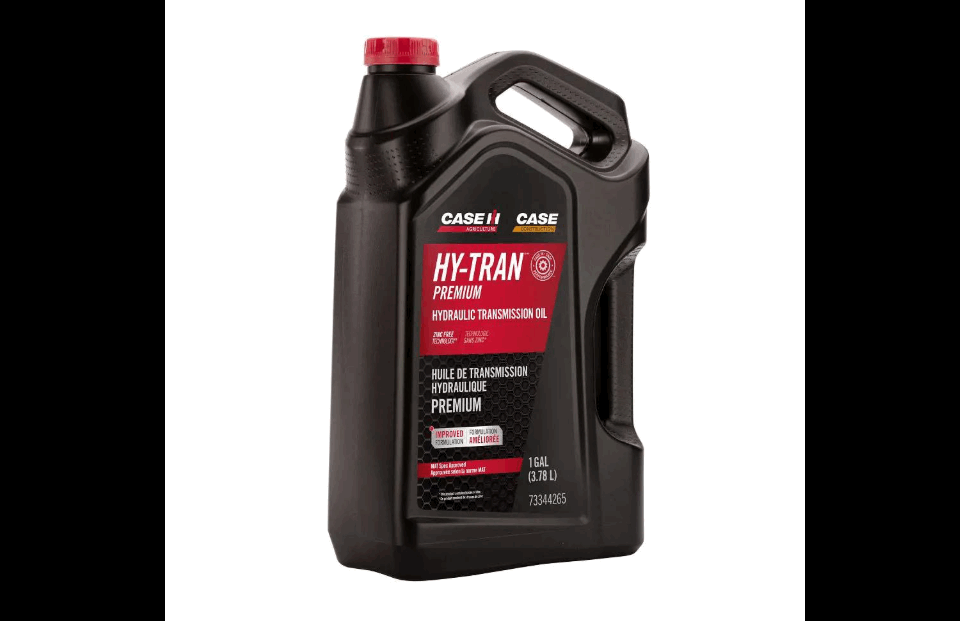
A Hy-Tran hydraulic oil equivalent is a fluid that provides compatible hydraulic and transmission performance for equipment that requires Hy-Tran. A suitable alternative must meet the required fluid specifications and operating conditions. Similar viscosity alone does not make another hydraulic oil an equivalent.
Hy-Tran type fluids perform several functions within agricultural and industrial equipment. They transfer hydraulic power, lubricate transmission components, and control friction in wet brakes and clutches. They can also protect differentials and final drives against wear. For this reason, the correct replacement must support each system that shares the fluid. Its additive package, friction properties, viscosity, and oxidation resistance all affect performance.
Always compare the equipment requirements with the specifications of the replacement fluid. Start with the operator’s manual and identify the required fluid standard. Next, compare that requirement with the product data sheet for the alternative oil. This process provides a more reliable comparison than choosing a product by viscosity or marketing terms alone.
This guide explains Hy-Tran equivalent types, specifications, viscosity, and compatible alternatives. It also covers equipment compatibility and the risks of using the wrong oil. Finally, it explains fluid mixing and the correct replacement process.
What Is a Hy-Tran Hydraulic Oil Equivalent?
A Hy-Tran hydraulic oil equivalent is a replacement fluid that provides the required performance for compatible hydraulic and transmission systems. The fluid must satisfy the specifications required by the equipment manufacturer. It must also perform correctly across every system that uses the same fluid reservoir.
Three factors determine whether an alternative qualifies as a suitable equivalent. The first is specification compatibility. The replacement should meet the fluid requirements listed for the equipment. The second is functional compatibility. The oil must provide the necessary lubrication, hydraulic performance, and friction control. The third is application compatibility. The fluid must suit the specific transmission, hydraulic system, wet brakes, clutches, and drivetrain components in the machine.
Viscosity provides useful information, but it does not confirm equivalence by itself. Two fluids can have similar viscosity while providing different friction or wear protection. Their additive packages can also produce different performance under heat, pressure, and mechanical load. These differences matter in systems that use one fluid for several functions.
For this reason, choose a Hy-Tran equivalent by comparing specifications rather than product names alone. Check the equipment manual first. Then compare its fluid requirements with the technical data for the replacement. This method helps confirm that the alternative can support the required hydraulic, transmission, and friction performance.
What Types of Oil Can Be Used as a Hy-Tran Equivalent?
Universal Tractor Transmission Oil, Tractor Hydraulic Fluid, and multifunction hydraulic and transmission fluids are the main fluid categories to evaluate as Hy-Tran equivalents. However, the product must meet the specifications required by the equipment. Its fluid category alone does not establish compatibility.
Universal Tractor Transmission Oil, commonly called UTTO, serves several systems within tractors and similar equipment. These fluids can lubricate transmissions while supporting hydraulic operation. Suitable formulations can also provide the friction characteristics required by wet brakes and clutches. This multifunction design makes UTTO an important category when evaluating Hy-Tran alternatives.
Tractor Hydraulic Fluid, or THF, represents another relevant category. Manufacturers formulate these fluids for hydraulic and drivetrain applications in agricultural equipment. Their performance requirements vary between products. Therefore, a THF label does not prove that the fluid meets the requirements of a particular machine.
Multifunction hydraulic and transmission fluids may also qualify when their specifications match the equipment requirements. These products combine several performance characteristics in one formulation. They can support hydraulic power transfer, component lubrication, wear protection, and friction control.
Conventional hydraulic oil requires more caution. Standard hydraulic oil may provide suitable viscosity and anti wear protection for a hydraulic system. However, it may lack the friction characteristics required by transmissions, wet brakes, or clutches. Always verify the required specification before using conventional hydraulic oil as a Hy-Tran replacement.
What Specifications Should a Hy-Tran Hydraulic Oil Equivalent Meet?
A Hy-Tran hydraulic oil equivalent should meet the fluid specifications required by the equipment manufacturer. These requirements matter more than the product name or general fluid category. They define how the oil must perform in hydraulic systems, transmissions, wet brakes, clutches, and other lubricated components.
Hydraulic performance forms one part of the specification. The fluid must transfer power efficiently and protect pumps and other hydraulic components against wear. It also needs suitable oxidation stability. This property helps the oil maintain its performance during extended exposure to heat and operating stress.
Transmission performance requires additional properties. The fluid must lubricate gears and bearings while maintaining suitable friction characteristics. Friction control becomes especially important in equipment with wet brakes or oil immersed clutches. Incorrect friction properties can affect engagement and braking behavior.
Anti wear protection also affects equipment life. Hydraulic pumps, gears, bearings, and drivetrain components operate under mechanical loads. A suitable additive system helps protect these surfaces from excessive wear. The fluid must maintain this protection throughout its intended service period.
Always check the operator’s manual before selecting an equivalent. Identify the required fluid specification and compare it with the technical data from the oil manufacturer. Do not rely only on terms such as universal tractor fluid or premium hydraulic oil. These descriptions do not confirm specification compatibility. The required specification provides a stronger basis for deciding whether an alternative can replace Hy-Tran in a particular machine.
What Viscosity Should a Hy-Tran Hydraulic Oil Equivalent Have?
The correct viscosity for a Hy-Tran hydraulic oil equivalent depends on the fluid requirements of the equipment and its operating conditions. Viscosity describes a fluid’s resistance to flow. It affects hydraulic response, lubrication, cold starting, and protection at operating temperature.
Low temperatures make oil thicker and increase resistance to flow. The hydraulic system then requires suitable fluidity during startup. Excessive viscosity can slow fluid movement and affect hydraulic response. The correct fluid must maintain enough flow for the system under the expected cold operating conditions.
Higher operating temperatures create a different challenge. Oil becomes thinner as its temperature rises. The fluid still needs enough viscosity to maintain a protective lubricating film between moving components. This protection matters for pumps, gears, bearings, and other loaded surfaces.
However, matching viscosity does not prove that two fluids provide equivalent performance. Oils with similar viscosity can use different additive packages and friction systems. One product may work correctly with wet brakes and clutches, while another may not provide the required friction characteristics. Their anti wear and oxidation performance can also differ.
Use viscosity as one part of the selection process. First, identify the specification required by the equipment manufacturer. Then check the viscosity and performance data for the proposed replacement. A suitable Hy-Tran equivalent must combine the correct operating characteristics with the required specification and application compatibility.
Which Hydraulic Oils Are Equivalent to Hy-Tran?
Several tractor hydraulic and transmission fluids can serve as Hy-Tran alternatives when their specifications match the requirements of the equipment. Examples include products that list Case IH MS 1209, Hy-Tran Ultra, or the applicable CNH specification in their performance claims. Always match the required specification in the equipment manual before choosing one.
| Product | Fluid Type | Relevant Specification or Claim | Typical Application |
|---|---|---|---|
| Mystik JT-5 Universal Trans-Hydraulic Fluid | Universal tractor fluid | MS 1209, Hy-Tran Ultra | Tractor hydraulic and transmission systems |
| CAM2 PROMAX Premium Universal Tractor Hydraulic Fluid | Universal tractor hydraulic fluid | MS 1209, Hy-Tran Ultra | Hydraulic, wet brake, and transmission systems |
| Parts Master Universal Tractor Hydraulic and Transmission Fluid | Universal tractor fluid | MS 1209, Hy-Tran Ultra | Transmissions, differentials, final drives, and hydraulics |
| SynGard All Season Tractor Hydraulic Fluid | All season UTTO | MS 1209 | Tractor hydraulic and transmission systems |
Mystik JT-5 Universal Trans-Hydraulic Fluid is one option for equipment with the appropriate Case IH requirement. Its published product information lists MS 1209 Hy-Tran Ultra among the fluids it can replace. The product also covers several other tractor transmission and hydraulic fluid requirements. This broad application makes specification verification especially important before use.
CAM2 PROMAX Premium Universal Tractor Hydraulic Fluid provides another option. Its manufacturer lists MS 1209 Hy-Tran Ultra among the specified products it can replace. CAM2 designed the fluid for hydraulic systems, wet brakes, and transmissions. These functions make it relevant to equipment that uses one fluid across several systems.
Parts Master Universal Tractor Hydraulic and Transmission Fluid also lists Case MS 1209 Hy-Tran Ultra as a replacement application. The fluid lubricates transmissions, differentials, and final drives while serving as a hydraulic fluid. Its published data also identifies anti wear, corrosion, oxidation, and foam control properties.
SynGard All Season Tractor Hydraulic Fluid lists Case IH MS 1209 among its performance levels. Its technical data identifies it as an all season UTTO. The fluid also lists requirements from several other agricultural equipment manufacturers.
These examples do not make every product interchangeable in every Case IH machine. Hy-Tran requirements vary by equipment model, year, and application. Check the specification in the operator’s manual first. Then confirm that the current product data sheet lists the required specification before adding the replacement fluid.
How Do You Choose the Correct Hy-Tran Equivalent for Your Equipment?
Choose the correct Hy-Tran equivalent by matching the fluid specification with the requirements listed for your equipment. Product names and similar viscosity provide useful clues, but they cannot confirm compatibility alone. A six step selection process provides a more reliable method.
First, identify the exact equipment make and model. Different machines from the same manufacturer may require different fluid specifications. The model and production year can also affect the required lubricant.
Second, check the operator’s manual for the required hydraulic and transmission fluid. Record the specification rather than relying only on a recommended product name.
Third, review the technical data sheet for the alternative fluid. Look for the required specification in the product’s applications, performance claims, or manufacturer recommendations.
Fourth, compare the viscosity characteristics. The replacement must provide suitable flow during cold starts and adequate lubrication at normal operating temperatures.
Fifth, consider every system that shares the fluid. These systems can include hydraulics, transmissions, wet brakes, clutches, differentials, and final drives. The replacement must provide the required performance across all applicable components.
Finally, confirm compatibility before filling the system. Follow the equipment manufacturer’s requirement when product information conflicts with the operator’s manual. This process reduces the risk of choosing a fluid based only on price, brand, or a general tractor hydraulic fluid label.
Which Equipment Can Use a Hy-Tran Hydraulic Oil Equivalent?
Equipment that specifies a fluid requirement supported by the replacement product can use an appropriate Hy-Tran equivalent. This may include tractors, agricultural machines, loaders, and other equipment with combined hydraulic and transmission systems. The required specification determines compatibility more accurately than the equipment category alone.
Tractors represent a common application because one fluid can serve several systems. Depending on the machine, the reservoir may supply the hydraulic system and provide lubrication for transmission components. The fluid may also support wet brakes, clutches, differentials, or final drives. A compatible replacement must satisfy the requirements of these systems.
Agricultural and construction machines can also use multifunction tractor fluids when their manufacturers specify compatible performance requirements. However, two machines that perform similar work do not necessarily require the same oil. Their pumps, transmissions, braking systems, operating temperatures, and friction requirements may differ.
Can Older Tractors Use a Hy-Tran Equivalent?
Older tractors can use a Hy-Tran equivalent when the replacement fluid supports the specification required by the tractor. Do not assume that every modern universal tractor fluid provides automatic backward compatibility.
Start with the original fluid requirement in the operator’s manual. Then compare it with the current product data sheet for the proposed replacement. Some modern fluids list several older specifications within their applications or performance claims. This information helps identify products intended for older equipment.
The age of the tractor does not determine compatibility by itself. The required specification remains the primary selection criterion. Confirm that requirement before changing the fluid, especially when the tractor uses a common reservoir for its hydraulic system, transmission, and wet brakes.
What Happens If You Use the Wrong Oil Instead of Hy-Tran?
Using the wrong oil instead of Hy-Tran can affect hydraulic response, lubrication, wet brake operation, clutch performance, and component wear. The exact effect depends on how the replacement differs from the required fluid specification. A similar viscosity does not guarantee the same performance.
Incorrect viscosity can change hydraulic operation. Oil that becomes too thick at low temperatures can move slowly through the system. This can reduce hydraulic response during startup. Oil that becomes too thin at operating temperature may provide less protection between loaded surfaces.
Incorrect friction characteristics can create problems in machines with wet brakes and oil immersed clutches. These components rely on controlled friction to operate correctly. A fluid with unsuitable friction properties can change engagement behavior or contribute to brake noise and chatter.
Insufficient wear protection can also shorten component life. Pumps, gears, bearings, and drivetrain parts operate under continuous mechanical loads. The correct additive system protects these surfaces while the equipment operates. A fluid that fails to provide the required protection can increase wear over time.
Problems may not appear immediately after a fluid change. The machine may continue to operate while incorrect friction, lubrication, or oxidation performance affects components gradually. For this reason, normal operation after filling does not prove fluid compatibility. Compare the required specification with the replacement product before use.
Can You Mix Hy-Tran With an Equivalent Hydraulic Oil?
Mix Hy-Tran with another fluid only when the equipment requirements and fluid manufacturer support compatibility between the products. Two oils may physically mix without providing the same performance after blending. Fluid miscibility and specification compatibility describe different properties.
Additive systems create one important concern. Tractor hydraulic and transmission fluids contain additives that control wear, oxidation, foam, corrosion, and friction. Combining different formulations changes the concentration of these additives. The resulting mixture may not provide the same performance as either fluid in its original formulation.
The existing oil also matters. Topping off a system becomes harder to evaluate when the current fluid is unknown or contaminated. Adding a suitable product does not correct contamination or confirm the properties of an unidentified fluid already inside the machine.
A complete fluid change provides better control when changing products. Follow the equipment manufacturer’s service procedure and drain the existing fluid as required. Replace applicable filters and refill the system with the selected compatible fluid. Some oil will remain inside certain components, so follow any additional service instructions for the machine.
Always confirm the required specification before mixing or replacing fluids. Use the operator’s manual and current product information as the primary references. This approach protects the hydraulic system, transmission, wet brakes, and other components that depend on the shared fluid.
How Do You Replace Hy-Tran With an Equivalent Oil?
Replace Hy-Tran with an equivalent oil by confirming the required specification, draining the existing fluid, servicing the applicable filters, and refilling the system with a compatible product. Follow the service procedure for the specific machine throughout the process. This helps maintain the correct fluid level and reduces contamination between old and new fluids.
First, check the operator’s manual and identify the required fluid specification. Compare this requirement with the current technical data sheet for the replacement oil. Confirm compatibility before draining the existing Hy-Tran fluid.
Next, determine the correct fluid capacity for the machine. The total capacity can differ from the amount required during a routine fluid change. Some oil may remain inside hydraulic lines, cylinders, transmission passages, and other components after draining.
Drain the old fluid according to the manufacturer’s service instructions. Inspect the drained oil for water, metal particles, or unusual contamination. Replace hydraulic or transmission filters when the maintenance schedule requires it. A new filter prevents accumulated contaminants from remaining in service with the replacement fluid.
Refill the reservoir with the selected equivalent to the specified level. Start the machine and operate the relevant hydraulic and transmission functions according to the service procedure. This circulates the new fluid through the system.
Finally, stop the equipment and check the fluid level again under the conditions specified by the manufacturer. Inspect the machine for leaks and abnormal operation. Confirm correct hydraulic response, transmission behavior, and wet brake operation before returning the equipment to normal service.
Conclusion
The correct Hy-Tran hydraulic oil equivalent must match the specifications and operating requirements of the equipment. A similar viscosity or tractor hydraulic fluid label does not confirm compatibility. The replacement must provide the hydraulic performance, lubrication, friction control, and wear protection required by the machine.
Start with the equipment rather than the replacement oil. Check the operator’s manual and identify the required fluid specification. Then compare that requirement with the current technical data sheet for the alternative. Review its viscosity and performance claims before confirming compatibility. Pay particular attention to machines that use one fluid for hydraulics, transmissions, wet brakes, clutches, differentials, and final drives.
This process also applies when changing from Hy-Tran to another product. Confirm compatibility before mixing fluids or completing a full replacement. Follow the equipment manufacturer’s service instructions when draining, refilling, and checking the system.
Selecting a Hy-Tran equivalent therefore follows a clear sequence: identify the equipment requirement, verify the specification, compare fluid performance, and confirm application compatibility. This approach provides a stronger basis for fluid selection than choosing an alternative by brand, price, viscosity, or product category alone.