Choosing the right engine oil affects engine performance, fuel efficiency, and long-term reliability. Castrol oil is a good choice for many vehicles because it delivers strong wear protection, reliable lubrication, and consistent performance in different driving conditions. The brand has earned a strong reputation through decades of research and partnerships with leading vehicle manufacturers. Many of its products also meet strict API, ACEA, and OEM specifications.
However, no engine oil fits every engine. The best results come from choosing the correct viscosity grade and product line for your vehicle. For example, Castrol EDGE suits high-performance and turbocharged engines, while Castrol MAGNATEC and Castrol GTX work well for daily driving and high-mileage vehicles. Using the right oil helps reduce engine wear and maintain stable performance over time.
This guide explains whether Castrol oil is worth buying and what makes it different from other brands. You will learn how it protects engine components, where it performs best, and which product fits your vehicle. The article also compares Castrol with Mobil 1 and Shell Helix. By the end, you will know whether Castrol is the right engine oil for your driving needs.
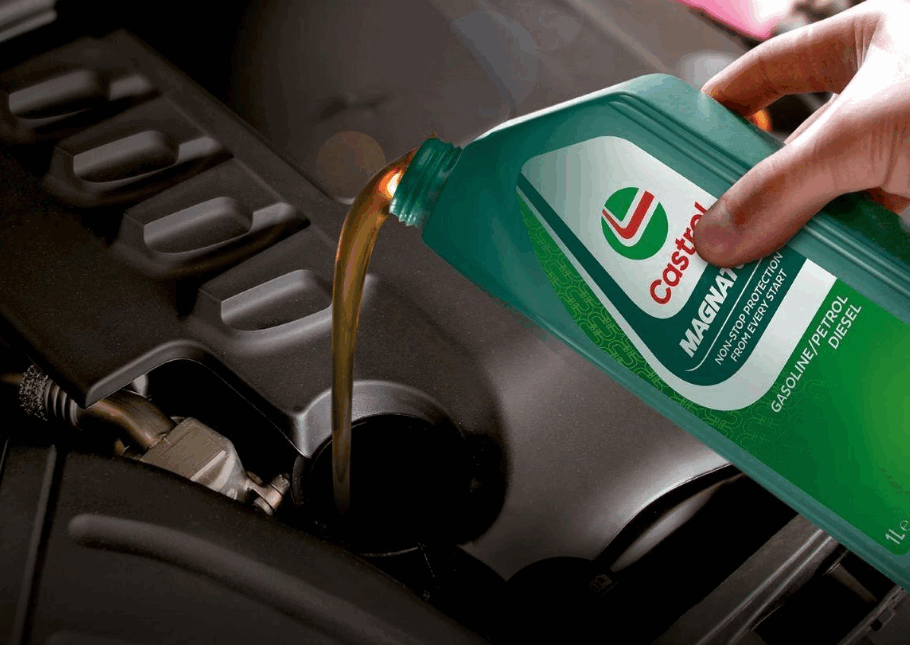
Is Castrol Oil Good?
Yes, Castrol oil is a good engine oil for most modern vehicles because it provides reliable engine protection, stable performance, and products designed for different driving conditions. The brand has supplied lubricants for passenger cars, motorcycles, commercial vehicles, and motorsports for decades. Its engine oils also meet strict industry standards, making them compatible with many manufacturers, including BMW, Ford, Volkswagen, Mercedes-Benz, and Jaguar Land Rover. As a result, Castrol has become one of the most trusted engine oil brands worldwide.
The quality of Castrol oil comes from its advanced lubricant technology rather than its brand name alone. Each product line targets specific engine requirements and driving conditions. For example, Castrol EDGE uses Fluid TITANIUM Technology to strengthen the oil film under high pressure, while Castrol MAGNATEC contains intelligent molecules that cling to engine components during start-up. These technologies help reduce metal-to-metal contact, improve lubrication, and maintain stable performance in both city traffic and highway driving.
However, Castrol oil delivers the best results only when you choose the correct product. Engine design, mileage, climate, and manufacturer specifications all influence oil performance. A turbocharged engine often requires a fully synthetic oil with high thermal stability, while an older vehicle may benefit from an oil formulated for high-mileage engines. Selecting the wrong viscosity or specification can reduce lubrication efficiency and shorten oil life, regardless of the brand.
Overall, Castrol is an excellent choice for drivers who want dependable engine protection and long-term reliability. Its broad product range allows owners to match the right oil with their vehicle instead of relying on a one-size-fits-all solution. When you follow the manufacturer’s recommendations and use the correct Castrol product, the oil can help reduce engine wear, support cleaner operation, and maintain consistent performance throughout the recommended service interval.
Why Does Castrol Oil Protect Engines Effectively?
Castrol oil protects engines effectively because it creates a strong lubricating film that reduces friction between moving components under different operating conditions. Every engine contains metal parts that move at high speed and generate heat. Without proper lubrication, these components wear quickly and lose efficiency. Castrol formulates its engine oils to maintain a stable oil film that separates critical engine parts, helping reduce direct contact and extending engine life.
The oil also performs consistently across a wide temperature range. Modern engines face high thermal stress during heavy acceleration, towing, and long highway journeys. They also experience significant wear during cold starts because oil has not fully circulated through the engine. Castrol develops synthetic formulations that flow quickly at low temperatures and remain stable under extreme heat. As a result, the engine receives reliable lubrication from start-up to normal operating temperature.
Another important advantage is Castrol’s ability to keep the engine clean. During combustion, fuel produces contaminants that can form sludge and harmful deposits over time. These deposits restrict oil flow and reduce engine efficiency. Castrol engine oils contain detergent and dispersant additives that help suspend contaminants until the next oil change. This process keeps internal components cleaner, supports smoother operation, and helps preserve overall engine performance during the recommended service interval.
Castrol also designs its products to satisfy demanding international performance standards. Many formulations meet or exceed API, ACEA, and manufacturer-specific approvals required by leading automotive brands. These certifications show that the oil has passed strict tests for wear protection, oxidation resistance, piston cleanliness, and viscosity stability. Therefore, drivers can choose Castrol with greater confidence when selecting an engine oil that matches their vehicle’s technical requirements.
What Are the Main Advantages and Disadvantages of Castrol Oil?
Castrol oil offers several advantages that make it one of the most trusted engine oil brands, but it also has a few limitations that buyers should consider before making a decision. Its overall value depends on choosing the right product for your engine, driving habits, and maintenance schedule. Understanding both the strengths and weaknesses helps drivers select an engine oil that delivers the best long-term performance instead of relying on brand reputation alone.
One of Castrol’s biggest advantages is its ability to protect engines under different operating conditions. Its synthetic formulations reduce friction, improve thermal stability, and maintain consistent viscosity throughout the oil change interval. Many products also include advanced additive packages that help prevent sludge formation and reduce harmful deposits. In addition, Castrol offers specialized product lines for modern turbocharged engines, high-mileage vehicles, motorcycles, and everyday passenger cars. This broad selection makes it easier for drivers to find an oil that matches their vehicle’s technical requirements.
Castrol also benefits from extensive manufacturer approvals and a long history in the automotive industry. Many vehicle manufacturers recommend Castrol products because they satisfy demanding performance standards for wear protection, oxidation resistance, and engine cleanliness. The brand’s strong global distribution network also makes genuine products widely available through dealerships, service centers, and automotive retailers. As a result, drivers can easily purchase replacement oil that meets the correct specifications for their vehicles.
Despite these advantages, Castrol is not the perfect choice for every situation. Premium synthetic products often cost more than budget engine oils, which may discourage price-sensitive buyers. Counterfeit Castrol products also exist in some markets, making it important to buy from authorized retailers. Furthermore, even the highest-quality oil cannot compensate for using the wrong viscosity grade or ignoring the manufacturer’s recommendations. Choosing the correct specification remains the most important factor for achieving reliable engine protection and long-term performance.
Which Castrol Oil Is Best for Different Vehicles?
The best Castrol oil depends on your engine type, vehicle age, driving conditions, and the manufacturer’s recommended oil specification. Castrol produces several product lines with different formulations instead of offering one universal engine oil. Each product targets specific performance requirements, allowing drivers to choose an oil that matches both their engine design and daily driving habits. Selecting the right product improves lubrication efficiency and helps the engine perform as intended throughout the recommended service interval.
Castrol EDGE is the premium choice for modern vehicles that operate under high loads or demanding conditions. Its fully synthetic formula delivers outstanding protection against friction and maintains a strong oil film at high temperatures. This product suits turbocharged engines, performance vehicles, and luxury cars that require advanced synthetic lubricants. Drivers who frequently travel long distances or experience heavy traffic can also benefit from its stable performance and extended engine protection.
Castrol MAGNATEC offers an excellent balance between performance and value for everyday driving. Its intelligent molecules attach to critical engine components and provide additional protection during start-up, which is when significant engine wear can occur. Meanwhile, Castrol GTX focuses on keeping engines clean by helping prevent sludge and harmful deposits. It works well for older vehicles, high-mileage cars, and drivers who want reliable protection at a more affordable price. Motorcycle owners can also choose Castrol POWER1, which is specifically formulated to meet the lubrication demands of high-revving motorcycle engines.
Choosing the correct viscosity remains more important than choosing the most expensive product. Every vehicle manufacturer specifies an oil grade, such as 0W-20, 5W-30, or 5W-40, based on engine design and operating conditions. Matching both the viscosity and the required API, ACEA, or OEM specification ensures the oil performs correctly inside the engine. Therefore, the best Castrol oil is the one that fully meets your vehicle’s technical requirements rather than simply offering the highest level of performance.
Is Castrol Better Than Mobil 1 and Shell Helix?
Castrol, Mobil 1, and Shell Helix are all premium engine oil brands, but each one excels in different areas. Castrol stands out for its balanced combination of engine protection, product variety, and manufacturer approvals. Mobil 1 has a strong reputation for long-drain performance and high-temperature stability, while Shell Helix focuses on engine cleanliness through its advanced detergent technology. Choosing the best option depends on your vehicle, driving conditions, and maintenance priorities rather than the brand alone.
Castrol performs exceptionally well in reducing engine wear during both cold starts and high-load driving. Its premium synthetic products maintain a durable lubricating film that protects critical engine components under heavy pressure. Mobil 1 also delivers excellent wear protection and performs particularly well in extreme temperatures, making it a popular choice for high-performance engines. Shell Helix, on the other hand, emphasizes deposit control by helping prevent sludge formation and keeping internal engine parts cleaner over long service intervals.
Product compatibility is another area where Castrol performs strongly. The brand offers engine oils that meet a wide range of API, ACEA, and manufacturer-specific approvals for European, Japanese, and American vehicles. Mobil 1 provides similar coverage, especially for premium and luxury vehicles, while Shell Helix also supports many leading automotive brands. Although all three manufacturers produce high-quality lubricants, availability and product selection often vary by region. Drivers should always verify that the selected oil matches the specifications listed in the owner’s manual before making a purchase.
Overall, none of these brands is universally better than the others because each serves different driving needs. Castrol is an excellent choice for drivers seeking dependable engine protection, broad vehicle compatibility, and multiple product options across different price ranges. Mobil 1 may suit drivers who prioritize maximum synthetic performance under demanding conditions, while Shell Helix appeals to those who value exceptional engine cleanliness. Selecting the correct viscosity and manufacturer-approved specification will always have a greater impact on engine performance than choosing between these three premium brands.
How Do You Choose the Right Castrol Oil?
Choosing the right Castrol oil starts with following your vehicle manufacturer’s recommendations instead of selecting the most expensive product. Every engine has specific lubrication requirements based on its design, operating temperature, and internal tolerances. Using the correct oil helps maintain stable performance, protects critical engine components, and supports the recommended maintenance schedule. Even a premium engine oil cannot deliver its full benefits if it does not match your vehicle’s specifications.
The first step is to check the owner’s manual for the recommended viscosity grade and performance standards. Most manufacturers specify an oil grade such as 0W-20, 5W-30, or 5W-40, along with API, ACEA, or OEM approvals. These specifications ensure the oil provides the correct flow characteristics and protection under different operating conditions. Matching these requirements is more important than choosing a particular brand or product line.
Next, consider how and where you drive. Vehicles used for frequent short trips, heavy traffic, or cold climates often benefit from fully synthetic oils because they flow quickly during cold starts and remain stable at high temperatures. High-mileage vehicles may perform better with formulations designed to reduce oil consumption and help protect aging engine seals. Drivers who regularly tow heavy loads or operate high-performance vehicles should also choose products that provide enhanced thermal stability and wear protection.
Finally, purchase Castrol oil from authorized retailers or reputable automotive suppliers to reduce the risk of counterfeit products. Before completing your purchase, confirm that both the viscosity grade and the required specifications match your vehicle’s requirements. Choosing the correct Castrol product protects your engine more effectively than selecting the most expensive oil without checking compatibility. A well-matched engine oil supports smoother operation, longer engine life, and more consistent performance throughout every service interval.
Is Castrol Oil Worth Buying?
Yes, Castrol oil is worth buying if you choose a product that matches your vehicle’s specifications and driving conditions. The brand combines advanced lubrication technology, broad manufacturer approvals, and a diverse product range to meet the needs of modern engines. While its premium products cost more than many budget alternatives, they often provide stronger wear protection, better thermal stability, and more consistent performance over the recommended oil change interval. For many drivers, these benefits justify the higher initial cost by helping maintain engine efficiency and long-term reliability.
Castrol offers excellent value because it serves a wide variety of vehicles instead of focusing on a single market segment. Drivers can choose affordable options for everyday commuting or premium synthetic oils for high-performance engines. This flexibility allows owners to purchase an engine oil that suits both their maintenance budget and their vehicle’s technical requirements. As a result, drivers avoid paying for unnecessary features while still receiving reliable engine protection.
Long-term ownership costs also play an important role when evaluating engine oil. A high-quality lubricant helps reduce friction, limits harmful deposits, and supports cleaner engine operation throughout the service interval. These advantages can contribute to smoother performance and help minimize premature engine wear over time. Although engine oil alone cannot prevent mechanical failures, using the correct lubricant as part of regular maintenance supports the overall health of the engine and its critical components.
Overall, Castrol remains one of the strongest choices for drivers who value dependable performance and proven engine protection. Its extensive product lineup allows owners to find an oil that matches almost every passenger vehicle, from compact cars to turbocharged SUVs and performance models. Choosing the correct viscosity and manufacturer-approved specification remains the key to achieving the best results. When those requirements are met, Castrol provides excellent value and stands as a worthwhile investment for long-term engine care.
Conclusion
Castrol oil is a reliable choice for drivers who want strong engine protection, dependable performance, and a product that meets modern industry standards. Its wide range of engine oils makes it suitable for everything from daily commuting and high-mileage vehicles to turbocharged and high-performance engines. When drivers select the correct viscosity grade and manufacturer-approved specification, Castrol helps reduce engine wear, maintain stable lubrication, and support long-term engine reliability.
However, choosing the right engine oil involves more than selecting a well-known brand. Every vehicle has unique lubrication requirements, and using the recommended oil specification remains the most important factor for protecting engine components. Regular oil changes and proper maintenance also play a significant role in preserving engine performance throughout the vehicle’s lifespan.
If your vehicle manufacturer approves Castrol and the product matches the required viscosity and performance standards, it is a worthwhile investment for long-term engine care. By understanding the differences between Castrol’s product lines and comparing them with other leading brands, you can confidently choose an engine oil that delivers the right balance of protection, performance, and value for your specific driving needs.