A Honda F-Can Malfunction warning indicates that one or more electronic control modules are no longer communicating properly through the Fast Controller Area Network (F-CAN). Instead of identifying a single defective component, this warning signals that the vehicle’s communication network has detected an interruption that may affect multiple systems simultaneously. As a result, drivers may notice several warning lights appearing together, reduced vehicle performance, or the temporary loss of features such as the Anti-lock Braking System (ABS), Vehicle Stability Assist (VSA), or Electric Power Steering (EPS).
Because modern Honda vehicles rely on continuous communication between dozens of electronic control units, even a minor issue such as a weak battery, a damaged wiring harness, or a loose connector can trigger an F-CAN malfunction. In more complex cases, the problem may involve a faulty control module or a failure within the CAN bus network itself. Identifying the exact cause requires a systematic diagnostic process rather than replacing parts based on assumptions.
This guide explains what a Honda F-Can Malfunction means, the symptoms you should expect, the most common causes behind the warning, and the professional methods used to diagnose and repair the problem. You will also learn whether it is safe to continue driving, how much repairs typically cost, and which preventive maintenance practices can reduce the risk of future communication failures.
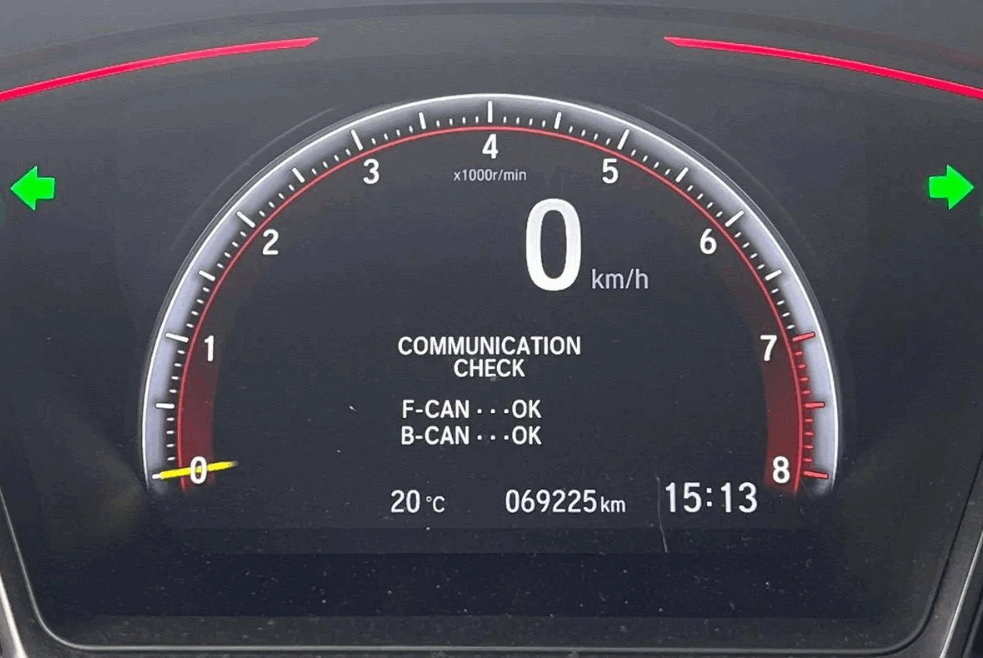
What Does Honda F-Can Malfunction Mean?
A Honda F-Can Malfunction means the vehicle has detected a communication failure within the Fast Controller Area Network (F-CAN). This network allows electronic control units to exchange data while the vehicle is running. The warning does not identify one failed component. Instead, it indicates that one or more control modules can no longer communicate correctly. As a result, several vehicle systems may stop working as expected.
The F-CAN network connects many important control modules. These include the Engine Control Module (ECM), Body Control Module (BCM), Anti-lock Braking System (ABS), Vehicle Stability Assist (VSA), Electric Power Steering (EPS), transmission controller, and instrument cluster. Every module sends and receives information in real time. The shared data includes engine speed, wheel speed, steering angle, battery voltage, and sensor signals. When communication stops, the affected modules cannot verify this information. They then store communication Diagnostic Trouble Codes (DTCs), which are usually U-codes.
Several electrical problems can interrupt F-CAN communication. A weak battery may reduce system voltage below the required level. Damaged wiring, corroded connectors, blown fuses, or poor ground connections can also interrupt the CAN High and CAN Low circuits. In some vehicles, a failed control module prevents the entire network from exchanging data correctly. Even a single faulty module can affect communication across multiple systems.
An F-CAN malfunction often triggers several warning lights at the same time. Drivers may see the ABS, VSA, power steering, and check engine indicators together. This does not always mean each system has failed. Instead, the modules cannot receive the information they need to operate normally. For this reason, technicians diagnose the communication network before replacing any components. A complete inspection usually includes battery testing, CAN bus measurements, communication DTC scanning, and module isolation.
What Are the Most Common Symptoms of Honda F-Can Malfunction?
The symptoms of a Honda F-Can Malfunction vary depending on which control modules lose communication. However, the first sign is usually multiple warning lights appearing on the dashboard at the same time. Drivers often notice the Check Engine Light, ABS warning, VSA indicator, and Electric Power Steering (EPS) warning together. These alerts suggest that several systems cannot exchange data normally through the F-CAN network.
Many vehicles also experience noticeable changes in performance. The engine may start normally but respond slowly to throttle input. In some cases, the transmission shifts harshly or enters a fail-safe mode to protect internal components. Cruise control, hill start assist, or traction control may stop working because the related modules no longer receive the information they require.
Electrical features can also become unreliable during a communication failure. The instrument cluster may display warning messages, inaccurate gauges, or intermittent indicator lights. Power windows, climate controls, or the infotainment system may reset unexpectedly. These problems often appear together because multiple control modules depend on the same communication network.
A severe F-CAN communication fault can make the vehicle difficult to start or prevent it from starting altogether. If the Engine Control Module cannot exchange information with the immobilizer or Body Control Module, the starting sequence may be interrupted. Although this symptom is less common, it usually indicates a more serious communication problem that requires immediate diagnosis.
Some symptoms appear only under specific driving conditions. For example, warning lights may disappear after restarting the engine but return while driving. This pattern often points to an intermittent wiring fault, a loose connector, or unstable battery voltage. Because intermittent faults are difficult to reproduce, technicians typically combine live data monitoring with communication DTC scanning to identify the exact source of the problem.
What Causes Honda F-Can Malfunction?
A Honda F-Can Malfunction occurs when one or more control modules cannot communicate through the Fast Controller Area Network. Although the warning appears as a single message, the underlying cause can vary from a simple power issue to a complex network failure. Identifying the root cause is essential because replacing the wrong component rarely resolves the problem.
Low battery voltage is one of the most common causes of F-CAN communication failures. Every control module depends on a stable power supply to send and receive data. When the battery becomes weak or the charging system cannot maintain proper voltage, communication may become unstable. This condition often triggers multiple warning lights after starting the engine or during periods of high electrical demand.
Damaged wiring and poor electrical connections can also interrupt network communication. The F-CAN system uses dedicated CAN High and CAN Low circuits to transmit data between control modules. A broken wire, loose connector, corroded terminal, or poor ground connection can interrupt the data flow. Even a small increase in electrical resistance may prevent modules from exchanging information correctly.
A faulty control module is another possible cause. Each ECU must communicate with other modules at the correct speed and timing. If one module develops an internal fault, it may stop responding or continuously transmit invalid data. This problem can disrupt communication across the entire network and generate several U-code Diagnostic Trouble Codes. In many cases, technicians isolate the failed module before considering replacement because multiple modules may report the same communication error.
External factors can also contribute to an F-CAN malfunction. Improperly installed aftermarket accessories may interfere with the vehicle’s electrical system or overload existing circuits. Outdated software can create communication conflicts between modules, especially after a battery replacement or control module repair. Water intrusion is another common issue because moisture can damage connectors and increase corrosion inside the wiring harness. A complete diagnosis should always verify power supply, wiring integrity, network resistance, and module communication before any repair begins.
How Do You Diagnose Honda F-Can Malfunction?
Diagnosing a Honda F-Can Malfunction requires a structured approach because the warning does not identify the failed component. Instead, it indicates that communication has been interrupted somewhere within the network. Professional technicians begin by collecting diagnostic data before inspecting individual parts. This process reduces unnecessary repairs and helps identify the actual source of the fault.
The first step is to scan the vehicle with a Honda-compatible diagnostic tool. Professional scanners, such as the Honda Diagnostic System (HDS), can read communication Diagnostic Trouble Codes (DTCs) from every control module. Most F-CAN failures generate U-codes, which indicate that one module has lost communication with another. Reviewing these codes helps technicians determine whether the problem affects a single module or the entire network.
The battery and charging system should be tested before performing more advanced inspections. Low system voltage can interrupt communication even when the battery still starts the engine. Technicians measure battery voltage, verify charging output, and inspect the battery terminals for corrosion or loose connections. If the power supply is unstable, restoring the correct voltage may resolve the communication fault without replacing other components.
The next step is to inspect the CAN bus wiring and connectors. Technicians check the CAN High and CAN Low circuits for damaged insulation, loose terminals, water intrusion, or excessive resistance. They also inspect ground connections and related fuses because poor electrical continuity can interrupt data transmission. If no visible damage is found, resistance and continuity tests help confirm whether the network is operating within Honda’s specifications.
After verifying the wiring, technicians evaluate each control module on the network. Live data and communication status reveal whether a module is responding correctly or causing the network to fail. In some cases, disconnecting a faulty module restores communication to the remaining system. Once the root cause has been confirmed, technicians perform the required repair and clear the stored DTCs. A final road test ensures that every control module communicates normally and that the Honda F-Can Malfunction warning does not return.
How Is Honda F-Can Malfunction Fixed?
Repairing a Honda F-Can Malfunction begins with correcting the underlying communication fault rather than replacing parts at random. The repair method depends entirely on the diagnostic results. In many cases, the warning disappears after the root cause has been resolved and the communication codes have been cleared. A systematic repair process also reduces the risk of recurring network failures.
Battery-related problems are often the easiest to fix. If testing reveals low voltage or poor charging performance, the battery or charging system should be repaired before any additional work begins. Technicians also clean the battery terminals and verify all ground connections because unstable power can interrupt communication between multiple control modules.
Damaged wiring and faulty connectors require careful inspection and repair. Broken wires should be replaced instead of temporarily patched whenever possible. Corroded terminals must be cleaned or replaced to restore a stable electrical connection. If moisture has entered a connector, technicians normally remove the corrosion, dry the affected area, and confirm that the connection meets Honda’s electrical specifications before reassembly.
Some repairs involve updating or replacing an electronic control module. A software update may correct communication errors caused by outdated firmware or compatibility issues between modules. If an ECU has failed internally, replacement is usually necessary. However, the new module often requires programming and synchronization with the vehicle before normal communication can resume. Skipping this step may cause additional warning messages or new communication faults.
Every repair should end with a complete system verification. Technicians clear all stored Diagnostic Trouble Codes, confirm that every control module communicates correctly, and perform a road test under normal driving conditions. They also rescan the vehicle to ensure that no new U-codes have appeared. Completing these final checks helps confirm that the Honda F-Can Malfunction has been resolved and that the communication network is operating normally.
Is It Safe to Drive with Honda F-Can Malfunction?
The safety of driving with a Honda F-Can Malfunction depends on the severity of the communication failure. Some vehicles remain fully drivable when the fault affects a non-critical control module. However, the warning should never be ignored because the communication problem can spread to other systems without notice. Even if the vehicle appears to operate normally, important safety functions may not respond as intended.
A minor communication fault may cause only intermittent warning lights or temporary error messages. In these situations, the engine, transmission, and steering may continue to perform normally. Even so, the vehicle should be inspected as soon as possible. A small wiring issue or unstable battery voltage can develop into a larger network failure if left unresolved.
Driving becomes more dangerous when the malfunction affects critical safety systems. Communication failures involving the ABS, Vehicle Stability Assist (VSA), or Electric Power Steering (EPS) can reduce braking performance, steering assistance, or vehicle stability during emergency maneuvers. If these warning lights remain illuminated while driving, the vehicle should be inspected before it is used for long distances or high-speed travel.
Some communication faults can also affect engine operation. The vehicle may enter a reduced-power mode to protect essential components after losing communication with key control modules. In more severe cases, the engine may stall unexpectedly or fail to restart after being turned off. These symptoms indicate a serious network problem that requires immediate diagnosis.
The safest approach is to treat every Honda F-Can Malfunction warning as an indication that the communication network needs professional inspection. Continuing to drive for a short distance to reach a repair facility is often acceptable if the vehicle operates normally and no critical warning lights remain active. However, if steering, braking, or engine performance changes noticeably, driving should stop immediately until the fault has been diagnosed and repaired.
Which Honda Models Commonly Experience F-Can Malfunction?
A Honda F-Can Malfunction is not limited to one specific model. The warning can appear in any Honda vehicle that uses the Fast Controller Area Network to connect electronic control modules. As modern vehicles rely on increasingly complex communication systems, the likelihood of network-related faults also increases. In most cases, the problem is caused by the condition of the electrical system rather than a design flaw in a particular model.
The warning is frequently reported in popular Honda models, including the Civic, Accord, CR-V, HR-V, Pilot, Odyssey, and Ridgeline. These vehicles use multiple control modules to manage the engine, transmission, braking system, steering system, and body electronics. If communication is interrupted between these modules, the vehicle may display an F-Can Malfunction warning along with several other dashboard alerts.
The model year can also influence the type of communication problem that develops. Older vehicles are more likely to experience wiring damage, connector corrosion, or poor ground connections after years of exposure to heat, moisture, and vibration. Newer models may experience communication faults after software updates, battery replacement, or improper installation of aftermarket electrical accessories. Although the causes differ, the diagnostic process remains largely the same.
Maintenance history also plays an important role. Vehicles with a weak battery, repeated jump-starts, or previous electrical repairs are more likely to develop intermittent communication issues. In contrast, Honda models that receive regular battery testing, wiring inspections, and scheduled maintenance usually experience fewer network-related faults over time.
Regardless of the model, an F-Can Malfunction should always be diagnosed using the stored communication codes and a complete electrical inspection. Assuming that the warning is caused by a known issue for a specific vehicle can lead to unnecessary repairs and higher costs. A systematic diagnosis remains the most reliable way to identify the actual source of the communication failure.
How Much Does It Cost to Repair Honda F-Can Malfunction?
The cost of repairing a Honda F-Can Malfunction depends on the root cause of the communication failure. Simple electrical problems are usually inexpensive to repair, while failed control modules can significantly increase the final bill. A professional diagnosis is the best way to estimate repair costs because the warning itself does not identify the defective component.
The diagnostic process is typically the first expense. Most repair shops charge for a complete system scan, communication code analysis, and electrical inspection. This service helps technicians determine whether the fault is related to the battery, wiring, connectors, or a specific control module. Paying for an accurate diagnosis often reduces overall repair costs because it prevents unnecessary parts replacement.
Battery and wiring repairs are generally the most affordable solutions. Replacing a weak battery or repairing a damaged wiring harness usually requires less labor than replacing electronic modules. Cleaning corroded connectors, repairing ground connections, or replacing a blown fuse can also restore communication without major component replacement. These repairs are often completed during a single service visit.
Costs increase when an electronic control module has failed. Replacing an Engine Control Module, Body Control Module, or ABS control unit usually requires programming after installation. The new module must communicate correctly with the rest of the vehicle before the repair is complete. Additional labor may also be required if technicians need to isolate multiple communication faults before identifying the defective module.
Vehicle model, replacement parts, and labor rates all influence the final repair cost. Genuine Honda parts are generally more expensive than aftermarket alternatives, but they provide better compatibility with the vehicle’s communication network. For this reason, owners should request a complete diagnostic report before approving repairs. Understanding the exact cause of the Honda F-Can Malfunction makes it easier to compare repair options and avoid unnecessary expenses.
How Can You Prevent Honda F-Can Malfunction?
Preventing a Honda F-Can Malfunction starts with maintaining a healthy electrical system. Every control module depends on stable voltage and reliable network communication to operate correctly. When the battery, wiring, and connectors remain in good condition, the risk of communication failures decreases significantly. Regular maintenance also helps identify small electrical issues before they affect multiple vehicle systems.
Battery maintenance should be the highest priority. A weak battery is one of the most common causes of intermittent F-CAN communication problems. Testing the battery during routine service can identify voltage loss before warning messages appear. Drivers should also inspect the battery terminals for corrosion and ensure the charging system is operating within the manufacturer’s specifications.
The condition of the wiring harness is equally important. Heat, moisture, and constant vibration can gradually damage insulation and electrical connectors. During regular inspections, technicians should check for loose terminals, damaged wires, and signs of water intrusion around major connectors. Repairing these issues early helps maintain stable communication between control modules.
Electrical modifications should always be performed carefully. Aftermarket accessories such as remote starters, audio amplifiers, lighting systems, and GPS trackers can interfere with the vehicle’s communication network if they are installed incorrectly. Using factory-approved wiring methods and avoiding unnecessary electrical splices reduces the chance of future communication faults. Professional installation also lowers the risk of damaging sensitive control modules.
Routine diagnostic scans provide another layer of protection. Even when no warning lights are present, periodic system scans can detect stored communication codes before they develop into larger problems. Combined with regular battery testing and electrical inspections, this preventive approach helps keep the Honda F-CAN network operating reliably and reduces the likelihood of unexpected communication failures.
Frequently Asked Questions About Honda F-Can Malfunction
Can a weak battery cause a Honda F-Can Malfunction?
Yes. A weak battery is one of the most common causes of F-CAN communication problems. Low system voltage can interrupt data exchange between control modules and trigger multiple warning lights. Testing the battery and charging system should always be one of the first diagnostic steps.
Can I reset the Honda F-Can Malfunction warning without repairing the problem?
You can clear the warning with a diagnostic scanner, but the fault will usually return if the underlying problem remains. The control modules continuously monitor network communication. If the interruption occurs again, the system stores new Diagnostic Trouble Codes (DTCs) and displays the warning message.
What Diagnostic Trouble Codes are related to F-CAN communication failures?
Most Honda F-CAN communication faults generate U-code Diagnostic Trouble Codes. Common examples include U0001, U0073, U0100, U0121, and U0155. Each code identifies a communication problem between specific control modules. A complete scan of every module is necessary because multiple U-codes often appear during the same failure.
Can aftermarket accessories trigger an F-Can Malfunction?
Yes. Improperly installed electrical accessories can interfere with the CAN bus network. Remote starters, audio amplifiers, GPS trackers, and aftermarket lighting systems are common examples. Incorrect wiring, poor grounding, or overloaded circuits may interrupt communication between control modules and activate the warning.
When should I take my Honda to a repair shop?
You should schedule an inspection as soon as the warning appears, even if the vehicle continues to drive normally. Immediate diagnosis is recommended if the warning is accompanied by ABS, VSA, EPS, or Check Engine lights, reduced engine performance, steering problems, or difficulty starting the vehicle. Early repairs help prevent additional communication failures and reduce the risk of more expensive electrical damage.
Conclusion
A Honda F-Can Malfunction indicates that the vehicle’s communication network is no longer operating correctly. Although the warning may appear suddenly, it usually results from problems such as low battery voltage, damaged wiring, poor electrical connections, software issues, or a faulty control module. Because multiple systems rely on the F-CAN network, a single communication fault can trigger several warning lights and affect vehicle performance.
Accurate diagnosis is the key to a successful repair. Rather than replacing parts based on dashboard warnings, technicians should verify battery condition, inspect the CAN bus circuits, retrieve communication DTCs, and confirm which module has interrupted network communication. This method reduces unnecessary repairs and ensures that the root cause is corrected.
Routine maintenance also plays an important role in preventing future communication failures. Regular battery testing, wiring inspections, and professional diagnostic scans help maintain a stable electrical system and reduce the risk of unexpected network faults. Addressing a Honda F-Can Malfunction early not only improves vehicle reliability but also helps avoid more costly repairs in the future.