Honda does not provide a factory option to permanently disable the Auto Start-Stop system. Although you can press the Auto Start-Stop OFF button before driving, the feature automatically reactivates every time you restart the engine. This behavior frustrates many Honda owners who drive in heavy traffic, make frequent short trips, or simply prefer uninterrupted engine operation.
Fortunately, several long-term solutions are available. Depending on your Honda model, you can install an Idle Stop Eliminator, use a memory module that remembers your last setting, or choose other aftermarket solutions designed to prevent the system from activating automatically. Each method offers different advantages in terms of installation difficulty, compatibility, cost, and potential impact on your vehicle warranty.
Understanding how the Auto Start-Stop system works is essential before making any modification. While Honda introduced this technology to improve fuel efficiency and reduce emissions, it does not provide the same driving experience for every owner. Some drivers appreciate the fuel savings, while others find repeated engine restarts distracting, especially during stop-and-go traffic or daily commuting.
This complete guide explains how to permanently turn off Honda Auto Start-Stop, compares the most effective solutions available today, and discusses their effects on reliability, fuel economy, battery life, warranty coverage, and overall driving experience. By the end of this article, you will know which method is the safest and most practical for your specific Honda model.
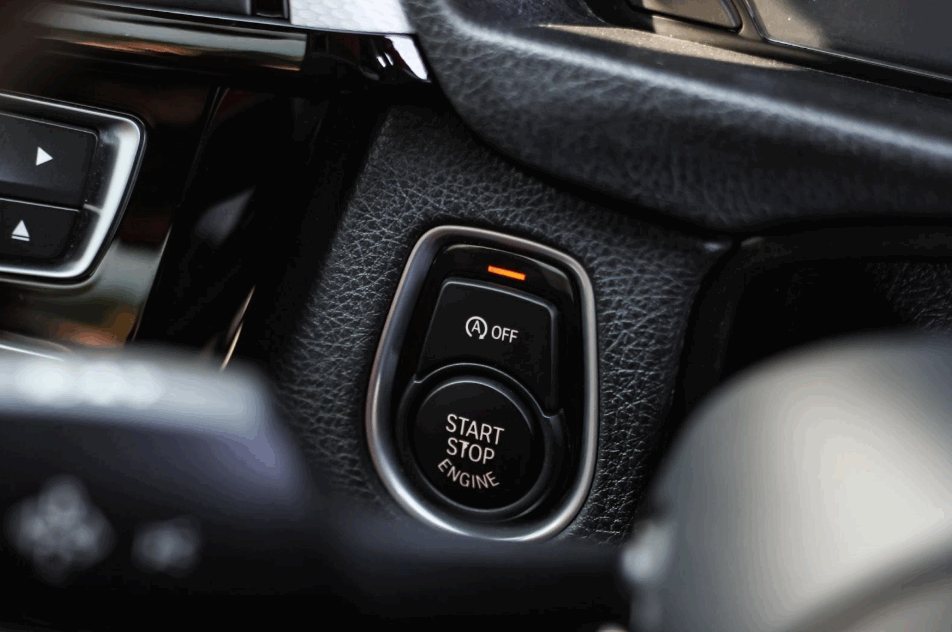
What Is Honda Auto Start-Stop and Why Do Many Drivers Want to Turn It Off?
Honda Auto Start-Stop automatically shuts off the engine when your vehicle stops. It restarts the engine as soon as you release the brake pedal or press the accelerator. Honda created this system to reduce fuel consumption and lower emissions during idle time. The feature works only when the engine, battery, climate control, and other operating conditions meet specific requirements.
Many Honda owners disable this feature because they prefer a smoother driving experience. The engine pauses every time the vehicle stops, and the restart can feel noticeable in slow-moving traffic. Some drivers dislike the slight vibration during each restart. Others simply want instant acceleration without waiting for the engine to restart. These concerns become more obvious during daily commuting or frequent stop-and-go driving.
The biggest frustration comes from the reset behavior. Honda automatically turns the Auto Start-Stop system back on every time you restart the vehicle. As a result, drivers must press the OFF button before almost every trip. This extra step feels unnecessary for owners who never use the feature. Many of them eventually look for a permanent solution instead of repeating the same action every day.
Some drivers also worry about long-term component life. Honda designed the system to work with an AGM battery, an advanced battery management system, and a heavy-duty starter motor. These components can handle frequent engine restarts under normal conditions. However, some owners still prefer to reduce unnecessary start-stop cycles. Their decision usually focuses on driving comfort rather than concerns about mechanical reliability.
Can You Permanently Turn Off Honda Auto Start-Stop?
Yes, you can permanently turn off Honda Auto Start-Stop, but Honda does not include a built-in setting that keeps the system disabled after you restart the vehicle. The Auto Start-Stop OFF button only works for the current drive. Once you switch off the ignition and start the engine again, the feature automatically returns to its default setting. This design complies with fuel economy and emissions standards in many markets.
Honda programmed the Engine Control Module to restore the Auto Start-Stop function after every ignition cycle. The manufacturer expects drivers to decide whether they want to disable the feature during each trip. While this approach helps maintain consistent fuel-saving performance, many owners find it inconvenient because they must press the same button every time they start the vehicle.
For this reason, many Honda owners look for a permanent solution. The most popular option is an Idle Stop Eliminator. This small device remembers your last Auto Start-Stop setting and automatically applies it after every restart. As a result, you no longer need to press the OFF button before driving. Many aftermarket modules also allow you to remove the device at any time without changing the vehicle’s factory software.
Some drivers choose ECU programming or other electrical modifications instead. These methods can disable the system, but they usually require advanced technical knowledge. They may also increase the risk of software conflicts or warranty concerns if someone performs the work incorrectly. In most cases, a high-quality plug-and-play memory module offers the safest balance between convenience, reliability, and reversibility for everyday drivers.
Before choosing any solution, confirm that the product supports your Honda model and model year. Compatibility varies between the Civic, Accord, CR-V, Pilot, HR-V, Passport, Ridgeline, and Odyssey because Honda uses different electrical systems across production years.
What Are the Best Ways to Permanently Disable Honda Auto Start-Stop?
Several methods can permanently disable Honda Auto Start-Stop, but not every solution offers the same level of safety or convenience. The best option depends on your Honda model, technical experience, and whether you want to restore the factory settings in the future. Most owners choose a plug-and-play solution because it works without changing the vehicle’s original software or wiring.
An Idle Stop Eliminator remains the most popular choice for Honda owners. The device connects directly to the factory Auto Start-Stop switch and remembers the last button position after every ignition cycle. If you turn the system off once, the module keeps it off each time you start the vehicle. Installation usually takes only a few minutes, and most products allow you to remove the module without leaving permanent changes behind. This combination of simplicity and reliability makes it the preferred solution for everyday drivers.
A memory module provides a similar experience but uses a different operating method on some Honda models. Instead of disabling the system through software, it records your previous selection and restores it automatically. Many drivers choose this option because it feels completely transparent during normal driving. However, you should always confirm compatibility before purchasing a module because Honda updates electrical systems across different model years.
Some owners consider ECU programming to disable Auto Start-Stop. This method changes the vehicle’s software configuration instead of adding external hardware. Although ECU coding can produce a permanent result, it requires specialized equipment and professional knowledge. Incorrect programming may create software conflicts or affect future dealer updates. For this reason, ECU modification rarely serves as the first recommendation for most drivers.
A few online guides also mention fuse removal or wiring modifications. These methods may disable the feature on certain vehicles, but they often create unnecessary risks. Removing the wrong fuse can affect other electrical systems, while cutting factory wiring makes future repairs more difficult. Most automotive technicians recommend avoiding these approaches unless a manufacturer specifically approves the procedure.
The table below compares the most common solutions and highlights their strengths.
| Method | Installation | Reversible | Warranty Risk | Recommended |
|---|---|---|---|---|
| Idle Stop Eliminator | Easy | Yes | Low | ★★★★★ |
| Memory Module | Easy | Yes | Low | ★★★★☆ |
| ECU Programming | Advanced | Usually No | Medium to High | ★★★☆☆ |
| Fuse or Wiring Modification | Advanced | Difficult | High | ★☆☆☆☆ |
For most Honda owners, an Idle Stop Eliminator delivers the best balance of convenience, safety, and long-term reliability. It requires little technical knowledge, preserves the factory wiring, and allows you to restore the original configuration whenever necessary. That flexibility explains why it has become the preferred solution for drivers who want to permanently turn off Honda Auto Start-Stop without creating unnecessary complications.
How Do You Install an Idle Stop Eliminator?
Installing an Idle Stop Eliminator is the easiest way to permanently turn off Honda Auto Start-Stop on most compatible models. Most plug-and-play modules connect directly to the factory Auto Start-Stop switch, so they do not require software programming or permanent wiring changes. The entire process usually takes less than 15 minutes when you use the correct module for your vehicle.
Before you begin, make sure the module matches your Honda model and model year. Many manufacturers produce different versions for the Civic, Accord, CR-V, Pilot, HR-V, Passport, Ridgeline, and Odyssey. Choosing the correct version helps prevent installation problems and ensures the module communicates properly with the factory electrical system. You should also park the vehicle on a level surface, switch off the ignition, and remove the key or key fob from the cabin before disconnecting any trim panels.
Installation Steps
Start by removing the trim panel that surrounds the Auto Start-Stop button. Most Honda models use plastic retaining clips, so a trim removal tool helps prevent scratches or broken clips. Once the panel is loose, disconnect the factory electrical connector from the Auto Start-Stop switch. Connect the Idle Stop Eliminator between the original connector and the factory switch, then secure the wiring so it cannot move or become pinched behind the dashboard. After reconnecting the trim panel, start the engine and verify that the module remembers your preferred Auto Start-Stop setting after each ignition cycle.
Common Installation Mistakes
Most installation problems occur because drivers purchase the wrong module or fail to secure the wiring correctly. A loose connector may prevent the Auto Start-Stop button from working as expected, while trapped wires can become damaged when the trim panel is reinstalled. Some owners also skip the compatibility check and install a module designed for a different model year. This mistake often causes communication errors because Honda updates electrical components throughout each vehicle generation.
After completing the installation, test the vehicle several times before driving normally. Turn the engine off, restart it, and confirm that the Auto Start-Stop system remains in your preferred setting. If the feature behaves normally and no warning lights appear on the dashboard, the installation is complete. Regular inspection is unnecessary because a properly installed plug-and-play module requires little maintenance during normal vehicle ownership.
Does Permanently Disabling Auto Start-Stop Affect Your Honda?
Permanently disabling Honda Auto Start-Stop changes how the vehicle operates, but it does not automatically damage the engine or other major components. The overall impact depends on the method you choose and how you drive your vehicle. A high-quality plug-and-play module simply prevents the system from activating. It does not modify the engine’s calibration, fuel injection, or transmission programming.
Fuel economy is the first area that most drivers notice. When Auto Start-Stop remains disabled, the engine continues to idle while the vehicle is stationary. As a result, fuel consumption may increase slightly during heavy city traffic where the system would normally shut the engine off. However, the difference is often small for drivers who spend most of their time on highways or drive routes with few traffic lights.
Many owners worry about battery life. Honda equips vehicles with an AGM battery, an advanced Battery Management System, and a starter motor designed for repeated engine restarts. These components support the Auto Start-Stop system under normal operating conditions. When you disable the feature, the starter motor activates less frequently because the engine no longer restarts at every stop. Some owners believe this may reduce wear over time, although Honda designed the system to operate within the expected service life of these components.
Engine wear is another common concern. Modern Honda engines maintain oil pressure and lubrication throughout normal driving conditions, including repeated restarts. Therefore, disabling Auto Start-Stop does not significantly improve engine durability for most drivers. Instead, the biggest advantage comes from a more consistent driving experience. The vehicle responds immediately when traffic begins moving because the engine remains running at all times.
Driving comfort often becomes the main reason owners disable the system. Continuous engine operation eliminates restart delays and reduces the small vibration that some drivers notice during frequent stops. The air conditioning system also performs more consistently because the engine keeps running instead of cycling on and off. This benefit becomes especially noticeable during hot weather or long periods in slow-moving traffic.
Overall, permanently disabling Honda Auto Start-Stop has a greater effect on convenience than on vehicle reliability. Choosing a reversible plug-and-play module allows you to improve driving comfort while preserving the factory electrical system. For most Honda owners, this approach provides the best balance between everyday usability and long-term peace of mind.
Which Honda Models Have Auto Start-Stop?
Honda introduced the Auto Start-Stop system across several models to improve fuel efficiency and reduce emissions. However, the feature did not appear on every vehicle at the same time. Availability depends on the model, trim level, engine, and model year. Before purchasing an aftermarket module, you should always confirm that your vehicle includes the factory Auto Start-Stop system.
The Honda Civic is one of the most common models equipped with this feature. Many Civic models from recent generations include Auto Start-Stop as standard or optional equipment, especially on higher trim levels with turbocharged engines. The Honda Accord also supports the system on many versions, making it one of the most popular vehicles for owners searching for a permanent disable solution.
Honda also added Auto Start-Stop to several SUVs. The CR-V, HR-V, Pilot, Passport, and Ridgeline all use the technology on selected model years. These vehicles often spend more time in urban traffic, where the system can reduce idle fuel consumption. At the same time, many SUV owners prefer to disable the feature because they want smoother acceleration in stop-and-go driving or while towing light loads.
The Honda Odyssey also includes Auto Start-Stop on many recent models. Family drivers often notice the system during school runs, shopping trips, or city commuting because these routes involve frequent stops. Some owners choose to keep the feature active for better fuel economy, while others prefer a more predictable driving experience with the engine running continuously.
The table below provides a general overview of Honda models that commonly support Auto Start-Stop. Features may vary by market, engine option, and production year, so you should always verify compatibility before ordering an aftermarket device.
| Honda Model | Auto Start-Stop Available | Compatibility Check Required |
|---|---|---|
| Civic | Yes | Yes |
| Accord | Yes | Yes |
| CR-V | Yes | Yes |
| HR-V | Yes | Yes |
| Pilot | Yes | Yes |
| Passport | Yes | Yes |
| Ridgeline | Yes | Yes |
| Odyssey | Yes | Yes |
If you are unsure whether your Honda supports Auto Start-Stop, check the owner’s manual or look for the Auto Start-Stop OFF button on the dashboard. You can also confirm compatibility by entering your vehicle’s model year and trim level on the website of the module manufacturer before making a purchase.
Conclusion
Honda Auto Start-Stop helps reduce fuel consumption and emissions by shutting off the engine during short stops. While the feature works as designed, many drivers prefer a smoother and more predictable driving experience. The need to press the OFF button after every ignition cycle also encourages many Honda owners to look for a permanent solution.
A plug-and-play Idle Stop Eliminator offers the simplest and most practical approach. It remembers your preferred setting without modifying the factory software or cutting the vehicle’s wiring. Installation is straightforward, and most modules can be removed at any time if you want to restore the original configuration. This combination of convenience and reversibility makes it the preferred option for many Honda owners.
Before purchasing any device, confirm that it supports your Honda model, trim level, and model year. Choosing a compatible product helps ensure reliable operation and avoids unnecessary installation issues. If you have concerns about warranty coverage or dealer service, consult your Honda dealer or the module manufacturer before making any modifications.
By selecting a high-quality solution and installing it correctly, you can permanently turn off Honda Auto Start-Stop while maintaining a safe, comfortable, and reliable driving experience.
Frequently Asked Questions
Can I permanently disable Honda Auto Start-Stop without modifying the ECU?
Yes. Many owners use a plug-and-play Idle Stop Eliminator that remembers the last Auto Start-Stop setting. The device works without changing the ECU software or permanently modifying the vehicle’s wiring.
Will disabling Auto Start-Stop void my Honda warranty?
Installing a reversible plug-and-play module does not automatically void your vehicle warranty. However, warranty decisions depend on local regulations and whether a modification causes a specific failure. Check your warranty terms or consult your Honda dealer if you have concerns.
Does disabling Auto Start-Stop damage the engine?
No. Disabling the system does not damage the engine when you use a properly designed aftermarket module. The engine simply continues idling instead of shutting down at traffic lights or during short stops.
Will I use more fuel if Auto Start-Stop stays off?
Yes, fuel consumption may increase slightly because the engine continues running while the vehicle is stationary. The difference is usually most noticeable during frequent stop-and-go city driving.
What is the best way to permanently turn off Honda Auto Start-Stop?
For most drivers, a high-quality plug-and-play Idle Stop Eliminator provides the best balance of convenience, reliability, and reversibility. It requires minimal installation and restores your preferred setting automatically after every engine restart.