The 5.7 HEMI engine remains one of the most popular American V8 platforms because it responds exceptionally well to performance modifications. Whether it powers a Ram 1500, Dodge Charger R/T, Challenger R/T, or Chrysler 300, this engine offers significant room for improvement without requiring a complete rebuild. However, not every upgrade produces the same results. Some modifications increase airflow, others optimize fuel delivery, and a few fundamentally transform how the engine generates power. Choosing the wrong combination can lead to disappointing horsepower gains, unnecessary expenses, or even reliability issues.
The best 5.7 HEMI performance upgrades are the ones that work together as a complete system rather than as individual parts. For example, installing long tube headers without an ECU tune limits the potential benefits, while adding a larger throttle body to a stock engine often produces only marginal improvements. Understanding how each component interacts with the engine allows you to invest in modifications that deliver measurable performance instead of chasing inflated marketing claims.
This guide explains which upgrades provide the greatest horsepower gains, how much power each modification can realistically add, and which combinations offer the best value for different budgets. You will also learn when bolt-on parts are enough, when internal engine upgrades become worthwhile, and whether a supercharger is the right choice for your build. By the end of this article, you will have a clear upgrade path that balances horsepower, drivability, reliability, and long-term performance.
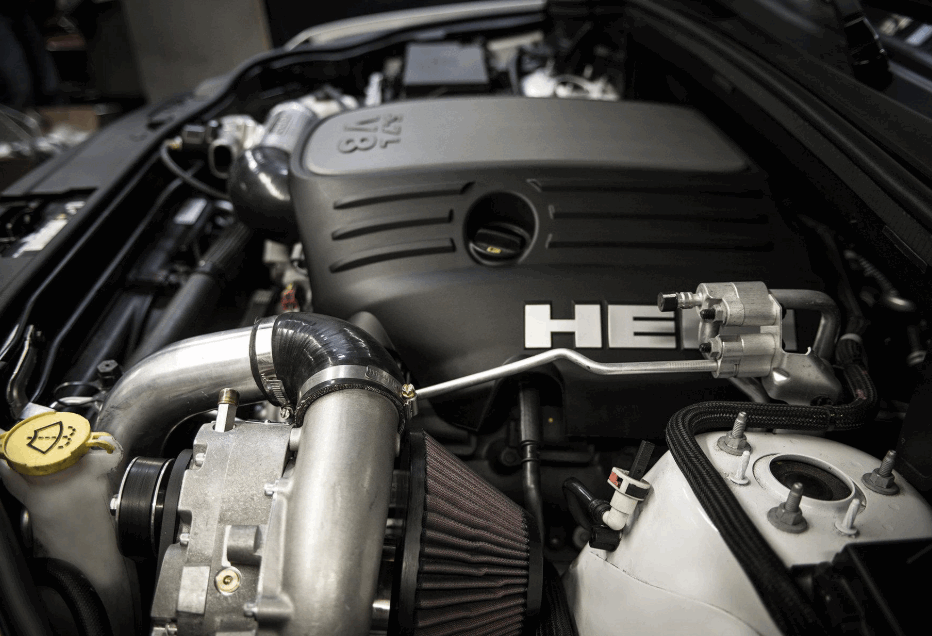
What Are the Best 5.7 HEMI Performance Upgrades?
The best 5.7 HEMI performance upgrades improve airflow, engine calibration, and combustion efficiency. These three areas determine how much power the engine can produce. Although many aftermarket parts are available, only a few deliver significant horsepower gains. Cold air intakes, long tube headers, ECU tuning, performance camshafts, and superchargers consistently produce the strongest results.
Airflow upgrades are usually the best place to start. The factory intake and exhaust systems prioritize emissions, fuel economy, and noise reduction. As a result, they restrict the engine’s breathing at higher RPM. Installing a cold air intake, long tube headers, and a less restrictive exhaust helps the engine move more air. Better airflow allows the cylinders to fill more efficiently, creating the foundation for higher horsepower.
However, airflow improvements alone cannot unlock the engine’s full potential. The factory ECU still uses conservative ignition timing and fuel mapping. An ECU tune recalibrates these settings to match the new hardware. It also improves throttle response and optimizes air and fuel delivery. For most naturally aspirated builds, tuning provides one of the highest returns on investment after bolt on modifications.
Internal engine upgrades become valuable when higher power levels are the goal. A performance camshaft changes valve timing and lift, allowing the engine to move more air through the cylinders. Stronger valve springs and upgraded lifters improve reliability under higher loads. These modifications require careful tuning, but they can produce substantial horsepower gains when installed as a complete package.
Forced induction delivers the largest increase in performance. A quality supercharger system can add well over 150 horsepower with proper supporting modifications. Nevertheless, most owners achieve better value by following a staged upgrade path. Starting with bolt on parts, adding an ECU tune, and upgrading the valvetrain before forced induction creates a balanced combination of power, drivability, and long term reliability.
Which Bolt On Mods Deliver the Biggest Horsepower Gains?
Bolt on modifications offer the best balance of cost, performance, and installation difficulty for a 5.7 HEMI. These upgrades replace restrictive factory components without opening the engine. They improve airflow, reduce exhaust back pressure, and help the engine operate more efficiently. When combined with a professional ECU tune, they can produce noticeable horsepower gains while preserving everyday drivability.
A cold air intake is often the first upgrade owners install. The factory air box limits airflow at higher engine speeds. A high performance intake reduces intake restriction and supplies cooler, denser air to the throttle body. On a stock engine, the gain is usually between 5 and 10 horsepower. The improvement becomes more noticeable when the intake is paired with other airflow modifications and custom tuning.
Long tube headers provide one of the largest horsepower increases among naturally aspirated bolt on upgrades. Factory exhaust manifolds create back pressure that limits exhaust scavenging. Long tube headers improve exhaust flow by allowing spent gases to exit the cylinders more efficiently. Most well designed systems add between 15 and 30 horsepower after tuning. They also increase mid range torque, making the vehicle feel stronger during acceleration.
A cat back exhaust complements upgraded headers by reducing restriction after the catalytic converters. While the horsepower gain is smaller than headers alone, it improves overall exhaust flow and engine sound. Most quality systems add approximately 5 to 15 horsepower. More importantly, they help maximize the benefits of other airflow upgrades.
Other bolt on modifications can further improve performance when selected carefully. A ported intake manifold increases airflow distribution across the cylinders, especially at higher RPM. A larger throttle body can improve throttle response on modified engines, although its benefits are limited on an otherwise stock setup. Together, these upgrades create a more efficient induction system and prepare the engine for future modifications.
The greatest results come from combining compatible components instead of installing random parts. A cold air intake, long tube headers, a free flowing exhaust, and an ECU tune form one of the most effective upgrade packages for a naturally aspirated 5.7 HEMI. This combination commonly delivers gains of 30 to 50 horsepower while maintaining factory like reliability and excellent street manners.
Why Is ECU Tuning One of the Most Important Performance Upgrades?
An ECU tune is one of the most important 5.7 HEMI performance upgrades because it unlocks horsepower that factory calibration leaves unused. Every modern HEMI engine relies on the Engine Control Unit to manage ignition timing, fuel delivery, throttle response, and transmission behavior. The factory tune is designed for reliability, emissions compliance, and fuel economy. As a result, it cannot fully utilize aftermarket performance parts.
Installing bolt on modifications without tuning limits their effectiveness. A cold air intake, long tube headers, or a performance exhaust can improve airflow. However, the ECU continues to operate with conservative settings. It cannot automatically optimize ignition timing or adjust the air and fuel mixture for maximum performance. A custom tune recalibrates these parameters to match the upgraded hardware. This process allows the engine to generate more horsepower while improving overall drivability.
Throttle response is another area where tuning makes a noticeable difference. Factory calibration often softens throttle input to create smoother acceleration and better fuel efficiency. A performance tune removes much of this delay. The engine responds more quickly to accelerator input, making the vehicle feel faster even before peak horsepower increases. Many drivers also notice improved transmission shift quality because the tune can optimize shift points and torque management.
The amount of horsepower gained depends on the engine configuration and supporting modifications. A completely stock 5.7 HEMI typically gains between 10 and 20 horsepower from a quality tune. Engines equipped with long tube headers, a cold air intake, and a free flowing exhaust usually see even greater improvements because the calibration fully supports the increased airflow. The combined package often delivers smoother power throughout the RPM range instead of producing gains only at high engine speeds.
Choosing the right tuning method is just as important as selecting the right hardware. A canned tune provides a quick solution for lightly modified vehicles, but it uses generic calibrations. A custom dyno tune delivers better results because it is developed specifically for your engine, fuel quality, and installed components. For owners who want the highest performance, maximum reliability, and consistent power delivery, professional ECU tuning remains one of the best investments in any 5.7 HEMI build.
Which Internal Engine Upgrades Produce the Largest Horsepower Gains?
Internal engine upgrades produce the largest horsepower gains for a naturally aspirated 5.7 HEMI because they improve the engine’s ability to move air through the cylinders. Unlike bolt on parts, these modifications change the engine’s mechanical operation. They increase airflow at higher RPM, improve combustion efficiency, and allow the engine to support significantly more power. However, they also require careful planning and professional tuning to achieve reliable results.
A performance camshaft is the most effective internal upgrade for increasing horsepower. The camshaft controls when the intake and exhaust valves open and close. An aftermarket cam uses more lift and longer duration than the factory design. This change allows more air and fuel to enter the combustion chamber while helping exhaust gases leave the cylinders more efficiently. A properly matched cam package can add 40 to 70 horsepower on a naturally aspirated 5.7 HEMI, especially when combined with long tube headers and a custom ECU tune.
Supporting valvetrain components are equally important. Stronger valve springs prevent valve float at higher engine speeds and maintain precise valve control. Upgraded pushrods improve durability under increased valve spring pressure, while performance lifters reduce the risk of premature wear. Replacing these components at the same time creates a more reliable valvetrain and helps the engine perform consistently under demanding conditions.
Many owners also choose to remove the Multi Displacement System when installing a performance camshaft. The factory MDS lifters are designed to deactivate cylinders during light load conditions to improve fuel economy. While effective for daily driving, they are considered a weak point in high performance applications. An MDS delete kit replaces these components with standard lifters, improving long term reliability and expanding camshaft options. This upgrade also simplifies engine calibration and eliminates compatibility issues with aggressive cam profiles.
Internal engine upgrades deliver the best results when every component works together. A complete cam package, upgraded valvetrain, long tube headers, and a professional ECU tune create a balanced combination that significantly outperforms individual modifications. Although these upgrades require a larger investment than basic bolt on parts, they provide the strongest naturally aspirated horsepower gains while preparing the engine for future performance enhancements.
Is a Supercharger the Ultimate Upgrade for a 5.7 HEMI?
A supercharger is the ultimate performance upgrade for a 5.7 HEMI if maximum horsepower is the primary goal. Unlike naturally aspirated modifications, a supercharger forces compressed air into the engine. This process allows the cylinders to burn more fuel during each combustion cycle. The result is a dramatic increase in horsepower and torque across the entire RPM range.
The biggest advantage of a supercharger is its ability to produce large power gains without replacing the engine block. Most complete systems add between 120 and 200 horsepower on an otherwise healthy 5.7 HEMI. The exact increase depends on boost pressure, fuel quality, and engine calibration. Many street builds exceed 500 horsepower at the crank while maintaining excellent drivability with conservative tuning.
A supercharger also transforms the way the vehicle accelerates. Positive displacement systems, such as TVS and Roots designs, generate boost almost immediately. They deliver strong low end torque and instant throttle response, making them ideal for heavy trucks and muscle cars. Centrifugal superchargers build boost more gradually. They produce greater power at higher engine speeds and often suit drivers who prefer strong top end performance.
Supporting upgrades become essential once forced induction is added. Higher airflow requires larger fuel injectors and a higher capacity fuel pump to maintain the correct air and fuel ratio. A larger intercooler lowers intake air temperature and reduces the risk of detonation. Many high horsepower builds also benefit from stronger spark plugs, upgraded cooling components, and a reinforced transmission. These supporting modifications protect the engine while ensuring consistent performance under heavy load.
Professional ECU tuning is the most important part of any supercharger installation. The factory calibration cannot safely manage additional boost pressure or increased fuel demand. A custom tune adjusts ignition timing, fuel delivery, boost control, and torque management to match the new setup. Proper calibration improves power, protects internal engine components, and delivers smooth drivability in both daily driving and full throttle conditions.
Although a supercharger offers the largest horsepower increase, it is not the best choice for every owner. The system costs significantly more than bolt on upgrades and requires additional supporting parts. Drivers seeking moderate performance gains often achieve better value with intake, exhaust, headers, camshaft upgrades, and ECU tuning. However, enthusiasts pursuing maximum performance will find that a properly engineered supercharger system delivers the highest horsepower potential available for the 5.7 HEMI platform.
How Much Horsepower Can Different 5.7 HEMI Performance Upgrades Add?
The horsepower gained from 5.7 HEMI performance upgrades depends on the combination of parts rather than a single modification. Some upgrades produce only modest improvements on their own. Others unlock much larger gains when paired with supporting components and a professional ECU tune. Building the engine in logical stages delivers better results than installing unrelated parts.
A cold air intake typically adds between 5 and 10 horsepower on an otherwise stock engine. A cat back exhaust provides another 5 to 15 horsepower by reducing exhaust restriction. These upgrades improve airflow, but their individual gains remain relatively small. When installed together, they create a stronger foundation for future modifications instead of producing dramatic power increases by themselves.
Long tube headers deliver one of the largest gains among naturally aspirated bolt on upgrades. Most quality systems increase output by 15 to 30 horsepower after ECU tuning. Adding a custom tune contributes another 10 to 20 horsepower while improving throttle response and transmission behavior. Together, these modifications often increase total output by 30 to 50 horsepower over the factory configuration.
A performance camshaft produces a much larger improvement because it changes the engine’s breathing characteristics. A complete cam package commonly adds 40 to 70 horsepower when paired with upgraded valve springs, long tube headers, and professional tuning. The exact result depends on camshaft design, fuel quality, and the supporting modifications already installed. Engines with well matched components typically produce stronger power throughout the entire RPM range instead of only at high engine speeds.
Forced induction delivers the highest horsepower increase available for the 5.7 HEMI platform. A well engineered supercharger system commonly adds between 120 and 200 horsepower with conservative boost levels and proper calibration. Builds that include upgraded fuel injectors, improved cooling, and custom tuning can exceed these figures while maintaining reliable street performance. The combination of forced induction and supporting hardware creates a significant increase in both horsepower and torque.
The table below summarizes the typical horsepower gains for the most common upgrades.
| Performance Upgrade | Typical Horsepower Gain* |
|---|---|
| Cold Air Intake | 5–10 hp |
| Cat Back Exhaust | 5–15 hp |
| Long Tube Headers | 15–30 hp |
| ECU Tune | 10–20 hp |
| Camshaft Package | 40–70 hp |
| Supercharger Kit | 120–200+ hp |
*Actual gains vary depending on engine condition, fuel quality, dyno type, supporting modifications, and tuning quality.
Understanding these typical gains helps owners build a realistic upgrade plan. Instead of chasing a single high horsepower part, it is more effective to combine compatible upgrades that complement one another. A balanced setup consistently produces more usable power, better reliability, and stronger long term value than randomly selected modifications.
What Is the Best Upgrade Path for a 5.7 HEMI?
The best 5.7 HEMI upgrade path follows a logical sequence that builds horsepower while protecting reliability. Each modification should support the next stage instead of creating new bottlenecks. This approach maximizes performance, reduces unnecessary expenses, and minimizes the need to replace parts later. Most experienced builders start with airflow improvements before moving to engine modifications and forced induction.
The first stage should focus on basic bolt on upgrades. A cold air intake, long tube headers, and a high flow cat back exhaust improve the engine’s breathing without affecting everyday reliability. Adding a professional ECU tune at this stage allows the engine to take full advantage of the increased airflow. Most vehicles gain between 30 and 50 horsepower from this combination while maintaining excellent street manners.
The second stage should improve the engine’s mechanical efficiency. A performance camshaft delivers the largest naturally aspirated horsepower increase, but it should never be installed alone. Upgraded valve springs, stronger pushrods, and quality lifters create a complete valvetrain package that supports higher engine speeds and increased valve lift. Many owners also perform an MDS delete during this stage to improve long term reliability and simplify future tuning.
The final stage is designed for enthusiasts who want maximum performance. A supercharger dramatically increases airflow and engine output, but it also requires supporting upgrades. Larger fuel injectors, a higher capacity fuel pump, improved cooling, and professional ECU tuning become essential. Many high horsepower builds also benefit from stronger transmission components because the factory drivetrain may become the limiting factor once engine torque increases significantly.
Planning the upgrade path before purchasing parts prevents unnecessary spending. For example, installing a restrictive factory exhaust before adding a supercharger limits the benefits of forced induction. Likewise, replacing stock valve springs after a camshaft installation requires repeating much of the same labor. Purchasing compatible components from the beginning saves both time and money while producing a more reliable final build.
Every owner should choose an upgrade path that matches personal goals and budget. A daily driven truck may only need bolt on modifications and ECU tuning to feel noticeably stronger. A weekend performance vehicle can justify a complete cam package or a supercharger system. Selecting upgrades that match the intended use of the vehicle creates a balanced combination of horsepower, drivability, and long term durability.
Which Supporting Upgrades Improve Performance and Reliability?
Supporting upgrades improve both performance and reliability by helping the 5.7 HEMI handle additional horsepower. Many owners focus on power producing parts such as camshafts or superchargers. However, supporting components often determine whether the engine performs consistently over the long term. Upgrading the fuel system, cooling system, ignition system, and drivetrain creates a balanced package that can safely manage higher power levels.
The fuel system is one of the first areas that requires attention. As horsepower increases, the engine needs more fuel to maintain the correct air and fuel ratio. Stock injectors and fuel pumps are adequate for mild bolt on modifications, but they can become a restriction on high output builds. Larger fuel injectors and a higher flow fuel pump ensure that the engine receives enough fuel under heavy load. This reduces the risk of running lean, which can damage pistons and valves.
The cooling system also becomes more important as engine output rises. Additional horsepower generates more heat during combustion. Higher temperatures reduce performance and increase the likelihood of detonation. An upgraded aluminum radiator, a larger intercooler for supercharged applications, and a high performance thermostat help control operating temperatures. Maintaining stable coolant and intake air temperatures allows the engine to produce consistent power during repeated acceleration.
The ignition system should match the increased demands of a modified engine. High quality spark plugs with the correct heat range improve combustion efficiency and reduce the chance of misfires under load. Performance ignition coils are not always necessary for mild builds, but they can provide a stronger and more stable spark in high boost applications. Choosing the proper spark plug gap during ECU tuning also improves reliability and throttle response.
The drivetrain deserves equal attention because additional engine power places greater stress on the transmission and differential. A transmission performance tune improves shift quality and reduces clutch slip in automatic models. Vehicles producing substantially more torque may also require a higher capacity torque converter, stronger clutch packs, or upgraded driveshaft components. Reinforcing the drivetrain helps transfer power to the wheels without sacrificing durability.
Supporting upgrades should never be viewed as optional. They protect the investment made in expensive performance parts while allowing the engine to operate safely under higher loads. A balanced combination of fuel, cooling, ignition, and drivetrain upgrades produces better long term results than focusing on horsepower alone. Owners who build the entire system instead of only the engine usually achieve greater reliability, stronger performance, and lower maintenance costs.
What Common Mistakes Should You Avoid When Upgrading a 5.7 HEMI?
Many 5.7 HEMI performance upgrades fail to deliver the expected results because owners overlook the overall build strategy. Buying the most expensive parts does not guarantee the best performance. Every modification must work with the rest of the engine. Avoiding a few common mistakes saves money, improves reliability, and produces better horsepower gains.
One of the biggest mistakes is installing performance parts without an ECU tune. Many owners add a cold air intake, long tube headers, or a larger throttle body and expect immediate gains. However, the factory calibration still controls ignition timing, fuel delivery, and throttle response. Without tuning, the engine cannot fully benefit from the improved airflow. In many cases, the performance increase is far smaller than expected.
Another common mistake is choosing parts that do not match the build. A large throttle body offers little benefit on a stock engine because the factory intake manifold remains the primary restriction. Likewise, an aggressive camshaft may reduce drivability if the vehicle is used every day. Selecting components that complement each other produces better results than installing the largest available aftermarket parts.
Ignoring supporting upgrades is another costly error. Higher horsepower increases stress on the fuel system, cooling system, and drivetrain. Stock injectors may not supply enough fuel for forced induction, while inadequate cooling can increase intake temperatures and reduce performance. Upgrading these systems before they become a limitation helps protect the engine and maintain consistent power.
Many owners also underestimate the importance of professional installation and calibration. Incorrect camshaft timing, poor header installation, or an inaccurate ECU tune can reduce performance and damage engine components. Even high quality parts perform poorly when they are installed incorrectly. Working with experienced tuners and reputable shops minimizes these risks and helps the engine operate as intended.
The final mistake is chasing peak horsepower instead of building a balanced vehicle. A dyno number may look impressive, but real world performance depends on throttle response, torque delivery, traction, and reliability. A well planned combination of bolt on upgrades, supporting components, and professional tuning often outperforms a build that focuses only on maximum horsepower. The best 5.7 HEMI builds deliver strong performance every time the engine starts, not only during a single dyno session.
Which 5.7 HEMI Performance Upgrades Offer the Best Value for Money?
The best value 5.7 HEMI performance upgrades deliver measurable horsepower gains without requiring major engine modifications. Price alone does not determine value. A worthwhile upgrade increases performance, supports future modifications, and maintains long term reliability. For most owners, a carefully planned combination of bolt on parts and professional tuning provides the highest return on investment.
A professional ECU tune offers one of the best values for money. It improves ignition timing, fuel delivery, throttle response, and transmission behavior without replacing mechanical components. A quality custom tune often adds 10 to 20 horsepower on a stock engine. The benefits become even greater after installing airflow upgrades because the calibration is optimized for the new hardware. Few modifications provide a similar improvement at a comparable cost.
Long tube headers also deliver excellent value because they create significant horsepower gains while supporting future upgrades. They improve exhaust scavenging and reduce back pressure throughout the RPM range. Unlike cosmetic modifications, quality headers continue to provide benefits as additional performance parts are added. Their value increases further when combined with a free flowing exhaust system and a custom ECU tune.
A cold air intake is another worthwhile investment, especially during the early stages of a build. The horsepower increase is relatively small on its own, but the intake improves airflow and prepares the engine for larger modifications. It also works well with headers, exhaust upgrades, and performance tuning. Instead of viewing it as a standalone upgrade, owners should consider it part of a complete airflow package.
A performance camshaft delivers outstanding value for enthusiasts seeking larger naturally aspirated gains. Although installation costs are higher, the horsepower increase is substantially greater than most bolt on modifications. A complete cam package with upgraded valve springs and professional tuning transforms the engine’s power curve while creating a stronger foundation for future upgrades. Owners planning long term performance builds often recover more value from this investment than from repeatedly purchasing small aftermarket parts.
Supercharger systems provide the highest horsepower per upgrade, but they do not always offer the best value for every owner. The initial purchase price is significantly higher, and additional spending on fuel system, cooling, and drivetrain upgrades is usually required. Drivers looking for moderate performance gains often achieve a better cost to performance ratio with bolt on modifications and ECU tuning. However, enthusiasts pursuing maximum horsepower may find that a supercharger delivers the greatest value because no naturally aspirated upgrade can match its power potential.
The highest return on investment comes from following a staged upgrade strategy instead of buying parts individually. Starting with a cold air intake, long tube headers, a cat back exhaust, and a professional ECU tune creates an efficient foundation for future modifications. Owners can then add a camshaft or forced induction without replacing earlier components. This approach reduces wasted spending, improves overall performance, and delivers the strongest value throughout the life of the build.
Conclusion
The 5.7 HEMI remains one of the most upgrade friendly V8 engines because it responds well to both bolt on modifications and advanced performance packages. Every successful build begins with a clear goal and a logical upgrade strategy. Instead of chasing the highest advertised horsepower numbers, owners achieve better long term results by selecting components that work together. A balanced combination of airflow improvements, ECU tuning, and supporting upgrades consistently delivers more usable performance than randomly installing aftermarket parts.
For most street driven vehicles, the ideal starting point includes a cold air intake, long tube headers, a cat back exhaust, and a professional ECU tune. This package provides noticeable gains in horsepower, throttle response, and driving enjoyment while maintaining factory level reliability. Enthusiasts seeking greater naturally aspirated performance can add a camshaft package with upgraded valvetrain components. Those pursuing maximum power will achieve the largest gains with a properly engineered supercharger system supported by fuel, cooling, and drivetrain upgrades.
Every performance modification should be viewed as part of a complete system rather than an isolated upgrade. Careful planning reduces unnecessary costs, improves reliability, and creates a stronger foundation for future improvements. By following a staged upgrade path and investing in quality parts with professional calibration, owners can unlock the full performance potential of the 5.7 HEMI while preserving the durability that has made this engine popular among truck and muscle car enthusiasts.