Knowing the correct 5.7 HEMI oil capacity helps protect your engine and maintain reliable performance. Most 5.7L HEMI engines require 7 quarts (6.6 liters) of engine oil when you replace the oil filter. However, the exact capacity depends on the vehicle model, production year, and engine configuration. Adding too much or too little oil can reduce lubrication and increase engine wear.
This guide explains the correct oil capacity for the most common 5.7L HEMI applications. It covers the Ram 1500, Dodge Charger, Dodge Challenger, Chrysler 300, Jeep Grand Cherokee, and Dodge Durango. You will also learn which oil viscosity Chrysler recommends and when to change the engine oil. In addition, the guide explains how to check the oil level correctly after every oil change.
If you service your own vehicle, accurate specifications are essential. They also help you avoid common maintenance mistakes. By the end of this guide, you will know the correct oil capacity for your model year and understand the best maintenance practices for a 5.7 HEMI engine.
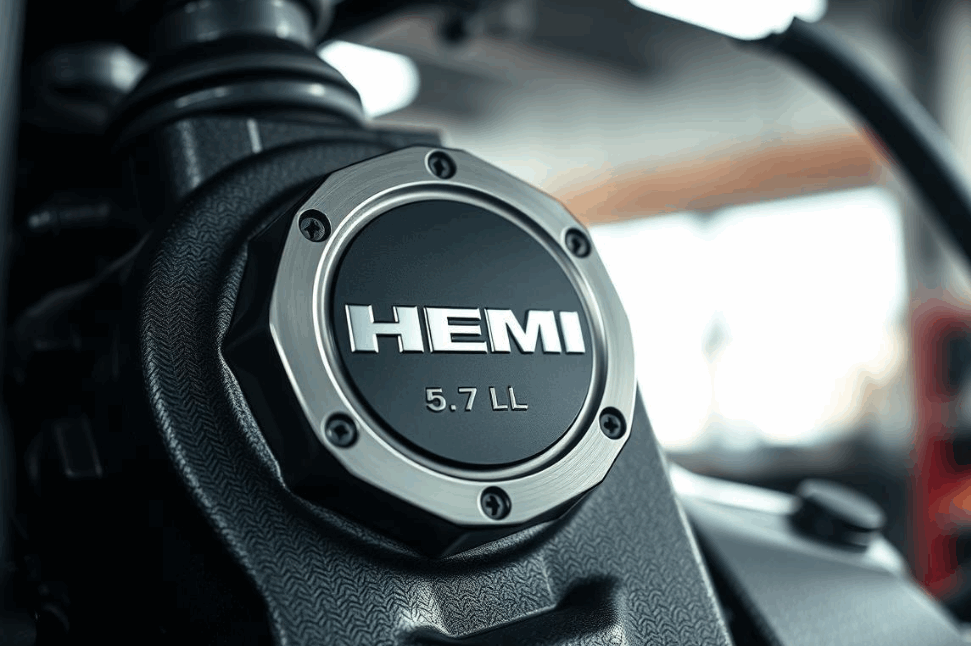
What Is the Oil Capacity of a 5.7 HEMI Engine?
The 5.7 HEMI oil capacity is 7 quarts (6.6 liters) when you replace the oil filter on most modern applications. This specification applies to many Ram, Dodge, Chrysler, and Jeep models equipped with the 5.7L HEMI V8. However, some model years and vehicle configurations may have slight differences. For that reason, you should always verify the specification for your exact vehicle.
Replacing the oil filter changes the total amount of oil the engine needs. A new filter holds a small amount of fresh oil before it begins circulating through the lubrication system. As a result, the engine requires additional oil to reach the correct level on the dipstick. If you replace the engine oil without changing the filter, the refill amount may be slightly lower. Nevertheless, replacing the oil filter during every oil change remains the recommended maintenance practice.
Oil capacity can also vary because the 5.7L HEMI was installed in several vehicle platforms. The Ram 1500, Dodge Charger, Dodge Challenger, Chrysler 300, Jeep Grand Cherokee, and Dodge Durango use different oil pans, engine layouts, and calibration updates. Although the differences are usually small, they affect the total refill capacity. Always use the specification listed for your model year instead of assuming every 5.7 HEMI engine requires the same amount of oil.
Adding the correct amount of oil protects every moving component inside the engine. Proper lubrication reduces friction, stabilizes oil pressure, and improves cooling around critical parts such as the crankshaft, camshaft, pistons, and hydraulic lifters. After every oil change, start the engine for several minutes, allow the oil to circulate, and then check the dipstick on a level surface. This simple step confirms that the oil level falls within the recommended range before you drive the vehicle.
5.7 HEMI Oil Capacity by Model Year
The 5.7 HEMI oil capacity remains close to 7 quarts (6.6 liters) for most applications. However, the exact refill amount depends on the vehicle, model year, and engine configuration. Manufacturers may update the oil pan, lubrication system, or engine components during a production cycle. Therefore, checking the factory specification for your vehicle is always the safest approach before adding fresh oil.
The table below summarizes the typical oil capacity for the most common vehicles equipped with the 5.7L HEMI V8 engine.
| Vehicle | Model Years | Oil Capacity (With Filter) |
|---|---|---|
| Ram 1500 | 2009–Present | 7 quarts (6.6 L) |
| Ram 2500 | 2011–Present | 7 quarts (6.6 L) |
| Dodge Charger | 2006–Present | 7 quarts (6.6 L) |
| Dodge Challenger | 2009–Present | 7 quarts (6.6 L) |
| Chrysler 300 | 2005–Present | 7 quarts (6.6 L) |
| Jeep Grand Cherokee | 2005–2022 | 7 quarts (6.6 L) |
| Dodge Durango | 2011–Present | 7 quarts (6.6 L) |
Although these vehicles share the same engine displacement, they do not always use identical engine calibrations. Some models include the Multi-Displacement System (MDS), while newer trucks may feature the eTorque mild hybrid system. These technologies improve efficiency, but they do not significantly change the engine oil capacity. Instead, they influence the recommended oil viscosity and maintenance schedule.
You should also remember that the listed capacity applies when replacing both the engine oil and the oil filter. If the filter remains installed, the engine may require slightly less oil. Even so, replacing the oil filter during every service helps remove contaminants and supports consistent oil pressure throughout the lubrication system.
If your owner’s manual lists a different capacity, always follow the manufacturer’s specification. Factory documentation takes priority because it reflects the exact engine configuration installed in your vehicle. This simple verification helps prevent overfilling, reduces maintenance errors, and ensures the engine operates within its designed lubrication range.
What Oil Is Recommended for a 5.7 HEMI?
The recommended oil for a 5.7 HEMI depends on the model year and operating conditions. Most modern 5.7L HEMI engines use SAE 0W-20 full synthetic oil because it provides excellent cold-start protection and supports the Multi-Displacement System (MDS). Some earlier models specify SAE 5W-20, so you should always confirm the correct viscosity in the owner’s manual before adding new oil.
Full synthetic oil offers better protection than conventional oil under normal and severe driving conditions. It flows more quickly during cold starts and maintains a stable viscosity at high operating temperatures. As a result, it reduces internal friction, minimizes engine wear, and helps keep critical components clean. It also resists oxidation better than conventional oil, allowing the engine to perform consistently throughout the recommended service interval.
Choosing oil that meets the latest industry standards is just as important as selecting the correct viscosity. Chrysler recommends engine oil that satisfies current API SP and ILSAC GF-6 specifications whenever applicable. These standards improve wear protection, reduce sludge formation, and help prevent low-speed pre-ignition in modern gasoline engines. Using certified oil also supports emissions performance and protects advanced engine technologies.
Driving conditions can also influence your oil choice. Vehicles that tow heavy loads, operate in extremely hot weather, or spend long periods in stop-and-go traffic place additional stress on the engine. High-quality full synthetic oil maintains its protective properties under these demanding conditions and helps preserve stable oil pressure. Regular oil changes with the correct specification remain the most effective way to extend engine life and maintain reliable performance.
Although many aftermarket brands meet Chrysler’s requirements, selecting a reputable product is essential. Well-known manufacturers such as Pennzoil, Mobil 1, Valvoline, Castrol, and Mopar produce full synthetic oils that meet the required specifications for most 5.7 HEMI applications. Regardless of the brand, always use the viscosity and performance rating specified for your vehicle to achieve the best long-term results.
How Do You Change Oil on a 5.7 HEMI?
Changing the oil on a 5.7 HEMI is a straightforward maintenance task when you follow the correct procedure. Replacing the engine oil and oil filter at the same time removes contaminants from the lubrication system and helps maintain stable oil pressure. Before you begin, make sure the engine is warm, park the vehicle on a level surface, and gather the correct oil, a new oil filter, a drain pan, and the required tools.
Start by removing the oil drain plug and allow the old oil to drain completely. Once the flow slows to a drip, reinstall the drain plug and tighten it to the manufacturer’s specified torque. Next, remove the old oil filter and apply a thin layer of fresh engine oil to the gasket of the new filter. Install the new filter by hand until the gasket contacts the mounting surface, then tighten it according to the filter manufacturer’s instructions.
After replacing the drain plug and oil filter, pour the recommended amount of fresh engine oil into the engine. Most 5.7L HEMI engines require 7 quarts (6.6 liters) when the oil filter is replaced. However, you should add the final portion gradually instead of pouring the entire amount at once. This approach reduces the risk of overfilling and makes it easier to achieve the correct oil level.
Start the engine and let it idle for several minutes. This allows the fresh oil to circulate through the engine and fill the new oil filter. Turn the engine off and wait several minutes before checking the dipstick. The oil level should fall between the MIN and MAX marks. Finally, reset the Oil Life Monitoring System if your vehicle is equipped with one. This step ensures the maintenance reminder accurately tracks the next service interval.
How Often Should You Change Oil in a 5.7 HEMI?
The recommended oil change interval for a 5.7 HEMI depends on your driving habits, engine load, and the type of oil you use. Under normal driving conditions, most manufacturers recommend changing the engine oil every 7,500 to 10,000 miles or at least once a year when using full synthetic oil. However, vehicles that operate under demanding conditions often require more frequent service to maintain proper engine protection.
Severe driving conditions shorten the life of engine oil. Frequent towing, carrying heavy loads, driving in extreme temperatures, making short trips, or spending long periods in stop-and-go traffic causes the oil to degrade more quickly. These conditions increase engine heat and contamination, which reduces the oil’s ability to lubricate moving parts. For this reason, many owners choose to replace the oil every 5,000 miles when the vehicle regularly operates under heavy workloads.
Many modern Ram, Dodge, Jeep, and Chrysler models equipped with the 5.7L HEMI feature an Oil Life Monitoring System. Instead of relying on mileage alone, this system analyzes engine operating conditions and estimates the remaining oil life. It considers factors such as engine temperature, idle time, trip length, and driving patterns to determine when service is necessary. As a result, the maintenance reminder provides a more accurate oil change schedule than a fixed mileage interval.
Even if the Oil Life Monitoring System has not displayed a service reminder, you should inspect the engine oil regularly. Clean oil appears smooth and maintains the correct level on the dipstick, while old oil often becomes dark, thick, or contaminated with debris. Checking the oil level once a month helps identify leaks, excessive oil consumption, or other maintenance issues before they develop into costly engine repairs. Following the recommended service interval remains one of the simplest ways to protect the long-term reliability of a 5.7L HEMI engine.
What Problems Can Incorrect Oil Level Cause?
Using the correct 5.7 HEMI oil capacity is essential because both overfilling and underfilling can damage the engine. The lubrication system is designed to operate within a specific oil level range. When the oil level falls outside that range, the engine cannot maintain proper lubrication or oil pressure. Over time, this increases wear on critical internal components and may lead to expensive repairs.
Overfilling the engine with oil creates its own set of problems. Excess oil allows the crankshaft to contact the oil inside the pan, causing the lubricant to foam. Foamy oil contains air bubbles that reduce lubrication efficiency and make it difficult for the oil pump to maintain consistent pressure. As a result, engine components may receive less protection even though the crankcase contains more oil than required. Drivers may also notice oil leaks, increased exhaust smoke, or warning lights if the oil level remains too high.
Low oil level presents an even greater risk because the engine cannot supply enough lubricant to moving parts. Reduced oil volume decreases oil pressure and limits the protective film between metal surfaces. This condition increases friction and accelerates wear on the crankshaft bearings, camshaft, pistons, hydraulic lifters, and valve train. If the engine continues to operate with insufficient oil, excessive heat can cause severe internal damage or complete engine failure.
Checking the oil level regularly is the easiest way to avoid these problems. Park the vehicle on level ground, allow the engine to cool for several minutes, and inspect the dipstick before long trips or heavy towing. If the oil level is below the recommended range, add the correct engine oil gradually and recheck the dipstick after each addition. Following the specified oil capacity and performing routine inspections will help your 5.7 HEMI deliver reliable performance for many years.
Frequently Asked Questions About 5.7 HEMI Oil Capacity
One of the most common questions is how much oil a 5.7 HEMI takes. Most modern 5.7L HEMI engines require 7 quarts (6.6 liters) of engine oil when the oil filter is replaced. However, you should always confirm the exact specification for your model year because minor differences may exist between vehicle applications.
Many owners also ask whether they can use 5W-30 instead of 0W-20 or 5W-20. The answer depends on the manufacturer’s recommendation. Using a different viscosity may affect engine lubrication, fuel economy, and the operation of systems such as MDS. For the best results, always select the oil grade specified in the owner’s manual.
Another frequent question concerns the oil filter. Replacing the oil filter during every oil change is the recommended practice because the old filter retains contaminated oil and debris. Installing a new filter improves oil circulation and helps maintain consistent oil pressure throughout the engine. It also ensures the engine receives clean oil immediately after every service.
Drivers often wonder when they should check the engine oil level. The most accurate reading comes after the engine has reached operating temperature and then cooled for several minutes on level ground. This allows the oil to drain back into the oil pan before you inspect the dipstick. Checking the level immediately after shutting off the engine may produce an inaccurate reading.
Some owners are also concerned about adding too much oil. Even a small overfill can increase crankcase pressure and reduce lubrication efficiency if the crankshaft begins to aerate the oil. Likewise, operating below the recommended oil level reduces oil pressure and accelerates engine wear. Maintaining the correct oil capacity remains one of the simplest and most effective ways to protect a 5.7 HEMI engine.
Conclusion
Using the correct 5.7 HEMI oil capacity is one of the most important steps in maintaining engine reliability and long-term performance. Most applications require 7 quarts (6.6 liters) of engine oil with a new oil filter, although the exact specification may vary by model year and vehicle. Verifying the factory recommendation before every oil change helps prevent overfilling, low oil levels, and unnecessary engine wear.
Selecting the proper oil viscosity, replacing the oil filter during every service, and following the recommended maintenance interval are equally important. These practices support stable oil pressure, improve lubrication, and keep internal engine components clean under a wide range of driving conditions. Regular inspections also make it easier to detect leaks or abnormal oil consumption before they become serious problems.
Whether you own a Ram 1500, Dodge Charger, Dodge Challenger, Chrysler 300, Jeep Grand Cherokee, or Dodge Durango, following the correct maintenance procedures will help your 5.7L HEMI deliver dependable performance for years to come. For the best results, always use high-quality engine oil that meets Chrysler specifications and confirm the correct oil capacity for your specific model year before every service.