Honda manufactures the Honda Pilot at its Alabama Auto Plant in Lincoln, Alabama, USA. The facility builds every Honda Pilot for the North American market. Honda also follows the same global quality standards across all of its manufacturing plants. As a result, buyers receive the same high level of reliability, safety, and performance regardless of where Honda assembles the vehicle.
Many buyers search for the Honda Pilot’s production location before purchasing a new or used model. Some want to know whether Honda builds the SUV in the United States or Japan. Others compare manufacturing locations because they believe the factory can influence quality, resale value, or parts availability. Knowing where Honda builds the Pilot also helps owners verify a vehicle’s origin before completing a purchase.
This article answers the question directly and explains why Honda selected Alabama as its primary production hub. You will also learn how Honda’s manufacturing strategy has changed over time and which vehicles share the same assembly plant. Finally, the guide shows how to identify your Honda Pilot’s production location by reading the Vehicle Identification Number (VIN). After reading, you will understand where Honda manufactures the Pilot and why its production location matters to buyers.
Where Is the Honda Pilot Manufactured?
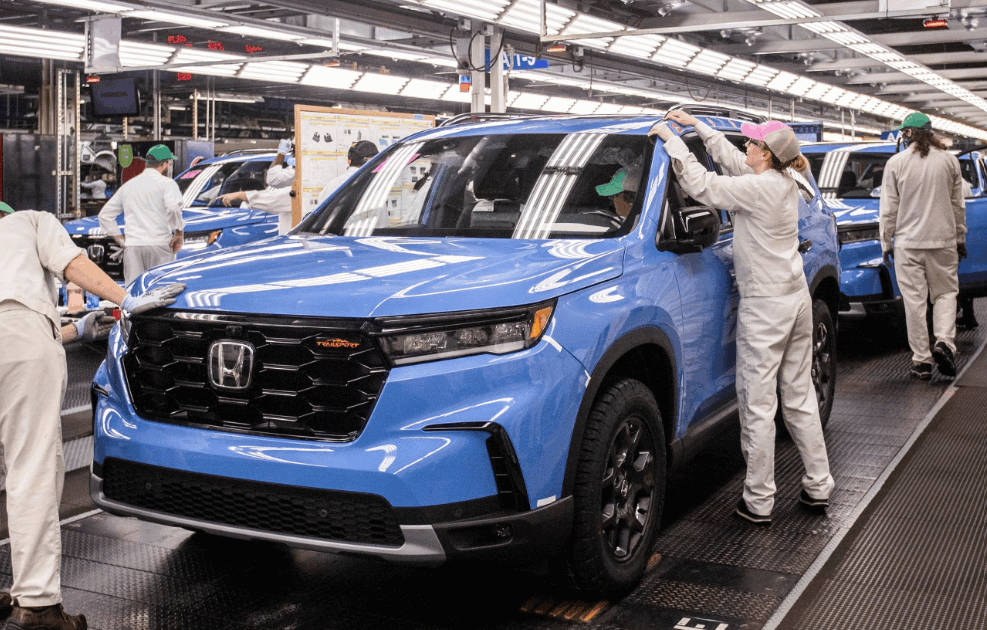
Honda manufactures the Honda Pilot at Honda Manufacturing of Alabama in Lincoln, Alabama. The company builds every Honda Pilot for the North American market at this facility. This production strategy allows Honda to supply dealerships across the United States and Canada more efficiently while maintaining consistent quality.
Honda opened the Alabama plant in 2001 to expand its manufacturing capacity in North America. Since then, the facility has become one of the company’s most important production centers. It covers more than 4 million square feet and employs thousands of associates who assemble vehicles, engines, and key components. The plant combines advanced robotics with skilled workers to achieve high production accuracy and strict quality standards.
Honda selected Alabama because the location supports a reliable supply chain and provides easy access to major transportation networks. The plant also sits close to many automotive suppliers, which helps reduce production costs and shorten delivery times. These advantages allow Honda to respond quickly to customer demand while improving manufacturing efficiency.
Although Honda is a Japanese automaker, it manufactures many of its best selling vehicles in North America. Building the Honda Pilot in Alabama helps the company reduce shipping costs, shorten delivery schedules, and support local economies. At the same time, Honda applies the same engineering standards, inspection procedures, and quality control systems that it uses at manufacturing facilities around the world.
Today, every new Honda Pilot sold in North America comes from the Alabama Auto Plant. Buyers who purchase a new model can expect the same durability, safety, and long term reliability that have made the Honda Pilot one of the most trusted three row SUVs in its segment. The manufacturing location reflects Honda’s commitment to serving the North American market rather than any difference in vehicle quality.
Why Does Honda Manufacture the Pilot in Alabama?
Honda chose Alabama because the location supports efficient vehicle production and fast distribution across North America. The state offers strong transportation infrastructure, a skilled workforce, and access to a large network of automotive suppliers. These advantages help Honda shorten delivery times while maintaining stable production throughout the year.
The Alabama Auto Plant also gives Honda the flexibility to meet changing market demand. The factory can adjust production volumes more quickly because it operates close to dealerships and major customer markets. This approach reduces shipping distances and improves inventory management without compromising manufacturing quality.
Another reason for building the Honda Pilot in Alabama is the plant’s advanced production capability. Honda equips the facility with automated manufacturing systems that work alongside experienced technicians. Every vehicle passes through multiple inspection stages before it leaves the assembly line. These quality checks help ensure that each Honda Pilot meets the company’s global engineering and safety standards.
Honda has invested billions of dollars in its Alabama operations since opening the plant in 2001. The investment has expanded production capacity, improved manufacturing technology, and created thousands of jobs. Today, the facility produces several of Honda’s largest vehicles on the same campus, allowing the company to share equipment, expertise, and production resources more efficiently.
Manufacturing the Honda Pilot in Alabama also strengthens Honda’s long term strategy in North America. Local production lowers transportation costs and reduces the impact of global supply chain disruptions. More importantly, it allows Honda to deliver new vehicles to customers faster while maintaining the reliability and build quality that buyers expect from the brand.
Has the Honda Pilot Always Been Manufactured in the Same Location?
Honda has manufactured the Honda Pilot in Alabama since the model entered production in 2002. Every generation has rolled off the assembly line at Honda Manufacturing of Alabama in Lincoln. This long standing production strategy has allowed Honda to maintain consistent quality while supporting growing demand across North America.
The first generation Honda Pilot marked an important milestone for the company. It became one of the first light trucks that Honda produced in the United States. As consumer demand for midsize SUVs increased, Honda expanded the Alabama plant instead of moving production to another country. The company invested in new equipment, modern assembly technology, and additional production capacity to support future generations.
Each new Honda Pilot generation introduced updated styling, improved technology, and stronger performance. However, Honda kept the same manufacturing location throughout these changes. Engineers refined the production process with every redesign while preserving the quality standards that define the brand. This approach reduced manufacturing complexity and helped the company improve efficiency over time.
Some buyers assume Honda builds the Pilot in Japan because Honda is a Japanese automaker. In reality, Honda has focused Pilot production in the United States for more than two decades. The Alabama plant serves as the primary production hub because it sits close to Honda’s largest SUV market and an established supplier network.
Keeping production in one location also benefits customers. Factory teams gain years of experience assembling the same vehicle, which improves consistency and reduces production errors. At the same time, Honda can introduce new technologies without disrupting the manufacturing process. This strategy has helped the Honda Pilot earn a strong reputation for reliability, quality, and long term durability across multiple generations.
Which Vehicles Are Built Alongside the Honda Pilot?
Honda builds several popular vehicles alongside the Honda Pilot at Honda Manufacturing of Alabama. The facility also produces the Honda Passport, Honda Odyssey, and Honda Ridgeline. Manufacturing these models at one location allows Honda to improve production efficiency while maintaining consistent quality across its light truck lineup.
The Honda Pilot and Honda Passport share the same global platform, so they use many common production processes and components. This shared architecture helps Honda simplify assembly without reducing vehicle quality. At the same time, engineers can introduce new technologies across multiple models more quickly because the vehicles follow similar manufacturing standards.
The Honda Odyssey and Honda Ridgeline also benefit from the Alabama plant’s flexible production system. Although each model serves a different group of buyers, they move through many of the same production stages. Skilled technicians, automated equipment, and advanced inspection systems work together to ensure every vehicle meets Honda’s strict engineering requirements before leaving the factory.
Building multiple vehicles at one facility also strengthens Honda’s supply chain. Suppliers can deliver engines, transmissions, body panels, and other components to a single production hub instead of shipping them to several factories. This approach reduces transportation costs, improves inventory management, and allows Honda to respond faster when market demand changes.
The Alabama Auto Plant represents more than a manufacturing facility. It serves as Honda’s primary production center for many of its largest vehicles in North America. By producing the Honda Pilot alongside other high volume models, Honda improves operational efficiency while delivering the reliability, safety, and build quality that customers expect from the brand.
Does the Manufacturing Location Affect Honda Pilot Quality?
The manufacturing location does not determine the quality of the Honda Pilot. Honda follows the same global engineering standards at every production facility. Every Honda Pilot must meet strict requirements for safety, performance, durability, and reliability before it reaches dealerships.
Honda maintains quality by using standardized manufacturing processes across its global network. Engineers design the production system, train factory teams, and monitor every assembly stage with the same procedures. As a result, the company delivers consistent build quality whether a vehicle comes from Alabama or another Honda plant.
The Alabama Auto Plant combines advanced automation with experienced technicians to achieve precise assembly. Robots perform tasks that require high accuracy, including welding and body alignment. Skilled associates then inspect critical components, install interior parts, and complete final quality checks. This balance between technology and human expertise helps reduce production errors while improving consistency.
Every Honda Pilot undergoes multiple inspections before leaving the factory. Quality specialists examine the body structure, engine performance, electrical systems, braking components, and safety features. The vehicle also passes road simulation tests and functional inspections to confirm that every system operates correctly. These procedures help Honda identify potential issues before customers receive the vehicle.
Some buyers believe a Japanese built Honda offers higher quality than a U.S. built model. However, modern Honda factories operate under the same quality management system and engineering requirements. The manufacturing location mainly supports regional demand and efficient distribution. Instead, regular maintenance, driving habits, and service history have a much greater impact on a Honda Pilot’s long term reliability than the factory where Honda assembled it.
How Can You Check Where Your Honda Pilot Was Built?
You can identify where your Honda Pilot was built by checking its Vehicle Identification Number (VIN) and the certification label inside the driver’s door. Honda places this information on every vehicle before it leaves the factory. These identifiers provide the most reliable way to confirm a vehicle’s manufacturing location.
Start by locating the 17 character VIN. You can find it on the dashboard near the windshield, inside the driver’s door jamb, or on your vehicle registration documents. The VIN itself does not always display the factory name, but it helps dealerships and official VIN databases identify where Honda assembled the vehicle. Matching the VIN with the certification label gives the most accurate result.
Next, inspect the certification label attached to the driver’s side door frame. Honda prints the manufacturing location directly on this label. Most Honda Pilot models sold in the United States and Canada display Lincoln, Alabama as the place of manufacture. The label also includes the month and year of production, vehicle weight information, and compliance details required by federal regulations.
Checking the manufacturing location becomes especially important when buying a used Honda Pilot. The information helps verify that the vehicle matches its registration records and has not been altered. It also allows buyers to confirm the production year and compare the vehicle with factory specifications before making a purchase.
Although many online VIN decoders provide manufacturing information, they should not replace official sources. Honda dealerships and trusted VIN databases offer the most accurate production records. By comparing the VIN with the certification label, buyers can verify where Honda built the vehicle and purchase with greater confidence.
Frequently Asked Questions About Honda Pilot Manufacturing
Many buyers have similar questions about where Honda manufactures the Honda Pilot and whether the production location affects ownership. The answers below address the most common concerns and provide clear information based on Honda’s current manufacturing strategy.
Is the Honda Pilot made in Japan?
No. Honda manufactures the Honda Pilot in Lincoln, Alabama for the North American market. Unlike some smaller Honda models, the Pilot has remained a U.S. built SUV since its introduction.
Is every Honda Pilot built in Alabama?
Yes. Honda currently assembles every Honda Pilot sold in the United States and Canada at Honda Manufacturing of Alabama. The company has used this facility as the model’s primary production center for more than two decades.
Is the Honda Pilot considered an American made SUV?
Yes. The Honda Pilot qualifies as an American built SUV because Honda assembles it in the United States. The vehicle also uses many components supplied by North American manufacturers, although Honda sources some parts from its global supplier network.
Does the manufacturing location affect reliability?
No. Honda applies the same engineering specifications and quality control procedures across its manufacturing facilities. Long term reliability depends far more on routine maintenance, driving habits, and proper servicing than on the factory where the vehicle was assembled.
Which Honda SUVs are still manufactured in Japan?
Honda continues to manufacture selected models for global markets in Japan. However, the production location varies by model year and destination market. Buyers should always verify a specific vehicle’s origin by checking the VIN or the certification label before purchasing.
Conclusion
Honda manufactures the Honda Pilot at Honda Manufacturing of Alabama in Lincoln, Alabama. The facility has produced the company’s flagship three row SUV for the North American market since the model entered production in 2002. Honda selected this location because it supports efficient manufacturing, a strong supplier network, and faster delivery to customers across the United States and Canada.
The production location does not reduce the Honda Pilot’s quality or reliability. Honda follows the same global engineering standards, inspection procedures, and quality management system throughout its manufacturing network. Every vehicle must pass rigorous quality checks before it reaches dealerships, ensuring a consistent ownership experience for customers.
If you plan to purchase a new or used Honda Pilot, always verify the manufacturing information by checking the Vehicle Identification Number and the certification label inside the driver’s door. These details confirm the vehicle’s origin and help you compare it with factory specifications. Understanding where the Honda Pilot is manufactured gives buyers greater confidence while demonstrating Honda’s long term commitment to producing dependable SUVs for the North American market.