Choosing the best delete kit for a 6.7 Cummins depends on your truck’s model year, intended use, component quality, tuner compatibility, and long-term reliability. While many delete kits include similar hardware, differences in exhaust materials, tuning support, fitment, and installation quality can significantly affect performance, towing capability, and maintenance costs. Selecting the right kit requires evaluating the complete package rather than focusing only on price.
Owners of 6.7L Cummins-powered Ram trucks often look for delete kits to improve exhaust flow, reduce exhaust gas temperatures (EGTs), simplify the emissions system, and unlock additional horsepower and torque when the vehicle is used in applications where such modifications are legally permitted. However, not every kit delivers the same results. A complete system should offer high-quality components, precise vehicle compatibility, durable construction, and reliable tuning support that matches the truck’s generation.
This guide compares the best 6.7 Cummins delete kits using practical buying criteria instead of marketing claims. You’ll learn which features matter most, how different kits compare, what performance improvements you can realistically expect, and which option best suits towing, daily driving, budget-conscious builds, or maximum performance applications. The guide also explains compatibility considerations, installation requirements, and important legal factors to review before purchasing a delete kit.
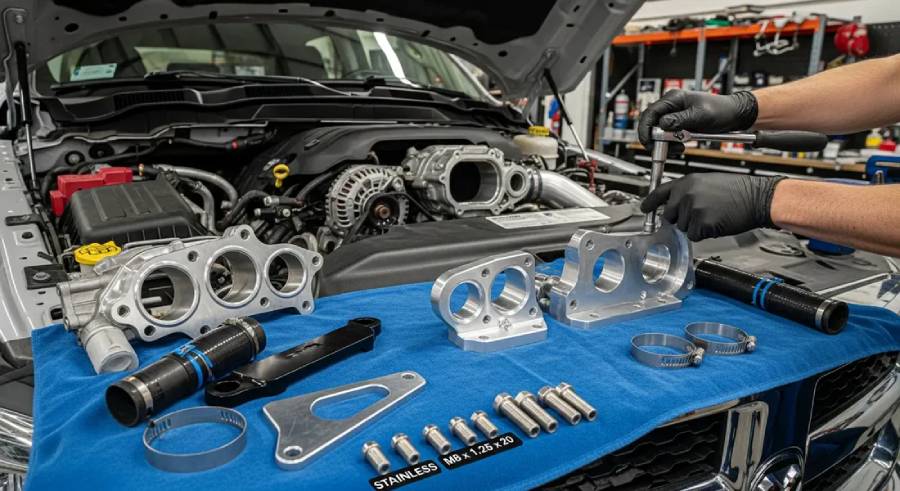
What Is the Best Delete Kit for a 6.7 Cummins?
The best delete kit for a 6.7 Cummins is the one that matches your truck’s model year, includes high-quality emissions delete components, supports reliable ECM tuning, and is designed for your intended application. A premium kit should provide accurate fitment, durable materials, complete installation hardware, and compatibility with a proven delete tuner. Choosing a kit based solely on price often results in poor fitment, lower-quality materials, or missing components that increase installation time and long-term maintenance.
There is no single delete kit that performs best for every owner. A truck used primarily for heavy towing requires a different setup than one built for maximum horsepower or weekend off-road use. For example, towing-focused builds typically prioritize lower exhaust gas temperatures (EGTs), stable engine operation under load, and long-term reliability, while performance-oriented builds emphasize higher horsepower gains, faster turbo response, and increased airflow.
The best-performing kits generally combine a complete DPF, DEF, and EGR delete solution with high-quality exhaust piping and tuning support. Stainless steel exhaust components resist corrosion better than aluminized steel, while precision-bent tubing improves exhaust flow and simplifies installation. A complete package also minimizes compatibility issues by including the hardware required to replace or remove factory emissions components.
Instead of asking which brand is universally the best, buyers should evaluate every delete kit using the same technical criteria. This approach provides a more accurate comparison than relying on advertising claims or customer reviews alone.
Which Features Should the Best 6.7 Cummins Delete Kit Include?
Does the kit include EGR, DPF, and DEF delete components?
A complete 6.7 Cummins delete kit should include every component required to replace the factory emissions system for the intended application. Complete packages reduce installation complexity because the major hardware is designed to work together instead of requiring separately purchased parts.
Most complete kits include an exhaust system that replaces the diesel particulate filter (DPF), hardware associated with the exhaust gas recirculation (EGR) system, mounting hardware, clamps, block-off plates where applicable, and supporting installation components. Some packages also include provisions for the diesel exhaust fluid (DEF) and selective catalytic reduction (SCR) systems on later-model trucks.
Purchasing a complete kit also reduces the risk of installation delays caused by missing clamps, incorrect pipe sections, or incompatible hardware. Before purchasing, buyers should verify exactly which components are included and whether additional parts or tuning software are required to complete the installation.
Is a compatible delete tuner included?
A delete tuner is one of the most important parts of a complete delete setup because the engine control module (ECM) must be calibrated to operate correctly after emissions-related hardware is removed. Hardware alone does not provide the expected performance improvements or prevent diagnostic issues if the engine software is not properly configured.
Some delete kits include a compatible tuner, while others require the tuner to be purchased separately. Buyers should confirm compatibility with their truck’s model year, transmission, engine calibration, and existing modifications before selecting a package. Purchasing hardware and tuning designed to work together generally simplifies installation and reduces compatibility concerns.
Reliable tuning also allows owners to select calibrations optimized for different objectives, such as towing, fuel economy, or performance. Choosing reputable tuning support is often more important than selecting the least expensive hardware package.
What exhaust material and pipe size provide the best durability?
Stainless steel exhaust systems generally provide the highest durability because they offer greater resistance to corrosion, road salt, and moisture than aluminized steel. Trucks that operate in humid climates or regions with winter road treatment typically benefit most from stainless steel construction due to its longer service life.
Pipe diameter also affects exhaust flow characteristics. Larger-diameter exhaust systems reduce back pressure more effectively than smaller factory systems, allowing exhaust gases to exit the engine with less restriction. The appropriate diameter depends on the engine configuration, turbocharger setup, and intended power level rather than simply choosing the largest available option.
Quality manufacturing is equally important. Mandrel-bent tubing maintains a consistent internal diameter throughout each bend, reducing airflow restriction compared with compression-bent pipes. Precision welding, durable hangers, and properly designed flanges further improve installation quality and long-term reliability.
Does the kit support your truck’s model year?
Model-year compatibility is one of the most important factors when selecting a 6.7 Cummins delete kit because emissions systems, sensors, wiring, and engine calibration differ across production years. A kit designed for one generation may not fit another without additional components or modifications.
Manufacturers typically specify supported Ram model years for each kit. Buyers should verify compatibility using the truck’s production year, engine configuration, emissions equipment, and VIN information whenever possible. This step helps prevent ordering incorrect exhaust sections, incompatible hardware, or unsupported tuning files.
Checking compatibility before purchase also reduces installation problems and minimizes the likelihood of returning components after delivery. For owners planning additional performance upgrades, confirming future compatibility with larger turbochargers, aftermarket exhaust systems, or revised tuning strategies is equally important.
Which Are the Best Delete Kits for 6.7 Cummins?
The best 6.7 Cummins delete kit depends on whether your priority is overall value, premium build quality, towing reliability, or maximum performance. Rather than focusing on brand popularity alone, compare each kit based on exhaust material, included components, tuner compatibility, installation quality, and long-term durability. A well-designed kit delivers consistent performance improvements while reducing installation complexity and future maintenance.
Best Overall Delete Kit
A complete stainless steel delete kit with full EGR, DPF, and DEF delete hardware and proven tuner compatibility is the best overall choice for most 6.7 Cummins owners. This type of package offers the best balance between durability, installation simplicity, and performance potential.
The most complete kits typically include mandrel-bent exhaust piping, block-off hardware, clamps, hangers, and all required installation accessories. When paired with compatible ECM tuning, these systems improve exhaust flow, reduce exhaust restriction, and provide a stable platform for towing or moderate performance upgrades.
This category is best suited for owners looking for a long-term solution instead of replacing individual components over time.
Best Value Delete Kit
The best value delete kit delivers reliable fitment and essential components without including unnecessary premium upgrades. Budget-conscious buyers should prioritize manufacturing quality and compatibility over cosmetic features or extensive accessory packages.
A quality value-oriented kit should still provide accurately manufactured exhaust piping, dependable mounting hardware, and compatibility with reputable tuning solutions. Spending slightly more on better materials often reduces future repair costs caused by premature corrosion or poor fitment.
Value kits are ideal for owners who want dependable performance improvements while maintaining a reasonable budget.
Best Premium Delete Kit
Premium delete kits emphasize material quality, manufacturing precision, and long-term durability. These packages typically use high-grade stainless steel, precision CNC-machined components, reinforced mounting hardware, and carefully engineered exhaust routing.
Higher-end systems generally require fewer installation adjustments because the components are manufactured to tighter tolerances. Better weld quality, stronger flanges, and corrosion-resistant finishes also improve durability in demanding environments such as regions with heavy snow or road salt.
Premium kits are recommended for trucks expected to remain in service for many years or operate under heavy workloads.
Best Delete Kit for Heavy Towing
Heavy towing applications require a delete kit that prioritizes reliability and heat management instead of maximum horsepower. Lower exhaust restriction helps reduce exhaust gas temperatures during extended climbs and sustained engine loads, allowing the turbocharger and cooling system to operate more efficiently.
Owners who tow large trailers should choose a kit designed to support towing-specific engine calibrations rather than aggressive performance tuning. Stable power delivery, predictable transmission behavior, and consistent engine temperatures are more valuable than achieving the highest dyno numbers.
A towing-oriented setup also benefits from durable exhaust construction capable of withstanding continuous high-temperature operation over thousands of miles.
Best Delete Kit for Maximum Performance
Performance-focused delete kits are designed to maximize airflow and support higher horsepower levels when combined with appropriate engine modifications and custom tuning. These systems reduce exhaust back pressure, allowing the turbocharger to spool more efficiently and supporting increased fuel delivery through revised engine calibration.
Performance builds often combine a complete delete kit with upgraded turbochargers, larger intercoolers, improved intake systems, and custom transmission tuning. Selecting components that work together is more important than purchasing the largest exhaust system available.
Owners planning future engine upgrades should select a delete kit that remains compatible with larger turbochargers and higher airflow requirements to avoid replacing the exhaust system later.
How Do the Best Delete Kits Compare?
The following comparison summarizes the primary factors buyers should evaluate before selecting a 6.7 Cummins delete kit.
| Comparison Factor | Best Overall | Best Value | Premium Kit | Heavy Towing | Performance Build |
|---|---|---|---|---|---|
| Primary Focus | Balanced performance | Affordable reliability | Maximum durability | Reliability under load | Maximum airflow |
| Exhaust Material | Stainless Steel | Aluminized or Stainless | Premium Stainless Steel | Stainless Steel | Stainless Steel |
| Included Components | Complete Package | Essential Hardware | Complete Package | Complete Package | Complete Package |
| Tuner Compatibility | Excellent | Good | Excellent | Excellent | Excellent |
| Installation Difficulty | Moderate | Moderate | Moderate | Moderate | Moderate to High |
| Durability | Excellent | Good | Excellent | Excellent | Excellent |
| Towing Suitability | Excellent | Good | Excellent | Outstanding | Moderate |
| Performance Potential | High | Moderate | High | High | Maximum |
| Typical Buyer | Most Owners | Budget Builds | Long-Term Ownership | Frequent Towing | High-Performance Builds |
While comparing products, buyers should avoid focusing on a single specification such as exhaust diameter or advertised horsepower gains. The best delete kit is the one that provides the highest overall compatibility with the truck, intended use, and future upgrade plans. Evaluating component quality, tuning support, installation hardware, and manufacturer reputation together results in a more informed purchasing decision than comparing price alone.
How Much Performance Can a 6.7 Cummins Delete Kit Add?
A properly matched delete kit primarily improves exhaust flow and reduces restrictions created by the factory emissions system. The exact performance gain depends on engine calibration, supporting modifications, turbocharger condition, fuel system capability, and tuning quality rather than the hardware alone. Buyers should evaluate complete system performance instead of expecting identical results from every delete kit.
Horsepower gains
Horsepower improvements depend largely on the engine tune rather than the delete hardware itself. The delete kit creates a less restrictive exhaust path, allowing the engine to operate more efficiently after appropriate ECM calibration. Without compatible tuning, installing hardware alone will not unlock the full performance potential.
Performance-oriented calibrations generally produce the largest horsepower increases because they optimize fuel delivery, turbocharger control, and engine operating parameters. Trucks equipped with upgraded turbochargers, intake systems, and transmission tuning can achieve greater gains than stock vehicles using the same delete hardware.
For owners seeking reliable everyday performance, a conservative calibration often provides a better balance between additional power, engine longevity, and drivetrain reliability than an aggressive performance tune.
Torque improvements
Torque gains are often more noticeable than peak horsepower because improved airflow helps the engine produce stronger pulling power across a broader RPM range. Increased low- and mid-range torque improves acceleration, towing confidence, and throttle response during normal driving.
Drivers who tow heavy trailers typically benefit from smoother torque delivery rather than the highest possible peak output. Stable torque characteristics reduce unnecessary transmission shifting and help maintain speed when climbing grades or accelerating under load.
The final torque improvement depends on the quality of the engine calibration, transmission programming, and the overall mechanical condition of the truck.
Fuel economy changes
Fuel economy may improve after installing a delete kit when the engine is professionally calibrated and driven under similar operating conditions, but results vary significantly between vehicles and driving habits. Highway driving, towing frequency, terrain, tire size, and throttle input all influence real-world fuel consumption.
Many owners report improved fuel efficiency because the engine experiences lower exhaust restriction and operates more efficiently during steady cruising. However, increased horsepower often encourages more aggressive driving, which can offset any potential fuel savings.
Fuel economy should therefore be viewed as a secondary benefit rather than the primary reason for selecting a delete kit.
Exhaust gas temperature reduction
Lower exhaust gas temperatures (EGTs) are one of the most significant practical benefits of reducing exhaust restriction. Improved exhaust flow allows heat to exit the engine more efficiently, reducing thermal stress during sustained towing or extended high-load operation.
Lower EGTs contribute to improved engine durability because excessive exhaust temperatures place additional stress on the turbocharger, exhaust manifold, pistons, and valves. For trucks that regularly tow heavy trailers or operate in mountainous terrain, effective heat management is often more valuable than maximum horsepower.
Monitoring EGT with appropriate instrumentation remains recommended for high-load applications, especially when additional engine modifications are installed.
Turbocharger efficiency
Reducing exhaust restriction allows the turbocharger to operate more efficiently by improving exhaust gas evacuation. Faster exhaust flow helps the turbo respond more quickly during acceleration while reducing unnecessary back pressure behind the turbine.
Improved turbocharger efficiency contributes to smoother throttle response, more consistent boost delivery, and improved engine responsiveness throughout the operating range. These improvements become even more noticeable when combined with supporting upgrades such as larger intercoolers, high-flow intake systems, or upgraded turbochargers.
The overall improvement depends on the complete engine combination rather than the delete kit alone, making component compatibility an important part of any performance build.
How Do You Choose the Right Delete Kit for Your Needs?
The right delete kit depends on how the truck is used every day. Buyers should prioritize compatibility, durability, and tuning support before considering additional performance features. Matching the kit to the truck’s primary application produces better long-term results than selecting the most expensive or highest-advertised package.
Daily driving
Daily-driven trucks benefit most from a balanced delete kit that emphasizes reliability, fitment, and long service life. A complete package with durable exhaust construction and conservative engine tuning provides dependable operation while minimizing future maintenance.
Owners who use their trucks for commuting, occasional hauling, and general transportation should prioritize installation quality, corrosion resistance, and manufacturer support over maximum power output.
Heavy towing
Heavy towing requires a delete kit designed to maintain stable engine temperatures and dependable power delivery during continuous high-load operation. Stainless steel exhaust systems, high-quality mounting hardware, and towing-specific engine calibrations help improve long-term durability.
Trucks used for towing construction equipment, livestock trailers, RVs, or commercial loads should prioritize thermal management and drivetrain reliability over aggressive horsepower figures.
Performance builds
Performance builds require a delete kit capable of supporting future airflow and power upgrades. Owners planning larger turbochargers, upgraded injectors, improved fuel systems, or custom tuning should select exhaust components that will not become a restriction as engine output increases.
Choosing expandable hardware during the initial installation eliminates the need to replace major exhaust components when additional modifications are added later.
Budget builds
Budget builds should focus on essential quality rather than the lowest purchase price. A reasonably priced kit manufactured with accurate fitment and dependable materials often provides better long-term value than an inexpensive package requiring repeated repairs or replacement.
When comparing lower-cost options, buyers should verify component quality, hardware completeness, exhaust material, and tuner compatibility before making a purchasing decision. Spending slightly more on proven manufacturing quality frequently reduces installation issues and maintenance expenses throughout the life of the vehicle.
What Is Included in a Complete 6.7 Cummins Delete Kit?
A complete 6.7 Cummins delete kit includes the hardware required to replace or remove factory emissions components, along with the installation accessories needed for proper fitment. The exact contents vary by manufacturer and truck model year, but premium kits are designed to minimize the need for additional purchases during installation.
Exhaust system
The exhaust system is the primary component of every delete kit because it replaces the restrictive factory emissions exhaust assembly. Most systems consist of mandrel-bent tubing engineered to maintain consistent internal diameter through each bend, reducing turbulence and improving exhaust flow.
Premium exhaust systems are typically manufactured from T409 or T304 stainless steel for improved corrosion resistance, while entry-level kits may use aluminized steel to reduce cost. Buyers operating in regions with snow, road salt, or high humidity generally benefit from stainless steel construction due to its longer service life.
Exhaust diameter varies between manufacturers, with larger systems generally supporting higher airflow for modified engines. However, pipe size should match the engine’s intended power level rather than simply selecting the largest available option.
EGR delete hardware
EGR delete components replace or isolate the factory exhaust gas recirculation system where applicable for the intended application. Depending on the kit design, this may include block-off plates, coolant rerouting components, mounting hardware, and replacement fittings.
Well-manufactured components are precision-machined to ensure accurate sealing surfaces and long-term durability. High-quality gaskets and corrosion-resistant fasteners also reduce the likelihood of exhaust leaks after installation.
Installation hardware
Complete installation hardware simplifies the installation process by ensuring every major component fits together correctly. Premium kits typically include clamps, hangers, flanges, bolts, nuts, brackets, and all necessary mounting accessories.
Missing hardware is one of the most common causes of delayed installations. Purchasing a complete package reduces the likelihood of sourcing additional parts after work has already begun.
Delete tuner compatibility
Many complete kits are designed to work alongside compatible delete tuning, although the tuner is not always included in the package. Buyers should verify whether engine calibration software must be purchased separately before ordering.
Selecting hardware specifically designed to work with compatible tuning solutions minimizes compatibility concerns and reduces installation complexity.
Which Model Years Are Compatible with Each Delete Kit?
Model-year compatibility determines whether a delete kit fits correctly and supports the truck’s emissions system configuration. Even though every 6.7L Cummins shares the same engine family, emissions equipment, sensors, exhaust routing, and electronic control systems have changed across different production years.
2007.5–2012 models
The earliest 6.7 Cummins trucks use emissions equipment that differs significantly from later generations. Many delete kits designed for these vehicles feature different exhaust routing, sensor locations, and mounting hardware compared with newer models.
Owners should confirm compatibility with both the truck’s production year and transmission configuration before purchasing replacement components.
2013–2018 models
This generation introduced additional emissions technologies and updated electronic controls, requiring delete kits specifically engineered for these trucks. Hardware, exhaust sections, and supporting tuning often differ from earlier platforms.
Manufacturers typically list supported model years clearly because using components designed for another generation may result in poor fitment or installation complications.
2019 and newer models
Later-model trucks incorporate further updates to emissions hardware, engine management, and onboard diagnostics. As a result, compatibility becomes increasingly important when selecting replacement components.
Before ordering a delete kit, buyers should verify production year, VIN information, engine calibration, and any existing aftermarket modifications that could affect compatibility.
Why compatibility matters
Choosing the correct model-year-specific kit reduces installation time, minimizes fitment issues, and improves long-term reliability. Incorrect exhaust routing, incompatible mounting points, or unsupported tuning files can create unnecessary installation challenges and additional expenses.
Verifying compatibility before purchase is considerably easier than modifying or replacing incorrectly ordered components after installation has begun.
How Difficult Is It to Install a 6.7 Cummins Delete Kit?
Installing a 6.7 Cummins delete kit is generally considered an intermediate to advanced mechanical project because it involves removing factory emissions equipment, replacing exhaust components, and completing supporting engine calibration. The required experience depends on the truck’s configuration and the completeness of the kit.
Required tools
Most installations require standard hand tools, torque wrenches, penetrating lubricant, lifting equipment, and sufficient workspace beneath the vehicle. Depending on the truck’s condition, additional cutting tools or specialized sockets may also be necessary to remove seized fasteners or heavily corroded exhaust components.
Preparing every required tool before beginning the installation helps reduce downtime and minimizes unnecessary interruptions.
Installation time
Installation time varies according to vehicle condition, previous modifications, and installer experience. Trucks exposed to corrosion typically require more time because rusted exhaust fasteners and mounting hardware can be difficult to remove.
Complete kits with accurately manufactured components generally install more efficiently than incomplete packages requiring additional modifications or replacement hardware.
Professional installation vs. DIY
Professional installation provides the highest level of confidence for owners without previous diesel performance experience. Experienced technicians are familiar with common fitment issues, proper torque specifications, and tuning procedures that help ensure reliable operation.
DIY installation can reduce labor costs for experienced enthusiasts who possess the necessary tools and mechanical knowledge. Before beginning the project, owners should carefully review the manufacturer’s installation instructions and confirm that every required component is available.
Common installation mistakes
Several common mistakes can negatively affect installation quality and long-term reliability. These include ordering components for the wrong model year, failing to verify tuner compatibility, improperly tightening exhaust clamps, reusing damaged gaskets, and overlooking sensor or wiring connections during reassembly.
Inspecting every component before installation and following the manufacturer’s recommended procedure significantly reduces the likelihood of leaks, vibration, or premature component failure after the project is completed.
What Are the Advantages and Disadvantages of a Delete Kit?
Advantages
A high-quality delete kit can improve exhaust flow, simplify the emissions system, and support additional engine performance when combined with compatible tuning for applications where such modifications are legally permitted. The magnitude of these benefits depends on the quality of the hardware, engine calibration, and the overall condition of the vehicle.
Reduced exhaust restriction
Factory emissions systems create additional exhaust restriction through components such as the diesel particulate filter (DPF) and selective catalytic reduction (SCR) system. Replacing these components with a less restrictive exhaust path allows exhaust gases to exit the engine more efficiently.
Lower exhaust restriction can improve throttle response, reduce turbocharger workload, and create a more consistent airflow path, particularly during sustained acceleration or heavy towing.
Lower maintenance requirements
Emissions systems require periodic maintenance and may eventually need expensive component replacement as mileage increases. Depending on the vehicle’s operating conditions, diesel particulate filters, DEF-related components, sensors, and EGR systems can become maintenance items over the life of the truck.
Simplifying the exhaust system reduces the number of emissions-related components that may require future servicing, potentially lowering long-term maintenance expenses for off-road or competition vehicles where these modifications are appropriate.
Improved towing performance
Lower exhaust gas temperatures and improved airflow help the engine operate more efficiently during extended towing sessions. Trucks pulling heavy trailers often experience continuous engine load, making thermal management an important factor for long-term reliability.
When combined with appropriate engine calibration, improved airflow can provide smoother power delivery while reducing unnecessary stress on the turbocharger during sustained operation.
Better platform for future upgrades
A complete delete kit provides a stronger foundation for future performance modifications. Owners planning larger turbochargers, upgraded intercoolers, higher-capacity fuel systems, or custom engine tuning benefit from an exhaust system capable of supporting increased airflow without becoming a restriction.
Selecting quality hardware during the initial installation often eliminates the need to replace exhaust components as additional modifications are added later.
Disadvantages
Delete kits also introduce important considerations that buyers should evaluate before making any purchasing decision. Performance improvements should always be balanced against legal compliance, warranty implications, and the intended use of the vehicle.
Warranty implications
Modifying factory emissions equipment may affect portions of the manufacturer’s warranty. Coverage decisions vary depending on the manufacturer, vehicle age, applicable warranty terms, and the relationship between the modification and the repair being requested.
Owners should review their warranty documentation before performing any modification that alters factory-installed emissions equipment.
Reduced emissions compliance
Vehicles modified with delete kits may no longer comply with emissions regulations applicable in many jurisdictions. Compliance requirements vary according to country, state, province, and local inspection programs.
Owners are responsible for understanding the emissions requirements that apply where the vehicle is registered and operated.
Inspection challenges
Many jurisdictions perform emissions inspections or onboard diagnostic testing before vehicle registration renewal. A modified emissions system may prevent the vehicle from meeting inspection requirements depending on local regulations.
Buyers should verify inspection procedures before purchasing any emissions-related modification.
Resale considerations
A truck equipped with aftermarket emissions modifications may appeal to a smaller group of buyers than an unmodified vehicle. Some purchasers specifically seek performance-oriented builds, while others prefer factory-original vehicles because of warranty coverage or inspection requirements.
Maintaining documentation for all modifications can improve transparency if the vehicle is sold in the future.
What Legal Considerations Should You Know Before Buying a Delete Kit?
Delete kits are subject to emissions regulations that differ between countries, states, provinces, and local jurisdictions. Buyers should understand these legal requirements before purchasing or installing any emissions-related modification.
In many regions, removing, bypassing, or disabling factory-installed emissions equipment on vehicles operated on public roads is restricted or prohibited by law. Regulations may also prohibit the sale, installation, or use of certain emissions-delete products for street-driven vehicles.
Many manufacturers therefore market delete kits for off-road, racing, or competition-use vehicles only, reflecting the legal limitations that apply in various jurisdictions. Buyers should not assume that a product advertised online is legal for use on public roads simply because it is commercially available.
Owners should also verify whether annual inspections, emissions testing, onboard diagnostic checks, or registration requirements apply in their area before modifying any emissions-related system.
Before purchasing a 6.7 Cummins delete kit, always confirm the applicable federal, state, provincial, and local regulations governing emissions modifications where the vehicle will be registered and operated.
Frequently Asked Questions About 6.7 Cummins Delete Kits
Which delete kit lasts the longest?
Delete kits manufactured from high-quality stainless steel generally offer the longest service life. Material quality, weld consistency, corrosion resistance, and manufacturing precision have a greater impact on durability than brand recognition alone.
Which tuner works best with a delete kit?
The best tuner is the one specifically designed for your truck’s model year, engine calibration, and hardware configuration. Compatibility should always be verified before purchasing hardware and tuning separately.
Can a delete kit improve fuel economy?
Some owners experience improved fuel efficiency after installing a properly tuned delete kit, but results vary according to driving style, towing frequency, terrain, vehicle configuration, and engine calibration. Fuel economy should be considered a possible secondary benefit rather than a guaranteed outcome.
Which exhaust material is better?
Stainless steel provides better corrosion resistance and longer service life than aluminized steel, making it the preferred choice for trucks operated in demanding environments. Aluminized steel remains a practical alternative for owners seeking lower initial cost in moderate climates.
Is professional installation recommended?
Professional installation is recommended for owners without previous experience modifying diesel performance systems. Experienced installers can verify component fitment, complete engine calibration correctly, and identify potential issues before the truck is returned to service.
How much does a complete 6.7 Cummins delete kit cost?
The total cost depends on component quality, exhaust material, included hardware, tuner requirements, and labor charges if professional installation is used. Premium stainless steel systems with complete hardware and compatible tuning typically cost more than entry-level packages, but they often provide better durability and fewer installation issues over the long term.