The Dodge TIPM recall concerns electrical failures associated with the Totally Integrated Power Module (TIPM), a component that controls multiple vehicle systems from a single power distribution unit. TIPM failures have been linked to symptoms such as engine stalling, no-start conditions, fuel pump malfunctions, and unexpected electrical behavior. Because these issues can affect vehicle safety and reliability, many Dodge owners want to know whether their vehicle is included in an official recall and what steps they should take if it is not.
Understanding the Dodge TIPM recall requires more than checking whether a recall notice exists. Some vehicles were included in official recall campaigns, while many others experienced similar failures without qualifying for a recall. As a result, owners need to recognize the warning signs, verify their vehicle’s recall status using the VIN, and understand the available repair options before replacing expensive components.
This guide explains how the Dodge TIPM system works, which Dodge models have reported TIPM-related problems, the most common symptoms of a failing module, and how to perform a VIN recall lookup. It also compares repair and replacement options—including OEM modules, refurbished TIPMs, and fuel pump relay bypass kits—to help owners choose the most practical solution based on their vehicle’s condition and repair budget.
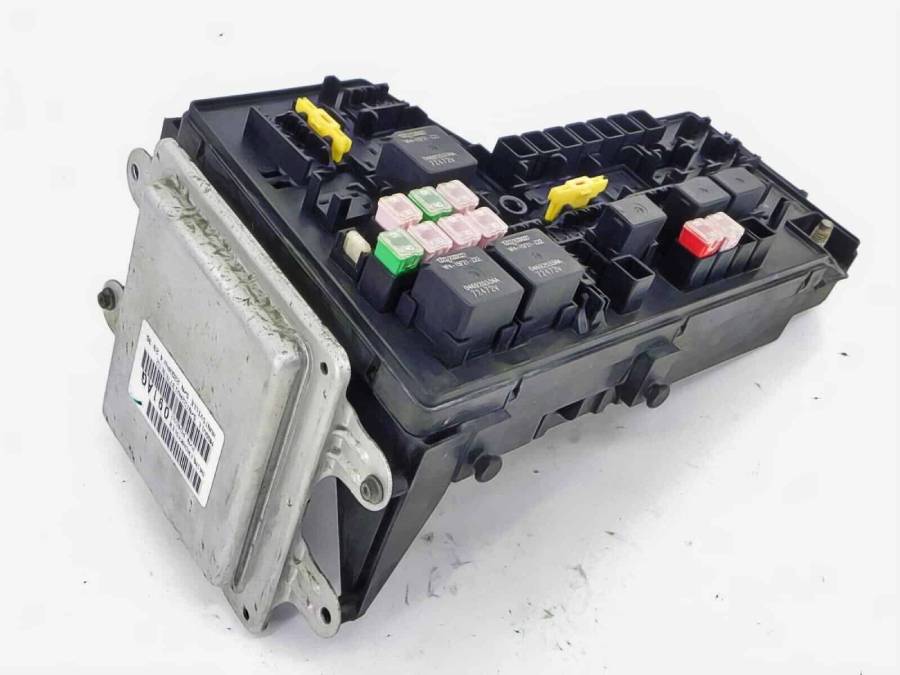
What Is the Dodge TIPM Recall?
The Dodge TIPM recall refers to safety recalls and investigations involving failures of the Totally Integrated Power Module (TIPM), an electronic power distribution unit that manages multiple electrical systems within a vehicle. Instead of using separate relays and fuse boxes for individual components, the TIPM centralizes power management for systems such as the fuel pump, starter, headlights, windshield wipers, horn, cooling fans, and power windows. When the module develops an internal fault, multiple systems can malfunction simultaneously, making diagnosis more difficult than with a single-component failure.
What does the TIPM do in a Dodge vehicle?
The TIPM distributes electrical power and controls communication between essential vehicle systems. It functions as both a fuse box and an intelligent control module, replacing many conventional relays with integrated electronic circuits. Depending on the model, the TIPM monitors dozens of electrical circuits and automatically manages power delivery based on commands from other control modules. This design reduces wiring complexity but also creates a single point of failure when the module becomes defective.
Why did TIPM failures lead to recalls and investigations?
TIPM failures attracted regulatory attention because some defects could affect vehicle safety. Certain Dodge vehicles experienced conditions in which the fuel pump relay failed inside the TIPM, causing the engine to stall unexpectedly or preventing it from starting altogether. In some cases, the fuel pump continued operating after the ignition was switched off, resulting in battery drain and additional electrical issues. These failures prompted investigations and recall campaigns for specific vehicles where the defect met safety recall criteria.
It is important to distinguish between TIPM problems and the Dodge TIPM recall. Thousands of owners have reported TIPM-related failures across different model years, but not every reported failure resulted in an official recall. Eligibility depends on factors such as the vehicle model, production year, manufacturing date, and the specific defect identified by the manufacturer.
Which electrical systems are controlled by the TIPM?
The TIPM controls dozens of electrical functions that are essential for normal vehicle operation. While the exact configuration varies by model, the module commonly manages:
- Fuel pump operation
- Starter relay
- Ignition power circuits
- Exterior lighting
- Interior lighting
- Windshield wipers
- Horn
- Cooling fans
- Power windows
- Door locks
- Air conditioning compressor controls
- Trailer lighting circuits on equipped vehicles
Because so many systems depend on a single module, a defective TIPM can produce symptoms that appear unrelated. For example, a vehicle may experience intermittent starting problems, random horn activation, and headlight malfunctions simultaneously, even though the root cause is a single internal failure within the TIPM.
Which Dodge Models Are Affected by the TIPM Recall?
Several Dodge vehicles have been associated with TIPM-related recalls, investigations, or widespread owner complaints. However, recall eligibility varies by model year and VIN, meaning owners should verify their individual vehicle rather than relying solely on model information.
Which Dodge model years have reported TIPM issues?
The majority of reported TIPM problems involve Dodge vehicles manufactured during the late 2000s and early 2010s. Models frequently associated with TIPM failures include:
- Dodge Grand Caravan
- Dodge Journey
- Dodge Durango
- Dodge Nitro
- Dodge Charger
- Dodge Challenger
Many reports involve vehicles produced approximately between 2007 and 2014, although the specific years affected differ by model and recall campaign.
Which recalls officially involve Dodge vehicles?
Not every Dodge equipped with a TIPM is included in an official recall. Some recall campaigns focused on specific defects, such as internal fuel pump relay failures, while other vehicles with similar symptoms were addressed through technical service bulletins, extended warranty programs, or individual repairs rather than nationwide recalls. For this reason, owners should avoid assuming that every TIPM failure qualifies for free replacement.
TIPM failures are not unique to Dodge vehicles because several Chrysler, Jeep, and Ram models use similar electrical architectures. Vehicles commonly associated with comparable issues include:
- Chrysler Town & Country
- Chrysler 300
- Jeep Grand Cherokee
- Jeep Wrangler
- Jeep Liberty
- Ram 1500
- Ram 2500
- Ram 3500
Because these brands shared components under FCA, many vehicles experienced similar electrical symptoms despite having different body styles or intended uses. This common platform explains why repair procedures, replacement modules, and diagnostic methods are often similar across multiple Dodge, Chrysler, Jeep, and Ram vehicles.
What Symptoms Indicate a Failing Dodge TIPM?
A failing Dodge TIPM can produce multiple electrical problems because it controls numerous vehicle systems from a single module. Unlike a failed fuse or relay that usually affects only one function, an internal TIPM defect often causes several seemingly unrelated symptoms at the same time. Recognizing these warning signs early can help prevent unexpected breakdowns and reduce the risk of replacing parts that are not actually defective.
Why won’t the engine start?
A no-start condition is one of the most common signs of TIPM failure. When the module cannot activate the starter relay or deliver power to the fuel pump, the engine may crank without starting or fail to crank altogether. In many cases, owners initially suspect a weak battery, faulty starter, or failed fuel pump, only to discover that the TIPM is preventing these components from operating correctly.
The problem is often intermittent during the early stages of failure. The vehicle may start normally several times before suddenly refusing to start, making the issue difficult to reproduce during routine inspections. As the internal circuitry deteriorates, the frequency of no-start incidents typically increases.
Why does the engine stall while driving?
A defective TIPM can cause the engine to stall by interrupting power to the fuel pump. If the internal fuel pump relay fails while the vehicle is moving, fuel delivery stops immediately, causing the engine to lose power and shut down. Unlike fuel starvation caused by an empty tank, this type of stall can occur without warning and may happen at highway speeds.
Unexpected engine stalling creates a significant safety concern because drivers can lose acceleration in traffic while steering and braking assistance gradually decrease. This type of failure was one of the primary reasons regulators investigated certain TIPM-related defects.
Why does the fuel pump keep running?
A fuel pump that continues operating after the engine is turned off is another characteristic symptom of TIPM failure. Normally, the TIPM cuts electrical power to the fuel pump shortly after the ignition is switched off. When the internal relay sticks in the closed position, the pump may continue running for several minutes or even continuously until the battery becomes discharged.
Owners often notice a humming sound from the rear of the vehicle after parking or discover that the battery is completely dead the following morning. Replacing the battery alone does not solve the problem because the underlying electrical fault remains inside the TIPM.
Which random electrical problems are linked to TIPM failure?
A damaged TIPM can cause unpredictable electrical behavior across multiple vehicle systems. Since the module distributes power to many components, failures may appear unrelated even though they originate from the same source.
Common electrical symptoms include:
- Headlights turning on or off unexpectedly
- Windshield wipers operating without driver input
- Horn sounding randomly
- Power door locks malfunctioning
- Power windows becoming inoperative
- Cooling fans running continuously
- Interior lights behaving erratically
- Battery draining overnight
- Intermittent communication faults between control modules
Experiencing several of these problems simultaneously is a stronger indicator of TIPM failure than a single isolated electrical issue.
Which warning signs should not be ignored?
Certain symptoms require immediate diagnosis because they may indicate a safety-related electrical failure. Drivers should arrange an inspection as soon as possible if they experience:
- Engine stalling while driving
- Repeated no-start conditions
- Fuel pump continuing to run after shutdown
- Burning electrical odor near the fuse box
- Visible signs of overheating around the TIPM
- Multiple electrical systems failing at the same time
Ignoring these symptoms can increase the likelihood of unexpected vehicle failure and may lead to additional damage to electrical components connected to the TIPM.
How Can You Check Whether Your Dodge Has a TIPM Recall?
The most reliable way to determine whether your Dodge qualifies for a TIPM recall is to search your Vehicle Identification Number (VIN). Recall eligibility is assigned to individual vehicles rather than every model in a production year, so two vehicles of the same model may have different recall statuses depending on where and when they were manufactured.
Where can you find your VIN?
The VIN is a unique 17-character identifier assigned to every vehicle. You can usually find it in several locations, including:
- The lower corner of the driver’s side windshield
- The driver’s door jamb certification label
- Vehicle registration documents
- Insurance documents
- Vehicle title
Recording the VIN accurately is essential because even one incorrect character will produce inaccurate recall results.
How do you perform an NHTSA VIN recall lookup?
The National Highway Traffic Safety Administration (NHTSA) provides an official VIN lookup tool that displays open safety recalls for eligible vehicles. After entering the complete VIN, the database checks whether any unresolved recall campaigns apply to that specific vehicle.
The search results generally identify:
- Active safety recalls
- Recall identification numbers
- Description of the safety defect
- Recommended corrective action
- Whether recall repairs remain outstanding
If no active recall appears, it does not necessarily mean the TIPM is functioning properly. It simply indicates that the vehicle is not currently included in an open safety recall.
How do you check recalls through a Dodge dealership?
An authorized Dodge dealership can verify recall eligibility using the manufacturer’s service database. Dealers have access to vehicle service records, completed recall repairs, and manufacturer updates that may not always be visible through public databases. They can also confirm whether previous owners already completed recall work or whether additional service campaigns apply to the vehicle.
If an open recall exists, the dealership will explain the required repair procedure and determine whether the repair is covered at no cost under the recall campaign.
What should you do if your vehicle is not included in a recall?
A Dodge that is not covered by an official recall can still experience TIPM failure. In this situation, owners should confirm the diagnosis before replacing expensive components. A qualified technician can inspect the electrical system, verify whether the TIPM is responsible for the symptoms, and rule out other causes such as a defective battery, alternator, wiring harness, ground connection, or individual relay.
If the TIPM is confirmed to be faulty, available solutions may include repairing the original module, installing a refurbished unit, replacing it with a new OEM TIPM, or using a fuel pump relay bypass kit when appropriate for the specific failure.
What Causes TIPM Failure?
TIPM failure is usually caused by internal electronic component degradation rather than a single external electrical fault. Because the Totally Integrated Power Module combines multiple relays, fuses, circuit boards, and control electronics into one sealed unit, failure of a single internal component can disrupt several vehicle systems simultaneously. Understanding the underlying causes helps determine whether the module can be repaired or requires complete replacement.
Which internal components fail most often?
The internal relay circuits are among the most common failure points inside a Dodge TIPM. Earlier TIPM designs integrated several relays directly onto the circuit board instead of allowing them to be replaced individually. Over time, repeated switching cycles generate heat that can wear relay contacts, damage solder joints, or cause electronic components to fail.
Besides relay failures, technicians commonly encounter:
- Burned circuit traces
- Failed transistors
- Damaged power drivers
- Cracked solder connections
- Corroded electrical terminals
- Internal printed circuit board (PCB) damage
Because these components are integrated into the module, replacing a single failed relay is often more difficult than replacing a conventional external relay.
How do relay failures affect the fuel pump?
A defective fuel pump relay is one of the most widely reported TIPM-related failures. Under normal operation, the TIPM activates the fuel pump only when required by the engine management system. When the internal relay becomes stuck in either the open or closed position, fuel delivery is interrupted or continues when it should stop.
A relay stuck in the open position prevents the fuel pump from operating, resulting in extended cranking or a complete no-start condition. Conversely, a relay stuck in the closed position allows the fuel pump to continue running after the ignition has been switched off. Continuous operation not only drains the battery but also places unnecessary wear on the fuel pump, potentially shortening its service life.
Does moisture or heat damage the TIPM?
Long-term exposure to heat, moisture, and vibration can accelerate TIPM deterioration. Although the module is designed to withstand harsh under-hood conditions, years of temperature cycling gradually weaken solder joints and electronic components. Moisture intrusion through damaged seals or electrical connectors may also contribute to corrosion that interferes with electrical communication.
Vehicles frequently operated in regions with high humidity, heavy road salt usage, or extreme temperature fluctuations may experience faster electrical component degradation. However, environmental conditions generally accelerate existing weaknesses rather than serving as the sole cause of TIPM failure.
Does age increase the risk of TIPM failure?
The likelihood of TIPM failure generally increases as the vehicle ages. Electronic modules experience cumulative stress from thousands of heating and cooling cycles, continuous electrical loading, and prolonged exposure to engine compartment temperatures. As vehicles accumulate mileage, electrical connectors, wiring insulation, and internal electronic components naturally degrade.
Older Dodge vehicles are therefore more likely to experience intermittent electrical faults that gradually become permanent. While proper maintenance cannot eliminate electronic aging, regular inspections of the battery, charging system, and electrical connections can reduce unnecessary stress on the TIPM.
How Is a Faulty Dodge TIPM Diagnosed?
Diagnosing a faulty TIPM requires confirming that the module itself is responsible for the electrical symptoms rather than another component in the vehicle’s electrical system. Because many TIPM symptoms resemble failures of batteries, alternators, fuel pumps, starters, or wiring harnesses, accurate diagnosis prevents unnecessary replacement of expensive parts.
Which symptoms can be confirmed without special tools?
Several warning signs strongly suggest TIPM-related problems before advanced diagnostic equipment is used. Owners should document recurring symptoms such as:
- Multiple unrelated electrical failures occurring together
- Intermittent no-start conditions
- Engine stalling without warning
- Fuel pump continuing to run after shutdown
- Battery repeatedly discharging overnight
- Headlights, horn, or windshield wipers activating unexpectedly
Recording when these symptoms occur helps technicians identify patterns that may indicate an internal TIPM fault rather than an isolated electrical issue.
Which diagnostic trouble codes are commonly associated with TIPM failure?
A faulty TIPM may trigger diagnostic trouble codes (DTCs), although no single code confirms TIPM failure by itself. Because the module communicates with multiple control units, electrical interruptions can generate communication faults, relay circuit errors, or voltage-related codes across different vehicle systems.
Technicians typically evaluate:
- Communication-related CAN bus codes
- Fuel pump circuit faults
- Relay control circuit faults
- Low-voltage or power distribution faults
- Intermittent module communication errors
Diagnostic trouble codes should always be interpreted alongside symptom history and electrical testing because similar codes can also result from damaged wiring, weak batteries, or failed control modules.
When should a professional diagnosis be performed?
Professional diagnosis is recommended whenever multiple electrical systems fail simultaneously or safety-related symptoms develop. Certified technicians use manufacturer-specific diagnostic equipment, wiring diagrams, and electrical testing procedures to verify whether the TIPM is functioning correctly. Testing may include voltage measurements, relay activation tests, circuit continuity checks, and communication analysis between electronic control modules.
A comprehensive diagnosis is especially important before replacing the TIPM because the module represents one of the more expensive electrical components on many Dodge vehicles. Confirming the root cause first helps avoid unnecessary repair costs and ensures that related issues, such as damaged wiring or charging system problems, are not overlooked.
What Are the Repair Options for a Dodge TIPM?
The best repair option for a faulty Dodge TIPM depends on the type of internal failure, the vehicle’s condition, and the owner’s budget. Some modules can be repaired, while others require complete replacement because of extensive circuit board damage. Before choosing any solution, the TIPM should be professionally diagnosed to confirm that it is the source of the electrical problems.
Should you repair the original TIPM?
Repairing the original TIPM is often the most cost-effective solution when the damage is limited to specific internal components. Specialized repair services can replace failed relays, repair damaged solder joints, rebuild burned circuit traces, and restore malfunctioning electronic circuits while retaining the vehicle’s original module.
Repairing the original unit offers several advantages:
- Lower cost than purchasing a new module
- No compatibility concerns with the original vehicle configuration
- Retention of the factory-installed module
- Reduced electronic waste compared with complete replacement
However, repair is only practical when the circuit board remains structurally intact. Modules with severe heat damage, extensive corrosion, or multiple failed electronic components may not be suitable candidates for rebuilding.
When is replacing the TIPM the better option?
Replacing the TIPM is recommended when the original module has suffered extensive internal damage or repeated repair attempts have failed. A replacement module restores the vehicle’s electrical system to normal operation and eliminates faults that cannot be reliably repaired.
Complete replacement is generally the preferred solution when:
- The printed circuit board has extensive damage.
- Multiple internal circuits have failed.
- Water intrusion has caused severe corrosion.
- Previous repairs did not permanently resolve the problem.
- The manufacturer specifies replacement instead of repair.
After installation, many Dodge models require the replacement TIPM to be programmed or configured using manufacturer-approved diagnostic equipment so it can communicate correctly with the vehicle’s electronic control modules.
What is a fuel pump relay bypass kit?
A fuel pump relay bypass kit is an aftermarket repair designed to bypass a failed internal fuel pump relay inside the TIPM. Instead of routing power through the defective relay integrated into the module, the kit installs an external relay that performs the same switching function.
This solution is commonly used when:
- The fuel pump relay is the only confirmed failure.
- The remainder of the TIPM operates normally.
- Owners want a lower-cost alternative to replacing the entire module.
- A permanent replacement module is temporarily unavailable.
Although a bypass kit can successfully resolve fuel pump relay failures, it does not repair unrelated electrical faults inside the TIPM. Vehicles experiencing multiple electrical problems typically require additional diagnosis beyond installing a bypass kit.
Should you buy an OEM or refurbished TIPM?
Both OEM and refurbished TIPMs can be effective repair solutions, but each offers different advantages.
An OEM TIPM is manufactured to the original factory specifications and is typically supplied through authorized dealerships or approved parts distributors. It generally provides the highest level of compatibility and manufacturer support, although it is usually the most expensive option.
A professionally refurbished TIPM is an original factory module that has been rebuilt by replacing worn electronic components, repairing damaged circuits, and testing the unit before resale. High-quality refurbished modules can significantly reduce repair costs while maintaining reliable operation, provided they are supplied by an experienced rebuilder that offers warranty coverage.
Before purchasing either option, owners should verify:
- Exact part number compatibility
- Vehicle model and model year compatibility
- Engine and drivetrain compatibility
- Programming requirements
- Warranty length
- Return and core exchange policies
How Much Does Dodge TIPM Repair or Replacement Cost?
The total cost of repairing or replacing a Dodge TIPM varies depending on the repair method, replacement part, labor rates, and whether programming is required. Vehicles still covered by an active recall or manufacturer service campaign may qualify for repairs at no cost, while owners outside recall coverage are generally responsible for all parts and labor expenses.
How much does dealership replacement cost?
Dealership replacement is usually the most expensive repair option because it combines OEM parts, factory programming, and dealer labor rates. In addition to installing a new TIPM, dealerships often perform software configuration and system calibration to ensure proper communication with the vehicle’s electronic control modules.
The final invoice may include:
- New OEM TIPM
- Diagnostic inspection
- Module programming
- Installation labor
- Electrical system verification
Although dealership repairs typically cost more than independent alternatives, they provide factory-approved components and service procedures.
How much does an independent repair shop charge?
Independent repair facilities often provide lower repair costs than dealerships by offering multiple repair options instead of complete module replacement. Depending on the diagnosis, an independent shop may recommend rebuilding the original TIPM, installing a refurbished unit, or replacing only the failed fuel pump relay circuit when appropriate.
Because labor rates vary by location and shop specialization, owners should request written estimates that clearly separate:
- Diagnostic charges
- Parts costs
- Labor costs
- Programming fees
- Warranty coverage
Comparing itemized estimates helps determine whether a lower initial price provides equivalent long-term value.
How much can a refurbished TIPM save?
A refurbished TIPM can substantially reduce repair costs compared with purchasing a brand-new OEM module. Since refurbished units reuse the original housing and circuit board while replacing worn internal components, they are generally priced well below new factory assemblies.
Cost savings should be balanced against several factors:
- Reputation of the rebuilding company
- Quality of replacement components
- Functional testing procedures
- Warranty duration
- Availability of technical support
- Core return requirements
Choosing a reputable supplier is often more important than selecting the lowest-priced refurbished module. A thoroughly tested unit backed by a comprehensive warranty usually provides greater long-term reliability than an inexpensive module with limited quality assurance.
Is It Safe to Drive With a Faulty TIPM?
Driving with a faulty TIPM is not recommended because the module controls several systems that are essential for safe vehicle operation. Although some TIPM failures begin with minor electrical inconveniences, they can quickly progress into problems that affect engine performance, lighting, or fuel delivery. Since many failures occur intermittently, a vehicle that appears to operate normally one day may develop serious electrical issues the next.
The greatest safety concern is the possibility of unexpected engine stalling. If the internal fuel pump relay loses power while the vehicle is moving, the engine may shut off without warning. Drivers can lose acceleration in heavy traffic or while merging onto highways, increasing the risk of an accident. Other failures, such as headlights switching off unexpectedly during nighttime driving or windshield wipers malfunctioning in heavy rain, can also reduce visibility and vehicle control.
Electrical failures may also become progressively worse over time. A TIPM that initially causes occasional no-start conditions may eventually develop multiple simultaneous faults affecting the horn, power windows, cooling fans, charging system, or fuel pump. Continuing to operate the vehicle without diagnosis can increase repair costs if additional electrical components become damaged.
If your Dodge experiences engine stalling, repeated no-start conditions, continuous fuel pump operation, burning electrical odors, or multiple electrical failures simultaneously, the vehicle should be inspected before further driving whenever possible.
How Can You Prevent Future TIPM Problems?
Although no maintenance procedure can completely prevent electronic module failure, reducing stress on the vehicle’s electrical system can help extend TIPM service life. Many TIPM failures develop gradually after years of heat exposure, electrical cycling, and high-current operation, making routine electrical maintenance an important part of long-term vehicle reliability.
Owners can reduce unnecessary strain on the TIPM by following several best practices:
- Maintain a healthy battery and replace weak batteries promptly.
- Test the alternator regularly to ensure stable charging voltage.
- Keep battery terminals clean and free of corrosion.
- Inspect major ground connections during routine maintenance.
- Repair damaged wiring harnesses before they create excessive electrical resistance.
- Avoid installing poorly designed aftermarket electrical accessories without proper circuit protection.
- Address intermittent electrical symptoms early instead of waiting for complete module failure.
- Protect the engine compartment from excessive moisture whenever possible.
Routine electrical inspections are particularly valuable for older Dodge vehicles because aging batteries, charging systems, and wiring can place additional loads on the TIPM that accelerate internal component wear.
What Should You Check Before Buying a Used Dodge With a TIPM History?
A used Dodge with a previous TIPM issue is not necessarily a poor purchase, but buyers should verify that the electrical system has been properly repaired rather than temporarily patched. Reviewing the vehicle’s repair history provides valuable insight into whether the problem was professionally resolved or simply masked.
Before purchasing a vehicle with a known TIPM history, check the following:
- Verify whether any open recalls remain outstanding.
- Request maintenance and repair records.
- Confirm whether the TIPM has been repaired, rebuilt, or replaced.
- Verify the part number of any replacement module.
- Determine whether programming was completed after installation.
- Inspect for battery drain complaints.
- Test all major electrical accessories.
- Confirm proper operation of headlights, horn, cooling fans, fuel pump, door locks, power windows, and windshield wipers.
- Perform a complete diagnostic scan for stored fault codes.
- Schedule a pre-purchase inspection by an experienced technician.
A professionally repaired vehicle with complete documentation is generally a lower-risk purchase than a vehicle showing unresolved electrical symptoms or incomplete service records.
Frequently Asked Questions About the Dodge TIPM Recall
Is every Dodge TIPM covered by a recall?
No. Not every Dodge equipped with a TIPM qualifies for an official recall. Recall eligibility depends on the specific vehicle identification number (VIN), production date, model, and the defect covered by the recall campaign. Many vehicles have experienced TIPM failures without being included in an official safety recall.
Does a TIPM recall expire?
Safety recalls generally do not expire, but recall eligibility remains tied to the individual VIN. If an open recall exists for your vehicle and the repair has not been completed, an authorized dealership can verify whether the repair remains available. Owners should always confirm their recall status using the VIN rather than assuming coverage based solely on the vehicle model.
Can a TIPM be repaired permanently?
Yes, many TIPM failures can be permanently repaired when the damage is limited to replaceable internal components. Professional rebuilders commonly replace defective relays, damaged circuit traces, solder joints, and electronic components before thoroughly testing the module. However, modules with severe circuit board damage or extensive corrosion usually require complete replacement.
Can you drive with a bad TIPM?
Driving with a bad TIPM should be avoided whenever the vehicle exhibits safety-related symptoms. Intermittent electrical faults can become unpredictable, increasing the risk of engine stalling, lighting failures, or repeated no-start conditions. Prompt diagnosis is the safest approach whenever multiple electrical systems begin malfunctioning simultaneously.
How long does TIPM replacement take?
TIPM replacement typically requires several hours, although total repair time depends on vehicle model, parts availability, and programming requirements. Installing the module is only one part of the process. Many vehicles also require software configuration, functional testing, and verification that all electrical systems communicate correctly before the repair is complete.