Finding the correct VC-13-G coolant equivalent requires matching the coolant specification and cooling system requirements rather than choosing a product based only on brand or color. A suitable replacement must provide compatible corrosion protection, temperature protection, and material compatibility for the cooling system in which VC-13-G is specified.
Coolant color alone does not confirm equivalence. Manufacturers use dyes to identify products, but color is not a universal technical standard for coolant chemistry or performance. Two coolants with a similar appearance can use different inhibitor technologies, while products with different colors may meet compatible technical requirements. The product specification, technical data sheet, and manufacturer recommendations provide more reliable evidence when selecting a replacement.
The same principle applies when considering aftermarket or universal coolants. A different brand can be suitable when its documented specifications match the requirements associated with VC-13-G and the intended application. Mixing should also depend on confirmed compatibility because combining different coolant formulations without verification can affect the protection provided by the coolant.
This guide explains how to identify a VC-13-G coolant equivalent, which specifications to compare, whether different brands can be used, when coolants can be mixed, and when the cooling system should be flushed before switching products.
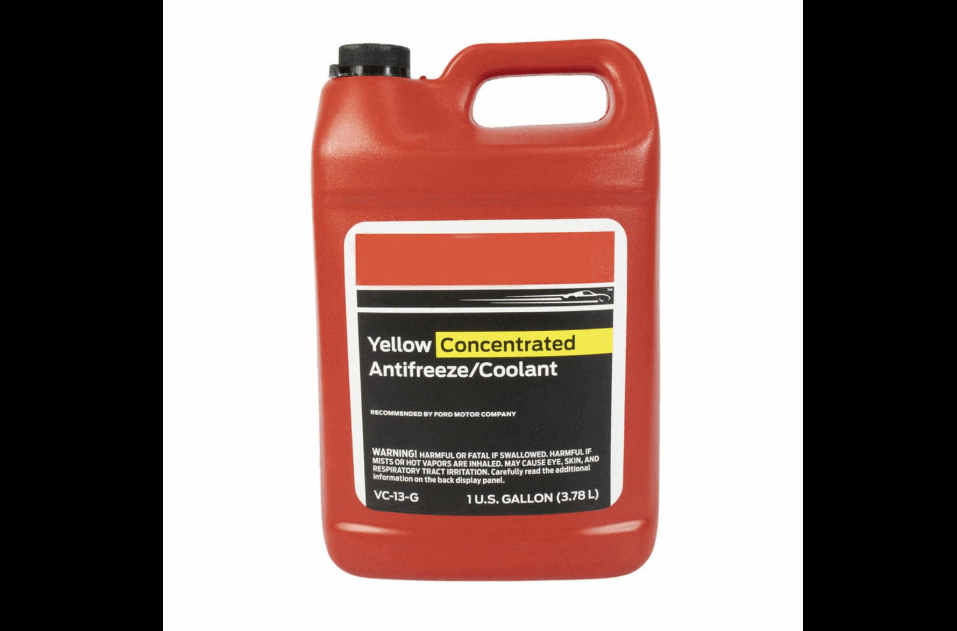
What Is the Best VC-13-G Coolant Equivalent?
The best VC-13-G coolant equivalent meets Ford specification WSS-M97B57-A2 and fits the vehicle’s cooling system. Motorcraft VC-13-G is Ford’s Yellow Concentrated Antifreeze/Coolant. Ford also offers VC-13DL-G as its prediluted Yellow coolant. Both products serve applications that require Ford Yellow coolant.
The specification provides the key reference when you compare replacement products. An aftermarket coolant should state compatibility with WSS-M97B57-A2 in its current technical documentation. The product should also match the requirements for the specific vehicle or cooling system.
Color alone cannot establish coolant equivalence. Manufacturers use dyes to identify coolant products. The color does not define the coolant’s chemistry or inhibitor package. Two yellow coolants can therefore use different formulations. They can also meet different technical specifications.
Brand name alone does not establish equivalence either. A different brand can provide a suitable replacement when its documentation confirms the required specification. The same principle applies to products labeled as extended life or universal coolant. These terms describe product characteristics, but they do not prove compatibility with VC-13-G.
The safest approach is to compare the coolant specification first. Check the vehicle owner’s manual and the replacement product’s technical data sheet. Confirm that the product meets the required Ford specification before you add it to the cooling system. This process provides stronger evidence of equivalence than matching the coolant color or brand.
What Specifications Should a VC-13-G Coolant Equivalent Meet?
A VC-13-G coolant equivalent should meet Ford specification WSS-M97B57-A2 and provide the required protection for the cooling system. The specification gives you a stronger basis for selecting a replacement than brand name or coolant color. It also helps you compare products from different manufacturers using the same technical requirement.
Coolant chemistry forms another key part of compatibility. The formulation must protect the cooling system from corrosion and support the required temperature range. It must also work with the metals, seals, and other materials inside the cooling system. A coolant that lacks the required protection does not qualify as an equivalent simply because it has a similar appearance.
Concentration also affects coolant performance. Concentrated coolant requires the correct dilution before use. Prediluted coolant already contains the required mixture of coolant and water. You should therefore follow the product instructions and the vehicle manufacturer’s requirements when preparing the coolant.
The technical data sheet provides the most useful information when you compare products. Check the listed Ford specification first. Then review the recommended applications, coolant type, concentration, and compatibility information. If the manufacturer does not identify the required specification, do not assume that the product replaces VC-13-G.
A suitable replacement must therefore satisfy the complete application requirement. Matching WSS-M97B57-A2 provides the primary specification check, while the vehicle application and product instructions provide the final compatibility check. This approach prevents color, marketing terms, or brand familiarity from becoming the main basis for coolant selection.
Can You Use a Different Brand Instead of VC-13-G Coolant?
Yes, you can use a different brand instead of VC-13-G when the replacement meets the required specification and fits the cooling system. The brand name does not determine coolant equivalence. The product’s documented specification provides the stronger basis for comparison.
A replacement coolant should identify compatibility with Ford specification WSS-M97B57-A2 when the vehicle requires that specification. The product should also support the intended application. This check matters because different coolant brands can use different formulations, additive packages, and service recommendations.
Aftermarket coolant can therefore work as a replacement when its manufacturer confirms the required specification. You should not treat every aftermarket product as equivalent to VC-13-G. A product may offer extended service life or claim universal compatibility without meeting the specific Ford requirement.
The same rule applies to generic coolant. The word “universal” does not prove compatibility. You need supporting information from the product manufacturer. The technical data sheet should provide the relevant specification or application information. The vehicle owner’s manual can provide another important reference.
Brand matching becomes less important once the technical requirements match. Specification, application, and documented compatibility should guide the replacement decision. This approach gives you a reliable way to compare Motorcraft coolant with products from other manufacturers without relying on brand recognition alone.
Does Coolant Color Matter When Replacing VC-13-G?
No, coolant color alone does not prove that another coolant matches VC-13-G. Motorcraft VC-13-G uses a yellow color, but color does not define the complete coolant specification. You should compare the technical requirements instead of choosing a replacement by appearance.
Coolant manufacturers add dyes to help identify their products. These dyes do not establish chemical compatibility. Two yellow coolants can therefore use different additive packages. They can also meet different manufacturer specifications. A similar color does not make those products interchangeable.
The same rule applies to different colors. A coolant with another color may meet the required specification and application. Ford documentation provides a useful example. Ford identifies VC-13-G as its Yellow Concentrated Antifreeze/Coolant. Ford also states that Yellow Coolant can replace Orange VC-3-B in certain service situations. The system does not require a flush in that specific application.
The specification provides better evidence than the color. Check the coolant product’s technical data sheet and compare its listed Ford specification with the requirement for your vehicle. Then confirm the product type and concentration.
Use coolant color as an identification clue, not as proof of equivalence. Check the specification first, then verify the vehicle application. This approach helps prevent an incorrect replacement when two products share a similar color.
Can You Mix VC-13-G With an Equivalent Coolant?
You should mix VC-13-G with another coolant only when the manufacturer confirms that both products are compatible. A coolant does not become an equivalent simply because it has a similar color or similar performance claims. The coolant specification and formulation must support the intended combination.
Mixing compatible coolants can simplify a top up when the original product is unavailable. The replacement should still meet the required specification for the cooling system. You should also follow the mixing instructions on the product label or technical data sheet. These instructions may specify the correct concentration and application.
Unknown coolant creates a different situation. You cannot confirm compatibility when you do not know which coolant already fills the system. Different formulations can contain different inhibitor packages. Mixing incompatible packages can reduce the protection that the cooling system receives. It can also make future coolant service more difficult because the final mixture no longer has a clearly defined specification.
You should also avoid using coolant color as a mixing guide. Yellow coolant does not automatically match every other yellow coolant. The same principle applies to orange, green, blue, and other colors. Product documentation provides a more reliable basis for the decision.
Check the specification before you mix VC-13-G with another coolant. If the manufacturer does not confirm compatibility, drain and replace the existing coolant according to the vehicle service procedure. This approach gives you greater control over the final coolant formulation and reduces the risk of using an unsuitable mixture.
Do You Need to Flush VC-13-G Before Using Another Coolant?
You do not always need to flush VC-13-G before using another coolant. The need for a flush depends on coolant compatibility, the condition of the existing fluid, and the vehicle manufacturer’s service procedure. A compatible replacement may not require a complete system flush in every application.
You should flush the cooling system when the existing coolant has an unknown specification. The same applies when you plan to switch to a coolant that the manufacturer does not confirm as compatible. Flushing removes the previous coolant and gives the replacement product a cleaner starting point.
Contamination also provides a strong reason to flush the system. Rust, debris, oil, or other fluids can affect coolant performance. A cooling system that contains the wrong coolant also needs attention before you add a new formulation. In these situations, simply adding another coolant can leave incompatible or contaminated fluid inside the system.
A normal top up differs from a complete coolant replacement. A top up adds compatible coolant to the existing fluid. A drain and refill removes the old coolant before adding fresh coolant. A flush goes further by cleaning the system and removing remaining coolant and contaminants.
Check the vehicle service instructions before you flush or replace VC-13-G. Ford service documentation can specify when a particular coolant change requires a flush and when it does not. Follow the procedure for the specific vehicle rather than applying one universal rule to every cooling system.
Can You Use Universal Coolant Instead of VC-13-G?
You can use a universal coolant instead of VC-13-G only when its manufacturer confirms compatibility with the required Ford specification. The word “universal” alone does not establish equivalence. You still need to verify the product specification and intended application.
Universal coolant products often target several vehicle applications. Their labels may list multiple manufacturer requirements or compatibility claims. These details provide useful information when you compare the product with VC-13-G. A product that does not list the required specification needs further verification before you use it.
The same rule applies to extended life coolant. Extended life describes a service characteristic. It does not automatically identify the coolant chemistry or manufacturer specification. Two extended life products can therefore have different formulations and different application requirements.
The technical data sheet provides the strongest starting point for verification. Check the listed specifications first. Then compare the recommended applications and coolant concentration with your vehicle requirements. Review the vehicle owner’s manual as another source of application information.
Do not treat “universal coolant” as a direct replacement by default. Confirm the required Ford specification and application before you add the product. This simple check gives you a stronger basis for selecting a replacement than the word “universal” on the front of the container.
How Do You Replace VC-13-G With an Equivalent Coolant?
Replace VC-13-G by first confirming the correct coolant specification and then following the vehicle manufacturer’s service procedure. The exact replacement process varies by vehicle. The cooling system may require different draining, filling, and air bleeding procedures.
Start by confirming the replacement coolant. Check the product’s technical data sheet and compare its specification with the requirement for your vehicle. Confirm the correct coolant concentration before you begin the replacement. Concentrated coolant may require dilution, while prediluted coolant comes ready for use.
Allow the engine and cooling system to cool before opening the system. Drain the existing coolant according to the vehicle service instructions. Collect the old coolant in a suitable container and dispose of it through an approved coolant recycling or disposal service.
Flush the system when the service procedure requires it. A flush also makes sense when the existing coolant has an unknown specification or contains contamination. Skip an unnecessary flush when the manufacturer provides a compatible drain and refill procedure.
Fill the system with the correct replacement coolant. Follow the specified fill volume and concentration. Remove trapped air according to the vehicle service procedure. An improperly filled cooling system can affect coolant circulation and system operation.
After filling, check the coolant level and inspect the system for leaks. Run the engine according to the manufacturer’s procedure and recheck the coolant level when required. The final step is to confirm that the cooling system contains the correct coolant concentration and operates without leaks or abnormal temperature changes.
How Can You Verify That a Coolant Is Compatible With VC-13-G?
Verify a coolant by comparing its manufacturer specification with the Ford requirement for the vehicle. This check provides stronger evidence than coolant color, product name, or general claims such as “universal.” The goal is to confirm technical compatibility before you add the replacement coolant.
Start with the vehicle owner’s manual or official service documentation. Identify the required coolant specification for the cooling system. Then check the replacement product’s technical data sheet. Look for the same specification or an explicit compatibility statement from the coolant manufacturer.
Next, check the coolant type and concentration. Confirm whether the product comes as a concentrate or a prediluted formula. Review the recommended applications as well. The product should match the vehicle and cooling system, not just the coolant specification.
Do not rely on color as the final test. Do not rely on the word “universal” either. These descriptions can help identify a product, but they do not establish technical equivalence. Manufacturer documentation provides stronger evidence because it connects the product to specific specifications and applications.
Use this verification order: manufacturer specification, technical data sheet, vehicle application, coolant type, and concentration. Stop the replacement process if the available documentation does not provide enough information to confirm compatibility. Choosing a verified product protects the cooling system and gives you a clear technical basis for the replacement.
What Should You Remember When Choosing a VC-13-G Coolant Equivalent?
Choose a VC-13-G coolant equivalent by matching the required Ford specification and the vehicle application. Motorcraft VC-13-G is Ford Yellow Concentrated Antifreeze/Coolant. Ford identifies WSS-M97B57-A2 as the relevant specification for its Yellow coolant. The specification provides a stronger basis for replacement than coolant color or brand.
Check the replacement product’s technical data sheet before you use it. Confirm the required specification, coolant type, concentration, and vehicle application. Use the vehicle owner’s manual or official service documentation to confirm the cooling system requirement.
Do not select a replacement because its color looks the same. Do not assume that a universal or extended life coolant automatically matches VC-13-G. These terms do not establish technical equivalence. Use manufacturer documentation to verify compatibility instead.
Mix VC-13-G with another coolant only when the manufacturer confirms compatibility. Flush the cooling system when the existing coolant has an unknown specification, contains contamination, or does not match the replacement product. Follow the vehicle manufacturer’s service procedure for draining, filling, and bleeding the system.
The safest replacement decision comes from verified specifications and application requirements. When the documentation does not confirm compatibility, do not treat the product as a direct VC-13-G equivalent. Verify the requirement first, then choose the coolant that meets it.