The TH400 vs TH350 comparison comes down to strength, weight, torque capacity, and intended use. Both are three-speed automatic transmissions developed by General Motors, but the TH400 is designed for heavier-duty applications, while the TH350 offers a lighter, more compact design suited to many street-driven vehicles.
The TH400 is generally stronger than the TH350 in stock form, making it a preferred choice for high-torque engines, heavy vehicles, and demanding drag racing applications. The TH350, however, weighs less, requires less installation space, and has slightly lower first and second gear ratios. These characteristics make it a practical option for classic cars, small-block Chevy engines, and moderate-performance builds.
Both transmissions use a 1:1 third gear ratio, but their internal construction, torque-handling capabilities, and drivetrain power losses differ. Actual performance also depends on transmission condition, torque converter selection, vehicle weight, and aftermarket modifications.
This guide compares the TH350 and TH400 in terms of specifications, horsepower and torque capacity, gear ratios, durability, street performance, drag racing suitability, identification, swap compatibility, and rebuild costs. Understanding these differences will help you choose the right transmission for your engine and driving requirements.
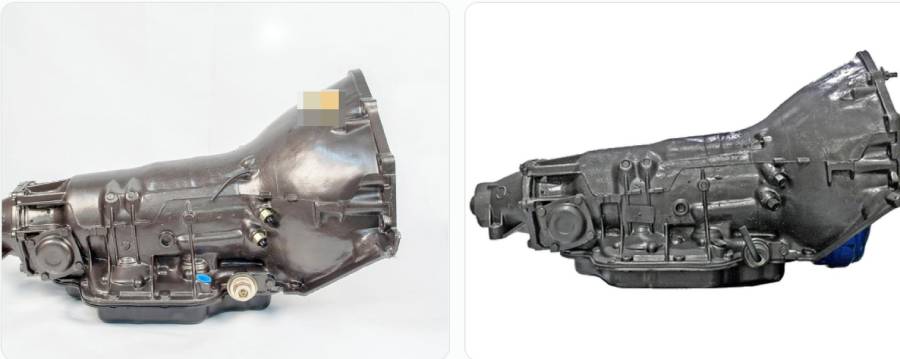
What Is the Difference Between a TH350 and a TH400 Transmission?
The main differences between the TH350 and TH400 are their torque-handling capabilities, internal construction, physical dimensions, weight, and intended applications. The TH350 is a lighter three-speed automatic transmission designed for a range of passenger vehicles, while the TH400 uses a heavier-duty design suited to higher-torque engines and more demanding operating conditions.
General Motors introduced the TH400 in 1964 and the TH350 in 1969. Both transmissions use a hydraulic control system, a torque converter, and three forward gears. However, their internal components and power-handling characteristics differ. The TH400 uses a more robust internal arrangement, including a larger clutch capacity in key areas, to withstand greater operating loads. The TH350 prioritizes a more compact package, making it easier to accommodate in vehicles with limited transmission tunnel space.
The following table compares the standard specifications of both transmissions.
| Specification | TH350 | TH400 |
|---|---|---|
| Manufacturer | General Motors | General Motors |
| Introduction year | 1969 | 1964 |
| Transmission type | 3-speed automatic | 3-speed automatic |
| First gear ratio | 2.52:1 | 2.48:1 |
| Second gear ratio | 1.52:1 | 1.48:1 |
| Third gear ratio | 1.00:1 | 1.00:1 |
| Reverse gear ratio | 1.94:1 | 2.07:1 |
| Typical overall length | 27.6 inches | 28.25 inches (short-tail version) |
| Approximate dry weight | 120 lbs | 135 lbs |
| Kickdown operation | Mechanical cable | Electric solenoid |
| Relative torque capacity | Lower in stock form | Higher in stock form |
| Typical applications | Street cars and lighter performance builds | Heavy-duty vehicles and high-torque builds |
Dimensions and weights are approximate and vary with transmission configuration, tailhousing, and installed components.
The TH350 has slightly shorter first and second gear ratios, producing marginally greater torque multiplication in those gears when all other drivetrain factors are equal. However, the difference is small. Both transmissions have a direct-drive third gear, meaning neither provides an overdrive ratio for reducing engine speed during highway cruising.
The TH400’s primary advantage is its ability to withstand greater mechanical stress. Its heavier-duty internal components make it particularly suitable for vehicles equipped with high-torque V8 engines or subjected to repeated hard acceleration. The TH350’s advantages are its lower weight, smaller dimensions, and suitability for moderate-torque applications where the additional capacity of a TH400 is unnecessary.
How Much Horsepower and Torque Can a TH350 and TH400 Handle?
A stock TH400 generally handles more engine torque than a stock TH350, but neither transmission has a universal horsepower limit. Actual capacity depends on the transmission’s internal components, condition, hydraulic pressure, vehicle weight, traction, and operating conditions. Performance-built versions of either transmission can support substantially greater power than their original factory configurations.
Horsepower and torque describe different aspects of engine output. Torque represents rotational force, while horsepower describes the rate at which work is performed. Transmission components experience mechanical loads related to input torque, gear multiplication, and operating conditions. Consequently, two engines producing the same peak horsepower can place different demands on a transmission if their torque curves and operating speeds differ.
The TH350 was originally used in passenger vehicles with a range of six-cylinder and V8 engines. Its compact construction provides adequate durability for many stock and moderately modified engines. However, increasing engine torque, fitting high-traction tires, or repeatedly launching a heavy vehicle can accelerate wear in its clutch packs, intermediate sprag assembly, and other internal components.
The TH400 was developed for applications requiring greater torque capacity. Its internal construction allows it to tolerate heavier loads, making it a common choice for big-block engines, high-performance vehicles, and drag racing builds. Nevertheless, a worn TH400 with damaged clutches, inadequate line pressure, or overheating problems can fail under loads that a properly rebuilt transmission would withstand.
Aftermarket modifications significantly change the power-handling capabilities of both transmissions. Performance rebuilds can incorporate upgraded friction materials, improved clutch configurations, reinforced internal components, and modified hydraulic controls. A professionally built TH350 can therefore withstand more demanding operating conditions than an unmodified or poorly maintained TH400, depending on the specifications of each unit.
Transmission cooling also affects reliability under high loads. Torque converter slip and internal friction generate heat, which accelerates transmission fluid degradation and clutch wear when temperatures become excessive. An appropriately sized transmission cooler, correct fluid level, and properly matched torque converter help maintain operating conditions within the transmission builder’s specifications.
For a high-torque engine or a vehicle subjected to repeated hard launches, the TH400 generally offers the stronger starting platform. For a lighter street vehicle with moderate engine output, the TH350 provides a practical alternative without the additional size and weight of the heavier-duty transmission. The final choice should be based on actual engine torque, vehicle configuration, and the verified capacity of the specific transmission build.
How Do TH350 and TH400 Gear Ratios Affect Performance?
The TH350 has slightly higher first and second gear ratios than the TH400, providing marginally greater torque multiplication during acceleration. The TH350 uses a 2.52:1 first gear and a 1.52:1 second gear, compared with 2.48:1 and 1.48:1 in the TH400. Both transmissions use a 1.00:1 third gear, which transfers engine speed directly through the transmission without overdrive.
The following table compares the standard gear ratios of both transmissions.
| Gear | TH350 | TH400 |
|---|---|---|
| First gear | 2.52:1 | 2.48:1 |
| Second gear | 1.52:1 | 1.48:1 |
| Third gear | 1.00:1 | 1.00:1 |
| Reverse gear | 1.94:1 | 2.07:1 |
The first gear ratio determines how much engine torque is multiplied before reaching the driveshaft, excluding the additional multiplication provided by the torque converter. For example, an engine producing 400 lb-ft of torque generates 1,008 lb-ft at the TH350 transmission output in first gear, compared with 992 lb-ft through the TH400. These calculations assume ideal mechanical efficiency and exclude torque converter multiplication. The TH350 therefore provides approximately 1.6% more first-gear torque multiplication under identical input conditions.
However, a TH350 does not automatically accelerate a vehicle faster than a TH400. Acceleration also depends on vehicle weight, engine torque delivery, rear axle gearing, tire traction, torque converter characteristics, and transmission power losses. A lighter vehicle equipped with a TH350 may benefit from reduced drivetrain weight, while a high-torque vehicle equipped with a TH400 may deliver more consistent performance under repeated heavy loads.
Rear axle ratio further influences how transmission gearing affects acceleration. For example, pairing a TH350’s 2.52:1 first gear with a 3.73:1 rear axle produces an overall mechanical ratio of approximately 9.40:1. A TH400 with the same rear axle produces approximately 9.25:1. The difference is relatively small compared with changes caused by selecting a different rear axle ratio or torque converter.
Neither transmission has an overdrive gear. With a 1.00:1 third gear, engine speed during highway cruising depends primarily on rear axle ratio, tire diameter, and torque converter slip. Consequently, choosing between a TH350 and TH400 does not provide the substantial highway RPM reduction associated with a four-speed automatic transmission equipped with overdrive.
Which Transmission Is More Durable, TH350 or TH400?
The TH400 is generally more durable than the TH350 under high-torque operating conditions because its internal components are designed to withstand heavier mechanical loads. Both transmissions can provide reliable service in appropriately matched vehicles, but the TH400 has a stronger factory foundation for demanding applications such as heavy vehicles, high-torque engines, and drag racing.
The TH350 relies on clutch packs, planetary gearsets, bands, and one-way clutch assemblies to transfer engine power through its three forward gears. Under excessive torque or repeated hard launches, components such as the intermediate sprag assembly and friction elements can experience accelerated wear or failure. Increased engine output, aggressive shift calibration, and high-traction tires place additional stress on these components, particularly when the transmission retains its original internal parts.
The TH400 uses a heavier-duty internal design with greater load-handling capability in key components. Its clutch assemblies and geartrain are well suited to higher-torque applications, which explains its widespread use in performance vehicles and heavy-duty builds. However, greater mechanical strength does not eliminate failure risks. Worn friction materials, damaged seals, insufficient hydraulic pressure, and excessive operating temperatures can still cause slipping, delayed engagement, or complete transmission failure.
Heat is a major factor affecting the service life of both transmissions. Automatic transmission fluid performs several functions, including lubrication, hydraulic pressure transfer, and heat removal. Excessive temperatures accelerate fluid oxidation and reduce the effectiveness of friction materials and seals. Repeated high-load acceleration, prolonged torque converter slip, and inadequate cooling increase thermal stress, especially in modified vehicles.
Transmission maintenance and component selection directly influence durability. Both transmissions benefit from maintaining the correct fluid level, using appropriate transmission fluid, checking for leaks, and ensuring adequate cooling capacity. Performance applications may also require upgraded clutch materials, reinforced internal components, and hydraulic modifications matched to the engine’s torque output. These upgrades address specific mechanical limitations rather than simply increasing advertised horsepower capacity.
A properly rebuilt TH350 can provide dependable performance in a lightweight street car or moderate-power build. However, a TH400 generally offers a greater durability margin when the vehicle is heavy, engine torque is substantial, or repeated high-load launches are expected. For applications where transmission strength takes priority over weight and compactness, the TH400 is the stronger choice.
Which Is Better for Street Driving, TH350 or TH400?
The TH350 is generally better for lighter street-driven vehicles with moderate engine torque, while the TH400 is better suited to heavier vehicles and high-torque street builds. Both transmissions provide three forward gears and hydraulic automatic shifting, but their differences in weight, physical size, and load capacity influence everyday driving performance.
The TH350’s compact design makes it a practical choice for classic Chevrolet cars, hot rods, and other vehicles where installation space and drivetrain weight matter. Its lighter construction reduces the weight carried by the vehicle, while its slightly higher first-gear ratio provides marginally greater torque multiplication during initial acceleration. These advantages are particularly relevant to street cars that do not require the additional torque capacity of a TH400.
The TH400 provides greater strength for vehicles equipped with high-torque engines, particularly those subjected to frequent hard acceleration or heavy loads. Its larger internal components are designed to withstand greater mechanical stress, although the transmission’s additional weight and hydraulic losses can be disadvantages in lighter vehicles. For a street car with substantial engine modifications, the TH400’s durability advantage may outweigh these trade-offs.
Neither transmission includes an overdrive gear or a factory lockup torque converter. Consequently, highway engine speed and fuel consumption depend heavily on rear axle gearing, tire diameter, engine efficiency, and torque converter characteristics. Shift quality also depends on valve body calibration, hydraulic pressure, and transmission condition rather than the transmission model alone.
Is a TH350 Better for a Small-Block Chevy?
The TH350 is often a better match for a moderately powered small-block Chevy because it combines adequate torque capacity with lower weight and compact dimensions. Small-block Chevrolet engines, including traditional 283, 305, 327, and 350 cubic-inch V8 configurations, have been used in vehicles where a TH350 provides a practical balance between performance and durability.
For example, a classic Chevrolet Camaro equipped with a mildly modified 350 cubic-inch small-block can use a properly maintained TH350 for street driving without requiring the heavier-duty construction of a TH400. The transmission’s 2.52:1 first gear also provides slightly greater mechanical torque multiplication than the TH400’s 2.48:1 first gear, although the difference has a limited effect on actual acceleration.
However, engine displacement alone does not determine transmission suitability. A heavily modified small-block with forced induction, increased compression, or substantial torque output can exceed the capacity of an original TH350. In these applications, a performance-built TH350 or a TH400 may be more appropriate, depending on vehicle weight, traction, and intended use.
Is a TH400 Better for a Big-Block Chevy?
The TH400 is generally the better choice for a high-torque big-block Chevy because its heavier-duty construction provides greater resistance to mechanical stress. Traditional Chevrolet big-block engines, including 396, 427, and 454 cubic-inch configurations, can produce substantial low-RPM torque, increasing the loads placed on transmission clutches, gearsets, and other internal components.
A Chevrolet Chevelle equipped with a high-torque 454 cubic-inch engine, for example, is a suitable application for a TH400 when drivetrain strength and repeated acceleration are priorities. The TH400’s robust construction helps accommodate the torque demands of heavier muscle cars, especially when paired with appropriate cooling and a correctly selected torque converter.
A TH350 can also be built for certain big-block applications, but its internal components must be selected according to the engine’s actual torque output and operating conditions. For a street-driven big-block vehicle where durability is more important than minimizing transmission weight, the TH400 offers the more appropriate starting platform.
Which Is Better for Drag Racing, TH350 or TH400?
The TH400 is generally better for high-torque drag racing applications, while a performance-built TH350 can be competitive in lighter vehicles where reducing drivetrain weight and power loss matters. The best choice depends on engine torque, vehicle weight, tire traction, launch conditions, and the internal specifications of each transmission.
Drag racing subjects automatic transmissions to intense mechanical loads during launches and gear changes. When a vehicle accelerates from a standstill, the torque converter multiplies engine torque before transferring it through the transmission’s internal components. High-traction racing tires further increase drivetrain loading by reducing wheelspin, placing greater stress on clutches, shafts, and one-way clutch assemblies.
The TH400 is widely used in high-horsepower drag racing because its internal construction provides a strong foundation for repeated high-load launches. Performance versions can incorporate upgraded clutch packs, reinforced shafts, modified valve bodies, and specialized racing components. These modifications allow builders to configure the transmission for specific engine combinations and racing conditions rather than relying solely on its original factory capacity.
The TH350 offers advantages in racing applications where weight and drivetrain efficiency are important. Its smaller internal components and lighter construction can reduce drivetrain mass, while its 2.52:1 first gear provides slightly greater torque multiplication than the TH400. However, these characteristics do not guarantee quicker elapsed times. Converter efficiency, shift calibration, engine power delivery, and vehicle traction can have a greater influence on racing performance than the small difference in gear ratios.
Parasitic power loss is another consideration. Both transmissions consume engine power through hydraulic pump operation, internal friction, and rotating components. The TH400’s heavier-duty construction can produce greater internal losses in comparable configurations, but the exact difference depends on component selection, fluid pressure, operating speed, and torque converter design. Reliable numerical comparisons require controlled testing under equivalent conditions.
For example, a lightweight drag car equipped with a moderately powered small-block engine may benefit from a properly built TH350 when reducing drivetrain weight is a priority. In contrast, a heavier drag car powered by a high-torque big-block or boosted engine generally benefits from the TH400’s stronger internal architecture and broader range of heavy-duty racing upgrades.
Both transmissions can be configured with performance-oriented valve bodies, upgraded friction materials, and suitable torque converters. The critical distinction is the level of mechanical stress each build must withstand. Choose a TH350 for a lightweight racing combination when its verified torque capacity is sufficient, and choose a TH400 when high torque and repeated hard launches make drivetrain strength the primary requirement.
How Can You Tell a TH350 From a TH400 Transmission?
You can identify a TH350 or TH400 transmission by examining its oil pan shape, kickdown mechanism, case dimensions, and identification markings. The oil pan provides the quickest visual distinction, while the kickdown system and transmission case features help confirm the identification.
The TH350 typically has a nearly square transmission oil pan with one corner cut at an angle and 13 mounting bolts. The TH400 has a more irregularly shaped oil pan with 13 mounting bolts and a distinctive protruding section along its perimeter. Because both transmissions use the same number of pan bolts, counting bolts alone cannot reliably distinguish them. Comparing the complete pan outline is a more effective identification method.
The kickdown mechanism provides another important difference. The TH350 uses a mechanical detent cable connected to the throttle linkage to initiate downshifts during heavy acceleration. The TH400 uses an electrically operated kickdown solenoid activated by a switch associated with the accelerator or throttle mechanism. A factory-style TH400 typically has an electrical connector on the transmission case, while a TH350 has a mechanical kickdown cable entering the case.
Physical dimensions also help distinguish the two transmissions. A typical short-tail TH350 measures approximately 27.6 inches overall, while a short-tail TH400 measures approximately 28.25 inches. However, both transmissions were produced in different configurations, including variations in extension housing length and output shaft design. Overall length should therefore be used as a supporting identification feature rather than the only determining factor.
Transmission identification markings provide additional confirmation. GM transmissions may have identification tags, stamped production codes, or casting numbers that help establish the transmission family and manufacturing details. These markings are particularly useful when identifying a transmission that has been removed from a vehicle or modified with aftermarket components.
For the most reliable identification, inspect the oil pan shape first, confirm the kickdown mechanism, and then examine the case markings. Using multiple physical characteristics reduces the risk of confusing a TH350 or TH400 with another General Motors automatic transmission.
Can You Replace a TH350 With a TH400?
You can replace a TH350 with a TH400 in many General Motors vehicles, but the conversion requires checking engine compatibility, driveshaft dimensions, transmission mounting points, and kickdown controls. Although both transmissions are three-speed automatics, their different case dimensions and output configurations mean the swap is not always a direct bolt-in replacement.
The first consideration is bellhousing compatibility. Both transmissions were manufactured with different GM bellhousing patterns, including Chevrolet and Buick-Oldsmobile-Pontiac configurations. A TH400 with the correct bellhousing pattern can bolt to a compatible engine, but a transmission with a different pattern may require an adapter or a different case. Matching the transmission to the engine’s exact bolt pattern is essential before purchasing replacement components.
Transmission length and mounting position also affect installation. A TH400 may have a different overall length and rear mounting location than the TH350 being replaced. Depending on the vehicle and transmission configuration, the driveshaft may need to be shortened or replaced, and the transmission crossmember may require repositioning. The output yoke must also match the TH400’s output shaft design and spline configuration.
The torque converter requires separate attention. TH350 and TH400 torque converters are not universally interchangeable because their input connections, mounting arrangements, and internal specifications differ. The replacement converter must match the TH400 transmission, engine flexplate, crankshaft interface, and intended operating conditions. Incorrect converter selection can cause installation problems, vibration, or transmission damage.
The kickdown system must also be converted. A TH350 uses a mechanical detent cable, while a TH400 requires an electrical kickdown control. Installing a TH400 therefore involves providing the appropriate switch and wiring arrangement if automatic kickdown operation is to function as designed. The existing shift linkage, cooler lines, and transmission mount should also be checked for compatibility.
What Parts Are Needed for a TH350-to-TH400 Swap?
A TH350-to-TH400 swap typically requires a compatible TH400 transmission, matching torque converter, appropriate output yoke, and modifications to the driveshaft, mounting arrangement, and kickdown system. The exact parts depend on the vehicle platform, engine configuration, and the specific versions of both transmissions.
The main components and compatibility requirements are summarized below.
| Component | TH350-to-TH400 Swap Requirement |
|---|---|
| TH400 transmission | Must have a compatible engine bellhousing pattern |
| Torque converter | Must match the TH400 and engine flexplate arrangement |
| Driveshaft | Length may require modification |
| Output yoke | Must match the TH400 output shaft |
| Transmission crossmember | May require repositioning or replacement |
| Transmission mount | Must fit the transmission and crossmember |
| Kickdown system | Requires appropriate electrical switch and wiring |
| Cooler lines | Connections and routing must be checked |
| Shift linkage | Must operate the TH400 gear selector correctly |
| Flexplate | Must match the engine and torque converter mounting pattern |
For example, replacing a short-tail TH350 with a short-tail TH400 in a classic Chevrolet may require a different driveshaft yoke and changes to driveshaft length because the transmissions have different output shaft configurations and overall dimensions. The crossmember position must also be verified against the vehicle’s mounting points.
Before installation, measure the existing transmission and driveshaft, identify the engine bellhousing pattern, and confirm the replacement TH400’s output shaft and extension housing configuration. These checks establish which components can be reused and which must be replaced.
A TH350-to-TH400 swap is most worthwhile when the engine’s torque output or the vehicle’s operating demands justify the TH400’s greater strength. For a moderate-power street car with a healthy TH350, rebuilding or upgrading the existing transmission may be more economical than completing a full conversion. For a high-torque build, the TH400 provides a stronger foundation when the installation is completed with compatible drivetrain components.
Read more: 4L80E Oil Capacity: Dry Fill & Pan Drop Guide
Is a TH350 or TH400 Cheaper to Rebuild?
The TH350 is generally cheaper to rebuild than the TH400 for comparable stock configurations because its smaller internal components and simpler heavy-duty requirements can reduce parts costs. However, the total rebuild expense depends on transmission condition, replacement components, labor rates, and the performance level required. A heavily damaged TH350 can cost more to rebuild than a TH400 that needs only standard wear components.
A standard transmission rebuild typically includes replacing worn friction plates, steel plates, seals, gaskets, filters, and other damaged components. The technician also inspects the valve body, planetary gearsets, bushings, bearings, and hydraulic systems. Both transmissions have strong aftermarket parts availability, allowing owners to choose between original-style replacement components and performance upgrades.
The following table compares the main factors affecting TH350 and TH400 rebuild costs.
| Cost Factor | TH350 | TH400 |
|---|---|---|
| Standard rebuild kit | Generally less expensive | Generally more expensive |
| Internal components | Smaller, lighter components | Heavier-duty components |
| Labor requirements | Depends on condition and shop | Depends on condition and shop |
| Performance upgrades | Available for street and racing builds | Extensive heavy-duty racing options |
| Aftermarket parts availability | Widely available | Widely available |
| Total rebuild cost | Often lower for comparable stock rebuilds | Often higher for comparable stock rebuilds |
A basic rebuild is different from a performance rebuild. A stock-style rebuild focuses on restoring the transmission to its original operating condition, while a performance rebuild may include upgraded clutch packs, reinforced shafts, improved friction materials, and valve body modifications. These components increase costs but can improve reliability when the transmission operates under greater mechanical loads.
For example, rebuilding a TH350 for a moderately powered small-block Chevy generally requires fewer performance modifications than preparing the same transmission for a high-torque drag racing application. A TH400 intended for a similar high-torque application may need fewer structural upgrades because its original design already provides greater load-handling capability. As a result, the less expensive transmission to purchase or rebuild is not always the most economical choice for the completed vehicle.
Labor costs also vary according to the transmission’s condition and the work required. Damaged planetary gears, worn drums, broken shafts, or a contaminated torque converter can substantially increase the final expense. Removal and installation labor, transmission fluid, cooling system service, and torque converter replacement should be included when comparing total project costs.
Choose a TH350 rebuild when the existing transmission is compatible with the vehicle and its verified capacity meets the engine’s requirements. A TH400 rebuild becomes more attractive when the vehicle requires greater torque capacity or repeated high-load operation. Comparing complete rebuild estimates and the intended operating conditions provides a more reliable decision than comparing rebuild kit prices alone.
Should You Choose a TH350 or TH400 for Your Build?
Choose a TH350 for a lighter vehicle with moderate engine torque, and choose a TH400 for a heavier vehicle or high-torque performance application. Both transmissions can deliver dependable service when properly matched to the engine and maintained, but their differences in strength, weight, dimensions, and upgrade requirements make them suitable for different builds.
The TH350 is a practical option for classic street cars, small-block Chevrolet applications, and lightweight performance vehicles. Its compact dimensions simplify installation in vehicles with limited transmission tunnel space, while its lower weight can benefit builds where reducing drivetrain mass matters. A properly rebuilt TH350 is sufficient for many street applications without requiring the additional heavy-duty construction of a TH400.
The TH400 is better suited to vehicles where torque capacity and durability take priority over transmission weight. High-torque big-block engines, heavy vehicles, and demanding drag racing combinations place substantial mechanical loads on transmission components. The TH400’s stronger internal architecture provides a greater durability margin in these applications, particularly when combined with appropriate cooling and performance components.
The following table summarizes which transmission is generally better suited to different vehicle applications.
| Vehicle or Application | Recommended Transmission | Main Reason |
|---|---|---|
| Lightweight classic street car | TH350 | Lower weight and compact dimensions |
| Moderately powered small-block Chevy | TH350 | Adequate capacity for many street builds |
| High-torque big-block Chevy | TH400 | Greater stock-form torque capacity |
| Heavy street or performance vehicle | TH400 | Stronger construction under higher loads |
| Lightweight drag racing car | Built TH350 or TH400 | Depends on torque output and racing setup |
| High-torque drag racing car | TH400 | Greater durability under repeated hard launches |
| Budget-conscious street rebuild | TH350, when compatible | Often lower rebuild and installation costs |
| High-performance transmission upgrade | Depends on build requirements | Actual torque capacity and component specifications |
Three factors should determine the final transmission choice: engine torque, vehicle weight, and intended use. Engine torque establishes the rotational load entering the transmission, while vehicle weight and available traction influence the stress experienced during acceleration. Intended use determines how frequently the transmission must withstand these loads, particularly during towing, aggressive street driving, or drag racing.
Transmission condition and installation compatibility are equally important before making a purchase. A professionally rebuilt TH350 with suitable internal upgrades can outperform a worn TH400 in reliability, while an incorrectly matched TH400 may introduce unnecessary installation costs. Check the bellhousing pattern, driveshaft requirements, torque converter compatibility, and mounting arrangement before committing to either transmission.
For most moderate-torque street builds, the TH350 offers a balanced combination of performance, weight, and cost. For heavier vehicles and high-torque engines, the TH400 provides the stronger foundation. The best transmission is the one whose verified torque capacity, physical configuration, and durability match the specific demands of your vehicle.