10W-30 is one of the closest practical SAE 30 oil equivalents for many engines. Both oils provide an SAE 30 viscosity grade at normal engine operating temperatures. However, they are not the same type of motor oil. SAE 30 is a monograde oil. In contrast, 10W-30 is a multigrade oil that flows better at lower temperatures.
Other multigrade oils can also serve as SAE 30 substitutes under the right conditions. Common options include 5W-30 and 0W-30. These oils provide a 30-grade viscosity at higher operating temperatures but behave differently during cold starts. Therefore, you should not treat every oil with “30” in its grade as a direct SAE 30 replacement.
Your engine design, ambient temperature, and required oil specification determine the correct substitute. The engine manufacturer also provides viscosity recommendations for specific operating conditions. For this reason, always check the owner’s manual before changing from SAE 30 to another grade.
This guide explains the main SAE 30 oil equivalents and their differences. It also compares SAE 30 with 10W-30 and 5W-30. You will learn how temperature affects each option and how to choose the right replacement for your engine.
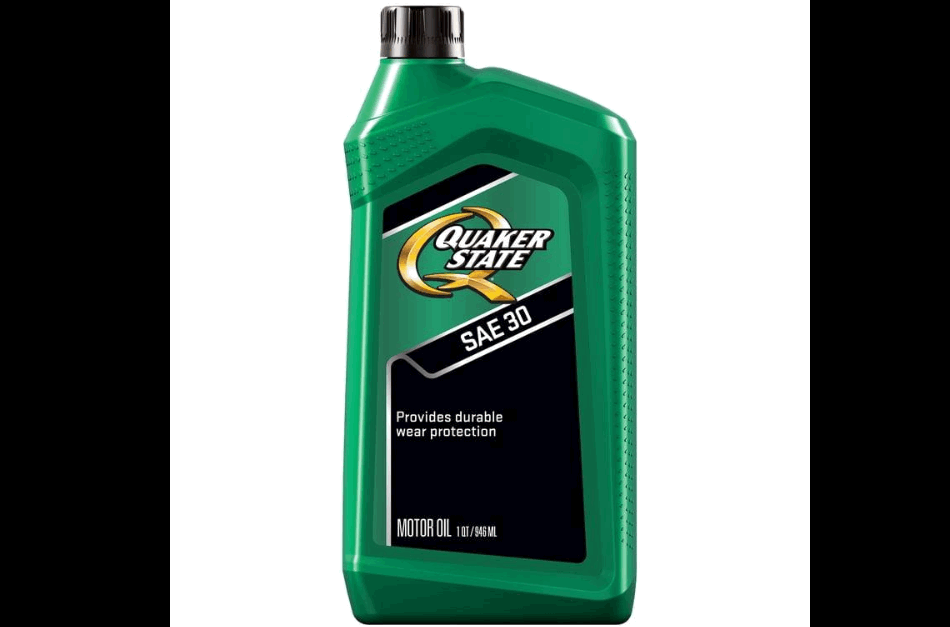
What Oil Is Equivalent to SAE 30?
10W-30 is one of the closest practical equivalents to SAE 30 for many engine applications. Both oils provide an SAE 30 viscosity grade at normal engine operating temperatures. However, their performance differs when the temperature drops. SAE 30 uses a single viscosity grade, while 10W-30 provides multigrade performance.
SAE 30 works as a monograde motor oil. Its viscosity characteristics make it more suitable for engines that operate in warmer conditions. In comparison, 10W-30 flows more easily during a cold start. The oil then maintains a 30-grade viscosity as the engine reaches its normal operating temperature. This wider temperature range makes 10W-30 a practical substitute in engines that allow multigrade oil.
5W-30 and 0W-30 are two other possible alternatives. Both provide a 30-grade viscosity at higher operating temperatures. However, they flow more easily than 10W-30 at low temperatures. This difference can improve oil circulation during cold starts. It does not mean that either grade can automatically replace SAE 30 in every engine.
The table below shows the main differences among common SAE 30 alternatives.
| Oil Grade | Oil Type | High Temperature Grade | Cold Temperature Performance | Replacement Potential |
|---|---|---|---|---|
| SAE 30 | Monograde | 30 | Limited | Original grade |
| 10W-30 | Multigrade | 30 | Good | Common alternative |
| 5W-30 | Multigrade | 30 | Better | Depends on engine requirements |
| 0W-30 | Multigrade | 30 | Best of these grades | Depends on engine requirements |
Always confirm the replacement in the owner’s manual before changing oil grades. Matching the number 30 alone does not guarantee compatibility. The engine manufacturer may also require a specific oil standard or performance specification.
Why Is 10W-30 Considered an SAE 30 Oil Equivalent?
10W-30 can serve as an SAE 30 equivalent because both oils meet a 30-grade viscosity classification at higher operating temperatures. The main difference appears at lower temperatures. SAE 30 has one viscosity grade, while 10W-30 provides separate low and high temperature performance characteristics.
The number 30 describes the oil’s viscosity grade under high temperature test conditions. It does not mean that the oil has a viscosity of exactly 30 units. SAE viscosity grades define ranges rather than one fixed viscosity value. Therefore, SAE 30 and 10W-30 can share the same high temperature grade without having identical formulations or behavior.
The 10W rating describes the low temperature performance of 10W-30. The letter W refers to winter performance. A 10W-30 oil must meet specific low temperature requirements for its winter grade. This characteristic allows the oil to circulate more effectively during cold starts than a monograde SAE 30 oil.
This temperature behavior explains why 10W-30 works as a practical SAE 30 substitute in many applications. It provides suitable viscosity at normal operating temperatures while supporting easier cold starts. However, equivalent does not mean identical or universally interchangeable. Engine design and manufacturer requirements still determine whether you should make the substitution.
For that reason, treat 10W-30 as a potential SAE 30 replacement rather than an automatic replacement. Check the required viscosity and oil specification before using it in an engine that calls for SAE 30.
Can You Use 10W-30 Instead of SAE 30?
You can use 10W-30 instead of SAE 30 when the engine manufacturer allows both viscosity grades. The two oils share a 30-grade viscosity classification at normal engine operating temperatures. However, 10W-30 performs better at lower temperatures because it is a multigrade oil.
Engine requirements should guide the replacement decision. Some engines specify SAE 30 for a particular temperature range or operating condition. Other engines allow 10W-30 as an alternative. In those cases, 10W-30 provides easier oil flow during startup while maintaining the required 30-grade viscosity as the engine warms up.
Ambient temperature also affects the choice. SAE 30 suits warmer conditions because cold temperatures increase its resistance to flow. In contrast, 10W-30 meets the requirements of its 10W winter grade. As a result, it circulates more effectively when the engine starts in colder weather.
You also need to check the required oil performance specification. A matching viscosity grade does not prove that two oils meet the same performance requirements. Your owner’s manual may specify both a viscosity grade and an API service category. Choose an oil that meets all listed requirements.
For example, an engine manual may recommend SAE 30 in warm weather but also approve 10W-30 across a wider temperature range. In this case, 10W-30 provides a suitable replacement within the approved conditions. Use 10W-30 as an SAE 30 substitute only when the engine specifications support the change.
Can You Use 5W-30 Instead of SAE 30?
You can use 5W-30 instead of SAE 30 in an engine that approves 5W-30 for its operating conditions. Both grades provide a 30-grade viscosity classification at higher operating temperatures. Their main difference concerns how they perform as temperatures fall.
5W-30 is a multigrade oil with stronger low temperature performance than SAE 30. Its 5W rating allows easier flow during cold starts. Faster circulation helps the oil reach engine components when the engine first starts. SAE 30 lacks a winter viscosity grade and becomes less suitable as ambient temperatures fall.
This difference makes 5W-30 a potential SAE 30 substitute in colder climates. However, better cold flow does not make 5W-30 the correct choice for every engine. The manufacturer may specify SAE 30 because of the engine design, expected operating conditions, or lubrication requirements.
The same rule applies when choosing between 5W-30 and 10W-30. Both oils have a 30-grade high temperature classification. However, 5W-30 meets lower temperature requirements than 10W-30. This characteristic matters most during cold starts rather than after the engine reaches its normal operating temperature.
Check the owner’s manual before replacing SAE 30 with 5W-30. Confirm the viscosity range and required oil performance standard. Choose 5W-30 when the manufacturer approves it and the operating conditions favor its lower temperature performance.
Is SAE 30 the Same as 10W-30?
No, SAE 30 and 10W-30 are not the same oil grade. They share a 30-grade viscosity classification at higher operating temperatures. However, they behave differently as temperatures fall. SAE 30 is a monograde oil, while 10W-30 is a multigrade oil with a winter rating.
SAE 30 has one viscosity grade. It works best within the temperature range specified by the engine manufacturer. As ambient temperature falls, the oil becomes more resistant to flow. This behavior can make SAE 30 less suitable for cold starts.
10W-30 provides a wider operating temperature range. The 10W portion represents its winter viscosity grade. This rating indicates how the oil performs under specified low temperature test conditions. The 30 portion represents its high temperature viscosity grade. Therefore, 10W-30 combines cold start performance with a 30-grade viscosity at higher temperatures.
This distinction also explains the difference between “same” and “equivalent.” Two oils can serve a similar purpose under certain operating conditions without being identical. SAE 30 and 10W-30 have different viscosity characteristics at lower temperatures. Their formulations and performance specifications may also differ.
For automotive use, check more than the number 30 on the label. Confirm the viscosity recommendation and performance specification in the owner’s manual. 10W-30 can serve as an SAE 30 alternative in approved applications, but it is not the same oil as SAE 30.
How Does Temperature Affect an SAE 30 Oil Substitute?
Temperature affects an SAE 30 substitute because motor oil changes viscosity as its temperature changes. Oil becomes more resistant to flow in colder conditions and flows more easily as it warms. The correct viscosity helps the lubrication system protect engine components during startup and normal operation.
SAE 30 has no winter viscosity rating. Cold weather therefore limits its suitability compared with multigrade oils. A multigrade oil such as 10W-30 provides better low temperature flow while retaining a 30-grade classification at higher temperatures. This wider range can make 10W-30 more practical when an engine operates through changing seasons.
5W-30 provides stronger cold temperature performance than 10W-30. Likewise, 0W-30 meets an even lower winter grade. These differences matter most during cold starts. Oil needs to circulate through the engine soon after startup to lubricate moving components. A suitable winter grade supports this process in low ambient temperatures.
Warmer weather does not automatically make SAE 30 better than every multigrade alternative. Engine manufacturers account for temperature when they specify acceptable viscosity grades. Some manuals recommend different grades for different ambient temperature ranges.
Choose an SAE 30 substitute according to the manufacturer’s temperature chart and oil requirements. Do not select 10W-30, 5W-30, or 0W-30 only because each oil contains the number 30. Temperature performance and engine requirements must support the replacement.
How Do You Choose the Correct SAE 30 Replacement for Your Engine?
Choose an SAE 30 replacement by checking the engine requirements, approved viscosity grades, ambient temperature, and oil performance specification. Do not choose an alternative based only on the number 30. Oils with the same high temperature viscosity grade can perform differently under other conditions.
First, check the owner’s manual for the recommended SAE viscosity. Many manufacturers provide a chart that matches oil grades with ambient temperature ranges. This information shows whether the engine accepts SAE 30 alone or also allows multigrade oils such as 10W-30 or 5W-30.
Next, consider the temperatures in which you start and operate the engine. A multigrade oil provides better cold flow than SAE 30. For example, 5W-30 performs better at low temperatures than 10W-30. Both provide a 30-grade viscosity classification at higher operating temperatures.
You should also verify the required oil performance specification. The viscosity grade describes viscosity behavior, but it does not describe every performance property of the oil. Check the owner’s manual for the required service category or manufacturer specification. Then select an oil that meets those requirements.
Finally, confirm that the manufacturer approves your chosen viscosity for the engine and operating conditions. A suitable SAE 30 equivalent must match more than viscosity alone. Manufacturer approval, temperature range, and oil specifications determine whether 10W-30, 5W-30, or another grade provides the correct replacement.
Can You Mix SAE 30 With 10W-30 or 5W-30?
SAE 30 can physically mix with compatible 10W-30 or 5W-30 engine oils, but routine mixing is not the best way to select an SAE 30 substitute. Mixing two grades changes the final oil blend. As a result, you should not assume that the mixture will perform exactly like either original grade.
SAE 30 and multigrade oils follow different viscosity profiles across temperature changes. SAE 30 provides monograde performance. In contrast, 10W-30 and 5W-30 provide both winter and high temperature viscosity characteristics. Mixing them does not create a precisely defined new SAE viscosity grade.
Oil specifications also matter. Two engine oils may use different additive packages or meet different performance requirements. For this reason, viscosity alone cannot determine whether mixing provides the best lubrication choice for an engine.
Adding a compatible oil may provide a practical way to restore the oil level when the correct product is unavailable. However, planned maintenance gives you more control over viscosity and performance requirements. Use the grade and specification that the engine manufacturer recommends whenever possible.
For a normal oil change, use one approved oil rather than creating a mixture of SAE 30 and a multigrade oil. This approach makes it easier to follow the manufacturer’s viscosity and performance requirements.
Can Synthetic Oil Replace SAE 30?
Synthetic oil can replace SAE 30 when it has the correct viscosity grade and meets the engine manufacturer’s specifications. The term synthetic does not describe an SAE viscosity grade. It describes how manufacturers formulate the lubricant. For this reason, synthetic oil alone is not an SAE 30 equivalent.
SAE 30 identifies a monograde viscosity classification. In contrast, synthetic oils come in many viscosity grades. These include SAE 30, 5W-30, 10W-30, and other grades. A synthetic SAE 30 oil can provide the required viscosity when an engine calls for SAE 30. An approved synthetic multigrade may also work when the manufacturer permits another viscosity grade.
The required performance specification matters as much as the viscosity. Engine oils contain additive packages that support lubrication, deposit control, oxidation resistance, and other performance needs. Different products may meet different service categories or manufacturer specifications. Therefore, two oils with similar viscosity characteristics do not always meet the same engine requirements.
For example, an engine that allows both SAE 30 and 10W-30 may accept a synthetic 10W-30 product. The selected oil still needs to meet the required performance specification. The owner’s manual provides the correct requirements for that engine.
Choose synthetic oil as an SAE 30 replacement only when its viscosity and performance specifications match the manufacturer’s requirements. Synthetic formulation does not determine compatibility by itself.
What Happens If You Use the Wrong Oil Instead of SAE 30?
Using the wrong oil instead of SAE 30 can affect oil flow, startup lubrication, and engine protection. The actual effect depends on the viscosity difference, engine design, operating temperature, and oil specification. A small difference between approved grades does not have the same effect as using an oil outside the manufacturer’s requirements.
Oil that becomes too resistant to flow can circulate more slowly during a cold start. Engine components need oil circulation soon after startup. This issue becomes more important at low ambient temperatures. A manufacturer may recommend a multigrade oil in these conditions because it provides better cold temperature flow.
An unsuitable viscosity can also change lubrication behavior after the engine warms up. The engine’s lubrication system operates within specific design requirements. Using an unapproved grade may prevent the oil from providing the performance that the manufacturer expects under certain operating conditions.
The wrong performance specification creates another concern. Viscosity describes only part of an engine oil’s properties. Oil standards also address performance characteristics that support engine protection. A replacement should therefore meet both the required viscosity and applicable performance specification.
Do not assume that every substitution will cause immediate engine damage. Instead, evaluate whether the oil falls within the manufacturer’s approved requirements. The safest SAE 30 substitute is an oil grade that matches the specified temperature range, viscosity requirements, and performance standard for the engine.
Should You Use SAE 30 or a Multigrade Oil?
Use SAE 30 when your engine manufacturer specifies it for the expected operating conditions. Choose a multigrade oil when the manufacturer approves it and you need better performance across a wider temperature range. Neither option is automatically better for every engine.
SAE 30 is a monograde oil with one viscosity grade. It can suit engines that operate within the temperature range specified by the manufacturer. However, its lack of a winter grade limits its low temperature performance. This difference becomes important when an engine must start in cold weather.
Multigrade oils provide more flexibility as temperatures change. For example, 10W-30 combines a 10W winter grade with a 30-grade high temperature classification. 5W-30 provides better low temperature performance than 10W-30 while retaining a 30-grade classification at higher temperatures. These characteristics make multigrade oils useful across broader temperature ranges.
However, temperature does not determine the choice by itself. The engine manufacturer may require a specific viscosity or performance standard. Engine design and expected operating conditions also affect the recommendation. Check these requirements before replacing SAE 30 with another oil.
For example, choose 10W-30 instead of SAE 30 when the owner’s manual approves both grades and conditions require better cold flow. Keep using SAE 30 when the manufacturer specifically requires that grade for your application.
Choose oil according to the engine manufacturer’s viscosity and performance requirements. Do not select a replacement only because SAE 30, 10W-30, and 5W-30 share the number 30.
What Is the Best SAE 30 Oil Equivalent?
10W-30 is one of the closest practical SAE 30 oil equivalents for many engines, but it is not a universal replacement. Both grades provide a 30-grade viscosity classification at higher operating temperatures. The main difference comes from their low temperature behavior. 10W-30 also provides a winter viscosity grade, while SAE 30 does not.
5W-30 can also replace SAE 30 when the engine manufacturer approves it. Its lower winter grade provides better cold temperature flow than 10W-30. However, neither grade should replace SAE 30 based on viscosity alone.
The correct replacement depends on three main factors: the engine manufacturer’s viscosity recommendation, the expected temperature range, and the required oil performance specification. These requirements determine whether SAE 30, 10W-30, 5W-30, or another grade provides the appropriate lubrication.
Check the owner’s manual before choosing an SAE 30 substitute. If the manufacturer approves a multigrade oil, select the grade that matches the specified operating conditions. If the manufacturer requires SAE 30, continue using SAE 30 unless the manufacturer provides another approved option.
For a detailed comparison of the two most closely related grades, see SAE 30 vs 10W-30.