K&N and OEM air filters are better for different priorities. K&N air filters focus on reusable service life and reduced airflow restriction, while OEM air filters prioritize manufacturer specified filtration, fit, and maintenance requirements. For most stock vehicles used for normal daily driving, an OEM filter remains the straightforward choice because it is designed around the engine’s original intake system. A K&N filter becomes more relevant for drivers who value reusability, want a washable filter, or are trying to reduce intake restriction.
The main difference comes from how each filter balances airflow, filtration, and maintenance. K&N commonly uses layers of oiled cotton gauze designed to allow air through while capturing contaminants. OEM filters typically use disposable paper or synthetic filter media selected to meet the vehicle manufacturer’s requirements. These differences affect airflow restriction, filtration characteristics, service intervals, cleaning requirements, and long term ownership cost.
Choosing between a K&N air filter and an OEM filter therefore requires more than comparing horsepower claims. The better option depends on how the filter affects airflow, engine performance, filtration, fuel economy, engine protection, maintenance, lifespan, and total cost. Driving conditions also matter because a daily commuter, a performance oriented vehicle, and a vehicle regularly exposed to dusty roads place different demands on an engine air filter.
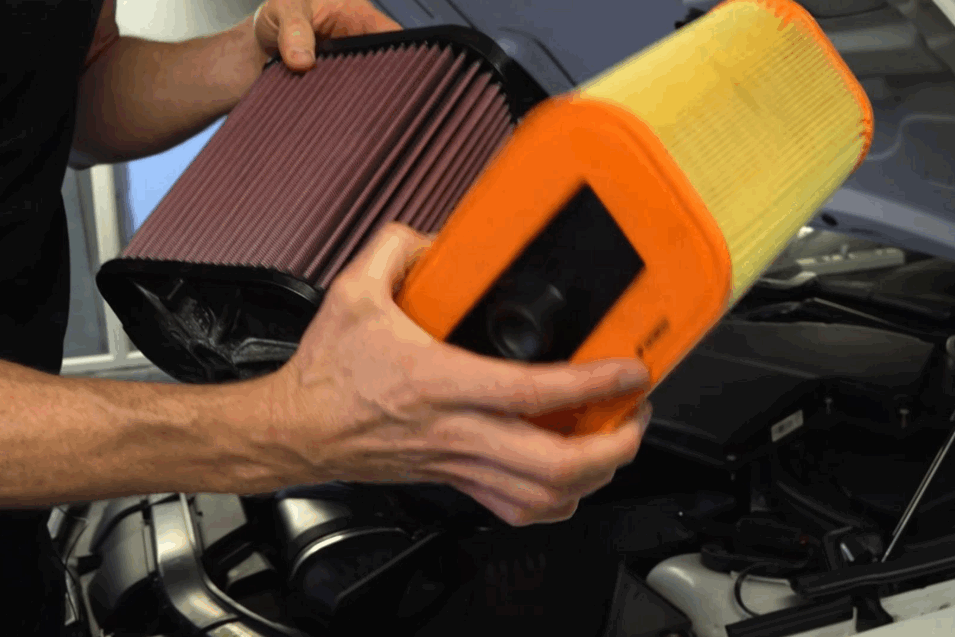
What Is the Difference Between a K&N Air Filter and an OEM Air Filter?
K&N and OEM air filters mainly differ in filter media, airflow characteristics, and maintenance. K&N commonly uses several layers of oiled cotton gauze. In contrast, OEM filters typically use pleated paper or synthetic media. These materials affect how each filter manages airflow and captures contaminants.
K&N designs many of its replacement filters for repeated use. The cotton fibers hold filter oil, which helps capture particles as air moves through the media. Drivers can clean and reuse these filters when they require service. This design reduces the need to buy a new filter at every service interval. However, the cleaning process requires more effort than a standard filter replacement.
OEM filters follow a simpler maintenance approach. Vehicle manufacturers select their filtration specifications to match the original intake system and engine requirements. The pleated media provides a large surface area for trapping dust and other contaminants. When the filter reaches its replacement interval or becomes dirty, the owner installs a new one. This process requires no washing, drying, or reapplication of filter oil.
These differences create a clear tradeoff. K&N emphasizes reusability and low airflow restriction, while OEM filters emphasize original equipment requirements and simple replacement. The better choice depends on the vehicle and its operating conditions. Drivers should also consider filtration, engine airflow demand, maintenance effort, and long term cost. Airflow deserves particular attention because the different filter media can change intake restriction.
Does a K&N Air Filter Provide More Airflow Than an OEM Filter?
A K&N air filter can provide lower airflow restriction than an OEM filter, especially when airflow demand increases. Its oiled cotton gauze media allows air to move through multiple layers of porous material. This design focuses on maintaining airflow while the filter captures contaminants. However, the actual difference depends on the specific K&N filter, OEM filter, intake system, and engine airflow demand.
OEM filters manage airflow differently. Their pleated paper or synthetic media creates a large filtration surface inside a compact airbox. The engine can draw air across this surface without requiring a highly porous filter medium. Manufacturers also size the filter and airbox for the airflow needs of the original engine. As a result, a clean OEM filter may already provide enough airflow for a stock engine.
Airflow restriction becomes more relevant when an engine demands a larger volume of air. High engine speeds and increased engine load raise airflow demand. Performance modifications can increase that demand further. A less restrictive filter has greater potential value when the existing filter limits airflow. In contrast, reducing filter restriction offers less benefit when another intake component already limits the system.
More airflow also does not guarantee more engine power. An engine needs the complete intake system to support the additional airflow. The throttle body, intake tubing, airbox, and engine calibration can influence the final result. For this reason, drivers should treat airflow as one comparison factor rather than proof of a horsepower increase. The next question is whether lower filter restriction produces a measurable performance advantage over an OEM filter.
Does a K&N Air Filter Increase Horsepower Compared With an OEM Filter?
A K&N air filter may increase horsepower when the OEM filter restricts the airflow that the engine needs. However, a filter change alone does not guarantee a noticeable power gain. The result depends on the engine, intake design, operating speed, and existing airflow restriction.
An engine produces power by burning a controlled mixture of air and fuel. At higher engine speeds, it needs more air to support combustion. A lower restriction filter can help when the original filter limits that airflow. The potential benefit becomes more relevant on engines with performance modifications. These engines may demand more air than the original intake system supplied under stock conditions.
A stock engine can respond differently. Manufacturers design the original airbox and filter to meet the airflow requirements of the standard engine. A clean OEM filter may therefore supply all the air that the engine needs. Replacing it with a less restrictive K&N filter will not create substantial extra power when the filter was not the limiting component.
Drivers should also separate measurable horsepower from noticeable acceleration. A dynamometer may detect a small change that feels insignificant during daily driving. Other intake components can also restrict airflow. These include the airbox, intake tubing, throttle body, and intake manifold. Changing only the filter does not remove those restrictions.
For this reason, horsepower should not determine the K&N Air Filter vs OEM decision by itself. K&N offers greater performance potential when filter restriction limits the intake system. On many stock vehicles, reusability and maintenance differences may matter more than a small change in engine output.
Does a K&N Air Filter Filter Better Than an OEM Air Filter?
An OEM air filter does not automatically filter better than a K&N filter, and a K&N filter does not automatically provide better filtration. Filtration performance depends on the specific filter design, media, particle size, airflow, and testing conditions. Drivers should compare verified filtration performance rather than judge a filter only by its material or airflow claims.
OEM filters typically use pleated paper or synthetic media with a large filtration area. The media traps dust and other particles as air passes through the filter. Manufacturers select the filter for the original engine and intake system. This approach gives the OEM filter a defined role in protecting the engine while maintaining the airflow that the stock engine requires.
K&N filters use oiled cotton gauze in many applications. The filter oil helps the media capture particles as air moves through its layers. The reusable design also allows owners to clean the filter instead of replacing it. However, correct maintenance matters. Excessive oil can create problems for certain intake components, while insufficient oil can affect filtration performance.
Filtration also depends on the driving environment. A vehicle that regularly travels on dusty roads places a higher demand on its air filter than a vehicle that mainly drives on clean highways. A dirty filter can also change airflow and filtration characteristics over time. For this reason, drivers should inspect the filter condition and follow the appropriate maintenance procedure.
The better choice therefore depends on the specific application and priority. Choose the filter that provides the required filtration for the vehicle while maintaining sufficient airflow. A K&N filter can suit drivers who value reusability and airflow. An OEM filter can suit drivers who prioritize the manufacturer’s original filtration specification and simple replacement.
Which Air Filter Provides Better Engine Protection?
The better engine air filter is the one that keeps harmful contaminants out of the engine while supplying enough airflow for the intake system. Dust, dirt, and other particles can enter the intake when a filter fails to capture them. The filter therefore plays a direct role in protecting the intake tract and internal engine components from contamination.
OEM filters support engine protection through the filtration specifications that manufacturers select for the original vehicle. Their pleated media provides a large surface area for capturing particles. The vehicle manufacturer also designs the filter to work with the original airbox and intake system. This makes an OEM filter a predictable choice for owners who want to maintain the original filtration setup.
K&N filters use oiled cotton gauze in many applications. The filter oil helps capture particles as air passes through the cotton layers. The reusable design can maintain filtration over a long service life when the owner cleans and oils the filter correctly. Maintenance therefore becomes part of engine protection. A poorly maintained reusable filter cannot provide the same result as a properly serviced filter.
Filter oil also deserves attention because some vehicles use mass airflow sensors in the intake system. Excess oil can create problems when it reaches sensitive intake components. Owners should follow the filter manufacturer’s cleaning and oiling procedure instead of applying an excessive amount of oil.
Driving conditions also affect engine protection. Dusty roads, gravel surfaces, and other environments with high airborne contamination increase the workload on an air filter. Drivers in these conditions should inspect the filter more frequently and replace or service it according to its condition.
For most drivers, engine protection depends more on correct filtration and proper maintenance than on choosing K&N or OEM by brand alone. The filter must fit correctly, capture contaminants effectively, and receive the required maintenance for the vehicle and driving environment.
Does a K&N Air Filter Improve Fuel Economy Compared With an OEM Filter?
A K&N air filter does not guarantee better fuel economy than an OEM filter. Fuel economy depends on the engine, intake system, driving conditions, vehicle load, and engine management. A less restrictive filter can support airflow, but that change does not automatically produce a measurable reduction in fuel consumption.
The engine needs a controlled supply of air to maintain efficient combustion. A restricted filter can reduce the amount of air that reaches the engine, especially when airflow demand rises. A clean filter reduces this restriction. However, a stock engine may already receive enough air through its OEM filter. Replacing a clean OEM filter with a less restrictive K&N filter therefore may produce little change in fuel economy.
Filter condition also matters. A dirty OEM filter can restrict airflow more than a clean replacement filter. The same principle applies to a K&N filter. Dirt accumulation can affect airflow, while incorrect cleaning or oiling can affect filter performance. Drivers should therefore compare filters under similar conditions instead of comparing a clean K&N filter with a heavily contaminated OEM filter.
Driving behavior can create a larger effect than a filter change. Acceleration, engine speed, traffic, road conditions, tire pressure, and vehicle load all influence fuel consumption. A small change in intake restriction may have little practical effect when these factors dominate fuel use.
For this reason, fuel economy should not serve as the main reason to replace an OEM filter with a K&N filter. A K&N filter may support airflow and offer reusable service life, but the available source material does not establish a specific fuel economy improvement for K&N filters. Drivers should evaluate filtration, airflow, maintenance, and long term cost alongside fuel economy.
Which Lasts Longer, a K&N Air Filter or an OEM Air Filter?
A K&N air filter can last longer as a reusable filter, while an OEM air filter usually follows a replaceable service cycle. K&N designs many filters for repeated cleaning and reuse. OEM filters normally require replacement after the recommended service interval or when contamination reduces their condition.
The two designs therefore measure lifespan differently. A K&N filter remains in the vehicle through multiple maintenance cycles. The owner removes, cleans, dries, and re-oils the filter before returning it to service. This process extends the usable life of the filter itself. The owner must follow the correct maintenance procedure because poor cleaning or incorrect oil application can affect filtration performance.
An OEM filter uses a different maintenance model. The owner checks the filter during scheduled service and replaces it when the filter reaches the recommended interval or shows excessive contamination. The owner does not need to clean or re-oil the filter. This approach reduces maintenance work but creates a recurring replacement cost.
Driving conditions can shorten the practical service interval for either type. Dusty roads, gravel surfaces, and other environments with high airborne contamination can load the filter faster. Drivers who operate in these conditions should inspect the filter more often instead of relying only on a fixed mileage interval.
Reusable service life does not mean maintenance free service. A K&N filter can remain in use through repeated cleaning cycles, but each cycle requires time and proper care. An OEM filter offers a simpler process because the owner replaces the filter instead of servicing the media.
The better choice depends on the owner’s priorities. K&N suits drivers who value reusability and accept regular cleaning. OEM suits drivers who prefer a simple replacement routine. Lifespan alone does not determine the better filter because maintenance effort, filtration, driving conditions, and long term cost also affect the decision.
Is a K&N Air Filter Cheaper Than an OEM Filter Over Time?
A K&N air filter can reduce long term replacement costs because the owner can clean and reuse the same filter. An OEM filter normally creates a recurring replacement cost because the owner installs a new filter after the service interval. The actual cost difference depends on the filter price, maintenance products, replacement frequency, and length of ownership.
K&N requires a higher maintenance commitment. The owner may need a suitable cleaning solution and filter oil during service. The owner also needs time to remove, clean, dry, and re-oil the filter. These costs do not appear in the initial purchase price, so a fair comparison should include the complete maintenance process.
OEM filters follow a simpler cost model. The owner buys a replacement filter and installs it when the filter reaches its service interval or becomes excessively dirty. This process requires less maintenance work, but the owner pays for another filter each time. A vehicle with frequent filter replacements can therefore create higher cumulative replacement costs.
A simple ownership calculation can show the difference. K&N ownership cost equals the initial filter price plus cleaning and re-oiling costs. OEM ownership cost equals the replacement filter price multiplied by the number of replacements during the same ownership period. For example, an owner who replaces an OEM filter four times during a vehicle ownership period pays for four separate filters. A K&N owner can continue using the same filter through multiple service cycles while paying for cleaning supplies.
However, lower long term cost does not automatically make K&N the better choice. Drivers should also value their time and maintenance preferences. A driver who prefers quick replacement may consider the OEM process more convenient. A driver who accepts regular cleaning may gain more value from a reusable K&N filter.
The cheaper option depends on total ownership cost, not purchase price alone. Compare the filter price, maintenance supplies, replacement frequency, and expected ownership period before deciding which option provides better value.
Is a K&N Air Filter Better for Daily Driving?
A K&N air filter can suit daily driving, but an OEM filter remains the simpler choice for drivers who prioritize straightforward maintenance. Daily driving usually places moderate demands on the engine air filter. A clean OEM filter can already provide the airflow required by a stock engine, so a K&N filter does not automatically create a meaningful performance advantage.
K&N becomes more attractive when the driver values reusability. The owner can clean and reuse the filter instead of replacing it at every service interval. This approach can reduce repeated filter purchases over the vehicle’s ownership period. It also requires more maintenance because the owner must clean, dry, and correctly re-oil the filter.
OEM filters offer a different advantage for daily drivers. The owner can replace the filter according to the vehicle manufacturer’s maintenance schedule. The process requires less hands-on work and does not require filter cleaning or re-oiling. Drivers who want a simple maintenance routine may therefore prefer an OEM filter.
Driving environment also affects the decision. A vehicle that spends most of its time on clean city streets or highways faces different filter conditions from a vehicle that regularly travels on gravel or dusty roads. Higher dust exposure can load the filter faster and increase the importance of regular inspection.
Daily driving alone does not make K&N or OEM the better choice. Choose K&N when reusability and hands-on maintenance fit your priorities. Choose OEM when simple replacement and the original maintenance approach matter more. For a stock daily driver, the decision should focus on filtration, maintenance, cost, and the condition of the existing filter rather than an assumed horsepower gain.
Is a K&N Air Filter Worth It on a Stock Engine?
A K&N air filter can be worth it on a stock engine when the owner values reusability and accepts the additional maintenance. The performance benefit alone may not justify the change when a clean OEM filter already supplies the airflow that the engine requires. A stock engine therefore needs a practical comparison rather than a general claim that one filter always performs better.
A K&N filter offers a reusable design that can remain in service through multiple cleaning cycles. This feature can reduce the need to purchase replacement filters during long term ownership. The owner must clean, dry, and correctly re-oil the filter as required. Drivers who enjoy maintaining their vehicles may consider this a useful advantage.
An OEM filter offers a simpler ownership experience. The owner replaces the filter according to the vehicle manufacturer’s maintenance requirements. The process requires no filter cleaning or re-oiling. This approach can suit drivers who want predictable maintenance with minimal additional work.
Performance also matters, but the expected gain depends on the intake system. A stock engine may already receive sufficient airflow through its original filter. A less restrictive K&N filter therefore does not guarantee a noticeable horsepower increase. The vehicle’s airbox, intake tubing, throttle body, and engine calibration can also limit the effect of a filter change.
The value of a K&N filter on a stock engine comes mainly from the combination of reusability, airflow characteristics, and long term ownership preferences. The value of an OEM filter comes from its original fit, straightforward replacement process, and manufacturer specified maintenance approach. Drivers should compare these factors before treating a K&N filter as a performance upgrade.
Should You Choose a K&N Air Filter or an OEM Air Filter?
Choose a K&N air filter if you value reusability, airflow characteristics, and long term filter use. Choose an OEM air filter if you prefer the original maintenance approach, straightforward replacement, and the vehicle manufacturer’s specified filter design. Neither option wins every category, so the right choice depends on the vehicle and the owner’s priorities.
A K&N filter makes the most sense for drivers who accept regular cleaning and re-oiling. Its reusable design can reduce repeated filter purchases over time. It can also offer lower airflow restriction in applications where the filter limits intake airflow. However, a K&N filter does not guarantee a noticeable horsepower or fuel economy improvement on a stock engine.
An OEM filter suits drivers who want a simple maintenance routine. The owner replaces the filter instead of cleaning and re-oiling it. The original filter also matches the vehicle’s factory intake system and maintenance approach. This makes OEM a practical choice for daily drivers who do not need the added maintenance involved with a reusable filter.
Driving conditions should also influence the decision. Dusty roads can load an air filter faster and increase the need for inspection. Drivers should consider filtration requirements, airflow, maintenance effort, ownership cost, and engine protection before choosing either option.
The best K&N Air Filter vs OEM choice is the filter that matches the vehicle’s requirements and the owner’s priorities. K&N offers a reusable approach with airflow focused characteristics. OEM offers a simple replacement approach with the original equipment specification. Compare those factors rather than choosing based on horsepower claims alone.