A BMW trunk may not open when the battery is disconnected because the trunk lock actuator, central locking system, and power trunk mechanism depend on vehicle electrical power to operate. When the battery loses connection or becomes completely discharged, electronic components that control trunk access cannot receive the power required to unlock the latch.
Modern BMW vehicles use integrated electrical systems to manage many access functions, including remote key operation, comfort access, central locking, and powered trunk mechanisms. Unlike a simple mechanical trunk lock, many BMW models rely on electronic signals to activate the trunk release system.
A disconnected battery does not necessarily mean the trunk lock itself is damaged. In many cases, the locking system is functioning normally but cannot respond because the vehicle no longer has electrical power. This distinction is important because forcing the trunk open can damage the latch mechanism, wiring, or body panels.
BMW designs its vehicles with emergency access options to handle situations where the battery is unavailable. Depending on the model and configuration, owners may be able to use a mechanical key, access external power terminals, or restore temporary electrical power to operate the locking system.
Understanding how the BMW trunk access system works helps determine the safest solution. The correct method depends on the vehicle generation, battery location, trunk design, and whether the issue is caused by a disconnected battery or a separate locking system failure.
This guide explains how to open a BMW trunk with a disconnected battery, the available emergency methods, potential repair costs, and ways to prevent future access problems.
How Can You Open a BMW Trunk With a Disconnected Battery?
You can open a BMW trunk with a disconnected battery by restoring temporary electrical power, using available mechanical access methods, or accessing the vehicle’s emergency release system depending on the BMW model. The correct method depends on the vehicle generation, battery location, and whether the trunk system has complete power loss or only a locking malfunction.
The first approach is usually restoring power to the vehicle because the BMW trunk release system is primarily controlled electronically. Many BMW models include external jump start terminals under the hood that allow the vehicle to receive temporary power without directly accessing the battery. Once power is restored, the central locking system and trunk actuator may become operational again.
BMW vehicles are designed with dedicated positive and negative jump points to allow emergency electrical access. These terminals are connected to the vehicle’s electrical system and can provide enough power to activate essential functions such as door unlocking and trunk release. This method is especially useful when the battery is located inside the trunk, making direct access impossible.
Mechanical key access is another possible solution on certain BMW models. Many BMW key fobs contain a removable physical key blade that can be used for manual unlocking. However, the availability and location of mechanical trunk access vary depending on the vehicle design. Some models provide more traditional emergency access options, while others rely heavily on electronic systems.
It is important to identify whether the problem is caused by a disconnected battery or a failed trunk lock component. If the vehicle receives power but the trunk still does not respond, the issue may involve the trunk latch actuator, central locking module, wiring, or another electrical component.
For example, a BMW with a dead battery may regain full trunk operation after temporary power is supplied, while a BMW with a failed trunk actuator may require additional diagnosis even after electrical power is restored.
How Do You Use BMW Emergency Power Access to Open the Trunk?
BMW emergency power access allows owners to restore enough electrical power to operate the vehicle’s locking system when the main battery is disconnected or discharged. This method works because BMW vehicles include external electrical connection points designed specifically for situations where the battery cannot be reached.
The most common emergency power method involves using the jump start terminals located in the engine compartment. These terminals connect directly to the vehicle’s electrical system and allow an external power source, such as another battery or jump starter, to provide temporary electricity.
Once power is supplied, the vehicle’s electronic systems can wake up and restore normal functions. The central locking system may begin responding again, allowing the owner to unlock doors and access the trunk through the normal release mechanisms.
The reason BMW uses this design is related to battery placement and vehicle safety. Many BMW models place the battery in the trunk area to improve weight distribution and protect electrical components. Without external terminals, owners would have difficulty accessing the battery when the trunk cannot open.
However, emergency power access must be performed correctly. Connecting power incorrectly can damage sensitive electronic modules, which control many vehicle functions. BMW electrical systems contain multiple control units that communicate with each other, so improper electrical procedures can create additional faults.
After the trunk is opened and battery access is restored, the battery condition should be checked. A battery that repeatedly loses power may indicate aging, charging system problems, or excessive electrical draw while the vehicle is parked.
For example, if a BMW trunk cannot open because the battery was disconnected during maintenance, applying temporary power through the correct terminals can restore access without removing or damaging the trunk locking system.
Read more: BMW Engine Coolant Low
Can You Open a BMW Trunk Manually Without Battery Power?
A BMW trunk can sometimes be opened manually without battery power through mechanical backup systems, but the available method depends on the vehicle model, trunk design, and installed equipment. BMW uses different access configurations across generations, so not every model provides the same manual opening procedure.
Many BMW key fobs include a hidden mechanical key blade that can be removed from the remote. This physical key is designed as a backup solution when electronic locking functions are unavailable. On models equipped with an external key cylinder, the mechanical key can unlock the vehicle without electrical power.
However, many modern BMW models have reduced the visibility of traditional key cylinders because of their electronic comfort access systems and streamlined exterior design. In these vehicles, mechanical access may only unlock the driver door rather than directly opening the trunk. After gaining access to the cabin, owners may be able to restore power or use interior trunk release functions if electrical systems become active again.
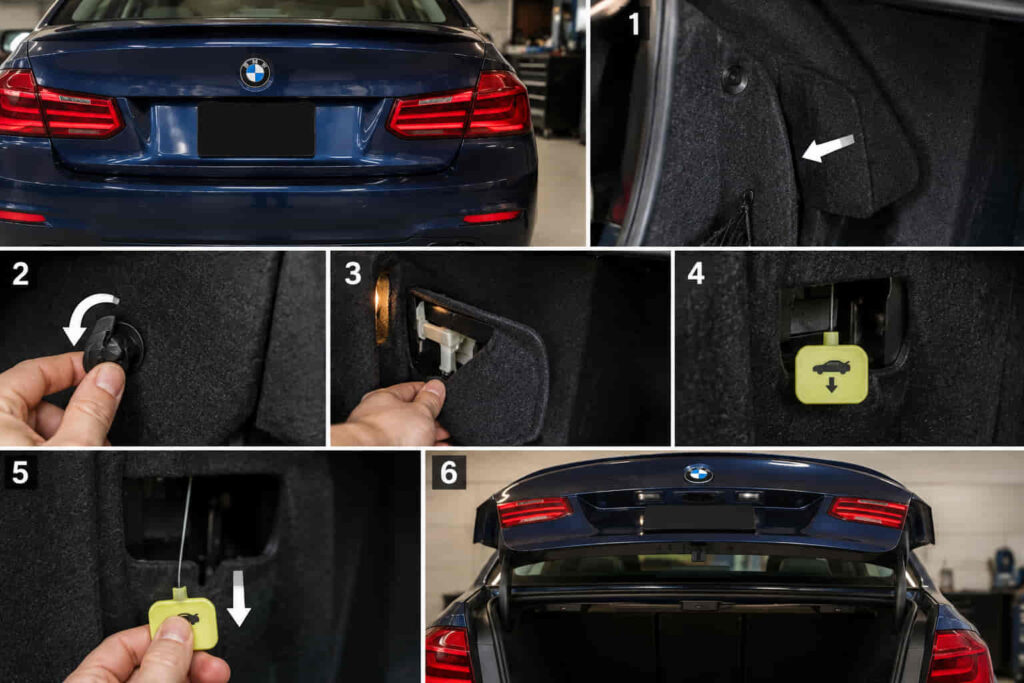
Some BMW vehicles also include emergency trunk access methods through the rear seat area or interior release mechanisms. These options vary depending on whether the vehicle is a sedan, coupe, SUV, convertible, or equipped with a power liftgate.
The reason BMW models differ is because trunk access is closely connected to vehicle security design. The system must provide emergency access while preventing unauthorized entry when electrical power is unavailable.
Owners should avoid forcing the trunk lid, pulling on the latch, or attempting to bypass locking components. These actions can damage the trunk seal, wiring harness, latch mechanism, or body panels, creating additional repair costs.
For example, an older BMW with a visible mechanical key cylinder may allow direct manual unlocking, while a newer BMW X5 with an electronic tailgate may require temporary power restoration before the liftgate can operate.
What Should You Do If Your BMW Trunk Still Will Not Open?
If a BMW trunk still will not open after restoring power or attempting emergency access methods, the problem may involve a failed trunk latch, electrical fault, locking module issue, or damaged access component. At this stage, further diagnosis is needed instead of repeatedly attempting to force the trunk open.
The first step is confirming whether the vehicle has regained electrical power. If the interior lights, dashboard, or central locking system remain inactive after connecting an external power source, the issue may involve the battery connection, battery condition, or another electrical problem.
If the vehicle has power but the trunk release remains unresponsive, the trunk latch actuator may be the source of the problem. The actuator receives electrical signals from the vehicle control system and physically releases the latch. A failed actuator can prevent the trunk from opening even when the battery and other systems work correctly.
Electrical wiring problems can also prevent trunk operation. BMW vehicles use complex wiring networks between control modules, switches, and actuators. Damaged wiring, connector corrosion, or communication errors can interrupt the signal needed to unlock the trunk.
The central locking module is another possible cause. This system coordinates locking and unlocking functions throughout the vehicle, including doors and trunk access. A fault within this system may create symptoms that appear similar to a battery problem.
Professional diagnosis becomes necessary when standard emergency procedures fail. A technician can test battery voltage, scan vehicle modules, inspect wiring, and determine whether the problem is electrical or mechanical.
For example, if a BMW trunk remains locked after a successful jump start and all other electrical systems operate normally, the issue is more likely related to the trunk latch mechanism or control system rather than the battery.
How Much Does BMW Trunk Access Repair Cost?
BMW trunk access repair costs depend on the cause of the problem, including battery failure, trunk latch problems, electrical faults, or damaged locking components. A simple battery-related issue is usually less expensive to resolve, while repairs involving electronic modules or trunk mechanisms may require more diagnosis and labor.
If the problem is caused by a discharged or disconnected battery, the repair may only involve battery charging, battery replacement, or restoring proper electrical connections. Battery-related repairs are generally simpler because the trunk system itself may still be functioning correctly once power is restored.
A failed trunk latch actuator can create higher repair costs because the component must be replaced and properly integrated with the vehicle’s locking system. The latch is responsible for physically releasing the trunk mechanism, so a failure can prevent access even when the vehicle has normal electrical power.
Electrical diagnosis may also increase repair costs because BMW vehicles use multiple control modules that communicate throughout the vehicle. Technicians may need to identify faults in wiring, connectors, or electronic control systems before determining the correct repair.
The vehicle model also affects repair complexity. A BMW sedan with a traditional trunk design may require different procedures compared with BMW SUVs equipped with powered liftgates and additional electronic components.
Preventing unnecessary repair costs starts with accurate diagnosis. Replacing parts without identifying the actual cause can lead to wasted expenses and continued access problems.
For example, replacing a trunk latch will not solve a vehicle-wide power loss caused by a weak battery, while replacing the battery will not repair a failed trunk actuator that has already stopped functioning.
How Can You Prevent BMW Trunk Access Problems?
Preventing BMW trunk access problems requires maintaining the vehicle battery, monitoring electrical system health, and addressing warning signs before complete power loss occurs. Since modern BMW trunk systems depend heavily on electronic components, battery maintenance plays an important role in preventing access failures.
Battery condition is one of the most important factors affecting BMW access reliability. A weak battery may still start the vehicle occasionally but fail to provide enough power for electronic systems after the vehicle has been parked for extended periods.
Regular battery testing helps identify declining performance before the battery becomes completely discharged. BMW vehicles are sensitive to voltage changes because many control modules depend on stable electrical power to operate correctly.
Replacing an aging battery at the appropriate time can prevent situations where the vehicle becomes inaccessible. Battery lifespan depends on climate, driving patterns, electrical usage, and charging system condition, but monitoring battery health reduces the risk of unexpected failure.
Keeping the mechanical key available is another simple prevention method. Many BMW owners rarely use the physical key blade because electronic access works normally, but it becomes valuable when the battery loses power.
Owners should also avoid leaving electrical accessories active for extended periods when the engine is not running. Devices that create excessive battery drain can reduce battery capacity and increase the chance of losing access to electronic functions.
Regular maintenance of the vehicle charging system is also important. Problems with the alternator or charging system can prevent the battery from maintaining sufficient power even after replacement.
For example, a BMW owner who regularly checks battery condition, keeps the mechanical key accessible, and responds to early electrical warnings can significantly reduce the risk of being unable to open the trunk.