Finding the right ND Oil 8 equivalent is important when servicing an automotive air conditioning system, especially when the original compressor oil is not available. DENSO ND Oil 8 is a PAG 46 type compressor oil designed for automotive AC compressors using R134a refrigerant. However, finding another product labeled PAG 46 does not automatically mean that it is a direct replacement.
The reason is that compressor oils can have different chemical formulations, additives, and compatibility requirements. DENSO states that its ND Oil 8 and ND Oil 12 products are double end capped PAG formulations developed for specific compressor applications. ND Oil 8 is intended for R134a systems, while ND Oil 12 contains additional additives for R1234yf and can also be used with R134a systems.
For this reason, choosing an ND Oil 8 alternative requires more than checking the viscosity. The refrigerant, compressor design, oil formulation, and manufacturer specifications should all be considered before using a substitute.
This guide explains what makes ND Oil 8 different, which PAG 46 characteristics matter when looking for an alternative, and how to determine whether another automotive AC compressor oil is suitable for your system.
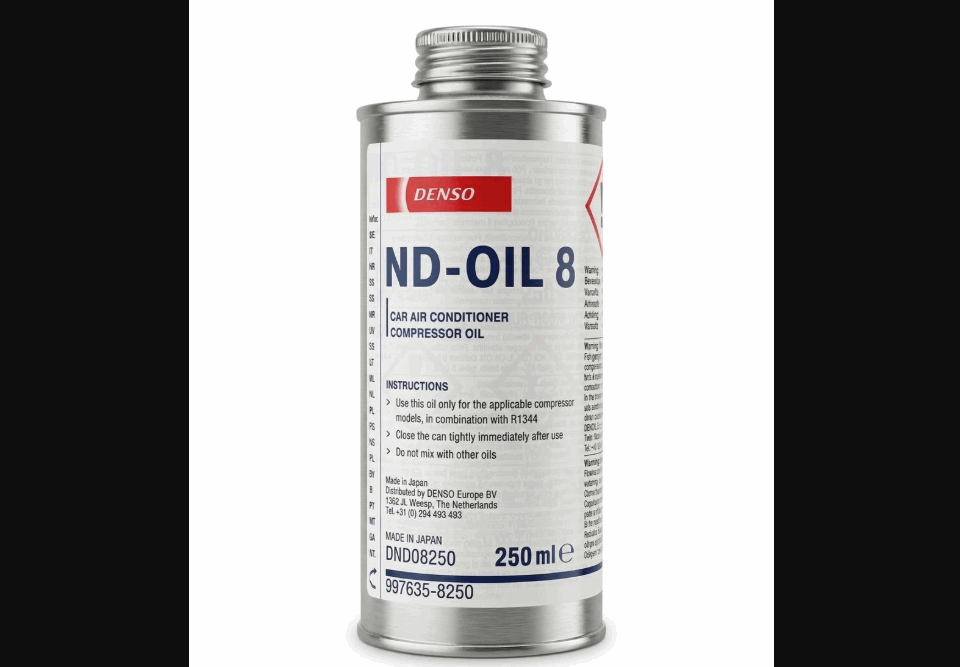
What Is ND Oil 8 and What Makes It Different?
ND Oil 8 is a DENSO compressor oil classified as a PAG 46 formulation. The PAG designation describes the base oil family, while the number 46 refers to its viscosity grade. DENSO specifies ND Oil 8 for compressors operating with R134a refrigerant. This makes it particularly relevant to many automotive AC systems that use mechanical compressors and R134a.
The important point is that PAG 46 describes only part of the oil specification. Two compressor oils can both be identified as PAG 46 while having different formulations and additive packages. These differences can affect their chemical stability, refrigerant compatibility, and suitability for a particular compressor.
DENSO explains that its ND Oil 8 and ND Oil 12 products use double end capped PAG formulations. This design provides greater chemical stability compared with many conventional single end capped PAG oils. DENSO also states that these oils were developed under specific requirements for its compressor systems.
This is why an ND Oil 8 equivalent should not be selected by viscosity alone. A suitable alternative should match the required PAG viscosity while also being designed for automotive AC compressor use and compatible with the refrigerant in the vehicle.
For an R134a system, a properly specified automotive PAG 46 oil may be considered when looking for an ND Oil 8 alternative. However, the compressor manufacturer’s requirements should remain the primary reference before making a substitution.
ND Oil 8 Equivalent: What PAG 46 Oil Should You Use?
The most relevant category when looking for an ND Oil 8 equivalent is automotive AC compressor oil with a PAG 46 formulation. Since DENSO identifies ND Oil 8 as a PAG 46 oil for R134a compressor systems, products with the same basic viscosity and application can be potential alternatives.
However, the term PAG 46 should be treated as a starting point rather than proof of exact equivalence. A suitable replacement should be specifically intended for automotive air conditioning compressors and should state compatibility with the refrigerant used by the vehicle. For an R134a system, the product should be suitable for R134a applications.
The compressor specification is also important. Different compressor designs can have different lubrication requirements. DENSO, for example, identifies ND Oil 8 for its mechanical compressors using R134a, while ND Oil 11 is a POE oil developed for electrically driven scroll compressors. This shows why the oil type cannot be selected from viscosity alone.
A practical way to evaluate a potential alternative is to compare four factors. First, confirm that it is a PAG 46 compressor oil. Second, verify that it is designed for automotive AC systems. Third, confirm compatibility with the system refrigerant. Finally, check the compressor manufacturer’s service information or approved oil specification.
Therefore, the closest general category is PAG 46 automotive AC compressor oil for R134a systems. An exact chemical equivalent should only be claimed when the manufacturer provides sufficient compatibility information.
How to Choose the Right ND Oil 8 Alternative
Choosing an ND Oil 8 alternative should begin with the compressor rather than the oil bottle. The compressor model and vehicle service information can reveal the oil specification, refrigerant type, and required oil quantity. These details provide a much stronger basis for selecting a replacement than the PAG 46 label alone.
The first step is to identify the refrigerant. ND Oil 8 is designed for R134a type refrigerant compressors. R1234yf systems require particular attention because DENSO developed ND Oil 12 with additives specifically intended for R1234yf. DENSO states that ND Oil 8 should not be used with R1234yf refrigerant.
The second step is to verify the compressor application. Mechanical compressors and electrically driven compressors can require different oil formulations. For example, DENSO identifies ND Oil 11 as a POE formulation developed specifically for its electric driven scroll compressors.
The third step is to compare the oil specification. Look for the correct PAG type, viscosity, refrigerant compatibility, and application information. If the manufacturer provides an approved oil list, that information should take priority over a generic viscosity description.
Finally, check the required oil quantity. Using the correct oil but adding the wrong amount can still create problems for an AC system. DENSO specifically emphasizes the importance of using the correct oil quantity when installing a replacement compressor.
A good ND Oil 8 alternative therefore needs to match the complete application, not simply the number 46 on the label.
ND Oil 8 vs. Other PAG 46 Oils
ND Oil 8 and other PAG 46 oils may share the same basic viscosity classification, but that does not make them chemically identical. PAG 46 identifies the general oil type and viscosity, while the formulation can vary between manufacturers and products.
DENSO describes ND Oil 8 as a double end capped PAG 46 formulation designed for R134a compressor systems. The company also states that its ND Oil 12 is another PAG 46 formulation with additional additives that allow it to be used with R1234yf as well as R134a.
This distinction is important when comparing an aftermarket PAG 46 product with ND Oil 8. A generic PAG 46 oil may have the correct viscosity but may not have the same additive package or chemical characteristics as the DENSO product.
ND Oil 12 is a useful example of why viscosity alone is not enough. Both ND Oil 8 and ND Oil 12 are PAG 46 products, yet they have different intended applications. DENSO developed ND Oil 12 with additional additives for R1234yf. DENSO also states that ND Oil 12 can be used in R134a systems, while ND Oil 8 cannot be used with R1234yf.
Therefore, when comparing ND Oil 8 with another PAG 46 product, focus on the complete specification. Refrigerant compatibility, compressor application, oil formulation, and manufacturer recommendations are more useful indicators of suitability than viscosity alone.
Can You Use PAG 46 Instead of ND Oil 8?
A PAG 46 oil can potentially be used as an ND Oil 8 alternative when the product is specifically designed for automotive AC compressors and meets the requirements of the particular R134a system. However, the label PAG 46 by itself does not guarantee that the oil is a direct replacement.
ND Oil 8 is a PAG 46 formulation intended for R134a compressor systems. DENSO also explains that its ND Oil 8 and ND Oil 12 products have specific formulations developed for its compressor requirements. This means that a generic PAG 46 product may have the correct viscosity while still differing in chemical formulation.
Before using another PAG 46 oil, confirm the refrigerant in the vehicle. If the system uses R134a, an automotive PAG 46 product specifically approved or recommended for R134a may be a potential choice. If the vehicle uses R1234yf, ND Oil 8 should not be treated as an appropriate oil simply because it is also PAG 46. DENSO explicitly warns against using ND Oil 8 with R1234yf systems.
It is also important to avoid mixing compressor oils without confirming compatibility. Different formulations can behave differently when combined, and an incorrect oil can affect compressor operation.
The safest approach is to check the compressor manufacturer’s specification first. If the manufacturer lists a particular PAG 46 formulation or approved equivalent, follow that recommendation rather than choosing a product based only on its viscosity.
Common Mistakes When Replacing ND Oil 8
One of the most common mistakes is assuming that every PAG 46 oil is interchangeable. PAG 46 is useful for identifying the general oil type and viscosity, but it does not describe every characteristic of the formulation. A replacement should also meet the requirements of the compressor and refrigerant system.
Another mistake is confusing ND Oil 8 with ND Oil 12. Both are PAG 46 formulations, but they were developed for different refrigerant requirements. DENSO specifies ND Oil 8 for R134a systems and states that ND Oil 12 includes additives for R1234yf and can also be used with R134a.
Failing to identify the refrigerant before adding compressor oil can therefore lead to an unsuitable combination. The technician should verify whether the vehicle uses R134a or R1234yf before selecting the oil.
Another common problem is choosing oil based only on price or availability. A cheaper generic product may appear suitable because it says PAG 46 on the container, but its formulation may not match the compressor requirements.
Incorrect oil quantity is another issue. Too little oil can reduce lubrication, while too much oil can affect AC system performance. The correct quantity should be determined from the vehicle or compressor service specification.
Finally, technicians should avoid treating universal AC oils as automatically compatible with every system. DENSO specifically notes that not all compressor oils and refrigerants can be mixed.
Frequently Asked Questions About ND Oil 8 Equivalent
What is the closest equivalent to ND Oil 8?
The closest general category is automotive AC compressor oil with a PAG 46 formulation designed for R134a systems. However, an exact equivalent depends on the compressor manufacturer’s specification and the formulation of the alternative product.
Is ND Oil 8 the same as PAG 46?
ND Oil 8 is a PAG 46 type compressor oil, but PAG 46 is a broader classification. Other PAG 46 oils can have different formulations and additives, so they should not automatically be considered chemically identical to ND Oil 8.
Can I use generic PAG 46 instead of ND Oil 8?
A suitable automotive PAG 46 product may be considered if it meets the compressor and R134a system requirements. Check the manufacturer’s specifications before making the substitution.
Can ND Oil 12 replace ND Oil 8?
DENSO states that ND Oil 12 can be used with both R134a and R1234yf systems, while ND Oil 8 is not suitable for R1234yf. However, the correct oil specification for the specific compressor should always be confirmed before replacement.
Is PAG 46 suitable for R134a automotive AC systems?
PAG 46 is widely used in automotive AC applications, but suitability depends on the complete formulation and compressor requirements. ND Oil 8 itself is a PAG 46 formulation designed for R134a compressor systems.
Conclusion
The best ND Oil 8 equivalent is not simply any bottle labeled PAG 46. ND Oil 8 is a specific DENSO PAG 46 formulation designed for R134a type refrigerant compressors, and its formulation is part of what makes it suitable for the intended application.
When choosing an alternative, start by identifying the compressor and refrigerant. Then verify the PAG type, viscosity, application, refrigerant compatibility, and manufacturer recommendations. This approach provides a much more reliable way to select an equivalent than comparing viscosity alone.
For R134a automotive AC systems, a properly specified PAG 46 compressor oil may be a suitable alternative to ND Oil 8. However, the exact product should be selected according to the compressor manufacturer’s requirements.
The key point is simple. PAG 46 can describe the right category, but the complete oil specification determines compatibility. Checking the full application before replacing ND Oil 8 helps protect the compressor, maintain proper lubrication, and support reliable AC system performance.