Mazda developed the i Stop system to reduce fuel consumption and lower emissions during everyday driving. The technology automatically shuts off the engine when the vehicle stops and restarts it as soon as you release the brake or prepare to move. Under normal conditions, the process feels smooth and almost unnoticeable. However, many owners eventually experience Mazda i Stop problems that prevent the system from working as expected.
You may notice that the engine no longer shuts off at traffic lights. The i Stop warning light may stay on or begin flashing. In some cases, the system stops working immediately after a battery replacement. These symptoms often confuse drivers because the vehicle may continue to run normally. Many people assume the i Stop unit has failed, but that is rarely the real cause.
The i Stop system depends on several components working together. The battery must hold enough charge to support repeated engine restarts. The charging system must supply stable voltage. Sensors must report accurate information to the control module. Engine temperature, climate control demand, brake input, and several safety conditions also affect system operation. If any of these requirements are not met, the system may disable itself to protect the vehicle.
Fortunately, many Mazda i Stop problems have simple solutions. A weak battery, an incorrect replacement battery, or a failed sensor often causes the issue. Some vehicles only need a proper battery initialization after installation. Other cases require a more detailed inspection to identify electrical or charging faults before replacing expensive parts.
This guide explains how the Mazda i Stop system works and why it sometimes fails. You will learn the most common problems, their warning signs, possible causes, diagnostic methods, repair options, and practical maintenance tips. By the end of this guide, you will know how to identify the real problem and choose the right solution with confidence.
What Is Mazda i Stop and How Does It Work?
Mazda introduced the i Stop system to improve fuel efficiency without changing the driving experience. Instead of letting the engine idle at traffic lights or during short stops, the system automatically turns the engine off when specific operating conditions are met. As soon as the driver releases the brake pedal or prepares to move, the engine restarts almost instantly. This process helps reduce unnecessary fuel consumption and lowers exhaust emissions, especially in city traffic where frequent stops are common.
Unlike a traditional start stop system, Mazda i Stop relies on precise engine positioning to restart the engine quickly and smoothly. It combines fuel injection with the starter motor to reduce restart time and improve driver comfort. Although the process happens in seconds, the system constantly monitors the vehicle before allowing the engine to stop.
Several components work together to keep the i Stop system operating correctly. The battery provides the power needed for repeated engine restarts. The alternator keeps the battery charged during normal driving. The engine control module processes information from multiple sensors, while the battery management system monitors battery condition and available power. At the same time, sensors check engine temperature, brake pedal position, steering angle, door status, hood position, and climate control demand. The system only activates after every required condition has been satisfied.
Many drivers believe the system has failed when the engine does not stop at a traffic light. In reality, this behavior is often normal. For example, the engine may still be warming up after a cold start. The battery may not have enough charge after several short trips. The air conditioner may require the engine to keep running during very hot weather. Turning the steering wheel sharply or opening a door can also prevent the system from activating.
Understanding these operating conditions makes troubleshooting much easier. Before assuming you have serious Mazda i Stop problems, it is important to determine whether the system is protecting the vehicle or responding to an actual mechanical or electrical fault. This knowledge can save both time and unnecessary repair costs.
Common Signs of Mazda i Stop Problems
Most Mazda i Stop problems do not appear without warning. The system usually shows clear signs before it stops working completely. Recognizing these symptoms early can help you diagnose the issue faster and prevent unnecessary repairs.
One of the most common signs is that the engine no longer turns off when the vehicle stops at a traffic light. Everything else may seem normal, but the i Stop feature simply refuses to activate. This issue often points to a battery, charging, or operating condition that no longer meets the system’s requirements.
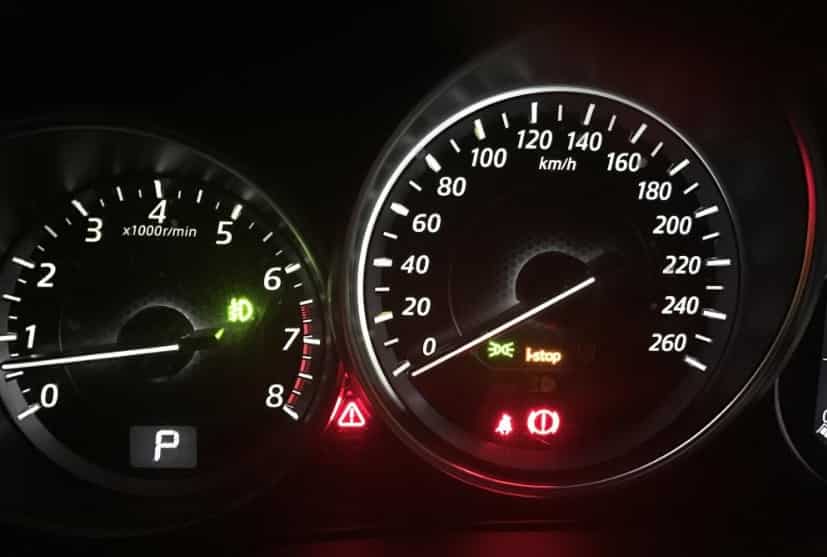
Another common symptom is an orange or flashing i Stop warning light on the dashboard. A solid light usually indicates that the system has been disabled, while a flashing light often suggests that the vehicle has detected a fault that requires further inspection. If the warning remains after restarting the engine, you should investigate the cause instead of ignoring it.
Some drivers notice that the system works only occasionally. It may activate during one trip but remain unavailable during the next. This inconsistent behavior often indicates a weak battery, unstable charging voltage, or a sensor that provides inaccurate information under certain conditions.
Battery replacement can also trigger unexpected problems. Many owners report that the i Stop feature stops working immediately after installing a new battery. In many cases, the replacement battery does not match Mazda’s specifications, or the vehicle requires a battery initialization procedure before the system can operate normally again.
You may also experience slow engine cranking, repeated warning messages, or several dashboard lights appearing at the same time. These symptoms can indicate a larger electrical problem rather than an isolated i Stop fault. A failing alternator, damaged wiring, or poor battery connections may affect multiple vehicle systems simultaneously.
Although these warning signs are common, they do not always identify the exact cause of the problem. Different faults can produce similar symptoms, which is why a systematic diagnosis is always more effective than replacing parts based on guesswork. The next section explains the most common Mazda i Stop problems, why they occur, and how you can fix them safely and efficiently.
12 Common Mazda i Stop Problems and How to Fix Them
The i Stop System Does Not Activate Under Normal Driving Conditions
One of the most misunderstood Mazda i Stop problems occurs when the engine refuses to shut off at a traffic light. Many owners immediately suspect a malfunction because the feature worked normally before. However, this behavior is often part of the system’s normal operation rather than a mechanical failure. Mazda designed i Stop to prioritize reliability and safety, so it will only activate after every required condition has been satisfied.
The system constantly evaluates the vehicle before stopping the engine. Battery charge, engine temperature, steering position, brake input, climate control demand, and several safety sensors all influence its decision. If one of these conditions falls outside the acceptable range, the engine simply continues running. This prevents unnecessary battery drain and ensures the vehicle can restart without hesitation.
Cold weather provides a good example. After starting the engine, the cooling system needs time to reach its normal operating temperature. During this period, i Stop remains unavailable because the engine must continue producing heat and maintain stable combustion. The same thing can happen after several short trips when the battery has not recovered enough charge to support another automatic restart.
Climate control also affects system operation more than many drivers realize. If the cabin requires maximum cooling in summer or strong heating in winter, the engine may continue idling to maintain passenger comfort. Selecting the windshield defroster often produces the same result because the heating system requires continuous engine power to remove condensation quickly.
Several safety conditions can also prevent activation. The system may stay inactive if the steering wheel remains turned, the hood is not fully closed, a door is open, or the driver’s seat belt is unfastened. These situations do not indicate a fault. Instead, they are built into the system to reduce unnecessary risks during daily driving.
Before assuming the vehicle needs repairs, consider whether these operating conditions apply. Drive the vehicle long enough for the engine to warm completely and allow the alternator to recharge the battery. If the system begins working again after a longer journey, the vehicle was most likely operating normally instead of experiencing a failure.
A Weak or Undercharged Battery
A weak battery remains the leading cause of Mazda i Stop problems across nearly every Mazda model. Unlike a conventional vehicle, the i Stop system depends on a healthy battery that can supply stable voltage every time the engine restarts. Even when the engine starts without difficulty, the battery may no longer meet the higher requirements needed for automatic stop start operation.
Most drivers first notice that i Stop stops working without any obvious warning. The vehicle drives normally, fuel economy may remain unchanged, and no fault messages appear on the dashboard. As battery performance continues to decline, additional symptoms often become noticeable. Engine cranking may feel slower than usual, dashboard lights may dim briefly during startup, and the i Stop warning light may begin appearing more frequently.
Battery condition naturally changes over time, but driving habits often accelerate the problem. Frequent short trips prevent the alternator from restoring the energy consumed during each engine start. As the battery remains partially discharged, the battery management system eventually disables i Stop to protect the remaining power. Extreme temperatures, aging battery cells, and heavy electrical loads can reduce battery performance even further.
Diagnosing the battery should always be the first step before replacing other components. Measuring battery voltage provides useful information, but a professional load test offers a much clearer picture of overall battery health. It is equally important to inspect both battery terminals for corrosion, loose connections, or damaged cables because poor electrical contact can produce symptoms similar to battery failure.
If testing confirms that the battery has reached the end of its service life, replacing it with the correct start stop battery usually restores normal operation. Installing an incompatible battery may solve the starting problem temporarily, but it often creates new i Stop issues later. Choosing the correct battery specification is therefore just as important as replacing the battery itself.
Installing the Wrong Battery
Replacing the battery seems like a simple maintenance job, but it often becomes the starting point of many Mazda i Stop problems. A large number of owners replace the original battery as soon as it begins to weaken. The vehicle starts normally again, yet the i Stop system suddenly refuses to operate. In most cases, the replacement battery does not meet the specifications required for Mazda’s start stop technology.
The i Stop system places much greater demands on the battery than a conventional vehicle. Every time the engine shuts off and restarts, the battery must deliver enough power while maintaining stable voltage for the vehicle’s electronic systems. A standard flooded battery may start the engine without difficulty, but it cannot always handle repeated charge and discharge cycles. As a result, the battery management system may disable i Stop to protect both the battery and the electrical system.
Choosing the correct battery involves more than matching the physical size. Capacity, cold cranking amps, reserve capacity, and battery technology all affect system performance. Depending on the model and production year, Mazda may require an EFB or AGM battery that is specifically designed for vehicles equipped with automatic start stop systems. Installing a lower specification battery often leads to poor charging performance, reduced battery life, and repeated i Stop failures.
The problem becomes even more confusing because the vehicle may not display an immediate fault code. Everything appears to work normally except the i Stop function. Many owners assume the new battery is defective and replace it again, even though the real issue is battery compatibility rather than battery quality.
Before purchasing a replacement, verify the battery specifications listed in the owner’s manual or the original equipment battery. If you are unsure, use the vehicle identification number to confirm the correct battery type for your specific model. Spending slightly more on the proper battery usually costs far less than diagnosing repeated electrical problems caused by an incompatible replacement.
A correctly matched battery not only restores i Stop operation but also improves charging efficiency and extends the lifespan of the vehicle’s electrical system. It is one of the simplest ways to avoid unnecessary repairs in the future.
Battery Replacement Without Proper Initialization
Many owners expect the i Stop system to work immediately after installing a new battery. When it does not, they often assume the replacement battery is faulty. In reality, the problem may have nothing to do with the battery itself. Many Mazda i Stop problems occur because the vehicle has not completed the proper battery initialization process after installation.
Modern Mazda vehicles use a battery management system that continuously monitors battery condition, charging performance, and available power. Over time, the system learns how the battery performs and adjusts charging strategies accordingly. When you install a new battery, the vehicle may continue using information that belongs to the old battery. This mismatch can prevent the i Stop system from operating normally, even though the new battery is fully charged and in excellent condition.
The symptoms are usually easy to recognize. The engine starts without difficulty, electrical accessories work normally, and the battery passes a health test. However, the i Stop indicator remains unavailable or a warning message appears on the dashboard. Some drivers also notice that the feature worked perfectly before the battery replacement but stopped functioning immediately afterward.
The correct solution depends on the Mazda model, engine, and production year. Some vehicles restore normal operation after completing a specific initialization procedure, while others require battery registration through a compatible diagnostic tool. Because these procedures vary between models, there is no universal reset method that works for every Mazda. Following random instructions found online can waste time and may even create additional fault codes.
If the system still refuses to activate after the battery has been initialized correctly, the next step is to check for stored diagnostic trouble codes. A weak charging system, damaged battery sensor, or unrelated electrical fault may prevent the initialization process from completing successfully. Identifying the root cause before replacing additional parts will usually save both time and money.
Whenever you replace the battery, follow the manufacturer’s recommended procedure instead of disconnecting and reconnecting the terminals without further checks. A few extra minutes spent completing the correct setup can prevent unnecessary warning lights and help the i Stop system return to normal operation much sooner.
A Faulty Battery Monitoring Sensor
The battery is not the only component that determines how the i Stop system operates. Mazda also relies on a battery monitoring sensor to measure voltage, current flow, and battery condition in real time. If this sensor sends inaccurate information, the control module may believe the battery cannot support another engine restart. As a result, the i Stop function remains disabled even when the battery is in good condition.
This problem often develops gradually rather than appearing overnight. At first, the i Stop system may work inconsistently. It activates during some trips but remains unavailable during others. As the sensor continues to report incorrect data, warning messages become more frequent, and the system may eventually stop operating altogether.
A faulty sensor can produce symptoms that closely resemble a weak battery. The engine usually starts without difficulty, but the i Stop feature rarely activates. In some cases, the battery passes every diagnostic test, yet the vehicle still reports that battery performance is insufficient. This often leads owners to replace a healthy battery without solving the original problem.
Loose battery terminals or corrosion around the negative terminal can create similar symptoms. Since the battery monitoring sensor is typically installed near the negative battery cable, poor electrical contact may interfere with the readings it sends to the control module. Even a small amount of corrosion can affect voltage measurements and reduce system reliability over time.
Diagnosing this issue requires more than checking battery voltage. A technician should inspect the sensor, wiring harness, and electrical connections before replacing any components. Live data from a professional scan tool can also reveal whether the sensor is reporting realistic values while the engine is running. If the readings remain abnormal after confirming the battery and charging system are healthy, replacing the battery monitoring sensor is often the most effective solution.
Regular battery maintenance can reduce the risk of sensor related problems. Keeping the battery terminals clean, tightening loose connections, and checking for corrosion during routine servicing helps the sensor collect accurate data and allows the i Stop system to operate as intended.
Alternator or Charging System Problems
A healthy battery cannot keep the i Stop system running if the charging system fails to maintain the correct voltage. Although many drivers focus on the battery first, the alternator plays an equally important role in preventing Mazda i Stop problems. Its primary job is to recharge the battery while the engine is running and supply stable electrical power to the vehicle. When charging performance drops, the battery gradually loses its reserve capacity, and the i Stop system often becomes one of the first features to stop working.
The warning signs usually appear slowly. The i Stop function may become less consistent, especially after short trips or heavy traffic. As the problem becomes more serious, the battery warning light may illuminate, headlights may appear dimmer at idle, or electrical accessories may not perform as expected. In some cases, drivers also notice slower engine cranking after the vehicle has been parked overnight.
Several faults can reduce charging efficiency. A worn alternator may no longer produce enough output under load. A loose drive belt can prevent the alternator from operating at full capacity, while damaged wiring or poor ground connections may reduce the amount of current reaching the battery. Modern Mazda vehicles also use intelligent charging systems that adjust output based on driving conditions, so diagnosing charging problems requires more than a simple voltage check.
Testing the charging system should always include measurements under different operating conditions. Battery voltage with the engine off provides only part of the picture. A technician should also verify charging voltage at idle, during acceleration, and while major electrical accessories are operating. Comparing these readings helps determine whether the alternator can maintain stable voltage when demand increases.
If the charging system cannot keep the battery fully charged, replacing the battery alone will rarely solve the problem. The new battery will gradually lose capacity, and the same i Stop issues will return within a short period. Identifying the source of the charging fault before replacing additional parts is the most effective way to avoid repeated repairs and unnecessary expenses.
Routine inspection of the alternator, drive belt, battery cables, and ground connections can prevent many charging related failures. Catching a small problem early is often far less expensive than replacing multiple electrical components after the system begins to fail.
A Faulty Brake Pedal Switch
A faulty brake pedal switch is another common cause of Mazda i Stop problems. The i Stop system depends on an accurate brake signal before it can shut the engine off. When you stop at a traffic light, the control module checks whether the brake pedal is fully pressed. If the switch fails to send the correct signal, the engine will continue idling because the system cannot confirm that the vehicle is safe to enter stop mode.
The first symptom is usually straightforward. The i Stop function stops working even though the battery is healthy and the engine has reached normal operating temperature. Some drivers also notice that the feature works intermittently, activating on one trip but remaining unavailable on the next. Because the battery is often blamed first, the brake switch may go unnoticed during the initial inspection.
A failing brake pedal switch can also affect other vehicle functions. The brake lights may remain on after you release the pedal or fail to illuminate when braking. Cruise control may stop working because it relies on the same brake input. If several of these symptoms appear together, inspecting the brake switch should become a priority.
Diagnosing the problem is usually simple. Inspect the brake switch for damage, loose wiring, or poor connector contact. A scan tool can also display live brake pedal data to verify whether the signal changes correctly when the pedal moves. If the readings remain inconsistent, replacing the switch is often the most effective solution.
Although the brake pedal switch is a small and inexpensive component, it plays a vital role in the i Stop system. Replacing a faulty switch early can restore normal operation and prevent unnecessary spending on batteries or other electrical parts that are still working properly.
Hood, Door, or Seat Belt Switch Problems
The i Stop system relies on several safety switches before it allows the engine to shut off. Even if the battery is fully charged and the engine is operating normally, the system may remain inactive when it detects that a safety condition has not been met. For this reason, faulty hood, door, or seat belt switches are among the overlooked causes of Mazda i Stop problems.
A defective switch can send incorrect information to the control module. For example, a worn hood latch switch may report that the hood is still open even when it is fully closed. A damaged door switch or seat belt sensor can create the same issue. Since the system cannot verify that the vehicle is in a safe condition, it keeps the engine running instead of activating i Stop.
Drivers often notice that the problem appears without warning. The i Stop function stops working, while the vehicle continues to drive normally. In some cases, the interior lights remain on longer than expected, the door open indicator appears unexpectedly, or warning messages flash briefly on the dashboard. These signs can help identify a faulty safety switch before more expensive components are inspected.
Start by checking that every door, the hood, and the driver’s seat belt are properly secured. If everything appears normal, inspect the latch mechanisms, wiring, and electrical connectors for dirt, corrosion, or physical damage. A diagnostic scan tool can also confirm whether the control module receives the correct status from each switch.
Although these switches are small components, they play an important role in system safety. Repairing or replacing a faulty switch often restores normal i Stop operation without requiring additional electrical repairs.
Engine Temperature Sensor Problems
The i Stop system only operates when the engine reaches the correct operating temperature. If the engine is too cold or the control module receives incorrect temperature data, the system will keep the engine running to protect performance and reduce unnecessary wear. As a result, a faulty engine coolant temperature sensor is one of the common Mazda i Stop problems that many owners overlook.
The most noticeable symptom is that i Stop never activates, even after driving for an extended period. The engine runs normally, but the feature remains unavailable at every stop. Some vehicles may also display poor fuel economy, an unstable temperature gauge, or an illuminated check engine light if the sensor begins to fail.
Several issues can cause this problem. The coolant temperature sensor may provide inaccurate readings because of age or internal failure. Low coolant levels can also affect temperature measurements, while a thermostat that remains open may prevent the engine from reaching its normal operating temperature. In each case, the control module assumes the engine is not ready for automatic shutdown and disables the i Stop function.
Begin the inspection by checking the coolant level and looking for visible leaks around the cooling system. Next, monitor the engine temperature with a scan tool to confirm that the readings increase steadily as the engine warms up. If the temperature remains unusually low or changes unexpectedly, inspect the coolant temperature sensor and thermostat before replacing other components.
Keeping the cooling system in good condition helps the i Stop system operate reliably. Regular coolant maintenance and early diagnosis of temperature related issues can prevent unnecessary warning lights and restore normal system performance without costly repairs.
High Air Conditioning Demand
High air conditioning demand is another reason the i Stop system may not activate. Many owners mistake this situation for one of the common Mazda i Stop problems. In fact, the system is often working exactly as Mazda intended. It keeps the engine running to maintain cabin comfort and stable climate control.
The issue usually appears during very hot or very cold weather. If the air conditioner is set to maximum cooling, the engine may continue idling at traffic lights. The same thing can happen when the heater works at full capacity. Using the windshield defroster can also prevent i Stop from activating because it requires constant airflow and engine power.
Most drivers notice that the system works normally on mild days. However, it becomes unavailable when outdoor temperatures are extreme. In some cases, the engine shuts off for a few seconds before restarting automatically. This behavior is normal because the climate control system requests additional power.
You can perform a simple test before looking for mechanical faults. Lower the fan speed and select a moderate cabin temperature. Then drive the vehicle under normal conditions. If i Stop starts working again, the climate control system is likely the reason. You should also switch off the windshield defroster during the test because it can override the stop start function.
If the problem continues, inspect the air conditioning system and cabin temperature sensor. A faulty sensor may send incorrect temperature data to the control module. The vehicle then keeps the engine running even when extra cooling or heating is unnecessary. Diagnosing the actual cause will save time and help you avoid replacing parts that are still working correctly.
Faulty Sensors, Wiring, or ECU Communication
The i Stop system depends on accurate information from multiple sensors and control modules. If one component sends incorrect data, the system may stop working even though the engine and battery appear to be in good condition. This is why electrical faults are among the most difficult Mazda i Stop problems to diagnose.
Several sensors help the control module decide when it is safe to shut the engine off. These include the steering angle sensor, wheel speed sensors, battery sensor, engine temperature sensor, and transmission sensors. Every signal must be accurate. If one sensor reports abnormal data, the control module may disable i Stop to protect the vehicle.
Damaged wiring can create similar problems. A loose connector, broken wire, or corroded terminal may interrupt communication between different control modules. These faults often develop over time because of moisture, vibration, or normal wear. As the electrical connection becomes weaker, the problem may appear only occasionally before becoming permanent.
The warning signs are not always limited to the i Stop system. Some drivers also notice the check engine light, ABS warning light, or traction control warning. Multiple warning lights usually indicate that several systems have lost communication rather than a single component failure.
A complete diagnostic scan is the best way to identify this type of fault. Generic code readers may detect engine codes, but they often miss Mazda specific communication errors. A professional scan tool can access every control module and display stored fault codes together with live sensor data. This information allows technicians to locate the real source of the problem instead of replacing parts by trial and error.
Electrical faults can take longer to diagnose than battery or sensor problems, but an accurate diagnosis prevents unnecessary repairs. Fixing a damaged wire or cleaning a corroded connector is often enough to restore normal i Stop operation without replacing expensive electronic components.
i Stop Warning Light or System Malfunction
An illuminated i Stop warning light is one of the clearest signs that something is preventing the system from operating correctly. While some owners assume the i Stop unit has failed, the warning light usually indicates that another component requires attention. In many cases, the problem involves the battery, charging system, sensors, or engine management rather than the i Stop system itself.
The warning light may appear as a solid or flashing indicator, depending on the Mazda model and the type of fault. A solid light often means the system has been disabled because one or more operating conditions are not satisfied. A flashing light usually suggests that the vehicle has detected a malfunction and requires further inspection. Since warning light behavior can vary between models and production years, it is important to check the owner’s manual before drawing conclusions.
Do not ignore the warning if it remains on after restarting the engine. Start by checking whether other dashboard lights are also illuminated. A battery warning light, check engine light, or charging system warning often provides valuable clues about the underlying problem. If multiple warnings appear together, the fault may affect more than just the i Stop system.
Next, inspect the battery terminals for loose connections or corrosion. A weak electrical connection can interrupt communication between the battery and the control module. If everything looks normal, scan the vehicle for diagnostic trouble codes. This step helps identify faults that cannot be seen during a visual inspection and reduces the risk of replacing parts unnecessarily.
Avoid repeatedly resetting the system without identifying the actual cause. Clearing the warning light may hide the symptom for a short time, but it will not repair the underlying fault. If the warning returns after basic checks, arrange a professional diagnosis as soon as possible.
Most Mazda i Stop problems can be resolved once the root cause is identified. A systematic inspection is always more effective than replacing parts based on guesswork. Taking the time to diagnose the warning correctly can save money, prevent repeat failures, and restore reliable i Stop performance.
How to Diagnose Mazda i Stop Problems
Diagnosing Mazda i Stop problems becomes much easier when you follow a logical process. Many owners replace the battery or reset the system immediately after i Stop stops working. However, this approach often wastes both time and money because several different components can produce the same symptoms. A step by step inspection helps identify the real cause before any parts are replaced.
Begin by checking whether the system is operating under normal conditions. The engine should reach its normal operating temperature, and the battery should have enough charge to support another restart. Make sure every door and the hood are fully closed, fasten the driver’s seat belt, and avoid testing the system while the windshield defroster or maximum air conditioning is running. These simple checks eliminate many situations that are often mistaken for faults.
Next, inspect the battery carefully. Look for loose terminals, corrosion, or damaged battery cables. If everything appears normal, measure the battery voltage and perform a load test if possible. A battery may still start the engine while lacking enough reserve capacity for the i Stop system. Confirm that the installed battery also matches Mazda’s recommended specification.
The charging system should be your next priority. Test the alternator output with the engine running and confirm that it maintains stable charging voltage. A weak alternator can gradually discharge the battery, causing i Stop to stop working even though the battery itself remains in good condition.
If no obvious problem is found, connect a compatible diagnostic scan tool. Reading stored fault codes often reveals issues that cannot be detected during a visual inspection. Live data can also help verify battery condition, engine temperature, brake switch operation, and sensor signals in real time.
Finally, avoid replacing expensive components before confirming the source of the fault. A complete diagnosis may reveal that the problem is nothing more than a loose connector or a faulty sensor. Finding the exact cause first is the fastest and most cost effective way to restore normal i Stop operation.
How to Reset Mazda i Stop After Battery Replacement
Many owners expect the i Stop system to work immediately after installing a new battery. When it does not, they often search for a quick reset procedure. However, resetting the system is not always the solution. Different Mazda models use different battery management strategies, so the correct procedure depends on the model, engine, and production year.
Before attempting any reset, confirm that the replacement battery meets Mazda’s specifications. An incorrect battery can prevent the system from operating even if it is fully charged. You should also check that both battery terminals are clean, tight, and free from corrosion. Poor electrical connections can interrupt communication between the battery and the control module.
Some Mazda vehicles automatically relearn battery information after several normal driving cycles. Others require a battery initialization or registration procedure before the i Stop system becomes available again. If this step is skipped, the control module may continue using data from the old battery and keep the feature disabled. Always follow the procedure recommended for your specific vehicle instead of relying on a universal reset method.
If the system still does not work after initialization, inspect the vehicle for stored fault codes. A charging system problem, faulty battery sensor, or another electrical issue may prevent the reset process from completing successfully. Simply clearing the warning light will not solve these underlying faults.
Avoid repeating random button combinations or battery disconnect procedures found online. While some methods may appear to work temporarily, they often fail to address the actual problem. In some cases, they can even erase useful diagnostic information that would help identify the fault.
A successful reset should restore normal i Stop operation only after the vehicle meets every operating requirement. If the warning light returns or the feature remains unavailable, further diagnosis is the safest and most reliable solution. Following the correct procedure from the beginning can save unnecessary repairs and help the system return to normal much sooner.
Can You Drive With Mazda i Stop Problems?
In most situations, you can continue driving even if the i Stop system stops working. The feature is designed to improve fuel economy and reduce emissions, not to keep the vehicle running. When i Stop becomes unavailable, the engine simply remains on while the vehicle is stopped. For many drivers, this is the only noticeable change.
However, you should not ignore the problem completely. The i Stop system often disables itself because it detects another issue within the vehicle. A weak battery, poor charging performance, or a faulty sensor may not affect normal driving at first. Over time, these problems can become more serious and lead to difficult starting or unexpected electrical failures.
Pay close attention to other warning lights on the dashboard. If the battery warning light, check engine light, or charging system warning appears together with the i Stop indicator, the vehicle should be inspected as soon as possible. These warnings often point to a fault that extends beyond the stop start system.
You should also seek immediate repairs if the engine struggles to start, the headlights become noticeably dim, or electrical accessories begin working inconsistently. These symptoms usually indicate that the battery or charging system can no longer supply enough power for normal vehicle operation.
If the i Stop warning is the only issue and the vehicle drives normally, you can usually continue driving for a short period while arranging an inspection. Even so, delaying diagnosis is not recommended. Identifying the cause early is often less expensive than waiting until the problem affects other electrical components.
Although many Mazda i Stop problems are minor, they should never be ignored. A proper inspection helps determine whether the issue is a simple operating condition or the first sign of a larger electrical fault.
Mazda i Stop Repair Costs
The cost of repairing Mazda i Stop problems varies depending on the underlying cause. Some issues require only a simple adjustment, while others involve replacing major electrical components. Because several faults can produce the same symptoms, an accurate diagnosis should always come before replacing any parts.
| Repair Item | Estimated Cost |
|---|---|
| Battery recharge | $20 to $50 |
| Start stop battery replacement | $180 to $450 |
| Battery monitoring sensor | $80 to $250 |
| Brake pedal switch | $60 to $180 |
| Hood or door switch | $50 to $200 |
| Coolant temperature sensor | $100 to $300 |
| Alternator replacement | $400 to $900 |
| Wiring repair | $100 to $600 |
| ECU diagnosis or programming | $150 to $500 |
Battery replacement is the repair most owners encounter. However, installing a new battery does not always solve the problem. If the alternator is not charging correctly or a faulty sensor is sending incorrect data, the i Stop warning may return even after the battery has been replaced.
Labor costs also influence the final repair bill. Independent repair shops often charge less than dealerships, but some procedures require Mazda specific diagnostic equipment. Battery initialization, software updates, and ECU programming are common examples.
The most cost effective approach is to identify the fault before authorizing repairs. A professional diagnostic test can reveal whether the issue comes from the battery, charging system, sensors, or electrical wiring. In many cases, cleaning battery terminals or replacing an inexpensive switch restores normal i Stop operation. Spending money on a proper diagnosis first can prevent unnecessary repairs and reduce the overall cost of fixing Mazda i Stop problems.
How to Prevent Mazda i Stop Problems
Preventing Mazda i Stop problems is usually easier and less expensive than repairing them. Most failures develop gradually because of battery wear, poor maintenance, or electrical issues that go unnoticed. A few simple maintenance habits can help the system operate reliably and extend the life of both the battery and other electrical components.
Always use the correct battery when a replacement is needed. Mazda designs the i Stop system to work with start stop batteries that can handle frequent charging and discharging cycles. Installing a conventional battery may reduce system performance and shorten battery life.
Driving habits also affect battery health. Frequent short trips prevent the alternator from fully recharging the battery, leaving it with less reserve power for the next engine restart. Whenever possible, take the vehicle on a longer drive to maintain a healthy state of charge and improve charging efficiency.
Regular battery inspections are equally important. Check the terminals for corrosion, make sure the connections remain tight, and replace a weak battery before it begins causing electrical problems. A simple battery test during routine maintenance can identify declining performance long before warning lights appear.
Do not ignore dashboard warning lights, even if the vehicle seems to drive normally. Early diagnosis can prevent a minor issue from developing into a more expensive repair. A weak alternator, damaged sensor, or loose electrical connection is usually easier and cheaper to repair before it affects other systems.
Finally, follow Mazda’s recommended maintenance schedule and address electrical problems as soon as they appear. Consistent maintenance not only reduces the risk of unexpected i Stop failures but also improves the overall reliability of your vehicle. A healthy battery, stable charging system, and properly functioning sensors are the foundation of a dependable i Stop system.
Frequently Asked Questions
Why is my Mazda i Stop not working?
A weak battery is the most common reason the i Stop system stops working. However, low engine temperature, high air conditioning demand, faulty sensors, or charging system problems can also prevent the feature from activating. A proper diagnosis is the best way to identify the exact cause.
Why is the Mazda i Stop warning light flashing?
A flashing i Stop warning light usually indicates that the system has detected a fault and requires inspection. Battery problems, sensor failures, or charging system issues are among the most common causes. Scanning the vehicle for diagnostic trouble codes is the fastest way to identify the problem.
Can a weak battery disable the i Stop system?
Yes. The i Stop system requires a healthy battery with enough reserve capacity to restart the engine repeatedly. Even if the vehicle starts normally, the battery may not provide enough power for automatic stop start operation.
Why did i Stop stop working after replacing the battery?
This often happens because the replacement battery does not meet Mazda’s specifications or the battery management system has not been initialized correctly. Some models require a battery registration or initialization procedure before the i Stop system can operate normally.
Does Mazda i Stop require a special battery?
Yes. Most Mazda models equipped with i Stop require a start stop battery that meets specific performance standards. Using an incorrect battery can reduce system reliability and prevent the feature from working properly.
Can I permanently disable Mazda i Stop?
Some owners use aftermarket devices or software modifications to disable the system, but these changes may affect vehicle warranty or electrical performance. The safest approach is to use the factory settings unless Mazda provides an official option for your vehicle.
Does i Stop damage the starter motor?
No. Mazda designed the starter motor and related components to handle frequent engine restarts. Under normal operating conditions, the system should not cause excessive wear when the vehicle is maintained correctly.
How long does a Mazda i Stop battery last?
Most start stop batteries last between three and five years. Battery life depends on driving habits, climate, maintenance, and charging performance. Vehicles used mainly for short trips often require battery replacement sooner.
Will disconnecting the battery reset the i Stop system?
Not always. Disconnecting the battery may clear some temporary settings, but many Mazda models require a specific initialization procedure after battery replacement. Simply disconnecting the battery rarely fixes the underlying cause of persistent i Stop problems.
Is it expensive to repair Mazda i Stop problems?
Repair costs vary widely. A simple battery replacement or brake switch repair may cost less than two hundred dollars, while alternator or electrical repairs can be significantly more expensive. An accurate diagnosis helps avoid replacing parts that are still working properly.
Conclusion
Mazda i Stop problems can have many different causes, but most of them are linked to the battery, charging system, sensors, or normal operating conditions. Although the i Stop feature may stop working unexpectedly, it does not always indicate a serious mechanical failure. In many cases, the system disables itself to protect the battery or ensure safe vehicle operation.
Before replacing expensive parts, take the time to inspect the battery, verify the charging system, and scan the vehicle for diagnostic trouble codes. A systematic diagnosis often reveals a simple issue, such as a weak battery, a faulty sensor, or poor electrical connections. Addressing the root cause first can save both time and repair costs while preventing the same problem from returning.
Regular maintenance also plays an important role in keeping the i Stop system reliable. Using the correct start stop battery, maintaining proper battery charge, and responding to warning lights early can significantly reduce the risk of future failures. These simple habits not only improve the performance of the i Stop system but also support the overall health of your vehicle’s electrical system.
If you are currently experiencing Mazda i Stop problems, start with the basic checks outlined in this guide before considering major repairs. A careful inspection is often enough to identify the issue and restore normal operation.
Have you experienced i Stop problems on your Mazda3, Mazda6, CX 3, CX 5, CX 30, CX 50, or CX 9? Share your vehicle model, model year, symptoms, and repair experience in the comments. Your feedback may help other Mazda owners find the right solution more quickly.