A lane keeping assist problem can appear without warning. Many drivers immediately wonder if their vehicle is still safe to drive. The system may work normally one moment and stop responding the next. A warning light can appear on the dashboard, or the steering assistance may suddenly switch off. This situation often causes unnecessary concern. Fortunately, it does not always mean the system has failed.
Many temporary issues can interrupt Lane Keeping Assist. Heavy rain, dense fog, faded lane markings, or a dirty windshield camera often prevent the system from detecting the road correctly. However, repeated warnings deserve closer attention. Camera calibration issues, damaged sensors, software errors, or electrical faults can all reduce the system’s performance.
Lane Keeping Assist is an important part of the Advanced Driver Assistance System, also known as ADAS. It monitors lane markings with a forward facing camera and helps keep the vehicle in its lane. Some vehicles also use additional sensors to improve accuracy. Although this technology increases driving safety, it cannot work properly without clear road markings and accurate sensor data.
Finding the real cause of a lane keeping assist problem is essential. Many drivers assume the system is defective, but the actual cause is often much simpler. Dirt on the windshield, low battery voltage, or outdated software can trigger warning messages. In other cases, a recent windshield replacement, suspension repair, or minor collision may require camera recalibration before the system works normally again.
This guide explains every important aspect of a lane keeping assist problem. You will learn how the system works, recognize the most common symptoms, understand the leading causes, diagnose the issue correctly, and choose the right repair solution. You will also discover typical repair costs and practical maintenance tips that help prevent future problems.
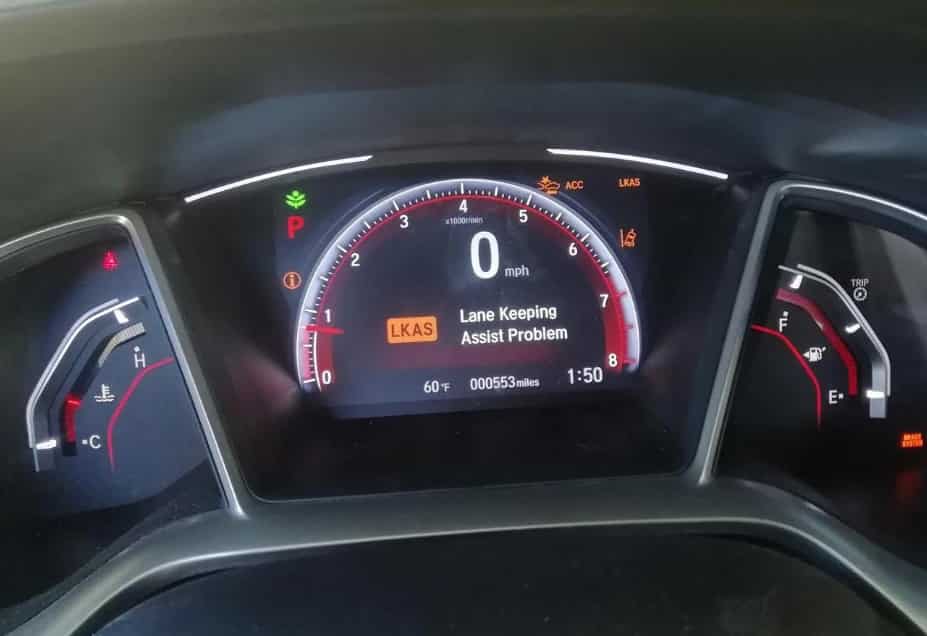
What Is a Lane Keeping Assist Problem?
A lane keeping assist problem means the system cannot perform its intended function correctly. The feature may fail to detect lane markings, stop providing steering assistance, or display a warning message on the dashboard. In some cases, the system turns off temporarily. In other situations, the problem continues until a technician identifies and fixes the cause.
Lane Keeping Assist is part of a vehicle’s Advanced Driver Assistance System. It uses a forward facing camera to monitor the road and identify visible lane boundaries. When the vehicle moves too close to a detected lane line, the system can warn the driver or provide small steering adjustments. The exact behavior depends on the vehicle manufacturer and the available safety technology.
Modern vehicles use different names for similar features. Some manufacturers call it Lane Keeping Assist, while others use terms such as Lane Keep Assist, Lane Departure Prevention, or Lane Centering Assist. Although these systems share similar goals, they do not always work in the same way.
Lane Departure Warning focuses mainly on alerts. It warns the driver when the vehicle leaves its lane without using a turn signal. The system usually provides visual, audio, or steering wheel alerts. However, it does not actively move the vehicle back into position.
Lane Keeping Assist provides a higher level of support. It can apply gentle steering input when it detects an unintended lane departure. Lane Centering Assist goes further by continuously helping the vehicle stay near the center of the lane. Because these systems rely on cameras and sensors, any problem with their input can affect performance.
Not every warning message means the system has a serious fault. Temporary conditions can cause the feature to become unavailable. For example, heavy rain, snow, dirty camera lenses, or unclear road markings can reduce detection accuracy. The vehicle may restore normal operation once conditions improve.
A true lane keeping assist problem usually appears repeatedly or remains active after basic checks. If cleaning the windshield, restarting the vehicle, or driving on a clear road does not solve the issue, further diagnosis may be necessary. A professional inspection can identify problems related to calibration, sensors, wiring, or software.
Understanding how Lane Keeping Assist works helps drivers make better decisions. Instead of ignoring warning messages or replacing expensive parts immediately, drivers can follow a logical troubleshooting process. This approach saves time, reduces unnecessary repair costs, and helps maintain the safety features of modern vehicles.
Common Symptoms of a Lane Keeping Assist Problem
A lane keeping assist problem can appear through several warning signs. Some drivers notice a dashboard warning immediately, while others discover that the system no longer provides steering support. Recognizing these symptoms early helps drivers find the cause faster and avoid unnecessary repairs.
The most common sign is a lane assist warning message. The vehicle may display alerts such as Lane Keeping Assist Unavailable or Driver Assistance System Error. These messages mean the system cannot operate normally and requires attention.
Another clear symptom is the loss of steering assistance. When Lane Keeping Assist works correctly, it provides gentle steering input when the vehicle moves toward a detected lane marking. If this correction disappears, the system may have trouble detecting lanes or communicating with other vehicle modules.
Some drivers also experience false alerts. The system may warn about lane departure even when the vehicle stays within the lane. This can happen because of poor lane visibility, a blocked camera, or incorrect sensor information.
In some cases, the vehicle may provide unusual steering corrections. The system may react too strongly or make unexpected movements. Drivers should take this seriously because it can indicate calibration problems or sensor issues.
Multiple ADAS warnings may appear together because Lane Keeping Assist shares data with other safety features. Problems with the camera, sensors, or software can also affect systems such as Adaptive Cruise Control and Forward Collision Warning.
Understanding these symptoms helps drivers identify a lane keeping assist problem before it becomes more serious. A temporary warning may disappear, but repeated errors usually require proper diagnosis.
What Causes a Lane Keeping Assist Problem?
A lane keeping assist problem can happen for many reasons. The system depends on cameras, sensors, software, and accurate vehicle data. When one part cannot provide reliable information, Lane Keeping Assist may stop working or show a warning message.
One common cause is a dirty or blocked windshield camera. Most vehicles place the camera near the rearview mirror. Dust, fingerprints, stickers, frost, or moisture can reduce visibility and prevent accurate lane detection. Cleaning the camera area is often the first step when troubleshooting the system.
Weather and road conditions can also affect performance. Heavy rain, fog, snow, bright sunlight, and poor visibility may make it difficult for the camera to identify lane markings. The system may temporarily disable itself until conditions improve.
Faded or missing lane lines create another common issue. Lane Keeping Assist needs clear road markings to understand the vehicle’s position. Construction zones, worn paint, and unclear road surfaces can confuse the system.
Camera calibration problems can also trigger a lane keeping assist problem. Windshield replacement, collision repairs, or suspension work may change the camera position. When this happens, the vehicle usually requires ADAS calibration to restore accurate operation.
Other possible causes include damaged sensors, electrical problems, software errors, low battery voltage, and incorrect wheel alignment. Modern driver assistance systems rely on communication between multiple vehicle modules. A small issue in one area can affect the entire system.
Understanding these causes helps drivers avoid unnecessary repairs. Simple problems such as a dirty camera may have an easy solution. However, repeated warnings often require professional diagnosis to identify the real source of the failure.
How to Diagnose a Lane Keeping Assist Problem?
Diagnosing a lane keeping assist problem starts with simple checks before considering expensive repairs. Many issues come from temporary conditions, incorrect settings, or blocked sensors. A step by step approach can help identify the cause more accurately.
First, check the warning message on the dashboard. Different vehicles display different alerts when Lane Keeping Assist cannot operate. The exact message can provide important information about whether the issue involves the camera, sensors, software, or another vehicle system.
Next, inspect the windshield area around the forward facing camera. Remove dirt, dust, frost, or moisture that may block the camera view. After cleaning the area, test the system on a road with clear lane markings and good weather conditions.
Drivers should also check whether Lane Keeping Assist remains enabled in the vehicle settings. Some systems allow drivers to adjust sensitivity or turn the feature off manually. A simple settings change may solve the issue without any repair.
Restarting the vehicle can also help identify temporary software problems. Turning the vehicle off and waiting several minutes may reset some electronic modules. However, repeated warnings after a restart usually require further investigation.
Checking tire pressure and wheel alignment is another useful step. Incorrect alignment can affect vehicle direction and create inaccurate steering data. If the problem continues, an ADAS diagnostic scan may be necessary to check for stored fault codes.
Professional calibration may become necessary after windshield replacement, collision repairs, or sensor replacement. Proper diagnosis prevents unnecessary part replacement and ensures the Lane Keeping Assist system works correctly.
How to Fix a Lane Keeping Assist Problem?
Fixing a lane keeping assist problem depends on the actual cause. Some solutions are simple and can be completed quickly. Other issues require professional equipment and technical knowledge, especially when the problem involves cameras, sensors, or vehicle software.
The first solution is cleaning the windshield and camera area. A blocked forward facing camera cannot detect lane markings correctly. Removing dirt, dust, frost, or moisture may restore normal system operation. After cleaning, drivers should test the vehicle on a road with clear lane lines.
If the problem continues, restarting the vehicle may help with temporary electronic errors. Some Lane Keeping Assist systems experience short term software issues that disappear after a complete power cycle. However, repeated warnings usually indicate a deeper problem.
Software updates can also solve certain Lane Keeping Assist issues. Vehicle manufacturers often release updates to improve ADAS performance and fix communication problems between control modules. A dealer or qualified repair shop can check whether an update is available.
Camera recalibration is another common repair. The system may need recalibration after windshield replacement, collision repairs, or changes to suspension components. Without correct calibration, the camera may provide inaccurate lane information.
Some cases require replacing damaged components. Faulty cameras, sensors, wiring connections, or control modules can prevent the system from working properly. Technicians usually perform diagnostic tests before replacing expensive parts.
Wheel alignment correction may also solve problems related to incorrect steering behavior. When the vehicle does not travel in the expected direction, the system may struggle to provide accurate assistance.
The best repair approach starts with proper diagnosis. Fixing the actual cause saves money and helps restore the safety functions that Lane Keeping Assist provides.
Can You Drive with a Lane Keeping Assist Problem?
A lane keeping assist problem does not always mean your vehicle is unsafe to drive. In many cases, the vehicle can still operate normally because Lane Keeping Assist only supports the driver. It does not control the entire driving process. However, drivers should understand the limitations of the system before continuing their journey.
When Lane Keeping Assist stops working, the driver must take full responsibility for steering control. The vehicle will not automatically correct lane position when the system becomes unavailable. This means the driver needs to stay more alert, especially on highways or during long trips.
A temporary warning caused by rain, fog, dirty camera lenses, or unclear lane markings is usually not a major concern. The system may return when road conditions improve. However, a repeated warning message should not be ignored because it may indicate a problem with the camera, sensors, software, or calibration.
Drivers should avoid relying on Lane Keeping Assist as a replacement for attention. Even when the system works correctly, it cannot recognize every road situation. Sharp curves, missing lane lines, construction areas, and poor weather can reduce performance.
A professional inspection is recommended when the vehicle shows multiple ADAS warnings, unexpected steering behavior, or a warning that remains after basic troubleshooting. These signs may indicate a deeper issue that affects other safety systems.
Driving with a lane keeping assist problem may be possible in some situations, but the issue should receive proper attention. A quick diagnosis can restore the system and help maintain the vehicle’s advanced safety features.
How Much Does It Cost to Fix a Lane Keeping Assist Problem?
The cost to fix a lane keeping assist problem depends on the actual cause and the vehicle model. Some issues require only basic maintenance, while others may need advanced ADAS repairs. Understanding the possible costs helps drivers prepare before visiting a repair shop.
A simple camera cleaning or system reset may cost nothing if drivers can complete the process themselves. However, professional diagnosis usually has a service fee because technicians need special tools to check ADAS components and stored fault codes.
Camera calibration is one of the most common repairs after windshield replacement or collision work. The cost varies depending on the vehicle manufacturer, calibration method, and repair facility. Some vehicles need static calibration, while others require dynamic calibration on the road.
Windshield replacement can also increase repair costs when the vehicle uses a camera based safety system. The correct windshield type, camera installation, and calibration process are important for proper Lane Keeping Assist operation.
Sensor or camera replacement can become more expensive. Advanced cameras and ADAS modules contain complex technology, so replacement parts and programming services may add significant costs. Electrical repairs and control module issues can also increase the final repair bill.
Wheel alignment is another possible expense when steering data affects system performance. A proper alignment may solve incorrect vehicle behavior and improve sensor accuracy.
The best way to reduce repair costs is to diagnose the problem early. Replacing parts without identifying the real cause can lead to unnecessary expenses. A proper inspection helps find the correct solution and restores the Lane Keeping Assist system efficiently.
How to Prevent Future Lane Keeping Assist Problems?
Preventing a lane keeping assist problem is easier than dealing with a complete system failure. Since Lane Keeping Assist depends on cameras, sensors, software, and vehicle data, regular maintenance plays an important role in keeping the system accurate.
Keeping the windshield clean is one of the simplest prevention methods. The forward facing camera needs a clear view of the road to detect lane markings correctly. Dirt, dust, water stains, and moisture around the camera area can reduce system performance.
Drivers should also avoid placing objects near the camera. Stickers, accessories, or anything that blocks the camera view may interfere with lane detection. A small obstruction can affect how the system understands the road environment.
Regular vehicle maintenance can also reduce the risk of ADAS problems. Proper tire pressure and wheel alignment help maintain accurate vehicle movement. Uneven tires or steering issues can affect how the system responds.
After windshield replacement, collision repairs, or suspension work, drivers should confirm that the vehicle receives proper ADAS calibration. Many Lane Keeping Assist problems occur because technicians repair physical components but skip the calibration process.
Keeping vehicle software updated is another important step. Manufacturers often release updates that improve system performance and fix communication issues between electronic modules.
Drivers should also understand the limitations of Lane Keeping Assist. The system works best with clear lane markings and suitable road conditions. Using the feature correctly reduces unnecessary warnings and improves reliability.
Regular care helps prevent unexpected failures and extends the life of modern driver assistance technology. A well maintained Lane Keeping Assist system provides better support and improves overall driving confidence.
Frequently Asked Questions About Lane Keeping Assist Problems
Why Is My Lane Keeping Assist Not Working?
A lane keeping assist system may stop working because of a blocked camera, poor weather, unclear lane markings, software errors, or calibration problems. Checking the windshield camera and vehicle settings is a good first step before seeking professional help.
Can a Dirty Windshield Cause a Lane Keeping Assist Problem?
Yes, a dirty windshield can affect Lane Keeping Assist performance. The forward facing camera needs a clear view to detect lane markings. Dirt, dust, frost, or moisture near the camera area can prevent accurate detection.
Does Windshield Replacement Require Lane Keeping Assist Calibration?
Many vehicles require ADAS calibration after windshield replacement. The camera position may change during the replacement process. Without proper calibration, the system may provide inaccurate lane information or stop working correctly.
Can Low Battery Voltage Affect Lane Keeping Assist?
Low battery voltage can affect modern driver assistance systems. Electronic modules may experience communication problems when the vehicle does not receive stable power. This can trigger temporary ADAS warning messages.
How Do I Reset Lane Keeping Assist?
The reset process depends on the vehicle model. In many cases, drivers can restart the vehicle, check system settings, and remove temporary camera obstructions. Persistent warnings usually require further diagnosis.
Can Wheel Alignment Fix a Lane Keeping Assist Problem?
Wheel alignment can help when the vehicle pulls to one side or provides incorrect steering behavior. However, alignment alone may not solve the issue if the camera, sensor, or software has a fault.
Is Lane Keeping Assist the Same as Lane Centering?
No. Lane Keeping Assist provides steering correction when the vehicle moves toward a lane boundary. Lane Centering Assist provides more continuous steering support to help maintain the vehicle near the center of the lane.
How Long Does Lane Keeping Assist Repair Take?
Repair time depends on the cause. Simple cleaning or software updates may take a short time. Camera replacement or ADAS calibration may require more time because technicians need proper testing and adjustment.
Should I Turn Off Lane Keeping Assist If It Behaves Incorrectly?
If the system makes unexpected steering movements, turning it off temporarily may be safer. Drivers should schedule an inspection to identify the cause and restore normal operation.
Conclusion
A lane keeping assist problem can happen for many different reasons. Some issues come from simple causes such as a dirty windshield, poor weather, or unclear lane markings. Other problems may involve camera calibration, damaged sensors, software errors, or electrical faults.
Understanding the symptoms is the first step toward finding the right solution. Warning messages, missing steering assistance, incorrect corrections, and multiple ADAS alerts can all provide important clues. A careful diagnosis helps drivers avoid unnecessary repairs and identify the real cause.
In many cases, basic troubleshooting can solve temporary problems. Cleaning the camera area, checking vehicle settings, and restarting the system are useful first steps. However, repeated warnings or unusual steering behavior require professional inspection. Proper ADAS diagnosis and calibration ensure that the system works accurately.
Modern driver assistance technology improves safety and driving confidence, but it still requires regular care. Maintaining the windshield, tires, alignment, and software helps prevent future issues and keeps safety features reliable.
A lane keeping assist problem should not be ignored, but it also does not always mean an expensive repair. With the right approach, drivers can restore system performance and continue enjoying the benefits of advanced vehicle safety technology.
Have you experienced a Lane Keeping Assist warning on your vehicle? Share your situation and vehicle model to help others understand possible causes and solutions.