Have you started your Jeep only to see the “Stop/Start Unavailable” warning appear on the dashboard? If so, you’re not alone. This is one of the most common issues reported by Jeep owners, especially those driving the Wrangler, Grand Cherokee, Cherokee, Compass, Gladiator, and Renegade. Although the message doesn’t always indicate a serious mechanical failure, it can be frustrating when your vehicle’s Engine Stop/Start (ESS) system suddenly stops working without explanation.
In many cases, the warning is caused by a weak main battery or a failing auxiliary battery. However, several other factors can also trigger the message, including low battery voltage, faulty sensors, software glitches, extreme weather conditions, or charging system problems. Because multiple components work together to operate the ESS system, identifying the exact cause is the first step toward a successful repair.
The good news is that the Jeep Stop/Start Unavailable warning is often easier to diagnose than many drivers expect. Some problems can be resolved with a simple battery test or software reset, while others may require replacing worn components before they lead to additional electrical issues.
This comprehensive guide explains what the warning means, why it appears, how to diagnose the problem step by step, the most effective repair methods, reset procedures, estimated repair costs, and practical tips to prevent the issue from returning. Whether you’re looking for a quick DIY solution or trying to decide if it’s time to visit a dealership, this guide will help you understand exactly what to do next.
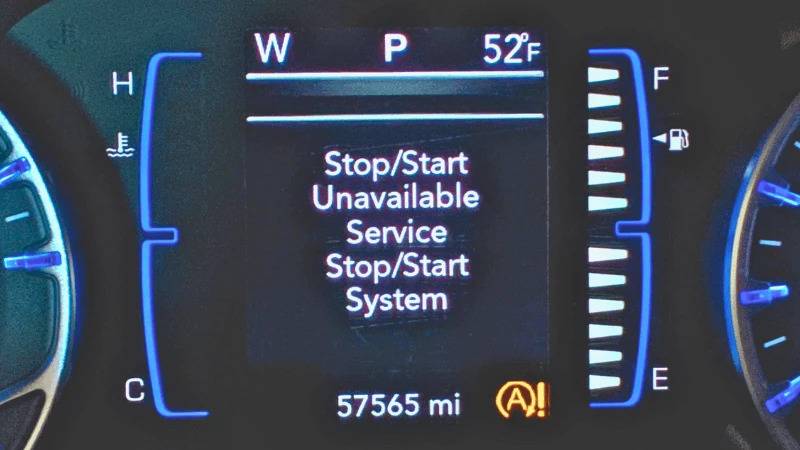
The Jeep Stop/Start Unavailable message means that the vehicle has temporarily or permanently disabled its Engine Stop/Start system. This feature is designed to shut off the engine when the vehicle comes to a complete stop, such as at a traffic light, and restart it when the driver releases the brake pedal.
The primary purpose of the system is to reduce fuel consumption and lower emissions during city driving. However, the system only operates when a long list of safety, electrical, and mechanical conditions has been met. When one or more of these conditions are not satisfied, the vehicle disables the feature and displays the warning message.
In many situations, this message does not mean that the engine itself is damaged. Your Jeep may continue to start, accelerate, and drive normally. The main difference is that the engine will remain running when the vehicle is stopped.
The system may become unavailable because the battery charge is too low, the engine has not reached the correct operating temperature, the air conditioning system is working heavily, or a safety sensor has detected an abnormal condition. Extreme outdoor temperatures can also prevent the feature from activating.
It is important to understand the difference between “Stop/Start Unavailable” and “Service Stop/Start System.” The first message may appear because normal operating requirements have not been met. The second message is more likely to indicate a stored fault that needs diagnosis.
For example, the system may remain unavailable during a cold morning because the engine needs additional time to warm up. Once the engine reaches the correct temperature and the battery has enough charge, the feature may begin working again without any repair.
However, if the message remains on the dashboard for several days, appears every time the vehicle starts, or is accompanied by a battery warning light, check engine light, hard starting, or electrical problems, further inspection is recommended.
In most cases, you can continue driving with the feature unavailable. Still, ignoring the warning for too long could allow an aging battery or charging system problem to become more serious.
1. Weak Main Battery
A weak main battery is one of the most common causes of the Jeep Stop/Start Unavailable warning. The Engine Stop/Start system depends heavily on stable battery voltage because it may restart the engine many times during a single trip.
A battery can still start the engine while being too weak to support the Stop/Start system. This is why many Jeep owners become confused when the warning appears even though the vehicle seems to start normally.
The vehicle’s battery monitoring system constantly evaluates battery voltage, temperature, charge level, and available starting power. If the system determines that the battery cannot safely support repeated engine restarts, it disables the ESS feature to protect the vehicle from becoming stranded.
Common signs of a weak main battery include:
- Slow or hesitant engine cranking
- Interior lights that briefly dim during startup
- Stop/Start operation that works inconsistently
- Dashboard warnings that appear and disappear
- Electrical accessories behaving unusually
- A clicking sound when attempting to start the vehicle
Battery age is another important factor. Many automotive batteries begin losing performance after several years, especially when exposed to extreme heat, freezing temperatures, frequent short trips, or long periods of inactivity.
Short trips can be particularly damaging to battery health because the alternator may not have enough time to restore the energy used during startup. Over time, the battery’s state of charge gradually decreases, causing the ESS system to remain unavailable.
The first diagnostic step is to test the battery rather than immediately replacing it. A basic voltage reading can provide useful information, but a professional load test gives a more accurate picture of the battery’s condition.
A fully charged battery at rest commonly measures around 12.6 volts. A reading closer to 12.2 volts may indicate that the battery is only partially charged. However, voltage alone does not confirm whether the battery can perform properly under load.
Battery terminals should also be inspected for corrosion, looseness, or damaged cables. A healthy battery cannot supply stable power if the electrical connections are dirty or poorly secured.
If testing confirms that the main battery is weak, replacing it with the correct battery type and capacity may restore normal Stop/Start operation. Some Jeep models require an AGM battery because the ESS system places greater demands on the electrical system than a conventional starting system.
Installing an incorrect or underpowered battery may cause the warning to return, even when the battery is new.
2. Failing Auxiliary Battery
Many Jeep models equipped with the Engine Stop/Start system use a dual battery configuration. In addition to the main battery, the vehicle may contain a smaller auxiliary battery that supports electrical systems during automatic engine shutdowns.
When the Jeep stops at a traffic light and the engine turns off, the auxiliary battery helps keep essential systems operating. These may include interior electronics, vehicle control modules, lights, climate control functions, and other accessories.
If the auxiliary battery becomes weak or fails, the vehicle may display the Jeep Stop/Start Unavailable message. This is especially common in certain versions of the Jeep Wrangler, Gladiator, Grand Cherokee, Cherokee, and Compass.
One frustrating aspect of auxiliary battery failure is that it may affect the main battery as well. Because the batteries are connected within the same charging system, a failing auxiliary battery may place an additional electrical load on the main battery. This can gradually weaken both batteries.
Symptoms of a failing auxiliary battery may include:
- Stop/Start operation no longer activating
- Repeated ESS warning messages
- Intermittent electrical problems
- Slow engine cranking
- Battery voltage dropping after the Jeep is parked
- Warning lights appearing after startup
- A recently replaced main battery becoming weak again
The auxiliary battery is smaller than the main battery, but it should not be overlooked during diagnosis. Some owners replace the main battery first, only to discover that the warning returns because the auxiliary battery was the actual source of the problem.
A proper battery test should evaluate both batteries individually. Testing only the main battery may produce incomplete or misleading results.
Accessing the auxiliary battery can also be more difficult than accessing the main battery. Its location varies depending on the Jeep model and model year. In some vehicles, it may be positioned beneath the main battery, behind an interior panel, or in another tightly packaged area.
If one battery has failed and both batteries are similar in age, a technician may recommend replacing both at the same time. This can reduce the risk of an older battery damaging or repeatedly draining the new one.
After battery replacement, the ESS system may not begin working immediately. The vehicle may need time to evaluate the new battery’s state of charge. In some cases, several normal driving cycles are required before the system becomes available again.
If the warning remains after both batteries have been tested or replaced, the next step is to inspect the battery sensor, charging system, wiring, and stored diagnostic trouble codes.
3. Cold or Hot Weather
Many Jeep owners are surprised to see the Stop/Start Unavailable warning appear only during winter mornings or extremely hot summer afternoons. In these situations, the message may not indicate a mechanical failure at all. Instead, the Engine Stop/Start system is protecting the vehicle because environmental conditions fall outside its normal operating range.
Cold temperatures significantly reduce battery performance. Even a healthy battery can lose a considerable amount of its available starting power when temperatures drop below freezing. Since the ESS system requires enough reserve energy to restart the engine instantly, the vehicle may temporarily disable the feature until the battery reaches an acceptable state of charge.
The engine also needs to reach its normal operating temperature before the system can function correctly. During a cold start, the engine management system prioritizes warming the engine, catalytic converter, and transmission fluid. Until these components reach their target temperatures, the Stop/Start system remains inactive.
Hot weather can create similar restrictions. On extremely warm days, the climate control system works harder to keep the cabin comfortable. If the air conditioning compressor is operating at maximum capacity, the vehicle may keep the engine running continuously to provide sufficient cooling performance.
Other weather-related conditions can also prevent ESS operation, including:
- Heavy windshield defrost usage
- High electrical demand from heated seats or steering wheel
- Battery temperature outside the recommended range
- High humidity combined with aggressive air conditioning
- Repeated short trips that never fully recharge the battery
Fortunately, weather-related warnings usually disappear automatically once normal operating conditions return. If the message only appears during extreme temperatures and disappears during moderate weather, the system is likely functioning as designed.
However, if the warning persists regardless of the weather, another underlying issue such as battery deterioration or sensor failure should be investigated.
4. Hood Latch Sensor Problems
The hood latch sensor is another frequently overlooked cause of the Jeep Stop/Start Unavailable warning. Although it is a relatively small component, it plays an important role in the vehicle’s safety system.
The Engine Stop/Start feature is programmed to prevent automatic engine shutdown if the hood is open or if the vehicle cannot verify that the hood is securely latched. This safety feature protects anyone performing maintenance under the hood by ensuring that the engine cannot restart unexpectedly.
If the hood latch sensor becomes dirty, damaged, misaligned, or develops an electrical fault, the vehicle may incorrectly believe that the hood is open. As a result, the ESS system immediately disables itself.
Common symptoms of a faulty hood latch sensor include:
- Stop/Start Unavailable message appearing shortly after startup
- ESS system never activating
- Intermittent warning messages
- Warning disappears after opening and closing the hood
- No other noticeable drivability problems
Fortunately, this issue is often easy to inspect. Begin by opening the hood and checking that it closes completely. Dirt, corrosion, leaves, or debris around the latch mechanism can interfere with the sensor’s operation.
Cleaning the latch with an appropriate cleaner and applying a small amount of lubricant may restore proper function if contamination is the cause.
Next, inspect the wiring harness connected to the latch. Loose connectors, damaged insulation, or corrosion may interrupt communication between the sensor and the vehicle’s control module.
If diagnostic testing identifies the hood latch sensor as faulty, replacing the entire latch assembly is often the recommended repair because the sensor is integrated into the mechanism on many Jeep models.
Compared with major electrical repairs, replacing a hood latch assembly is generally straightforward and relatively inexpensive.
5. Intelligent Battery Sensor (IBS) Malfunction
Modern Jeep vehicles rely on an Intelligent Battery Sensor (IBS) to monitor battery health in real time. This small electronic device is typically mounted on or near the negative battery terminal and continuously measures battery voltage, current flow, temperature, and overall state of charge.
The Engine Stop/Start system depends heavily on accurate information from the IBS. If the sensor reports incorrect data or stops communicating with the vehicle’s control modules, the ESS system may disable itself even if both batteries are in good condition.
A malfunctioning IBS can create symptoms that closely resemble those of a failing battery. Drivers may replace the battery only to discover that the warning message remains because the sensor continues providing inaccurate readings.
Common symptoms of an IBS failure include:
- Persistent Stop/Start Unavailable warning
- Battery warning light on the dashboard
- Charging system warnings
- Inconsistent battery voltage readings
- Poor battery charging performance
- Unexpected battery drain
- Diagnostic trouble codes related to battery monitoring
Several factors can contribute to IBS failure. Moisture intrusion, corrosion, damaged wiring, loose electrical connections, physical impact, or internal electronic failure may all affect the sensor’s accuracy.
Diagnosing an IBS problem usually requires an OBD-II scan tool capable of reading live battery data. A technician can compare the sensor’s reported values with actual battery measurements to determine whether the sensor is functioning correctly.
If the sensor is defective, replacement is generally straightforward. However, some Jeep models may require the vehicle’s battery management system to relearn battery characteristics after the repair. This process allows the charging system to optimize battery performance and restore normal Engine Stop/Start operation.
Ignoring a faulty IBS can lead to more than just a disabled ESS system. Because the charging system relies on the sensor’s information, inaccurate readings may shorten battery life, reduce charging efficiency, and contribute to recurring electrical problems over time.
6. Battery Voltage Too Low
Low battery voltage is one of the most common reasons the Jeep Stop/Start Unavailable warning appears. Unlike a completely dead battery, low voltage may still allow the engine to start while preventing the Engine Stop/Start (ESS) system from functioning properly.
The ESS system requires a healthy electrical reserve before it will automatically shut off the engine. Every time the engine stops at a traffic light, the vehicle must be confident that it has enough power to restart the engine instantly while continuing to supply electricity to the radio, climate control, lighting, safety systems, and onboard computers.
If battery voltage falls below the minimum threshold programmed by Jeep, the ESS system is automatically disabled. This is a protective measure designed to reduce the risk of a failed engine restart.
Several factors can contribute to low battery voltage, including:
- An aging battery with reduced capacity
- A partially discharged battery
- Frequent short-distance driving
- High electrical demand from accessories
- Loose or corroded battery terminals
- A failing alternator
- Electrical components drawing power while the vehicle is parked
Many drivers mistakenly assume the battery is defective when the real problem is an inadequate charging system. If the alternator cannot maintain the proper charging voltage while the engine is running, battery voltage will gradually decrease until the ESS system is disabled.
Using a digital multimeter is one of the easiest ways to evaluate battery voltage.
Typical readings include:
- 12.6 volts or higher indicates a fully charged battery.
- Around 12.4 volts suggests the battery is partially charged.
- Approximately 12.2 volts indicates a low state of charge.
- Below 12.0 volts often means the battery requires charging or replacement.
With the engine running, charging voltage should generally remain between 13.5 and 14.8 volts. Values outside this range may indicate alternator or voltage regulator problems.
Drivers should also inspect battery terminals for corrosion or loose connections. Even a healthy battery cannot provide consistent electrical power if resistance exists at the battery terminals.
If testing confirms that voltage is consistently low, recharge the battery and monitor whether the warning returns. If voltage drops again after only a short period of driving, further testing of the alternator and charging system is recommended.
7. Software or PCM Glitches
Not every Jeep Stop/Start Unavailable warning is caused by a hardware failure. In some situations, outdated software or temporary communication errors within the Powertrain Control Module (PCM) may prevent the ESS system from operating correctly.
Modern Jeep vehicles rely on dozens of electronic control modules that constantly exchange information. The Engine Stop/Start system receives input from the battery management system, transmission control module, brake controller, engine computer, steering system, climate control module, and numerous sensors throughout the vehicle.
If one module temporarily loses communication or processes incorrect data, the ESS system may disable itself as a precaution.
Common software-related symptoms include:
- The warning appears without any other mechanical symptoms.
- The message disappears after restarting the vehicle.
- No battery problems are detected during testing.
- The warning appears immediately after a battery replacement.
- The issue occurs intermittently without a consistent pattern.
Software glitches may develop after a weak battery, sudden voltage fluctuations, or interrupted communication between control modules. In some cases, Jeep has released software updates to improve ESS performance and correct known issues affecting specific model years.
One of the simplest troubleshooting steps is to restart the vehicle. Turn the engine off, remove the key or switch off the ignition, wait several minutes, and restart the vehicle. Temporary communication errors may clear during this process.
If the warning continues, an OBD-II scan tool should be used to check for stored diagnostic trouble codes. Even if the Check Engine Light is not illuminated, hidden fault codes may provide valuable information about communication failures or module errors.
If no hardware problems are found, a dealership or qualified repair facility may recommend updating the PCM or Body Control Module software. Software updates often improve communication between vehicle systems and may eliminate recurring ESS warnings without replacing any physical components.
Keeping your vehicle’s software current is an important part of maintaining modern electronic systems, especially in vehicles equipped with advanced battery management technology.
8. Faulty Brake Pedal or Seat Belt Sensors
The Engine Stop/Start system relies on several safety sensors before allowing the engine to shut off automatically. Two of the most important are the brake pedal sensor and the driver’s seat belt sensor.
When approaching a stop, the vehicle verifies that the brake pedal is firmly applied and that the driver remains properly seated with the seat belt fastened. If either condition cannot be confirmed, the system disables automatic engine shutdown.
A faulty brake pedal position sensor may incorrectly report that the brake pedal is not fully depressed, even when the driver is holding the brake. Similarly, a defective seat belt sensor may falsely indicate that the driver’s seat belt is unfastened.
Either condition can trigger the Jeep Stop/Start Unavailable message.
Common symptoms include:
- ESS never activates during normal driving.
- The warning appears only occasionally.
- Brake lights behave abnormally.
- Seat belt reminder remains illuminated after fastening the belt.
- Cruise control or other driver assistance features operate inconsistently.
Brake pedal sensors experience repeated use throughout the life of the vehicle and may eventually wear out. Dirt, moisture, damaged wiring, or internal electrical failure can also affect sensor performance.
Seat belt buckle sensors are generally reliable but can become contaminated by dirt or debris. Repeated use over many years may also wear the internal switch mechanism.
Diagnosing these sensors usually requires a scan tool capable of reading live sensor data. A technician can verify whether the brake pedal position changes correctly when the pedal is pressed and whether the seat belt sensor accurately reports its status.
Replacing either sensor is generally much less expensive than replacing batteries or major electrical components. However, accurate diagnosis is important because similar symptoms may also be caused by wiring faults or communication problems between control modules.
If both sensors operate correctly, the diagnostic process should continue with additional inspections of the battery management system, charging system, and ESS control logic to identify the root cause of the warning.
9. Engine Operating Conditions Not Met
Sometimes the Jeep Stop/Start Unavailable message does not indicate a malfunction at all. Instead, it simply means the Engine Stop/Start system has determined that the vehicle’s current operating conditions are not suitable for automatic engine shutdown.
The ESS system continuously evaluates dozens of operating parameters before deciding whether it is safe and practical to stop the engine. If any required condition is not met, the system temporarily disables itself until normal conditions return.
This behavior is completely normal and is designed to improve reliability, driver comfort, and overall vehicle performance.
Common operating conditions that can disable the ESS system include:
- The engine has not reached normal operating temperature.
- The battery charge is below the required level.
- The cabin heating or air conditioning system is working at maximum capacity.
- The steering wheel is turned sharply.
- The vehicle is reversing or maneuvering at low speed.
- The transmission has not fully engaged Drive.
- The driver’s door is open.
- The driver’s seat belt is unfastened.
- The hood is not securely latched.
- The vehicle is parked on a steep incline.
- High electrical demand from heated seats, rear defroster, or other accessories.
- Diesel particulate filter regeneration or other emissions-related operating cycles.
For example, during winter, the heating system may require the engine to remain running so warm coolant continues circulating through the heater core. Likewise, on extremely hot days, the air conditioning compressor may require continuous engine operation to maintain cabin comfort.
Many drivers also notice that the ESS system does not activate immediately after starting the vehicle. This is normal because the engine management system needs time to stabilize fuel mixture, oil pressure, coolant temperature, and battery charging before allowing automatic engine shutdown.
If the warning disappears after several minutes of driving or only appears under specific weather conditions, the system is most likely operating exactly as designed.
However, if the message remains active under ideal driving conditions, additional diagnosis should be performed to identify an underlying electrical or mechanical problem.
10. Internal ESS System Failure
Although less common than battery-related issues, an internal failure within the Engine Stop/Start system can also trigger the Jeep Stop/Start Unavailable warning.
The ESS system consists of multiple electronic modules, wiring harnesses, relays, sensors, and communication networks. If any of these components fail, the system may disable itself to prevent unexpected behavior.
Potential causes of an internal ESS failure include:
- Damaged wiring harnesses
- Loose electrical connectors
- Corroded terminals
- Faulty relays
- Failed control modules
- CAN bus communication errors
- Blown fuses
- Water intrusion into electrical connectors
- Manufacturing defects in electronic components
Unlike battery problems, internal electrical faults often generate diagnostic trouble codes that require professional scan equipment to interpret.
In some cases, a damaged wiring harness may cause intermittent failures. The warning may appear only when driving over rough roads or during wet weather, making the issue difficult to reproduce.
Water intrusion is another possible cause, especially if the vehicle has been exposed to flooding, heavy rain, off-road water crossings, or previous collision repairs. Moisture inside electrical connectors can create corrosion that interferes with communication between control modules.
A qualified technician will typically begin by scanning all control modules for stored fault codes. If communication-related codes are present, additional electrical testing may be required to locate damaged wiring or failed components.
Because internal ESS failures often involve multiple interconnected systems, replacing parts without proper diagnosis can become expensive and may not resolve the problem. Performing a systematic inspection is always more effective than replacing components based on guesswork.
If your Jeep displays multiple warning lights in addition to the Stop/Start message, such as battery, ABS, traction control, or check engine warnings, a complete diagnostic inspection should be performed as soon as possible.
Once you understand what causes the warning, the next step is determining the appropriate repair. Fortunately, many cases can be diagnosed using a logical step-by-step approach before replacing expensive components.
Step 1: Test the Main Battery
Begin by testing the condition of the primary battery. Check both the resting voltage and perform a load test if possible. If the battery is weak, old, or unable to maintain sufficient voltage under load, replace it with the correct battery type recommended for your Jeep.
Step 2: Inspect the Auxiliary Battery
If your Jeep uses a dual-battery system, test the auxiliary battery separately. Even if the main battery is healthy, a failing auxiliary battery can disable the ESS system.
Step 3: Check Battery Connections
Inspect both battery terminals for corrosion, loose clamps, damaged cables, or signs of overheating. Clean any corrosion using an appropriate battery terminal cleaner and ensure all connections are tight.
Step 4: Verify Charging System Performance
Start the engine and measure charging voltage. If the alternator is not supplying sufficient voltage, both batteries may gradually discharge, causing the ESS system to remain unavailable.
Step 5: Inspect the Hood Latch Sensor
Open and close the hood several times to ensure it latches securely. Inspect the latch mechanism for dirt, corrosion, or damaged wiring that may prevent the sensor from detecting a closed hood.
Step 6: Scan for Diagnostic Trouble Codes
Connect an OBD-II scanner capable of reading manufacturer-specific modules. Even if the Check Engine Light is off, stored fault codes may identify battery management issues, sensor failures, communication errors, or charging system faults.
Step 7: Check for Software Updates
Ask your dealership or a qualified repair facility whether updated PCM or Body Control Module software is available for your vehicle. Some ESS-related issues have been corrected through software revisions rather than hardware replacement.
Step 8: Replace Faulty Components
If diagnostic testing confirms a defective battery, auxiliary battery, hood latch sensor, Intelligent Battery Sensor, alternator, or another component, replace only the confirmed faulty part. Avoid replacing multiple components without evidence, as this increases repair costs without guaranteeing a solution.
Step 9: Perform a Road Test
After completing repairs, drive the vehicle under normal conditions for several driving cycles. The ESS system may require time to relearn battery performance and operating conditions before it becomes fully functional again.
Following this structured troubleshooting process helps eliminate unnecessary repairs and significantly increases the likelihood of identifying the true cause of the Jeep Stop/Start Unavailable warning.
If the Jeep Stop/Start Unavailable warning appears, resetting the system may restore normal operation in some situations. However, it is important to understand that a reset will not repair a defective battery, faulty sensor, or damaged electrical component. Instead, it clears temporary system conditions or allows the vehicle to re-evaluate its operating status.
Before attempting any reset procedure, make sure the main battery and auxiliary battery are in good condition. A weak battery is the most common reason the warning returns immediately after a reset.
Method 1: Restart the Vehicle
The simplest reset method is to restart the vehicle.
- Park the Jeep safely.
- Shift the transmission into Park.
- Turn the engine off.
- Remove the key or switch off the ignition completely.
- Wait approximately three to five minutes.
- Restart the engine.
During the restart process, the control modules perform a self-check. If the warning was caused by a temporary communication issue, the message may disappear.
Method 2: Drive Through a Complete Drive Cycle
The ESS system continually monitors battery health and operating conditions. After charging the battery or replacing a component, it may require several normal driving cycles before becoming available again.
A typical drive cycle should include:
- At least 20 to 30 minutes of driving
- Both city and highway speeds
- Minimal use of high electrical loads when possible
- Battery charging under normal conditions
Many owners notice the ESS system begins functioning normally after several trips without requiring any additional action.
Method 3: Charge the Battery
If the battery state of charge is low, connect an appropriate smart battery charger and allow the battery to reach full capacity.
After charging, restart the vehicle and continue driving normally. A fully charged battery often restores Stop/Start functionality if no other faults are present.
Method 4: Clear Diagnostic Trouble Codes
If repairs have already been completed, an OBD-II scan tool can be used to clear stored diagnostic trouble codes.
Once the codes are cleared, drive the vehicle normally while monitoring whether the warning returns.
If the same fault code immediately reappears, further diagnosis is required because an active fault still exists.
Method 5: Battery Disconnect Reset
Some owners attempt to disconnect the battery for several minutes before reconnecting it.
Although this may temporarily reset certain electronic modules, it is generally not the preferred repair method. Disconnecting the battery may erase learned settings, radio presets, window calibration, or other vehicle memory without correcting the underlying problem.
For newer Jeep models, using a scan tool and following manufacturer-recommended procedures is generally a safer approach.
When a Reset Will Not Work
A reset alone cannot solve problems caused by:
- A failing main battery
- A defective auxiliary battery
- A faulty Intelligent Battery Sensor
- Hood latch sensor failure
- Alternator problems
- Damaged wiring
- Software requiring an official update
- Failed electronic control modules
If the warning returns shortly after every reset attempt, focus on identifying the root cause rather than repeatedly clearing the message.
One of the most common questions Jeep owners ask is whether it is safe to continue driving after seeing the Stop/Start Unavailable warning.
In most situations, the answer is yes.
The warning simply means that the automatic Engine Stop/Start feature has been disabled. It does not necessarily indicate that the engine, transmission, or braking system has suffered a serious failure.
Most vehicles continue to operate normally with the ESS system unavailable. The engine starts conventionally, accelerates normally, and drives like any other vehicle without automatic stop/start technology.
However, the warning should never be ignored indefinitely.
If the message is caused by a weak battery, the vehicle may continue starting normally for days or even weeks before battery performance deteriorates further. Eventually, the battery may become too weak to start the engine at all.
You should monitor your vehicle carefully for additional symptoms such as:
- Slow engine cranking
- Battery warning light
- Check Engine Light
- Flickering dashboard lights
- Electrical accessories operating abnormally
- Multiple warning messages appearing simultaneously
- Difficulty starting the engine
If these symptoms accompany the Stop/Start warning, the problem may involve the charging system or another electrical fault that requires immediate attention.
You should stop driving and seek professional diagnosis if:
- The engine repeatedly stalls.
- The battery warning light remains illuminated.
- The alternator is not charging properly.
- Multiple safety systems display warning messages.
- The vehicle experiences repeated no-start conditions.
Driving with the ESS system disabled will not normally damage the engine. The primary disadvantage is that you lose the fuel-saving and emissions-reduction benefits provided by automatic engine shutdown during idle.
Repair Costs
The cost of repairing a Jeep Stop/Start Unavailable warning varies considerably depending on the underlying cause. Simple battery maintenance may cost very little, while replacing multiple electrical components can become significantly more expensive.
Below are typical repair cost ranges in the United States.
| Repair | Estimated Cost |
|---|---|
| Battery diagnostic test | $25 to $75 |
| Main battery replacement | $180 to $450 |
| Auxiliary battery replacement | $120 to $300 |
| Replace both batteries | $350 to $700 |
| Hood latch sensor replacement | $150 to $350 |
| Intelligent Battery Sensor replacement | $120 to $300 |
| Alternator replacement | $500 to $1,200 |
| PCM software update | $100 to $250 |
| Dealer diagnostic inspection | $120 to $220 |
| Wiring repair | $150 to $800+ |
Actual costs vary depending on the Jeep model, model year, labor rates, geographic location, and whether genuine OEM or aftermarket parts are used.
Although replacing both batteries may appear expensive, it is often more economical than repeatedly diagnosing recurring ESS problems caused by an aging battery system.
Preventing Future Stop/Start Problems
Many Stop/Start issues can be prevented through routine maintenance and healthy driving habits.
To reduce the likelihood of seeing the warning again, follow these recommendations:
- Test both batteries at least once a year.
- Replace aging batteries before they begin to fail.
- Keep battery terminals clean and free of corrosion.
- Tighten loose battery connections.
- Drive long enough for the alternator to fully recharge the battery.
- Avoid excessive short-distance driving whenever possible.
- Limit unnecessary electrical loads while the engine is off.
- Keep the hood latch clean and properly lubricated.
- Install software updates recommended by Jeep.
- Scan for stored fault codes during routine maintenance.
- Inspect the charging system if battery voltage drops repeatedly.
Routine battery maintenance is often the single most effective way to prevent recurring ESS warnings.
Frequently Asked Questions
The warning usually appears because the Engine Stop/Start system cannot safely operate. The most common causes include a weak battery, failing auxiliary battery, low charging voltage, faulty sensors, or operating conditions that temporarily disable the system.
Can I still drive my Jeep?
Yes. In most situations the vehicle remains safe to drive. Only the automatic Stop/Start function is disabled. However, additional warning lights or starting problems should be diagnosed promptly.
Will replacing the battery fix the problem?
If battery deterioration is the underlying cause, replacing the battery often restores normal ESS operation. Both the main battery and auxiliary battery should be tested before replacement.
Yes. Extremely cold temperatures reduce battery performance and may temporarily disable the ESS system until the battery and engine reach normal operating conditions.
Can a bad auxiliary battery trigger the warning?
Absolutely. On Jeep models equipped with a dual-battery system, a failing auxiliary battery is one of the most common reasons the warning appears.
Can I reset the warning myself?
You can restart the vehicle, charge the battery, complete several drive cycles, or clear diagnostic codes after repairs. However, a reset alone will not repair defective components.
Does the warning mean my alternator is failing?
Not always. A weak battery is far more common, but a failing alternator can prevent the battery from maintaining sufficient charge, eventually causing the ESS system to become unavailable.
Which Jeep models commonly experience this issue?
The warning is most frequently reported on the Wrangler, Gladiator, Grand Cherokee, Cherokee, Compass, and Renegade equipped with the Engine Stop/Start system.
Conclusion
The Jeep Stop/Start Unavailable warning is usually a symptom rather than the actual problem. In most cases, the underlying cause is related to battery health, particularly a weak main battery or a failing auxiliary battery. However, low charging voltage, faulty sensors, software issues, or specific operating conditions can also prevent the Engine Stop/Start system from functioning correctly.
The best approach is to begin with the simplest inspections. Test both batteries, verify charging voltage, examine battery connections, and scan the vehicle for diagnostic trouble codes before replacing any parts. A systematic diagnosis not only saves money but also prevents unnecessary repairs.
Fortunately, most ESS-related issues can be resolved without major mechanical work. Replacing a worn battery, cleaning electrical connections, updating vehicle software, or repairing a faulty sensor is often enough to restore normal operation.
If the warning persists after basic troubleshooting or is accompanied by additional warning lights, hard starting, or electrical problems, a professional diagnostic inspection is recommended. Addressing the issue early can help prevent more expensive repairs and ensure your Jeep continues to operate safely and reliably for years to come.