The correct Hyundai Palisade oil type depends on the model year, engine, viscosity, and oil specification. Hyundai sets specific oil requirements for each powertrain. Owners should check these requirements before buying or adding engine oil. A viscosity grade such as 5W 30, 0W 20, or 0W 30 does not provide enough information by itself.
The correct engine oil must also meet Hyundai’s required performance standard. These standards may include API, ILSAC, or ACEA specifications. They define how well the oil protects the engine under different operating conditions. Hyundai may change these requirements between model years and engine configurations. Oil capacity can also vary, so owners should confirm the correct refill quantity before an oil change.
This guide explains the Hyundai Palisade oil type by model year and engine. It also covers the correct viscosity, oil capacity, performance specifications, and synthetic oil requirements. You will also learn how often to change the oil and whether you can substitute another viscosity. The guide also explains what happens when you use the wrong oil and how to choose a suitable product.
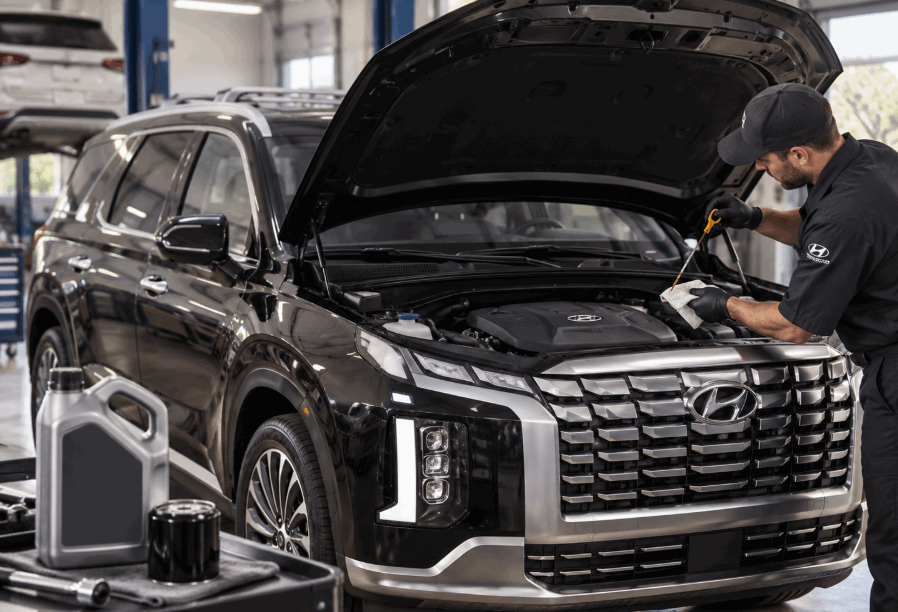
What Oil Type Does a Hyundai Palisade Take?
A Hyundai Palisade takes engine oil that matches the viscosity and performance specification for its model year and engine. Most U.S. Palisade models from 2020 through 2025 use SAE 5W 30 oil. However, the 2026 model uses different oil because Hyundai introduced new powertrains.
The oil specification matters as much as the viscosity. Therefore, a bottle labeled 5W 30 does not automatically meet Hyundai’s requirements. Earlier Palisade manuals specify ACEA A5 or an approved alternative. In addition, newer manuals place more emphasis on full synthetic oil and current API, ILSAC, or ACEA standards.
The 2026 Palisade requires different oil for each powertrain. For example, the gasoline model uses SAE 0W 20 oil with API SN PLUS, API SP, or ILSAC GF 6 performance. Hyundai also requires full synthetic oil for this engine. By contrast, the 2026 Palisade Hybrid uses SAE 0W 30 with the same API or ILSAC performance level.
Therefore, owners should identify the model year and engine before buying oil. This step reduces the risk of choosing the wrong viscosity or specification. As a result, the engine receives the correct lubrication and protection under normal operating conditions.
What Is the Hyundai Palisade Oil Type by Model Year?
The Hyundai Palisade oil type changed significantly for the 2026 model year. Models from 2020 through 2025 use a 3.8 liter GDI V6 in the U.S. market. These models recommend SAE 5W 30 oil. Their drain and refill capacity is about 6.5 liters. However, Hyundai introduced new gasoline and hybrid powertrains for 2026.
| Model Year | Engine | Recommended Oil | Oil Specification | Oil Capacity |
|---|---|---|---|---|
| 2020 | 3.8L GDI V6 | SAE 5W 30 | ACEA A5 or above | 6.5 L or 6.87 US qt |
| 2021 | 3.8L GDI V6 | SAE 5W 30 | ACEA A5 or above | 6.5 L or 6.87 US qt |
| 2022 | 3.8L GDI V6 | SAE 5W 30 | ACEA A5 or above | 6.5 L or about 6.87 US qt |
| 2023 | 3.8L GDI V6 | SAE 5W 30 | API Latest, ILSAC Latest, or ACEA A5/B5 full synthetic | 6.5 L or 6.86 US qt |
| 2024 | 3.8L GDI V6 | SAE 5W 30 | API Latest, ILSAC Latest, or ACEA A5/B5 full synthetic | 6.5 L or 6.86 US qt |
| 2025 | 3.8L GDI V6 | SAE 5W 30 | API Latest, ILSAC Latest, or ACEA A5/B5 full synthetic | 6.5 L or 6.86 US qt |
| 2026 | 3.5L GDI gasoline | SAE 0W 20 | API SN PLUS, API SP, or ILSAC GF 6 full synthetic | 5.8 L or 6.13 US qt |
| 2026 Hybrid | 2.5L T GDI HEV | SAE 0W 30 | API SN PLUS, API SP, or ILSAC GF 6 | 5.8 L or 6.13 US qt |
The 2020, 2021, and 2022 manuals recommend SAE 5W 30 and ACEA A5 or above. However, Hyundai also lists alternatives when ACEA A5 oil is unavailable. For example, the applicable manual may allow specific API or ILSAC classifications.
Similarly, the 2023 through 2025 models still use SAE 5W 30. Their oil capacity also remains about 6.5 liters. However, Hyundai changes the wording of the oil requirement in these manuals. In particular, Hyundai specifies full synthetic oil that meets the listed API, ILSAC, or ACEA standard.
By contrast, the 2026 model introduces the largest change in the Palisade oil chart. The standard 3.5 liter gasoline engine uses SAE 0W 20. Meanwhile, the 2.5 liter turbo hybrid uses SAE 0W 30. Both engines hold about 5.8 liters during a normal drain and refill.
Therefore, owners should not assume that one oil works for every Hyundai Palisade. Instead, they should match the oil to the exact model year and engine. In addition, owners outside the United States should check their regional manual because Hyundai offers different engines in some markets.
What Oil Viscosity Does a Hyundai Palisade Need?
The Hyundai Palisade needs SAE 5W-30, 0W-20, or 0W-30 oil, depending on its model year and engine. Most U.S. models from 2020 through 2025 use SAE 5W-30. However, Hyundai changed the viscosity requirements for the redesigned 2026 Palisade. The 2026 gasoline model uses SAE 0W-20. Meanwhile, the 2026 Palisade Hybrid uses SAE 0W-30.
SAE viscosity describes how engine oil flows at different temperatures. For example, the first number describes oil behavior at lower temperatures. The letter W refers to winter performance. In contrast, the second number represents viscosity when the engine reaches operating temperature. Therefore, 0W-20 flows more easily during a cold start than 5W-30 under comparable conditions.
Oil viscosity directly affects engine operation. Lower viscosity oil can reduce internal resistance and support fuel economy. In addition, it can circulate faster when the engine starts in cold weather. Higher viscosity oil provides a thicker lubricating film at higher temperatures. However, this does not mean that thicker oil always provides better protection.
Hyundai specifically warns against using a viscosity outside its recommendation. The company explains that viscosity affects fuel economy, cold weather starting, and engine lubrication. Therefore, owners should follow the grade specified for their exact Palisade. Climate alone should not justify switching to an unapproved viscosity.
For example, a 2025 Palisade owner should use SAE 5W-30 according to Hyundai’s U.S. specification. By contrast, a 2026 gasoline Palisade owner should use SAE 0W-20. A 2026 Hybrid owner should use SAE 0W-30 instead. As a result, checking the model year prevents a simple but important oil selection mistake.
How Much Oil Does a Hyundai Palisade Take?
A Hyundai Palisade takes about 5.8 to 6.5 liters of engine oil during a drain and refill, depending on the model year. The 2025 Palisade holds 6.5 liters, or 6.86 US quarts. However, the 2026 gasoline model holds 5.8 liters, or 6.13 US quarts. The 2026 Palisade Hybrid also uses a 5.8 liter drain and refill capacity.
Oil capacity refers to the amount required for the specified service procedure. Therefore, owners should distinguish drain and refill capacity from total system capacity. Hyundai specifically identifies these newer figures as drain and refill quantities. This distinction matters because some oil can remain inside the lubrication system during routine service.
For example, the 2025 Palisade combines SAE 5W-30 with a 6.5 liter capacity. In contrast, the 2026 gasoline Palisade combines SAE 0W-20 with a 5.8 liter capacity. The 2026 Hybrid also holds 5.8 liters but uses SAE 0W-30. Therefore, oil quantity alone cannot identify the correct oil for the vehicle.
Owners should also verify the oil level after completing an oil change. First, add the specified amount for the engine. Then, check the dipstick according to Hyundai’s procedure. If the level remains below the full mark, add oil gradually. However, owners should avoid filling beyond the full mark because excess oil can interfere with proper engine operation.
Finally, the owner’s manual should remain the primary reference for oil capacity. Regional versions of the Palisade can use different engines and specifications. Therefore, owners should confirm the market, model year, and engine before purchasing the full oil change quantity.
Does a Hyundai Palisade Require Full Synthetic Oil?
Hyundai recommends or requires full synthetic oil for newer Palisade models, depending on the model year and engine. For the 2025 Palisade, Hyundai specifies SAE 5W-30 oil and calls for a full synthetic grade that meets the listed performance standard. However, Hyundai also explains what owners must do if they use a lower grade oil. In that case, they must follow the severe maintenance schedule for both the engine oil and oil filter.
The 2026 Palisade follows a similar requirement. Hyundai specifies SAE 0W-20 for the gasoline engine. In addition, the oil must meet API SN PLUS, API SP, or ILSAC GF-6. Hyundai identifies full synthetic oil as the required grade for this engine. Therefore, owners should choose a full synthetic product that meets both the viscosity and performance requirements.
The 2026 Palisade Hybrid also requires full synthetic engine oil. However, it uses SAE 0W-30 instead of SAE 0W-20. Hyundai specifies API SN PLUS or above and also lists API SP or ILSAC GF-6. As a result, owners cannot choose the correct oil by looking at the synthetic label alone. They must also confirm the correct viscosity and certification.
Full synthetic oil offers more consistent performance across a wider temperature range. It also resists oxidation and viscosity breakdown better than basic mineral oil. However, these general benefits do not replace Hyundai’s technical requirements. A synthetic oil with the wrong viscosity or specification remains the wrong choice for the engine.
Therefore, owners should use three criteria when selecting Palisade engine oil. First, match the SAE viscosity to the engine. Next, confirm the required API, ILSAC, or ACEA standard. Finally, choose the required oil grade stated in the owner’s manual. This process gives the engine the lubrication properties Hyundai designed it to use.
What Oil Specification Does a Hyundai Palisade Require?
The Hyundai Palisade requires an oil specification that matches its model year and engine, not just the correct SAE viscosity. Depending on the vehicle, Hyundai references ACEA, API, or ILSAC performance standards. These classifications define oil performance in areas such as wear protection, deposit control, oxidation resistance, and fuel economy.
For example, the 2025 U.S. Palisade uses SAE 5W-30. Hyundai lists ACEA A5 or above in its lubricant table. In addition, the manual states that the engine requires a full synthetic grade meeting the applicable API, ILSAC, or ACEA A5/B5 requirement. Therefore, an owner should verify the certification printed on the oil container before purchase.
The 2026 gasoline Palisade uses a different standard combination. Hyundai specifies SAE 0W-20 with API SN PLUS, API SP, or ILSAC GF-6. Meanwhile, the 2026 Palisade Hybrid uses SAE 0W-30 with API SN PLUS, API SP, or ILSAC GF-6. Thus, the two engines share similar performance classifications but require different viscosity grades.
SAE and API describe different properties of engine oil. SAE identifies the viscosity grade. By contrast, API identifies a performance category that reflects testing requirements for gasoline engine oils. ILSAC adds performance requirements that also address factors such as fuel economy and emission system compatibility. ACEA uses a separate European classification system for engine oil performance.
Therefore, SAE 5W-30 and API SP do not mean the same thing. The first term describes viscosity, while the second describes performance requirements. An oil bottle may display the correct viscosity but lack the specification that Hyundai requires. Consequently, owners should check both pieces of information before adding oil.
The safest selection method is straightforward. Match the model year first and then identify the engine. After that, confirm the SAE viscosity and required performance standard in the Hyundai owner’s manual. Finally, select an oil that satisfies every listed requirement. This method prevents owners from relying only on brand, price, or viscosity.
How Often Should You Change the Oil in a Hyundai Palisade?
A Hyundai Palisade generally needs an oil and filter change every 8,000 miles or 12 months under normal driving conditions. Hyundai uses whichever limit comes first. This interval applies to the 2025 Palisade and also appears in the 2026 gasoline and hybrid maintenance schedules.
However, driving conditions can shorten the interval. Hyundai recommends an oil and filter change every 5,000 miles or 6 months under severe usage conditions. Therefore, owners should not rely only on annual mileage when planning maintenance.
Severe driving includes several common situations. For example, repeated trips shorter than 5 miles count as severe use in normal temperatures. Extensive idling also qualifies. In addition, Hyundai includes heavy traffic, dusty roads, mountain driving, towing, and frequent stop and go driving. Therefore, a Palisade used mainly for short city trips may need oil changes more often than one used for steady highway driving.
Using the wrong oil can also change the maintenance schedule. For example, Hyundai states that owners should follow the severe schedule when they use a lower grade oil instead of the recommended oil. Therefore, using mineral or semi synthetic oil in place of the specified full synthetic oil can require more frequent service.
The 2026 Palisade also uses an Oil Life Management System. This system estimates oil life from the driver’s operating history. As a result, it can alert the driver when an oil change becomes necessary. However, owners should still follow Hyundai’s maintenance schedule and use the correct engine oil specification.
Therefore, the correct oil change interval depends on how the vehicle operates. Use 8,000 miles or 12 months for normal service when the applicable Hyundai schedule allows it. Use 5,000 miles or 6 months when the vehicle regularly operates under severe conditions. In addition, always follow the schedule for the exact model year and market.
Can You Use 5W-30 Instead of 0W-20 or 0W-30 in a Hyundai Palisade?
You should not replace 0W-20 or 0W-30 with 5W-30 unless Hyundai approves that viscosity for your specific engine and operating temperature. The three grades have different flow characteristics. Therefore, the correct choice depends on the engine design and Hyundai’s viscosity recommendation.
For example, the 2025 Palisade uses SAE 5W-30. However, the 2026 gasoline Palisade uses SAE 0W-20. Meanwhile, the 2026 Palisade Hybrid uses SAE 0W-30. These differences show why owners should not assume that an oil from an earlier Palisade will suit a newer model.
The first number describes low temperature viscosity. Therefore, 0W oil flows more easily during cold starts than 5W oil under comparable conditions. The second number describes viscosity at higher operating temperatures. Consequently, 0W-20 and 0W-30 do not provide the same high temperature viscosity.
A thicker oil is not automatically safer for the engine. Hyundai states that oil viscosity affects fuel economy, cold starting, and lubrication at operating temperature. In addition, Hyundai warns that using a viscosity outside its recommendation can cause engine damage. Therefore, choosing a thicker grade without checking the manual can create more risk rather than more protection.
Climate also affects oil selection, but only within Hyundai’s approved range. For example, Hyundai asks owners to consider the expected temperature before the next oil change. However, this guidance does not mean that any thicker or thinner oil becomes acceptable in extreme weather. Instead, owners should use the viscosity chart for their exact engine.
An emergency top up also differs from a complete oil change. If the oil level becomes dangerously low, restoring the correct oil level protects the engine from oil starvation. However, owners should still use an approved viscosity and specification whenever possible. They should not treat an emergency mixture as the preferred oil for the next full service.
Therefore, use 5W-30 only when Hyundai lists 5W-30 for that Palisade engine. Use 0W-20 when Hyundai specifies 0W-20. Similarly, use 0W-30 when Hyundai specifies 0W-30. Matching the model year, engine, viscosity, and oil specification provides a safer rule than choosing oil based on thickness alone.
What Happens If You Use the Wrong Oil in a Hyundai Palisade?
Using the wrong oil in a Hyundai Palisade can reduce lubrication and eventually damage the engine. The risk depends on the viscosity, oil specification, operating conditions, and driving duration. For example, oil that is too thick may circulate more slowly during a cold start. By contrast, oil that is too thin may not provide the lubrication that Hyundai designed the engine to use.
Incorrect viscosity can also affect fuel economy and cold weather performance. Hyundai states that lower viscosity oils can improve fuel economy and cold starting. However, the engine still needs adequate lubrication at higher temperatures. Therefore, Hyundai warns that using a viscosity outside its recommendation may cause engine damage.
Using oil with the wrong performance specification creates another risk. An oil may have the correct SAE grade but fail to meet Hyundai’s API, ILSAC, or ACEA requirement. As a result, the oil may not provide the expected protection against wear, deposits, and oxidation. Therefore, owners should check both viscosity and performance classification before adding oil.
A small emergency top up does not automatically mean the engine will fail. However, owners should correct the oil choice at the next appropriate service. In contrast, repeatedly running the engine with an unapproved oil increases the risk of long term problems. Hyundai also advises owners to use only lubricants that meet its specifications.
Therefore, the safest approach is to match four details before an oil change. Confirm the model year, engine, SAE viscosity, and required oil specification. This method reduces the risk of lubrication problems and avoids relying on oil brand or thickness alone.
How Do You Check the Oil Level in a Hyundai Palisade?
Check the Hyundai Palisade oil level on level ground after warming the engine and allowing the oil to return to the oil pan. Hyundai provides a specific procedure for an accurate dipstick reading. Following this process helps prevent both low oil levels and overfilling.
First, park the Palisade on level ground and select Park. Then, apply the parking brake and warm the engine until it reaches normal operating temperature. Next, turn the engine off and remove the oil filler cap and dipstick. Hyundai instructs owners to wait about 15 minutes before taking the final reading. This waiting period allows oil to drain back into the oil pan.
After waiting, wipe the dipstick clean and insert it fully. Then, remove it again and inspect the oil level. The level should remain between the L and F marks. If the oil falls below L, add the specified engine oil until the level reaches the correct range. However, do not fill the engine above the F mark.
Owners should also check the oil level regularly between services. Hyundai explains that normal engine operation consumes some oil. In addition, driving habits, climate, traffic, and oil quality can influence consumption. New engines may also consume more oil during the break in period. Hyundai states that this behavior should stabilize after about 4,000 miles.
Therefore, an oil change interval does not replace routine oil level checks. Check the level when Hyundai displays a low engine oil warning or when regular maintenance requires it. If the warning remains after adding the correct amount of oil, Hyundai recommends having the vehicle inspected.
Should You Change the Oil Filter When Changing Hyundai Palisade Oil?
You should change the Hyundai Palisade oil filter whenever the maintenance schedule calls for an engine oil change. Hyundai groups engine oil and the engine oil filter as one maintenance item. Therefore, replacing both components at the same service interval follows the manufacturer’s maintenance schedule.
For example, Hyundai lists engine oil and filter replacement every 8,000 miles or 12 months under normal conditions for the 2026 Palisade. The same interval applies to the 2026 Palisade Hybrid. However, severe operating conditions require more frequent service.
The oil filter supports the lubrication system by removing contaminants from circulating engine oil. As the filter collects debris, its ability to perform this function gradually declines. Therefore, installing fresh oil while continuing to use an old filter does not follow Hyundai’s normal oil service procedure.
Hyundai also connects oil quality with filter replacement frequency. For example, the 2026 Palisade requires API SN PLUS or above full synthetic engine oil. If an owner uses mineral or semi synthetic oil instead, Hyundai directs the owner to follow the severe maintenance schedule. As a result, both the engine oil and filter require earlier replacement.
The 2025 Palisade follows the same principle. Hyundai specifies full synthetic oil that meets the applicable API, ILSAC, or ACEA requirement. However, using a lower grade oil moves the vehicle to the severe oil and filter replacement schedule.
Therefore, owners should treat the oil and filter as one maintenance service. Replace both according to the schedule for the exact model year. In addition, use a filter that meets Hyundai’s requirements rather than choosing one based only on price or physical size.
How Do You Choose the Best Oil for a Hyundai Palisade?
Choose Hyundai Palisade engine oil by matching the model year, engine, SAE viscosity, and required performance specification. Brand should come after these four technical requirements. Therefore, the best oil is not automatically the most expensive product or the most popular brand.
Start with the model year because Hyundai changed Palisade oil requirements between generations. For example, the 2025 Palisade uses SAE 5W-30. Hyundai specifies ACEA A5 or above and requires an applicable full synthetic grade. By contrast, the 2026 gasoline Palisade uses SAE 0W-20 with API SN PLUS, API SP, or ILSAC GF-6.
Next, confirm the engine before selecting the viscosity. This step becomes especially important for the 2026 model year. The gasoline Palisade and Palisade Hybrid use different oil viscosities. Therefore, model year alone does not always identify the correct oil.
After that, check the certification printed on the oil container. A correct viscosity does not guarantee the correct performance standard. For example, two bottles can both carry an SAE 0W-20 label. However, only the product that meets Hyundai’s required API or ILSAC specification satisfies the complete requirement.
Owners should also avoid choosing a thicker oil simply because they expect better protection. Hyundai explains that viscosity affects fuel economy, cold starting, and lubrication. Therefore, an oil outside the recommended viscosity range may reduce performance or cause engine damage.
Finally, choose a reputable oil product that satisfies every required specification. For a 2025 Palisade, that means starting with the specified SAE 5W-30 requirement. For a 2026 gasoline Palisade, start with SAE 0W-20 and the required API or ILSAC classification. As a result, the specification determines whether the oil suits the engine, while the brand becomes a secondary choice.
Where Can You Find the Correct Hyundai Palisade Oil Specification?
The Hyundai owner’s manual is the primary source for the correct Hyundai Palisade oil specification. Specifically, check the Recommended Lubricants and Capacities section for your model year. This section lists the required SAE viscosity, oil performance classification, and drain and refill capacity.
First, confirm the exact model year and powertrain. This step matters because Hyundai changed the Palisade oil requirements for 2026. For example, the 2025 Palisade specifies SAE 5W-30 and a 6.5 liter capacity. By contrast, the 2026 gasoline Palisade specifies SAE 0W-20 and a 5.8 liter capacity.
The powertrain also matters within the same model year. For example, the 2026 gasoline Palisade requires SAE 0W-20. Meanwhile, the 2026 Palisade Hybrid requires SAE 0W-30. Both engines use a 5.8 liter drain and refill capacity. Therefore, checking only the year does not always identify the correct oil.
Next, compare the manual specification with the information on the oil container. For example, the 2026 gasoline model requires API SN PLUS, API SP, or ILSAC GF-6. The 2026 Hybrid uses the same performance classifications but requires SAE 0W-30. Therefore, the bottle must satisfy both the viscosity and performance requirements.
Owners should also check the maintenance section of the manual. The oil specification tells you which product to use. However, the maintenance schedule tells you when to replace the oil and filter. For example, Hyundai schedules engine oil and filter replacement every 8,000 miles or 12 months under normal conditions for the 2026 Palisade Hybrid. Severe driving conditions require more frequent service.
Finally, avoid relying on a generic oil recommendation that does not identify the exact Palisade model year and engine. Hyundai warns that poor quality lubricants or products outside its specifications can cause severe engine damage. Therefore, use the owner’s manual as the final reference and confirm that the oil container displays the required certification before purchase.