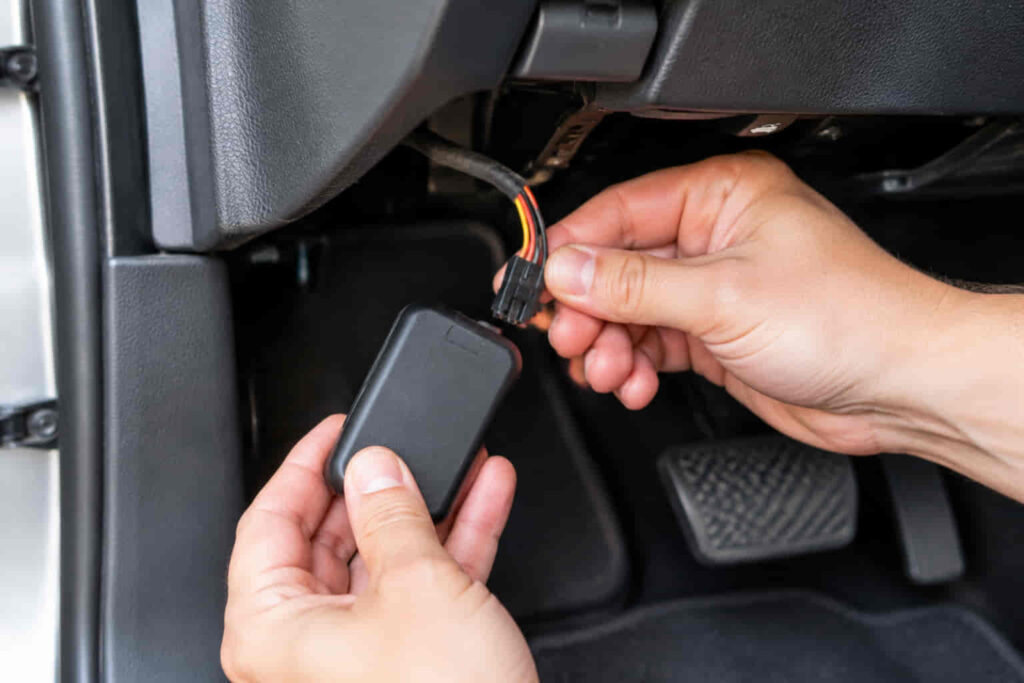
Learning how to remove a GPS tracker from a car starts with identifying the tracking device, determining how it receives power, and confirming that you are authorized to remove it. The removal method depends on whether the vehicle contains an OBD-II GPS tracker, a battery-powered tracking device, or a hardwired GPS tracker connected to the electrical system. Plug-in and standalone devices may be removable without modifying vehicle wiring, while hardwired trackers require additional precautions to prevent electrical damage.
A GPS tracker uses satellite positioning to determine its location, while many vehicle tracking systems use cellular networks to transmit that information to a monitoring platform. These devices are commonly installed for fleet management, theft recovery, vehicle financing, and personal security. However, an unfamiliar electronic module is not necessarily a GPS tracker. It may belong to the vehicle’s diagnostic system, aftermarket alarm, or another electrical accessory. Disconnecting an unidentified component can cause warning lights, electrical faults, or loss of important vehicle functions.
This guide explains how to identify different GPS tracker types, inspect accessible installation areas, and determine when removal is appropriate. It also covers vehicle electrical safety, ownership considerations, unknown tracking devices, and post-removal inspections. If you suspect unauthorized tracking, documenting the device and seeking appropriate assistance may be safer than immediately disconnecting it.
How Do You Remove a GPS Tracker From a Car Safely?
The safest way to remove a GPS tracker from a car is to verify that you are authorized to remove the device, identify its connection type, and follow the appropriate removal procedure without damaging the vehicle’s electrical system. An OBD-II tracker, a battery-powered tracker, and a hardwired GPS tracker use different installation methods. Treating all three devices the same can result in damaged connectors, electrical faults, or unintended interference with vehicle security features.
Before removing a tracking device, confirm the vehicle’s ownership status and determine who installed the equipment. A personally owned vehicle may contain an aftermarket tracker installed by a previous owner, dealership, insurance provider, or security company. Leased vehicles, financed vehicles, and company-owned vehicles may also contain tracking systems governed by contractual agreements. Removing a device without checking the applicable authorization or agreement can create legal or contractual problems, even when the tracker is physically accessible.
The next step is to identify the device and determine whether it is connected to the vehicle’s electrical system. Look for a manufacturer name, model number, identification label, or documented installation information. These details help distinguish a GPS tracker from an alarm module, diagnostic accessory, or factory-installed electronic component. A tracking device that plugs into a standard diagnostic connector presents different removal considerations from a module connected directly to the vehicle’s wiring harness.
For an authorized, removable OBD-II GPS tracker, the appropriate procedure generally involves switching off the ignition, allowing the vehicle’s electronic systems to settle, and disconnecting the device according to the manufacturer’s instructions. The connector should be handled by its housing rather than pulled by attached wires. If the tracker is secured with a locking mechanism, additional wiring, or a tamper-resistant installation, do not force it loose. These features may indicate that the device requires a specific removal procedure.
A standalone battery-powered tracker does not ordinarily require a connection to the vehicle’s electrical system. Once the device has been positively identified and removal is authorized, it may be detached from its accessible mounting location according to the manufacturer’s instructions. Care is necessary when the device is attached to painted panels, plastic trim, or other surfaces that could be damaged during removal. A tracker with a swollen, leaking, or visibly damaged battery should not be opened or handled unnecessarily.
Hardwired GPS trackers require greater caution because they may share electrical connections with other vehicle components. Some installations involve power, ground, ignition-sensing circuits, or additional vehicle-control functions. Disconnecting an unidentified wire or cutting into a wiring harness can create electrical faults or interfere with vehicle operation. A qualified automotive electrician should identify the connections and perform the removal using the appropriate wiring documentation.
After an authorized removal, inspect the affected area for loose connectors, damaged wiring, or disturbed mounting components. Check whether the vehicle starts normally and whether any new dashboard warning lights or electrical problems appear. If the vehicle behaves differently, stop further modifications and arrange a professional diagnostic inspection.
Safe GPS tracker removal is complete only when the device has been handled appropriately and the vehicle’s electrical and security systems remain functional. Identifying the installation method before attempting removal is the most important factor in avoiding unnecessary damage.
How Can You Tell What Type of GPS Tracker Is Installed in Your Car?
You can identify the type of GPS tracker installed in a car by examining its power source, connection method, manufacturer information, and relationship to the vehicle’s electrical system. The three main categories are OBD-II GPS trackers, battery-powered GPS trackers, and hardwired GPS trackers. Each category has distinct installation characteristics that determine whether removal is a straightforward disconnection or a task requiring professional electrical work.
An OBD-II GPS tracker connects through the vehicle’s onboard diagnostic port, which provides access to standardized diagnostic information and electrical power on compatible vehicles. These trackers generally use a plug-in connector and may include a compact housing containing positioning, cellular communication, and processing components. Some models also collect vehicle operating information available through the diagnostic interface. A device connected to the OBD-II port is not automatically a GPS tracker, however, because diagnostic scanners, insurance telematics devices, and other accessories may use the same connection.
A battery-powered GPS tracker operates using an internal or replaceable battery rather than drawing continuous power from the vehicle. These devices are often designed for independent operation and may use a magnetic mount, adhesive attachment, or protective enclosure. Their operating duration depends on battery capacity, reporting frequency, cellular connectivity, and power-management settings. A battery-powered tracker may continue recording or transmitting location information after being physically separated from the vehicle, provided it remains powered and has the necessary signal connectivity.
A hardwired GPS tracker receives electrical power through a connection to the vehicle’s wiring system. Depending on the installation, the device may monitor ignition status, vehicle movement, or other electrical signals. Fleet management and aftermarket security systems sometimes use hardwired equipment because it can operate without regular battery replacement. Some installations also include backup batteries or additional modules. The presence of a wiring connection does not establish that a component is a tracker, since alarm controllers, remote-start modules, and other accessories can have similar appearances.
Manufacturer labels and model numbers provide stronger identification evidence than housing shape alone. A small black electronic box with several wires is not sufficient proof of GPS tracking capability. The model number can be compared with manufacturer documentation to determine whether the device supports satellite positioning, cellular communication, vehicle diagnostics, or security functions. This verification is particularly important when the module is connected to other equipment or appears to be part of a factory-installed system.
The device’s power source also influences the risks associated with removal. A plug-in OBD-II tracker can generally be disconnected without modifying the original wiring when its installation is straightforward and removal is authorized. A battery-powered unit may be physically independent of the vehicle’s electronics. A hardwired tracker, by contrast, may require tracing and restoring electrical connections to preserve normal vehicle operation. These differences explain why identifying the tracker category must come before choosing a removal method.
The most reliable identification combines the device’s model information with its actual installation and power connections. When those details cannot be confirmed, avoid disconnecting an unfamiliar module. An automotive electrician or the device manufacturer can help establish its function before any changes are made.
Read more: rochester carburetor identification
Where Should You Look for a GPS Tracker in Your Car?
The best place to start looking for a GPS tracker in your car is the OBD-II diagnostic port, followed by accessible areas containing removable accessories or externally attached devices. The appropriate inspection method depends on whether the tracker is plugged into the vehicle, powered by its own battery, or connected directly to the electrical system. A visual inspection can identify many aftermarket devices without requiring the removal of interior panels or interference with factory-installed components.
Most passenger vehicles manufactured for the U.S. market since the 1996 model year have an OBD-II diagnostic connector. This port is generally located within the driver’s compartment, commonly beneath the dashboard near the steering column. Its primary purpose is to provide access to vehicle diagnostic information, but some GPS tracking and telematics devices also use it for power and data. An authorized vehicle owner can consult the owner’s manual to identify the correct connector and determine whether an unfamiliar accessory is attached. A device plugged into this port should be identified by its manufacturer and model number before removal because not every OBD-II accessory provides GPS tracking.
Battery-powered GPS trackers do not require a direct connection to the vehicle’s electrical system, allowing them to operate independently of the OBD-II port. Some legitimate tracking products use magnetic mounts or removable brackets, while others are placed in accessible storage areas. When inspecting a vehicle you own or are authorized to examine, begin with visible accessories and compartments that can be checked without tools. A device’s shape, magnetic attachment, or electronic enclosure does not establish that it is a tracker. Manufacturer markings and product documentation provide more reliable identification.
Hardwired GPS trackers are more difficult to identify through a basic visual inspection because their electrical connections may be integrated with aftermarket accessories or concealed behind vehicle trim. Fleet tracking equipment, vehicle recovery systems, and insurance-related telematics products may be professionally installed. An unfamiliar module near the dashboard or another electrical component could also belong to an alarm, remote-start system, or factory-installed vehicle feature. Removing interior panels to investigate an unidentified device creates additional risks, particularly around airbag wiring, electronic control modules, and other safety-related systems.
If the vehicle has an aftermarket tracking service, reviewing installation records can be more effective than searching individual compartments. Purchase documentation, fleet management records, insurance telematics agreements, and previous service invoices may identify the device manufacturer and installation method. The tracking service provider may also confirm whether the system uses an OBD-II connection, a standalone unit, or a professionally installed hardwired module. This information helps narrow the inspection without disturbing unrelated vehicle components.
An unexplained device should be documented before it is disconnected, especially when its ownership or purpose is uncertain. Record any visible manufacturer information, model number, and connection details without pulling on wiring or opening the enclosure. If there is reason to suspect unauthorized tracking, avoid unnecessary handling that could destroy evidence. A qualified automotive technician or appropriate authority can help establish the device’s identity and determine a safe next step.
A reliable GPS tracker inspection prioritizes accessible connections, manufacturer identification, and installation records over extensive vehicle disassembly. When a device cannot be identified through these methods, professional inspection is preferable to removing unknown electrical components.
What Tools Do You Need to Remove a GPS Tracker From a Car?
The tools needed to remove a GPS tracker depend on the device’s installation method, but basic identification and inspection generally require a flashlight, vehicle documentation, and the tracker’s manufacturer instructions. A straightforward plug-in or removable battery-powered tracker may not require specialized equipment. Hardwired devices, however, can require professional diagnostic tools and electrical repair procedures because their connections may affect other vehicle systems.
A flashlight provides sufficient illumination to inspect accessible connectors, labels, and mounting points without disturbing the surrounding components. Clear visibility is particularly important when examining an OBD-II accessory beneath the dashboard, where multiple wiring harnesses and electrical modules may be located close together. The objective is to identify the device and its connection, not to pull apart nearby components. A compact inspection mirror may also help read a label or connector marking in an accessible area without removing trim.
The vehicle owner’s manual is another important resource because it identifies the diagnostic port and explains precautions related to the vehicle’s electrical system. Manufacturer service documentation may provide additional information about factory-installed telematics, security equipment, and authorized accessories. These references help distinguish an aftermarket GPS tracker from a component that should remain connected. For example, an unfamiliar electronic module may be part of an approved anti-theft system rather than an independently removable tracking device.
The GPS tracker’s installation manual is especially useful when the manufacturer and model are known. It may specify whether the device uses a standard OBD-II connector, a locking attachment, a dedicated mounting bracket, or a hardwired installation. Following the documented removal procedure reduces the risk of damaging connectors or disturbing other equipment. If the manufacturer requires a release tool or an authorized service procedure, substituting improvised tools can damage the installation.
A clean, soft cloth can help protect painted or finished surfaces when handling an authorized, removable battery-powered tracker. Some mounting systems use adhesives or magnets that can collect dirt between the device and the vehicle body. Pulling a mounted device across a contaminated surface can scratch the finish. The attachment should be released according to the manufacturer’s instructions rather than forced away from the panel.
Electrical tools require more caution. A multimeter, trim removal tool, or wiring repair equipment may be appropriate for a qualified automotive electrician working from a verified installation diagram. These tools should not be used to experiment with unidentified circuits. Cutting pliers, wire strippers, and improvised probes are particularly unsuitable for removing an unknown hardwired module because they can damage insulation, create short circuits, or interfere with security and ignition-related functions.
Protective equipment and the working environment also matter. The vehicle should be parked securely, with the ignition switched off before inspecting accessible electrical accessories. Avoid working near exposed or damaged wiring, and do not handle a tracker with a swollen or leaking battery. If inspection requires removing panels near airbags, accessing high-voltage components in an electric or hybrid vehicle, or modifying factory wiring, the work should be assigned to a qualified technician.
The correct tools are those needed to identify and safely disconnect an authorized device without altering unrelated vehicle systems. For simple removable trackers, documentation and careful handling are often sufficient. For hardwired installations, accurate wiring information and professional electrical expertise are more important than an extensive collection of DIY tools.
How Do You Remove an OBD-II GPS Tracker From a Car?
To remove an OBD-II GPS tracker from a car safely, confirm that the device is an authorized removable accessory, switch off the vehicle, and disconnect it according to the manufacturer’s instructions without damaging the diagnostic connector. OBD-II trackers are generally easier to remove than hardwired tracking devices because they use an existing vehicle interface rather than requiring permanent modifications to the wiring harness. However, the connection must be identified correctly before any attempt to disconnect it.
The OBD-II port is a standardized diagnostic interface that allows compatible equipment to communicate with the vehicle’s onboard systems. In most U.S.-market passenger vehicles manufactured since the 1996 model year, the diagnostic connector is located within the driver’s compartment, commonly beneath the dashboard. Some GPS tracking devices use this port to obtain electrical power and access vehicle information. A typical plug-in tracker contains electronic components for location positioning, cellular communication, and data processing, although the available functions vary by manufacturer.
Before removal, examine the device’s visible identification markings and compare them with the manufacturer’s documentation. A module connected to the diagnostic port may be a GPS tracker, an insurance telematics device, a diagnostic adapter, or another electronic accessory. Identifying the model helps determine whether the device has a locking connector, a service agreement, or a specific disconnection procedure. If the tracker belongs to a fleet management provider, vehicle financing company, or another authorized party, confirm that removal is permitted before proceeding.
Once the device has been identified and removal is authorized, park the vehicle securely, switch off the ignition, and follow any manufacturer-specified shutdown or waiting procedure. Locate the device’s connector housing and check whether a retaining clip or locking mechanism is present. A conventional removable OBD-II accessory can generally be disconnected by releasing any applicable retention mechanism and carefully separating its connector from the vehicle’s diagnostic port. Apply controlled force to the connector housing rather than pulling on attached wires or twisting the assembly.
Some tracking systems use an OBD-II extension cable or a pass-through connector instead of attaching the tracking module directly to the diagnostic port. In these installations, the visible device may be connected to an intermediate harness or another accessory. Disconnecting the wrong component could interrupt equipment that shares the diagnostic interface. If the installation includes unfamiliar wiring, a tamper-resistant enclosure, or a connector that does not release normally, stop and consult the device manufacturer or a qualified automotive electrician.
After the authorized device has been disconnected, visually inspect the diagnostic port for bent terminals, damaged plastic, or loose mounting components. Do not insert metal objects into the connector or attempt to repair damaged terminals without appropriate training. If the device was associated with a subscription-based tracking service, physical removal may not automatically cancel the service or delete previously collected location information. Contact the service provider to address account status and data management separately.
The vehicle should then be checked for normal operation. Start it according to the manufacturer’s instructions and observe whether any new dashboard warning lights appear. A standard removable OBD-II accessory should not require cutting or modifying factory wiring, but an unusual installation may involve additional equipment. If the vehicle develops electrical or diagnostic problems after removal, a professional inspection can determine whether the issue is related to the disconnected device.
An OBD-II GPS tracker is safely removed when its authorized connector has been disconnected without damaging the diagnostic port or disturbing other vehicle electronics. The essential distinction is between a conventional plug-in accessory and an installation involving additional wiring, locks, or integrated equipment.
How Do You Remove a Battery-Powered GPS Tracker From a Car?
A battery-powered GPS tracker can generally be removed from a car by identifying the device, confirming that removal is authorized, and carefully releasing its mounting system without damaging the vehicle or the tracker’s battery. Unlike OBD-II and hardwired tracking devices, a standalone battery-powered tracker does not ordinarily rely on the vehicle’s electrical system for continuous operation. This makes physical removal less likely to affect the vehicle’s wiring, although the device’s mounting method and condition still require attention.
Battery-powered GPS trackers contain an independent power source that supports their positioning and communication functions. Many models use rechargeable lithium-ion batteries, while others use replaceable cells. Their operating duration depends on battery capacity, reporting intervals, cellular signal conditions, and power-saving features. Some devices transmit location updates at scheduled intervals rather than continuously. As a result, a battery-powered tracker may continue operating after it has been separated from the vehicle.
The first consideration is positive device identification. A small electronic enclosure attached to a vehicle is not necessarily a GPS tracker. It may be an accessory, sensor, or another battery-powered component. Examine any accessible manufacturer label, model number, or product marking and compare it with reliable documentation. If the device is unfamiliar and there is reason to suspect unauthorized tracking, photograph its condition and location before moving it, provided doing so is safe. Preserving this information may be important if the situation requires investigation.
Standalone trackers may be attached using magnets, adhesive pads, mounting brackets, or protective cases. The removal method should match the attachment system rather than relying on force. A magnetic enclosure can collect dirt or metallic particles against a painted surface, creating a risk of scratches if it is dragged across the panel. Adhesive-mounted devices may also damage paint or interior trim if pulled away abruptly. Follow the manufacturer’s release instructions and avoid prying against finished surfaces with metal tools.
A removable tracker secured inside an accessible storage area may require little more than releasing its approved bracket or holder. However, if the device is mounted near wiring, vehicle safety components, or inaccessible mechanical assemblies, do not remove surrounding parts simply to reach it. Professional assistance is appropriate when access requires lifting the vehicle, removing protective panels, or working close to moving components.
Battery condition is another important safety factor. A tracker with a swollen battery, leaking fluid, unusual heat, or visible physical damage should not be opened, punctured, crushed, or charged. Lithium-based batteries can present fire and chemical hazards when damaged. If the device appears unsafe, avoid further handling and seek guidance from an appropriate battery-handling or automotive professional. An intact device should be handled according to the manufacturer’s instructions, particularly if it contains a rechargeable battery.
Removing a battery-powered GPS tracker from the vehicle does not necessarily erase its stored information or terminate an associated monitoring account. Depending on the model, the device may retain location history internally or continue transmitting its own location while powered. Historical tracking records may also remain on a remote service platform. Vehicle owners seeking to manage their privacy should therefore distinguish physical removal from account cancellation and data deletion.
After removal, inspect the mounting area for scratches, adhesive residue, damaged trim, or disturbed components. If the tracker was attached to an exterior painted surface, clean the area using products compatible with the vehicle’s finish. Avoid aggressive scraping or solvents that could damage paint or protective coatings. When the device belongs to an authorized service provider, arrange its return, storage, or disposal according to the applicable agreement.
Battery-powered GPS tracker removal is complete when the device has been safely detached without damaging its battery, mounting surface, or nearby vehicle components. Because standalone trackers can continue operating independently, physical removal and management of the associated tracking service should be treated as separate issues.
How Should a Hardwired GPS Tracker Be Removed From a Car?
A hardwired GPS tracker should be removed by a qualified automotive electrician who can identify its electrical connections, disconnect the device safely, and restore the vehicle’s wiring to its intended condition. Unlike an OBD-II plug-in tracker or a standalone battery-powered device, a hardwired GPS tracker receives power through connections to the vehicle’s electrical system. Removing it without understanding those connections can cause short circuits, damaged wiring, electrical faults, or interference with security and ignition-related functions.
Hardwired tracking systems commonly use connections for constant battery power, ground, and ignition status. Depending on the device and installation, additional circuits may support vehicle diagnostics, alarm integration, or other authorized fleet management functions. Some systems also contain backup batteries that allow the tracker to continue operating temporarily when external power is unavailable. These differences mean that identifying a tracking module does not automatically reveal which wires can be safely disconnected.
The first requirement is to establish the device’s identity and installation history. A manufacturer label, model number, installation invoice, or service agreement can help determine how the tracker was originally connected. This information is particularly important when the device was installed by a dealership, fleet management provider, vehicle recovery company, or aftermarket security specialist. Some installations involve additional modules or shared electrical connections, so removing only the visible tracker may not address the complete system.
A qualified technician should compare the installation documentation with the vehicle’s electrical information before performing any disconnection. Automotive wiring harnesses contain circuits serving numerous components, including lighting, electronic control modules, security equipment, and vehicle communication networks. Wire color alone is not a reliable method of identifying a circuit because manufacturers and aftermarket installers may use different conventions. Cutting an unfamiliar wire can interrupt a necessary connection or create an electrical hazard.
The technician must also account for the tracker’s relationship with other installed equipment. For example, an aftermarket tracking system may be integrated with a vehicle alarm or an authorized immobilization feature. Removing the module without restoring the affected circuits can prevent normal starting or produce security-system faults. The appropriate removal procedure therefore involves more than separating the tracking unit from its power supply. It requires confirming that the vehicle’s original electrical functions remain intact.
Electrical safety is especially important in modern vehicles. Sensitive electronic control modules can be damaged by incorrect electrical testing, while supplemental restraint systems contain wiring and components that require specific handling procedures. Hybrid and electric vehicles introduce additional precautions because high-voltage systems must not be approached using ordinary accessory-removal methods. A professional should follow the vehicle manufacturer’s service procedures and use suitable diagnostic equipment when necessary.
After the authorized removal, the technician should inspect the affected wiring for damaged insulation, loose connections, inappropriate splices, and other installation-related defects. Any required repairs should follow accepted automotive electrical practices and the vehicle manufacturer’s requirements. The technician should then verify that relevant electrical functions operate normally and investigate any diagnostic trouble codes associated with the work.
The safest hardwired GPS tracker removal restores the vehicle to a properly functioning electrical configuration without leaving disconnected circuits or damaged wiring. Because the installation may involve security equipment and other integrated systems, professional removal is preferable to cutting wires or experimenting with unidentified connections.
Can Removing a GPS Tracker Damage Your Car?
Yes, removing a GPS tracker can damage your car if the device is connected to electrical circuits, secured to sensitive components, or integrated with another vehicle system. The level of risk depends primarily on the tracker’s installation method. A conventional removable OBD-II accessory generally presents less electrical risk than a hardwired tracker, while a battery-powered device can create mechanical or surface damage if its mounting system is handled incorrectly.
Electrical damage is the most significant concern with hardwired GPS tracking systems. These devices may share power, ground, or signal connections with other vehicle electronics. Improper disconnection can damage connectors, interrupt electrical continuity, or create short circuits. In some installations, the tracking equipment is associated with an aftermarket alarm or immobilization system. Removing an interconnected component without restoring the original wiring can affect vehicle starting or other security-related functions.
OBD-II trackers present a different set of risks. A standard plug-in device can generally be disconnected without changing factory wiring, provided removal is authorized and the connector is handled correctly. However, pulling on an attached cable, forcing a locked connector, or twisting the device can damage the diagnostic port. Bent terminals or a loose connector may interfere with future diagnostic equipment. If an OBD-II tracking installation includes an extension harness or additional electronics, the removal procedure may be more complicated than disconnecting a single plug.
Battery-powered trackers are less likely to interfere with the vehicle’s electrical system because they operate independently. Their main removal risks involve mounting surfaces and battery safety. Magnetic attachments can trap abrasive particles against painted body panels, while adhesive mounts may leave residue or damage finishes when pulled away forcefully. A physically damaged lithium-ion battery can also create a fire hazard. These risks explain why even an electrically independent tracker should be handled according to its mounting and battery instructions.
Another concern is the loss of functions associated with an authorized tracking service. Some GPS systems support theft recovery, fleet management, vehicle usage reporting, or insurance telematics programs. Removing the device may interrupt those services even when the vehicle continues operating normally. The consequences depend on the equipment and service agreement. For example, disconnecting an insurance telematics device may stop data collection required by a particular program, while removing a fleet tracker may affect the vehicle’s management records.
Dashboard warning lights and diagnostic trouble codes can also appear after an improper removal, particularly when an installation has disturbed vehicle wiring or connected modules. A warning light does not necessarily prove that the tracker caused the problem, but a new electrical fault following removal should be investigated. A technician can inspect the affected connections and use appropriate diagnostic equipment to determine whether the issue is related to the removal or an unrelated vehicle condition.
Modern vehicles may contain factory-installed telematics modules that are integrated with emergency assistance, connected services, or security features. These systems should not be treated as ordinary aftermarket GPS trackers. Removing an unidentified factory module can disable functions beyond location reporting and may create faults in interconnected electronic systems. Manufacturer documentation and professional diagnosis are necessary before making changes to integrated equipment.
The risk of vehicle damage increases when GPS tracker removal involves unidentified wiring, integrated electronics, or forceful disconnection. Proper identification, authorization, manufacturer documentation, and professional electrical work reduce these risks. When the installation method is uncertain, preserving the vehicle’s original electrical configuration should take priority over immediate device removal.
What Should You Do if You Find an Unknown GPS Tracker in Your Car?
If you find an unknown GPS tracker in your car, document the device, verify its identity, and determine whether it was installed with authorization before attempting removal. An unfamiliar tracking device may be associated with a previous owner, an aftermarket security system, an insurance program, or unauthorized surveillance. Its presence alone does not establish who installed it or why. Identifying the equipment and its installation context is necessary to protect both vehicle safety and any evidence relevant to a privacy concern.
Start by recording the device’s visible condition and location without disturbing its connections. Photographs can preserve details such as the mounting arrangement, manufacturer label, model number, and any visible identification markings. These details may help a technician, tracking service provider, or appropriate authority determine the device’s purpose. Avoid opening the enclosure, cutting attached wires, or forcing the device away from its mounting point. Unnecessary handling can damage the vehicle, alter the device’s condition, or compromise information that may be useful during an investigation.
Next, establish whether the device belongs to an authorized vehicle service. Review available purchase records, aftermarket installation invoices, insurance agreements, and vehicle security documentation. If you recently purchased a used car, a tracker may have been left behind after a previous service ended. A dealership-installed recovery system or an aftermarket alarm module may also resemble a standalone tracking device. Matching the model number with manufacturer documentation provides stronger evidence of the device’s function than relying on its appearance.
If the device cannot be linked to a legitimate installation and you suspect unauthorized tracking, consider your personal safety before deciding what to do with it. An unknown tracker may raise concerns about stalking, harassment, or unwanted location monitoring. If you believe someone is following you or you are in immediate danger, contact emergency services or local law enforcement as appropriate. A trusted person, victim-support organization, or qualified investigator may also help you assess the situation. Removing or disabling a tracker immediately is not always the safest response, particularly if doing so could alert someone who is monitoring it.
The device’s installation method also determines whether physical removal is appropriate. A removable battery-powered tracker may be independent of the vehicle’s electronics, while an unfamiliar hardwired module could be connected to security equipment or other electrical circuits. A qualified automotive electrician can inspect an uncertain installation and identify the equipment without making unnecessary changes to the wiring. If the tracker may be evidence of unauthorized surveillance, explain that concern before any work begins so the device and its installation details can be documented appropriately.
Physical removal does not guarantee that all location-related information has been eliminated. Some tracking systems retain historical data on remote servers, and certain devices can continue transmitting their own location while powered. A vehicle may also contain separate factory telematics services or connected applications that provide location features. These systems should be evaluated independently rather than assuming that finding one tracker explains every source of vehicle location data.
The appropriate response to an unknown GPS tracker combines device identification, evidence preservation, personal safety, and professional assistance when necessary. Confirming the installation’s purpose before altering the equipment helps avoid electrical damage and supports a more informed response to potential privacy violations.
Is It Legal to Remove a GPS Tracker From Your Car?
Whether it is legal to remove a GPS tracker from a car depends on vehicle ownership, the authority of the person removing it, the installation agreement, and the laws that apply in the relevant jurisdiction. Owning or regularly driving a vehicle does not automatically resolve every question about tracking equipment installed in it. A GPS tracker may belong to the vehicle owner, a service provider, an employer, or another party with contractual rights concerning the equipment.
For a privately owned vehicle, the owner generally has greater control over removable aftermarket accessories than a person using a vehicle under a lease or employment arrangement. However, ownership of the car does not necessarily establish ownership of every installed device. A tracker provided under an insurance, financing, or security agreement may remain the property of the service provider. Before removing such equipment, review the relevant terms to determine whether the device must be returned, whether professional removal is required, and whether disconnection affects an active service.
Financed vehicles require particular attention to the financing agreement and applicable law. Some vehicle financing arrangements involve GPS tracking or vehicle recovery technology, although the permitted uses and installation practices vary by jurisdiction. Removing a tracker in violation of an enforceable agreement may create contractual consequences. The presence of a financing agreement also does not mean that every form of tracking or monitoring is automatically lawful. The legality of installation, disclosure, consent, and use must be assessed under the rules that apply to the specific circumstances.
Leased and company-owned vehicles present different ownership considerations. A leasing company or employer may authorize tracking for vehicle recovery, fleet operations, maintenance planning, or other business purposes, subject to applicable privacy and employment laws. A driver who is not the vehicle owner may lack authority to remove company-owned tracking equipment. Disconnecting a fleet tracker without permission can also interfere with business operations or breach an employment or vehicle-use agreement.
Unauthorized tracking raises a separate legal issue. Laws governing electronic surveillance, stalking, harassment, and location-data collection vary across U.S. states and other jurisdictions. A device installed without appropriate permission may violate applicable law, but determining whether a particular installation is unlawful requires facts about the parties involved, the vehicle’s ownership, the purpose of tracking, and the relevant legal rules. Finding an unfamiliar GPS tracker is therefore a reason to investigate, not sufficient evidence by itself to establish a legal violation.
The method of removal can also have legal and practical consequences. Damaging equipment that belongs to another party, destroying potential evidence, or modifying a vehicle without authorization may create additional disputes. If a tracker appears to have been installed unlawfully, documenting its condition and seeking advice from law enforcement or a qualified legal professional may be more appropriate than immediately destroying or discarding it. A technician can assist with safe removal when the device is connected to the vehicle’s electrical system.
The safest legal approach is to confirm your authority to remove the tracker, review any applicable agreement, and seek jurisdiction-specific advice when ownership or surveillance rights are disputed. This distinction protects the vehicle from unnecessary damage while recognizing that the legality of GPS tracking and the legality of device removal are separate questions.
How Do You Check Your Car After Removing a GPS Tracker?
After removing a GPS tracker from your car, check the affected connection, dashboard warning lights, electrical accessories, and normal vehicle operation to confirm that the removal has not caused a fault. The inspection should match the type of tracking device removed. An OBD-II tracker requires attention to the diagnostic connector, a battery-powered tracker requires inspection of its mounting surface, and a hardwired tracker requires verification of the electrical connections restored during professional removal.
Begin with a visual inspection of the area where the tracking device was installed. If an authorized OBD-II tracker was disconnected, examine the diagnostic port for cracked plastic, bent terminals, or a loose connector housing. The port should remain securely mounted and accessible for future diagnostic work. Do not insert tools into its terminals or attempt to straighten damaged contacts without appropriate training. A damaged OBD-II connector can interfere with diagnostic equipment even when the vehicle appears to operate normally.
For a battery-powered tracker, inspect the attachment area for adhesive residue, scratches, damaged trim, or loose mounting hardware. A magnetic device may leave surface marks if dirt or metallic particles were trapped beneath its enclosure. Clean the affected area using products compatible with the vehicle’s paint or interior materials. If the device was mounted near mechanical components, verify that no bracket, fastener, or protective cover was disturbed during removal.
A hardwired GPS tracker requires a more comprehensive electrical inspection. A qualified automotive electrician should confirm that disconnected circuits have been properly restored, connections are secure, and exposed conductors are appropriately insulated. The technician should also verify that the removal has not affected any integrated alarm, ignition-monitoring, or vehicle security functions. An installation that included aftermarket wiring may require inspection beyond the original location of the tracking module.
Once the physical inspection is complete, start the vehicle according to the manufacturer’s instructions and observe the instrument cluster. Check for new warning lights, unusual electrical behavior, or messages associated with vehicle security and electronic systems. Confirm that relevant functions, such as the headlights, power accessories, and other equipment near the affected installation, operate normally. A new warning light does not automatically establish that the tracker removal caused a fault, but its appearance warrants investigation.
If an electrical problem appears after removal, avoid repeatedly disconnecting nearby components in an attempt to identify the cause. A technician can use appropriate diagnostic equipment to retrieve fault information and examine the affected circuits. Diagnostic trouble codes must be interpreted alongside the vehicle’s symptoms and service information because a stored code may predate the tracker removal or relate to an unrelated condition.
The final check concerns the tracking service itself. Disconnecting a device does not necessarily cancel a subscription, close an account, or remove previously stored location records. If the tracker was part of an authorized insurance, fleet management, or vehicle security service, contact the provider to confirm the account’s status and any required equipment return. This administrative step is separate from confirming that the vehicle operates correctly.
A successful GPS tracker removal leaves the vehicle’s electrical connections, safety features, and normal operating functions intact. When the device was hardwired or its installation was uncertain, professional inspection provides greater assurance than a visual check alone.
Can a GPS Tracker Still Track Your Car After It Is Removed?
A GPS tracker that has been completely removed from a car generally cannot continue reporting that vehicle’s current location unless it remains with the vehicle or another connected tracking system is providing location data. However, physical removal does not automatically stop every form of location monitoring associated with the vehicle. The result depends on the device’s power source, whether it remains near the car, and whether separate telematics systems or connected services are active.
A GPS tracking device typically determines its position using satellite navigation signals and communicates location information through a cellular or another supported data connection. When a plug-in or hardwired tracker is removed from its vehicle power source, it may stop operating if it has no independent battery. Some devices include backup batteries, however, and can continue functioning for a limited period after external power is disconnected. Their remaining operating time depends on battery capacity, device settings, and communication activity.
Battery-powered trackers behave differently because their operation does not depend on the vehicle’s electrical system. A standalone device can continue determining and transmitting its own location after being detached from the car, provided it has sufficient power and connectivity. That location no longer represents the vehicle’s position if the device has been separated from it. For example, a tracker placed in a secure storage location may continue reporting the location of that storage area rather than the car it previously accompanied.
Historical location data is another important distinction. Many GPS tracking services transmit position records to remote servers, where information may remain available after the physical device is removed. Depending on the provider, stored records may include previous routes, timestamps, parking locations, and trip information. Removing the hardware does not necessarily delete those records. Access, retention, and deletion policies depend on the service provider, applicable agreements, and relevant privacy laws.
A vehicle may also contain more than one location-enabled system. Modern connected vehicles can include factory-installed telematics modules that support emergency assistance, navigation, theft recovery, remote vehicle functions, or manufacturer applications. Removing an aftermarket GPS tracker does not automatically disable these separate services. Similarly, a smartphone connected to the vehicle may collect location information through its own applications and account settings, independently of any tracking device installed in the car.
If the goal is to manage authorized vehicle location sharing, review the relevant connected-vehicle accounts, tracking subscriptions, and application permissions. Manufacturer documentation can clarify which features use vehicle location information and what privacy controls are available. For a previously installed aftermarket tracker, the service provider can explain whether the associated account remains active and how stored data is handled. When unauthorized tracking is suspected, consider preserving evidence and seeking appropriate assistance before changing accounts or equipment.
Removing one GPS tracker stops that device from accompanying the vehicle, but it does not erase historical tracking records or deactivate independent location services. A complete assessment of vehicle location privacy must distinguish the physical tracking hardware, its associated monitoring account, and other systems capable of collecting location information.
When Should You Hire a Professional to Remove a GPS Tracker?
You should hire a professional to remove a GPS tracker when the device is hardwired, its electrical connections are unclear, or removing it could affect the vehicle’s security, ignition, or electronic systems. A qualified automotive electrician can identify the tracking equipment, examine its installation, and determine the appropriate removal procedure without unnecessarily disturbing factory wiring. Professional assistance is especially important when the tracker cannot be disconnected through a standard removable connector.
Hardwired GPS trackers present the clearest reason to seek professional service. These devices may share electrical circuits with ignition-monitoring equipment, aftermarket alarms, or vehicle security systems. Some installations also contain additional modules or backup power sources. Disconnecting the visible tracking unit without understanding the complete installation can leave damaged wiring, interrupted circuits, or malfunctioning accessories. A technician can use the manufacturer’s installation documentation and vehicle-specific electrical information to assess these connections.
Professional inspection is also appropriate when an unfamiliar electronic module cannot be positively identified. GPS trackers, remote-start controllers, alarm modules, and other aftermarket accessories may have similar housings and wiring arrangements. Removing a component based on appearance alone can disable equipment unrelated to location tracking. A technician can examine manufacturer markings, installation records, and the surrounding electrical connections to establish the device’s function before making changes.
Vehicle symptoms provide another reason to request professional assistance. If a tracker appears connected to a system associated with starting problems, dashboard warning lights, or electrical faults, avoid disconnecting additional components. An automotive diagnostic specialist can investigate the underlying problem and determine whether the tracking installation is involved. This approach reduces the risk of introducing new faults while attempting to correct an existing issue.
A professional may also be necessary when the tracking device belongs to a fleet operator, dealership, insurance provider, or vehicle recovery service. These installations may require authorized removal, equipment return, or confirmation that the associated service has been discontinued. If an unknown device raises concerns about unauthorized tracking, choose an inspection provider who can document the installation carefully and preserve relevant evidence when appropriate.
The deciding factor is whether the tracker can be positively identified and safely removed without altering the vehicle’s electrical or safety systems. For an authorized, straightforward plug-in accessory, manufacturer instructions may be sufficient. For hardwired, integrated, damaged, or unidentified equipment, professional removal provides the safer path and helps preserve normal vehicle operation.