Bug splatter can be removed from the front of a car without damaging the paint by softening the insect residue first, using a paint-safe cleaner, wiping it gently with clean microfiber, and rinsing the surface thoroughly. Avoid scrubbing dried bugs directly because trapped dirt and hardened residue can increase friction against the clear coat.
Start by parking the car out of direct sunlight and rinsing the bumper, hood, grille, headlights, and other affected areas with water. Fresh bug residue may come off during a normal wash with automotive shampoo. Dried or stubborn remains need more dwell time with water or a dedicated bug remover before they are wiped away. If residue remains after the first treatment, soften and clean the area again rather than applying more pressure.
The safest method also depends on where the bugs are stuck. Painted bumpers and hoods have different cleaning requirements from glass, plastic headlight lenses, and grille components. This guide explains how to remove fresh and dried bugs from the front of a car, which cleaning products and tools to use, what can scratch or damage the paint, and how wax, ceramic coatings, and paint protection film can make future cleaning easier.
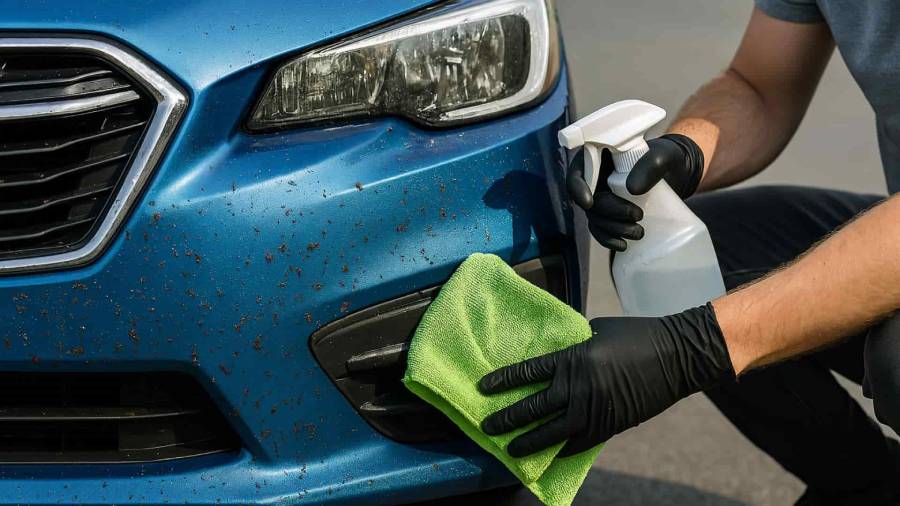
How Do You Get Bugs Off the Front of a Car Without Damaging the Paint?
You can get bugs off the front of a car without damaging the paint by rinsing away loose dirt, softening the bug residue, cleaning it with a paint-safe product, and wiping with clean microfiber instead of scrubbing. The key is to reduce friction between the insect remains and the clear coat. Trying to remove dried bugs with pressure increases the chance that dirt trapped on the surface will create fine scratches.
There are 6 steps to remove bugs safely from the front of a car.
- Park the car out of direct sunlight. Work on a cool surface so water and cleaning products do not dry before you can rinse them away. A hot hood or bumper also reduces the time available for a cleaner to soften stubborn residue.
- Rinse loose dirt from the front of the car. Use water to remove dust, sand, and loose insect remains from the bumper, hood, grille, headlights, and windshield. Removing these particles before touching the paint reduces the amount of abrasive contamination between the towel and clear coat.
- Soften the remaining bug residue. Apply water, car shampoo, or a dedicated bug remover according to the product instructions. Allow enough contact time for the residue to soften, but do not let the cleaner dry on the surface.
- Gently wipe away the softened bugs. Use a clean microfiber towel or wash mitt with light pressure. Move across the affected area rather than repeatedly scrubbing one spot. Apply another round of cleaner if the residue does not release easily.
- Wash and rinse the treated surfaces. Wash the area with an automotive shampoo to remove loosened insect material and cleaning-product residue. Rinse thoroughly so no cleaner remains around grille openings, panel gaps, badges, or trim.
- Dry and inspect the paint. Dry the front of the vehicle with a clean microfiber drying towel and check the surface under good lighting. Treat remaining spots again instead of trying to scrape or scrub them away.
This process follows a simple sequence: remove loose contamination → soften bonded residue → minimize mechanical contact → rinse the surface clean. The same principle applies whether bugs are stuck to the hood, painted bumper, or other clear-coated panels.
How Do You Remove Dried Bugs From Car Paint?
Remove dried bugs from car paint by giving the residue more time to soften rather than using more scrubbing force. Dried insect remains adhere more firmly to the surface than fresh splatter, so a normal rinse may not remove them completely. Rehydrating and loosening the residue reduces the amount of physical agitation needed to separate it from the paint.
Start by rinsing the affected panel to remove loose contamination. Apply a dedicated automotive bug remover or another product specifically labeled as suitable for the surface being cleaned. Keep the treated area within the product manufacturer’s specified dwell time and rinse it before the cleaner dries. Product instructions take priority because formulas differ in concentration, application method, and surface compatibility.
Treat stubborn spots a second time if residue remains after the first wash. Repeat chemical softening before increasing mechanical pressure. For example, a bug spot that remains on the hood after one treatment should receive another application and gentle microfiber contact rather than aggressive rubbing with a dry towel.
Dried residue should also be distinguished from a mark that remains after the contaminant has been removed. If the surface feels clean but a visible defect remains in the clear coat, repeatedly applying bug remover is unlikely to solve the underlying paint defect. The next step should be to inspect the paint rather than continue scrubbing it.
What Can You Use to Remove Bugs From a Car Safely?
The main tools for safely removing bugs from a car are water, automotive shampoo, a paint-compatible bug remover, a clean microfiber towel, and a microfiber wash mitt. Each serves a different function in the cleaning process, so stronger chemicals are not automatically better.
Water performs the initial rinse and helps soften insect residue while carrying loose dirt away from the surface. Automotive shampoo provides lubrication during the contact wash, reducing direct friction between the wash media and paint. Fresh bug splatter may come off during this normal washing process without requiring a separate chemical treatment.
A dedicated bug remover is more useful when insect remains have dried or do not release during a regular wash. Its purpose is to loosen stubborn organic contamination so it can be removed with less mechanical agitation. Use a product intended for the surface being treated and follow its instructions for application, dwell time, and rinsing.
Microfiber towels and wash mitts provide controlled physical contact with the vehicle. Use clean wash media because a soft towel contaminated with grit can still scratch paint. Replace or rinse the towel when it becomes dirty instead of repeatedly moving accumulated contamination across the panel.
The least aggressive effective method should be used first. Start with rinsing and a normal automotive wash for fresh bugs, then move to a compatible dedicated bug remover when the residue requires additional treatment. This approach removes contamination without introducing unnecessary chemical or mechanical stress.
How Do You Remove Bugs Without Scratching Car Paint?
Remove bugs without scratching car paint by keeping the surface lubricated, removing loose grit before wiping, using clean microfiber, and avoiding excessive pressure. Scratching risk depends not only on the bugs themselves but also on what is trapped between the cleaning material and the clear coat.
There are 4 main behaviors that increase the risk of fine scratches during bug removal: wiping a dry dirty panel, applying excessive pressure, using contaminated towels, and using abrasive cleaning materials. For example, rubbing a dry bumper with a towel can drag road dust and grit across the clear coat while attempting to remove the insect residue.
Aggressive scrubbing is unnecessary when the residue has been softened correctly. Gentle agitation and aggressive scrubbing are different actions. Gentle agitation uses lubricated, clean wash media to lift loosened contamination, while scrubbing relies on repeated pressure to force bonded residue away from the surface. The second method places more mechanical stress on the clear coat.
Use a clean microfiber towel or microfiber wash mitt for contact cleaning. Fold a microfiber towel to create several clean working faces and switch to a fresh section as contamination accumulates. Do not continue wiping the entire front end with one visibly dirty surface.
Stubborn bug residue is a signal to repeat the softening process, not automatically increase pressure. Rinse the area, apply the appropriate cleaner again, allow it to work according to its instructions, and then make another gentle removal attempt. This method prioritizes preserving the clear coat while still removing contamination effectively.
Can Bug Splatter Damage Car Paint?
Bug splatter should be removed from car paint promptly because dried insect residue becomes harder to clean and can require more aggressive treatment if it remains on the surface. The practical paint-care risk comes from both the contamination itself and the cleaning process required after the residue has dried and bonded more firmly to the exterior.
Fresh bug splatter contains moisture and is generally easier to loosen during rinsing or a regular car wash. As the residue dries, it adheres more firmly to the surface. Heat from direct sunlight and a warm hood or bumper can accelerate drying, which is why bug-covered front-end panels should not be left dirty longer than necessary after highway driving.
Leaving bugs on the car also increases the chance of paint damage during later removal. A driver may respond to stubborn dried residue by pressing harder, repeatedly rubbing the same area, or using an abrasive material. These actions increase mechanical contact with the clear coat and can produce fine scratches or visible surface defects.
Remove substantial bug splatter when practical rather than waiting for it to accumulate through several washes. This is particularly useful after long highway trips, where the front bumper, hood, grille, headlights, and mirrors can collect concentrated insect residue. Early cleaning reduces the amount of dwell time and physical agitation required during the next wash.
A mark that remains after the insect material has been completely removed requires separate evaluation. Do not continue scrubbing a clean surface simply because a visible spot remains. If washing and bug removal no longer change the mark, inspect the clear coat before attempting a more corrective process.
How Do You Remove Bugs From Different Parts of the Front of a Car?
Remove bugs according to the material of each front-end surface because painted panels, grille components, headlight lenses, and automotive glass do not have identical cleaning requirements. The same basic process of rinsing, softening, gentle removal, and rinsing again applies, but the cleaner and contact method must be compatible with the surface.
For a painted bumper and hood, prioritize clear-coat-safe cleaning. Rinse away road grit first, soften the insects, and use clean microfiber or a wash mitt with minimal pressure. Painted areas require particular attention to lubrication because dirt dragged across the clear coat can create visible wash marks.
For a car grille, first use water to loosen insects trapped around openings, slats, badges, and mesh. These shapes make direct wiping difficult, so forcing a towel into narrow openings is not always effective. Use gentle cleaning tools that fit the grille geometry and avoid excessive force on delicate trim, painted components, sensors, or decorative finishes.
For headlights, treat the lens as a separate surface rather than assuming every paint cleaner is automatically suitable for it. Modern headlight assemblies commonly have plastic exterior lenses with their own protective surfaces. Use a cleaner compatible with the lens material, soften dried insects before wiping, and avoid abrasive household cleaning materials.
For a windshield, use a product appropriate for automotive glass after loose insect residue has been softened and removed. Glass is different from clear-coated paint, so a product designed specifically for one surface should not automatically be transferred to another. Pay particular attention to residue in the windshield-wiper path because remaining contamination can interfere with clean wiping.
The safest approach is therefore surface-specific: identify the material first, confirm cleaner compatibility second, and then use the least aggressive method capable of removing the bugs. This is more reliable than treating the entire front of the vehicle as a single surface.
What Should You Avoid When Removing Bugs From Car Paint?
Avoid aggressive dry scrubbing, dirty towels, abrasive materials, unsuitable cleaners, and allowing cleaning chemicals to dry on car paint. These practices introduce unnecessary mechanical or chemical risk when bug residue can usually be handled with a controlled wash and softening process.
There are 5 main mistakes to avoid when removing bugs from painted surfaces.
- Do not aggressively scrub dried bugs. More pressure creates more friction against the clear coat. Reapply a suitable cleaner and allow the residue to soften when normal wiping does not release it.
- Do not wipe dirty paint with a dry towel. Dust, sand, and road debris can become trapped between the towel and clear coat. Rinse the panel before making contact with the surface.
- Do not use dirty or abrasive cleaning materials. A microfiber towel loses its paint-safe advantage when its fibers contain grit. Likewise, an abrasive pad can alter the finish even if it removes the bug residue quickly.
- Do not assume a strong household cleaner is safe for automotive paint. A product’s ability to dissolve or loosen contamination does not establish its compatibility with clear coat, plastic trim, wax, sealant, or other exterior materials.
- Do not let cleaning chemicals dry on the surface. Apply and remove products according to their instructions. Work on manageable sections and avoid conditions that cause the product to dry faster than intended.
Cleaning a hot panel in direct sunlight can make several of these problems harder to control. Water and cleaning solutions evaporate faster from heated surfaces, reducing working time. Move the vehicle into shade and allow excessively hot panels to cool when required by the cleaning product’s directions.
The objective is not to use the strongest possible method. The objective is to remove the insect residue with the minimum chemical and mechanical force required while preserving the exterior finish.
Can You Use Household Products to Remove Bugs From a Car?
Automotive-specific cleaning products are the safer default for removing bugs because a household product that removes insect residue is not automatically compatible with automotive paint, clear coat, plastic trim, or existing paint protection. Cleaning effectiveness and surface compatibility are separate factors. A product can loosen contamination effectively while still being unsuitable for routine use on a vehicle exterior.
Dish soap is designed primarily for cleaning household items rather than maintaining automotive exterior surfaces. Although it may remove dirt and greasy contamination, there is little reason to choose it when automotive shampoo is available for routine washing. Car shampoo provides cleaning and lubrication while being formulated specifically for vehicle washing. Use a dedicated bug remover when normal shampoo does not release dried insect residue.
A Magic Eraser should not be the first choice for removing bugs from painted surfaces. Its cleaning action includes abrasion, which introduces unnecessary risk when working on clear coat. Removing a stubborn bug spot quickly is not a successful result if the process also changes the appearance of the surrounding finish. Soften the contamination and use non-abrasive wash media instead.
WD-40 and similar garage products should not automatically be treated as bug removers either. Before applying any non-detailing chemical to a vehicle, verify that its manufacturer identifies the intended automotive surface as a suitable application. The front of a car can contain clear-coated paint, unpainted plastic, rubber, chrome-like trim, glass, and headlight lenses, so compatibility with one material does not establish compatibility with all of them.
The same rule applies to other DIY remedies found online. Do not judge a bug-removal method only by whether it removes the bug. Evaluate whether the product is intended for the surface, whether it affects existing wax or sealant, how it must be rinsed away, and whether it introduces abrasion. A paint-safe automotive product with clear application instructions removes much of this uncertainty.
Read more: SofTex vs Leather: Which Seat Material Is Better for Your Car?
How Can You Keep Bugs From Sticking to the Front of Your Car?
You cannot completely prevent insects from hitting the front of a moving car, but regular cleaning and suitable paint protection can prevent heavy buildup and make future bug residue easier to remove. The practical goal is therefore easier maintenance rather than creating a surface that bugs never contact.
There are 3 main strategies: remove bug splatter before it becomes stubborn, maintain a protective surface layer, and use physical paint protection where additional protection is justified. These approaches address different parts of the problem.
First, clean concentrated bug splatter promptly, especially after highway trips. Fresh residue generally requires less treatment than dried contamination. A quick rinse or appropriate wash after a bug-heavy drive can reduce the amount of hardened material that needs to be removed during the next full wash.
Second, maintain the vehicle’s wax, paint sealant, or ceramic coating according to the product’s requirements. These products create a sacrificial or protective layer over the vehicle finish and can make routine contamination easier to manage. However, wax and ceramic coatings do not prevent insects from striking the vehicle, so the front end still requires regular cleaning.
Wax is the simpler option for owners who want conventional paint protection as part of their washing routine. Ceramic coatings are designed to provide a more durable surface treatment, but coated cars still collect bug splatter and still need proper washing. Do not compensate for neglected cleaning by assuming a coating makes the paint maintenance-free.
Third, paint protection film provides a physical film over covered painted areas. PPF is particularly relevant to high-impact front-end areas such as the bumper, leading edge of the hood, and other surfaces exposed to road debris. Unlike wax or a ceramic coating, the film creates a physical barrier between external contamination and the underlying paint.
PPF itself still needs appropriate care. Bug residue should be removed from the film according to the film manufacturer’s maintenance instructions, and cleaners should be confirmed as compatible with that specific product. Physical protection changes which surface receives the contamination; it does not eliminate the need for cleaning.
For most drivers, the simplest prevention routine is clean bugs early, maintain the chosen paint-protection product, and avoid allowing layers of insect residue to accumulate on the front end. This reduces the need for aggressive cleaning and makes the next bug-removal process easier on the vehicle’s finish.