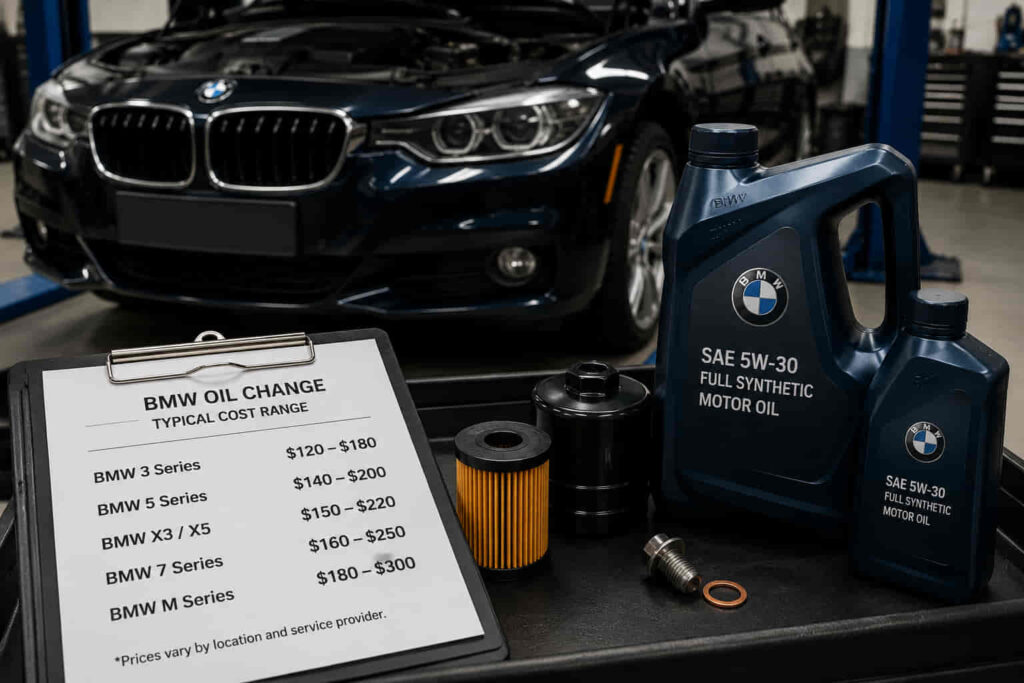
An oil change on a BMW typically costs more than a standard vehicle because BMW engines require premium synthetic oil, specific oil specifications, quality filters, and proper maintenance procedures. The exact cost depends on the BMW model, engine type, oil capacity, service location, and whether the vehicle is maintained at a BMW dealership or an independent specialist.
BMW engines are designed for performance, efficiency, and long-term durability, which means the engine lubrication system requires products that meet specific engineering requirements. Modern BMW engines such as the B48, B58, N55, and S58 rely on high-quality synthetic oil to maintain proper lubrication, manage heat, and protect internal components under different driving conditions.
The cost of a BMW oil change is not determined only by the price of the oil itself. Labor rates, oil filter quality, service procedures, and additional inspections included during the appointment also affect the final price. A dealership service appointment may cost more because it includes factory-trained technicians and BMW-specific equipment, while an independent BMW specialist may provide similar maintenance at a lower cost.
Regular oil maintenance is one of the most important factors affecting BMW reliability. Old or degraded oil can increase engine wear, reduce turbocharger protection, and affect overall performance.
Understanding how much an oil change costs on a BMW helps owners plan maintenance expenses, choose the right service option, and protect their vehicle’s engine over the long term.
Why Is a BMW Oil Change More Expensive Than Other Cars?
A BMW oil change is more expensive than many standard vehicles because BMW engines require higher-quality lubricants, larger amounts of oil in some applications, and maintenance procedures designed for high-performance engines. The additional cost comes from the engineering requirements of the engine rather than only the service process itself.
BMW uses advanced engines that operate under higher temperatures and tighter mechanical tolerances compared with many mainstream vehicles. Turbocharged engines such as the B48 and B58 require oil that can maintain stable lubrication under increased heat and pressure, especially when the turbocharger is operating at high speeds.
The type of oil used is one of the biggest factors affecting the total price. BMW engines typically require full synthetic oil that meets specific BMW Longlife specifications. Synthetic oil is more expensive than conventional oil because it is designed to provide better protection against oxidation, temperature changes, and internal engine wear.
Oil capacity also affects the cost of service. Different BMW models require different amounts of oil depending on engine size and design. A BMW M model with a high-performance engine may require more specialized oil and a larger oil capacity compared with a smaller four-cylinder BMW model.
The oil filter is another important component of the service. A quality filter removes contaminants from the oil and helps maintain clean lubrication throughout the engine. Using low-quality filters can reduce the effectiveness of the maintenance service.
Labor cost also contributes to the final price. BMW dealerships typically charge higher labor rates because they use factory equipment, BMW diagnostic systems, and technicians trained specifically for BMW vehicles. Independent BMW specialists may offer lower prices while still providing appropriate service when they have the necessary expertise.
For example, replacing oil with a basic product that does not meet BMW specifications may reduce short-term cost but can negatively affect long-term engine protection, especially in turbocharged BMW engines.
What Type of Oil Does a BMW Need?
A BMW needs high-quality full synthetic engine oil that meets the manufacturer’s required specifications for the specific engine and model year. Using the correct oil is essential because BMW engines are designed around precise lubrication requirements that affect performance, efficiency, and durability.
Most modern BMW vehicles use synthetic oil because it provides better protection than conventional oil under demanding operating conditions. Synthetic oil maintains its chemical stability during extreme temperatures, reduces deposits, and continues protecting engine components during longer service intervals.
BMW Longlife oil specifications are designed to match the requirements of BMW engines. These specifications consider factors such as engine design, emissions systems, fuel efficiency targets, and internal component protection.
The correct oil viscosity depends on the engine design and operating environment. BMW engines may require different viscosity grades depending on the model, engine generation, and climate conditions. A BMW B48 four-cylinder engine may have different oil requirements compared with a B58 inline-six engine or a high-performance S58 engine.
Using the wrong oil specification can affect more than lubrication. Incorrect oil may influence turbocharger performance, fuel economy, engine cleanliness, and long-term reliability. This is why BMW owners should follow manufacturer recommendations rather than choosing oil only based on price.
Oil quality becomes especially important for performance-oriented BMW models. Engines such as the B58 and S58 are designed to produce high power output while maintaining reliability, but they depend on proper lubrication to manage heat and friction.
For example, a BMW M340i equipped with the B58 engine requires oil that can handle high-performance operation, while still supporting normal daily driving conditions.
How Often Should You Change Oil on a BMW?
A BMW oil change interval depends on the engine type, driving conditions, oil quality, and maintenance strategy, but regular oil replacement is essential for protecting engine components and maintaining long-term reliability. Although BMW vehicles are engineered with advanced lubrication systems, engine oil gradually loses its ability to protect internal components as it accumulates heat, contaminants, and moisture.
Modern BMW models use maintenance monitoring systems that track factors such as mileage, driving behavior, and operating conditions to estimate when an oil service is required. However, following the maximum recommended interval is not always ideal for every driver because real-world conditions can accelerate oil degradation.
Frequent short trips are one factor that can reduce oil life. When an engine does not reach full operating temperature, moisture and fuel contaminants may accumulate in the oil, reducing its protective properties. Drivers who mainly use their BMW for short city trips may benefit from more frequent oil changes compared with drivers who complete longer highway journeys.
Performance driving also places additional stress on engine oil. High engine temperatures, increased turbocharger activity, and higher engine loads require oil that can maintain stable lubrication under demanding conditions.
BMW owners should also consider the age and mileage of the vehicle. Older BMW models may benefit from more frequent oil service because aging seals, increased engine wear, and changing operating conditions can influence lubrication requirements.
Regular oil changes protect important engine components, including bearings, timing components, and turbocharger systems. Delaying oil service can increase friction, accelerate wear, and contribute to expensive engine repairs.
For example, a BMW that is primarily driven in heavy city traffic may require more frequent oil changes than the same model driven mainly on open highways because the engine experiences different operating conditions.
Should You Get an Oil Change at a BMW Dealer or Independent Shop?
BMW owners can choose between dealership service, independent BMW specialists, or performing an oil change themselves, with each option offering different advantages in cost, convenience, and expertise. The best choice depends on the owner’s priorities, vehicle condition, and comfort level with maintenance decisions.
BMW dealerships provide factory-trained technicians, BMW-specific diagnostic equipment, and direct access to manufacturer procedures. This option is often preferred by owners who want official service records, warranty-related support, or maintenance performed according to BMW standards.
Independent BMW repair shops can provide high-quality service at a lower cost when they have experience with BMW vehicles. Many specialists understand BMW engines, common maintenance requirements, and the correct procedures for servicing models equipped with advanced systems.
The price difference between dealerships and independent shops can be significant because labor rates and service packages vary. However, choosing the cheapest option is not always the best decision if the service provider lacks experience with BMW lubrication requirements.
Some owners choose to perform oil changes themselves to reduce labor costs. DIY maintenance requires proper tools, correct oil specifications, and knowledge of BMW service procedures. Because BMW vehicles often use electronic service monitoring systems, owners may also need to reset maintenance indicators after completing the service.
The quality of the oil and filter matters more than the location where the service is performed. A properly completed oil change using approved products can provide excellent protection whether it is performed at a dealership or qualified independent shop.
For example, an older BMW outside its warranty period may benefit from a trusted BMW specialist, while a newer BMW under warranty may be better suited for dealership maintenance.
What Is Included in a BMW Oil Change Service?
A BMW oil change service includes replacing engine oil, installing a new oil filter, checking important vehicle systems, and resetting the maintenance monitoring system. The service is designed to maintain engine lubrication while allowing technicians to identify potential issues before they develop into larger problems.
The oil replacement process begins with removing the old engine oil, which contains accumulated contaminants and degraded lubrication compounds. Fresh oil restores the protective layer between moving engine components and helps maintain proper heat control.
Replacing the oil filter is an essential part of the service because the filter removes particles and debris from the lubrication system. Installing new oil without replacing a contaminated filter reduces the effectiveness of the maintenance procedure.
Many BMW oil services also include a general vehicle inspection. Technicians may check fluid levels, visible leaks, tire condition, brake components, and other maintenance-related areas depending on the service package.
The maintenance system reset is another important step. BMW vehicles use electronic service monitoring to track maintenance intervals, and resetting the system ensures the vehicle correctly records the next oil service period.
A complete oil service is more than simply draining old oil and adding new fluid. It is a preventive maintenance procedure that helps identify early signs of wear and supports long-term engine reliability.
For example, during an oil change, a technician may discover a small oil leak or unusual component wear that could be repaired before it develops into a more expensive engine problem.
How Can You Reduce BMW Oil Change Costs?
Reducing BMW oil change costs requires choosing the right service option, using approved products, and following an efficient maintenance strategy without compromising engine protection. Saving money on BMW maintenance does not mean using the cheapest oil or delaying service because incorrect savings can create higher repair costs later.
One effective way to control oil change expenses is choosing a qualified independent BMW specialist instead of always using dealership service. Independent shops with experience working on BMW vehicles often provide lower labor costs while still following proper service procedures and using compatible oil specifications.
Buying approved oil and filters from reliable sources can also help reduce maintenance expenses. However, quality should remain the priority because BMW engines depend on correct lubrication standards. Using low-quality oil or filters may reduce the initial cost but can increase engine wear over time.
Following the correct maintenance schedule also helps control costs. Changing oil too frequently increases unnecessary expenses, while delaying oil service can allow contaminants and degraded oil to damage engine components. A balanced maintenance approach protects the engine while avoiding unnecessary services.
Keeping detailed service records can also improve long-term ownership value. Maintenance documentation helps owners track service history, identify recurring issues, and maintain better vehicle condition.
Some BMW owners choose to perform oil changes themselves to reduce labor expenses. DIY oil service can be effective for experienced owners who have the correct tools and understand BMW maintenance procedures. However, the process requires proper oil selection, safe disposal of used oil, and accurate maintenance tracking.
For example, choosing a trusted BMW specialist and using manufacturer-approved synthetic oil can provide a balance between reasonable maintenance costs and long-term engine protection.
Why Is Regular Oil Maintenance Important for BMW Reliability?
Regular oil maintenance is important for BMW reliability because engine oil protects internal components, controls heat, reduces friction, and supports the long-term performance of complex BMW powertrains. A well-maintained lubrication system is one of the foundations of keeping a BMW engine operating efficiently for many years.
Engine oil creates a protective layer between moving components inside the engine. Without sufficient lubrication, metal surfaces experience increased friction, which accelerates wear and can damage critical components such as bearings, timing systems, and cylinder surfaces.
Oil maintenance is especially important for turbocharged BMW engines because turbochargers operate at extremely high speeds and temperatures. Clean, high-quality oil helps protect turbocharger bearings and supports proper operation under demanding conditions.
Regular oil changes also help maintain engine cleanliness. Over time, old oil can collect contaminants and form deposits that reduce lubrication efficiency. Fresh oil helps remove heat and maintain smoother operation throughout the engine.
The relationship between oil maintenance and reliability is particularly important for modern BMW engines such as the B48, B58, N55, and S58. These engines combine advanced technology with high performance, meaning they require proper lubrication to achieve their expected durability.
Neglecting oil service can lead to problems that extend beyond routine maintenance. Increased engine wear, reduced performance, and expensive repairs may occur when lubrication quality is ignored for extended periods.
For example, a BMW B58 engine with consistent oil maintenance can deliver strong performance and reliability over high mileage, while the same engine with neglected oil changes may experience premature wear and costly repairs.