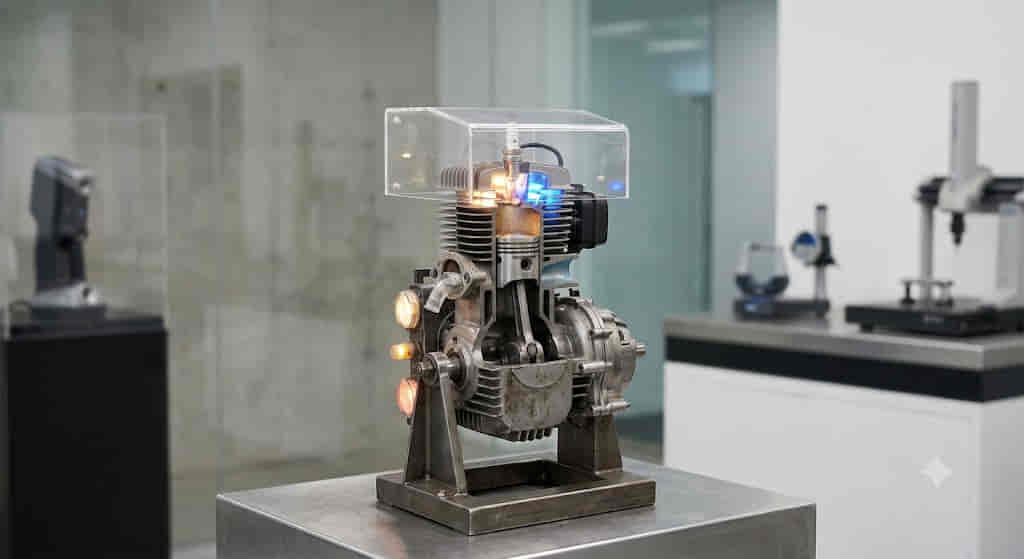
A 2 stroke engine works by completing one operating cycle in two piston strokes, equivalent to one revolution of the crankshaft. Unlike a four-stroke engine, which requires four piston strokes to complete its cycle, a two-stroke engine combines several processes to produce power more frequently. In a typical gasoline two-stroke engine, the piston moves upward to compress the air-fuel mixture while fresh mixture enters the crankcase. The piston then moves downward after combustion, producing power while helping move fresh mixture into the cylinder and allowing exhaust gases to escape.
The key to understanding how a 2 stroke engine works is the relationship between piston movement, crankcase pressure, and the intake, transfer, and exhaust ports. These components coordinate the movement of fresh mixture and burned gases within a compact engine design. The exact process depends on the engine configuration, but many small gasoline two-stroke engines use the crankcase to help draw in and transfer the air-fuel mixture.
Two-stroke engines are used in applications such as chainsaws, some lawn equipment, and certain marine engines. Their relatively simple construction and frequent power strokes make them useful for specific applications, although fuel efficiency, lubrication requirements, and exhaust emissions vary by design. Understanding the two piston strokes, gas exchange process, and combustion cycle explains how these engines generate power and how they differ from four-stroke engines.
How Does a 2 Stroke Engine Work?
A typical gasoline two-stroke engine works by completing a full operating cycle through two piston strokes: the upward compression stroke and the downward power stroke. During these movements, the engine coordinates compression, combustion, intake, and exhaust without dedicating a separate piston stroke to each process. The crankshaft completes one revolution for every operating cycle, allowing the engine to produce a power stroke once per revolution under normal operation. This arrangement helps explain why two-stroke engines can deliver frequent power pulses from a relatively simple mechanical design.
During the upward stroke, the piston moves toward the cylinder head and compresses the air-fuel mixture already inside the combustion chamber. At the same time, the increasing volume in the crankcase creates lower pressure, drawing a fresh air-fuel mixture into the crankcase through the intake system. Near the top of the stroke, the spark plug ignites the compressed mixture in a conventional spark-ignition gasoline engine. Combustion raises the pressure inside the cylinder, preparing the engine for its power stroke.
During the downward stroke, expanding combustion gases push the piston away from the cylinder head. The connecting rod transfers this force to the crankshaft, converting the piston’s linear movement into rotational motion that can drive a machine or vehicle. As the piston moves downward, it also reduces the crankcase volume and increases pressure on the fresh mixture stored there. Near the lower part of the stroke, the piston uncovers the exhaust port, allowing burned gases to begin leaving the cylinder, followed by the transfer port, which allows fresh mixture to enter and help clear the remaining exhaust gases.
This gas-exchange process is known as scavenging. In a common crankcase-scavenged design, the incoming mixture travels from the crankcase through transfer passages into the cylinder while exhaust gases leave through the exhaust port. Because these events occur close together, some fresh mixture may escape through the exhaust in certain designs, affecting fuel efficiency and emissions. The precise flow depends on port timing, engine geometry, and the method used to deliver air and fuel.
The cycle then repeats as the piston rises again. The engine does not use two completely separate strokes for intake, compression, power, and exhaust; instead, several processes overlap and are coordinated by piston movement and pressure changes. This combination of compression, combustion, crankcase pumping, and scavenging is the fundamental operating principle of a typical gasoline two-stroke engine.
Read more: Chevrolet Cruze Engine Problems
How Do the Intake, Transfer, and Exhaust Ports Work?
The intake, transfer, and exhaust ports control how fresh air-fuel mixture enters a typical crankcase-scavenged two-stroke gasoline engine and how burned gases leave the cylinder. Unlike many four-stroke engines, which use mechanically operated intake and exhaust valves, this type of two-stroke engine commonly uses openings in the cylinder wall that the piston uncovers and covers as it moves. The position and timing of these ports determine when gas can enter or leave the cylinder, making port design essential to engine performance, fuel consumption, and exhaust emissions.
The intake system supplies fresh air-fuel mixture to the crankcase in a conventional premixed-fuel design. As the piston moves upward, the crankcase volume increases and its pressure falls, helping draw the mixture through the intake passage. Depending on the engine design, a reed valve or another intake-control mechanism may help regulate flow and prevent the mixture from moving backward. When the piston begins its downward stroke, the crankcase volume decreases and compresses the incoming mixture in preparation for transfer into the cylinder. Not every two-stroke engine uses this arrangement; some designs use a separate blower or another method to supply air.
The transfer ports connect the crankcase or another charging system to the cylinder. When the piston moves down far enough to uncover these ports, the pressure difference helps push fresh mixture into the cylinder. The transfer passages are shaped to direct the incoming flow so it can displace burned gases while reducing the amount of fresh mixture that escapes directly through the exhaust. This process is called scavenging, and its effectiveness depends on port geometry, flow direction, engine speed, and pressure conditions. Poor scavenging can leave more exhaust gas in the cylinder or allow some fresh charge to pass out through the exhaust.
The exhaust port provides an outlet for combustion gases after the power stroke begins. As the piston descends, it uncovers the exhaust port, allowing the high-pressure gases to escape. The transfer ports generally open shortly afterward, so fresh mixture can enter while the remaining exhaust gases continue leaving. As the piston rises again, it covers the ports, allowing the fresh charge trapped in the cylinder to be compressed for the next combustion event. The exact opening and closing sequence varies with the engine’s port layout and piston position.
The three port functions work together rather than operating as independent systems. Intake flow replenishes the charge, transfer flow delivers it to the cylinder, and exhaust flow removes combustion products. Correct timing and passage design help an engine fill the cylinder effectively while limiting fresh-charge loss. This coordinated gas exchange is one of the defining features of a typical two-stroke engine and helps explain both its compact construction and its potential efficiency and emissions trade-offs.
How Does a 2 Stroke Engine Produce Power on Every Crankshaft Revolution?
A typical two-stroke engine produces one power stroke per crankshaft revolution because combustion occurs once during each complete operating cycle, which takes two piston strokes. When the compressed air-fuel mixture ignites in a gasoline two-stroke engine, the expanding combustion gases exert pressure on the piston and force it downward. The connecting rod transfers this force to the crankshaft, which converts the piston’s reciprocating motion into rotational energy. This rotation can then drive equipment such as a chainsaw cutting chain, a small boat’s propeller, or another connected mechanical load.
The power stroke begins when the spark plug ignites the compressed mixture near the end of the compression stroke. Combustion rapidly increases the pressure inside the cylinder, pushing the piston away from the cylinder head. As the piston descends, the connecting rod applies force to the crankshaft’s offset crank pin, creating torque that rotates the shaft. The crankshaft continues rotating through inertia and the energy supplied by combustion, carrying the piston through the remainder of its downward movement and into the next upward stroke.
The relationship between piston movement and crankshaft rotation explains the two-stroke engine’s power frequency. In a conventional four-stroke engine, one cylinder completes its intake, compression, power, and exhaust strokes over two crankshaft revolutions. In a typical two-stroke engine, the corresponding operating cycle takes one crankshaft revolution, so the cylinder has a power stroke during every revolution. At the same engine speed, this creates more frequent power events, although it does not automatically mean that every two-stroke engine produces more useful power than every four-stroke engine.
Actual engine output depends on more than the frequency of combustion. Cylinder displacement, engine speed, compression, fuel delivery, scavenging efficiency, mechanical friction, and exhaust design all affect how much useful power reaches the crankshaft. For example, a two-stroke engine with poor scavenging may lose some fresh air-fuel mixture through the exhaust, reducing efficiency despite its frequent power strokes. Engine design and operating conditions therefore determine whether the theoretical advantage translates into strong practical performance.
The crankshaft’s rotation also drives the engine’s internal mechanisms and maintains the timing relationship between piston movement and gas exchange. As the crankshaft completes each revolution, the piston returns toward the cylinder head, compresses the next charge, and prepares for another combustion event. This repeating sequence allows a typical two-stroke engine to generate a power stroke on every revolution while combining power production with intake and exhaust processes in a compact mechanism.
What Are the Main Parts of a 2 Stroke Engine?
A typical two-stroke engine relies on several interconnected components to compress the air-fuel mixture, generate combustion pressure, exchange gases, and convert reciprocating motion into rotation. The main parts include the cylinder, piston, combustion chamber, spark plug, connecting rod, crankshaft, crankcase, and gas exchange ports. Each component performs a specific function, and the engine operates efficiently only when these parts work together in the correct sequence. Although the arrangement varies between engine designs, these components form the basic structure of many small gasoline two-stroke engines.
The cylinder provides the enclosed space in which the piston moves and combustion takes place. Inside the cylinder, the piston travels upward and downward, changing the available volume above it. This movement compresses the air-fuel mixture before ignition and allows expanding combustion gases to push the piston downward during the power stroke. The combustion chamber is the space above the piston near the top of its travel. A spark plug ignites the compressed mixture in a typical spark-ignition engine, initiating combustion and producing the pressure needed to drive the piston.
The connecting rod links the piston to the crankshaft and transfers force between them. As combustion pushes the piston downward, the connecting rod applies force to the crankshaft’s offset crank pin. The crankshaft converts the piston’s linear movement into rotational motion, which can power equipment such as a chainsaw or a small motorized machine. Its rotation also moves the piston through the next part of the cycle, allowing compression and gas exchange to repeat. This mechanical connection is essential because the piston cannot deliver continuous rotary output directly.
The crankcase has a particularly important role in many small two-stroke engines because it helps control the movement of the fresh air-fuel mixture. As the piston moves upward, the volume beneath it increases and reduces pressure in the crankcase, drawing in a fresh charge through the intake system. When the piston moves downward, the volume decreases and raises crankcase pressure, helping push the mixture through the transfer ports and into the cylinder. This arrangement allows the crankcase to function as part of the gas-induction and transfer system rather than serving only as a housing for the crankshaft.
The intake, transfer, and exhaust ports regulate the movement of gases into and out of the cylinder. In many piston-controlled designs, the piston itself opens and closes these ports as it moves. The exhaust port allows burned gases to leave the cylinder, while the transfer ports carry fresh mixture from the crankcase into the combustion chamber area. The intake port admits fresh mixture into the crankcase. Together, these components coordinate the gas exchange process and prepare the cylinder for the next combustion event. Their placement and timing influence how effectively the engine clears exhaust gases, retains fresh mixture, and produces useful power.
How Is a 2 Stroke Engine Lubricated?
A typical small gasoline two-stroke engine is lubricated by mixing oil with the fuel or by using a separate oil-injection system. Unlike many four-stroke engines, which store lubricating oil in a sump and circulate it through dedicated oil passages, common crankcase-compression two-stroke engines use the crankcase to move the fresh air-fuel mixture. This arrangement means conventional sump lubrication is generally unsuitable for these designs. Instead, lubricating oil travels with the incoming charge, coats moving surfaces, and helps reduce friction between components such as the piston, cylinder wall, crankshaft bearings, and connecting rod bearings.
In a premix lubrication system, the correct amount of two-stroke engine oil is blended with gasoline before the fuel enters the engine. As the mixture passes through the intake system and crankcase, the oil helps form a lubricating film on internal moving parts. The fuel then continues into the cylinder, where combustion occurs, while much of the oil is burned or leaves with the exhaust gases. The required fuel-to-oil ratio depends on the engine manufacturer’s specifications and the oil being used. For example, an engine designed for a 50:1 fuel-to-oil ratio requires a different mixture from one designed for 40:1, so the operator should follow the exact ratio stated in the owner’s manual rather than assume that one ratio suits every engine.
A separate oil-injection system delivers two-stroke oil from a dedicated reservoir into the fuel or intake path. Depending on the design, an oil pump meters the supply according to engine speed or operating demand. This system removes the need to premix oil manually for every fuel container, but it still requires the correct oil type, adequate oil supply, and proper system maintenance. If the lubrication system fails or the oil supply is insufficient, friction and operating temperatures can rise, increasing wear and potentially causing severe engine damage. Too much oil can also contribute to excessive smoke, deposits, and spark-plug fouling.
Lubrication requirements vary with engine design and operating conditions. The correct oil formulation and delivery method help protect components while supporting reliable combustion. Operators should use oil specified for two-stroke engines, follow the manufacturer’s mixing instructions when premixing is required, and maintain any oil-injection equipment according to the service schedule. A two-stroke engine’s lubrication system is therefore directly connected to its fuel-delivery arrangement, making correct oil selection and supply essential to engine durability and performance.
What Are the Advantages and Disadvantages of a 2 Stroke Engine?
A two-stroke engine offers a compact design, a power stroke on every crankshaft revolution, and a relatively simple mechanical structure. These characteristics make it suitable for applications where low weight, compact dimensions, and a strong power output relative to engine size are useful. Unlike a conventional four-stroke engine, which completes its operating cycle over two crankshaft revolutions, a typical two-stroke engine completes its cycle in one revolution. This allows it to produce power more frequently at a given engine speed, although actual output depends on engine displacement, combustion efficiency, scavenging, and mechanical losses.
One major advantage is the engine’s relatively simple construction. Many small two-stroke engines use piston-controlled intake, transfer, and exhaust ports instead of a conventional valve train with camshafts and multiple valves. Fewer valve-train components can reduce mechanical complexity, simplify some maintenance procedures, and help keep the engine compact. For example, this design is useful in portable equipment such as chainsaws and certain handheld lawn tools, where users benefit from a lightweight power source that is easier to transport and operate.
Another advantage is the potential for a high power-to-weight ratio. Because a typical two-stroke engine produces one power stroke per crankshaft revolution, it has frequent opportunities to convert combustion energy into mechanical output. Its compact construction can also reduce overall engine mass. However, frequent power strokes do not guarantee higher power in every comparison. Cylinder design, engine speed, fuel delivery, cooling, and exhaust tuning all influence performance, so a well-designed four-stroke engine may outperform a two-stroke engine in particular applications.
Two-stroke engines also have important disadvantages, especially in fuel consumption, emissions, and lubrication. In some crankcase-compression designs, fresh air-fuel mixture enters the cylinder while exhaust gases are leaving, and some unburned mixture can escape through the exhaust port. This reduces fuel-use efficiency and increases hydrocarbon emissions. Because many small gasoline two-stroke engines burn lubricating oil along with the fuel, they can also produce visible exhaust smoke and oil-related deposits. Modern designs can reduce these problems through improved fuel delivery, combustion control, and exhaust treatment, but performance varies significantly by engine type.
Maintenance and operating requirements create further trade-offs. Engines that require premixed fuel depend on the correct fuel-to-oil ratio, while oil-injection systems require a reliable oil supply and functioning delivery components. Incorrect lubrication can increase friction and wear, and poor combustion or unsuitable operating conditions can cause deposits and starting problems. Four-stroke engines commonly have more complex valve mechanisms but use a separate engine-oil system in many conventional designs. The more suitable engine therefore depends on the intended task: a two-stroke engine may suit lightweight portable equipment, while a four-stroke engine may be preferable when fuel economy, emissions, or extended operating periods are priorities.
How Does a 2 Stroke Engine Differ From a 4 Stroke Engine?
A two-stroke engine differs from a four-stroke engine primarily in the number of piston strokes and crankshaft revolutions required to complete one operating cycle. A typical two-stroke engine completes its cycle in two piston strokes and one crankshaft revolution, while a conventional four-stroke engine requires four piston strokes and two crankshaft revolutions. Both engines use intake, compression, combustion, and exhaust processes to convert fuel energy into mechanical power, but they organize these processes differently. This difference affects power delivery, mechanical complexity, lubrication, fuel consumption, and exhaust emissions.
In a two-stroke engine, the piston moves upward to compress the mixture while fresh charge enters the crankcase in many small gasoline designs. After ignition, combustion pushes the piston downward, producing power while the engine begins the exhaust and transfer processes. These processes overlap around the end of the downward stroke, allowing the engine to complete its cycle within one crankshaft revolution. In a conventional four-stroke engine, intake, compression, power, and exhaust occur in four separate piston strokes. The intake and exhaust valves open and close at specific times, and the complete cycle takes two crankshaft revolutions.
The difference in cycle timing affects how frequently each engine produces a power stroke. A single-cylinder two-stroke engine has one power stroke per crankshaft revolution, whereas a conventional single-cylinder four-stroke engine has one power stroke every two revolutions. At the same engine speed, the two-stroke engine therefore has more frequent combustion power events. However, power output does not depend on frequency alone. Gas exchange efficiency, engine displacement, combustion quality, friction, and exhaust design determine how much useful energy reaches the crankshaft.
Mechanical construction and lubrication also distinguish the two designs. Many small two-stroke engines use ports controlled by piston movement and rely on oil mixed with the fuel or delivered through a dedicated oil-injection system. Conventional four-stroke engines commonly use a valve train and a separate lubrication system that circulates oil through the engine. The four-stroke arrangement has more valve-related components, while the two-stroke design can be simpler and lighter. These differences affect maintenance procedures, component layout, and how the engine must be operated.
Fuel economy and emissions depend on the engine’s gas exchange and lubrication systems. In some crankcase-compression two-stroke engines, a portion of the fresh air-fuel mixture can escape through the exhaust during scavenging, wasting fuel and increasing hydrocarbon emissions. Burning lubricating oil can also contribute to exhaust smoke and deposits. A conventional four-stroke engine generally keeps the intake and exhaust processes more distinctly separated, which can improve fuel control and emissions performance. Nevertheless, modern engine technologies vary, so the actual difference depends on the specific models being compared.
Choosing between a two-stroke and a four-stroke engine depends on the application. A two-stroke engine may be appropriate when low weight, compact construction, and frequent power strokes are valuable, as in some chainsaws and portable tools. A four-stroke engine may be better when fuel efficiency, lower emissions, and sustained operation are priorities. Comparing the engines by their intended use, maintenance needs, operating costs, and environmental performance provides a more reliable basis for choosing than considering the number of strokes alone.