Modern vehicles are becoming smarter every year, and advanced driver assistance systems now play a vital role in improving road safety. Among these innovations, the Honda Collision Mitigation Braking System stands out as one of the most valuable technologies included in Honda Sensing. Designed to monitor the road ahead, this intelligent system helps detect potential frontal collisions, warns the driver of danger, and can automatically apply the brakes when necessary. While it cannot prevent every accident, it provides valuable support that may reduce the severity of a collision and give drivers more time to react.
Many Honda owners are curious about how the Honda Collision Mitigation Braking System actually works in everyday driving. Some want to understand why the system suddenly activates, while others are concerned about warning lights, unexpected braking, or messages indicating that the system is unavailable. Questions also arise after windshield replacement, front bumper repairs, or driving in heavy rain, snow, or fog. Understanding these situations is essential because the performance of any driver assistance technology depends on proper sensor operation and suitable driving conditions.
This comprehensive guide explains everything you need to know about the Honda Collision Mitigation Braking System. You will learn how the system detects potential hazards, how its warning and braking functions operate, and what benefits it offers for daily driving. The article also explores common problems, possible causes of warning messages, maintenance tips, and practical troubleshooting advice. Whether you are considering buying a Honda or already own one, this guide will help you better understand how the Honda Collision Mitigation Braking System contributes to safer and more confident driving while reminding you that attentive driving remains the most important safety feature on the road.
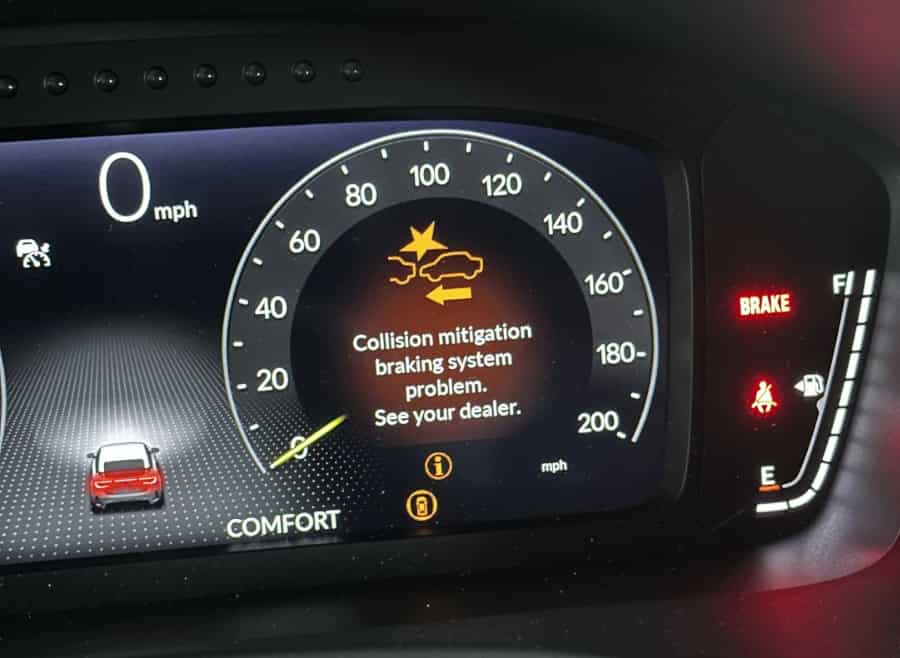
What Is the Honda Collision Mitigation Braking System?
The Honda Collision Mitigation Braking System, also known as CMBS, is an advanced driver assistance feature that helps reduce the risk of frontal collisions. It is one of the key technologies included in the Honda Sensing safety package. The system monitors the road ahead and looks for potential hazards. When it detects an increasing collision risk, it alerts the driver and may apply the brakes to help reduce the impact.
Unlike a conventional braking system, CMBS actively analyzes traffic conditions while you drive. A forward facing camera continuously scans the road ahead. Many Honda models also use a radar sensor to improve object detection. Together, these components measure distance, vehicle speed, and closing speed. They identify vehicles ahead and, on supported models, can also recognize pedestrians and cyclists. If the system predicts a possible collision, it responds in several stages. It first warns the driver. If the driver does not react in time, the system increases braking assistance to help slow the vehicle.
Although the Honda Collision Mitigation Braking System is highly advanced, it does not guarantee that every collision can be avoided. Its main purpose is to reduce collision severity and provide extra time for the driver to respond. Weather conditions, poor visibility, and blocked sensors can affect system performance. Heavy rain, snow, fog, and dirt on the camera or radar sensor may reduce detection accuracy. For this reason, drivers should always remain attentive and maintain a safe following distance.
The Honda Collision Mitigation Braking System works together with other Honda Sensing technologies to improve overall driving safety. It adds another layer of protection during daily driving without replacing the driver’s responsibility. By combining intelligent monitoring, timely warnings, and automatic braking support, CMBS helps drivers react more quickly when unexpected hazards appear on the road.
How Does the Honda Collision Mitigation Braking System Work?
The Honda Collision Mitigation Braking System uses advanced sensors to monitor the road ahead in real time. Its primary goal is to detect situations that could lead to a frontal collision. Instead of reacting after an accident occurs, the system constantly evaluates traffic conditions and helps the driver respond before the situation becomes critical.
A forward facing camera serves as one of the system’s main components. Many Honda models also include a millimeter wave radar sensor. These technologies work together to identify vehicles traveling ahead. On supported models, they can also detect pedestrians and cyclists under suitable driving conditions. The system measures the distance between vehicles and calculates how quickly that distance is closing. It also considers vehicle speed and driver behavior before deciding whether intervention is necessary.
When CMBS detects a possible collision, it responds in several stages. The first stage provides visual and audible warnings to capture the driver’s attention. These alerts encourage the driver to brake or steer away from danger. If the driver does not react quickly enough, the system increases brake assistance. In situations where the collision risk continues to rise, CMBS can automatically apply stronger braking force to help reduce vehicle speed before impact.
The Honda Collision Mitigation Braking System does not follow a single braking pattern for every situation. Instead, it adjusts its response based on road conditions and the estimated collision risk. This intelligent approach allows the system to provide assistance without interfering unnecessarily during normal driving. Drivers may notice warning messages, audible alerts, or brief braking before stronger intervention occurs.
Although CMBS offers valuable protection, it cannot overcome the laws of physics. High speeds, slippery roads, and poor visibility can limit its performance. The system also depends on clean sensors and proper calibration to deliver accurate results. For the best performance, drivers should keep the windshield and radar area clean while following regular maintenance recommendations. When used together with safe driving habits, the Honda Collision Mitigation Braking System provides an extra layer of confidence and helps reduce the severity of many real world driving situations.
Key Features and Benefits of Honda CMBS
The Honda Collision Mitigation Braking System combines intelligent detection with automatic braking support to help drivers respond more effectively to potential hazards. Instead of relying on a single safety function, CMBS uses several technologies that work together to improve awareness and reduce collision risks. These features provide additional support during everyday driving, especially in busy traffic where sudden stops can happen without warning.
One of the system’s most important functions is Forward Collision Warning. This feature monitors traffic ahead and alerts the driver when it detects a possible frontal collision. Visual messages appear on the instrument display, while audible alerts encourage the driver to react immediately. These early warnings give drivers valuable time to brake or change direction before the situation becomes more dangerous.
Another key feature is Automatic Emergency Braking. If the driver does not respond quickly enough, the Honda Collision Mitigation Braking System can apply braking force automatically. The amount of braking depends on the estimated collision risk and the vehicle’s speed. In many situations, this action helps reduce impact speed and may lower the severity of an accident. Although the system cannot prevent every collision, it provides important support during critical moments.
On supported Honda models, CMBS can also recognize pedestrians and cyclists under suitable driving conditions. This capability improves safety in urban areas where different road users often share the same space. The system continuously analyzes information from its camera and radar sensor to identify potential hazards and respond when necessary. However, weather conditions, lighting, and sensor visibility can influence detection accuracy.
The benefits of the Honda Collision Mitigation Braking System extend beyond emergency situations. Drivers often feel more confident during daily commutes because the system adds another layer of protection. It also supports safer driving on highways by helping monitor traffic changes ahead. Families appreciate the additional peace of mind, while many buyers consider Honda Sensing an important advantage when choosing a new vehicle.
Despite these benefits, CMBS should always support the driver rather than replace careful driving habits. Drivers must remain alert, maintain a safe following distance, and stay prepared to brake or steer at any time. When combined with responsible driving, the Honda Collision Mitigation Braking System becomes an effective safety feature that helps reduce risks and improves overall driving confidence.
Common Honda Collision Mitigation Braking System Problems
Although the Honda Collision Mitigation Braking System is designed to improve driving safety, drivers may occasionally experience unexpected issues. Most problems do not indicate that the system has completely failed. Instead, they often result from environmental conditions, sensor interference, or maintenance needs. Understanding these situations helps drivers respond correctly and avoid unnecessary concern.
One of the most common issues is a warning message that says the system is temporarily unavailable. This message often appears when the camera or radar sensor cannot detect the road clearly. Heavy rain, thick fog, snow, or direct sunlight can reduce visibility and limit system performance. Dirt, insects, or ice covering the windshield or front grille may also block the sensors. Cleaning these areas often restores normal operation once driving conditions improve.
Some drivers report unexpected braking even when the road appears clear. This situation can occur if the system briefly identifies an object as a potential hazard. Metal guardrails, sharp curves, road signs, or vehicles changing lanes may sometimes trigger a false alert. These events are uncommon, but they show that CMBS always prioritizes safety when it detects possible collision risks.
Another concern involves warning lights that remain illuminated after windshield replacement or front end repairs. The camera and radar sensor require precise alignment to operate correctly. If technicians do not calibrate these components after service, the Honda Collision Mitigation Braking System may not function as intended. Professional calibration is essential whenever these parts are removed, replaced, or repositioned.
Software updates can also affect system performance. Honda occasionally releases updates that improve detection accuracy or correct known issues. Installing the latest software helps keep the system operating as designed. Drivers should also follow the recommended maintenance schedule and pay attention to any safety recalls related to their vehicle.
If warning messages continue after cleaning the sensors and driving in clear weather, professional inspection is the best solution. A qualified Honda technician can check sensor alignment, scan the vehicle for diagnostic codes, and identify the source of the problem. Early diagnosis helps prevent unnecessary repairs and ensures that the Honda Collision Mitigation Braking System continues to provide reliable safety assistance whenever it is needed.
How to Troubleshoot and Maintain the Honda Collision Mitigation Braking System
Maintaining the Honda Collision Mitigation Braking System is important because the technology depends on accurate sensor information. A small obstruction or alignment issue can affect how the system detects hazards. Regular checks and proper care help ensure that CMBS continues to provide reliable support during daily driving.
The first step when you notice a CMBS warning is to inspect the sensor areas. Start by checking the windshield area in front of the forward facing camera. Dust, fingerprints, stickers, fog, or ice can interfere with camera performance. Clean the glass carefully and make sure nothing blocks the camera view. Drivers should also check the front grille or bumper area where the radar sensor is located. Remove dirt, snow, or other debris that may prevent the sensor from working correctly.
Restarting the vehicle can sometimes clear temporary system warnings. This may happen when poor weather or a temporary sensor obstruction causes the alert. However, a restart does not repair a mechanical problem, damaged sensor, or calibration issue. If the warning returns repeatedly, the vehicle needs further inspection.
Recent repairs can also explain why the Honda Collision Mitigation Braking System stops working properly. Windshield replacement, bumper repairs, front end impacts, or sensor replacement may require professional calibration. Even a small change in camera or radar position can affect detection accuracy. A qualified technician can check the system and perform the correct calibration procedure when needed.
Battery condition is another factor that many drivers overlook. Modern Honda vehicles rely on electronic control systems, and a weak battery can sometimes create multiple warning messages. If CMBS warnings appear together with other dashboard alerts, technicians should inspect the vehicle’s electrical system.
Good maintenance habits can prevent many common CMBS problems. Keep the windshield clean, avoid placing objects near the camera area, and inspect the front of the vehicle after minor impacts. Follow Honda’s recommended service schedule and address warning messages early.
The Honda Collision Mitigation Braking System is a sophisticated safety technology, but it depends on proper operation of cameras, sensors, and vehicle electronics. Regular maintenance helps protect these components and ensures that CMBS remains ready to assist when drivers need it most.
Frequently Asked Questions About Honda Collision Mitigation Braking System
Can the Honda Collision Mitigation Braking System prevent every accident?
No, the Honda Collision Mitigation Braking System cannot prevent every accident. The system helps reduce collision risks and may lower the impact severity in certain situations. However, it has limitations based on speed, weather, road conditions, and sensor visibility. Drivers must always remain focused and ready to take control of the vehicle.
Why is my Honda CMBS warning light on?
A CMBS warning light can appear for several reasons. Common causes include dirty sensors, poor weather conditions, blocked camera visibility, or sensor alignment problems. The warning may disappear after conditions improve. If the light remains active, the vehicle should receive a professional inspection.
Can I reset the Honda Collision Mitigation Braking System myself?
A simple restart may clear temporary warnings caused by short term sensor issues. However, a manual reset cannot fix damaged sensors, incorrect calibration, or electrical problems. If the warning continues, technicians should diagnose the system before attempting any repair.
Does windshield replacement affect Honda CMBS?
Yes, windshield replacement can affect CMBS operation. The forward facing camera sits behind the windshield and requires accurate positioning. If the new windshield changes the camera angle or the system detects an alignment issue, calibration may be necessary.
Can rain or snow disable Honda CMBS?
Severe weather can temporarily reduce CMBS performance. Heavy rain, snow, fog, and strong sunlight may prevent sensors from accurately detecting objects ahead. In these situations, the system may display a temporary warning until visibility improves.
Can I turn off the Honda Collision Mitigation Braking System?
Many Honda models allow drivers to temporarily disable CMBS through vehicle settings. The exact process depends on the model year and trim level. Drivers should check the owner’s manual for specific instructions. Disabling the system removes an additional safety layer, so it should only be done when necessary.
Why did my Honda brake automatically?
The system may apply automatic braking when it detects a high collision risk. This can happen when another vehicle slows suddenly or when an obstacle enters the detection area. If the braking happens frequently without a clear reason, the sensors and system calibration should be checked.
How much does Honda CMBS calibration cost?
The cost of CMBS calibration depends on the Honda model, repair facility, and the type of calibration required. Windshield replacement, radar replacement, or collision repairs may increase the cost because specialized equipment and procedures may be required.
Is it safe to drive with a Honda CMBS warning message?
Driving with a CMBS warning message may be possible, but the system may not provide full safety assistance. Drivers should use extra caution and arrange an inspection if the warning does not disappear. A working safety system provides better protection during unexpected situations.
Understanding these common questions helps Honda owners get the most value from their safety technology. The Honda Collision Mitigation Braking System works best when sensors remain clean, the vehicle receives proper maintenance, and drivers understand both its capabilities and limitations.
Conclusion
The Honda Collision Mitigation Braking System represents an important step forward in modern vehicle safety technology. By combining cameras, sensors, and intelligent braking support, CMBS helps drivers identify potential collision risks and respond faster in dangerous situations. The system can provide warnings, assist with braking, and reduce the severity of certain frontal collisions when conditions allow it to operate correctly.
Throughout this guide, we explored how the Honda Collision Mitigation Braking System works, from hazard detection to automatic braking assistance. We also examined its key features, including Forward Collision Warning, emergency braking support, and integration with Honda Sensing technologies. These functions provide valuable protection during daily driving, especially in heavy traffic, urban environments, and situations where quick reactions are required.
However, CMBS is not a replacement for responsible driving. The system has limitations and depends on clear sensors, proper calibration, and suitable road conditions. Warning messages, unexpected behavior, or system failures often relate to blocked sensors, poor weather, damaged components, or calibration issues after repairs. Regular maintenance and timely inspections help ensure that the technology continues to perform as Honda designed.
For Honda owners, understanding the capabilities and limitations of the Honda Collision Mitigation Braking System creates a safer and more confident driving experience. This technology works best when it supports an attentive driver who remains prepared to react at any moment.
Have you experienced a CMBS warning message or unexpected braking event in your Honda? Share your vehicle model, year, and experience to help other Honda owners better understand this safety technology.