Honda Accord uses regular unleaded gasoline for most models. The recommended fuel usually has an 87 octane rating. Most Honda Accord owners do not need premium gasoline for daily driving.
The correct Honda Accord gas type depends on the engine configuration and model year. Different engines can have different fuel requirements. Turbocharged models and hybrid models may follow different recommendations from standard gasoline engines.
Choosing the correct fuel helps the Honda Accord maintain engine performance and fuel efficiency. The octane rating affects how gasoline burns inside the engine. Using the recommended fuel allows the engine to work efficiently and reduces the risk of combustion problems.
Premium gasoline has a higher octane rating, but it does not always improve performance or fuel economy. Drivers should follow Honda’s fuel recommendations instead of choosing gasoline based only on price or octane level.
This guide explains the best gas type for a Honda Accord. It covers regular and premium gasoline, octane ratings, engine differences, and fuel choices that support long term vehicle reliability.
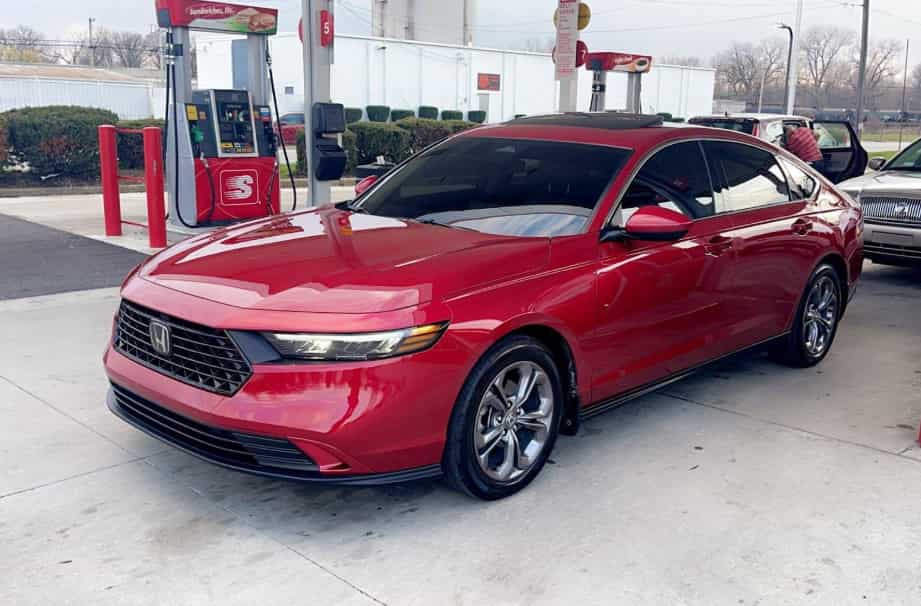
What Gas Type Does a Honda Accord Use?
Honda Accord uses regular unleaded gasoline with an 87 octane rating for most models. Honda designs its standard Accord engines to operate efficiently with this fuel type. Regular unleaded gasoline provides the combustion characteristics required for normal driving conditions, including daily commuting, highway driving, and city traffic.
The gas type recommendation comes from the engine design and fuel system calibration. Honda engineers adjust the engine control system, compression ratio, and combustion process based on the recommended fuel specification. Using the correct gasoline helps the engine maintain stable performance and consistent fuel efficiency.
Octane rating measures a fuel’s ability to resist premature combustion, also known as engine knocking. A higher octane number does not always mean better fuel quality for every vehicle. A Honda Accord that requires 87 octane fuel will not automatically perform better with 91 or 93 octane gasoline.
Drivers should check the owner’s manual or fuel label before choosing gasoline. These sources provide the exact fuel requirement for each Honda Accord model and engine option. For example, a Honda Accord with a turbocharged engine may have different recommendations compared with another model using a different powertrain.
Using the recommended Honda Accord gas type also helps control ownership costs. Regular unleaded gasoline usually costs less than premium fuel while meeting the engine’s operating requirements. Choosing the correct fuel allows drivers to balance performance, efficiency, and maintenance needs without unnecessary expenses.
Does a Honda Accord Need Premium Gas?
Honda Accord does not usually require premium gasoline for normal operation. Most models run efficiently on regular unleaded gasoline that meets the recommended 87 octane rating. Using premium fuel in an engine designed for regular gasoline does not automatically increase horsepower, improve fuel economy, or extend engine life.
Premium gasoline has a higher octane rating, which helps engines resist abnormal combustion under higher pressure conditions. Some high performance engines require premium fuel because they use higher compression ratios or advanced engine tuning. However, most Honda Accord models do not need this additional octane level for everyday driving.
Some Honda Accord turbocharged engines may respond differently to higher octane fuel. Turbocharged engines create more pressure inside the combustion chamber, which can increase the importance of proper fuel selection. Drivers should follow Honda’s recommended fuel specification instead of choosing premium gasoline based only on the engine type.
Using premium gas when it is not required can increase fuel expenses without providing significant benefits. For example, a driver who fills a Honda Accord with premium gasoline every week may spend more money while receiving similar performance compared with regular unleaded fuel.
The best fuel choice depends on the vehicle’s requirements, not the highest available octane rating. Honda Accord owners should use the fuel type listed in the owner’s manual to maintain reliable engine operation and avoid unnecessary costs.
What Octane Rating Should You Use for a Honda Accord?
Honda Accord typically uses gasoline with an 87 octane rating for most standard models. Octane rating shows how well fuel resists premature combustion inside the engine. A higher octane number means the fuel can handle greater pressure before ignition occurs.
The engine control system in a Honda Accord works with the recommended octane level to manage combustion timing. When the fuel matches the manufacturer’s specification, the engine can maintain smooth operation, stable power delivery, and efficient fuel consumption.
Using 87 octane gasoline is suitable for most Honda Accord models because Honda designs these engines around this fuel requirement. Drivers do not need to upgrade to premium gasoline unless their specific model or owner’s manual recommends it.
Higher octane fuels, such as 91 or 93 octane, mainly benefit engines that operate under higher compression or increased combustion pressure. These fuels help prevent engine knocking in engines that require additional resistance to premature ignition. However, using higher octane fuel in an engine designed for regular gasoline usually provides little or no noticeable improvement.
The correct octane rating depends on the specific Honda Accord engine and model year. Owners should check the fuel label inside the fuel door or the owner’s manual to confirm the recommended gasoline type. Following Honda’s recommendation helps maintain the balance between engine protection, fuel cost, and daily driving performance.
Does Honda Accord Gas Type Depend on the Engine and Model Year?
Honda Accord gas type can change depending on the engine configuration and model year. Honda has produced the Accord with different powertrains, including naturally aspirated engines, turbocharged engines, and hybrid systems. Each engine design has specific fuel requirements based on its combustion characteristics and performance goals.
Most Honda Accord models with standard gasoline engines use regular unleaded gasoline with an 87 octane rating. These engines provide reliable performance for everyday driving without requiring premium fuel. The fuel system and engine control unit work together to adjust combustion based on the recommended gasoline specification.
Honda Accord models with turbocharged engines require closer attention to fuel recommendations. Turbochargers increase the amount of air entering the combustion chamber, which creates higher pressure during combustion. Because of this design, some turbocharged engines may benefit from higher octane fuel when the manufacturer recommends it.
Honda Accord Hybrid models also use regular unleaded gasoline in most cases. The hybrid powertrain combines a gasoline engine with electric motors to improve efficiency. Since the gasoline engine operates with different performance demands compared with turbocharged engines, it follows a different fuel management approach.
Owners should always check the fuel requirement for their specific Honda Accord model year and engine type. The same vehicle name can include different engines across generations, so general fuel advice may not apply to every version. Checking the owner’s manual provides the most accurate information for choosing the correct Honda Accord gas type.
Can Using the Wrong Gas Damage a Honda Accord?
Using the wrong gas type can affect Honda Accord performance, especially when the fuel has a lower octane rating than the engine requires. Octane rating controls how well gasoline resists premature ignition. When fuel ignites too early, the engine can experience abnormal combustion, which may create knocking sounds and reduce performance.
Modern Honda Accord engines use electronic control systems to manage combustion conditions. When the engine detects changes caused by fuel quality, the system can adjust ignition timing to protect the engine. This technology helps prevent immediate damage, but it does not mean drivers should regularly use fuel below the recommended specification.
Using lower octane fuel than recommended may cause several noticeable effects. Drivers may experience reduced engine responsiveness, lower efficiency, or unusual engine sounds during acceleration. These effects depend on the engine design, driving conditions, and the difference between the recommended fuel and the gasoline used.
Using premium gasoline in a Honda Accord that only requires regular fuel does not create harmful effects. However, it usually does not provide significant benefits because the engine does not require the additional octane level. Drivers may spend more money without receiving better performance or improved fuel economy.
The safest approach is to follow Honda’s fuel recommendation for each Accord model. Using the correct gasoline type supports proper combustion, protects engine components, and helps maintain consistent vehicle performance over time.
Does Gas Type Affect Honda Accord Fuel Economy?
Honda Accord gas type has a limited effect on fuel economy when drivers use the recommended gasoline. The engine is designed to operate efficiently with the specified octane rating, so switching to a higher octane fuel does not usually create a noticeable improvement in miles per gallon.
Fuel economy depends on several factors beyond gasoline type. The engine condition, driving habits, vehicle weight, tire pressure, and maintenance schedule have a stronger influence on fuel consumption. For example, aggressive acceleration and frequent short trips can reduce Honda Accord fuel efficiency more than the difference between regular and premium gasoline.
Octane rating mainly affects combustion stability rather than the amount of energy produced by the fuel. Premium gasoline can help some high performance or turbocharged engines prevent knocking, but it does not automatically provide better mileage in engines designed for regular fuel.
Drivers can improve Honda Accord fuel economy by maintaining proper vehicle conditions. Regular oil changes, correct tire inflation, clean air filters, and smooth driving habits help the engine use fuel more efficiently. These maintenance factors often create a greater impact on MPG compared with choosing a higher octane gasoline.
For most Honda Accord owners, the best approach is to use the recommended fuel type and focus on proper vehicle care. Using the correct gasoline helps the engine operate as designed while avoiding unnecessary fuel costs from premium fuel that the vehicle does not require.
What Is the Best Gas for a Honda Accord?
The best gas for a Honda Accord is the fuel type recommended by Honda for the specific model and engine. For most Honda Accord vehicles, regular unleaded gasoline with an 87 octane rating provides the correct balance of performance, efficiency, and cost. Using the recommended fuel allows the engine to operate according to its original design.
Quality gasoline also plays an important role in maintaining engine performance. Drivers should choose fuel from reliable gas stations that follow fuel quality standards. Clean fuel helps reduce the risk of deposits forming inside the fuel system and supports consistent engine operation.
The owner’s manual remains the most accurate source for Honda Accord fuel recommendations. Different model years and engine options may have different requirements. A turbocharged Honda Accord and a hybrid Honda Accord may use different engine technologies, so owners should confirm the correct gasoline specification before choosing fuel.
Many drivers assume premium gasoline is always the best option because it has a higher octane rating. However, the ideal fuel is not always the highest octane available. The ideal fuel is the gasoline that matches the engine’s requirements. Using unnecessary premium fuel can increase ownership costs without creating meaningful performance improvements.
Honda Accord owners can achieve the best results by following three basic practices: use the recommended octane rating, choose quality gasoline, and maintain the vehicle regularly. This approach supports engine reliability, predictable fuel economy, and long term driving performance.
How Can You Improve Honda Accord Fuel Efficiency?
Improving Honda Accord fuel efficiency depends more on driving habits and vehicle maintenance than changing gasoline type. Using the recommended fuel is important, but other factors have a stronger impact on how efficiently the engine uses gasoline. A well maintained Honda Accord can achieve better fuel economy and more consistent performance.
Driving style has a direct effect on fuel consumption. Smooth acceleration, steady speeds, and avoiding unnecessary braking help reduce fuel usage. Rapid acceleration forces the engine to use more fuel because it requires more power in a shorter period. Drivers who maintain consistent driving patterns usually achieve better MPG than drivers with aggressive habits.
Proper vehicle maintenance also supports better fuel efficiency. Maintaining correct tire pressure reduces rolling resistance and helps the engine work with less effort. Regular oil changes allow internal engine components to move efficiently, while replacing a dirty air filter helps maintain proper airflow during combustion.
Honda Accord owners should also reduce unnecessary weight and avoid excessive idling. Extra weight increases the energy required to move the vehicle, while long idle periods consume fuel without creating distance. These small changes can improve daily fuel economy without changing the vehicle’s fuel type.
The best fuel efficiency strategy combines the correct Honda Accord gas type with responsible ownership habits. Using recommended gasoline, maintaining the engine, and driving efficiently allow the vehicle to deliver reliable performance while controlling fuel expenses.
Conclusion: Where Can You Check the Correct Honda Accord Fuel Type?
The most reliable place to check the correct Honda Accord gas type is the vehicle’s owner’s manual. Honda provides specific fuel recommendations based on the engine design, model year, and powertrain configuration. This information helps owners choose the correct gasoline without relying on general assumptions.
Drivers can also check the fuel label located near the fuel door. This label usually shows the recommended octane rating for the vehicle. It provides a quick reference when filling up at a gas station and helps prevent the use of unsuitable fuel.
The Honda official specifications and vehicle documentation provide additional information for owners who need detailed fuel requirements. These sources are especially useful when buying a used Honda Accord because previous owners may not have provided complete maintenance or fuel history.
Choosing the correct Honda Accord gas type is a simple but important part of vehicle ownership. Most models perform best with regular unleaded gasoline that matches Honda’s recommended octane rating. Using the correct fuel supports engine performance, maintains fuel efficiency, and helps reduce unnecessary operating costs.
Honda Accord owners should focus on matching the fuel to the vehicle’s requirements rather than choosing the most expensive gasoline available. The right gasoline choice, combined with regular maintenance and efficient driving habits, helps the vehicle deliver reliable performance throughout its lifespan.