A GMC power seat stuck in recline can quickly turn a comfortable drive into a frustrating and even dangerous experience. Whether you own a GMC Sierra, Yukon, Acadia, Terrain, or Canyon, a seat that refuses to return to an upright position affects your driving posture, visibility, and overall safety. Many drivers immediately assume the entire seat assembly has failed, only to discover later that the real problem was a blown fuse, a faulty seat switch, or a malfunctioning recline motor.
Fortunately, most power seat issues are easier to diagnose than many people expect. Modern GMC vehicles rely on a combination of electrical components, control modules, wiring, and mechanical tracks to move the seat smoothly. If just one of these components fails, the seat may become stuck in a reclined position, stop responding to the controls, or move only in one direction.
This comprehensive guide explains everything you need to know about a GMC power seat stuck in recline, from identifying the most common causes to performing simple troubleshooting steps at home. You’ll also learn how to reset the power seat, determine whether the problem is electrical or mechanical, estimate repair costs, and decide when it’s time to seek professional assistance. By following the step-by-step instructions in this guide, you can avoid unnecessary parts replacement, save money on repairs, and restore your seat to proper working condition as quickly as possible.
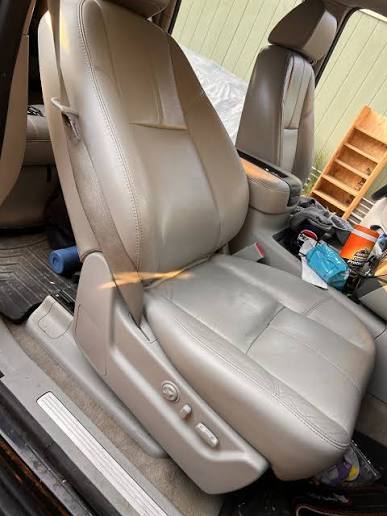
Symptoms of a GMC Power Seat Stuck in Recline
When a GMC power seat becomes stuck in the reclined position, the symptoms are not always identical. In some cases, the seat may stop moving completely. In others, only the backrest function fails while the seat can still slide forward, backward, upward, or downward. Paying attention to the exact behavior of the seat can help you identify which component is most likely causing the problem.
One of the most common signs is a seat that reclines normally but refuses to return to an upright position. This often points to a worn power seat switch, a failing recline motor, or damaged wiring between the switch and the motor. The switch may still send power in one direction but fail to complete the circuit in the opposite direction.
Another common symptom is complete silence when you press the recline control. If there is no clicking, humming, or motor noise, the problem may involve a blown fuse, failed switch, loose connector, or loss of power to the seat. However, silence does not automatically mean the motor is defective. A motor cannot run if it is not receiving voltage.
If you hear a clicking or humming sound but the backrest does not move, the recline motor may be trying to operate while the mechanism is jammed. A damaged gear, bent linkage, or mechanical obstruction inside the seat frame can create this symptom. The motor may also be weak and unable to move the seat under load.
Slow or intermittent movement is another warning sign. The seat may move only after pressing the switch several times, or it may stop halfway and begin working again later. This can indicate worn switch contacts, corrosion in an electrical connector, low battery voltage, or a motor that is approaching the end of its service life.
You may also notice that the memory seat function has stopped working at the same time. On GMC models equipped with memory seating, a control module stores seat positions and commands the motors. If the module loses calibration or develops an internal fault, the recline function may stop responding correctly.
Common symptoms include:
- The seatback is stuck fully or partially reclined
- The seat moves in one direction but not the other
- Other seat adjustments still work normally
- The recline motor makes noise but the seat does not move
- There is no sound when the switch is pressed
- The seat moves slowly or only intermittently
- The memory seat function no longer recalls saved positions
- The seat stops at the same point every time
- The switch feels loose, sticky, or physically damaged
The more specific you can be about the symptom, the easier it will be to avoid replacing the wrong part.
What Causes a GMC Power Seat to Get Stuck in Recline?
A GMC power seat stuck in recline can result from an electrical failure, mechanical obstruction, control module problem, or a combination of several issues. The best troubleshooting approach is to begin with the simplest and least expensive possibilities before moving to motors, modules, or major seat components.
1. Faulty Power Seat Switch
The power seat switch is one of the most common failure points. Every time you move the recline control, small internal contacts complete an electrical circuit and send voltage to the seat motor. Over time, these contacts can wear out, burn, loosen, or become contaminated with dirt and moisture.
A failing switch may work in one direction but not the other. For example, the seat may recline backward but refuse to return upright. This happens because the switch uses separate contacts to reverse the polarity of the motor. One side of the circuit may remain functional while the other fails.
Liquid spills, dust, repeated use, and physical damage can shorten the life of the switch. If the button feels loose, sticks in place, or works only when pressed at a certain angle, the switch deserves close inspection.
2. Burned-Out Recline Motor
The recline motor controls the angle of the seatback. If this motor fails, the seat may remain stuck even though the other adjustments continue to function. A motor can fail because of worn brushes, damaged internal gears, overheating, corrosion, or excessive strain from repeated operation.
A completely failed motor may remain silent when power is applied. A weak motor may hum, click, or move the seat only when no one is sitting in it. In some cases, tapping the motor lightly may make it work temporarily, but this is usually a sign that replacement will soon be necessary.
3. Blown Fuse or Circuit Protection Issue
A blown fuse can disable the entire power seat system. The fuse may fail because of a temporary electrical surge, a shorted wire, a jammed motor, or excessive current draw.
The exact fuse location depends on the GMC model and model year. It may be located in the instrument panel fuse block, underhood fuse box, rear electrical center, or another designated fuse panel. The owner’s manual should identify the correct fuse or circuit breaker.
Replacing a fuse may restore power, but a fuse that blows again should not be ignored. Repeated fuse failure usually indicates a short circuit, damaged wiring, or a motor drawing too much current.
4. Damaged Wiring or Loose Connectors
Power seat wiring is exposed to constant movement. Every time the seat slides forward or backward, the harness underneath must flex. Over time, wires can become pinched, stretched, rubbed through, or disconnected.
Loose connectors are also common after interior repairs, carpet cleaning, seat removal, or accidental contact with objects stored under the seat. Corrosion may develop if moisture enters the cabin or if a liquid spill reaches the wiring.
A damaged wire may cause intermittent operation, complete failure, or movement in only one direction. Inspect the harness carefully for crushed insulation, exposed copper, melted sections, loose terminals, and disconnected plugs.
5. Seat Control Module Failure
Some GMC vehicles use a seat control module to manage power adjustments, memory functions, and communication with other vehicle systems. If the module fails or loses calibration, the seat may stop responding even though the fuse, switch, and motor appear normal.
Module-related problems are more likely when several seat functions fail at the same time. You may also notice that memory positions no longer save, the easy-exit feature stops working, or diagnostic trouble codes are stored.
A faulty module may require professional testing, reprogramming, or replacement. Installing a new module without confirming the diagnosis can lead to unnecessary expense.
6. Mechanical Obstruction or Damaged Recline Mechanism
Not every GMC power seat problem is electrical. Coins, pens, toys, debris, seat covers, and personal items can interfere with the seat frame or recline linkage. A bent bracket, damaged gear, broken cable, or seized pivot can also prevent movement.
When the motor runs but the seatback does not move, a mechanical problem becomes more likely. Continued use of the switch may overheat the motor or damage the gears, so avoid holding the control once it becomes clear that the seat is jammed.
7. Low Battery Voltage
Power seats require a stable electrical supply. A weak battery may provide enough energy to power lights and electronics while struggling to operate a loaded seat motor.
Low voltage is especially likely if the seat moves slowly, works only with the engine running, or stops after the vehicle has been parked for a long time. Testing the battery and charging system can rule out a broader electrical issue.
Step-by-Step Diagnosis
Diagnosing a GMC power seat stuck in recline should follow a logical sequence. Replacing parts without testing can quickly become expensive, especially if the actual problem is a fuse, connector, or damaged wire.
Step 1: Test Every Seat Function
Begin by checking every available adjustment. Move the seat forward, backward, upward, downward, and through the lumbar settings if equipped. Then test the recline function in both directions.
If every function is dead, suspect a power supply issue such as a blown fuse, failed circuit breaker, disconnected connector, or missing ground. If only the recline function fails, the switch, recline motor, wiring, or recline mechanism is more likely.
Step 2: Check the Fuse and Circuit Breaker
Locate the power seat fuse using the owner’s manual or the diagram on the fuse box cover. Remove the fuse and inspect it visually, but do not rely only on appearance. A fuse can sometimes look intact even when it has failed.
Use a multimeter or test light to confirm power on both sides of the fuse. Replace a failed fuse only with one of the same amperage rating. Installing a higher-rated fuse can overheat the wiring and create a fire risk.
If the replacement fuse blows again, stop testing the seat until the short circuit or overloaded component has been identified.
Step 3: Listen for Motor Operation
Press the recline switch while listening closely near the seatback and lower seat frame.
A humming or clicking sound suggests that the motor is receiving power. The problem may involve weak motor output, stripped gears, a jammed mechanism, or a damaged linkage.
Complete silence may point to a failed switch, damaged wiring, blown fuse, poor ground, failed module, or burned-out motor.
Step 4: Inspect the Area Under the Seat
Move the seat only if another adjustment still works and it is safe to do so. Use a flashlight to inspect the wiring harness, connectors, seat track, and surrounding area.
Look for loose plugs, pinched wires, exposed copper, corrosion, melted insulation, coins, pens, or other objects. Do not place your hands near moving tracks while someone operates the switch.
Gently reconnect any loose connector after turning the ignition off. Avoid pulling directly on the wires.
Step 5: Test the Seat Switch
Remove the switch trim only if you are comfortable working with interior components. Inspect the connector for corrosion, looseness, or damaged terminals.
A multimeter can be used to verify whether the switch sends voltage to the recline motor in both directions. If power enters the switch but does not leave through the appropriate output terminal, the switch is likely defective.
Sometimes the seat will move when the switch is pressed firmly, wiggled, or operated from a specific angle. This is a strong sign of worn internal contacts.
Step 6: Test Power and Ground at the Recline Motor
Accessing the recline motor may require removing trim panels or partially loosening the seat. Before removing the seat, disconnect the battery and follow proper precautions for seat-mounted airbags and restraint connectors.
With the circuit safely prepared, test for voltage at the motor connector while operating the recline switch. The polarity should reverse when the switch direction changes.
If correct voltage and ground reach the motor but it does not move, the motor or mechanical recline assembly is probably faulty. If voltage is missing, trace the problem back toward the switch, wiring, fuse, or control module.
Step 7: Check Battery Voltage
Measure the battery voltage with the engine off and again while the engine is running. A weak battery or charging system problem can cause slow or inconsistent seat operation.
The seat should not be diagnosed in isolation if other electrical components are also behaving abnormally. Dim lights, slow window motors, hard starting, or multiple warning messages may indicate a broader voltage problem.
Step 8: Scan for Diagnostic Trouble Codes
Vehicles with memory seating or advanced seat modules may store diagnostic trouble codes. A compatible scan tool can identify communication errors, position sensor faults, module failures, or circuit problems.
Basic code readers may not access body control or seat modules. A professional scan tool or dealership-level diagnostic system may be required.
Step 9: Inspect the Mechanical Recline Assembly
If the motor runs and receives proper voltage, inspect the recline gears, drive cables, pivot points, and brackets. Broken teeth, seized pivots, or damaged cables can prevent the seatback from moving.
Avoid forcing the backrest by hand. Excessive pressure can bend the frame, damage the airbag wiring, or break internal components.
A careful diagnosis helps separate a simple electrical issue from a more expensive mechanical failure. In many cases, the exact sound, movement pattern, and voltage reading will reveal the faulty component before any parts need to be replaced.
How to Reset a GMC Power Seat Stuck in Recline
If your GMC power seat is stuck in the reclined position, a reset procedure may restore normal operation without replacing any parts. Power seats rely on electronic control modules, position sensors, and electric motors. Occasionally, a temporary software glitch or loss of synchronization can prevent the seat from responding correctly. Before purchasing expensive components, try the following reset methods.
Method 1: Perform a Battery Reset
A battery reset is often the easiest troubleshooting step. Disconnecting the battery allows the seat control module to power down completely and clear temporary faults.
Start by turning off the engine and removing the key from the ignition. Open the hood and disconnect the negative battery terminal using the appropriate wrench. Leave the battery disconnected for approximately 10 to 15 minutes to ensure the control modules fully discharge.
Reconnect the battery securely and start the vehicle. Test every seat adjustment, including forward, backward, height adjustment, lumbar support, and recline. If the issue was caused by a temporary electronic fault, the seat may begin functioning normally again.
Keep in mind that disconnecting the battery may reset the clock, radio presets, and other stored vehicle settings.
Method 2: Reset the Memory Seat System
Many GMC models equipped with memory seating allow the control module to recalibrate the seat position.
Turn the ignition to the ON position without starting the engine. Move the seat through its complete range of motion if any adjustments are still functional. Slide the seat fully forward and backward, raise and lower the cushion, then operate the recline function if possible.
After cycling the seat, save a new memory position using the Memory button and one of the numbered preset buttons. Some vehicles automatically recalibrate the seat position during this process.
If the memory system resumes normal operation but the recline function remains inoperative, the issue is likely mechanical or related to the recline motor.
Method 3: Inspect and Reset the Fuse
A partially failed fuse or poor fuse connection can interrupt power to the seat system.
Locate the power seat fuse in the appropriate fuse box using the owner’s manual. Remove the fuse and inspect both the fuse and its terminals. Replace the fuse with one of the exact same amperage if necessary.
Even if the fuse appears intact, removing and reinstalling it can sometimes restore a poor electrical connection caused by oxidation or vibration.
If the replacement fuse immediately blows again, discontinue testing and investigate for a short circuit or overloaded motor.
Method 4: Reinitialize the Seat Control Module
Some newer GMC vehicles require the seat control module to relearn seat positions after electrical interruptions.
With the ignition switched on, operate each seat adjustment from one extreme to the other. Hold the switch for several seconds after the movement stops before reversing direction. Repeat this process for every available seat function.
This procedure allows the module to recognize the full travel limits of each motor. Although not every GMC model supports this calibration method, it is a simple step worth trying before replacing electronic components.
If none of these reset procedures restores normal seat operation, the problem is likely caused by a failed switch, damaged wiring, defective recline motor, or mechanical failure within the seat assembly.
DIY Fixes You Can Try Before Visiting a Repair Shop
Many GMC power seat problems can be resolved with basic hand tools and careful inspection. Performing a few simple repairs yourself can save hundreds of dollars in unnecessary labor charges.
Clean the Power Seat Switch
Dust, spilled drinks, and dirt frequently accumulate around the seat controls. Over time, contamination can prevent the switch from making proper electrical contact.
Use compressed air to remove loose debris around the switch. Apply a small amount of electrical contact cleaner into the switch while repeatedly operating each button. Allow the cleaner to dry completely before testing the seat again.
Difficulty Level: Easy
Estimated Time: 15 to 20 minutes
Estimated Cost: Less than $15
Lubricate the Seat Tracks
A dry or partially seized seat mechanism places additional strain on the recline motor.
Inspect the seat tracks and recline linkage for rust, dirt, or hardened grease. Clean the affected areas before applying a silicone-based lubricant or white lithium grease. Operate the seat several times to distribute the lubricant evenly.
Avoid petroleum products that attract excessive dirt or damage plastic components.
Difficulty Level: Easy
Estimated Time: 20 minutes
Estimated Cost: $10 to $20
Remove Obstructions
Small objects frequently fall beneath vehicle seats without the driver’s knowledge.
Coins, pens, charging cables, toys, bottle caps, and other debris can interfere with the recline mechanism or seat tracks. Carefully inspect beneath and behind the seat using a flashlight before assuming an electrical failure.
Difficulty Level: Easy
Estimated Time: 10 minutes
Estimated Cost: Free
Tighten Loose Electrical Connectors
Electrical connectors beneath the seat may loosen over time because of constant seat movement.
Disconnect the vehicle battery before handling any wiring. Locate the connectors beneath the seat and verify that each connector is fully seated and locked. Look for corrosion, bent terminals, or damaged insulation.
If corrosion is present, clean the terminals using electrical contact cleaner before reconnecting them.
Difficulty Level: Moderate
Estimated Time: 30 minutes
Estimated Cost: Less than $20
Replace the Power Seat Switch
If testing confirms that the switch is defective, replacement is usually straightforward.
Remove the trim panel surrounding the controls, disconnect the electrical connector, install the new switch, and verify operation before reinstalling the trim.
Most replacement switches require no programming.
Difficulty Level: Moderate
Estimated Time: 45 to 60 minutes
Estimated Parts Cost: $70 to $250
Replace the Recline Motor
A failed recline motor requires more mechanical work but remains within the capability of experienced DIY mechanics.
Depending on the GMC model, partial seat disassembly may be necessary to access the motor. Disconnect the battery before working around seat-mounted airbags. Carefully remove the old motor, install the replacement, reconnect the wiring, and verify proper operation before reassembling the seat.
Difficulty Level: Advanced
Estimated Time: 2 to 4 hours
Estimated Parts Cost: $150 to $500
If you are uncomfortable removing the seat or working near airbag components, professional installation is strongly recommended.
GMC Power Seat Repair Costs
Repair costs vary depending on the failed component, vehicle model, labor rates, and whether original equipment or aftermarket parts are used. Fortunately, many power seat problems involve relatively inexpensive repairs rather than complete seat replacement.
Replacing a blown fuse is usually the least expensive repair, typically costing between $5 and $20 if performed yourself.
A replacement power seat switch generally costs between $70 and $250, including labor at most repair shops.
If the recline motor has failed, expect total repair costs ranging from $200 to $600, depending on the accessibility of the motor and labor required.
Repairing damaged wiring or electrical connectors typically costs $100 to $400, although severe wiring damage may increase the final bill.
Replacing a faulty seat control module is considerably more expensive because many modules require programming after installation. Total costs generally range from $300 to $900.
In rare situations where the seat frame, recline mechanism, and electrical components have all suffered extensive damage, replacing the complete seat assembly may cost anywhere from $1,000 to $3,000, especially when genuine GMC parts are used.
Before approving expensive repairs, request a complete diagnosis. Many vehicle owners replace motors or control modules unnecessarily when the actual problem is a worn switch, loose connector, or damaged wire. A systematic diagnosis can significantly reduce repair costs while ensuring the correct component is repaired the first time.
Models Most Commonly Affected
Although a GMC power seat stuck in recline can occur in nearly any model equipped with power-adjustable seats, certain vehicles are reported more frequently due to higher production numbers, heavier daily use, or aging electrical components. The exact cause varies by model year, trim level, and seating configuration, but understanding common patterns can help narrow down the diagnosis.
GMC Sierra
The GMC Sierra is one of the most commonly reported models for power seat issues, particularly on higher trim levels equipped with 8-way or 10-way power seats and memory functions.
Owners often report that the driver’s seat reclines normally but refuses to return upright. In many cases, the culprit is a worn seat switch or a failing recline motor after years of repeated use. Wiring beneath the driver’s seat can also become damaged due to constant seat movement, especially in work trucks that experience frequent entry and exit.
If your Sierra also has memory seating, a malfunctioning seat control module should not be ruled out.
GMC Yukon
Because the Yukon is frequently used as a family SUV or long-distance travel vehicle, its power seats typically receive extensive use over time.
Common complaints include intermittent recline operation, memory seat failures, and seat movement that stops halfway through its travel. Debris trapped beneath the seat is also more common in SUVs carrying children or pets.
Fortunately, many Yukon seat problems can be resolved by cleaning electrical connectors, replacing the seat switch, or recalibrating the memory seat system.
GMC Acadia
The GMC Acadia features a more compact seat assembly, making electrical connectors and wiring harnesses particularly susceptible to movement-related wear.
Owners occasionally report that the recline function fails while every other adjustment continues to operate normally. This often points toward a defective recline motor or switch rather than a complete electrical failure.
If multiple seat functions stop working simultaneously, checking the fuse and seat control module should be among the first diagnostic steps.
GMC Terrain
Terrain owners generally experience fewer seat-related issues than owners of larger GMC trucks and SUVs. However, aging vehicles may develop worn switches, loose connectors, or motor fatigue after years of regular operation.
Water intrusion from wet clothing or accidental beverage spills can also damage the seat controls, particularly if liquids seep into the switch assembly.
Routine cleaning and periodic inspection of the seat controls can significantly reduce the likelihood of future failures.
GMC Canyon
The GMC Canyon shares many electrical components with the Chevrolet Colorado, including portions of the power seat system.
Because these midsize trucks are often used in construction, farming, and outdoor environments, dirt, dust, and moisture may accelerate wear inside the switch assembly and wiring connectors.
Frequent inspection beneath the driver’s seat is recommended, especially if the truck is regularly exposed to mud, sand, or standing water.
Regardless of which GMC model you own, the diagnostic process remains largely the same. Begin with the simplest possibilities such as fuses, switches, and wiring before considering expensive components like seat motors or control modules.
How to Prevent Future Power Seat Problems
While some component failures are unavoidable due to normal wear, many power seat problems can be prevented through regular maintenance and careful operation. A few simple habits can extend the life of your seat motors, switches, and electrical system while reducing the risk of unexpected failures.
Keep the seat controls clean by wiping them periodically with a soft microfiber cloth. Dirt, dust, and spilled liquids can gradually work their way inside the switch assembly, leading to poor electrical contact and premature failure.
Avoid storing loose objects beneath the front seats. Coins, pens, flashlights, charging cables, and children’s toys frequently become lodged in the seat tracks or recline mechanism. Even small objects can prevent the seat from moving properly or overload the recline motor.
Operate the seat smoothly rather than holding the switch after the seat reaches its maximum travel. Continuing to apply power after the motor has stopped places unnecessary stress on the gears and electrical components.
Inspect the area beneath the seat during routine vehicle cleaning. Look for damaged wiring, loose connectors, or signs of corrosion. Addressing these issues early is much less expensive than replacing a burned-out motor or control module later.
Lubricate the seat tracks occasionally using a high-quality silicone lubricant or white lithium grease. Clean away dirt and old grease before applying fresh lubricant to ensure smooth movement.
If your vehicle has memory seats, save your preferred seating position again after replacing the battery or performing electrical repairs. This helps maintain proper calibration and ensures the control module recognizes the correct seat positions.
Pay attention to early warning signs such as slow seat movement, intermittent operation, unusual noises, or switches that require repeated pressing. These symptoms often appear long before complete failure occurs, giving you an opportunity to make inexpensive repairs before additional components are damaged.
Routine maintenance not only improves comfort but can also prevent costly repairs and extend the service life of the entire power seat system.
Frequently Asked Questions
Why is my GMC power seat stuck in the reclined position?
The most common causes include a faulty seat switch, failed recline motor, blown fuse, damaged wiring harness, defective seat control module, or a mechanical obstruction inside the recline mechanism. A systematic diagnosis is the best way to identify the exact cause.
Can a blown fuse cause the seat to stay reclined?
Yes. A blown fuse can disable the entire power seat system or interrupt power to specific seat functions. However, if the replacement fuse blows again, there is likely an underlying electrical problem that needs further investigation.
How do I manually move a power seat that won’t recline?
Some seat mechanisms can be accessed by removing trim panels and manually turning the motor drive with the appropriate tool. Others require partial seat disassembly. Because procedures vary between GMC models, consult the factory service manual before attempting manual adjustment.
Will disconnecting the battery reset the power seat?
In some cases, yes. Disconnecting the battery allows the seat control module to reset and may clear temporary electronic faults. However, this procedure will not repair damaged motors, switches, or mechanical components.
Is it safe to drive with the seat stuck in recline?
Driving with a seat that is excessively reclined is not recommended. An improper seating position reduces visibility, limits steering control, and may prevent the seat belt and airbags from providing optimal protection during a collision.
How much does it cost to repair a GMC power seat?
Repair costs typically range from less than $20 for a fuse replacement to more than $1,000 if the entire seat assembly requires replacement. Most common repairs involving switches, wiring, or motors fall between $100 and $600.
Can I replace the recline motor myself?
Experienced DIY mechanics with the proper tools can often replace the recline motor at home. However, because many seats contain airbags and complex electrical connectors, beginners may find professional installation to be the safer option.
How can I tell if the seat switch or motor is bad?
If the motor receives power but does not move, the motor is usually at fault. If power never reaches the motor when the switch is pressed, the switch, wiring, fuse, or control module is more likely responsible. A multimeter is the most effective tool for confirming the diagnosis.
Conclusion
A GMC power seat stuck in recline is certainly frustrating, but it does not always indicate a major mechanical failure. In many cases, the issue can be traced to relatively inexpensive components such as a blown fuse, worn seat switch, loose electrical connector, or damaged wiring. By following a structured diagnostic process, you can identify the root cause more efficiently and avoid replacing parts that are still functioning properly.
For more advanced issues involving the recline motor, seat control module, or mechanical seat assembly, professional diagnosis may be the most cost-effective solution. Attempting repairs without proper testing can lead to unnecessary expenses and additional damage.
Regular maintenance plays an important role in preventing future seat problems. Keeping the seat tracks clean, protecting the switches from moisture, inspecting the wiring beneath the seat, and addressing minor symptoms early can significantly extend the life of the power seat system.
Whether you drive a GMC Sierra, Yukon, Acadia, Terrain, Canyon, or another GMC model, the troubleshooting methods outlined in this guide provide a practical starting point for restoring normal seat operation. With patience and a systematic approach, many power seat problems can be resolved without replacing the entire seat assembly.
If you’ve experienced a GMC power seat stuck in recline, share your vehicle model, model year, symptoms, and repair solution in the comments. Your experience may help other GMC owners diagnose and fix the same issue more quickly.