Dodge Ram gear selector problems can cause the shifter to become stuck in Park, stop responding, select the wrong gear, or trigger a Service Shifter warning. These problems can originate from the gear selector itself, the brake-shift interlock, electrical components, shift linkage, control modules, or the transmission system. Identifying the specific symptom is therefore the first step toward finding the actual fault.
A gear selector problem does not automatically mean the transmission has failed. For example, a truck that cannot shift out of Park may have a faulty brake switch or shift-interlock problem, while an electronic selector that does not respond may point to a power, wiring, connector, or selector assembly fault. A truck that accepts the driver’s gear selection but fails to engage that gear can indicate a different problem involving transmission operation or control.
This guide explains the common symptoms and causes of Dodge Ram gear selector problems, how to diagnose the affected system, and which repairs address each root cause. It also covers driving safety, repair costs, affected model years, recalls, and steps that can help prevent future gear-selection problems.
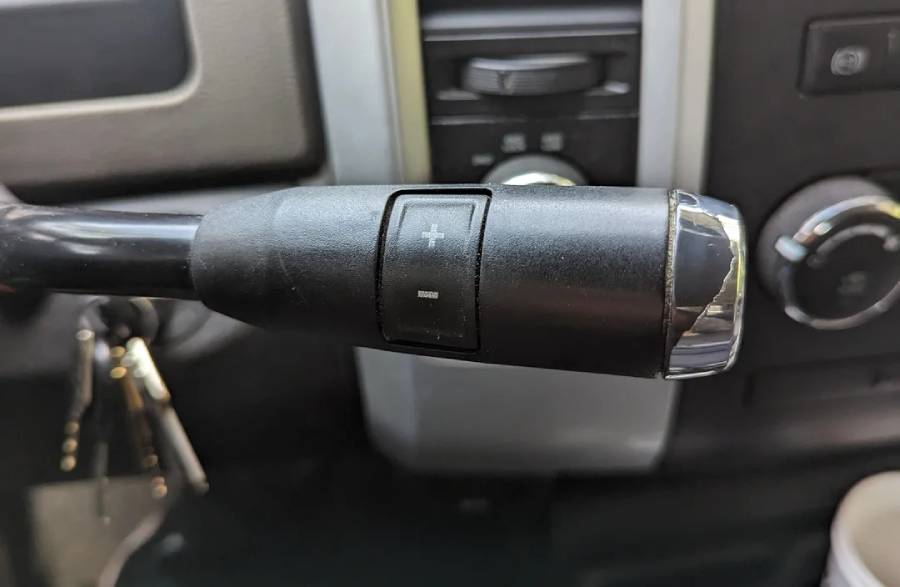
What Are the Most Common Dodge Ram Gear Selector Problems?
The most common Dodge Ram gear selector problems include a shifter stuck in Park, an unresponsive selector, failure to engage the selected gear, an incorrect gear-position indication, abnormal resistance or looseness in the shifter, and a Service Shifter warning. The exact symptoms depend on the model year, shifter design, and component responsible for the failure.
A Dodge Ram gear selector stuck in Park is one of the clearest symptoms. The shift-interlock system is designed to prevent the driver from moving out of Park until required conditions, such as applying the brake pedal, are met. A problem with the brake-switch signal, interlock mechanism, electrical supply, or related components can therefore leave the selector locked even when the driver presses the brake pedal.
An unresponsive gear selector presents differently. On trucks equipped with an electronic or rotary selector, the driver may turn or operate the selector but receive no expected response from the vehicle. Electrical power problems, damaged connections, selector faults, or communication problems within the control system can produce this behavior. The symptom should not be treated as proof that the selector assembly itself has failed because several components participate in transmitting and processing the driver’s gear request.
Another symptom occurs when the selector moves normally but the truck does not engage the requested gear. For example, the driver may select Drive while the vehicle remains in Neutral or fails to respond as expected. This symptom requires a broader diagnosis because the selector may be successfully sending the request while a control or transmission-related fault prevents the requested gear from being engaged.
An incorrect gear-position display is also significant. The indicated PRND position should correspond with the actual selected gear. A mismatch between the driver’s selection, dashboard indication, and vehicle behavior requires attention because it can indicate a problem in the selection, position-detection, linkage, electrical, or transmission-control system.
Physical changes in shifter operation provide additional diagnostic clues. A selector that suddenly feels loose can indicate a mechanical connection problem on configurations that use linkage or a cable, while unusual resistance can indicate binding or another mechanical fault. These symptoms must be evaluated according to the specific shifter configuration rather than assuming every Dodge Ram uses the same selection mechanism.
A Service Shifter message indicates that the vehicle has detected a fault associated with the shifter or gear-selection system. The warning identifies a system-level problem rather than confirming that one specific component has failed. Diagnosis is necessary before replacing the shifter because electrical connections, control circuits, related modules, or the selector assembly can contribute to the warning.
What Causes Dodge Ram Gear Selector Problems?
Dodge Ram gear selector problems can be traced to 7 main areas: the selector assembly, brake-shift interlock system, mechanical linkage, electrical power supply, wiring and connectors, electronic control system, and transmission. Identifying which area is responsible prevents unnecessary replacement of a working gear selector.
The gear selector assembly itself can fail mechanically or electronically. A mechanical failure can change how the selector moves or prevent normal movement, while an electronic failure can prevent the driver’s selection from being transmitted correctly. The relevant failure mode depends heavily on whether the truck uses a column, rotary, or another selector configuration.
The brake-shift interlock system is particularly relevant when the truck is stuck in Park. This safety system uses brake-pedal input as part of the process that allows the selector to leave Park. A faulty brake switch, interlock component, or related electrical circuit can interrupt that process. Checking whether the brake lights respond normally when the pedal is pressed can provide an initial diagnostic clue, although normal brake-light operation alone does not rule out every interlock-related fault.
Mechanical linkage or shift-cable problems apply to Dodge Ram configurations that use these components to transfer selector movement. Wear, damage, disconnection, or incorrect adjustment can create a mismatch between the selector position and the actual transmission position. For example, the driver may move the shifter toward Drive while damaged or misadjusted linkage fails to move the transmission-side mechanism to the corresponding position.
Electrical power is another important cause on electronically controlled systems. Low battery voltage or an interrupted power supply can affect electronic gear-selection components because they depend on stable electrical power to operate and communicate. Battery condition, charging-system performance, fuses, and power circuits therefore belong in the diagnostic process when the selector suddenly becomes unresponsive or warning messages appear.
Wiring and connector faults can interrupt signals even when the selector itself remains functional. Damaged wiring, corrosion, poor terminal contact, or loose connectors can interfere with communication between the driver’s selector input and the systems responsible for executing that input. An intermittent connection can also explain a problem that appears and disappears rather than remaining constant.
Control-system faults form another category. The transmission control module, powertrain control module, and associated communication networks participate in gear-selection and transmission operation depending on the vehicle configuration. A communication or control fault can consequently produce symptoms that resemble a defective selector. Diagnostic trouble codes and circuit testing become important when basic mechanical and electrical inspections do not reveal the cause.
Finally, a transmission problem can produce symptoms that drivers mistake for a bad gear selector. If the selector accepts the driver’s command and correctly indicates the requested position but the transmission does not engage or operate as expected, diagnosis must extend beyond the shifter. This distinction is important because replacing a functioning selector will not correct an internal transmission or transmission-control fault.
How Can You Diagnose a Dodge Ram Gear Selector Problem?
Diagnose a Dodge Ram gear selector problem by checking the electrical supply, brake-shift interlock, fuses, selector behavior, wiring and connectors, mechanical linkage where applicable, and diagnostic trouble codes. The order matters because a simple power or brake-switch fault can produce symptoms that resemble a failed selector or transmission problem.
Start with the battery and electrical system when an electronic or rotary gear selector becomes completely unresponsive. Check whether the truck starts normally, whether other electrical systems operate correctly, and whether low-voltage symptoms are present. A weak battery or poor electrical connection can interfere with electronically controlled components, so stable power should be confirmed before the selector assembly is treated as defective.
Check the brake lights and shift-interlock operation next when the selector is stuck in Park. The interlock prevents the transmission from being shifted out of Park until the required brake-pedal input is detected. If pressing the brake pedal does not produce the expected brake-light response, the brake switch or its circuit becomes a relevant diagnostic target. A functioning brake light does not eliminate every interlock fault, but it helps narrow the search.
Inspect the relevant fuses, wiring, and electrical connectors when the selector receives power intermittently, stops responding without a mechanical change, or triggers a warning message. Look for loose connectors, damaged wiring, corrosion, poor terminal contact, or an interrupted circuit. An intermittent electrical connection can produce a selector problem that disappears after restarting the truck and returns later.
Observe exactly what happens when a gear is selected. Determine whether the selector physically moves, whether the dashboard displays the requested position, and whether the transmission actually engages that gear. These are three separate events. A failure at the first event points toward the selector or interlock mechanism, while successful selection followed by failed engagement shifts diagnostic attention toward the control or transmission system.
Mechanical linkage or a shift cable should be inspected on configurations that use those components. Excessive shifter movement, unusual looseness, resistance, or a mismatch between selector position and transmission position can indicate wear, disconnection, damage, or incorrect adjustment. The inspection procedure must match the specific Ram model year and shifter configuration because the gear-selection mechanism differs across vehicles.
A diagnostic scan should follow when basic inspection does not identify the fault or when the truck displays a Service Shifter warning. Diagnostic trouble codes can identify affected circuits, implausible position signals, communication faults, or transmission-control problems. A trouble code should guide diagnosis rather than automatically determine which part to replace. The circuit and component associated with the code still need to be tested.
How Can You Tell a Bad Gear Selector From a Transmission Problem?
A bad gear selector primarily affects the driver’s ability to request or communicate a gear selection, while a transmission problem affects the vehicle’s ability to engage or operate the requested gear. Comparing selector movement, indicated gear position, and actual transmission response helps separate the two fault categories.
Suspect the selector system first when the shifter will not move, an electronic selector does not respond, the displayed position does not correspond with the selection, or the vehicle reports a shifter-specific fault. These symptoms occur before or during the process of requesting a gear and therefore point toward components involved in gear selection, position detection, interlocking, electrical communication, or control.
Suspect a transmission or transmission-control problem when the selector accepts the command and the correct gear appears on the display but the truck still fails to engage or operate normally. For example, selecting Drive successfully while the vehicle fails to move as expected indicates that the diagnostic process must extend beyond the physical selector.
The distinction is important because the same driver complaint—“my Ram won’t go into gear”—can describe two different failures. One truck may not be able to request Drive because of a selector-system fault, while another may successfully request Drive but fail to engage it because of a transmission-related fault. Confirming where the selection process stops prevents unnecessary parts replacement.
How Do You Fix Dodge Ram Gear Selector Problems?
Fix a Dodge Ram gear selector problem by repairing the component responsible for the failed gear-selection process rather than replacing the shifter automatically. The correct repair can involve restoring electrical power, repairing the brake-shift interlock circuit, correcting wiring or connector faults, servicing mechanical linkage, replacing a failed selector assembly, or repairing a control or transmission fault.
Repair power-supply problems first when testing confirms insufficient or unstable voltage. The battery, terminals, grounds, fuses, charging system, and related power circuits should be checked according to the identified fault. Replacing the selector without correcting an electrical supply problem can leave the original symptom unchanged.
Repair a brake-switch or shift-interlock fault when the truck remains in Park because the system does not receive or execute the required brake input. The specific repair depends on which part of the circuit fails. A defective switch requires a different repair from a damaged wire, failed interlock component, or poor electrical connection, even though each can produce a similar stuck-in-Park symptom.
Repair damaged wiring and connectors when circuit inspection identifies an open circuit, damaged conductor, corrosion, loose terminal, or poor connection. Electrical faults should be corrected at their source rather than temporarily clearing a warning and assuming the problem has disappeared. Intermittent wiring faults are particularly important because normal selector operation may return temporarily even though the underlying defect remains.
Adjust or replace the shift linkage or cable when a vehicle equipped with those components has a confirmed mechanical problem. The goal is to restore the correct relationship between driver input and transmission position. A damaged or disconnected component requires replacement, while an adjustment should only be performed when the applicable service procedure identifies misalignment as the cause.
Replace or repair the gear selector assembly when testing confirms that the selector itself cannot correctly detect, transmit, or execute the driver’s input. Selector replacement should follow diagnosis, not serve as the first diagnostic step. This approach reduces the risk of replacing a functional assembly when the actual cause is a brake switch, electrical circuit, connector, control module, or transmission fault.
Control-module and transmission-related faults require repair based on diagnostic findings. Module communication problems can involve power, ground, network wiring, software, programming, or the module itself, while transmission problems can require a separate mechanical or hydraulic diagnosis. These faults should not be grouped under a generic “bad shifter” diagnosis simply because the initial symptom involves gear selection.
Can You Reset a Dodge Ram Gear Selector?
A Dodge Ram gear selector reset can help only when the specific problem involves an electronic state, calibration, or control condition for which the vehicle has an applicable reset or relearn procedure. A reset cannot repair a broken selector, damaged wire, failed brake switch, disconnected linkage, or internal transmission fault.
Avoid treating battery disconnection as a universal gear-selector reset. Disconnecting power may clear temporary states on some systems, but it can also reset stored information without repairing the fault that caused the warning. If the problem returns, the underlying component or circuit still requires diagnosis.
The correct reset or relearn procedure depends on the Ram model, model year, powertrain, and gear-selector system. Use the applicable service procedure when a reset or calibration is required. If the selector remains unresponsive, displays an incorrect gear position, or repeatedly triggers a Service Shifter warning after the appropriate procedure, continue diagnosis instead of repeatedly resetting the system.
Is It Safe to Drive a Dodge Ram With a Gear Selector Problem?
It is not safe to continue driving a Dodge Ram when a gear selector problem prevents you from confirming or controlling which gear the truck is in. A selector that does not correspond with the indicated or actual transmission position creates a safety risk because the vehicle may not respond as the driver expects.
Stop driving the truck when the selector position and actual gear do not match. For example, a vehicle that indicates Park but is not securely held in Park requires immediate attention because unintended vehicle movement is possible. The same principle applies when the driver selects Drive or Reverse but cannot reliably determine whether the requested gear has engaged.
A Dodge Ram that remains stuck in Park presents a different situation. The vehicle may not be moving, but forcing the selector is not an appropriate repair because excessive force can damage the shifter, linkage, or related components. The brake-shift interlock, brake-switch input, power supply, and selector system should be diagnosed to identify why Park cannot be released.
A Service Shifter warning also deserves diagnosis even when the truck appears to shift normally. The warning means the vehicle has detected a fault associated with the shifter or gear-selection system, but the warning alone does not identify the failed component. Continuing to operate the vehicle without diagnosis can allow an intermittent problem to progress into a condition where gear selection becomes unreliable.
The safest decision depends on whether gear selection remains predictable. Do not drive the truck if the selected gear cannot be verified, the vehicle unexpectedly changes its response to selector input, or Park cannot be reliably confirmed. A truck with these symptoms should be inspected before normal operation resumes.
How Much Does It Cost to Fix a Dodge Ram Gear Selector Problem?
The cost to fix a Dodge Ram gear selector problem depends on the failed component, because the same shifting symptom can originate from a brake switch, wiring, mechanical linkage, selector assembly, control system, or transmission. A diagnostic inspection should therefore identify the root cause before repair costs are estimated.
Electrical faults can involve relatively small components or more extensive circuit repairs. A blown fuse may be inexpensive to replace, but the cause of a repeatedly blown fuse still needs to be identified. Wiring repairs vary according to the location and extent of the damage, while corroded or damaged connectors can require terminal repair or connector replacement.
Brake-switch and shift-interlock repairs form another cost category. A truck stuck in Park because of a failed brake-switch input requires a different repair from one with a damaged interlock mechanism. Both problems can create the same initial symptom, which is why estimating repair cost from “stuck in Park” alone is unreliable.
Mechanical linkage or shift-cable repairs apply only to configurations equipped with those components. Adjustment can involve less work than replacement, while a broken, disconnected, or severely worn component can require new parts and additional labor. Model year and shifter configuration determine which mechanical components are present.
Replacing a failed gear selector assembly generally costs more than correcting a simple fuse, switch, or connector fault because the selector itself is a larger assembly and labor requirements vary by vehicle design. Electronic systems may also require diagnostic procedures or calibration after repair, depending on the specific vehicle and replacement procedure.
Control-module or transmission-related repairs can increase costs substantially because diagnosis extends beyond the selector. A communication fault, for example, must be traced through the relevant power, ground, wiring, network, and module circuits before a module is condemned. An internal transmission fault requires an entirely different repair path.
A reliable Dodge Ram gear selector repair estimate therefore requires the model year, truck configuration, diagnostic result, required parts, and local labor rate. Quoting one universal price for every Dodge Ram gear selector problem would combine several unrelated repairs into a figure that has little diagnostic value.
Which Dodge Ram Model Years Have Gear Selector Problems?
Dodge Ram gear selector problems cannot be assigned to one model year or generation without identifying the truck’s specific shifter design and failure type. Ram trucks have used different gear-selection systems across model years, so a stuck column shifter, an unresponsive rotary selector, and a transmission that fails to engage the requested gear should not automatically be classified as the same problem.
The distinction between Dodge Ram and Ram is also important when researching affected vehicles. Ram became a separate truck brand after previously being sold under Dodge, so owners and online sources may use “Dodge Ram” broadly even when referring to later Ram 1500, 2500, or 3500 trucks. Searching only for “Dodge Ram gear selector problems” can therefore mix vehicles from different generations and shifter configurations.
The selector design provides a more useful diagnostic starting point than model year alone. A truck with a mechanical column-shifter system can develop linkage, cable, or adjustment problems that do not apply in the same way to a truck using an electronic rotary selector. Electronic systems introduce a different group of potential faults involving power supply, wiring, position signals, communication, and control components.
For this reason, owners should identify the model year, Ram model, powertrain, and shifter configuration before comparing symptoms with another vehicle. A problem reported on one Ram 1500 does not establish that a Ram 2500 from another model year has the same root cause, even when both drivers describe the symptom as a gear selector problem.
Are There Recalls for Dodge Ram Gear Selector Problems?
A Dodge Ram or Ram truck may be covered by a gear-selection-related recall, but recall eligibility must be verified for the specific vehicle rather than inferred from the symptom alone. A truck being stuck in Park, displaying a Service Shifter warning, or failing to engage a selected gear does not by itself prove that the vehicle has an open recall.
A recall addresses a defined safety defect affecting a specified population of vehicles. Eligibility can depend on factors such as model, model year, production period, installed equipment, and vehicle identification number (VIN). Two trucks with similar gear-selection symptoms can therefore have different recall statuses.
Technical Service Bulletins (TSBs) should also be distinguished from recalls. A TSB provides service information to technicians about a known condition, diagnostic procedure, or repair approach. It does not automatically mean every vehicle of that model has the problem, and it does not have the same status as a safety recall.
Owner reports represent a third category. Multiple drivers can report similar shifter symptoms without those reports establishing a recall or proving that every case has the same cause. Owner complaints can identify a pattern worth investigating, but diagnosis and official vehicle-specific information remain necessary.
For an individual truck, check recall status using the VIN and then compare any applicable recall or service information with the actual symptom. If no applicable recall exists, the selector problem should still be diagnosed normally rather than assuming the absence of a recall means no fault is present.
Can Dodge Ram Gear Selector Problems Be Prevented?
Not every Dodge Ram gear selector failure can be prevented, but early attention to electrical, mechanical, and warning symptoms can reduce the risk of a minor fault progressing into an unreliable gear-selection condition. Prevention should focus on components that support selector operation rather than treating the shifter as an isolated part.
Maintain the battery and electrical system in good condition, particularly on trucks with electronically controlled selectors. Low voltage, poor terminal connections, damaged grounds, or unstable electrical power can interfere with electronic components and complicate diagnosis. A selector warning that appears alongside other electrical symptoms should therefore prompt an electrical-system check rather than immediate shifter replacement.
Respond to changes in selector operation as soon as they appear. Increased resistance, excessive looseness, intermittent response, an incorrect gear indication, or repeated difficulty leaving Park provides useful information before the system fails completely. Continuing to force a selector that has developed abnormal resistance can also create additional mechanical damage.
Do not ignore intermittent Service Shifter warnings simply because they disappear after restarting the truck. An intermittent warning can result from a connection, circuit, selector, or control problem that temporarily returns to normal operation. Recording when the warning occurs and scanning the vehicle for diagnostic information can make the underlying fault easier to identify.
Finally, verify unusual gear-selection behavior before continuing normal driving. A selector should provide a predictable relationship between driver input, indicated gear, and actual vehicle response. When those three elements stop matching, diagnosis is more important than repeatedly resetting the system or continuing to operate the truck until the fault becomes permanent.