Resetting the Electronic Throttle Control (ETC) on a Dodge Ram can restore normal throttle response when the system needs to relearn its throttle position or other adaptive values. The exact reset or relearn procedure depends on the Ram model year, engine, throttle system, and reason the calibration was lost. A procedure that works for one Dodge Ram configuration should not automatically be treated as correct for every model.
An ETC reset is most relevant after specific maintenance or calibration events, such as throttle body service or other work that requires the system to relearn its operating values. A reset does not repair a failed throttle body, damaged wiring, faulty sensor, or other active electrical or mechanical problem. If the red lightning bolt warning returns, the truck enters limp mode, or diagnostic trouble codes reappear after a reset, the underlying fault needs to be diagnosed instead of repeatedly clearing or resetting the system.
This guide explains how to approach a Dodge Ram electronic throttle control reset, complete the appropriate throttle relearn, verify whether the procedure worked, and troubleshoot an ETC problem that remains afterward.
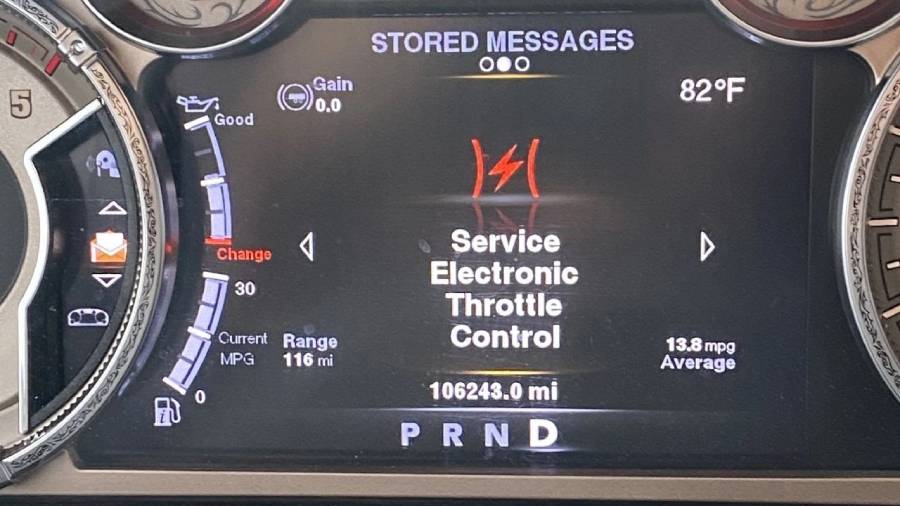
How Do You Reset the Electronic Throttle Control on a Dodge Ram?
You reset the Electronic Throttle Control on a Dodge Ram by completing the correct ignition and throttle relearn procedure for the truck’s model year, engine, and ETC configuration. The purpose of the procedure is to allow the Powertrain Control Module (PCM) or Engine Control Module (ECM) to recognize the expected throttle and accelerator pedal positions after learned values have been lost or a relevant component has been serviced.
There is not one manual reset sequence that can be confirmed as correct for every Dodge Ram. Dodge Ram and Ram trucks span multiple generations, engines, control modules, and electronic throttle systems. For that reason, the factory service information for the specific model year and powertrain takes priority over a generic ignition-pedal sequence found online. This distinction matters because an incorrect procedure may simply fail to initiate a relearn rather than correct the ETC problem.
A reset should also not be used as a substitute for diagnosis. The ETC system relies on coordinated signals from components such as the accelerator pedal position sensors, throttle actuator, throttle position sensors, PCM/ECM, electrical connectors, and associated wiring. An active fault in one of these components can cause the ETC warning to remain or return even after a relearn attempt.
What Should You Check Before Resetting the Electronic Throttle Control?
Check the battery condition, ETC warning status, diagnostic trouble codes, throttle body condition, and electrical connections before attempting an ETC reset. These checks help distinguish a lost calibration from an active mechanical or electrical fault that a reset cannot repair.
Start with the battery and electrical supply because the ETC system depends on stable voltage for the control module, sensors, and throttle actuator to communicate and operate correctly. A weak battery, poor terminal connection, damaged ground, or unstable supply voltage can produce abnormal electronic behavior. Correct an identified voltage or connection problem before attempting repeated throttle relearns.
Next, scan the truck for stored and pending diagnostic trouble codes when an OBD-II scan tool is available. A Check Engine Light or red lightning bolt warning does not identify the failed component by itself. Trouble codes provide a more specific diagnostic direction by indicating whether the control system has detected a throttle actuator, throttle position, accelerator pedal position, electrical circuit, or correlation problem. Record the codes before clearing them because clearing diagnostic information too early can remove useful evidence about the original fault.
Inspect the throttle body and its electrical connection as well. The throttle plate should not be assumed to need cleaning simply because an ETC warning appears. Visible contamination, a damaged connector, loose terminals, damaged wiring, or an identified mechanical problem requires appropriate inspection or repair. A relearn can restore learned values, but it cannot restore a failed actuator, repair damaged wiring, or correct a mechanically defective throttle body.
How Do You Perform a Dodge Ram Electronic Throttle Control Reset?
Perform the Dodge Ram ETC reset using the manufacturer-specified relearn procedure for the exact model year, engine, and throttle system. A commonly described manual approach involves an ignition cycle followed by a controlled accelerator-pedal input, but this sequence should not be treated as a universal factory procedure for every Dodge Ram.
Before beginning, place the truck in Park, apply the parking brake, switch off unnecessary electrical accessories, and make sure the accelerator pedal is completely released. Turn the ignition to the required ON position without starting the engine when the applicable service procedure calls for a key-on relearn. Trucks equipped with push-button starting require the corresponding ignition mode rather than a traditional key position.
Allow the control modules to initialize before making any pedal input. When the model-specific procedure requires accelerator pedal movement, depress and release the pedal smoothly according to the specified sequence rather than rapidly pumping it. The ETC system interprets accelerator pedal position electronically, so random pedal movement does not provide a reliable substitute for the prescribed calibration sequence.
Complete the required ignition cycle and allow the system to finish its initialization. Start the engine only when the applicable procedure instructs you to do so. Observe the idle and ETC warning indicator after startup rather than immediately assuming the reset succeeded. A stable idle, normal accelerator response, and absence of returning ETC faults provide more useful evidence than completion of the ignition sequence alone.
Some Dodge Ram configurations may require a scan-tool-assisted relearn instead of, or in addition to, a manual procedure. Use the applicable service information or a capable diagnostic scan tool when the vehicle does not support the manual procedure, the relearn repeatedly fails, or a replacement component requires an electronically commanded calibration.
How Do You Relearn the Throttle Position After the Reset?
Relearn the throttle position by allowing the ETC system to establish the expected relationship between accelerator input, commanded throttle opening, and actual throttle position using the procedure specified for the vehicle. Resetting stored or adaptive information and completing a throttle relearn are related actions, but they are not necessarily the same operation.
The ETC system does not use a traditional mechanical throttle cable to directly translate every pedal movement into throttle plate movement. Accelerator pedal position is measured electronically, the control module calculates the required throttle command, and the throttle actuator changes throttle plate position. Throttle position feedback then allows the control module to verify whether actual movement corresponds with the commanded position. A relearn establishes or verifies the reference values required for this control process.
After the appropriate relearn, let the engine reach the operating state required by the applicable service procedure and monitor idle behavior. Avoid interpreting a brief change in idle immediately after service as proof of either success or failure. The relevant indicators are whether idle stabilizes, accelerator response remains predictable, the ETC warning stays off, and diagnostic faults do not return.
A road test may be appropriate after a successful stationary relearn when the truck operates normally and no condition makes driving unsafe. Apply the accelerator progressively and check for hesitation, restricted power, abnormal throttle response, or limp mode. The relearn should be considered unsuccessful if the ETC warning returns, throttle response remains abnormal, or relevant diagnostic trouble codes reappear. In that situation, further diagnosis is more appropriate than repeatedly performing the same reset.
How Do You Know if the Dodge Ram Throttle Reset Worked?
A Dodge Ram throttle reset has worked when throttle response returns to normal, idle stabilizes, the Electronic Throttle Control warning stays off, and the truck does not return to limp mode. Diagnostic trouble codes related to the ETC system should also remain cleared after the vehicle completes the appropriate operating cycle. Completing a reset sequence alone does not confirm success; the ETC system must operate normally afterward.
Start the engine and observe its idle behavior without immediately pressing the accelerator. The engine should settle into a consistent idle once the applicable relearn process is complete. An unusually high, low, fluctuating, or rough idle can indicate that the relearn has not completed correctly or that another engine-management problem remains. Idle behavior is especially relevant after throttle body cleaning or replacement because the airflow characteristics at the closed or near-closed throttle position may differ from the values previously learned by the control module.
Next, check accelerator and throttle response. Press the accelerator progressively and confirm that engine response is smooth and predictable. Hesitation, delayed response, restricted engine speed, unexpected surging, or a major difference between pedal input and engine response indicates that the ETC system requires further diagnosis. The PCM/ECM continuously compares accelerator pedal input with commanded and actual throttle position, so inconsistent signals can cause the system to limit throttle operation rather than respond normally to the driver.
Check the instrument panel during idle and, when the truck is safe to drive, during a controlled road test. The red lightning bolt ETC warning should not remain illuminated or repeatedly return after a successful procedure. The Check Engine Light also requires attention when it remains on because an ETC-related diagnostic trouble code may still be active even when the truck appears to drive normally.
An OBD-II scan provides another verification method. Read stored and pending trouble codes after the reset and again if the warning returns. A returning ETC-related code indicates that clearing or resetting the system did not eliminate the underlying condition. For example, a persistent throttle actuator, throttle position, accelerator pedal position, or circuit fault requires diagnosis of the affected system instead of another identical reset attempt.
Limp mode is a particularly important sign. The PCM/ECM can restrict throttle response when it detects a condition that prevents reliable electronic throttle operation. If normal power returns after the reset and remains available, that result supports a successful relearn. If reduced power or limp mode returns, treat the problem as an unresolved ETC fault rather than a calibration issue.
When Does a Dodge Ram Need an Electronic Throttle Control Reset?
A Dodge Ram may need an Electronic Throttle Control reset or relearn when the system’s learned throttle values have been disrupted by applicable service, component replacement, or loss of calibration. The need for a relearn depends on the truck’s model year, engine, control strategy, and the work that was performed. An ETC warning by itself does not prove that a reset is required.
The distinction between calibration loss and component failure determines whether resetting is useful. A relearn addresses stored or adaptive values used by the electronic throttle system. It does not repair a damaged throttle actuator, failed position sensor, defective accelerator pedal sensor, open or shorted circuit, poor electrical connection, or mechanical throttle body problem. Diagnose an active fault when evidence points to one of these conditions.
The applicable service procedure should determine whether a relearn is required after maintenance. This approach prevents unnecessary reset attempts and avoids treating every throttle-related symptom as a calibration problem. The specific event that occurred before the symptom appeared—such as battery work, throttle body cleaning, or throttle body replacement—provides important diagnostic context.
Does a Dodge Ram Need a Throttle Reset After Disconnecting the Battery?
A Dodge Ram does not automatically require the same throttle reset procedure every time the battery is disconnected; the requirement depends on the vehicle’s model year, powertrain, and control strategy. Disconnecting power can affect adaptive or learned information in electronic control systems, but the values affected and the relearn process are vehicle-specific.
After reconnecting the battery, start by observing how the engine operates rather than immediately performing an unverified pedal sequence. Check idle stability, throttle response, warning indicators, and diagnostic trouble codes. Normal operation without an ETC warning provides little reason to repeatedly reset the throttle system solely because battery power was disconnected.
Perform the applicable relearn when the manufacturer service procedure specifies one or when the truck exhibits symptoms consistent with lost learned values after battery service. If an ETC warning, severe throttle restriction, or relevant trouble code appears, diagnose that condition as well. A battery disconnect can coincide with low voltage, loose terminals, poor grounds, or other electrical issues, and a throttle reset cannot correct those faults.
Does a Dodge Ram Need a Reset After Cleaning the Throttle Body?
A Dodge Ram may require a throttle relearn after throttle body cleaning when the service changes the relationship between the previously learned throttle position and actual airflow. Whether a separate relearn procedure is required depends on the specific ETC system and manufacturer service instructions for that truck.
Deposits can accumulate around the throttle plate and bore during normal operation. The control system can adapt to changes over time, so removing substantial deposits may alter airflow at a given throttle position compared with the condition before cleaning. A relevant relearn allows the control system to operate using values appropriate for the serviced throttle body rather than relying on assumptions based on its previous condition.
Throttle body cleaning should not be treated as a universal fix for an ETC warning. Inspect and diagnose the system before cleaning when trouble codes or other evidence indicate an actuator, sensor, wiring, connector, or control-system fault. Cleaning addresses contamination; it does not repair an electronic or mechanical component that has failed.
After cleaning and completing any specified relearn, verify the result through idle quality, throttle response, warning-light status, and diagnostic data. Persistent rough idle, abnormal throttle response, an ETC warning, or returning trouble codes indicates that further diagnosis is required.
Does a Dodge Ram Need a Reset After Replacing the Throttle Body?
A Dodge Ram can require an ETC relearn or calibration after throttle body replacement so the control system can correctly recognize and operate the replacement assembly. The exact requirement must be determined from service information for the specific model year, engine, and throttle body configuration.
Installing the replacement throttle body and calibrating the ETC system are separate parts of the repair when a relearn is specified. The PCM/ECM needs reliable relationships between commanded throttle movement and actual throttle position. Depending on the vehicle, this process may occur through an initialization procedure, a defined relearn sequence, a scan-tool function, or another manufacturer-specified process.
Do not assume that a new throttle body has fixed the original problem until the system has been verified. The original ETC fault may involve wiring, connectors, accelerator pedal position sensing, power supply, or another part of the control circuit. Replacing the throttle body without diagnosing those possibilities can leave the same warning and drivability symptoms in place.
Confirm the repair after installation and the applicable relearn by checking idle stability, accelerator response, ETC warning status, and diagnostic trouble codes. If the red lightning bolt returns or the truck enters limp mode after the replacement and relearn, continue diagnosis instead of repeatedly resetting the new throttle body.
Why Won’t the Electronic Throttle Control Reset on a Dodge Ram?
A Dodge Ram Electronic Throttle Control reset will not solve the problem when an active mechanical, sensor, wiring, voltage, or control-system fault remains. A reset or relearn changes or re-establishes learned operating values; it does not repair a component that cannot provide the input, movement, or feedback required by the ETC system.
The ETC system depends on several components working together. The accelerator pedal position sensors report driver input, the PCM/ECM determines the required throttle opening, the throttle actuator moves the throttle plate, and throttle position feedback confirms whether the commanded movement occurred. Power, ground, wiring, and electrical connectors allow these components to communicate. A fault anywhere in this control path can prevent normal throttle operation even when the reset procedure itself is performed correctly.
There are 4 main areas to investigate when an ETC reset repeatedly fails: the throttle body and actuator, throttle position sensing, accelerator pedal position sensing, and electrical supply or wiring. Diagnostic trouble codes and scan-tool data can help narrow the fault before parts are replaced. Repeating a reset without identifying the cause is unlikely to produce a lasting result when the ETC warning or limp mode consistently returns.
Can a Dirty or Damaged Throttle Body Prevent a Successful Reset?
A contaminated, mechanically restricted, or electrically defective throttle body can prevent normal ETC operation after a reset. The throttle body contains the throttle plate and electronic actuator responsible for controlling airflow into the engine. The PCM/ECM expects the actual throttle position to correspond with the position it commands.
Deposits around the throttle plate and bore can affect airflow and throttle movement, particularly when contamination becomes substantial. Cleaning can address removable deposits when inspection confirms contamination, but cleaning and resetting serve different purposes. Cleaning changes the physical condition of the throttle body, while relearning allows the control system to establish the appropriate operating values afterward when the vehicle requires that procedure.
Mechanical or electrical throttle body failure requires a different response. A damaged throttle plate, failing actuator motor, internal electronic fault, or other physical defect cannot be corrected by clearing adaptive information. The system may detect that the actual throttle position does not follow its command and illuminate the ETC warning or restrict engine power.
Inspect the throttle body, connector, and associated wiring when the warning returns after a reset. Use diagnostic trouble codes and scan data to support the diagnosis instead of replacing the throttle body solely because the red lightning bolt appears. A throttle body is one part of the ETC system, not the only possible source of an ETC fault.
Can a Throttle Position Sensor Cause the ETC Problem to Return?
A throttle position sensing fault can cause the ETC warning to return because the PCM/ECM needs reliable throttle position feedback to control the throttle plate. The control system compares the requested throttle position with feedback representing the throttle plate’s actual position. An implausible or inconsistent signal can therefore be treated as an ETC fault.
This feedback function is critical because electronic throttle control does not rely solely on the accelerator pedal command. The control module must also determine whether the throttle plate moved to the expected position. When the reported position does not agree with the commanded position within the system’s expected operating parameters, the control module can store a diagnostic trouble code and limit throttle operation.
A reset cannot make an electrically defective position circuit produce reliable data. When a relevant code returns after the relearn, inspect the system according to the diagnostic procedure for that vehicle. Depending on the Dodge Ram configuration, throttle position sensing may be integrated into the electronic throttle body rather than serviced as a separate external sensor. Confirm the component configuration before purchasing replacement parts.
Scan-tool live data can provide additional diagnostic evidence because it allows commanded and reported values to be compared while the system operates. An abnormal value still requires proper circuit and component testing; it should not automatically be interpreted as proof that a specific sensor must be replaced.
Can an Accelerator Pedal Position Sensor Cause an ETC Warning?
An accelerator pedal position sensor fault can trigger an ETC warning when the control module cannot reliably determine the driver’s requested acceleration. The accelerator pedal is an electronic input to the ETC system, so incorrect, inconsistent, or implausible pedal-position information can affect throttle control even when the throttle body itself is functional.
The control sequence begins with pedal input. The accelerator pedal position sensing system reports pedal movement to the PCM/ECM, the control module calculates an appropriate throttle command, and the throttle actuator changes throttle plate position. Throttle position feedback then allows the system to verify the result. This relationship means an ETC problem can originate before the throttle body receives its command.
Modern electronic throttle systems use signal validation strategies because unintended throttle movement presents a significant control problem. When the control module detects accelerator pedal information that does not meet its expected relationship or operating range, it can store a fault and reduce throttle authority. The driver may experience limited acceleration, poor throttle response, an ETC warning, or limp mode.
Diagnose pedal-related trouble codes before replacing the throttle body. Inspect the accelerator pedal assembly, electrical connector, wiring, power supply, and signal behavior according to the vehicle-specific diagnostic procedure. Replacing or resetting the throttle body will not correct an accelerator pedal circuit that continues to provide invalid information.
Can Low Battery Voltage or Wiring Problems Cause an ETC Fault?
Low system voltage, poor electrical connections, damaged wiring, or inadequate power and ground can cause ETC faults because the throttle system depends on stable electrical operation. These conditions should be checked when throttle symptoms appear after battery work, electrical repairs, intermittent starting problems, or other voltage-related events.
The throttle actuator, position-sensing circuits, accelerator pedal sensors, and control module require electrical power and intact circuits. Loose battery terminals, corroded or damaged connections, wiring faults, or poor grounds can interrupt these relationships. An intermittent connection is particularly difficult to identify because the truck may operate normally at one moment and display an ETC warning at another.
Check battery condition and connections before assuming that an electronic throttle component has failed. Inspect relevant connectors and wiring for visible damage, poor terminal engagement, contamination, or other defects indicated by the vehicle-specific diagnostic process. Diagnostic trouble codes describing circuit voltage, signal correlation, or communication behavior can provide direction, but each code must be interpreted in the context of the circuit it monitors.
Correct the identified electrical fault before repeating the relearn. A successful ETC reset requires the underlying throttle system to operate correctly; resetting the control system cannot compensate for an unstable voltage supply or damaged circuit. If the electrical supply is stable and the ETC warning still returns, continue diagnosis using the stored codes, scan data, and manufacturer test procedures.
Why Is the Red Lightning Bolt Light On After Resetting the Dodge Ram?
The red lightning bolt can remain on or return after an ETC reset when the Dodge Ram still detects a fault affecting electronic throttle control. Completing a reset does not guarantee that the underlying condition has disappeared. When the control module continues to detect an abnormal throttle command, position signal, pedal input, electrical circuit, or related operating condition, it can reactivate the warning.
The ETC warning should therefore be treated as an indication that the electronic throttle system requires attention, not as proof that one specific component has failed. The system depends on coordinated operation between the accelerator pedal input, PCM/ECM, throttle actuator, throttle position feedback, wiring, connectors, and electrical supply. A problem in any relevant part of that control path can cause the warning to return.
The timing of the warning provides useful diagnostic context. A light that returns immediately after startup suggests that the control module is detecting a fault during initialization or its initial system checks. A warning that appears only after the accelerator is pressed, the engine reaches a particular operating condition, or the truck is driven can indicate that the fault becomes detectable only when the system performs a specific command or comparison. The timing does not identify the failed component by itself, but it helps determine when the fault occurs.
Read stored and pending diagnostic trouble codes when the warning remains on or returns. Preserve the codes before clearing them again because they can identify which part of the ETC control process requires testing. Scan-tool data can then be used to compare relevant inputs and outputs, such as accelerator pedal position and throttle position, when the applicable diagnostic procedure calls for those values.
Do not repeatedly reset the ETC simply to turn off the red lightning bolt. If the warning consistently returns, the reset has already demonstrated that the problem is not being permanently resolved through relearning alone. The next step is to diagnose the active fault and repair its cause.
Can You Drive a Dodge Ram With the Electronic Throttle Control Light On?
You should not continue normal driving with the Dodge Ram ETC light on when throttle response is abnormal, engine power is restricted, the engine stalls, or the truck enters limp mode. These symptoms indicate that the electronic throttle system is not operating normally and that predictable accelerator response may be compromised.
Electronic throttle control directly affects how the engine responds to accelerator input. The accelerator pedal provides an electronic request, the control module determines the appropriate throttle command, and the throttle actuator controls throttle plate movement. A fault that makes this process unreliable can cause the control module to restrict throttle operation rather than continue providing normal engine response.
Limp mode is one possible result. In this operating state, the vehicle can limit engine power or throttle response because the control system has detected a condition that prevents normal operation. The restriction is a symptom of an unresolved fault, not evidence that the truck has repaired itself. Resetting the ETC to temporarily restore power does not establish that the underlying problem is gone.
Stop driving when accelerator response becomes unpredictable or the engine repeatedly stalls. A truck that hesitates severely, fails to respond normally to pedal input, or unexpectedly loses engine power can be difficult to control in traffic. Moving the vehicle only as necessary to reach a safe location is different from continuing normal driving while hoping the warning will clear.
An ETC warning with apparently normal engine operation still warrants diagnosis. Check for stored and pending diagnostic trouble codes and observe whether throttle behavior changes. An intermittent electrical or sensor fault can disappear temporarily and return when vibration, temperature, voltage, or another operating condition changes.
The appropriate response therefore depends on both the warning and the truck’s behavior. Normal throttle response does not make a persistent ETC warning irrelevant, while reduced power, limp mode, stalling, or unpredictable acceleration makes further driving inappropriate until the fault is diagnosed. Once the cause has been identified and repaired, complete any required reset or relearn and verify that the warning does not return.
How Do You Diagnose a Dodge Ram ETC Problem That a Reset Does Not Fix?
Diagnose a Dodge Ram ETC problem that remains after a reset by reading the diagnostic trouble codes, identifying the affected circuit or control function, inspecting the related components and wiring, and testing the system before replacing parts. A failed reset narrows the problem: when the correct relearn has been completed but the ETC warning, abnormal throttle response, or limp mode returns, an active fault requires investigation.
Start with an OBD-II scan instead of clearing the warning again. Retrieve stored, pending, and applicable manufacturer-specific diagnostic trouble codes and record them before erasing anything. Freeze-frame information, when available, can provide additional context by showing operating conditions when a fault was recorded. Engine speed, vehicle speed, throttle position, accelerator pedal position, and system voltage can help establish what the truck was doing when the problem occurred.
Use each code as a diagnostic direction rather than a replacement-parts instruction. A code associated with throttle position does not automatically prove that the throttle body is defective because the reported problem can involve the component, connector, wiring, power supply, ground, signal relationship, or another part of the monitored circuit. The same principle applies to accelerator pedal and throttle actuator faults.
Next, compare the diagnostic information with the truck’s symptoms. Determine whether the ETC warning appears immediately after startup, during idle, when the accelerator is pressed, or only while driving. Also record whether the truck has rough idle, hesitation, reduced power, stalling, or limp mode. Connecting the code with the conditions that trigger the symptom creates a more useful diagnostic path than repeatedly performing the same reset.
Inspect and test the indicated system according to the service information for the specific Dodge Ram. The required checks can include electrical connectors, wiring continuity, power and ground, accelerator pedal position signals, throttle position feedback, throttle actuator operation, and system voltage. When scan-tool bidirectional tests or manufacturer-specific relearn functions are required, a diagnostic tool with the necessary capabilities is more appropriate than a basic code reader.
Which OBD-II Codes Can Point to a Dodge Ram Throttle Control Problem?
OBD-II codes associated with throttle position, throttle actuator control, accelerator pedal position, and signal correlation can point toward a Dodge Ram ETC problem. The exact meaning and diagnostic procedure must be confirmed for the truck’s model year, engine, and control system rather than inferred solely from the code number.
Throttle position-related codes indicate that the control module has detected a problem involving throttle position information or its expected operating range. This information matters because the PCM/ECM needs feedback about actual throttle plate position to determine whether the throttle actuator followed the commanded movement. A position-related code can therefore direct diagnosis toward the throttle body, integrated position sensing, connector, wiring, or related circuits.
Throttle actuator control codes point toward the system responsible for electronically moving the throttle plate. The actuator must respond to control-module commands and produce movement that agrees with expected throttle position feedback. A problem in the actuator, its electrical circuit, power supply, wiring, connector, or throttle mechanism can interfere with this relationship.
Accelerator pedal position codes direct attention toward the driver’s electronic throttle input. The control module uses pedal-position signals to determine requested acceleration. Invalid or inconsistent input can cause restricted throttle operation even when the throttle body is mechanically capable of moving normally.
Correlation or performance codes are particularly relevant to an ETC diagnosis because electronic throttle control depends on signals agreeing with each other within defined limits. The control module can detect a fault when two related position signals disagree or when commanded throttle operation does not correspond with the feedback it expects.
Specific code numbers should be interpreted using service information applicable to the vehicle. Do not replace the throttle body, accelerator pedal assembly, or another ETC component based only on the presence of a code. Confirm the circuit and component condition using the diagnostic tests specified for that fault.
What Should You Inspect After Reading the Trouble Codes?
Inspect the circuit and component identified by the diagnostic information, beginning with accessible electrical connections and progressing to component and signal testing. This sequence reduces unnecessary parts replacement and preserves the relationship between the detected fault and the physical system being tested.
Start with connectors and visible wiring in the affected circuit. Look for loose or incompletely seated connectors, damaged terminals, damaged insulation, contamination, and wiring that has been pulled, pinched, or exposed to excessive heat. Pay particular attention to areas that were recently disturbed during battery service, throttle body cleaning, component replacement, or other engine-bay work.
Check power, ground, and system voltage when the fault has an electrical component. Stable electrical supply is necessary for the control module, throttle actuator, and position sensors to operate correctly. A voltage problem should be corrected before interpreting unusual electronic throttle data because unstable supply conditions can affect multiple parts of the system simultaneously.
Use live data to evaluate the relevant position signals when the scan tool and service procedure support that test. Accelerator pedal position should change predictably as the pedal moves, while throttle position feedback should respond appropriately to commanded throttle operation. Look for values that become erratic, stop changing, disagree with related signals, or behave abnormally when the ETC warning appears.
Test the throttle body and accelerator pedal system only as directed by the applicable diagnostic procedure. Some Dodge Ram configurations integrate throttle position sensing and the actuator into the throttle body assembly, so assuming that every sensor is separately replaceable can lead to an incorrect repair plan. Component configuration should be confirmed before disassembly or replacement.
The diagnostic process should follow a clear sequence: read the codes, preserve the operating context, identify the affected circuit, inspect the wiring and connectors, verify electrical supply, evaluate relevant scan data, and perform the manufacturer-specified component tests. Replace a component when testing supports its failure rather than because an ETC reset did not work.
When Should You Stop Resetting the ETC and Have the Dodge Ram Diagnosed?
Stop resetting the Electronic Throttle Control when the ETC warning repeatedly returns, the truck continues entering limp mode, throttle response remains abnormal, the engine stalls, or the same diagnostic trouble codes reappear. These symptoms indicate that relearning alone is not resolving the condition and that the underlying mechanical, electrical, sensor, or control-system fault needs to be diagnosed.
A repeated red lightning bolt warning is one of the clearest reasons to move from resetting to diagnosis. The ETC system monitors accelerator input, commanded throttle movement, actual throttle position, and related electrical signals while the engine operates. When the control module detects the same unacceptable condition after a reset, it can activate the warning again. Repeating the same relearn does not repair the condition that caused the system to detect the fault.
Repeated limp mode also requires diagnosis. Reduced throttle authority or restricted engine power indicates that the control system is not allowing normal operation while the fault is present. A reset that temporarily restores normal performance but is followed by another limp-mode event should not be considered a successful repair. The temporary improvement only shows that resetting changed the system state before the fault was detected again.
Stop attempting resets when throttle response remains unpredictable. Severe hesitation, delayed acceleration, restricted power, abnormal engine response to pedal movement, or stalling requires investigation of the ETC system and related engine-management components. These symptoms are more significant than an isolated warning because they show that the problem is affecting vehicle operation.
Returning diagnostic trouble codes provide another clear stopping point. Read and record the codes instead of repeatedly clearing them. A code that reappears after the appropriate operating conditions have occurred indicates that the control module continues to detect the monitored fault. Use the code, freeze-frame information, live data, and vehicle-specific diagnostic procedure to determine whether the problem involves the throttle body, accelerator pedal system, electrical circuit, power supply, wiring, connectors, or another related component.
Professional diagnosis becomes appropriate when the required tests exceed the available tools or service information. Manufacturer-specific scan functions, bidirectional actuator testing, electrical measurements, wiring diagnosis, and certain throttle relearn procedures can require equipment beyond a basic OBD-II code reader. A qualified technician can test the system rather than relying on repeated resets or replacing components by assumption.
The same principle applies after throttle body replacement. Do not continue resetting a newly installed throttle body when the ETC warning or original drivability problem remains after the correct installation and applicable relearn. Verify the replacement part and calibration, then investigate the rest of the control system. The original fault can exist in the accelerator pedal circuit, wiring, connector, electrical supply, or another monitored part of the ETC system.
A Dodge Ram ETC reset is useful when the electronic throttle system needs an applicable calibration or relearn. It is not a repair for an active component or circuit failure. Once the correct reset or relearn has been attempted and the same fault returns, structured diagnosis is the next step.