The battery on most Dodge Challenger models is located in the trunk, not under the hood. Specifically, it sits beneath the trunk floor on the passenger-side rear section, close to the spare tire well (or the storage compartment on models without a spare tire). This rear-mounted design often surprises first-time owners because most vehicles place the battery inside the engine bay.
Dodge relocated the battery to the rear to improve weight distribution, free up engine compartment space, and reduce the battery’s exposure to engine heat. As a result, owners who need to inspect the battery, replace it, recharge it, or jump-start the vehicle must follow a different procedure than they would on many other cars. Although the battery itself is in the trunk, Dodge also provides dedicated jump-start terminals under the hood, allowing the vehicle to be jump-started without directly accessing the battery in most situations.
This guide explains where the Dodge Challenger battery is located, how to access it safely, why Dodge chose a rear-mounted battery design, and how the location varies across model years. You’ll also learn where the jump-start terminals are, how to replace the battery correctly, what battery specifications to look for, and the maintenance practices that help maximize battery life.
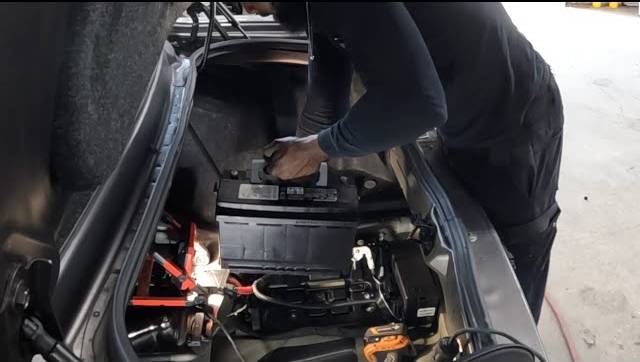
Where Is the Battery Located on a Dodge Challenger?
The battery on nearly all Dodge Challenger models is located inside the trunk rather than under the hood. It is positioned beneath the trunk floor on the passenger-side rear section of the vehicle, close to the spare tire well or the underfloor storage compartment, depending on the model year and trim level. This rear-mounted configuration has been used throughout the modern Dodge Challenger lineup, making it one of the first locations owners should check when performing battery maintenance.
Unlike many passenger vehicles that mount the battery inside the engine compartment, the Challenger uses a rear-mounted battery to optimize vehicle engineering. Moving the battery to the rear improves front-to-rear weight distribution, frees valuable space in the engine bay for larger engines and cooling components, and helps protect the battery from excessive engine heat. Lower operating temperatures can reduce thermal stress on the battery, contributing to more consistent performance over time.
Owners often assume the battery is missing after opening the hood because only the jump-start terminals are visible in the engine compartment. This design allows emergency jump-start procedures to be completed from under the hood while keeping the battery safely enclosed in the trunk. Understanding this layout prevents unnecessary disassembly and helps owners locate the battery more quickly during inspections, charging, or replacement.
Although the battery location is consistent across most Dodge Challenger model years from 2008 onward, slight variations in trunk trim panels, cargo floor design, and battery covers may exist between trims such as the SXT, GT, R/T, Scat Pack, Hellcat, and Demon. These differences affect only how the battery compartment is accessed rather than the battery’s general location.
How Do You Access the Battery on a Dodge Challenger?
How do you open the battery compartment?
Accessing the Dodge Challenger battery requires removing the trunk floor panel. Start by parking the vehicle on a level surface, turning off the ignition, and removing the key or key fob from the vehicle. Open the trunk and lift the carpeted cargo floor. Depending on the model, you may need to remove the floor insert, storage tray, or spare tire cover before the battery compartment becomes visible.
Most Challenger models secure the battery beneath a protective cover designed to shield it from cargo and debris. Once the cover is removed, the battery, hold-down bracket, battery terminals, and vent tube can be inspected. Before disconnecting any cables, visually examine the battery for corrosion, loose terminal connections, fluid leakage, or physical damage that could indicate replacement is necessary.
Which tools are needed to reach the battery?
Only a few common hand tools are required to access and remove the battery. Most owners can complete the job using a socket wrench, a ratchet with the appropriate socket size for the terminal clamps and hold-down bracket, work gloves, and safety glasses. A battery terminal cleaning brush and a digital multimeter are also useful for inspecting battery condition before deciding whether replacement is necessary.
If the battery is being replaced rather than inspected, a battery carrying strap is recommended because AGM batteries used in many Dodge Challenger models are significantly heavier than they appear. Using the correct tools minimizes the risk of damaging the battery terminals or surrounding trim components.
What safety precautions should you follow before touching the battery?
Disconnecting the battery safely helps prevent electrical damage and personal injury. Always switch off the engine, remove the ignition key, and ensure all electrical accessories are turned off before beginning work. Wear protective gloves and eye protection because batteries can produce corrosive residue and, under certain conditions, release hydrogen gas during charging.
Disconnect the negative (-) battery terminal first to reduce the risk of creating an electrical short circuit if a tool contacts the vehicle body. After the negative cable has been removed, disconnect the positive (+) terminal. During installation, reverse the sequence by connecting the positive terminal first and the negative terminal last. This procedure reduces the likelihood of accidental sparking and follows standard automotive battery service practices.
Avoid placing metal tools directly across both battery terminals, and never smoke or create sparks near the battery compartment. If corrosion is present around the terminals, clean the affected areas before installing the new battery to ensure a secure electrical connection and reliable starting performance.
Why Is the Dodge Challenger Battery Located in the Trunk?
Dodge places the Challenger battery in the trunk to improve weight distribution, maximize engine compartment space, and reduce heat exposure. This engineering approach is common in rear-wheel-drive performance cars because relocating the battery shifts some weight from the front axle toward the rear axle, resulting in a more balanced chassis.
A better weight distribution improves vehicle handling during acceleration, braking, and cornering. The Dodge Challenger is equipped with large-displacement V6 and V8 engines that already place significant weight over the front wheels. Relocating the battery helps offset part of this front-end weight, improving vehicle stability without requiring major suspension changes.
The rear-mounted battery also creates additional room inside the engine compartment. Modern Challenger models contain large engines, cooling systems, intake components, electronic modules, and emission-control equipment. Moving the battery to the trunk gives engineers greater flexibility when packaging these components while making engine maintenance less crowded.
Another advantage is reduced exposure to engine heat. Batteries perform best within moderate temperature ranges, while excessive heat accelerates electrolyte evaporation and internal chemical degradation. By locating the battery away from the engine bay, Dodge helps reduce thermal stress that can shorten battery life, particularly in regions with consistently high ambient temperatures.
Although the battery itself is stored in the trunk, owners can still perform emergency jump-start procedures without opening the battery compartment. Dodge provides dedicated jump-start terminals under the hood, combining the packaging benefits of a rear-mounted battery with the convenience of front-mounted service points.
Where Are the Jump-Start Terminals on a Dodge Challenger?
The jump-start terminals on a Dodge Challenger are located under the hood rather than next to the battery. The positive (+) jump terminal is covered by a red plastic protective cap, while the negative connection is made to a designated chassis ground point or grounding stud attached to the vehicle body. This configuration allows roadside assistance or owners to jump-start the vehicle without removing the trunk floor or accessing the battery directly.
Using the under-hood terminals is the procedure recommended for routine jump-starting because it is faster, safer, and reduces the chance of accidentally shorting the battery terminals inside the trunk. The electrical system is designed so these remote terminals provide the same starting current required by the starter motor while keeping the battery compartment protected.
How do you jump-start a Dodge Challenger safely?
A safe jump-start follows the correct cable connection sequence. Position the assisting vehicle close enough for the jumper cables to reach without allowing the vehicles to touch each other. Turn off both ignitions before making any electrical connections.
Connect the red jumper cable to the positive terminal of the discharged Challenger first, then connect the other end of the red cable to the positive terminal of the donor battery. Attach the black cable to the donor vehicle’s negative terminal, then connect the remaining black clamp to the designated grounding point on the Challenger instead of directly to the battery’s negative terminal.
Start the donor vehicle and allow it to idle for several minutes before attempting to start the Challenger. Once the engine starts successfully, disconnect the jumper cables in the reverse order of installation. Allow the engine to run for at least 20 to 30 minutes or drive the vehicle so the alternator can begin recharging the battery. If the vehicle repeatedly requires jump-starting, the battery or charging system should be tested because repeated discharge often indicates battery deterioration or an alternator-related problem.
Why shouldn’t you connect jumper cables directly to the battery?
Using the remote jump-start terminals is safer than connecting directly to the battery in normal situations. The battery is enclosed beneath the trunk floor, making direct access less convenient during emergencies. More importantly, connecting the negative cable to the designated grounding point reduces the possibility of sparks forming immediately adjacent to the battery, where hydrogen gas may accumulate during charging.
The remote terminals are engineered specifically for high-current starting procedures and provide the same electrical path needed to crank the engine. Following the manufacturer’s connection points also reduces the risk of damaging sensitive electrical components or creating poor cable connections that can interfere with successful starting.
Does the Battery Location Change by Dodge Challenger Model Year?
The battery location remains largely the same across modern Dodge Challenger models. Whether you own an early third-generation Challenger introduced in 2008 or one of the final production models built in 2023, the battery is typically mounted beneath the trunk floor on the passenger-side rear section. While Dodge updated the vehicle’s exterior styling, interior technology, powertrain options, and safety systems over the years, the rear-mounted battery configuration remained consistent.
Owners may notice small differences in cargo floor panels, battery covers, storage compartments, or mounting hardware between model years, but these changes do not significantly affect battery access. Regardless of trim level, the battery is designed to remain isolated from the engine compartment while the remote jump-start terminals stay under the hood for easier emergency access.
2008–2014 Dodge Challenger Models
Battery placement is consistent throughout the early third-generation Challenger models. Vehicles produced between 2008 and 2014 position the battery beneath the trunk floor near the passenger-side rear corner. Access generally requires lifting the carpeted cargo floor and removing the protective battery cover before reaching the battery terminals and hold-down bracket.
Most maintenance procedures—including battery inspection, charging, and replacement—follow the same sequence throughout these model years. Owners should always disconnect the negative battery cable before removing the positive cable to minimize the risk of electrical short circuits.
2015–2023 Dodge Challenger Models
The redesigned 2015–2023 Challenger continues using the rear-mounted battery layout. Although Dodge introduced updated interiors, revised electronics, additional driver-assistance features, and new engine options during these years, the battery remained in the trunk beneath the cargo floor.
Some later models include revised trunk trim panels or additional storage inserts that slightly change the removal process before reaching the battery compartment. These differences are cosmetic rather than mechanical and typically add only one or two extra steps when accessing the battery.
Are There Any Differences Between Trim Levels?
Most Dodge Challenger trim levels share the same battery location regardless of engine size. Models such as the SXT, GT, R/T, Scat Pack, SRT Hellcat, Jailbreak, Redeye, and Demon all use a rear-mounted battery configuration. The primary differences involve battery specifications rather than battery placement.
Higher-performance models often require batteries with greater Cold Cranking Amps (CCA) to support larger engines and increased electrical demand. Optional equipment packages may also affect battery capacity, but they do not relocate the battery from the trunk.
How Do You Replace the Battery on a Dodge Challenger?
Replacing the battery on a Dodge Challenger involves accessing the trunk-mounted battery, disconnecting the electrical connections in the correct order, and installing a compatible replacement battery. Following the proper procedure helps prevent electrical damage and ensures the vehicle’s charging system operates correctly after installation.
Step 1: Prepare the Vehicle
Park the Challenger on a level surface, shift the transmission into Park, switch off the ignition, and remove the key fob from the vehicle. Open the trunk and lift the cargo floor to expose the battery compartment. Wear safety glasses and insulated gloves before handling the battery.
Step 2: Disconnect the Battery
Disconnect the negative (-) terminal first using the appropriate socket or wrench. After the negative cable has been isolated, disconnect the positive (+) terminal. Removing the negative cable first reduces the possibility of accidentally creating a short circuit if a tool contacts the vehicle body.
Step 3: Remove the Hold-Down Bracket
Remove the battery hold-down bracket that secures the battery inside the compartment. Carefully lift the battery straight upward using both hands or a battery carrying strap. Because AGM batteries are relatively heavy, avoid lifting them by the terminals or battery cables.
Step 4: Install the New Battery
Position the replacement battery in the same orientation as the original unit. Confirm that the battery dimensions, terminal layout, voltage, and CCA rating match the manufacturer’s specifications before installation. Secure the battery with the hold-down bracket to prevent movement during vehicle operation.
Step 5: Reconnect the Battery
Reconnect the positive (+) terminal first, followed by the negative (-) terminal. Tighten both terminal clamps securely without overtightening them. Loose connections can cause intermittent starting problems, charging faults, or warning lights on the dashboard.
Step 6: Verify Proper Operation
Start the engine and confirm that it cranks normally without hesitation. Check for battery or charging-system warning indicators on the instrument cluster. Depending on the model year, some electronic settings such as the clock, radio presets, or automatic window calibration may need to be reset after battery replacement.
If the vehicle fails to start after installing a new battery, inspect the terminal connections, verify the battery charge level, and test the charging system to rule out alternator or electrical issues.
What Battery Does a Dodge Challenger Use?
Most Dodge Challenger models use a 12-volt AGM (Absorbent Glass Mat) battery, although the exact battery specification depends on the model year, engine, and factory equipment. Selecting the correct replacement battery requires matching the original battery’s group size, terminal configuration, Cold Cranking Amps (CCA), and reserve capacity rather than purchasing a battery based solely on physical dimensions.
Many modern Challenger models are equipped with an AGM battery because it delivers higher starting power, better vibration resistance, and improved durability than a conventional flooded lead-acid battery. AGM batteries also tolerate repeated charge and discharge cycles more effectively, making them suitable for vehicles with numerous electronic systems and high electrical loads.
Battery group size varies by model year, but many Dodge Challenger vehicles are equipped with a Group 94R (H7) battery. Owners should verify the required group size by checking the battery label, the owner’s manual, or the manufacturer’s specifications before purchasing a replacement. Installing an incorrect battery may result in improper fitment, insufficient starting performance, or difficulty securing the battery inside the compartment.
What battery specifications should you check before buying a replacement?
Four specifications determine whether a replacement battery is compatible with a Dodge Challenger. These include battery group size, voltage, Cold Cranking Amps (CCA), and terminal orientation.
The battery group size determines the physical dimensions and terminal placement. A battery that does not match the required group size may not fit correctly inside the battery tray or align with the factory battery cables.
Voltage should always be 12 volts for modern Dodge Challenger models. Installing a battery with an incorrect voltage is incompatible with the vehicle’s electrical system and can damage electronic components.
Cold Cranking Amps measure the battery’s ability to start the engine in low-temperature conditions. Higher-performance Challenger models equipped with larger V8 engines generally require higher CCA ratings because larger engines demand greater starting current.
Terminal orientation must also match the factory battery. Incorrect terminal placement can prevent the battery cables from reaching the terminals safely or place unnecessary stress on the wiring harness.
Should you choose an AGM or a flooded battery?
An AGM battery is generally the recommended replacement for a Dodge Challenger originally equipped with one. AGM batteries provide higher cranking power, recharge more efficiently, resist vibration better, and typically last longer under demanding operating conditions.
While some owners consider replacing an AGM battery with a conventional flooded battery because of the lower purchase price, doing so may reduce overall durability and electrical performance. Replacing the battery with the same technology specified by the manufacturer helps maintain charging efficiency and ensures compatibility with the vehicle’s electrical system.
What Are the Signs That the Dodge Challenger Battery Needs Replacement?
A weakening battery usually produces several warning signs before it fails completely. Recognizing these symptoms early allows owners to replace the battery before it leaves the vehicle unable to start.
Slow Engine Cranking
Slow engine cranking is one of the earliest indicators of battery deterioration. If the starter motor turns the engine more slowly than normal or requires several seconds before the engine starts, the battery may no longer provide sufficient current. This symptom becomes more noticeable during cold weather because battery capacity naturally decreases as temperatures fall.
Dashboard Battery Warning Light
A battery warning light does not always indicate a failed battery, but it signals that the charging system requires inspection. The warning may result from a weak battery, a failing alternator, loose battery terminals, damaged wiring, or a slipping serpentine belt. Testing both the battery and charging system is the most reliable way to identify the source of the problem.
Dim Lights and Electrical Problems
A declining battery can reduce the performance of multiple electrical components. Headlights may appear dimmer than usual, interior lights may flicker, and accessories such as the infotainment system, power windows, or climate control may operate inconsistently. These symptoms often become more noticeable when several electrical systems are used simultaneously.
Frequent Jump-Starts
A vehicle that repeatedly requires jump-starting usually has a battery nearing the end of its service life. Although leaving lights on or allowing the vehicle to sit unused for an extended period can temporarily discharge the battery, repeated jump-starts over a short period often indicate that the battery can no longer hold an adequate charge.
Corroded Battery Terminals
Corrosion around the battery terminals can interfere with electrical current flow and reduce starting reliability. White, blue, or green deposits around the battery posts increase electrical resistance and may prevent the battery from charging or delivering full power to the starter motor. Cleaning the terminals may restore proper operation temporarily, but heavy corrosion can also indicate battery aging.
Battery Age
Most Dodge Challenger batteries last between three and five years under normal driving conditions. Actual service life varies depending on climate, driving habits, charging system condition, and vehicle usage. Batteries exposed to high temperatures, frequent short trips, or long periods without driving generally wear out faster than those operated under moderate conditions.
Owners should have the battery professionally tested once it approaches the three-year mark, especially before winter or before taking long road trips. Replacing a battery before complete failure reduces the likelihood of unexpected breakdowns and helps protect the vehicle’s electrical system from voltage-related issues.
How Can You Extend the Life of a Dodge Challenger Battery?
Proper maintenance can significantly extend the service life of a Dodge Challenger battery and reduce the likelihood of unexpected starting problems. While most automotive batteries last between three and five years, regular inspections and good charging habits help maximize battery performance throughout its lifespan.
Test the Battery Regularly
Checking battery condition periodically helps identify problems before they lead to a no-start situation. Measure battery voltage with a digital multimeter or have the battery tested with a dedicated battery analyzer during routine maintenance. A fully charged 12-volt battery should typically measure around 12.6 volts with the engine off, while noticeably lower readings may indicate insufficient charge or battery deterioration.
Routine battery testing is especially important before winter, long-distance travel, or after the vehicle has been stored for an extended period.
Keep the Battery Terminals Clean
Clean battery terminals provide better electrical conductivity and improve charging efficiency. Dirt, moisture, and corrosion increase electrical resistance, making it harder for the battery to deliver sufficient current to the starter motor.
Inspect the positive and negative terminals regularly for white, blue, or green corrosion deposits. If corrosion is present, disconnect the battery safely and clean the terminals using a battery terminal brush and an approved cleaning solution before reconnecting the cables securely.
Use a Battery Maintainer During Long-Term Storage
A battery maintainer helps preserve battery capacity when the vehicle is not driven regularly. Dodge Challengers that remain parked for several weeks may experience gradual battery discharge because electronic systems continue drawing a small amount of power even when the ignition is off.
Connecting a quality battery maintainer keeps the battery at an optimal state of charge without overcharging it. This practice is particularly beneficial for seasonal vehicles, collector cars, and performance models that spend long periods in storage.
Avoid Frequent Short Trips
Short drives may not allow the alternator enough time to fully recharge the battery. Every engine start consumes a significant amount of electrical energy, and repeated short trips can leave the battery partially discharged for extended periods.
Combining several short trips into one longer drive or occasionally driving the vehicle for at least 20 to 30 minutes allows the alternator to replenish the battery more effectively.
Inspect the Charging System
A healthy battery depends on a properly functioning charging system. Even a brand-new battery can discharge quickly if the alternator produces insufficient charging voltage or if electrical connections become loose or damaged.
Inspect the alternator, serpentine belt, battery cables, and electrical connections during scheduled maintenance. Diagnosing charging system problems early prevents premature battery failure and improves overall electrical reliability.
Frequently Asked Questions About Dodge Challenger Battery Location
Can you jump-start a Dodge Challenger without opening the trunk?
Yes. Dodge equips the Challenger with remote jump-start terminals under the hood, allowing the vehicle to be jump-started without directly accessing the battery in the trunk. Using these designated terminals is the recommended procedure for emergency starting because it is faster and safer than connecting jumper cables directly to the battery.
Can the battery be relocated to the engine compartment?
Relocating the battery is generally not recommended. The factory electrical system, battery cables, mounting points, and vehicle weight distribution were engineered around the rear-mounted battery configuration. Moving the battery requires extensive modifications to the electrical system and may negatively affect safety, reliability, and vehicle balance.
How long does a Dodge Challenger battery typically last?
Most Dodge Challenger batteries last between three and five years under normal driving conditions. Battery lifespan depends on several factors, including climate, driving habits, charging system performance, and maintenance practices. Vehicles driven frequently on longer trips typically experience longer battery life than those used only for short commutes or stored for extended periods.
What happens if the battery dies while the trunk is locked?
A completely discharged battery can make opening the trunk more difficult, especially if the vehicle relies on electronic trunk release functions. In most situations, owners can restore electrical power by using the remote jump-start terminals under the hood. Once temporary power is supplied, the electronic trunk release can usually be operated normally to access the battery for charging or replacement.