The Dana 44 is generally stronger than the Dana 30, thanks to its larger ring gear, heavier-duty components, and greater capacity to handle demanding off-road conditions. However, the Dana 30 is lighter, typically less expensive, and strong enough for many daily-driven Jeeps and vehicles used for moderate trail riding. Choosing between these two axles depends on tire size, vehicle configuration, driving conditions, and upgrade requirements.
The main difference between the Dana 44 and Dana 30 lies in their mechanical construction. A conventional Dana 44 typically features an 8.5-inch ring gear and 30-spline axle shafts, while a traditional Dana 30 uses a 7.125-inch ring gear and commonly has 27-spline shafts. These differences influence torque capacity, durability, and resistance to drivetrain stress. However, specifications vary between axle generations and vehicle applications.
For Jeep owners considering larger tires, differential lockers, or more challenging terrain, understanding these differences is essential before investing in an axle upgrade. This guide compares Dana 44 vs Dana 30 specifications, strength, off-road performance, tire compatibility, and upgrade costs to help you determine which axle best suits your vehicle and driving needs.
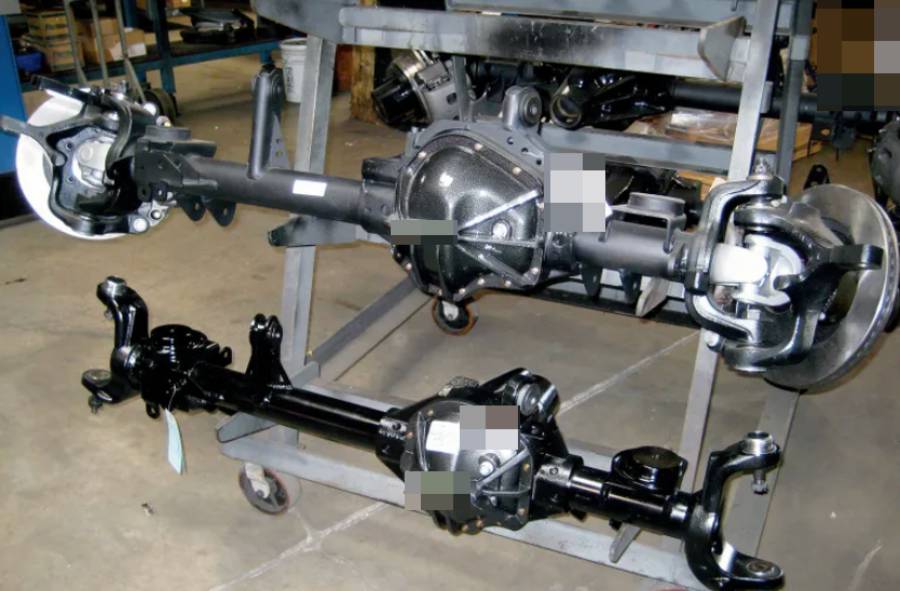
What Are the Main Differences Between Dana 44 and Dana 30 Axles?
The main differences between Dana 44 and Dana 30 axles are ring gear diameter, axle shaft strength, differential housing size, weight, and load-handling capability. The Dana 44 generally uses larger, heavier-duty components designed to withstand greater drivetrain stress, while the Dana 30 prioritizes lower weight and adequate strength for lighter-duty applications. Both axles are widely used in Jeep vehicles, but their exact specifications depend on the model year and axle configuration.
How Do Dana 44 and Dana 30 Specifications Compare?
The following table compares common specifications of traditional Dana 30 and Dana 44 solid axles. Modern variants, including Dana Advantek designs, may have different dimensions and component specifications.
| Specification | Dana 30 | Dana 44 |
|---|---|---|
| Ring gear diameter | 7.125 inches | 8.5 inches |
| Common axle shaft spline count | 27 splines | 30 splines |
| Differential housing | Smaller | Larger |
| Axle shaft strength | Generally lower | Generally higher |
| Overall weight | Lighter | Heavier |
| Common applications | Jeep front axles | Jeep front and rear axles |
| Off-road capability | Light to moderate trails | Moderate to demanding trails |
| Replacement and upgrade cost | Generally lower | Generally higher |
The Dana 44’s conventional 8.5-inch ring gear is approximately 19% larger in diameter than the Dana 30’s 7.125-inch ring gear. This larger diameter allows a different gear geometry and contributes to the Dana 44’s greater strength potential. However, ring gear size alone does not determine an axle’s total torque capacity. Gear material, tooth design, bearing support, and housing rigidity also influence durability.
Axle shafts represent another important difference. Traditional Dana 30 configurations commonly use 27-spline inner shafts, whereas conventional Dana 44 applications frequently use 30-spline shafts. The larger spline count is generally associated with a larger shaft diameter, although actual strength depends on shaft dimensions, material, and heat treatment. Stronger shafts help withstand the twisting forces generated when large tires encounter obstacles or suddenly regain traction.
The Dana 30 also has a weight advantage in many comparable configurations. Its smaller differential housing and lighter components reduce axle assembly weight, making it suitable for daily driving and moderate off-road use. The Dana 44 sacrifices some of that weight advantage for increased component strength. However, a complete axle’s weight also depends on its width, tube dimensions, brakes, and mounting hardware.
These structural differences explain why the Dana 30 remains practical for many stock Jeep configurations, while the Dana 44 is frequently preferred for builds involving larger tires, aggressive off-road driving, and additional drivetrain modifications.
Is a Dana 44 Stronger Than a Dana 30?
Yes, the Dana 44 is generally stronger than the Dana 30 because its larger differential components and heavier-duty construction provide greater resistance to torque loads and mechanical stress. This strength advantage becomes particularly relevant when vehicles use oversized tires, differential lockers, or encounter demanding off-road conditions. However, actual durability depends on the axle generation, shaft materials, housing design, and driving conditions.
A conventional Dana 44 typically provides greater strength potential than a traditional Dana 30, but neither axle has a universal torque capacity. For example, an upgraded Dana 30 with chromoly shafts may withstand certain loads better than a stock Dana 44 with weaker original components. Comparing complete axle configurations is therefore more accurate than comparing model names alone.
How Does Ring Gear Size Affect Axle Strength?
A larger ring gear generally supports greater torque-handling potential by allowing larger gear geometry and a more substantial differential assembly. The conventional Dana 44 uses an 8.5-inch ring gear, compared with the Dana 30’s 7.125-inch ring gear. This difference contributes to the Dana 44’s ability to withstand demanding drivetrain loads.
Ring gear strength depends on more than diameter. Tooth geometry, gear material, pinion support, and differential housing rigidity determine how effectively torque transfers between the driveshaft and axle shafts. During rock crawling, for example, a tire trapped against an obstacle creates resistance that increases stress on the ring and pinion gears. A stronger differential assembly is better equipped to resist tooth damage under these conditions.
However, the larger ring gear does not make the Dana 44 immune to failure. Incorrect gear installation, inadequate lubrication, excessive backlash, and severe shock loads can damage either axle. Proper gear setup and maintenance remain essential regardless of axle size.
How Do Axle Shafts Affect Dana 30 and Dana 44 Durability?
Dana 44 axle shafts generally provide greater torsional strength than traditional Dana 30 shafts because many Dana 44 configurations use larger-diameter, 30-spline shafts instead of 27-spline shafts. Larger shaft cross-sections can resist greater twisting forces, although spline count alone does not establish shaft strength.
Axle shaft durability depends on material composition, heat treatment, shaft diameter, and joint design. Aftermarket chromoly shafts, commonly manufactured from alloys such as 4340 steel, are designed to improve resistance to twisting and fracture compared with many original equipment shafts. Upgrading these components can increase the durability of either axle without changing the differential housing.
Front axle U-joints also influence drivetrain strength. When a vehicle turns under heavy throttle, the joints transfer torque through the steering knuckles while operating at an angle. This creates additional mechanical stress, especially when a locked differential forces both wheels to rotate together. A failed U-joint can damage the surrounding axle shaft ears, making joint strength and condition important considerations.
The most vulnerable component is not always the same across axle configurations. Traditional Dana 30 assemblies may experience axle shaft, U-joint, or ring and pinion failures under excessive loads, while Dana 44 assemblies can also suffer shaft failures, gear damage, or housing deformation. The Dana 44 offers a stronger starting point for demanding builds, but the complete axle assembly determines real-world durability.
How Do Dana 44 and Dana 30 Perform Off-Road?
The Dana 44 generally performs better than the Dana 30 in demanding off-road conditions because its heavier-duty components can withstand greater drivetrain stress. The Dana 30 remains suitable for light to moderate trail riding, while the Dana 44 provides additional strength for rock crawling, larger tires, and vehicles equipped with differential lockers. However, actual performance depends on axle configuration, traction, vehicle weight, and driving technique.
For recreational off-roading, a properly maintained Dana 30 can handle dirt trails, gravel roads, and moderate obstacles without requiring a complete axle replacement. Its lighter construction also reduces weight compared with many equivalent Dana 44 configurations. Jeep Cherokee XJ and Wrangler TJ owners frequently retain their factory Dana 30 front axles for recreational trail use, particularly when running moderate tire sizes and avoiding aggressive throttle inputs.
Rock crawling places greater demands on axle components because tires repeatedly encounter high-resistance obstacles. When a tire becomes wedged between rocks, the drivetrain transfers torque against substantial resistance. Sudden wheelspin followed by immediate traction can generate shock loads that damage axle shafts, U-joints, or differential gears. The Dana 44’s larger differential components and typically stronger shafts provide an advantage under these conditions.
Differential lockers further influence axle durability. A locker improves traction by allowing both wheels on an axle to receive driving torque when one wheel loses grip. However, increased traction can also expose axle components to higher loads, particularly when oversized tires are installed. A locked Dana 30 used for aggressive rock crawling generally faces greater mechanical risk than the same axle used with an open differential on moderate trails.
The Dana 44 is therefore the more appropriate starting point for demanding off-road builds, but it is not automatically necessary for every modified Jeep. A Dana 30 with upgraded shafts, properly installed gears, and suitable tires can remain effective for moderate trail driving. Vehicle weight, gearing, terrain difficulty, and driver behavior should determine whether the additional strength of a Dana 44 justifies its cost.
What Tire Sizes Can Dana 30 and Dana 44 Axles Handle?
A Dana 30 is commonly used with 31-inch to 33-inch tires, while a Dana 44 is generally a stronger option for vehicles running 35-inch tires or larger. However, neither axle has a universal maximum tire diameter. Safe tire compatibility depends on the specific axle variant, vehicle weight, gearing, differential type, terrain, and driving conditions.
Larger tires increase the mechanical leverage applied to axle shafts and differential components. For example, increasing tire diameter from 31 inches to 35 inches increases the tire’s effective radius by approximately 12.9%. At the same contact-patch force, this creates approximately 12.9% more torque demand at the axle. Larger tires also frequently weigh more, increasing rotational inertia and the potential for shock loading.
The following table summarizes practical tire-size considerations for common Jeep axle configurations rather than manufacturer-certified limits.
| Tire Size | Dana 30 | Dana 44 |
|---|---|---|
| 31 inches | Generally suitable for common stock applications | Generally suitable |
| 33 inches | Common choice for moderate off-road builds | Generally suitable |
| 35 inches | Increased stress; upgrades may be advisable | Common choice with appropriate configuration |
| 37 inches | High-risk choice for demanding off-road use | Requires careful assessment and potentially substantial upgrades |
| 40 inches | Generally unsuitable for conventional configurations | Typically requires a heavier-duty axle solution |
These recommendations assume conventional axle configurations and are not universal ratings. Vehicle-specific fitment, suspension clearance, brake performance, and drivetrain strength must also be considered.
Can a Dana 30 Handle 35-Inch Tires?
Yes, a Dana 30 can operate with 35-inch tires, but the increased mechanical stress makes axle configuration and driving conditions especially important. A Dana 30 equipped with 35-inch tires may remain serviceable for street driving and moderate trails, while aggressive rock crawling creates a substantially higher risk of component failure.
The primary concern is the additional leverage generated by the larger tires. Compared with 33-inch tires, 35-inch tires increase effective tire radius by approximately 6.1%. This increases the torque required at the axle to generate the same driving force at the ground. Additional tire mass and aggressive tread patterns can further increase drivetrain loading.
Upgraded chromoly axle shafts, stronger U-joints, and appropriate differential gearing can improve a Dana 30’s ability to support 35-inch tires. Re-gearing helps restore suitable engine operating characteristics and overall gearing after increasing tire diameter, although it does not eliminate the additional mechanical stress caused by larger tires.
For Jeep owners who primarily drive on pavement and moderate trails, retaining a Dana 30 may be economically reasonable. However, frequent rock crawling, locked differentials, heavy vehicles, and aggressive throttle use make a stronger axle assembly a more dependable long-term choice.
Can a Dana 44 Handle 37-Inch Tires?
A Dana 44 can be used with 37-inch tires, but its suitability depends heavily on the axle generation, component strength, and intended off-road use. Modern heavy-duty Dana 44 variants may support demanding tire configurations more effectively than older conventional Dana 44 assemblies. A 37-inch tire should not be considered universally safe for every Dana 44.
Compared with 35-inch tires, 37-inch tires increase effective radius by approximately 5.7%. The additional leverage, combined with increased tire weight and traction, places greater stress on axle shafts, differential gears, steering components, and wheel bearings. These demands become particularly severe when rock crawling with locked differentials.
Upgrading axle shafts, U-joints, steering components, and differential protection can improve durability. However, reinforcing individual components does not eliminate limitations in axle tube strength, housing construction, or other drivetrain parts. Older or lighter-duty Dana 44 configurations may require extensive modifications to withstand repeated heavy off-road loads.
For vehicles regularly tackling difficult rock trails with 37-inch tires, the complete axle design matters more than the Dana 44 designation alone. Some builds benefit from a stronger Dana 44 variant, while heavier vehicles or more extreme applications may justify upgrading to a Dana 60. The appropriate choice depends on the entire drivetrain rather than tire diameter alone.
How Much Does a Dana 30 to Dana 44 Upgrade Cost?
A Dana 30 to Dana 44 axle upgrade typically costs approximately $1,500 to $5,000 or more, depending on the replacement axle, vehicle compatibility, installation labor, and additional drivetrain modifications. A used factory Dana 44 is generally less expensive than a new aftermarket axle assembly, but fabrication and replacement components can significantly increase the final cost.
The replacement axle itself represents the largest expense in many conversions. Used Dana 44 assemblies may cost approximately $500 to $1,500, depending on condition, availability, and vehicle application. New or professionally rebuilt assemblies can cost $2,000 to $4,000 or more, particularly when equipped with upgraded axle shafts, differential lockers, or reinforced housings. These figures are illustrative U.S. budget estimates rather than verified current market quotations.
Installation expenses depend on whether the Dana 44 is a direct-fit replacement or requires custom modifications. A compatible axle assembly may use existing suspension mounting points, while conversions involving different vehicle platforms can require welding, bracket fabrication, steering modifications, and driveshaft adjustments. Professional installation can add several hundred to more than $1,500 in labor, depending on complexity and local shop rates.
Additional expenses include differential gearing, brake components, wheel bolt patterns, and steering connections. On four-wheel-drive vehicles, the front and rear differential gear ratios must be compatible. Installing a Dana 44 with a different gear ratio may require re-gearing one axle, adding substantially to the conversion cost.
Upgrading an existing Dana 30 can be less expensive when its housing and differential remain in good condition. Chromoly axle shafts, stronger U-joints, and differential upgrades can improve durability without replacing the complete assembly. However, extensive modifications may approach the cost of a Dana 44 swap while retaining the Dana 30’s smaller ring gear and housing limitations.
For owners planning moderate off-road use, upgrading selected Dana 30 components may provide better value. A complete Dana 44 conversion becomes more attractive when larger tires, demanding terrain, and long-term drivetrain modifications require additional structural strength.
Which Is Better for a Jeep Wrangler, Dana 30 or Dana 44?
The Dana 44 is generally the better choice for Jeep Wranglers built for demanding off-road driving, while the Dana 30 remains suitable for many stock and moderately modified Wranglers. The best option depends on the Wrangler generation, factory axle configuration, tire diameter, and intended use. Axle specifications and available upgrades differ significantly between TJ, JK, and JL models.
The Jeep Wrangler TJ, produced from 1997 through 2006, commonly used a Dana 30 front axle, while rear axle configurations included the Dana 35 and optional Dana 44. The Rubicon version introduced a stronger factory axle package with Dana 44 front and rear axles. For standard TJ models running approximately 31-inch to 33-inch tires, a properly maintained Dana 30 front axle can provide adequate durability for recreational trail driving.
TJ owners installing 35-inch tires or preparing for aggressive rock crawling should evaluate axle shaft strength, U-joint durability, and differential gearing. Upgrading the existing Dana 30 may be sufficient for moderate use, but a Dana 44 swap provides a stronger foundation for more demanding modifications. Compatibility must be checked because factory and aftermarket axle assemblies can have different mounting and steering requirements.
The Jeep Wrangler JK, manufactured from 2007 through 2018, commonly featured a Dana 30 front axle on non-Rubicon models and a Dana 44 front axle on Rubicon models. Many JK configurations also used a Dana 44 rear axle. The JK Dana 30 differs from earlier TJ designs, so axle components and upgrade recommendations should not be assumed interchangeable.
For JK owners considering 35-inch tires, the factory Dana 30 may remain usable under controlled driving conditions, but larger tires and differential lockers increase the importance of axle strength. Rubicon models offer a stronger factory front axle configuration, although the Dana 44 designation does not eliminate the possibility of housing, shaft, or gear damage under severe loads.
The Jeep Wrangler JL, introduced for the 2018 model year, uses newer axle designs with specifications that vary by trim, model year, and equipment package. Some configurations use Dana 30-class front axles, while Rubicon models generally feature Dana 44 Advantek axles. These newer designs differ from traditional Dana 30 and Dana 44 assemblies in housing construction, gear dimensions, and component compatibility.
JL owners should therefore identify their exact factory axle before purchasing replacement parts or planning modifications. A conventional Dana 44 specification cannot automatically be applied to a Dana 44 Advantek axle, and aftermarket components must match the correct vehicle configuration.
Across all three Wrangler generations, the Dana 30 is a practical choice for daily driving and moderate off-road use, while the Dana 44 offers greater strength potential for more demanding builds. However, choosing an axle based solely on its model name overlooks important differences in housing design, axle shafts, gearing, and factory equipment. Matching the complete axle assembly to the vehicle’s intended use produces a more reliable upgrade decision.
Should You Choose a Dana 44 or Dana 30?
Choose a Dana 30 for daily driving, light off-road trails, and moderate tire upgrades, or a Dana 44 for demanding off-road conditions, larger tires, and higher drivetrain loads. The Dana 30 offers lower weight and generally lower ownership costs, while the Dana 44 provides greater strength potential through its larger differential components and heavier-duty construction.
A Dana 30 is a practical choice for Jeep owners who primarily drive on paved roads, gravel trails, and moderate off-road terrain. Vehicles equipped with 31-inch to 33-inch tires can often retain their factory Dana 30 without requiring a complete axle replacement, provided the axle is in good condition and the vehicle is operated within reasonable limits. Keeping the existing axle also avoids the expense of replacement assemblies, installation labor, and potential drivetrain modifications.
The Dana 44 becomes more attractive when a vehicle regularly encounters demanding rock trails, uses differential lockers, or operates with 35-inch tires and larger. Its stronger components provide additional resistance to torque loads and sudden traction changes. However, 37-inch tires, heavy vehicle weight, and aggressive rock crawling can still exceed the capabilities of certain Dana 44 configurations, making axle generation and component specifications essential considerations.
The following table summarizes which axle is generally more appropriate for common driving conditions.
| Driving Condition | Recommended Axle | Primary Reason |
|---|---|---|
| Daily commuting | Dana 30 | Lower weight and adequate strength |
| Light trail riding | Dana 30 | Suitable for moderate drivetrain loads |
| Moderate off-roading | Dana 30 or Dana 44 | Depends on tires, traction, and vehicle weight |
| 35-inch tire builds | Dana 44 preferred | Greater strength margin |
| Frequent rock crawling | Dana 44 | Stronger differential and axle components |
| 37-inch tire builds | Upgraded Dana 44 or heavier-duty axle | Higher mechanical loads require stronger components |
| Budget-conscious upgrades | Dana 30 | Retaining the factory axle can reduce costs |
These recommendations are general guidelines rather than manufacturer-approved operating limits. A reinforced Dana 30 may outperform a worn or poorly configured Dana 44 in specific conditions, and modern axle variants can differ substantially from older designs.
For most Jeep owners, the best decision is to retain a properly functioning Dana 30 until tire size, terrain difficulty, or repeated component failures justify a stronger axle. A Dana 44 is worth the investment when its additional strength addresses a specific drivetrain requirement rather than simply replacing an axle that already meets the vehicle’s needs.
Read more: Lippert Axle Identification: Complete Guide
How Can You Identify a Dana 30 or Dana 44 Axle?
You can identify a Dana 30 or Dana 44 axle by examining the differential cover shape, axle identification tags, housing markings, and vehicle specifications. The differential cover provides a useful visual clue, but identification numbers and manufacturer documentation offer more reliable confirmation, especially when dealing with modified vehicles or newer axle generations.
Traditional Dana 30 axles commonly feature a relatively rounded differential cover secured by 10 bolts. Conventional Dana 44 axles also frequently use 10 cover bolts, but their covers have a more angular, irregular shape with a larger differential housing. Because both axles can have the same number of cover bolts, bolt count alone is insufficient for accurate identification. Aftermarket covers and newer axle designs can also make visual identification more difficult.
Axle identification tags provide more specific information. Factory tags may be attached beneath differential cover bolts and can contain gear ratio information, manufacturing codes, or axle identification details. Some axle assemblies also have stamped numbers or identification markings on the housing or axle tubes. These markings can be cross-referenced with Dana Spicer documentation or vehicle manufacturer specifications to determine the correct axle model.
Vehicle identification records offer another method of confirming factory axle equipment. Jeep build sheets, original equipment codes, and manufacturer parts catalogs can identify the axle configuration installed during production. However, these records cannot confirm the axle currently installed if a previous owner has completed an axle swap.
Accurate axle identification is essential before ordering replacement gears, axle shafts, differential lockers, or bearings. Dana 30 and Dana 44 components are not generally interchangeable, and compatibility can also differ between generations of the same axle family. Confirming the axle model, production year, gear ratio, and relevant component specifications helps prevent incorrect parts purchases and installation problems.
Can You Upgrade a Dana 30 Without Replacing the Entire Axle?
Yes, a Dana 30 can be upgraded without replacing the complete axle assembly by installing stronger axle shafts, upgraded U-joints, differential lockers, appropriate gear ratios, and housing reinforcement components. These modifications can improve durability, traction, and off-road performance while retaining the original axle housing. However, they do not eliminate every structural limitation of the Dana 30 design.
Chromoly axle shafts are among the most common durability upgrades. Aftermarket shafts manufactured from high-strength alloys, such as 4340 chromoly steel, are designed to resist greater torsional stress than many factory shafts. Stronger shafts are particularly valuable for vehicles equipped with larger tires or used on rocky trails where sudden traction changes increase drivetrain loading. The correct shaft dimensions, spline count, and axle generation must be verified before installation.
Upgraded U-joints can further improve front axle durability by strengthening the connection between inner and outer axle shafts. Heavy-duty joints designed for demanding off-road applications can provide greater resistance to shock loads, although their effectiveness depends on compatibility with the surrounding shafts and steering components. Replacing worn factory joints also helps prevent failures that could damage axle shaft ears.
Differential lockers improve traction by allowing both wheels to receive driving torque when one wheel loses grip. This is especially useful during rock crawling and uneven trail conditions. However, lockers can increase stress on axle shafts and differential components because they allow greater torque transfer when traction is available. Combining a locker with stronger shafts and suitable driving techniques is important for maintaining reliability.
Re-gearing is another common modification when installing larger tires. Changing the differential gear ratio can restore more suitable engine operating speeds and improve low-speed driving performance. For example, moving from factory gearing to a numerically higher ratio can help compensate for the increased tire diameter. The appropriate ratio depends on tire size, transmission gearing, engine characteristics, and intended driving conditions.
Housing reinforcement components, including axle tube sleeves and differential housing gussets, can improve resistance to bending or deformation in compatible Dana 30 assemblies. These modifications are particularly relevant to certain off-road builds subjected to repeated impacts and high suspension loads. However, reinforcement does not increase the diameter of the ring gear or remove the inherent limitations of the differential assembly.
Upgrading a Dana 30 is generally worthwhile when the existing housing is in good condition and the vehicle is used for moderate off-roading. For builds involving frequent aggressive rock crawling, heavy vehicles, or substantial tire-size increases, replacing the axle with a suitable Dana 44 or heavier-duty assembly may provide better long-term value than extensively modifying the original Dana 30.