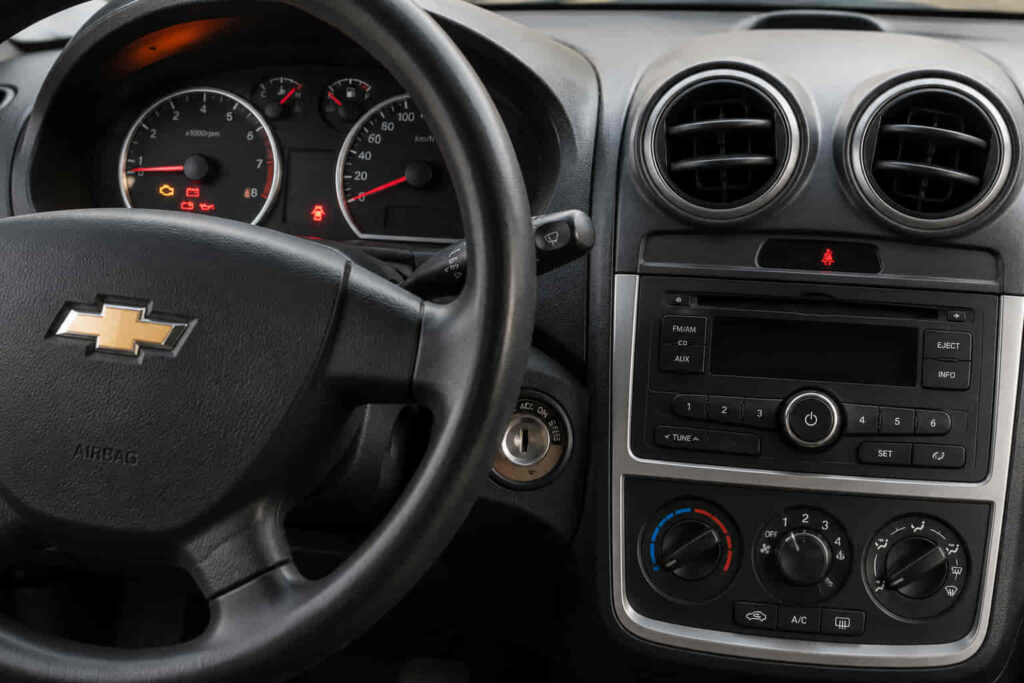
A Chevrolet Aveo that won’t start does not always indicate a dead battery. The starting system depends on multiple components working together, including the battery, starter motor, ignition system, fuel delivery system, engine control module (ECM), and several sensors. A failure in any of these systems can prevent the engine from starting even when the electrical accessories appear to function normally.
The first step in diagnosing a Chevrolet Aveo that is not starting is identifying the exact symptom. A vehicle that does not crank requires a different diagnostic approach than one that cranks normally but refuses to fire. Likewise, an engine that starts for a few seconds before stalling often points to a different set of faults involving the immobilizer, fuel delivery, or engine management system. Distinguishing these symptoms early reduces unnecessary parts replacement and shortens repair time.
This guide explains the most common reasons a Chevrolet Aveo fails to start and presents a logical diagnostic process that begins with the simplest inspections before moving to more advanced mechanical and electronic testing. Instead of relying on guesswork, each section focuses on the relationship between the symptom, the affected component, the underlying failure mechanism, and the appropriate repair. By following this sequence, owners and technicians can identify the root cause more efficiently while avoiding costly misdiagnoses.
Why Is My Chevrolet Aveo Not Starting?
A Chevrolet Aveo may fail to start because one of five primary systems has stopped functioning correctly: the electrical system, the starting system, the fuel delivery system, the ignition system, or the engine management and mechanical systems. Identifying which system has failed is the foundation of an accurate diagnosis because the same symptom can originate from several different components.
Electrical faults are among the most common causes of a no-start condition. A weak battery, corroded battery terminals, damaged ground connections, or a failing alternator can prevent sufficient voltage from reaching the starter motor. Although dashboard lights may still illuminate, voltage can drop below the level required to crank the engine. This explains why a vehicle can appear to have power while remaining unable to start.
The starting system is responsible for rotating the engine until combustion begins. If the starter motor, starter relay, starter solenoid, or ignition switch fails, the engine may produce a single click, repeated clicking, or no sound at all when the key is turned. These symptoms indicate that electrical power is not being converted into mechanical rotation, preventing the crankshaft from turning.
Fuel delivery problems prevent the engine from receiving the correct amount of fuel for combustion. A failed fuel pump, clogged fuel filter, defective fuel pressure regulator, or blocked fuel injector can interrupt fuel flow. In these situations, the engine often cranks normally but never starts because the air-fuel mixture cannot ignite. Measuring fuel pressure is one of the most reliable methods for confirming whether the fuel system is operating correctly.
The ignition system provides the spark required to ignite the compressed air-fuel mixture. Worn spark plugs, failed ignition coils, damaged ignition wiring, or ignition timing issues can eliminate spark completely or weaken it enough to prevent combustion. Many Chevrolet Aveo starting complaints occur after prolonged ignition component wear, particularly when scheduled maintenance has been delayed.
Engine management faults have become increasingly common in modern vehicles because the ECM relies on continuous input from multiple sensors before allowing the engine to start. A defective crankshaft position sensor, camshaft position sensor, engine immobilizer, or faulty ECM can interrupt ignition timing or fuel injection. For example, if the crankshaft position sensor fails, the ECM cannot determine crankshaft speed or position, causing both spark and injector pulses to stop even though the starter motor continues cranking.
Mechanical engine problems are less frequent but generally more severe. A broken timing belt, low engine compression, damaged valves, or internal engine failure can all prevent combustion regardless of whether the electrical and fuel systems operate normally. These faults typically require compression testing or mechanical inspection to confirm the diagnosis.
Understanding which of these five systems has failed allows troubleshooting to follow a structured process instead of replacing parts based on assumptions. The next step is determining whether the Chevrolet Aveo does not crank at all, cranks without starting, or starts briefly before stalling, as each symptom significantly narrows the range of possible causes.
Read more: Chevrolet Not Playing Music
Does Your Chevrolet Aveo Crank When You Turn the Key?
The first step in diagnosing a Chevrolet Aveo that is not starting is determining how the vehicle behaves when the ignition key is turned. This single observation immediately narrows the possible causes because a no-start condition can be divided into three distinct categories: the engine does not crank at all, the engine cranks normally but fails to start, or the engine starts briefly before stalling. Each condition involves different vehicle systems, requires different diagnostic procedures, and leads to different repair solutions. Identifying the correct symptom before replacing any component significantly improves diagnostic accuracy and reduces unnecessary repair costs.
A Chevrolet Aveo that does not crank indicates that the crankshaft never begins rotating. When the driver turns the key or presses the start position, the engine remains completely stationary. In some cases, a single click or repeated clicking sound may be heard from the starter relay or starter solenoid, while in other cases there is no sound at all. This symptom almost always originates within the electrical supply or starting circuit rather than the fuel or ignition systems because combustion cannot occur until the engine begins rotating.
Low battery voltage remains the most common reason for a no-crank condition. A healthy battery should maintain approximately 12.6 volts with the engine off. Once voltage falls below the level required by the starter motor, the dashboard lights may still illuminate while the starter cannot generate enough torque to rotate the engine. Corroded battery terminals, damaged ground cables, loose electrical connections, a failed starter relay, a worn starter motor, or a defective ignition switch can produce nearly identical symptoms because each interrupts electrical current before it reaches the starter assembly.
When the Chevrolet Aveo cranks normally but refuses to start, the diagnosis shifts away from the starting system and toward combustion-related components. The starter motor has already completed its function by rotating the crankshaft, which means the engine now requires the correct combination of fuel, spark, compression, and electronic control to begin running. If any one of these elements is missing, the engine continues turning without producing combustion.
Fuel delivery problems frequently cause this symptom. A failed fuel pump, restricted fuel filter, leaking fuel pressure regulator, or clogged fuel injectors can prevent sufficient fuel from reaching the combustion chambers. Even though the starter rotates the engine at normal speed, the cylinders never receive the correct air-fuel mixture required for ignition. Measuring fuel pressure instead of assuming a faulty fuel pump helps isolate the actual failure point.
Ignition failures create a similar result. Spark plugs eventually wear, ignition coils lose their ability to generate adequate voltage, and electrical connectors may develop high resistance over time. Without a properly timed spark, compressed fuel inside the cylinder cannot ignite. Modern Chevrolet Aveo models also depend on accurate signals from the crankshaft position sensor before the Engine Control Module commands ignition and injector operation. A failed crankshaft sensor therefore disables both spark and fuel injection simultaneously, producing a crank-no-start condition even though many mechanical components continue functioning normally.
Mechanical engine faults become increasingly likely when both spark and fuel delivery have been verified. A slipped or broken timing belt alters valve timing and prevents proper compression from developing inside the cylinders. Worn piston rings, damaged valves, or severe internal engine wear can reduce compression below the level required for combustion. Although these failures occur less frequently than electrical or fuel-related faults, they generally require compression testing or leak-down testing for confirmation because the symptoms closely resemble ignition or fuel system failures.
A third symptom occurs when the Chevrolet Aveo starts successfully but stalls within a few seconds. This behavior indicates that initial combustion occurs, proving the starter, battery, and basic ignition functions are operating. The problem develops immediately afterward because another system interrupts normal engine operation. Immobilizer faults are one of the most common causes, as the security system may allow the engine to fire briefly before disabling fuel injection after failing to recognize the programmed transponder key.
Electronic throttle body faults, unstable idle air control, contaminated mass airflow readings, vacuum leaks, or sudden fuel pressure loss can also cause immediate stalling. In these situations, the engine initially receives enough fuel and ignition to start but cannot maintain stable combustion once the ECM transitions from startup mode to normal engine management. Vehicles exhibiting this symptom often store Diagnostic Trouble Codes (DTCs), making an OBD-II scan one of the earliest and most valuable diagnostic steps.
Correctly identifying whether the Chevrolet Aveo exhibits a no-crank condition, a crank-but-no-start condition, or a start-and-stall condition determines the entire diagnostic pathway. Rather than inspecting every component individually, technicians isolate the affected vehicle system first and then perform targeted testing. This structured approach aligns the observed symptom with the underlying mechanical or electronic failure, minimizing diagnostic time while preventing unnecessary replacement of expensive components.
Could a Weak or Dead Battery Prevent the Chevrolet Aveo from Starting?
Yes. A weak or dead battery is the most common reason a Chevrolet Aveo fails to start because every stage of the starting process depends on a stable electrical supply. The battery does far more than power the starter motor. It also supplies voltage to the Engine Control Module (ECM), fuel pump, ignition coils, sensors, immobilizer, and other control modules during engine startup. If battery voltage drops below the minimum operating threshold, one or more of these systems may stop functioning correctly, preventing the engine from starting even though some electrical accessories continue to work.
Battery-related starting problems do not always result in a completely dead vehicle. Many Chevrolet Aveo owners assume the battery is healthy because the headlights, radio, or dashboard lights still operate. In reality, these components require significantly less current than the starter motor. While interior electronics can function with reduced battery voltage, the starter motor typically requires several hundred amps to rotate the engine. A battery that has deteriorated due to age, sulfation, repeated deep discharges, or prolonged inactivity may no longer provide the current necessary to crank the engine under load.
The first indication of battery failure is usually the way the vehicle responds when the ignition key is turned. If the engine produces rapid clicking sounds, the starter solenoid is repeatedly engaging and disengaging because battery voltage collapses whenever the starter attempts to draw current. A single loud click often indicates that electrical power reaches the starter solenoid, but insufficient current is available to rotate the starter motor. When no sound is heard at all, the battery may be completely discharged, one of the battery terminals may have lost contact, or the electrical circuit supplying the starter has been interrupted.
Cold weather further increases the likelihood of battery-related starting problems. Chemical reactions inside lead-acid batteries slow as ambient temperature decreases, reducing both available voltage and cranking capacity. At the same time, engine oil becomes more viscous, increasing the torque required to rotate the crankshaft. This combination explains why a battery that starts the vehicle normally during warm weather may struggle or fail entirely after temperatures drop overnight.
Battery age is another critical factor that should not be overlooked. Most original equipment and replacement automotive batteries maintain reliable performance for approximately three to five years under normal operating conditions. As the battery ages, internal lead plates gradually sulfate, active material deteriorates, and internal resistance increases. These changes reduce the battery’s ability to deliver high current during engine startup even if the battery continues to hold an acceptable resting voltage.
Parasitic battery drain can also leave a Chevrolet Aveo unable to start after remaining parked for several hours or overnight. Electrical components such as interior lights, aftermarket accessories, faulty relays, or malfunctioning control modules may continue consuming power after the ignition has been switched off. Although the current draw appears insignificant over a short period, continuous discharge eventually lowers battery voltage below the level required for engine starting. Vehicles that repeatedly require jump-starting despite recently replacing the battery should be inspected for excessive parasitic current rather than assuming another defective battery.
Corroded battery terminals frequently produce symptoms nearly identical to those of a weak battery. White, blue, or green corrosion around the battery posts increases electrical resistance between the battery and the vehicle’s electrical system. As starter current attempts to pass through the corroded connection, voltage drops dramatically before reaching the starter motor. In severe cases, the battery itself remains fully charged while the engine cannot crank because electrical energy cannot travel efficiently through the compromised connection. Loose battery clamps, damaged ground straps, or deteriorated positive cables create similar voltage losses and should always be inspected before replacing the battery.
The most reliable method of evaluating battery condition is measuring voltage under both resting and cranking conditions. A fully charged battery typically measures approximately 12.6 volts with the engine switched off. Readings between 12.4 and 12.5 volts generally indicate partial discharge, while measurements below 12.2 volts suggest the battery has lost a significant portion of its available charge. However, resting voltage alone does not confirm battery health. A battery may display normal voltage without sufficient capacity to deliver high starting current. Observing voltage while the engine is cranking provides a far more accurate assessment because a healthy battery should maintain adequate voltage under heavy load without collapsing.
If battery voltage tests within specification yet the Chevrolet Aveo still fails to start, attention should shift toward the charging system. A failing alternator often creates recurring starting problems because it cannot replenish battery capacity during normal driving. Drivers may successfully jump-start the vehicle only to discover the battery discharged again after the next parking period. In this situation, replacing the battery alone will not resolve the underlying problem because the charging system remains unable to restore the electrical energy consumed during startup.
Repeated jump-starting should never be considered a permanent solution. Every deep discharge accelerates battery deterioration and increases sulfation inside the battery cells. As battery condition worsens, voltage instability may begin affecting sensitive electronic modules, producing intermittent communication errors, sensor faults, or misleading diagnostic trouble codes. Correcting the root cause early prevents secondary electrical problems that often complicate diagnosis.
For this reason, battery inspection should always represent the first stage of diagnosing a Chevrolet Aveo that will not start. Confirming battery voltage, examining terminal condition, verifying cable integrity, and testing alternator output eliminates the most common cause of starting failure before more complex systems such as the fuel pump, ignition coils, crankshaft position sensor, or Engine Control Module are investigated. Following this sequence minimizes diagnostic time, reduces unnecessary parts replacement, and establishes a logical foundation for identifying the true cause of the no-start condition.
Is the Starter Motor or Starter Relay Faulty?
A faulty starter motor or starter relay can prevent a Chevrolet Aveo from starting even when the battery is fully charged. The starter system is responsible for converting electrical energy into mechanical rotation, allowing the crankshaft to turn until combustion begins. If any component within this circuit fails, the engine cannot crank regardless of the condition of the fuel system, ignition system, or Engine Control Module (ECM).
The Chevrolet Aveo starting circuit consists of several components that operate in sequence. When the ignition key is turned to the START position, the ignition switch sends a low-current signal to the starter relay. The relay then closes its internal contacts and delivers battery voltage to the starter solenoid. Once energized, the starter solenoid pushes the starter pinion gear into the flywheel while simultaneously allowing high-current electricity to flow into the starter motor. The motor rotates the flywheel, which in turn rotates the crankshaft until the engine starts. Because each component depends on the previous one, a failure anywhere along this path interrupts the entire starting process.
Starter motor failure becomes more common as mileage increases because the internal brushes, armature, bearings, and commutator experience continuous mechanical and electrical wear. Over thousands of start cycles, the brushes gradually wear shorter, reducing contact with the commutator. This increases electrical resistance and decreases the motor’s ability to generate torque. Initially, the engine may crank more slowly than normal, particularly after sitting overnight. As wear progresses, intermittent starting problems become more frequent until the starter eventually fails to operate altogether.
One of the most recognizable symptoms of a worn starter motor is a single loud click when the ignition key is turned. This sound indicates that the starter solenoid has successfully engaged, but the motor itself cannot rotate. Internal electrical damage, seized bearings, worn brushes, or an open armature winding may all produce this symptom. Because the solenoid still functions correctly, many owners mistakenly replace the battery even though the actual failure lies inside the starter assembly.
Repeated clicking sounds usually point toward insufficient electrical current rather than a defective starter motor. However, if battery voltage has already been verified and all battery cables are clean and secure, repeated clicking may also occur when the starter solenoid itself begins to fail. Burned solenoid contacts increase resistance each time the circuit closes, eventually preventing enough current from reaching the starter motor despite an otherwise healthy electrical system.
Intermittent starting is another characteristic indicator of starter motor wear. A Chevrolet Aveo may start normally several times before suddenly refusing to crank. After waiting a few minutes or tapping the starter housing lightly, the engine may start again. This temporary improvement occurs because worn brushes occasionally regain electrical contact after vibration or thermal expansion changes their position. Although the vehicle appears to recover, the internal components continue deteriorating until complete failure occurs.
The starter relay should also be considered whenever the Chevrolet Aveo exhibits an intermittent no-crank condition. The relay functions as an electrically controlled switch that isolates the high-current starter circuit from the low-current ignition switch. Every time the engine starts, electrical arcing occurs across the relay contacts. After thousands of operating cycles, these contacts gradually become pitted, oxidized, or burned, increasing resistance and reducing current flow. Eventually, the relay may fail to close consistently, preventing battery voltage from reaching the starter solenoid.
Because starter relays are inexpensive and relatively easy to access, they are often tested before replacing the starter motor. One practical diagnostic method involves swapping the starter relay with another identical relay controlling a non-essential circuit, provided both relays share the same specifications. If the engine starts normally after the relay is exchanged, the original relay has likely failed. This approach eliminates unnecessary starter replacement and confirms the electrical fault with minimal disassembly.
Voltage drop testing provides a more accurate diagnosis than simply checking battery voltage. A fully charged battery does not guarantee that sufficient voltage reaches the starter motor under load. Corroded cables, damaged wiring, loose ground connections, or deteriorated relay contacts can create significant resistance within the circuit. Measuring voltage directly at the starter while attempting to crank the engine allows technicians to determine whether the starter is receiving adequate electrical power. If full battery voltage reaches the starter but the motor does not rotate, the starter assembly itself is generally defective. If voltage is substantially lower than expected, the fault lies somewhere within the electrical circuit supplying the starter.
Mechanical problems can occasionally imitate starter failure. A seized engine, damaged flywheel teeth, or severe internal engine damage prevents the crankshaft from rotating even though the starter motor attempts to engage. Under these conditions, the starter may produce a heavy clunk without rotating the engine. Distinguishing between a failed starter and a mechanically locked engine requires verifying whether the crankshaft can be turned manually using the crankshaft pulley bolt. If the engine rotates freely by hand, the starting system becomes the primary focus of diagnosis.
Heat-related starter failure is another issue observed in older Chevrolet Aveo vehicles. After prolonged driving, internal resistance within the starter motor increases as temperature rises. The engine may restart normally while cold but refuse to crank after reaching operating temperature. Once the starter cools, internal electrical resistance decreases and normal operation temporarily returns. This pattern strongly indicates deterioration of the starter motor rather than battery failure.
Ignoring early symptoms of starter failure often leads to complete loss of vehicle mobility. Slow cranking speed, intermittent starting, occasional clicking, or delayed starter engagement rarely resolve themselves because all indicate progressive wear within the starting system. Addressing these symptoms during the early stages reduces the likelihood of unexpected breakdowns and prevents excessive strain on the battery, ignition switch, and electrical wiring caused by repeated unsuccessful starting attempts.
Before replacing the starter motor, the complete starting circuit should always be verified. Confirming battery condition, inspecting battery terminals, checking ground connections, testing the starter relay, measuring voltage at the starter, and evaluating ignition switch output ensures that the root cause is accurately identified. This systematic diagnostic approach prevents unnecessary component replacement while isolating the exact failure responsible for the Chevrolet Aveo no-start condition.
Is the Fuel System Preventing the Engine from Starting?
Yes. A fault within the fuel system can prevent a Chevrolet Aveo from starting even when the battery, starter motor, and ignition system are operating normally. Every gasoline engine depends on a precise amount of fuel reaching each cylinder at the correct pressure and timing. If fuel delivery is interrupted at any point between the fuel tank and the combustion chamber, the engine may crank at normal speed but will never produce combustion. This makes fuel system diagnosis one of the highest priorities whenever a Chevrolet Aveo cranks but refuses to start.
The Chevrolet Aveo fuel system consists of several components working together as a closed delivery circuit. The fuel pump draws gasoline from the fuel tank and sends it through the fuel filter before it reaches the fuel rail. The fuel injectors then deliver an accurately measured quantity of fuel into each combustion chamber under commands from the Engine Control Module (ECM). Throughout this process, the ECM continuously adjusts injector pulse width using information from sensors such as the crankshaft position sensor, engine coolant temperature sensor, manifold absolute pressure sensor, and oxygen sensors once the engine is running. A failure affecting any of these components can interrupt fuel delivery and create a no-start condition.
A failing fuel pump is one of the most common causes of a Chevrolet Aveo that cranks but will not start. Electric fuel pumps gradually lose efficiency as internal bearings, brushes, and impellers wear over time. Instead of maintaining the pressure required for injector operation, the pump begins producing lower pressure or inconsistent flow. During the early stages of failure, the engine may require several attempts before starting or may struggle after remaining parked overnight because fuel pressure leaks away while the vehicle is stationary. As the deterioration progresses, the pump eventually fails to build sufficient pressure altogether, leaving the engine unable to start.
Many fuel pump failures provide warning signs before complete failure occurs. Drivers often notice extended cranking times, hesitation during acceleration, loss of engine power under load, or intermittent stalling while driving. These symptoms indicate that the pump can no longer maintain stable fuel pressure under varying operating conditions. Ignoring these early indicators frequently results in complete pump failure, leaving the vehicle stranded without warning.
Fuel pressure is far more important than fuel quantity during engine startup. Even if the fuel tank contains sufficient gasoline, inadequate pressure prevents the injectors from atomizing fuel correctly inside the combustion chamber. Poor atomization produces an air-fuel mixture that cannot ignite efficiently, causing the engine to crank continuously without firing. For this reason, measuring fuel pressure with a dedicated pressure gauge provides significantly more accurate diagnostic information than simply confirming that fuel reaches the engine.
A clogged fuel filter can create similar symptoms because it restricts fuel flow between the fuel pump and the injectors. Over thousands of miles, contaminants such as rust particles, dirt, and sediment accumulate inside the filter element, increasing resistance throughout the fuel system. Initially, the restriction becomes noticeable only during heavy acceleration when fuel demand increases. Eventually, fuel flow becomes insufficient even during engine startup, causing extended cranking, rough starting, or a complete no-start condition. Vehicles that have exceeded the manufacturer’s recommended fuel filter replacement interval are particularly susceptible to this problem.
Fuel injectors themselves may also prevent the Chevrolet Aveo from starting. Modern fuel injectors operate with extremely tight tolerances, making them vulnerable to deposits created by poor-quality fuel, oxidation, or prolonged storage. Injectors that become partially blocked deliver an insufficient amount of fuel, while completely clogged injectors prevent fuel from entering the cylinders altogether. Electrical failures inside injector coils or damaged injector wiring can produce the same result because the ECM cannot command fuel delivery even though adequate fuel pressure exists within the fuel rail.
The Engine Control Module must also receive accurate sensor information before commanding injector operation. The crankshaft position sensor plays a particularly critical role because the ECM uses its signal to determine crankshaft speed and piston position. Without this information, the ECM cannot synchronize fuel injection with engine rotation and therefore disables injector pulses entirely. This explains why a failed crankshaft position sensor often resembles a fuel pump failure even though the fuel system itself remains mechanically functional.
Electrical faults should never be overlooked during fuel system diagnosis. A blown fuel pump fuse, defective fuel pump relay, damaged wiring harness, or corroded electrical connector can interrupt power before it reaches the fuel pump. Under these conditions, the pump never activates despite remaining mechanically healthy. Listening for the brief priming sound produced by the fuel pump when the ignition is switched to the ON position provides a useful preliminary indication of pump operation. However, the absence of this sound alone does not confirm pump failure because relay, fuse, or wiring faults produce identical symptoms.
Fuel quality also influences engine starting performance. Gasoline that has remained inside the tank for several months gradually degrades through oxidation and evaporation of volatile compounds. As fuel quality deteriorates, combustion becomes increasingly difficult during startup. Water contamination caused by condensation or poor fuel storage further reduces combustion efficiency and may prevent ignition altogether. Although degraded fuel is less common than electrical or mechanical faults, it should be considered whenever a Chevrolet Aveo has remained unused for an extended period.
Modern diagnostic equipment allows technicians to evaluate the entire fuel system without replacing unnecessary components. An OBD-II scan may reveal diagnostic trouble codes related to fuel pressure, injector circuits, or fuel pump control modules, while live data provides valuable information about engine cranking speed, injector pulse commands, and sensor communication. Combining electronic diagnosis with direct fuel pressure measurement creates a far more reliable assessment than replacing components based solely on symptoms.
Because fuel system failures often produce symptoms similar to ignition or sensor faults, diagnosis should always follow a logical sequence rather than assumptions. Verifying that the fuel pump operates, measuring fuel pressure against manufacturer specifications, inspecting the fuel filter, confirming injector operation, and checking electrical power supplied to the pump allows technicians to isolate the exact cause efficiently. This systematic approach prevents unnecessary replacement of expensive components while ensuring that the actual source of the Chevrolet Aveo starting problem is accurately identified before repairs begin.
Is There an Ignition System Problem?
Yes. An ignition system failure can prevent a Chevrolet Aveo from starting because the engine cannot ignite the air-fuel mixture without a properly timed spark. Even if the battery supplies sufficient power, the starter motor cranks the engine normally, and the fuel pump delivers adequate fuel pressure, combustion cannot occur unless the ignition system generates a high-voltage spark at the correct moment. This is why ignition faults are one of the primary causes of a Chevrolet Aveo that cranks but does not start.
The ignition system in the Chevrolet Aveo is designed to produce and distribute high-voltage electricity to each spark plug under precise control from the Engine Control Module (ECM). During engine cranking, the ECM receives signals from the crankshaft position sensor and calculates the exact timing required for ignition. It then commands the ignition coils to convert the battery’s 12-volt supply into tens of thousands of volts before delivering that energy to the spark plugs. The spark plugs ignite the compressed air-fuel mixture, creating combustion that allows the engine to continue running independently of the starter motor. Because every component in this sequence depends on the previous one, a single failure can interrupt the entire combustion process.
Worn spark plugs remain one of the most common ignition-related causes of difficult starting. Spark plugs operate under extremely high temperatures and pressures during every combustion cycle. Over time, electrode wear gradually increases the gap between the center and ground electrodes, requiring progressively higher voltage to produce a spark. Eventually, the ignition coil can no longer generate sufficient voltage to bridge the enlarged gap consistently, particularly during cold starts when battery voltage is naturally lower and combustion conditions are less favorable. The engine may crank repeatedly before starting, misfire immediately after startup, or fail to start altogether if spark production becomes too weak.
Spark plug contamination produces similar symptoms even when electrode wear remains within specification. Carbon deposits caused by incomplete combustion, excessive fuel delivery, oil consumption, or prolonged idling create an insulating layer around the electrodes that weakens spark intensity. Fuel-fouled spark plugs may also develop after repeated unsuccessful starting attempts because unburned gasoline accumulates inside the cylinders and wets the electrode surface. Once contaminated, the spark loses sufficient energy to ignite the air-fuel mixture reliably, causing the Chevrolet Aveo to continue cranking without firing.
Ignition coil failure represents another frequent source of no-start conditions. Unlike older distributor-based ignition systems, most Chevrolet Aveo models rely on electronically controlled ignition coils to generate high-voltage output. Continuous exposure to heat, vibration, and electrical load gradually weakens the internal windings and insulation materials. As internal resistance increases, coil output voltage decreases until spark production becomes unstable or disappears completely. Some ignition coils fail only after reaching operating temperature, causing intermittent starting problems that become increasingly difficult to diagnose because the vehicle may restart normally after cooling down.
Unlike mechanical failures that typically worsen gradually, ignition coil failures often develop intermittently before becoming permanent. Drivers frequently experience occasional rough starts, random engine misfires, hesitation during acceleration, or sudden stalling weeks before the engine refuses to start altogether. These early symptoms indicate that the ignition coil can no longer generate stable voltage under all operating conditions. Addressing the problem during this stage helps prevent complete ignition failure while reducing the likelihood of damaging the catalytic converter through repeated misfires.
The crankshaft position sensor plays a critical role in ignition timing because the ECM cannot trigger spark without knowing the precise position and rotational speed of the crankshaft. During engine startup, the sensor continuously transmits rotational data to the ECM, allowing ignition timing to remain synchronized with piston movement. If this signal is lost, the ECM immediately disables spark production to prevent uncontrolled ignition events. As a result, the engine cranks normally but never attempts to fire despite having adequate battery voltage, fuel pressure, and compression. This explains why a failed crankshaft position sensor often appears identical to a conventional ignition system failure.
Electrical faults within the ignition circuit can interrupt spark generation even when individual components remain functional. Damaged wiring harnesses, loose electrical connectors, corroded terminals, blown ignition fuses, or poor grounding increase electrical resistance and reduce voltage supplied to the ignition coils. Modern vehicles rely heavily on stable electrical communication between the ECM and ignition components, making even minor connection problems capable of producing intermittent no-start conditions. Careful inspection of connectors and wiring is therefore essential before replacing expensive ignition components.
Verifying spark presence is one of the most effective methods for isolating ignition system faults. Instead of assuming spark exists because the engine cranks normally, technicians use an inline spark tester to observe whether the ignition coil generates sufficient voltage during cranking. A bright, consistent spark indicates that the primary ignition circuit is operating correctly, allowing diagnosis to move toward fuel delivery or mechanical systems. Weak, inconsistent, or absent spark confirms an ignition-related failure and significantly reduces the number of components requiring further inspection.
Diagnostic Trouble Codes (DTCs) also provide valuable information when investigating ignition failures. The ECM continuously monitors ignition performance and stores fault codes whenever abnormal electrical conditions are detected. Misfire-related codes such as P0300 through P0304, ignition coil circuit faults, or crankshaft sensor codes frequently accompany ignition-related no-start conditions. However, diagnostic codes should guide the inspection process rather than determine the repair independently because wiring faults, low battery voltage, or sensor communication errors may generate similar fault patterns.
Because the ignition system functions alongside the fuel delivery and engine management systems, diagnosis should always follow a logical sequence. Confirming battery voltage, verifying engine cranking speed, checking for fuel pressure, testing spark output, scanning for diagnostic trouble codes, and evaluating crankshaft sensor data provides a complete picture of engine startup conditions. This systematic approach identifies the true cause of the Chevrolet Aveo no-start condition while preventing unnecessary replacement of spark plugs, ignition coils, sensors, or other components that may still operate within specification.
Could a Failed Crankshaft Position Sensor Stop the Engine from Starting?
Yes. A failed crankshaft position sensor can completely prevent a Chevrolet Aveo from starting because the Engine Control Module (ECM) cannot control ignition timing or fuel injection without accurate crankshaft position data. Among all electronic engine sensors, the crankshaft position sensor is one of the most critical during engine startup. If its signal disappears or becomes inconsistent, the ECM loses its reference for engine speed and piston position, causing it to disable spark generation and fuel injector operation as a protective measure. As a result, the engine often cranks normally but never starts.
The crankshaft position sensor continuously monitors the rotational movement of the crankshaft by detecting the teeth on a reluctor wheel attached to the crankshaft. Every time a tooth passes the sensor, an electrical signal is generated and transmitted to the ECM. By counting these signals, the ECM determines crankshaft speed, piston location, and the precise moment each cylinder reaches top dead center. This information allows the ECM to synchronize ignition timing and injector pulse width with engine rotation. Without this synchronization, combustion cannot occur because fuel and spark are delivered at the wrong time or are disabled entirely.
Unlike many engine sensors that influence performance after the engine has already started, the crankshaft position sensor is required from the first revolution of the crankshaft. During cranking, the ECM waits for a valid crankshaft signal before activating several essential engine functions. If the signal never arrives, the ECM assumes it cannot safely control combustion and immediately prevents the ignition coils and fuel injectors from operating. This explains why a Chevrolet Aveo with a failed crankshaft position sensor often behaves as though both the ignition system and fuel system have failed simultaneously.
One of the most common symptoms is an engine that cranks at normal speed but shows no indication of attempting to start. The starter motor operates normally, battery voltage remains stable, and the engine rotates freely, yet combustion never begins. Unlike fuel pump failures that may produce occasional firing or ignition faults that sometimes generate rough starting, a failed crankshaft position sensor typically causes a complete absence of combustion because the ECM never receives the information required to initiate the startup sequence.
Intermittent sensor failure can make diagnosis considerably more difficult. As internal electronic components deteriorate, the sensor may continue functioning when cold but stop transmitting accurate signals after reaching operating temperature. In this situation, the Chevrolet Aveo may start normally during the first drive of the day but refuse to restart after the engine has been driven for several minutes. Once the sensor cools, electrical resistance decreases and signal transmission temporarily returns, allowing the engine to restart. This heat-related failure pattern is frequently observed in aging crankshaft position sensors and often leads to repeated, unpredictable no-start complaints.
The sensor may also produce erratic signals before complete failure occurs. Instead of immediately preventing the engine from starting, intermittent signal loss can cause occasional engine misfires, unexpected stalling, hesitation during acceleration, fluctuating engine speed, or sudden shutdown while driving. These symptoms occur because the ECM temporarily loses synchronization between crankshaft rotation and ignition timing before communication resumes. As the sensor continues to deteriorate, these intermittent interruptions become more frequent until the engine ultimately fails to start altogether.
Because the crankshaft position sensor directly controls several engine management functions, its failure often triggers Diagnostic Trouble Codes (DTCs). Code P0335 is the most common indicator of a crankshaft position sensor circuit malfunction and usually represents the starting point for diagnosis. Depending on the nature of the electrical fault, related codes such as P0336, P0337, P0338, or P0339 may also appear, indicating signal range, performance, low voltage, high voltage, or intermittent circuit problems. Although these codes strongly suggest a crankshaft sensor issue, they do not automatically confirm that the sensor itself has failed. Damaged wiring, loose electrical connectors, corrosion, or ECM communication faults can generate similar diagnostic codes and should always be inspected before replacing the sensor.
Electrical integrity is particularly important because the crankshaft position sensor produces relatively low-voltage signals that are highly sensitive to resistance and interference. A damaged wiring harness located near the engine block may become exposed to heat, oil contamination, vibration, or mechanical abrasion over time. Corrosion inside the sensor connector can also interrupt signal transmission even when the sensor remains fully functional. Inspecting connector pins for moisture, bent terminals, or oxidation should therefore be included in every diagnostic procedure before concluding that the sensor has failed.
Modern diagnostic equipment provides several methods for confirming crankshaft position sensor performance. An OBD-II scanner capable of displaying live engine data allows technicians to observe engine RPM during cranking. If the starter motor rotates the engine but the scan tool continues displaying zero RPM, the ECM is not receiving a crankshaft position signal. This simple observation immediately narrows the diagnosis toward the crankshaft position sensor or its electrical circuit. More advanced testing with an oscilloscope allows technicians to evaluate signal waveform quality, confirming whether the sensor produces a clean and consistent electrical pattern throughout engine rotation.
Replacing the crankshaft position sensor without confirming the diagnosis can result in unnecessary repairs because several unrelated faults produce similar symptoms. A failed camshaft position sensor, damaged timing belt, defective ignition coils, low battery voltage, or ECM malfunction may also create a crank-but-no-start condition. Following a structured diagnostic sequence—including verifying battery voltage, confirming fuel pressure, checking spark output, reading diagnostic trouble codes, monitoring live RPM data, and inspecting sensor wiring—ensures the true source of the problem is identified before any components are replaced.
Because the crankshaft position sensor serves as the primary timing reference for the entire engine management system, its reliability directly determines whether the Chevrolet Aveo can start. Once the ECM loses this reference, ignition timing, fuel injection, and combustion control stop simultaneously, making the sensor one of the most influential electronic components involved in a no-start diagnosis. For this reason, evaluating crankshaft position sensor operation should become a priority whenever a Chevrolet Aveo cranks normally but consistently refuses to start, especially if the vehicle exhibits intermittent stalling, heat-related restart failures, or crankshaft sensor-related diagnostic trouble codes.
Could the Immobilizer or Key Fob Prevent the Chevrolet Aveo from Starting?
Yes. A malfunctioning immobilizer system or an unrecognized key can prevent a Chevrolet Aveo from starting even when the battery, starter motor, fuel system, and ignition system are operating correctly. Modern Chevrolet Aveo models incorporate an anti-theft system that requires successful communication between the ignition key, immobilizer antenna, Body Control Module (BCM), and Engine Control Module (ECM) before fuel injection and ignition are authorized. If this authentication process fails, the ECM intentionally blocks engine operation to prevent unauthorized vehicle use.
Unlike mechanical faults that prevent the engine from cranking, immobilizer-related problems usually allow the starter motor to operate normally. The engine may crank at normal speed but refuse to start, or it may start briefly before stalling within a few seconds. This occurs because the immobilizer permits the initial cranking sequence but interrupts fuel injection or ignition immediately after detecting that the transponder key cannot be verified. These symptoms often lead owners to suspect fuel pump or ignition coil failure when the actual problem lies within the vehicle’s security system.
The immobilizer system relies on a passive transponder chip embedded inside the ignition key. When the key is inserted into the ignition switch and turned to the ON position, an antenna ring surrounding the ignition cylinder generates a low-frequency electromagnetic field. This field energizes the transponder chip, allowing it to transmit its unique identification code to the immobilizer control system. The Body Control Module compares the received code with the codes stored in its memory. If the code matches an authorized key, the BCM communicates with the Engine Control Module and permits engine operation. If verification fails, the ECM disables critical engine functions regardless of the condition of other vehicle systems.
A damaged or improperly programmed transponder key is one of the most common causes of immobilizer-related starting problems. Although the mechanical portion of the key may still turn the ignition switch normally, damage to the embedded transponder chip prevents successful electronic authentication. Drivers often encounter this situation after accidentally dropping the key, exposing it to water, or attempting to use an inexpensive replacement key that has not been programmed to the vehicle. Because the immobilizer verifies electronic identity rather than the physical shape of the key, an unprogrammed replacement key will crank the engine but will not allow it to continue running.
The immobilizer antenna surrounding the ignition cylinder can also fail over time. Since the antenna is responsible for energizing and reading the transponder chip, any interruption in its operation prevents communication between the key and the immobilizer module. Wiring damage, loose connectors, internal coil failure, or electrical interference may all prevent the antenna from reading the transponder signal. In these situations, even the original factory key may suddenly become unrecognized despite having functioned correctly for years.
Communication failures between the Body Control Module and the Engine Control Module represent another potential source of immobilizer-related no-start conditions. Modern Chevrolet vehicles exchange encrypted security information across the vehicle’s communication network before authorizing engine startup. Voltage instability, damaged communication wiring, software corruption, or module malfunction may interrupt this exchange and prevent authorization from reaching the ECM. Although these failures occur less frequently than key-related problems, they generally require professional diagnostic equipment capable of accessing multiple vehicle control modules rather than only reading standard engine fault codes.
The vehicle’s security indicator provides one of the most valuable clues during diagnosis. Under normal conditions, the immobilizer warning light briefly illuminates when the ignition is switched on before turning off once key authentication has been completed successfully. If the indicator continues flashing or remains illuminated while attempting to start the engine, the immobilizer system has detected an authentication problem. Observing the behavior of this warning light before beginning mechanical diagnosis helps distinguish electronic security faults from fuel, ignition, or starter system failures.
Battery replacement or complete battery discharge can occasionally contribute to immobilizer communication problems. Although immobilizer programming is normally retained in non-volatile memory, extremely low system voltage may temporarily interrupt communication between electronic control modules. In some Chevrolet Aveo models, cycling the ignition several times or allowing the security system to complete its relearning procedure restores normal operation without replacing any components. Persistent immobilizer warnings after battery replacement, however, should be investigated using manufacturer-compatible diagnostic equipment.
Remote keyless entry problems should not automatically be confused with immobilizer faults. The remote key fob battery powers functions such as door locking and unlocking, while the transponder chip responsible for engine authorization is generally passive and does not rely on the key fob battery for operation. Consequently, a depleted remote battery usually prevents remote locking functions without affecting engine starting. However, integrated smart key systems on certain markets or later model variants may combine additional electronic features that require further diagnosis if communication problems occur.
Diagnostic Trouble Codes stored within the Body Control Module frequently provide more useful information than engine-related codes when investigating immobilizer failures. Security-related codes indicating transponder authentication errors, antenna communication faults, or module synchronization problems help technicians identify the affected subsystem without unnecessary replacement of mechanical engine components. Because many basic OBD-II scanners access only engine-related modules, professional scan tools capable of communicating with the BCM are often required to complete immobilizer diagnosis accurately.
Replacing immobilizer components without confirming the source of the communication failure frequently results in unnecessary expense because the fault may originate from key programming, wiring damage, low system voltage, or software synchronization rather than a defective control module. Verifying battery voltage, observing the security warning indicator, testing a spare programmed key, inspecting antenna connections, and scanning both the BCM and ECM for security-related diagnostic codes establish a logical diagnostic pathway before any parts are replaced.
Although immobilizer failures occur less frequently than battery, starter, or fuel system problems, they should always be considered whenever a Chevrolet Aveo cranks normally but refuses to start without any obvious mechanical fault. Understanding how the security system authorizes engine operation allows technicians to separate electronic authentication failures from conventional engine problems, reducing diagnostic time and preventing unnecessary replacement of ignition, fuel, or starter system components.
How Do You Diagnose a Chevrolet Aveo That Won’t Start Step by Step?
The fastest way to diagnose a Chevrolet Aveo that won’t start is to follow a structured sequence that eliminates the most common faults before moving to more complex mechanical or electronic systems. Replacing parts based on assumptions often increases repair costs without resolving the actual problem because multiple failures can produce nearly identical symptoms. A systematic diagnostic process isolates the affected system first and then confirms the failed component through testing rather than speculation.
The diagnosis should always begin by identifying the exact starting symptom. A Chevrolet Aveo that does not crank requires a completely different inspection than one that cranks normally but refuses to start. Likewise, an engine that starts briefly before stalling points toward a different group of faults involving the immobilizer or engine management system. Defining the symptom at the beginning reduces the number of possible causes before any tools are used.
The next step is verifying battery condition because the entire starting system depends on stable voltage. Measure battery voltage before attempting to start the engine instead of relying on the appearance of the dashboard lights. A healthy battery should provide sufficient voltage while maintaining adequate current under starter load. Inspect both battery terminals for corrosion, loose connections, damaged cables, and poor grounding because voltage loss frequently occurs at the connections rather than inside the battery itself. If battery voltage drops significantly while cranking, correcting the electrical supply should take priority before investigating other vehicle systems.
Once battery condition has been confirmed, evaluate starter motor operation. If the engine does not crank, listen carefully to the sound produced when the ignition key is turned. A rapid clicking sound generally indicates insufficient electrical current reaching the starter motor, while a single click often suggests the starter solenoid engages but the motor itself cannot rotate. Complete silence may indicate a defective ignition switch, starter relay, blown fuse, damaged wiring, or an open electrical circuit. Measuring voltage directly at the starter motor during cranking confirms whether the starter is receiving adequate electrical power before the starter assembly is replaced.
If the engine cranks normally, attention should immediately shift toward combustion rather than the starting system. The presence of normal cranking confirms that the battery, starter motor, and much of the primary electrical circuit are functioning correctly. The remaining diagnosis focuses on whether the engine receives the three elements required for combustion: fuel, spark, and compression, all coordinated by the Engine Control Module.
Fuel delivery should be verified before replacing any ignition components. Turn the ignition to the ON position and listen for the brief priming sound produced by the fuel pump inside the fuel tank. Although pump noise alone does not confirm correct operation, complete silence may indicate a failed fuel pump, defective relay, blown fuse, or interrupted electrical supply. The most reliable confirmation comes from measuring fuel pressure with a pressure gauge and comparing the reading with manufacturer specifications. Proper fuel pressure demonstrates that gasoline is reaching the fuel rail, while inadequate pressure directs the diagnosis toward the fuel pump, fuel filter, pressure regulator, or fuel supply circuit.
After confirming fuel delivery, verify ignition performance by testing for spark rather than assuming it exists. Using an inline spark tester allows the ignition system to be evaluated safely during engine cranking. A strong, consistent spark indicates that the ignition coils, ignition control circuit, and crankshaft position information are functioning correctly. Weak or absent spark shifts the diagnosis toward worn spark plugs, failed ignition coils, damaged wiring, ignition fuse problems, or sensor failures affecting ignition timing.
The crankshaft position sensor should be evaluated immediately whenever both spark and injector operation appear absent. This sensor provides the Engine Control Module with the crankshaft speed and position information required to synchronize fuel injection and ignition timing. If the ECM cannot detect engine rotation, it intentionally disables both systems to prevent uncontrolled combustion. Observing live engine RPM through an OBD-II scanner during cranking provides one of the fastest methods for identifying this failure. If engine speed remains at zero while the starter rotates the engine, the crankshaft position sensor or its electrical circuit becomes a primary suspect.
An OBD-II scan should be performed early in the diagnostic process rather than after replacing components. Modern Chevrolet Aveo models continuously monitor engine sensors, actuators, and communication circuits, storing Diagnostic Trouble Codes whenever abnormal operating conditions are detected. Codes such as P0335, P0340, P0230, P0562, or P0685 narrow the diagnostic pathway considerably by identifying the system experiencing abnormal operation. However, diagnostic codes should be interpreted alongside live sensor data and physical inspection because a stored code identifies the affected circuit rather than automatically identifying the failed component.
If fuel pressure, ignition spark, battery voltage, starter operation, and electronic control systems all function normally, mechanical engine condition becomes the next priority. A broken timing belt prevents valve timing from remaining synchronized with crankshaft rotation, eliminating compression and preventing combustion even though every electrical system operates correctly. Similarly, severely worn piston rings, damaged valves, or internal engine failure reduce cylinder compression below the level required for ignition. Compression testing provides objective confirmation of engine mechanical health and should always precede major engine repairs.
The immobilizer system should also be considered whenever the engine cranks normally yet refuses to continue running despite satisfactory mechanical and electrical test results. Observe the security warning indicator during startup and, if available, attempt to start the vehicle using a second programmed key. If authentication between the transponder key, Body Control Module, and Engine Control Module fails, fuel injection or ignition may be disabled even though every mechanical component remains fully functional.
Many no-start complaints ultimately result from relatively simple faults such as corroded battery terminals, blown fuses, damaged ground connections, or loose electrical connectors. These components require only minutes to inspect yet account for a significant percentage of starting problems. Beginning diagnosis with these basic inspections before moving toward advanced electronic testing improves efficiency while reducing unnecessary replacement of expensive components.
Following this structured diagnostic sequence transforms a complex no-start condition into a logical elimination process. Instead of replacing batteries, starters, fuel pumps, ignition coils, or sensors based on probability alone, each system is verified in the order it participates during engine startup. This methodology not only identifies the true cause of a Chevrolet Aveo starting problem more quickly but also minimizes repair costs, prevents repeat failures caused by misdiagnosis, and establishes a repeatable troubleshooting process that can be applied to nearly every no-start condition encountered on the vehicle.
Which Fault Codes Are Commonly Associated with a Chevrolet Aveo That Won’t Start?
Diagnostic Trouble Codes (DTCs) significantly reduce diagnostic time because they identify the system where the Engine Control Module (ECM) has detected abnormal operation. However, a fault code does not automatically identify a failed component. Instead, it indicates that the ECM has received an unexpected signal or lost communication with a specific circuit. Accurate diagnosis requires interpreting each code together with the vehicle’s symptoms, live sensor data, and physical inspection results.
One of the most important fault codes associated with a Chevrolet Aveo that will not start is P0335, which indicates a malfunction in the crankshaft position sensor circuit. The crankshaft position sensor provides the ECM with continuous information about engine speed and crankshaft position. Without this signal, the ECM cannot synchronize ignition timing or fuel injection, so it disables both systems to prevent uncontrolled combustion. A Chevrolet Aveo with this code typically cranks normally but never starts. In some cases, the engine may stall unexpectedly while driving before refusing to restart once the sensor has completely failed. Diagnosis should begin by inspecting the sensor connector, wiring harness, and signal voltage before replacing the sensor itself because damaged wiring can generate the same fault code.
Another frequently encountered code is P0340, which identifies a problem within the camshaft position sensor circuit. Although many engines can continue operating temporarily with limited camshaft sensor information, the Chevrolet Aveo relies on accurate synchronization between the crankshaft and camshaft signals during startup. If the ECM cannot determine valve timing accurately, fuel injection timing becomes unreliable, resulting in extended cranking, intermittent starting, or a complete no-start condition. Since the camshaft and crankshaft sensors operate together, technicians should evaluate both circuits whenever either code appears to avoid overlooking a related timing issue.
Fuel delivery problems commonly trigger P0230, which indicates a malfunction in the fuel pump primary circuit. Unlike a mechanical fuel pump failure, this code usually points toward an electrical interruption affecting pump operation. A blown fuse, defective fuel pump relay, damaged wiring, poor ground connection, or failing pump motor may all prevent adequate voltage from reaching the fuel pump. Drivers often report that the engine cranks normally but produces no sign of combustion because fuel pressure never develops inside the fuel rail. Confirming fuel pressure with a gauge and measuring voltage at the fuel pump connector provides a more accurate diagnosis than replacing the pump solely because this code is stored.
Low battery voltage frequently generates P0562, indicating that the electrical system has fallen below the minimum operating voltage expected by the ECM. While many owners interpret this as evidence of a defective battery, the actual cause may involve several different charging system components. An aging battery, failing alternator, loose battery terminals, excessive voltage drop across battery cables, or poor engine grounding can all reduce system voltage sufficiently to disrupt communication between electronic modules. Modern engine management systems depend on stable electrical power, so prolonged low voltage may also trigger secondary fault codes affecting unrelated sensors. For this reason, battery voltage and charging system performance should always be verified before investigating individual electronic components.
Another code capable of producing a complete no-start condition is P0685, which indicates a malfunction in the ECM power relay control circuit. The ECM cannot control fuel injection, ignition timing, or sensor communication unless it receives stable electrical power through its main relay. If the relay fails internally or the control circuit becomes damaged, the ECM may never complete its startup sequence despite the battery, starter motor, and fuel system functioning correctly. Symptoms often include a complete absence of injector operation, ignition spark, or communication with diagnostic scan tools. Testing relay operation and verifying power supply to the ECM should therefore precede replacement of expensive electronic control modules.
Electronic throttle-related faults such as P2101 occasionally contribute to starting problems on electronically controlled throttle systems. This code indicates that the throttle actuator does not respond as expected to commands issued by the ECM. During engine startup, the throttle body regulates airflow entering the intake manifold. If throttle position cannot be controlled accurately, the engine may struggle to maintain combustion immediately after starting or fail to start under certain operating conditions. Carbon accumulation inside the throttle body, damaged actuator motors, wiring faults, or throttle position sensor failures commonly contribute to this condition.
Another code sometimes associated with difficult starting is P2135, which identifies disagreement between the two throttle position sensor signals inside the electronic throttle body. The ECM continuously compares both signals to ensure accurate throttle control. When the values differ beyond an acceptable range, the ECM may enter a protective operating mode that restricts throttle movement or prevents engine startup altogether. Although this code more commonly affects drivability than cranking itself, it should be investigated whenever throttle-related warning lights accompany a no-start complaint.
While individual fault codes provide valuable diagnostic direction, multiple codes often appear simultaneously because one primary failure can disrupt several interconnected systems. For example, a severely discharged battery may generate voltage-related communication errors, throttle body faults, sensor reference voltage abnormalities, and ECM relay codes during the same starting attempt. Replacing every component referenced by stored codes would dramatically increase repair costs without resolving the underlying problem. Instead, technicians should identify the code most closely related to the original symptom, verify that fault through physical testing, and then determine whether secondary codes disappear after the primary failure has been corrected.
Live data analysis further improves diagnostic accuracy beyond stored fault codes alone. Monitoring engine RPM during cranking confirms crankshaft position sensor operation, injector pulse width verifies ECM fuel commands, battery voltage reveals electrical stability, and throttle position readings confirm proper electronic throttle response. Combining these real-time measurements with stored Diagnostic Trouble Codes allows technicians to distinguish between electrical failures, mechanical faults, and sensor communication problems far more effectively than relying on fault codes in isolation.
Understanding how each Diagnostic Trouble Code relates to the Chevrolet Aveo starting sequence transforms the scan tool from a code reader into a diagnostic instrument. Rather than treating fault codes as automatic parts replacement instructions, each code should be viewed as evidence directing the next inspection step. This approach aligns electronic diagnosis with systematic mechanical testing, resulting in faster troubleshooting, lower repair costs, and a significantly higher probability of identifying the true root cause of a Chevrolet Aveo that refuses to start.
When Should You Tow Your Chevrolet Aveo Instead of Troubleshooting It Yourself?
A Chevrolet Aveo should be towed when the no-start condition is caused by a mechanical failure, a serious electrical fault, or a safety-related issue that cannot be diagnosed or repaired without specialized equipment. While many starting problems originate from a discharged battery or worn starter motor, continuing to crank the engine or attempting repeated jump-starts after a major failure can cause additional damage. Knowing when to stop troubleshooting is just as important as knowing where to begin.
One of the clearest situations requiring immediate towing is a suspected timing belt failure. The timing belt synchronizes crankshaft and camshaft rotation, allowing the valves to open and close at precisely the correct moment. If the belt breaks or jumps several teeth, valve timing becomes incorrect and the engine loses compression. The starter motor may continue rotating the engine faster than normal because there is little compression resistance, but combustion cannot occur. Continuing to crank the engine after a timing failure may increase the risk of internal engine damage on interference-engine configurations, making professional inspection the safest course of action.
A seized engine also requires towing rather than further diagnosis at home. Internal lubrication failure, severe overheating, connecting rod damage, or bearing seizure can prevent the crankshaft from rotating altogether. Under these conditions, the starter motor may produce a heavy clunk or remain completely stationary despite receiving full battery voltage. Repeated attempts to start the engine place enormous stress on the starter motor, battery, and electrical system without overcoming the mechanical obstruction. Confirming engine seizure requires mechanical inspection rather than electrical troubleshooting.
Extremely low or uneven engine compression is another condition that cannot be resolved outside a repair facility. Compression is essential because it raises the temperature of the air-fuel mixture enough for ignition to occur after the spark plug fires. Worn piston rings, burned valves, damaged cylinder walls, or a failed cylinder head gasket can reduce compression below the minimum level required for combustion. Although compression testing can identify the problem, correcting the failure generally requires extensive engine disassembly and specialized measuring equipment beyond the scope of routine maintenance.
Major electrical failures also justify towing because they introduce both diagnostic complexity and potential safety hazards. Burned wiring harnesses, melted fuse boxes, damaged ground circuits, or short circuits affecting the Engine Control Module can disable multiple vehicle systems simultaneously. These faults often generate numerous unrelated Diagnostic Trouble Codes, making accurate diagnosis impossible until the underlying electrical problem has been isolated. Continuing to replace fuses or repeatedly attempting to start the engine may worsen wiring damage or increase the risk of overheating electrical components.
Immobilizer or security system lockouts can also prevent the Chevrolet Aveo from starting despite every mechanical component operating normally. If the security indicator continues flashing after attempting to start the engine with a properly programmed key, or if communication between the Body Control Module and Engine Control Module has failed, further mechanical inspection is unlikely to restore operation. These situations frequently require manufacturer-level diagnostic software capable of accessing security functions, programming transponder keys, or synchronizing electronic control modules.
Another situation requiring professional assistance occurs when the Engine Control Module itself loses communication. If an OBD-II scanner cannot establish communication with the ECM despite adequate battery voltage and intact fuses, the problem often involves ECM power supply circuits, communication networks, or internal module failure. Because virtually every engine management function depends on the ECM, diagnosis usually requires advanced electrical testing equipment and manufacturer-specific service procedures.
Repeated unsuccessful starting attempts should also be avoided when the cause of the no-start condition remains unknown. Every extended cranking cycle increases battery discharge, raises starter motor temperature, and may flood the cylinders with unburned fuel. Excessive fuel accumulation can contaminate engine oil, reduce cylinder lubrication, and complicate subsequent diagnosis. If the engine has already been cranked repeatedly without any indication of combustion, continuing the same procedure rarely produces a different result and often creates additional repair work.
Professional diagnosis becomes especially valuable when multiple symptoms appear simultaneously. For example, a Chevrolet Aveo that exhibits intermittent stalling, warning lights, communication errors, and a complete no-start condition may involve several interconnected faults rather than a single failed component. Modern vehicles integrate dozens of electronic control modules that communicate continuously through shared data networks. Isolating communication failures, sensor reference voltage issues, or software synchronization problems often requires equipment capable of monitoring live data across multiple modules rather than reading engine fault codes alone.
Towing the vehicle at the appropriate time frequently reduces overall repair costs. Owners who continue replacing batteries, starters, ignition coils, fuel pumps, or sensors without confirming the underlying fault often spend significantly more than the cost of a comprehensive diagnostic inspection. A structured diagnosis performed with professional equipment identifies the root cause before components are replaced, preventing unnecessary repairs while reducing vehicle downtime.
Recognizing the difference between a simple starting problem and a major system failure allows Chevrolet Aveo owners to make informed repair decisions. Battery replacement, terminal cleaning, relay inspection, or basic electrical testing can often be performed safely during the early stages of diagnosis. However, once evidence points toward internal engine damage, severe electrical failure, immobilizer communication issues, or Engine Control Module faults, transporting the vehicle to a qualified repair facility becomes the most efficient and cost-effective solution. This approach protects the vehicle from additional damage while ensuring that complex failures are diagnosed using the specialized equipment and technical procedures they require.
How Much Does It Cost to Fix a Chevrolet Aveo That Won’t Start?
The cost of repairing a Chevrolet Aveo that won’t start depends entirely on which system has failed. A no-start condition is a symptom rather than a diagnosis, meaning repair costs can range from replacing a worn battery to rebuilding the engine. Determining the root cause before purchasing parts is the most effective way to avoid unnecessary expenses because many starting problems produce nearly identical symptoms despite requiring completely different repairs.
Battery-related repairs are generally among the least expensive. If testing confirms that the battery can no longer hold sufficient voltage under load, replacement is usually the only permanent solution. Cleaning corroded battery terminals, replacing damaged battery cables, or repairing poor ground connections may restore normal starting performance without replacing the battery itself. Since the battery supplies power to every electrical component involved in the starting sequence, verifying its condition should always precede more expensive repairs.
Starter system repairs vary depending on whether the fault originates from the starter relay, starter solenoid, or starter motor. A defective relay or poor electrical connection may require only minor parts and labor, whereas replacing the complete starter assembly is more expensive because of both component cost and installation time. Confirming that full battery voltage reaches the starter before replacement prevents unnecessary repairs caused by wiring faults or weak batteries.
Fuel system repairs can differ substantially depending on the failed component. Replacing a clogged fuel filter generally costs far less than installing a new fuel pump assembly because many modern fuel pumps are integrated into the fuel tank and require additional labor for removal and installation. Electrical faults affecting the fuel pump relay or wiring may also resemble pump failure while requiring a completely different repair. Measuring fuel pressure before replacing components remains the most cost-effective diagnostic strategy.
Ignition system repairs are similarly dependent on the source of the failure. Replacing worn spark plugs is considered routine maintenance and is usually inexpensive compared with replacing ignition coils or repairing damaged ignition wiring. Because ignition coils, crankshaft position sensors, and electronic control circuits can produce similar no-start symptoms, testing spark output before replacing components reduces unnecessary parts replacement and lowers overall repair costs.
Electronic sensor failures often involve moderate repair costs but require accurate diagnosis. Replacing a crankshaft position sensor or camshaft position sensor is generally less expensive than replacing major engine components, yet installing a new sensor without confirming the fault can waste both time and money. Professional diagnostic testing frequently costs less than replacing multiple sensors based solely on stored fault codes.
Engine mechanical failures represent the highest repair category. A broken timing belt, damaged cylinder head, failed head gasket, or internal engine damage often requires extensive labor because major engine components must be disassembled before repairs can begin. In severe cases involving catastrophic engine damage, replacing the entire engine may become more economical than rebuilding the existing one. Accurate diagnosis through compression testing and mechanical inspection helps determine which repair option provides the best long-term value.
Professional diagnostic fees should also be considered part of the repair process rather than an unnecessary expense. Modern Chevrolet Aveo models rely on interconnected electronic control systems that cannot always be diagnosed through visual inspection alone. A comprehensive diagnostic procedure using manufacturer-compatible scan tools, live data analysis, fuel pressure testing, ignition testing, and electrical measurements frequently identifies the root cause more efficiently than replacing multiple suspected components. In many cases, the cost of professional diagnosis is significantly lower than the cumulative cost of unnecessary parts replacement.
Ultimately, the least expensive repair is usually the one performed after the correct diagnosis has been established. Following a structured troubleshooting process allows owners and technicians to identify the failed system first, confirm the defective component second, and replace only the part responsible for the no-start condition.
How Can You Prevent Chevrolet Aveo Starting Problems?
Preventing a Chevrolet Aveo from developing starting problems is primarily a matter of regular inspection and preventive maintenance rather than waiting for symptoms to appear. Most no-start conditions develop gradually as batteries weaken, electrical connections corrode, ignition components wear, or sensors begin producing unstable signals. Detecting these changes early significantly reduces the likelihood of an unexpected breakdown.
Battery maintenance should remain the highest priority because every starting event depends on stable electrical power. Inspecting battery terminals periodically for corrosion, ensuring cable connections remain tight, and testing battery condition before winter or extreme summer temperatures helps identify declining performance before complete failure occurs. Batteries naturally lose capacity as they age, making preventive replacement more reliable than waiting for a sudden no-start condition.
The charging system should also be inspected regularly. A healthy alternator maintains battery charge while supplying electrical power to the vehicle during operation. If charging voltage gradually declines, the battery may become discharged despite being in good condition. Periodic charging system tests verify that both the alternator and voltage regulator continue operating within specification.
Routine ignition maintenance contributes directly to reliable starting performance. Replacing spark plugs at the manufacturer’s recommended service interval prevents excessive electrode wear that increases ignition voltage requirements. During spark plug replacement, inspecting ignition coils and electrical connectors for heat damage, oil contamination, or cracked insulation allows developing problems to be corrected before they produce intermittent misfires or complete ignition failure.
Fuel quality and fuel system maintenance also influence long-term reliability. Avoiding contaminated fuel, replacing the fuel filter according to the maintenance schedule when applicable, and keeping sufficient fuel in the tank help reduce unnecessary stress on the fuel pump. Vehicles stored for extended periods should be operated periodically or treated with appropriate fuel stabilizer to minimize fuel degradation and deposit formation.
Electrical connections throughout the engine compartment deserve routine inspection because vibration, moisture, and temperature changes gradually affect wiring integrity. Loose ground straps, corroded connectors, damaged insulation, or deteriorating wiring harnesses may initially produce intermittent faults before developing into permanent no-start conditions. Correcting these issues during routine maintenance is considerably easier than diagnosing them after complete failure.
Owners should also pay close attention to early warning signs. Slower-than-normal cranking, intermittent starting difficulty, occasional stalling, random misfires, illuminated warning lights, or repeated battery discharge rarely resolve without intervention. Addressing these symptoms promptly often prevents secondary damage while reducing repair costs associated with more advanced failures.
Regular OBD-II scanning can further improve preventive maintenance even when no warning light is illuminated. Some intermittent sensor faults or pending Diagnostic Trouble Codes are stored before they become severe enough to trigger a malfunction indicator lamp. Identifying these developing faults allows repairs to be scheduled before they progress into a complete no-start condition.
Consistent preventive maintenance does not eliminate every possible failure, but it substantially reduces the likelihood of unexpected starting problems. By maintaining the battery, charging system, ignition components, fuel system, and electrical connections while responding promptly to early warning signs, Chevrolet Aveo owners can improve long-term reliability and minimize the risk of experiencing a no-start condition.
Frequently Asked Questions
Can a Chevrolet Aveo start with a weak battery?
A weak battery may still power the dashboard lights and accessories but fail to provide the high current required by the starter motor. As battery capacity declines, cranking speed decreases, making engine startup increasingly difficult, especially during cold weather.
Why does my Chevrolet Aveo crank but not start?
A crank-but-no-start condition usually indicates that the starter motor and battery are functioning correctly, while one of the systems required for combustion has failed. The most common causes include insufficient fuel pressure, lack of ignition spark, a faulty crankshaft position sensor, immobilizer problems, or low engine compression.
Can a bad fuel pump cause intermittent starting problems?
Yes. A failing fuel pump may initially produce inconsistent fuel pressure before stopping completely. During this stage, the engine may start normally on some occasions while requiring extended cranking or refusing to start at other times.
Will a bad alternator prevent the engine from starting?
A defective alternator rarely prevents immediate engine startup by itself. However, an alternator that cannot recharge the battery eventually leaves the battery with insufficient energy to operate the starter motor, resulting in a no-start condition after repeated driving cycles.
How do I know if the starter motor or the battery is the problem?
Battery testing should always be performed first. If battery voltage remains within specification while the starter receives adequate voltage but fails to rotate the engine, the starter motor becomes the more likely cause. Voltage drop testing across the starting circuit provides the most accurate diagnosis.
Can an OBD-II scanner identify the exact cause of a no-start condition?
An OBD-II scanner provides valuable diagnostic information by reading stored fault codes and live engine data, but it does not automatically identify the failed component. Fault codes should always be confirmed through electrical, mechanical, and fuel system testing before repairs begin.
Is it safe to keep trying to start the engine if it will not start?
Repeated cranking is not recommended. Excessive starting attempts discharge the battery, overheat the starter motor, and may flood the engine with unburned fuel. If several normal starting attempts fail, a systematic diagnosis should be performed before additional attempts are made.
Conclusion
A Chevrolet Aveo that won’t start is not a single problem but the result of a failure somewhere within the starting process. Every successful engine start depends on five essential systems working together: the electrical system must supply sufficient power, the starter system must rotate the engine, the fuel system must deliver adequate fuel pressure, the ignition system must generate a properly timed spark, and the engine management system must coordinate every stage of combustion. When any one of these systems fails, the engine cannot complete the startup sequence.
The most effective way to diagnose a no-start condition is to identify the symptom before replacing parts. Determining whether the engine does not crank, cranks but does not start, or starts and immediately stalls significantly narrows the list of possible causes. From there, verifying battery voltage, checking starter operation, confirming fuel pressure, testing for ignition spark, scanning for Diagnostic Trouble Codes, and evaluating engine compression provides a logical pathway toward identifying the root cause. This systematic approach eliminates guesswork, reduces unnecessary repairs, and prevents replacing components that are still functioning correctly.
Electronic diagnostics have become increasingly important in modern Chevrolet Aveo models. Components such as the crankshaft position sensor, immobilizer system, Engine Control Module, and Body Control Module all play critical roles during engine startup. Understanding how these systems interact allows both vehicle owners and technicians to distinguish between electrical faults, mechanical failures, fuel delivery issues, and security-related problems more efficiently.
Preventive maintenance remains the best strategy for avoiding unexpected starting problems. Regular battery testing, charging system inspections, timely spark plug replacement, fuel system maintenance, and routine checks of electrical connections help identify developing issues before they result in a complete no-start condition. Responding promptly to early warning signs such as slow cranking, intermittent starting, engine misfires, or dashboard warning lights further reduces the likelihood of costly repairs.
Ultimately, diagnosing a Chevrolet Aveo that won’t start should follow evidence rather than assumptions. A structured troubleshooting process not only shortens repair time but also minimizes repair costs by ensuring that every repair is based on verified test results instead of probability. Whether the cause is a weak battery, a faulty starter motor, inadequate fuel pressure, a failed crankshaft position sensor, or a more complex engine management issue, systematic diagnosis remains the most reliable method for restoring dependable engine operation.