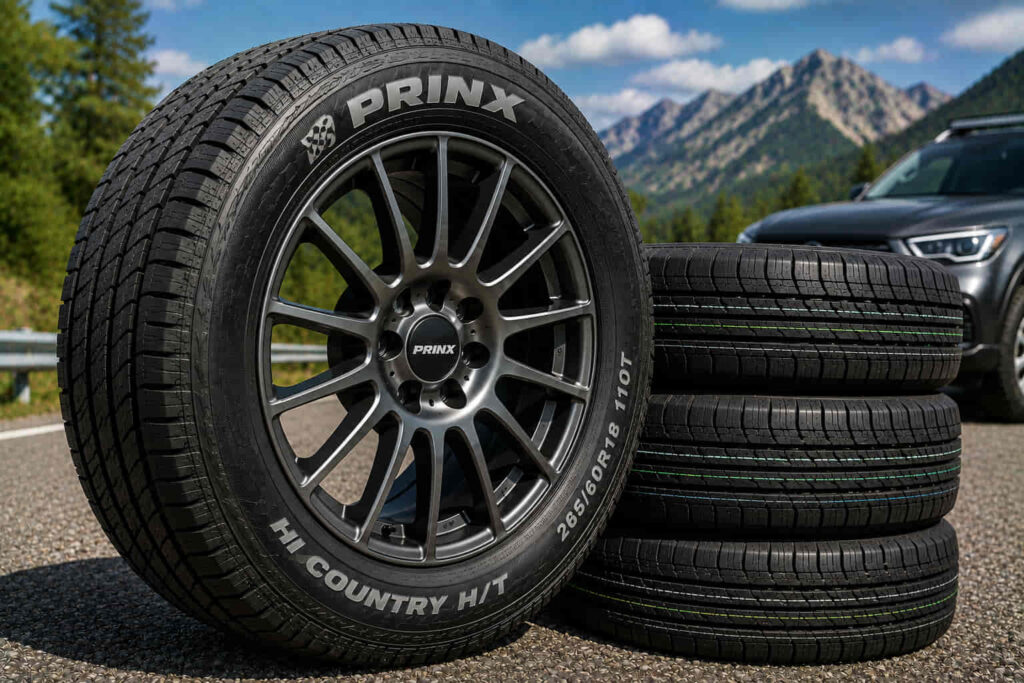
Prinx tires can be a good option for drivers looking for affordable replacement tires with practical performance, reliable construction, and competitive pricing. The brand focuses on providing value-oriented tire solutions for passenger vehicles, SUVs, light trucks, and commercial applications while targeting customers who want dependable performance without paying premium tire prices.
Prinx Tires operates within the value tire segment and is connected with Prinx Chengshan Tire, a global tire manufacturer with experience producing tires for different vehicle categories and markets. This manufacturing background allows Prinx to offer a wide product range designed around everyday driving needs, including passenger transportation, SUV applications, and commercial vehicle requirements.
The main appeal of Prinx tires comes from their balance between cost and functionality. Many drivers do not require advanced tire technology or maximum performance capabilities for their daily transportation. Instead, they need tires that provide stable traction, acceptable comfort, predictable handling, and reasonable durability at a competitive price.
However, Prinx should be evaluated according to its market position. The brand competes primarily in the value tire category rather than directly with premium manufacturers such as Michelin, Continental, or Bridgestone. This means buyers should consider their vehicle type, driving conditions, and performance expectations before choosing Prinx.
This guide explains Prinx tire quality, performance, durability, vehicle applications, advantages, limitations, and whether Prinx Tires are worth buying for different types of drivers.
What Is Prinx Tire Known For?
Prinx Tires is known for producing value-focused tires that combine affordable pricing, broad vehicle compatibility, and practical performance for passenger vehicles, SUVs, light trucks, and commercial applications. The brand has developed its position by focusing on drivers who need dependable tire performance for everyday transportation while maintaining reasonable ownership costs.
Prinx Tires is connected with Prinx Chengshan Tire, a global tire manufacturer that produces tires for multiple markets and vehicle categories. This manufacturing background allows Prinx to operate across different segments, including consumer tires and commercial tire applications, rather than focusing on only one specific vehicle category.
The brand is recognized for offering a wide range of tire solutions, including all-season tires, touring tires, performance tires, SUV tires, and light truck tires. This product variety allows Prinx to serve different driving needs, from daily commuting and highway travel to larger vehicles that require additional load capability.
Prinx’s main market position is based on providing balanced performance rather than competing directly with premium tire manufacturers. The brand focuses on delivering essential tire characteristics such as traction, stability, comfort, and durability at a more accessible price point.
This approach makes Prinx suitable for drivers who prioritize practical transportation value. A vehicle owner who needs reliable replacement tires for normal road conditions may benefit from Prinx’s balance between cost and performance, while drivers seeking maximum handling, advanced tire technology, or specialized performance may need higher-tier options.
For example, a family SUV owner looking for affordable all-season tires for commuting and highway driving may find Prinx provides suitable performance, while a performance vehicle owner who regularly pushes handling limits may require a more specialized tire.
How Does Prinx Tire Performance Compare?
Prinx tire performance is designed around balanced everyday driving characteristics, including predictable traction, stable handling, and acceptable comfort for normal road conditions. The brand focuses on meeting the needs of regular drivers rather than targeting extreme performance applications.
Dry traction is one of the key areas where Prinx tires aim to provide dependable performance. Passenger and touring models are designed to maintain consistent contact with paved surfaces, supporting normal acceleration, braking, and cornering during city and highway driving.
Wet traction depends on the specific Prinx tire model and tread design. Many all-season and touring tires use tread patterns with grooves designed to move water away from the contact area, helping maintain grip during normal rainy conditions. However, drivers who frequently encounter heavy rain or severe weather may prefer tires developed with specialized wet-weather technologies.
Highway stability is another important performance factor for Prinx tires. Many drivers spend significant time on highways, where predictable steering response and consistent handling are essential. Prinx focuses on creating tires that provide a controlled driving experience for regular transportation needs.
Ride comfort is also part of the brand’s value proposition. Prinx tires are designed to provide acceptable levels of road comfort and noise control for everyday vehicles. While premium touring tires often provide more refinement, Prinx aims to deliver practical comfort at a lower cost.
For example, a Honda Accord owner using Prinx touring tires for commuting and highway travel may find the performance meets daily driving requirements, while an enthusiast driver looking for maximum cornering grip would likely prefer a performance-focused tire from a higher-tier brand.
Read more: Are Advanta Tires Good
How Long Do Prinx Tires Last?
Prinx tires can provide reasonable tread life when they are properly selected for the vehicle and maintained according to recommended tire care practices. The actual lifespan of Prinx tires depends on several factors, including the specific tire model, vehicle weight, driving habits, road conditions, climate, and maintenance quality.
Different Prinx tire categories are designed for different durability requirements. Passenger and touring tires focus on providing stable mileage, comfortable daily driving, and consistent wear patterns for normal road use. SUV and light truck tires require stronger construction because these vehicles place greater loads on the tire structure and often operate under more demanding conditions.
Tire maintenance has a direct impact on Prinx tire durability. Maintaining correct tire pressure helps ensure even tread wear and reduces unnecessary stress on the tire casing. Regular tire rotation allows all four tires to wear more evenly, while proper wheel alignment helps prevent uneven wear caused by incorrect contact with the road surface.
Driving conditions also influence how long Prinx tires last. A tire used mainly for highway commuting typically experiences less stress than one used for frequent heavy loads, aggressive acceleration, rough roads, or commercial applications. Selecting the correct Prinx tire category based on the vehicle’s intended use is essential for achieving expected performance and service life.
Prinx’s durability advantage comes from offering practical service life at a competitive price. The brand focuses on providing reliable everyday performance rather than competing directly with premium manufacturers that invest heavily in advanced rubber compounds, specialized tread technology, and maximum mileage engineering.
For example, a commuter using Prinx all-season tires on a sedan with regular maintenance may receive strong value from the purchase, while a commercial vehicle operating under heavy loads may require a more specialized tire designed for demanding applications.
Are Prinx Tires Good for SUVs and Trucks?
Prinx tires can be a suitable option for SUVs and light trucks when they are used for everyday transportation, highway driving, and moderate-duty applications. The brand offers products designed to support larger vehicles while maintaining competitive pricing compared with many established tire manufacturers.
SUVs and trucks require tires that can handle higher vehicle weight, maintain directional stability, and provide dependable traction across different road conditions. Prinx addresses these requirements through tire options designed for larger vehicles, including SUV and light truck categories.
For SUV owners, important factors include ride comfort, handling stability, tread durability, and load capability. Prinx tires can provide a practical balance of these characteristics for drivers who primarily use their vehicles for commuting, family transportation, road trips, and normal highway driving.
Light truck owners should consider factors such as tire size, load rating, and intended application before selecting a Prinx tire. A correctly matched tire can support everyday hauling, transportation, and recreational use, but vehicles involved in frequent heavy-duty work may require tires specifically engineered for commercial or severe-duty conditions.
Prinx is generally better suited for drivers who need reliable performance without premium pricing. Its products are designed around practical usage rather than extreme off-road capability, racing performance, or specialized industrial requirements.
For example, a Toyota Highlander owner who needs affordable tires for family transportation and highway travel may find Prinx provides good value, while a pickup truck owner who regularly carries heavy equipment or operates in demanding environments may need a more specialized tire.
What Are the Advantages of Prinx Tires?
The main advantages of Prinx tires are competitive pricing, broad product availability, manufacturing capability, and practical performance for drivers who need reliable tires without premium-level costs. The brand creates value by focusing on essential tire characteristics that support everyday driving, commercial applications, and different vehicle categories.
One of Prinx’s biggest advantages is its connection with Prinx Chengshan Tire and its large-scale manufacturing capability. A broad production background allows the brand to develop tires across multiple segments, including passenger vehicles, SUVs, light trucks, and commercial vehicles. This wider product range gives drivers more options based on their specific vehicle requirements.
Another advantage is cost efficiency. Many drivers consider tire replacement a necessary maintenance expense and want dependable performance without paying the highest prices in the market. Prinx addresses this demand by offering tires that provide the fundamental qualities required for daily transportation, including traction, stability, and acceptable tread durability.
Prinx also benefits from product variety. Drivers can select from different tire categories depending on their needs, such as touring tires for comfortable commuting, performance tires for improved handling response, or SUV and light truck tires for larger vehicles. This flexibility helps the brand serve different types of vehicle owners.
The brand’s practical approach makes it suitable for drivers who prioritize value over premium features. A person who mainly drives in cities, suburbs, and highways may receive strong value from a tire that performs consistently without unnecessary advanced technology.
For example, a family vehicle owner replacing worn tires on a crossover may find Prinx provides the right balance between price and everyday reliability, while a driver seeking specialized motorsport performance would likely need a different tire category.
What Are the Limitations of Prinx Tires?
The main limitations of Prinx tires are lower premium brand recognition, fewer advanced tire technologies, and limited suitability for drivers with specialized performance requirements. These factors are important because Prinx competes primarily in the value tire segment rather than the premium tire market.
One limitation is that Prinx does not compete directly with premium manufacturers such as Michelin, Continental, or Bridgestone in areas like advanced compound development, extensive performance testing, and maximum refinement. Premium brands often invest more resources into improving braking performance, noise reduction, fuel efficiency, and specialized driving characteristics.
Another limitation is brand recognition. Compared with long-established tire companies, Prinx has a shorter consumer history in many markets. Some buyers prefer brands with decades of reputation, extensive original equipment partnerships, or stronger recognition among automotive consumers.
Prinx tires may also be less suitable for demanding driving environments. Drivers who regularly experience extreme weather conditions, aggressive performance driving, heavy commercial use, or specialized off-road requirements may need tires designed specifically for those situations.
Ride refinement can also differ compared with higher-priced alternatives. While Prinx tires aim to provide acceptable comfort for everyday use, premium touring tires often deliver quieter operation, smoother ride quality, and more advanced handling characteristics.
For example, a commuter using a compact sedan for regular highway travel may find Prinx meets their needs, while a luxury vehicle owner who prioritizes maximum cabin comfort and premium driving feel may prefer a higher-end tire brand.
Prinx Tires vs Other Budget Brands: Are They a Good Value?
Prinx tires provide good value for drivers who want affordable replacement tires with practical performance, but their overall value depends on matching the tire with the vehicle and driving conditions. The brand competes through manufacturing capability, product variety, and cost efficiency rather than premium-level technology.
Compared with premium tire brands, Prinx generally offers a lower purchase price. Premium manufacturers often provide advantages in areas such as advanced tread compounds, braking performance, comfort refinement, and long-term engineering development, but these benefits usually come with significantly higher costs.
Compared with other value-focused brands such as Sailun, Westlake, Milestar, and Sentury, Prinx competes in a similar market where affordability and everyday usability are major purchase factors. The final choice often depends on specific tire models, warranty coverage, availability, and the driver’s priorities.
Prinx’s advantage is its broader connection to both consumer and commercial tire applications. This allows the brand to serve different vehicle categories rather than focusing only on one segment. However, buyers should still compare individual tire specifications because performance can vary significantly between different models.
The best value comes from selecting a tire based on actual usage. A driver who needs affordable tires for commuting, family transportation, or normal highway driving may find Prinx provides sufficient performance, while users with demanding applications may require a more specialized option.
For example, a crossover owner looking for affordable all-season tires may receive strong value from Prinx, while a commercial truck operator requiring maximum load durability may need a dedicated commercial tire solution.
Are Prinx Tires Worth Buying?
Prinx tires are worth buying for drivers who need affordable replacement tires with practical performance, reasonable durability, and dependable everyday usability. The brand provides a value-focused option for vehicle owners who want reliable tire performance while controlling replacement costs.
The biggest strength of Prinx Tires is its ability to combine broad product availability with competitive pricing. Through its connection with Prinx Chengshan Tire, the brand offers tire solutions for different applications, including passenger vehicles, SUVs, light trucks, and commercial vehicles. This makes Prinx suitable for drivers who need functional tires for normal transportation needs.
However, Prinx is not the ideal choice for every driver. Customers who prioritize maximum performance, advanced tire technology, premium comfort, or specialized driving capability may benefit from choosing higher-tier tire manufacturers. Premium brands typically provide additional advantages in areas such as noise reduction, handling refinement, extreme weather performance, and long-term engineering development.
The right decision depends on matching the tire with the vehicle and driving environment. A driver using a sedan, crossover, or SUV mainly for commuting and highway travel may find Prinx provides strong value, while a user with heavy-duty commercial requirements or demanding performance expectations may need a more specialized tire.
Overall, Prinx Tires is a practical option in the value tire segment. While the brand does not compete directly with premium manufacturers in advanced technology and refinement, its combination of affordable pricing, product variety, and everyday performance makes it a reasonable choice for drivers who prioritize value and cost efficiency.